Adobe Dust
The most authentic adobe terracotta in the Benjamin Moore deck, reviewed honestly: the exteriors where it glows sunbaked, the light that turns it muddy, and what to pick instead.

Jessica has spec'd whites and neutrals for more than 300 rooms and keeps a sample wall of painted drawdowns in her studio. Every color review is checked against real reader rooms in the comments and re-tested when a formula changes. About the testing process →
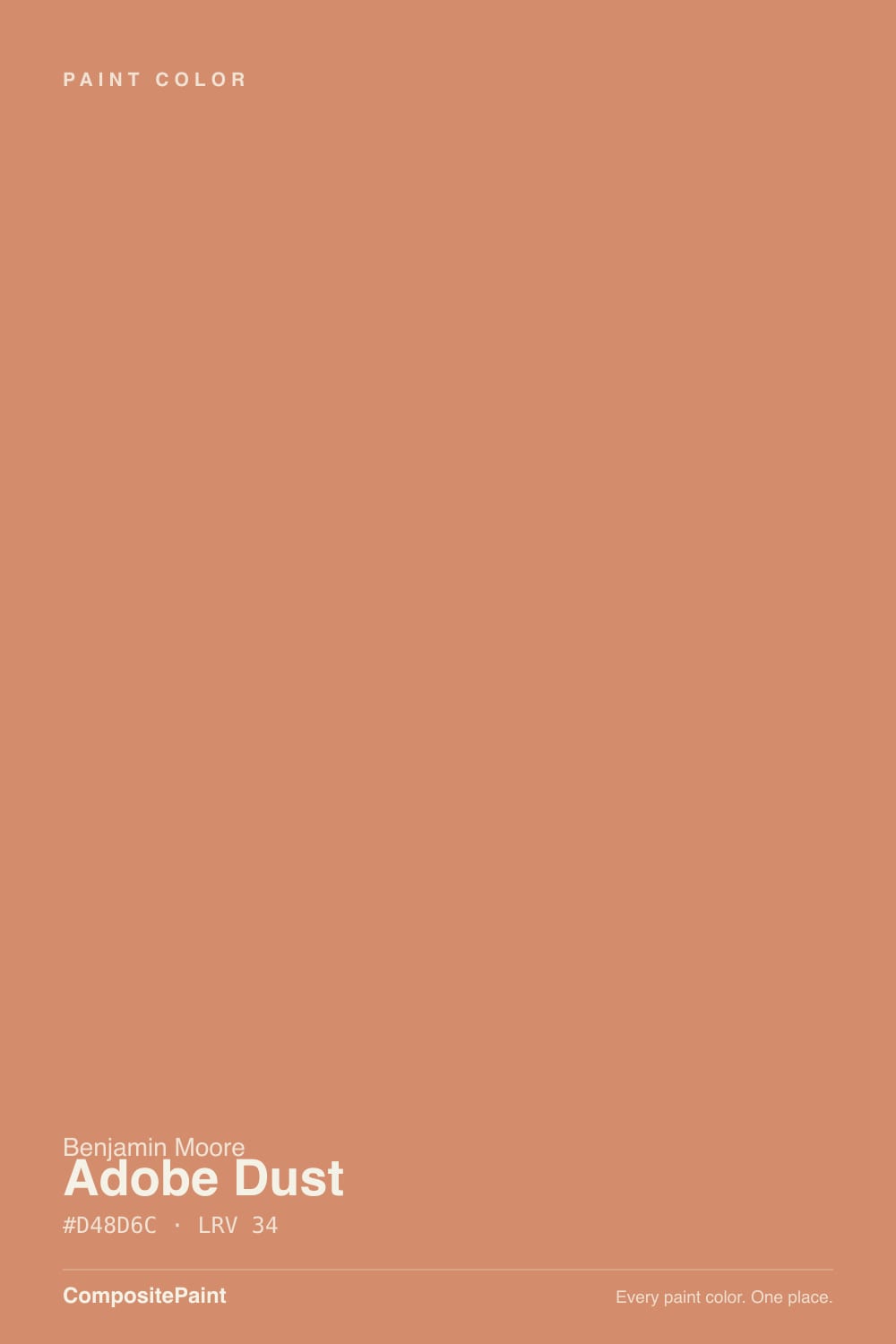
- 1Rookwood Terra Cotta14
- 2Determined Orange22
- 3Adobe Dust34
- 4Venetian Plaster42
- 5Colonial Yellow59
The Fast Verdict
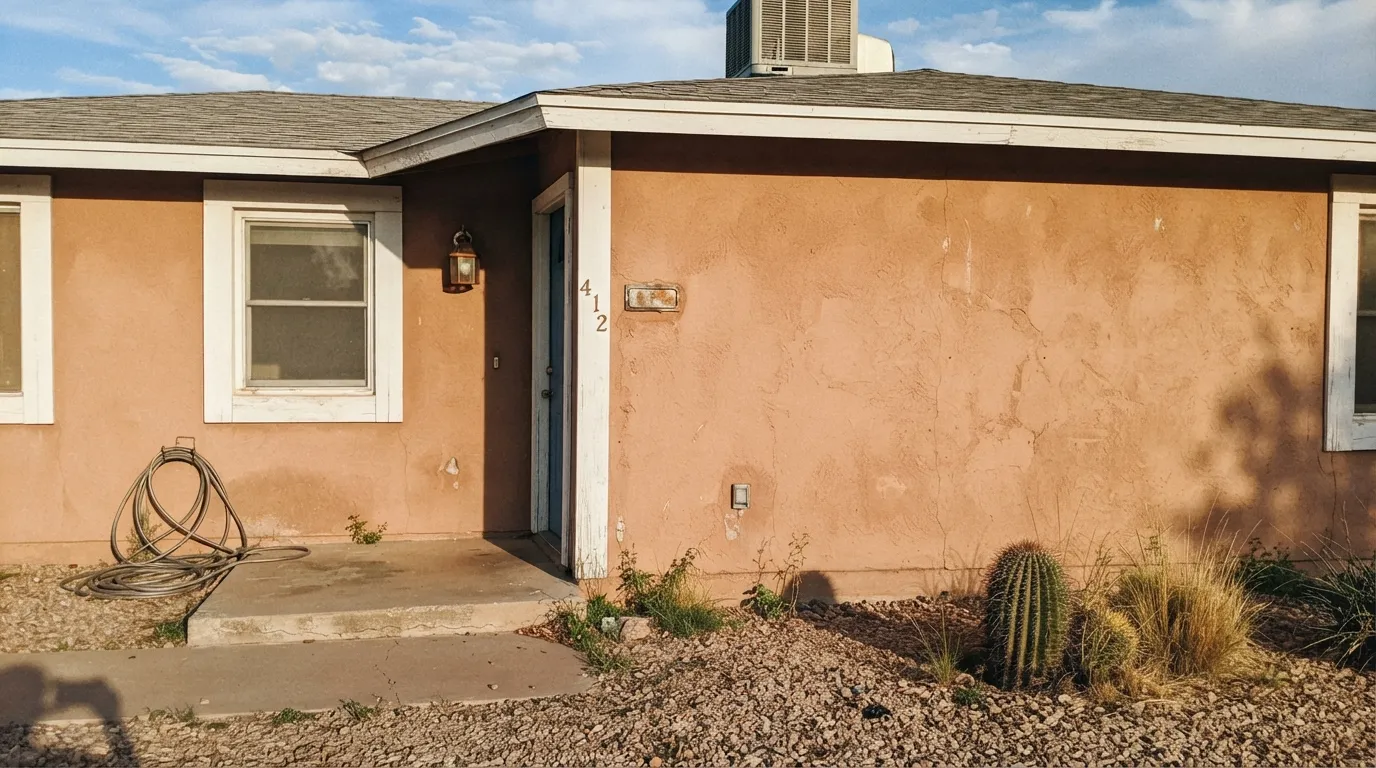
Adobe Dust is what a sunbaked clay wall actually looks like, ground into paint: a dusty red-orange terracotta with real weight, not the softened pink-clay some trend colors sell as adobe. Full sun makes it glow warm and grounded; take the sun away and it sinks toward a flatter clay-brown. It has earned a real following on Southwestern and Spanish Revival exteriors for exactly that honesty — this is the color those houses were already wearing before it had a paint-store name.
Stucco exteriors and Spanish Revival or Pueblo-style homes · full-sun accent walls · dining rooms with walnut or leather · anyone who wants literal adobe clay, not a softened trend terracotta
your room is north-facing and dim · you live somewhere gray and overcast most of the year · your stone, tile or roofing runs cool blue-gray · you want a clean bright orange, not a dusty one
- A real, sunbaked adobe terracotta — not a softened trend color
- Glows warm and grounded in full sun, especially on stucco exteriors
- Grounds a dining room beautifully with walnut, leather and brass
- Deep enough (LRV 34) to hold its color, light enough to still feel livable
- One of the standard authentic-adobe picks for Southwestern and historic-district facades
- Goes muddy brown-mauve in shade or north light
- Fights cool gray stone, slate roofing and stark white trim
- Reads dusty and muted, not the bright orange some buyers expect from "adobe"
- Heavy on all four walls of a dim room — works best as an accent or exterior
What Color Is Adobe Dust, Really?
Adobe Dust is a terracotta built on a genuine red-orange clay base, dusted down with brown so it reads earthy rather than citrus-bright. Benjamin Moore files it in the Color Preview collection — its bank of bolder, more saturated colors — but "bolder" here means depth, not brightness: this is a color that leans on warmth and weight instead of vibrancy. It sits in the same paint-chip strip as Rust (2175-30), one step darker and redder, which tells you exactly how Benjamin Moore itself thinks about the color: a lighter, dustier stop on the way to a full brick-red.
At LRV 34 it sits well below the light neutrals most whole-house colors live at, and above the true saturated terracottas like Sherwin-Williams Cavern Clay (LRV 24). That middle position is the point — light enough to read as a livable wall color rather than a design-statement piece, dark enough to hold its clay character in strong sun instead of washing out pastel. Next to a true orange it always looks calmer; next to a beige it always looks unmistakably terracotta.
Undertone in one line: red-orange clay first, brown second — never a clean citrus orange, never pink on its own. It has been used long enough on real adobe and stucco homes in the Southwest that facade guides list it among the standard "authentic adobe" picks, not a trend invention. If your sample reads dusty pink or muddy brown instead of terracotta, that is the room's light working against it, covered below — not a different paint.
Where It Shines
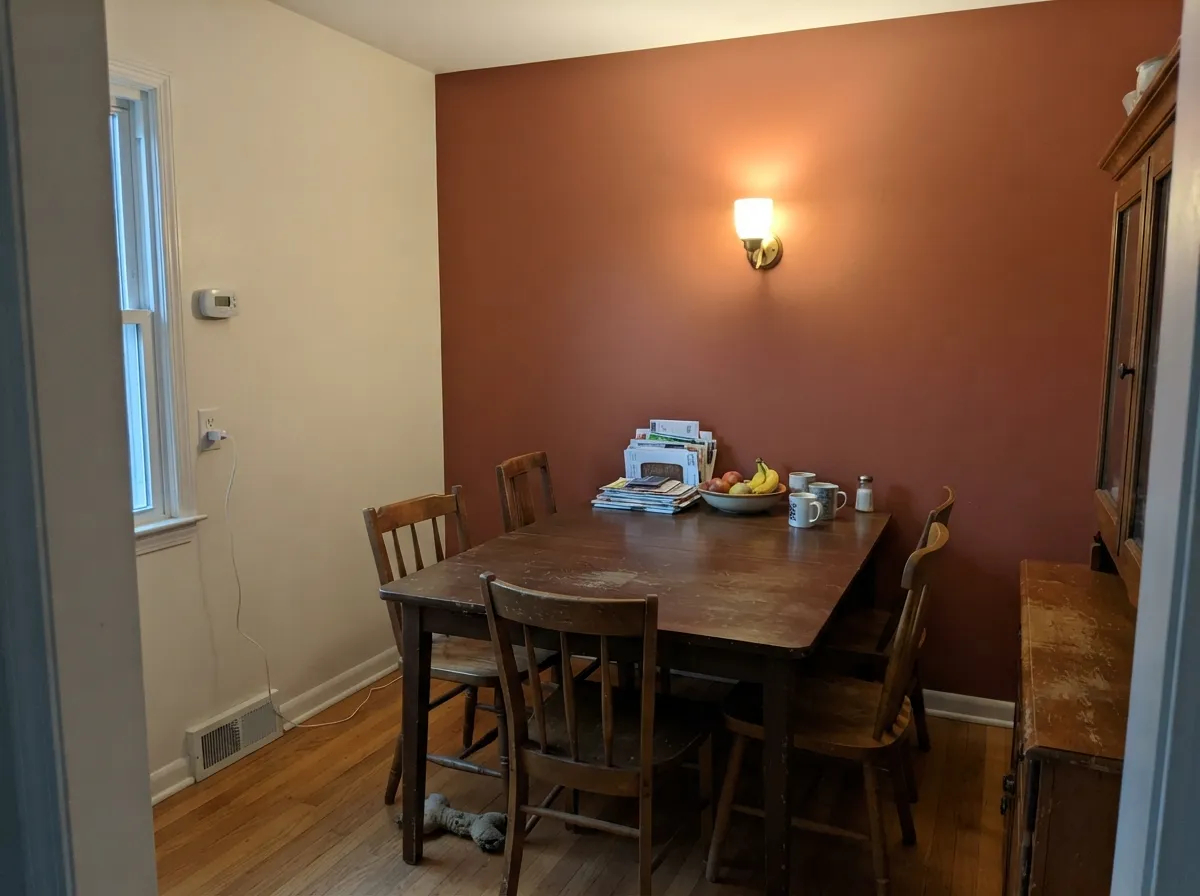
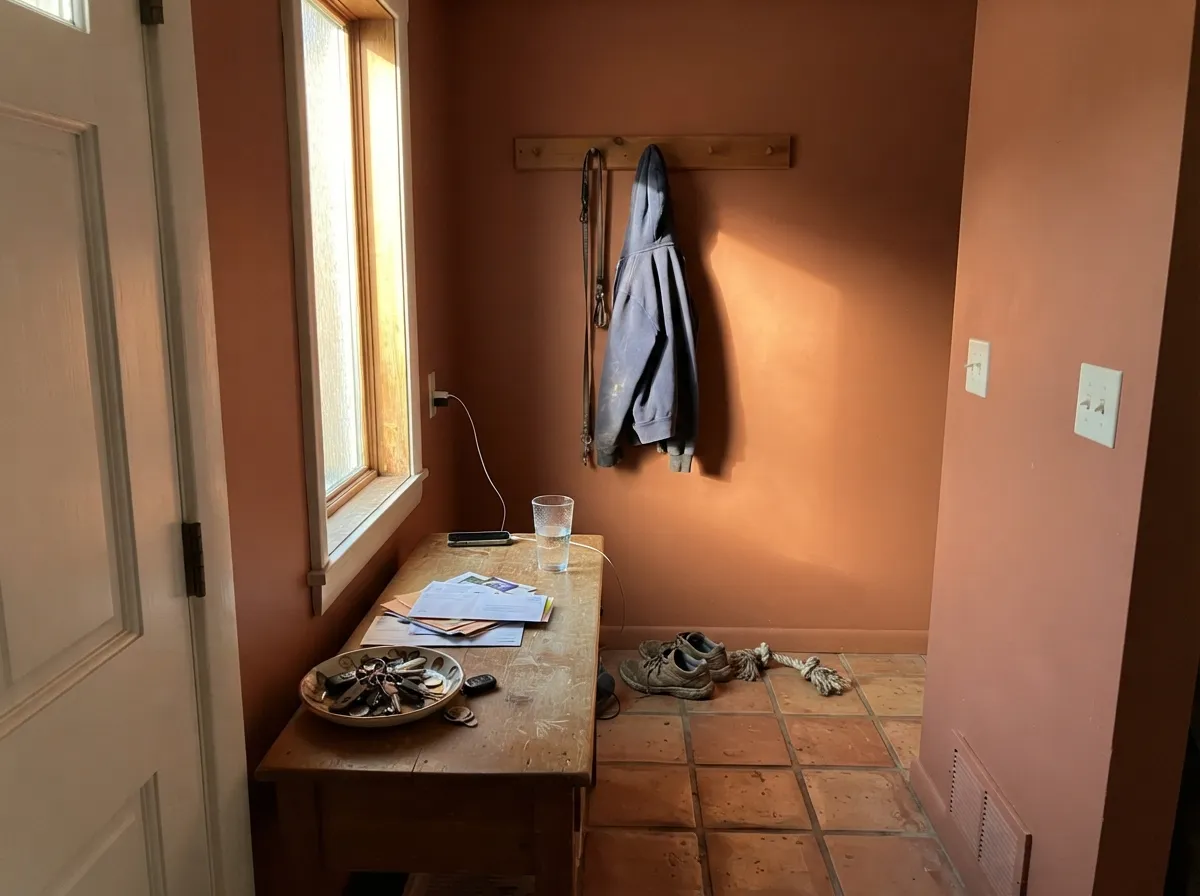
Give it real sun and it does exactly what its name promises. On a stucco exterior in full daylight it reads like sunbaked clay — warm, weighted, unmistakably Southwestern — which is why it keeps showing up on Spanish Revival and Pueblo-style homes and in historic-district facade guides. Indoors, it wants the same conditions in miniature: a sunny accent wall, a dining room with walnut and leather, an entryway that gets real daylight through the door.
Where It Fails
Almost every disappointed review of Adobe Dust comes from one of three situations, and all three are predictable before the first coat. None of them are the paint's fault — but if your house or your room matches one, this is not your color.
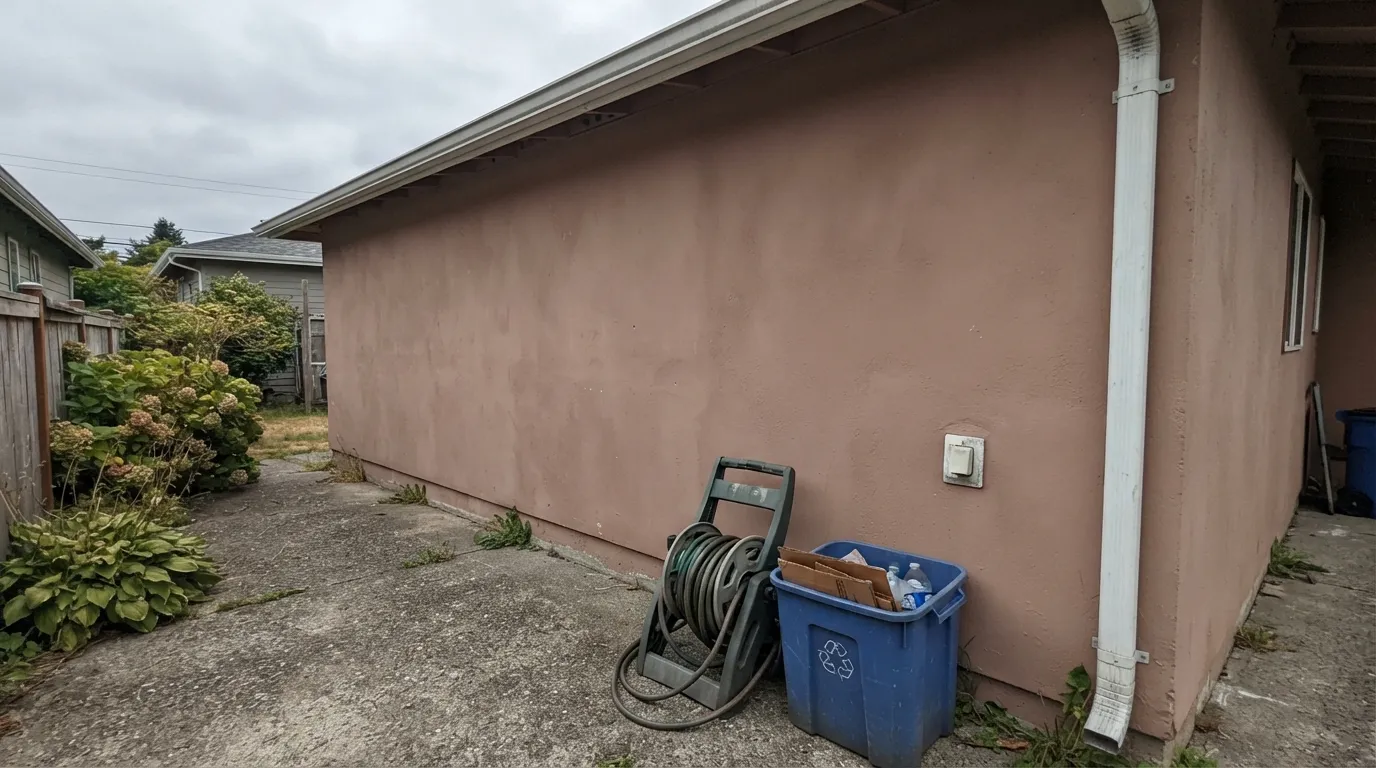
This color needs sun to read as clay. On the shady side of a house, or through a north window, the red-orange sinks toward a flat, muddy brown-mauve — readers expecting sunbaked terracotta get something closer to dried mud. Walk the sample around the whole house, including the shaded elevation, before committing stucco or siding to it.
Blue-based gray stone, slate roofing, or a cool stark-white trim fight the clay undertone and make Adobe Dust look chalky and slightly dirty instead of warm. It wants warm stone, brick, aged wood, or a warm white — Cloud White or Swiss Coffee, not a stark blue-white.
The name says adobe, and it means it — this is a dusted, muted clay, not the vivid pumpkin-orange some buyers picture from the chip alone. If you want more punch, Rust (2175-30) is the same family one shade deeper and redder; Adobe Dust is the quieter, dustier version on purpose.
Room by Room
On stucco, in full sun, this is the color Spanish Revival and Pueblo-style houses have worn for decades. Pair with a warm white trim and iron or dark wood doors and shutters for the classic look; check the shaded elevation before you commit.
With walnut, leather chairs and warm brass it feels grounded and a little formal, especially once the lamps come on at night. Eggshell holds up to chair-back scuffs better than matte.
A front hall or sunroom that gets real sun through the door or windows doubles down on the same warmth instead of fighting it. This is where the color is easiest to love.
On one sunlit wall it is striking without taking over. Four walls of it in a room that does not get direct sun reads heavy and can start to feel closing-in rather than cozy.
Warm and cocooning under 2700K lamps, but its energy works against a restful mood for a lot of sleepers, and a north-facing bedroom will lose its warmth by day. Better as a headboard wall than the whole room.
The cool tile, chrome fixtures and mirrors typical of a bathroom fight the clay undertone. Skip it unless the room already leans warm — brass hardware, wood vanity, warm stone.
Your Light Is the Risk
Direct sunlight is what makes this color: it glows sunbaked and terracotta-warm, the reason it's a Southwestern facade staple.
Without direct sun the red-orange sinks toward a flat, muddy brown. Test on the actual shaded elevation or wall before committing.
Warmest and reddest at the sun hours, quieter and more brown-clay the rest of the day. Most owners like the swing; it is a real one.
2700K lamps deepen it toward brick-red. Cool white LEDs flatten it toward dusty pink-brown — keep the bulbs warm.
Most complaints about Adobe Dust are a light mismatch. Upload a photo of your actual room and see it on your walls — then ask for the same wall in north light or evening lamps before you buy a single sample.
Need It From Another Brand?
Any paint counter can custom-tint Benjamin Moore 2175-40 directly. If you would rather stay in one brand's own deck, these are the closest stock matches, measured as ΔE2000. Under 2 is a difference you will not see on the wall.
| Brand | Closest color | ΔE | LRV | |
|---|---|---|---|---|
| Sherwin-Williams | Subdued SiennaSW 9009 · Sherwin-Williams | 2.0 | 32 | Color page → |
| Behr | Balcony SunsetMQ4-38 · Behr | 0.6 | 34 | Color page → |
| Valspar | Laredo2004-5C · Valspar | 1.7 | 34.3 | Color page → |
| PPG / Glidden | Cinnamon BrandyPPG1199-5 · PPG / Glidden | 1.3 | 33 | Color page → |
| Glidden | Cinnamon BrandyPPG1199-5 · Glidden | 1.2 | 33 | Color page → |
| Dutch Boy | Pretty Things207-4DB · Dutch Boy | 3.8 | 36 | Color page → |
Similar Benjamin Moore Colors
The nearest shades to Adobe Dust within Benjamin Moore's own range, ranked by perceptual color distance — useful when you want the same look a touch lighter, darker, or warmer.
WCAG 2.1: AA is 4.5 : 1 for normal text, 3 : 1 for large text, AAA is 7 : 1.
Adobe Dust vs the Colors You're Also Considering
Every Adobe Dust sample board has the same rivals on it. The numbers show the real lightness gap — then it comes down to which risk you would rather live with.
Pick this for the quieter, dustier version that still reads unmistakably adobe.
Benjamin Moore 2175-30 · LRV 19RustPick this if you want more punch and red — Rust is the same family, one step darker and bolder.
Pick this for the lighter, easier-to-live-with clay that still holds up outside strong sun.
Sherwin-Williams SW 7701 · LRV 24Cavern ClayPick this if your painter works in Sherwin-Williams — a deeper, more saturated terracotta that needs even more direct sun to glow.
Adobe Dust Coordinating Colors
The rule for coordinating with Adobe Dust is simple: stay warm. It flatters warm whites, aged wood, iron, and its own darker sibling — and it fights cool grays, stark blue-whites, and anything chrome-cold. These are the partners that keep showing up on the houses and rooms that work:
Adobe Dust's Own Story: An Actual Adobe Color
Most "terracotta" trend colors were invented for a paint deck. Adobe Dust works the other way around — it is a paint-store match for a building material that predates paint decks entirely: sun-dried clay brick, the literal adobe that Southwestern and Pueblo-style architecture has used for centuries. That is why facade guides for Spanish Revival and historic-district homes keep listing it as one of the standard authentic-adobe picks, rather than treating it as a seasonal trend color.
It sits in Benjamin Moore's Color Preview collection, the deck's bank of bolder, more saturated colors, but it earns that spot through depth and warmth rather than brightness. The practical result: it does not date the way a punchier, more saturated terracotta trend color can, because it was never chasing a trend to begin with.
Adobe Dust With Wood, Stucco and Stone
Stucco is its most natural home — the slightly textured, matte surface reads exactly like sun-dried clay when the color goes on flat sheen in real sun. Indoors, walnut, leather and aged or reclaimed wood are its best company; the reddish-brown in the wood and the reddish-brown in the paint read as one warm family instead of competing.
Stone and tile need the same warm check as trim: terracotta tile, warm sandstone and brick all deepen the effect. Blue-gray flagstone, cool granite counters, or chrome fixtures pull in the opposite direction and make the wall look slightly off rather than intentional — if those materials are already in place, treat Adobe Dust as a small dose (a door, a niche, a single accent wall) rather than the main event.
Three Ready Palettes Built on Adobe Dust
A color is never alone on the wall. These are complete combinations in the 60-30-10 pattern, with the reason each one holds together. Every one opens in the visualizer.
The classic Southwestern facade formula: a warm clay body against a warm white trim, with an iron-dark door and shutters echoing the region's ironwork so the palette reads deliberate rather than one flat note.
Try this palette in your roomCream walls keep the room bright while one terracotta wall carries the color; Chelsea Gray's charcoal-greige grounds the scheme without competing with the clay.
Try this palette in your roomLayering Adobe Dust with its own darker sibling Rust keeps the palette in one believable clay family instead of forcing in a contrast color; Natural Cream is the easy warm neutral hand-off to the rest of the house.
Try this palette in your roomAdobe Dust FAQ
Is Adobe Dust orange or pink?
Orange-clay first — it is a genuine red-orange terracotta dusted with brown. It can drift toward a dusty pink-brown in cool or shaded light, but on its own, in real daylight, it reads as adobe clay, not pink.
Does Adobe Dust work on a house exterior?
It is one of the more common picks for authentic adobe-style exteriors, and Benjamin Moore sells it in Regal Select Exterior. It needs real sun to look its best — check the shaded side of the house before committing the whole facade.
What trim color goes with Adobe Dust?
A warm white — White Dove or Swiss Coffee, not a stark blue-white. Dark iron or aged wood for doors and shutters completes the Southwestern look. Cool bright whites make it look chalky by comparison.
Is Adobe Dust too dark for a whole room?
At LRV 34 it is not a dark color by the numbers, but it reads heavy on all four walls of a room without direct sun. It works best as an accent wall, an exterior, or a room that gets real daylight.
How does Adobe Dust compare to Sherwin-Williams Cavern Clay?
Cavern Clay is deeper and more saturated (LRV 24 vs. 34) and needs even stronger direct sun to glow the way it's photographed. Adobe Dust is the lighter, easier version of the same terracotta idea — less dramatic, more forgiving.
Does Adobe Dust work with gray stone or a gray roof?
Only if the gray runs warm. Blue-based gray stone or slate roofing fights the clay undertone and makes the paint look chalky. Warm stone, brick, or a warm-gray roof are the safer partners.
Have you painted with Adobe Dust?
Rate it — one tap helps the next reader decide.
Ask a Question