Spiced Brandy
The muted terracotta everyone's circling for a southwest-modern house, reviewed honestly: where it glows, the light that turns it dusty pink, and what to pick instead.

Jessica has spec'd whites and neutrals for more than 300 rooms and keeps a sample wall of painted drawdowns in her studio. Every color review is checked against real reader rooms in the comments and re-tested when a formula changes. About the testing process →
- 1Anonymous20
- 2Felted Wool28
- 3Spiced Brandy34
- 4Revere Pewter55
- 5Agreeable Gray60
The Fast Verdict
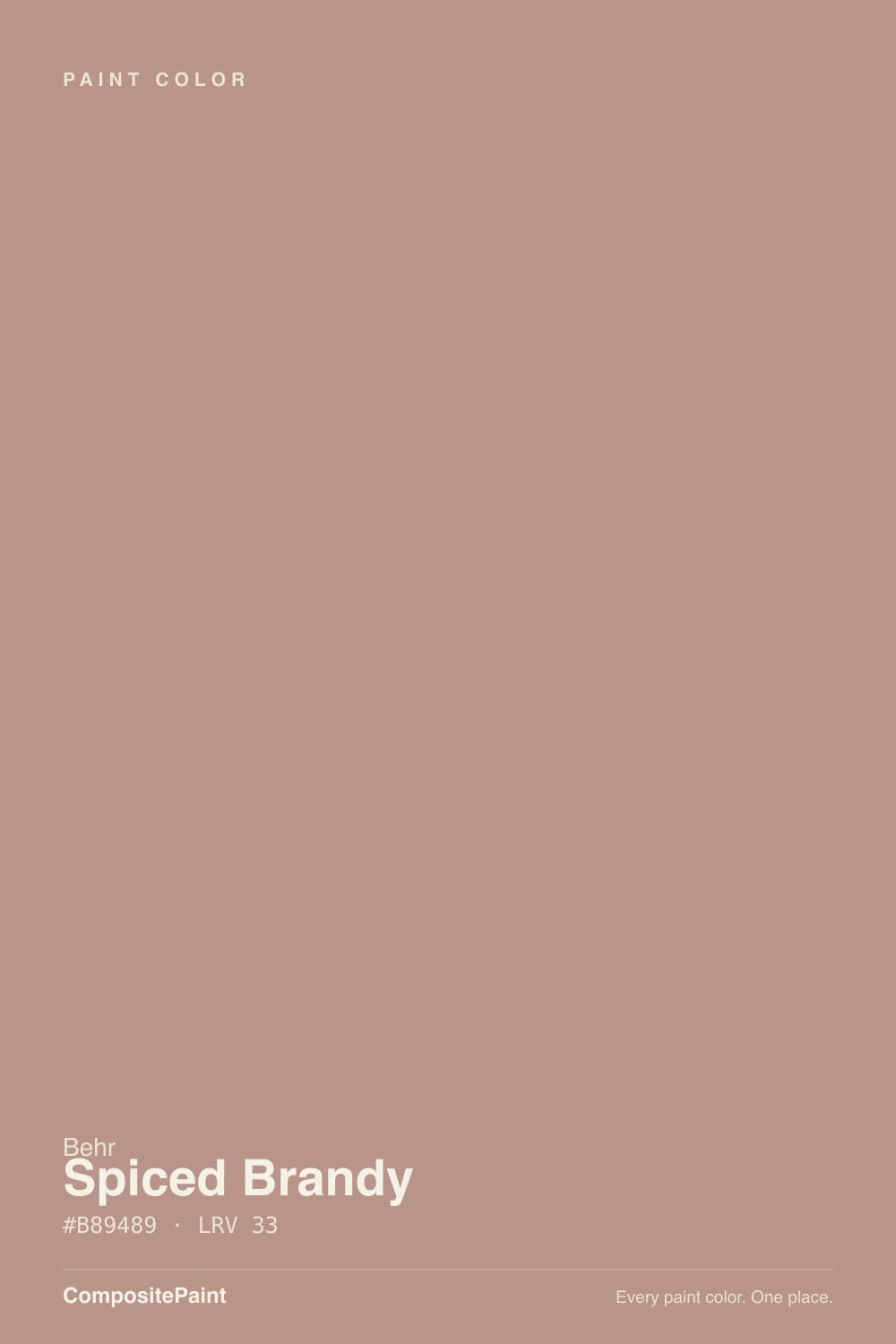
Spiced Brandy is Behr's quiet answer to the terracotta-clay trend: a muted rose-beige brown built on a real red undertone, grayed down enough that it reads earthy and grounded instead of orange. At LRV 33 it holds real color without going heavy, which is why it shows up on exteriors and front doors as often as accent walls. Give it daylight and warm wood and it looks like a considered, expensive choice; put it in a dim, cool-lit room and the pink undertone can read dusty instead of rich.
Exteriors and front doors with real daylight · entryways and dining rooms wanting warmth without orange · kitchen islands and cabinets next to cream and walnut · anyone circling the terracotta trend who wants it muted, not saturated
Your room runs on cool white LEDs with little daylight · you want a true neutral brown with zero pink · your floors or counters are cool gray stone · you want a bold, saturated orange rather than a muted clay
- Genuine terracotta warmth without going full orange
- Holds its color in real daylight — does not wash out like paler clays
- A distinctive, grounded front door and exterior color
- Flatters warm wood, brass, and cream linens
- Works at LRV 33 as either an accent or a full room without going heavy
- The red undertone shows in almost every light — no truly neutral read
- Cool LEDs and dim rooms turn it dusty and flat
- Fights cool gray floors, counters, and stone
- Not a safe bedroom or nursery color if you want calm, not clay
What Color Is Spiced Brandy, Really?
Spiced Brandy is Behr's muted take on the terracotta-clay trend: a warm rose-beige brown built on a genuine red undertone, softened with enough gray that it reads earthy and grounded rather than orange. It is the kind of color a stucco southwest-modern or adobe-influenced house asks for — not loud, not a statement color, but unmistakably warm the moment you set it next to a true gray or beige.
At LRV 33 it is a real mid-tone — deep enough to read as a genuine color decision, not a beige with a name, but light enough to still work as a whole exterior body or a full accent wall without going heavy. That depth is also why the undertone shows up so clearly: paler rose-clays wash out in bright light, but Spiced Brandy holds its color for better and worse — the red in it is visible in nearly every light condition, just more or less pronounced.
Undertone in one line: red and clay first, brown second — never a true neutral. If your sample reads mostly warm brown-beige, that is daylight rounding the edges; if it reads dusty mauve-pink, that is cool or overcast light pulling the red forward. Both are the same paint being honest about your room.
Where It Shines
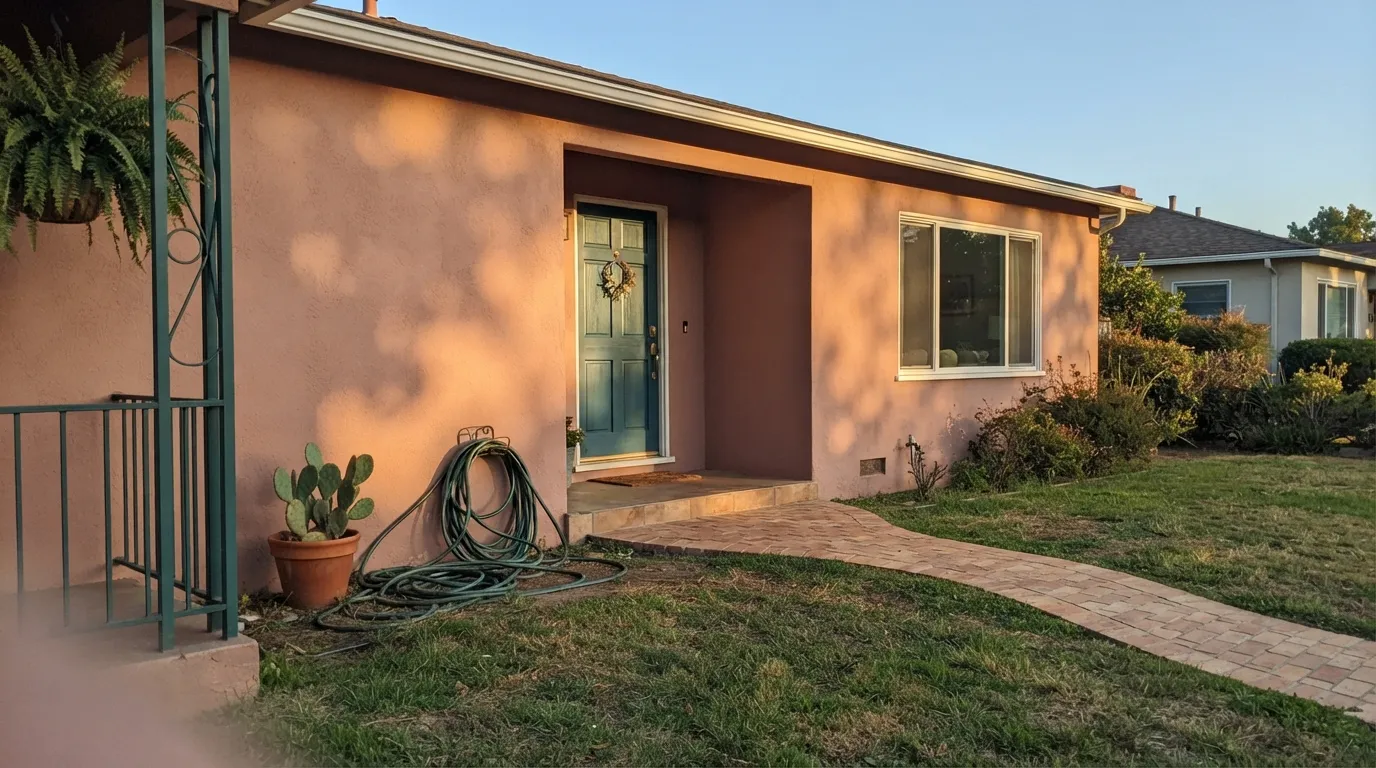
Give it real daylight — south or west sun, or a wall that gets consistent afternoon light — and it settles into a warm, grounded clay that flatters stucco, brick, and warm wood without shouting. It is at its best as a considered exterior body color or a front door that wants warmth instead of the usual black or navy, and indoors it does the same job on an entryway wall, a dining room, or a kitchen island paired with cream cabinetry and brass hardware.
Where It Fails
Most disappointment with Spiced Brandy comes from one of three mismatches, and all three are avoidable with a big sample and an honest look at your light. None of them are the paint failing — they are the color being exactly what it is.
On the chip it can look like a quiet nutmeg-brown. On four walls the red undertone is unmistakable, especially under warm bulbs — it reads closer to clay or muted rose than to plain brown. If you want the warmth without any pink, Edgecomb Gray is the safer neutral.
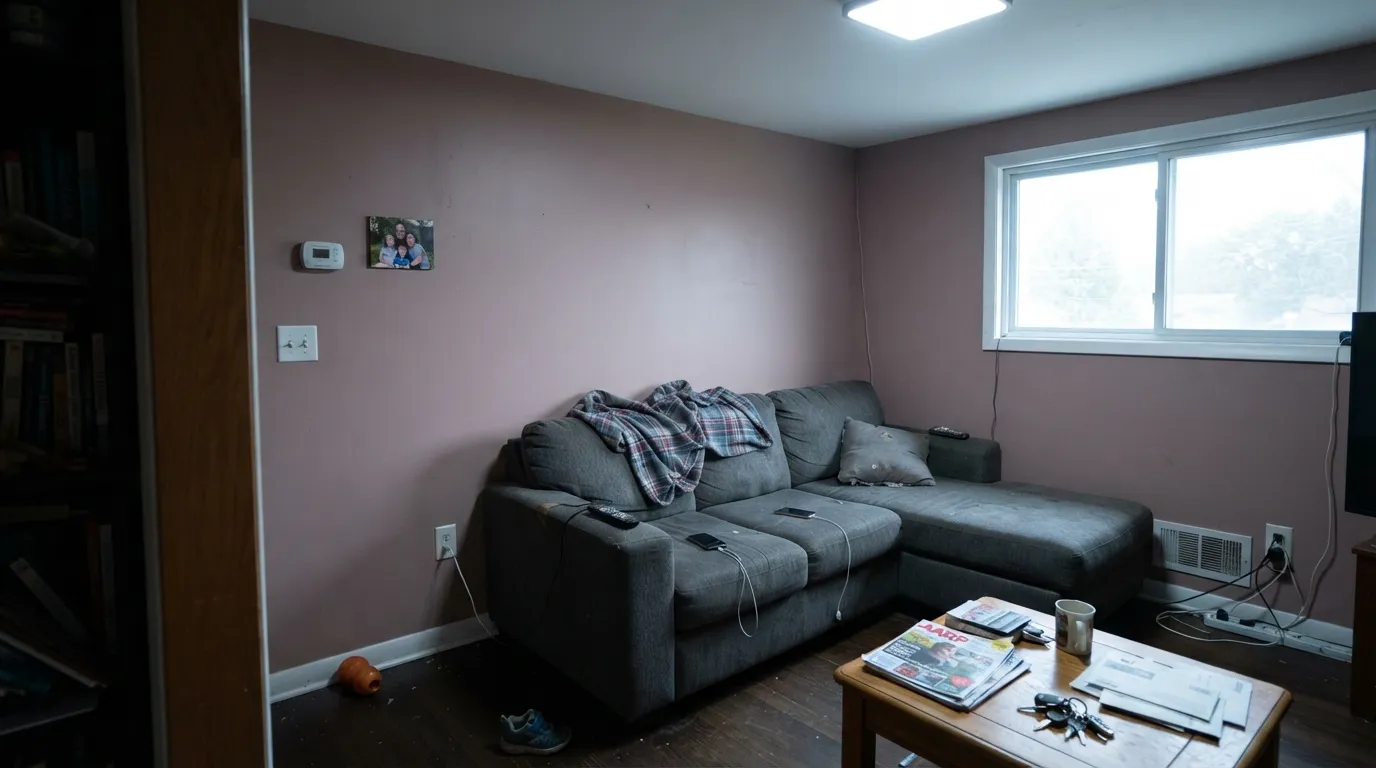
Cold artificial light strips the red out and leaves a flat, slightly muddy mauve-gray — the same complaint every rose-clay color gets in the wrong bulbs. Swap to warm 2700K bulbs before you blame the paint.
Gray LVP, gray-washed floors, and cool granite pull Spiced Brandy's undertone toward dusty pink by contrast. It wants warm wood — walnut, cedar, honey oak — not gray company.
Room by Room
In real daylight it reads like a considered adobe or southwest-modern body color, especially with stucco or brick. Flat or satin exterior finish; expect it to look a full step brighter and more orange in full sun than the chip suggests, and a step dustier on the shaded side of the house.
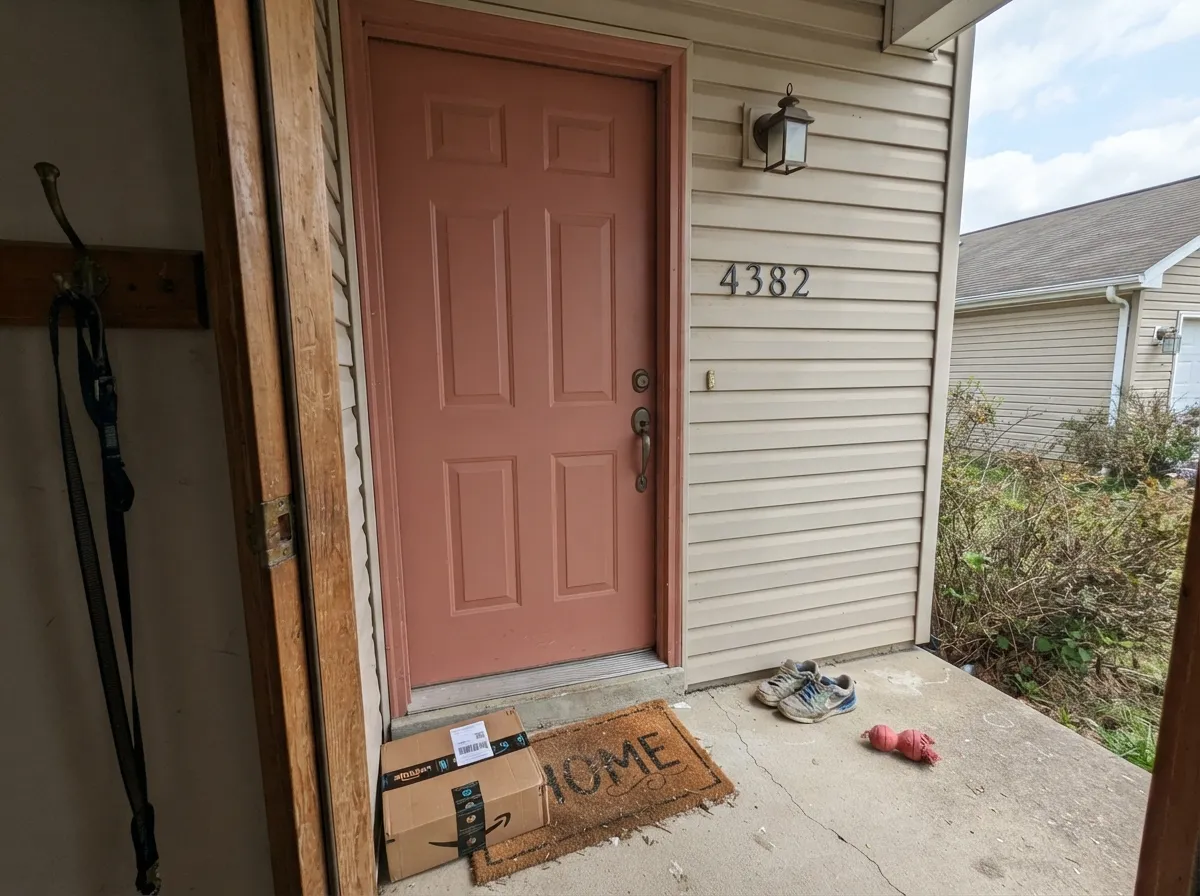
A warm, grounded alternative to the usual black or navy front door. Semi-gloss holds up to weather and reads a little richer than a flat interior sample. Indoors, an entryway wall in Spiced Brandy makes a warm first impression without committing the whole house.
Evening entertaining is this color's best use case: warm bulbs bring the clay forward and the room feels cozy, not orange. Eggshell finish; pair with cream linens and brass for the full effect.
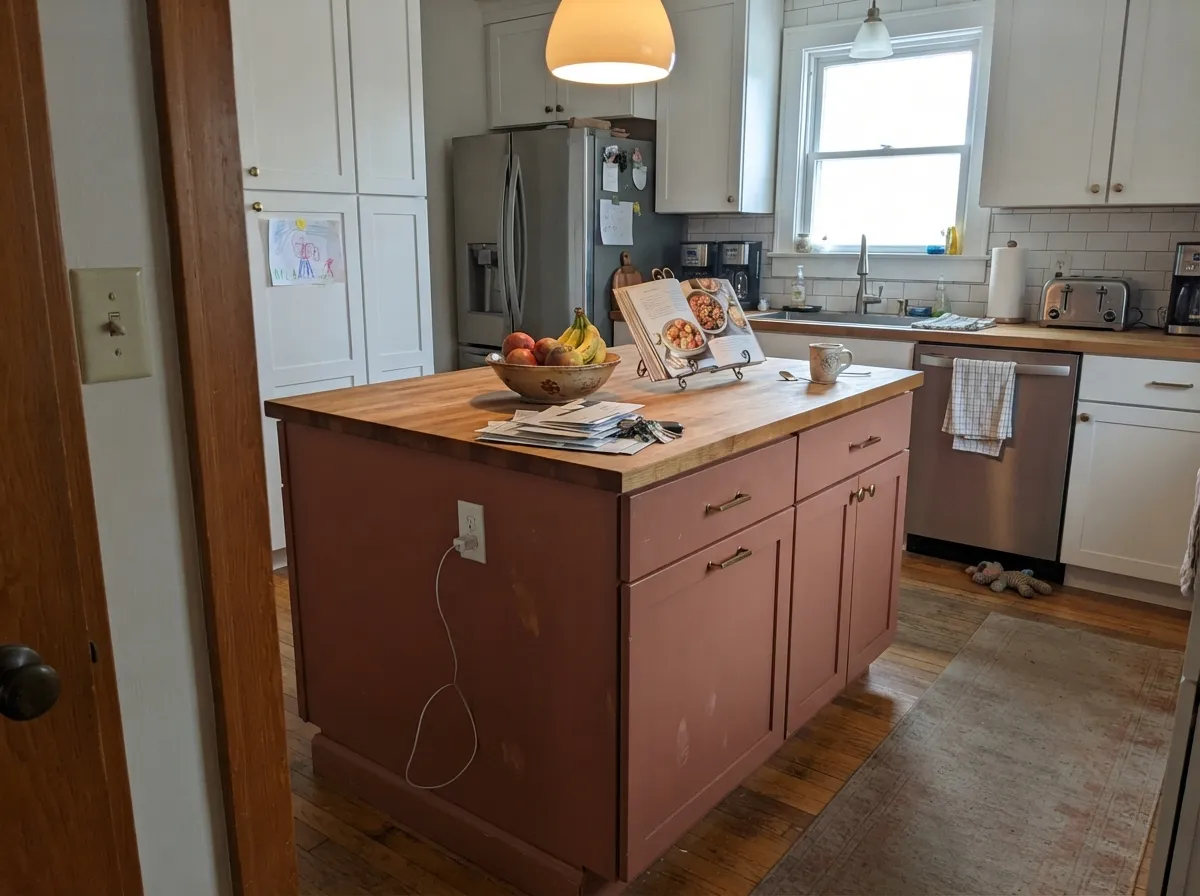
On an island or a run of lower cabinets under white or cream upper walls, it is a genuinely handsome warm neutral. A full kitchen of Spiced Brandy cabinets is a bigger commitment — sample it against your counters first, especially if they run cool gray.
Works as an accent wall or a full room in a space with real daylight and warm wood furniture. In a north-facing or dim living room it can read dusty rather than rich — this is not the room to skip the sample.
As an accent wall with warm lamps it can feel cozy and grounded, but it is not the deck's safest moody bedroom color — colors built for low light with less pink risk do that job more predictably.
Your Light Is the Risk
Full, warm sun brings the clay forward and keeps the color rich without tipping orange. The most flattering light it gets, indoors or out.
Cold light drains the red and leaves a flat, dusty mauve-gray. Test big before committing a whole exterior or accent wall.
Warmest and most clay-toned at the sun hours; steps back toward a quieter rose-brown the rest of the day. The shift is real but gentle.
2700K bulbs push it cozy and clay-warm at night. Cool white LEDs flatten it toward gray — swap bulbs before repainting.
Most complaints about Spiced Brandy are a light mismatch. Upload a photo of your actual room and see it on your walls — then ask for the same wall in north light or evening lamps before you buy a single sample.
Need It From Another Brand?
Any paint counter can custom-tint Behr S190-4 directly. If you would rather stay in one brand's own deck, these are the closest stock matches, measured as ΔE2000. Under 2 is a difference you will not see on the wall.
| Brand | Closest color | ΔE | LRV | |
|---|---|---|---|---|
| Benjamin Moore | Rosedale1180 · Benjamin Moore | 2.8 | 35 | Color page → |
| Valspar | Adobe Glow1007-10A · Valspar | 2.7 | 35 | Color page → |
| PPG / Glidden | Cool ClayPPG1071-5 · PPG / Glidden | 2.6 | 33 | Color page → |
| Glidden | Cool ClayPPG1071-5 · Glidden | 2.5 | 33 | Color page → |
| Dutch Boy | Davenport408-4DB · Dutch Boy | 1.8 | 32 | Color page → |
| Dunn-Edwards | CaramelizedDET687 · Dunn-Edwards | 1.0 | 33 | Color page → |
Similar Behr Colors
The nearest shades to Spiced Brandy within Behr's own range, ranked by perceptual color distance — useful when you want the same look a touch lighter, darker, or warmer.
WCAG 2.1: AA is 4.5 : 1 for normal text, 3 : 1 for large text, AAA is 7 : 1.
Spiced Brandy vs the Colors You're Also Considering
Every Spiced Brandy sample board has the same rivals on it. The numbers show the real lightness gap — then it comes down to which risk you would rather live with.
Pick this for the calmer, more grounded terracotta without the internet drama.
Sherwin-Williams SW 9081 · LRV 27Redend PointPick this if you want the pinker, more polarizing clay — this is the color that split the internet.
Pick this for a lighter, easier version that still reads earthy and warm.
Sherwin-Williams SW 7701 · LRV 24Cavern ClayPick this for a deeper, more orange terracotta — with more real light risk.
Spiced Brandy Coordinating Colors
The rule for coordinating with Spiced Brandy: warm whites and warm wood keep it grounded, cool grays fight it, and a genuine blue is its best complementary partner. These are the colors that keep showing up alongside it:
Spiced Brandy on Exteriors
Outside is where this color makes the most sense as a whole-house commitment. At LRV 33 it is deep enough to read as a real color choice rather than a beige with a name, and it sits comfortably next to stucco, brick, and warm stone — the palette southwest and adobe-style homes were already built around. Full sun brightens and warms it more than an indoor sample suggests; the shaded north side of a house will look noticeably dustier and more muted than the sunny south side, so walk the whole exterior with a large sample before ordering paint.
Behr sells it across several exterior-rated lines, so durability and fade resistance come down to which product line you choose rather than the color itself — ask for an exterior-rated flat or satin, and expect the standard Behr exterior repaint cycle rather than anything color-specific.
Spiced Brandy With Wood Tones and Floors
Warm wood is this color's best friend: walnut, cedar, and honey oak all sit comfortably against it because their warmth meets the clay halfway, and the pairing looks intentional rather than accidental. It is also forgiving of orange-leaning builder oak in a way that true grays and cool taupes are not — Spiced Brandy absorbs that warmth instead of fighting it.
The one flooring that needs a sample first is cool gray — LVP, gray-washed wood, or cool granite. Gray floors pull the pink forward by contrast, and the wall can read dustier and more mauve than it does over warm wood. It is not a dealbreaker in every room, but test a large sample above the actual floor before committing a whole wall or exterior.
Three Ready Palettes Built on Spiced Brandy
A color is never alone on the wall. These are complete combinations in the 60-30-10 pattern, with the reason each one holds together. Every one opens in the visualizer.
Crisp white trim keeps the clay body from reading muddy at a distance, and Iron Ore on the door gives the one dark anchor the scheme needs — a classic modern-adobe combination that reads considered, not accidental.
Try this palette in your roomBlue is clay's natural complement — Adirondack Blue on a pendant fixture or a run of open shelving keeps the warm island from feeling like the only decision in the room, while Alabaster walls stay quiet enough to let both colors do the work.
Try this palette in your roomBlank Canvas is Behr's own warmest white, so the trim-to-wall handoff never fights the clay; Wrought Iron supplies one soft near-black note so the entryway reads styled instead of simply "the orange room."
Try this palette in your roomSpiced Brandy FAQ
Is Spiced Brandy more brown or pink?
Both, depending on your light. Behr describes it as a brown with subtle red undertones, but in daylight it reads more like a muted clay-rose than a straight brown. If you want to avoid the pink entirely, this is not your color — the red is genuine, not a lighting trick.
Is it a good exterior color?
Yes, one of its best jobs. At LRV 33 it holds real color on a whole house without going heavy, and it pairs naturally with stucco, brick, and warm-toned siding. Expect full sun to read it brighter and more orange than the chip, and the shaded side of the house to look dustier.
What white goes with Spiced Brandy trim?
A warm white, not a stark cool one — Behr's own Blank Canvas or Behr White both work. A cool blue-white trim makes the walls look more pink by contrast, which is the opposite of what most buyers want.
Does it work in a kitchen?
Best on an island or lower cabinets rather than every wall — pair it with a crisp white like Alabaster and warm wood or brass hardware. Sample it against your counters first if they run cool gray; that combination is the one real clash.
What happens to the undertone in low light?
It gets cooler, flatter, and more muted — cold LEDs and overcast north light pull the red out and leave a dusty mauve-gray. Warm 2700K bulbs are close to mandatory if you want the color you saw on the chip.
Is Spiced Brandy the same as the viral terracotta trend colors?
Related, but quieter. It shares the same clay-red family as viral terracottas, but Behr grays it down further, so it reads as an earthy neutral rather than a bold accent — closer to a warm greige than to a saturated orange.
Have you painted with Spiced Brandy?
Rate it — one tap helps the next reader decide.
Ask a Question