100 Mph
Behr's racing-red front door color, reviewed honestly: the light where it glows, the orange it won't hide, and what to pick instead.

Jessica has spec'd whites and neutrals for more than 300 rooms and keeps a sample wall of painted drawdowns in her studio. Every color review is checked against real reader rooms in the comments and re-tested when a formula changes. About the testing process →
- 1Rookwood Dark Red3
- 2Rumors8
- 3100 Mph16
- 4Inferno22
- 5Rejuvenate30
The Fast Verdict
100 Mph is Behr's answer to a driveway that needs a punch of confidence: a deep, saturated red-orange, LRV 14, built to be the loudest thing on the block. It is not a shy color and it does not pretend to be one — the name says racing, and in real daylight it delivers exactly that adrenaline.
The catch is the orange running underneath it. Buyers picturing a crisp, blue-leaning "Christmas red" front door get a warmer, brickier red instead, and that mismatch is behind most of the disappointed reviews.
A front door or garage door that wants to be noticed · one accent wall in a den or entry, never four · porch floors, steps and brick accents in Behr's masonry and deck lines · homeowners who already know they want a warm, orange-leaning red, not a cool one
You want a true blue-red with zero orange · your entry only gets weak, indirect light · you're tempted to use it on more than one surface · you're not willing to prime and put on a second coat
- Genuinely reads as a bold, confident true red in real daylight — not a costume orange
- Sold in a matched sheen for nearly every job: door, garage, masonry, deck, porch floor
- LRV 14 hides dirt and scuffs well on a heavily touched front door
- The orange undertone keeps it warm and welcoming rather than harsh under warm porch light
- Stays bold instead of washing pastel in full, direct sun
- Deep-base coverage: budget two coats minimum, three over a lighter color, with primer
- The orange lean means it is not the crisp, blue-leaning red some buyers picture
- Fades and chalks faster than a neutral in full south or west sun, like most saturated exterior reds
- Too intense as a wall color across a whole room — it wants to be a door or one accent, not four walls
What Color Is 100 Mph, Really?
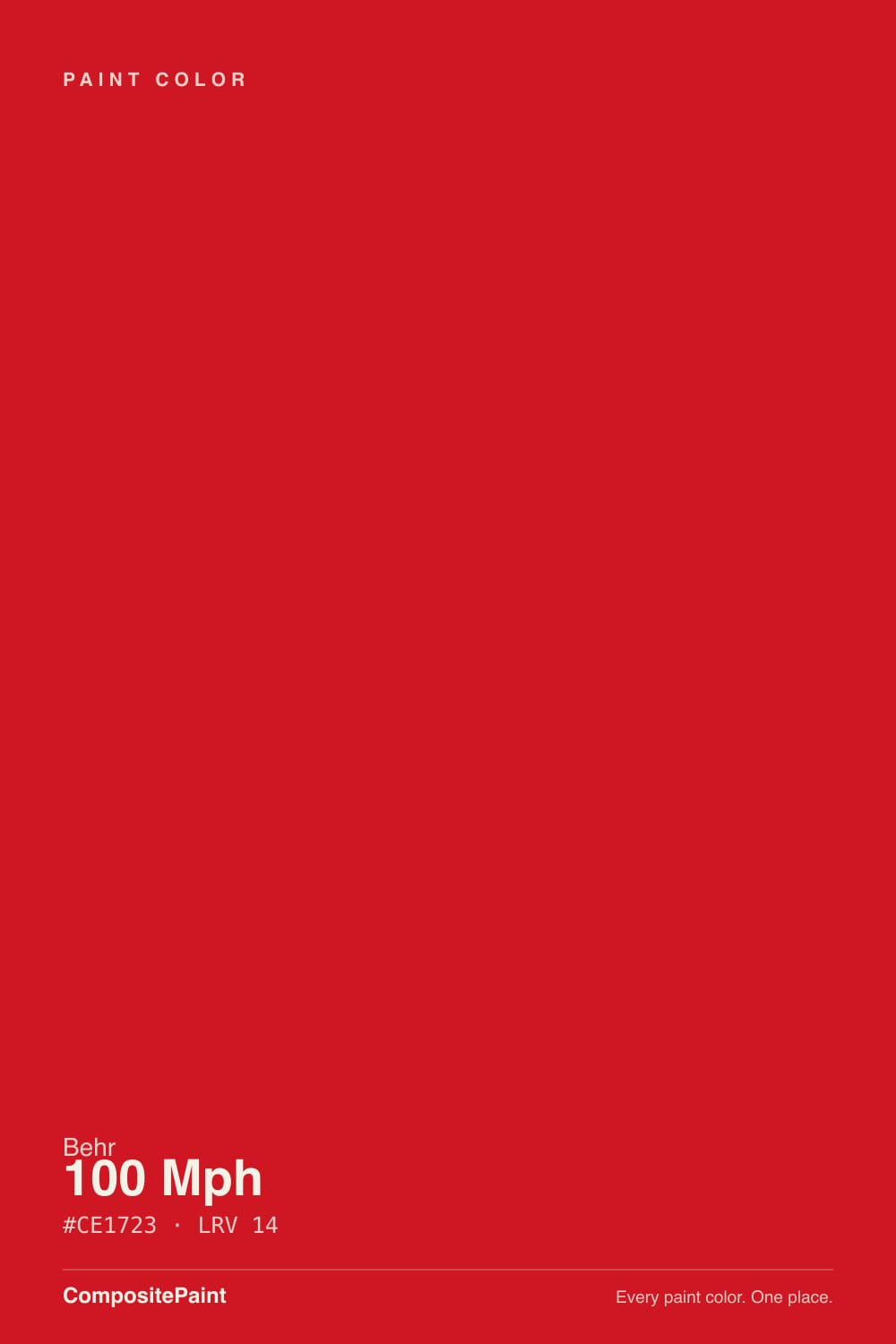
A deep base red-orange with real chroma and a low LRV of 14 — this is not a dusty terracotta or a muted brick, it is a genuinely bold, high-saturation color built to grab attention on a door or a garage. Behr sells it across an unusually wide range of finish lines — interior flat and matte, exterior satin, direct-to-metal for garage doors and railings, satin masonry paint for stucco and brick, and a solid-color deck stain — which tells you exactly how people actually buy it: not as a wall color, but as the one confident surface in an otherwise neutral exterior.
The orange is the whole story with this color. Behr's own color description leans hard into it — the undertone is described as running through the red, grounding what would otherwise be a pure fire-engine hue. That undertone is what keeps 100 Mph from reading garish up close, but it is also the reason the color drifts toward rust-orange rather than a classic blue-red the moment the light gets warm or the surface is large (a garage door reads noticeably more orange than a door-sized sample).
Undertone in one line: red with a clear, unapologetic orange lean — never blue-red, never a muted brick. If your sample looks brownish and quiet, that is shade or overcast light; if it looks almost coral-orange, that is direct sun or a warm bulb doing exactly what this color is built to do.
Where It Shines
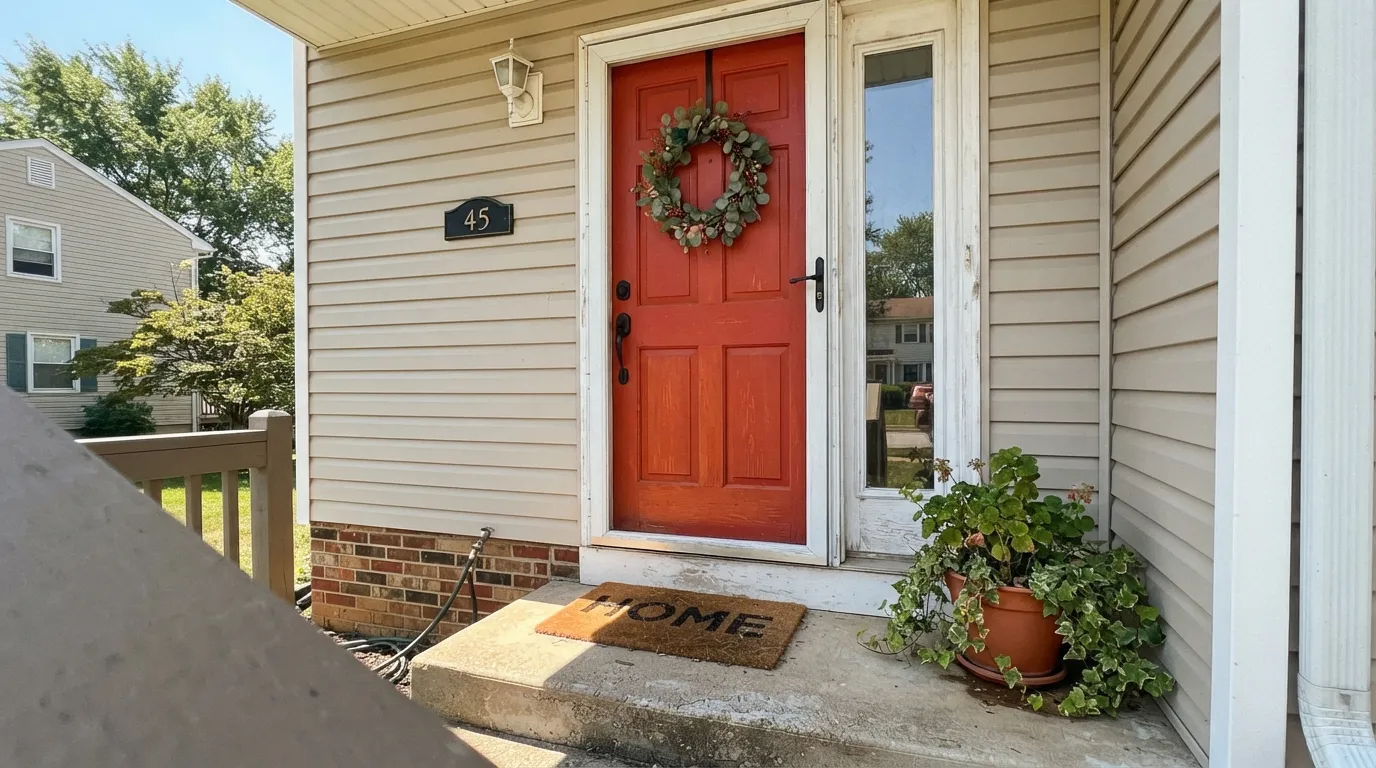
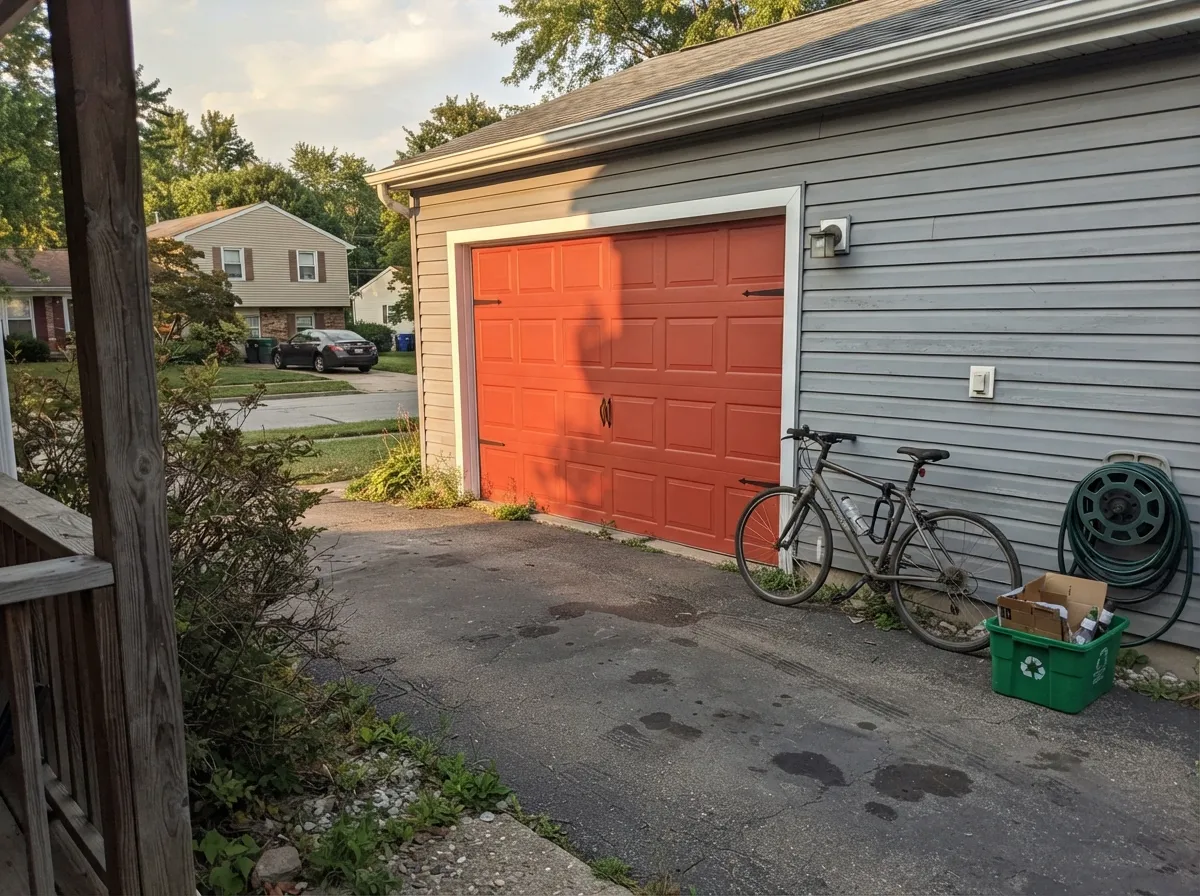
Give it real, direct daylight and a small, contained surface and it does exactly what the name promises. A front door in full or partial sun reads as a confident true red with a warm glow, not a costume-orange. It is genuinely one of the better racing-red options for a door because the orange keeps it from looking synthetic or plasticky the way some pure reds can under LED porch lights. Its second home is anything functional and exterior — a garage door, a set of porch steps, a masonry accent wall — because Behr sells the exact matched sheen for each of those jobs, which is rarer than it should be for a color this saturated.
Where It Fails
Almost every disappointed review of 100 Mph traces back to one of three predictable situations, and none of them are really the paint's fault — they are a mismatch between what the buyer pictured and what a deep-base orange-red actually does.
This is the single biggest source of buyer's remorse. 100 Mph is built around an orange undercurrent, not a cool crimson — Behr says so directly in its own color description. On the chip that reads as "exciting red." On a full door in flat or shaded light it reads as rust-orange, closer to a fire truck than a barn door. If you pictured a classic Christmas-card red, sample this one before you buy — you likely want Benjamin Moore Caliente or Sherwin-Williams Heartthrob instead.
This is a deep base color, and deep bases hide poorly in a single coat — one Home Depot reviewer restoring an exterior specifically flagged that the paint-and-primer-in-one formula still needed a second full coat over most of the house. Budget for two coats minimum, three if you're going over a lighter existing color, and prime first if the surface underneath is bright white or a different saturated hue.
Like almost every deep, saturated exterior red, 100 Mph takes more of a beating from UV than a beige or a gray does — the pigments that make a red this vivid are the ones that break down fastest in direct south or west sun. Expect a door or garage in full sun to need a fresh coat sooner than the rest of the house, not because the paint failed, but because bold reds always ask for more upkeep.
Room by Room
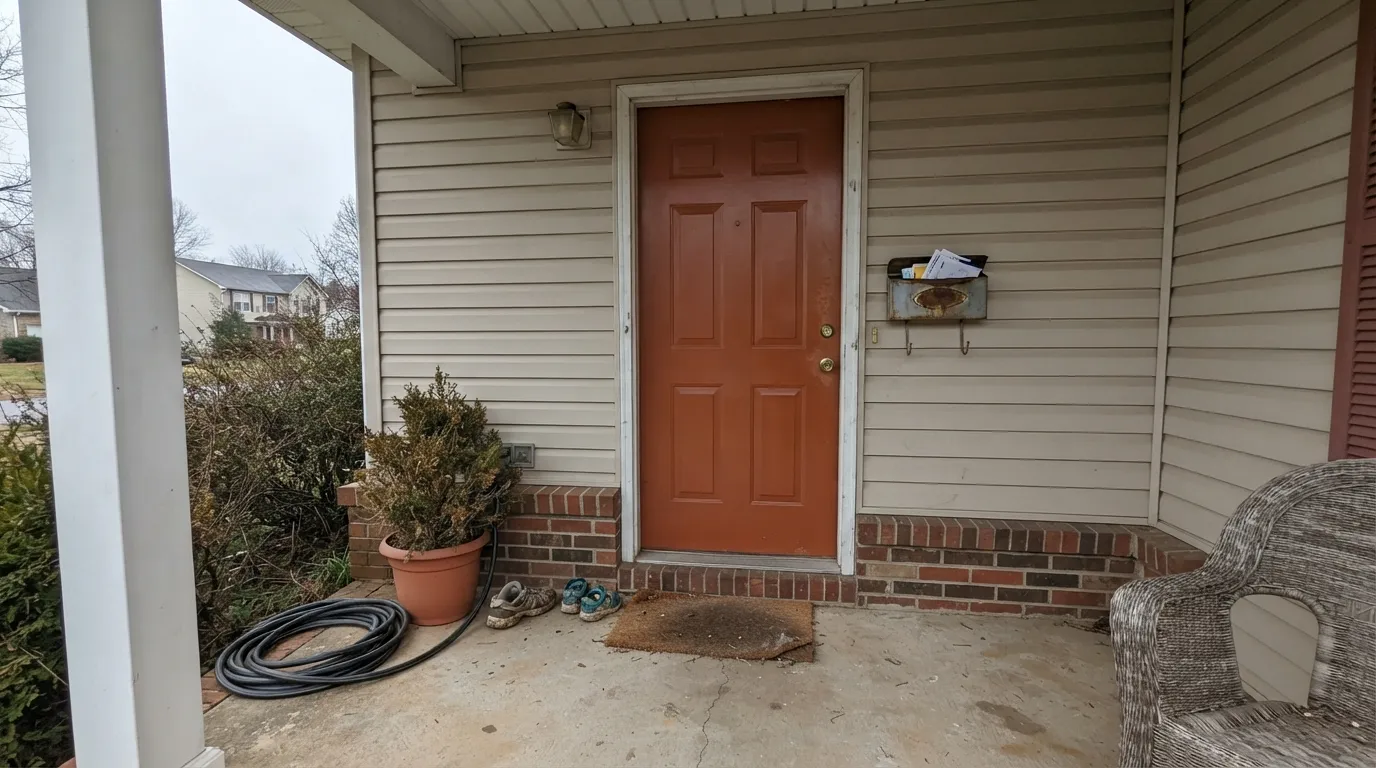
This is what the color is for. Semi-gloss over a properly primed door, warm porch-light bulbs at night, and it reads as confident and welcoming rather than aggressive. Test the sample directly on your door in your actual light before committing — porches under deep overhangs read noticeably darker and browner than an open, sun-hit entry.
A garage door is the largest single surface most people will ever paint this color, and larger surfaces always read bolder and more orange than a small chip. Tape a full sample board to the door and look at it at different times of day before you commit — what looks right on a paint stick can look like a stoplight across an 18-foot door.
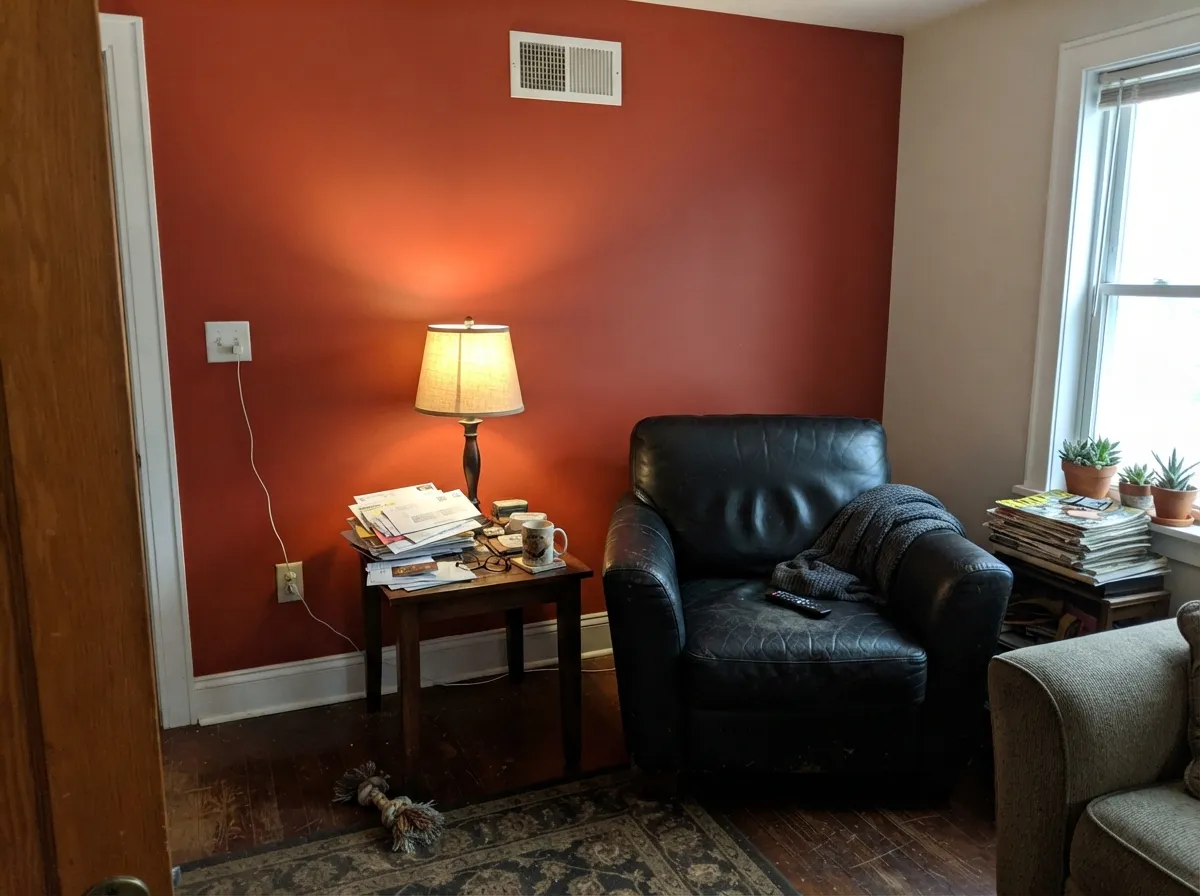
One wall in a den, office or entry works — think of it the way you'd use a piece of art, not a background. Pair it with a warm off-white like Behr Swiss Coffee on the surrounding walls and keep furniture and trim neutral. Four walls of this color is a genuinely different, much more intense experience than a sample suggests.
Behr sells a matched satin masonry paint in this exact color, and it works well on a small retaining wall, a chimney accent or a single brick planter — anywhere you want one deliberate pop rather than a repainted facade. It is not a whole-house exterior color at LRV 14.
It exists as a solid-color deck stain and a textured anti-slip porch and patio floor paint, both real Behr product lines. A red porch floor or a red-painted set of steps is a classic, deliberate look, and this color is dark enough to hide the dirt a lighter deck stain would show.
It is too saturated and too dark to live as siding or a main exterior wall color for most houses. Keep it to the door, the garage, the steps, or one accent — it was never meant to cover four sides of a house, and nothing in how Behr sells it suggests otherwise.
Your Light Is the Risk
Full or strong partial sun is where it earns its name — vivid, warm, unmistakably red-orange with real energy. This is the light to sample it in.
Without direct light it sinks toward a flat, muddy brick-brown and loses the racing-red punch entirely. A north-facing or heavily covered porch will disappoint.
Cooler morning light keeps it closer to true red; warm afternoon and golden-hour light pulls the orange forward. The swing is real but stays inside the same warm family.
Warm 2700K bulbs deepen it into a rich, welcoming brick glow. Cool white LED security floodlights flatten it and can push it toward an odd coral cast in photos — swap the bulb before you swap the paint.
Most complaints about 100 Mph are a light mismatch. Upload a photo of your actual room and see it on your walls — then ask for the same wall in north light or evening lamps before you buy a single sample.
Need It From Another Brand?
Any paint counter can custom-tint Behr P170-7 directly. If you would rather stay in one brand's own deck, these are the closest stock matches, measured as ΔE2000. Under 2 is a difference you will not see on the wall.
| Brand | Closest color | ΔE | LRV | |
|---|---|---|---|---|
| Sherwin-Williams | FireworksSW 6867 · Sherwin-Williams | 1.6 | 17 | Color page → |
| Benjamin Moore | Strawberry Red2003-20 · Benjamin Moore | 2.5 | 16 | Color page → |
| Valspar | Red Bliss1010-1 · Valspar | 1.9 | 16.4 | Color page → |
| PPG / Glidden | Wright Tanager RedFLLW287 · PPG / Glidden | 4.8 | 17 | Color page → |
| Glidden | Red Geranium19YR 14/629 · Glidden | 2.1 | 14 | Color page → |
| Dutch Boy | Luscious Scarlet105-7DB · Dutch Boy | 2.5 | 16 | Color page → |
Similar Behr Colors
The nearest shades to 100 Mph within Behr's own range, ranked by perceptual color distance — useful when you want the same look a touch lighter, darker, or warmer.
WCAG 2.1: AA is 4.5 : 1 for normal text, 3 : 1 for large text, AAA is 7 : 1.
100 Mph vs the Colors You're Also Considering
Every 100 Mph sample board has the same rivals on it. The numbers show the real lightness gap — then it comes down to which risk you would rather live with.
Pick this when you specifically want the racing-orange edge, not a safer, more traditional door red.
Behr PPU2-02 · LRV 8Red PepperPick this if you want Behr's other go-to door red — browner and more believable as a classic red, less orange energy.
Pick this if Caliente reads too blue-red for your taste and you want more warmth and brightness.
Benjamin Moore AF-290 · LRV 8CalientePick this if you want the benchmark true red with almost no orange — the safer pick if 100 Mph felt like too much fire.
Within Behr, Grenadine S-G-180, #D3131E at LRV 14, is the nearest twin and reads a shade brighter. Top Tomato P180-7, #D72022 at LRV 16, and Chili Pepper 180B-7, #DB1E1D at LRV 16, are both lighter and lean more orange, so they feel sunnier. Flirt Alert P150-7, #C11527 at LRV 12, is the deepest of the group. Poinsettia 150B-7, #C6142E at LRV 13, carries visible pink, and Fire Coral BIC-31, #C93426 at LRV 15, softens toward brick.
Across brands, Benjamin Moore Ruby Red 2001-10 at LRV 16 measures 1.85 away, which makes the two visually identical in normal room light. Rust-Oleum Farmhouse Red 329211 at LRV 13 measures 2.73 and Valspar Scarlet Tanager M212 at LRV 14.5 measures 3.29, so both are very close but worth sampling first.
Sherwin-Williams Real Red SW 6868 at LRV 13, measuring 3.88, is close but visibly different side by side, reading a touch deeper and less brilliant.
100 MPH Coordinating Colors
The rule with a color this saturated is restraint everywhere else: quiet whites, grays and near-blacks let 100 Mph be the one loud note instead of fighting for attention. These are the partners that keep showing up in exteriors and rooms that work:
100 MPH's Own Story: A Color Built to Be an Accent
Behr markets 100 Mph as pure adrenaline — its official description leans on the racing name directly, calling it a bold hue that boosts energy and demands attention. What's more telling than the marketing copy is how Behr actually sells it: this color exists in interior flat and matte, exterior satin, direct-to-metal for garage doors and railings, satin masonry paint for brick and stucco, and a solid-color deck stain. That is an unusually wide spread of specialty finishes for one color, and it tells you plainly what this shade is for — the door, the garage, the steps, the brick planter — not the living room wall.
That breadth is a genuine strength if you're shopping for it deliberately: you can match the exact sheen to the exact job instead of forcing an interior paint to work outdoors or vice versa. It is also a hint that this was never designed or expected to be a whole-room color, which lines up with how it actually behaves at LRV 14 — dark, saturated, and built to carry attention on one surface at a time.
100 MPH on Exterior Surfaces
Outside is where this color earns its keep, and where the fine print matters most. On a door or garage in real sun it reads bold and warm, exactly as advertised — but plan for the deep-base coverage math: two coats minimum, three over a lighter existing color, and a primer coat if the surface underneath is bright white or a saturated hue you're covering. Skipping that step is the most common source of a patchy, uneven-looking first attempt.
The other honest exterior fact is fade. Deep, saturated reds break down under UV faster than neutrals do — that is true of red paint generally, not a defect unique to this can — so a south- or west-facing door or garage should be budgeted for a fresh coat on a shorter cycle than the rest of the house. Used sparingly, on the surfaces Behr actually built matched products for, it holds up well; used as a whole-house color, the maintenance case gets much harder to make.
Three Ready Palettes Built on 100 Mph
A color is never alone on the wall. These are complete combinations in the 60-30-10 pattern, with the reason each one holds together. Every one opens in the visualizer.
A calm off-white body lets the door do all the talking, and a neutral black-gray on shutters and fixtures keeps the red from having to compete with a second bold color. Classic, easy to resell, and it photographs well in any light.
Try this palette in your roomA cool, quiet gray body is the exact backdrop that lets a garage door this saturated read as a deliberate design choice instead of a mistake — white trim keeps the edges crisp and stops the red from bleeding visually into the siding.
Try this palette in your roomWarm cream walls keep the room from feeling cold, black trim and furniture give the eye somewhere to land besides the red, and the single accent wall lets 100 Mph do what it does best — one bold surface, not a whole room's worth of intensity.
Try this palette in your room100 Mph FAQ
Is 100 MPH more red or orange?
Red, with an unmistakable orange undertone that Behr itself describes as grounding the color. It is not a cool, blue-leaning red — if you pictured a classic Christmas-red door, sample it in person first, because it leans warmer and brighter than that.
What sheen should I use on a front door?
Semi-gloss for the door itself — it wipes clean and gives the color a rich, lacquered look. Behr also sells this in exterior satin and direct-to-metal formulas for garage doors and metal railings; match the finish to the surface.
Does it really need two coats?
Plan on it. This is a deep base color, and deep bases hide poorly in one coat — real owner reviews confirm a second full coat was needed even with a paint-and-primer-in-one product. Prime first if you're covering a bright white or a very different color underneath.
Will a red front door fade in full sun?
Some, over time — deep, saturated reds are the color family most prone to UV fading and chalking on any brand. A south- or west-facing door will likely need a fresh coat sooner than a neutral-colored one nearby. This is a property of bold reds generally, not a defect specific to this paint.
What white trim goes with 100 MPH?
A warm off-white like Behr Polar Bear or Swiss Coffee keeps the whole entry feeling cohesive rather than stark. A cooler white will make the red look slightly more orange by contrast — sample both together before deciding.
Can I use it on a garage door, brick, or a deck?
Yes to all three — Behr sells this exact color as a direct-to-metal paint for garage doors and railings, a satin masonry paint for brick and stucco, and a solid-color deck stain. It is genuinely built to work as a functional exterior accent, not just a wall color.
Have you painted with 100 Mph?
Rate it — one tap helps the next reader decide.
Ask a Question