Palette

Light Color PaletteLight Linen

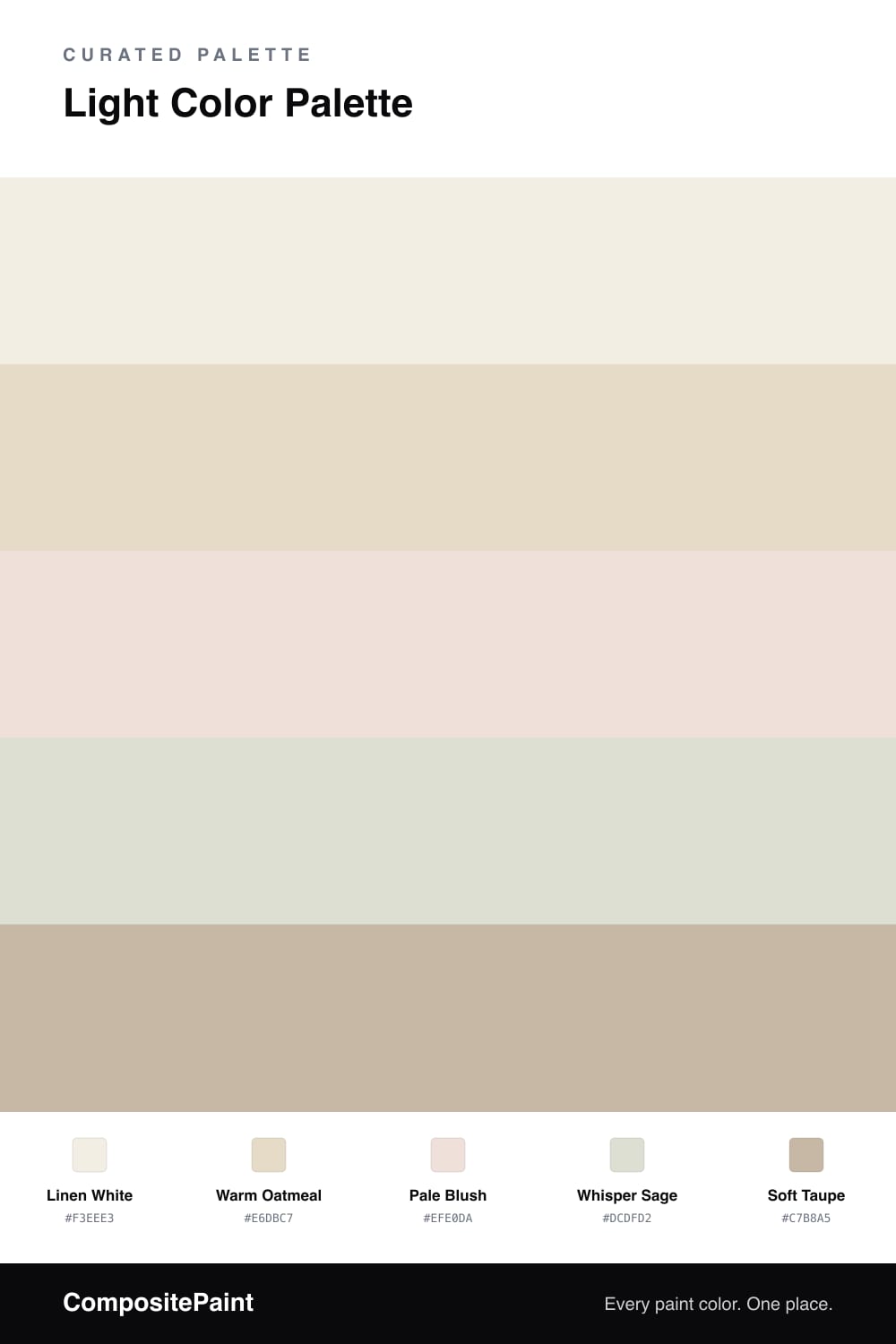
A soft five-color scheme of airy linen white, warm oatmeal, and the faintest blush and sage, kept high-key and low-contrast — every color matched to real paint you can buy.

By Jessica Williams · Color Stylist & Interior Editor
View palette in

There is a particular kind of light that pools in a quiet room first thing in the morning, soft and a little hazy, and this palette is built to hold it. Linen White leads as the dominant tone, warm enough to feel like fabric rather than a cold gallery white, and Warm Oatmeal sits just beneath it as a base that gives the scheme its gentle weight.

The interest here is barely-there on purpose. Pale Blush warms a wall the way afternoon sun does, Whisper Sage cools the next one by a degree, and the two play off each other so quietly you feel the shift before you name it. This is the low-contrast, high-key direction that feels very 2026, where calm reads as confident.

To keep it from drifting too soft, let Soft Taupe do the grounding on trim, a console, or a single woven piece. Used in small doses it gives the eye a resting point, and the whole linen-and-oatmeal scheme settles into something restful instead of vague.

Buy these colors

Every Color, Matched to Real Paint

Each color matched to the closest paint in every brand we track, by ΔE2000. Tap a swatch for its full guide. Take any code to the store, they mix on demand.

Questions people actually ask

Questions

Will a palette this light feel washed out?

It will not, as long as you let the tones do different jobs. Linen White carries the most surface, Warm Oatmeal grounds it with a little weight, and Soft Taupe gives your eye somewhere to land. The faint blush and sage keep things from going flat, so the whole scheme reads soft rather than empty.

How do I keep all these pale colors from blending into one another?

Lean on texture and finish instead of contrast. Use a matte for the linen walls, a slightly warmer satin for trim in Soft Taupe, and let woven or nubby materials in Warm Oatmeal catch the light. The low contrast is the point, so the small shifts between tones become what you actually notice.