Stone Fruit
The peachy pink Sherwin-Williams built for people who tried blush and got a cold, sad pink instead — reviewed honestly: the rooms where it glows, the light that dulls it, and what to pick instead.

Jessica has spec'd whites and neutrals for more than 300 rooms and keeps a sample wall of painted drawdowns in her studio. Every color review is checked against real reader rooms in the comments and re-tested when a formula changes. About the testing process →
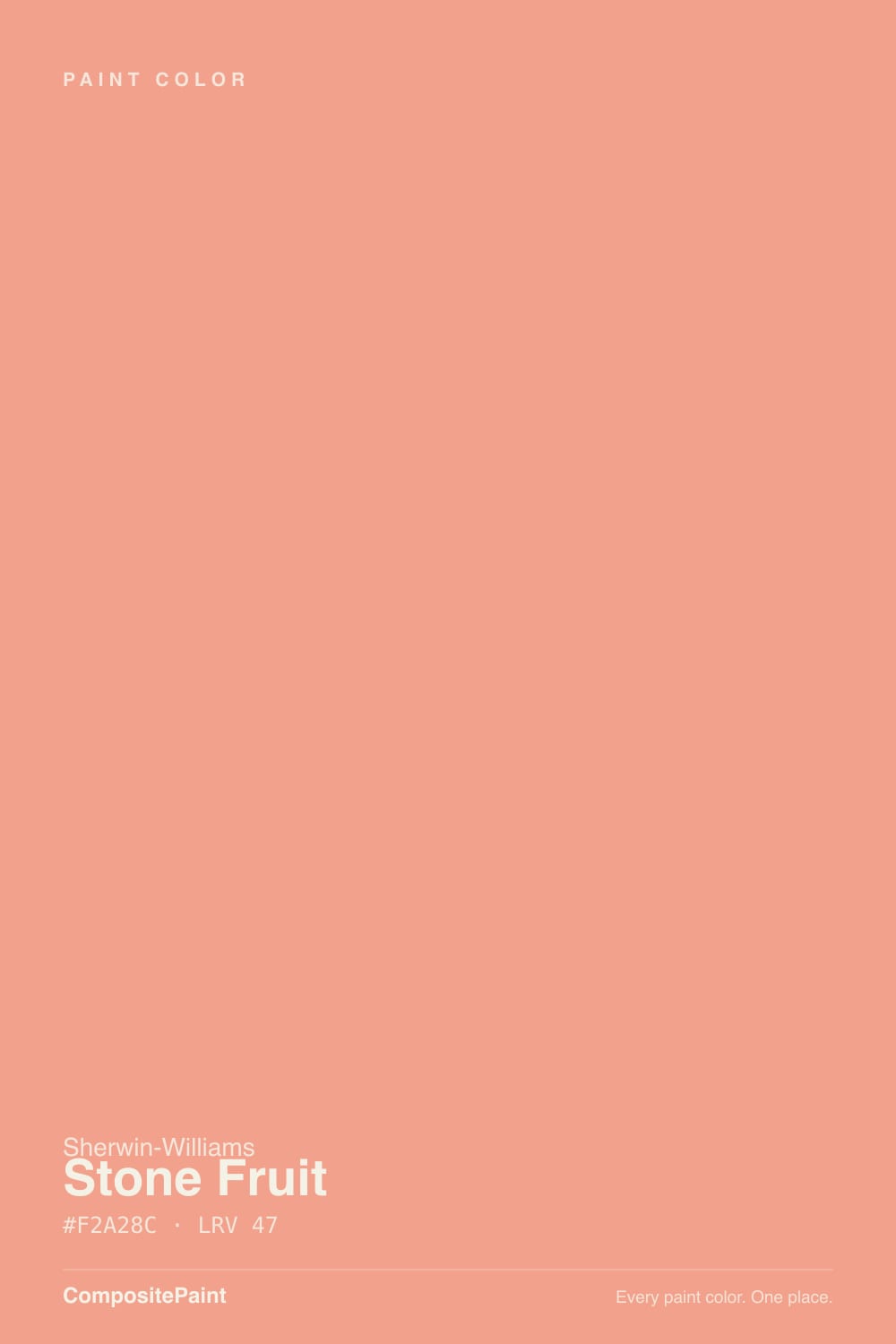
- 1Razzle Dazzle20
- 2Retro Pink38
- 3Stone Fruit47
- 4Pale Cherry Blossom61
- 5First Light76
The Fast Verdict
Stone Fruit is Sherwin-Williams' answer for shoppers who sampled a soft blush pink and watched it go gray and sad on the wall. At LRV 47 it holds real, visible peach-coral color — warm, clear, never muddy — without tipping into candy pink or Halloween orange. It is not a whole-house color and was never meant to be one; it is the confident single room or single wall that makes a neutral house feel considered.
Nurseries and kids' rooms that want warmth without going pastel-sweet · powder rooms and vanities · one accent wall in a room with real daylight · anyone who tried blush and got a cold, sad pink instead
You want a true neutral · the room runs on cool LEDs with little daylight · you're covering a whole open-plan main floor · you need a color that reads the same at 8am and 8pm
- A warm coral-peach that reads grown-up, not nursery-cute
- Holds real color even in flat light — doesn't wash out like the palest blush pinks
- Small rooms (powder rooms, vanities, one wall) take it beautifully
- Built-in complementary partner in sage green, plus warm wood and brass
- A genuine, considered alternative for anyone who found blush too cold
- Cool north light drains it toward a dull, dusty salmon
- Fights a stark, cool-white trim — needs a warm white partner
- Too much color for a whole open floor plan
- Can read young or nursery-specific if paired with pastel accessories instead of grown-up materials
What Color Is Stone Fruit, Really?
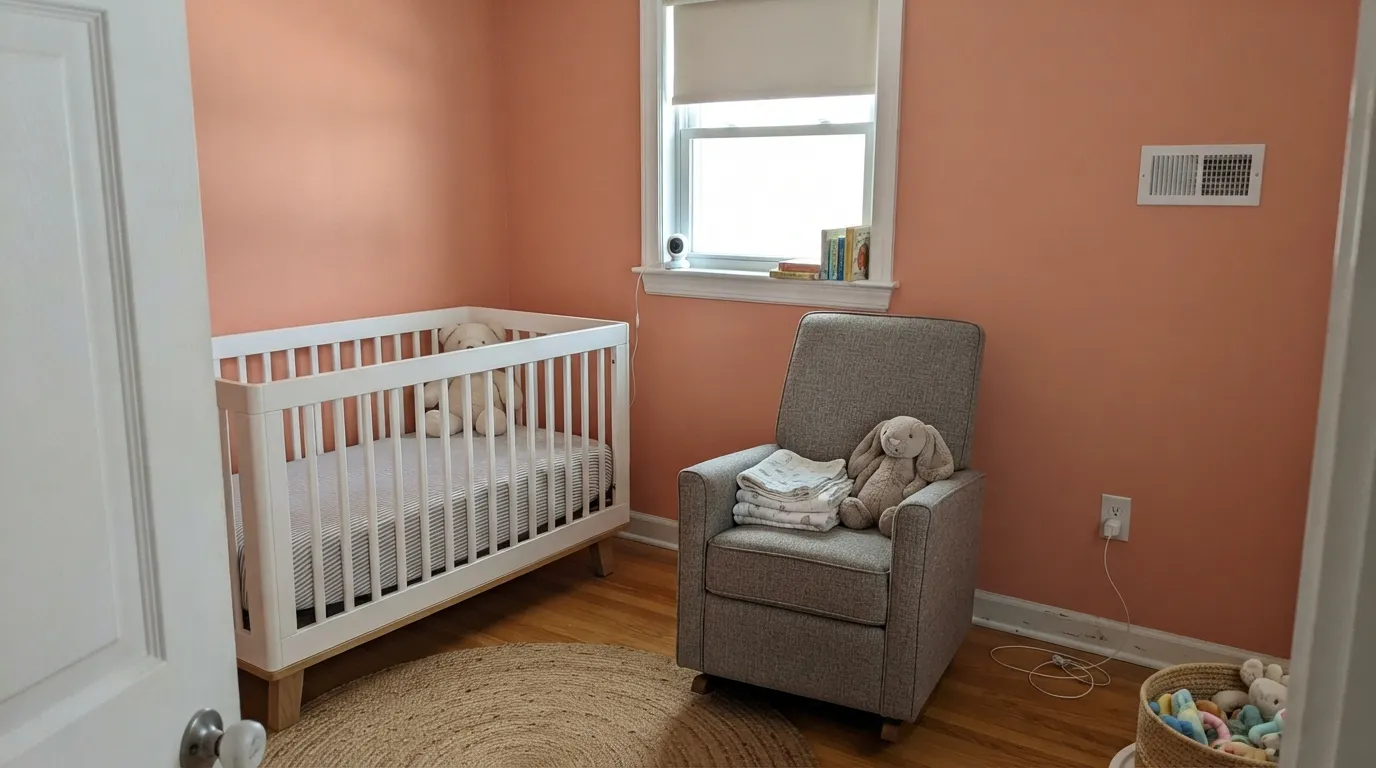
Stone Fruit is a warm peach-coral with a clean, un-muddy edge — closer to the flesh of a ripe nectarine than to a bubblegum or salmon pink. Sherwin-Williams actually files it in the Orange family on its own site (its hue angle sits in the high 30s), even though almost everyone who sees a chip of it calls it "pink." That tug-of-war is the color's whole personality: enough orange in the base to feel warm and grounded, enough pink lightness to feel soft instead of citrus-bold. It sits alongside Rose Pink and Full Bloom in Sherwin-Williams' own curated picks — built as a considered alternative to blush, not a trend color chasing a moment.
At LRV 47 it is a genuine mid-tone — deeper than the pale, barely-there pinks (First Light, Pink Shadow) and lighter than a true coral or terracotta. That depth is the point: paler peaches wash out in weak light and read like nothing happened, but Stone Fruit holds its color even on an overcast day. The trade-off is the one every mid-tone warm color makes — it needs the room to give something back. In flat, dim light it can sink toward a dusty, tired salmon instead of the clear peach on the fan deck.
Undertone in one line: peach first, a little coral warmth underneath, never true rose or mauve. If your sample looks pale and pretty but slightly gray, that is cool light doing exactly what cool light does to warm colors — not a flaw in the paint.
Where It Shines
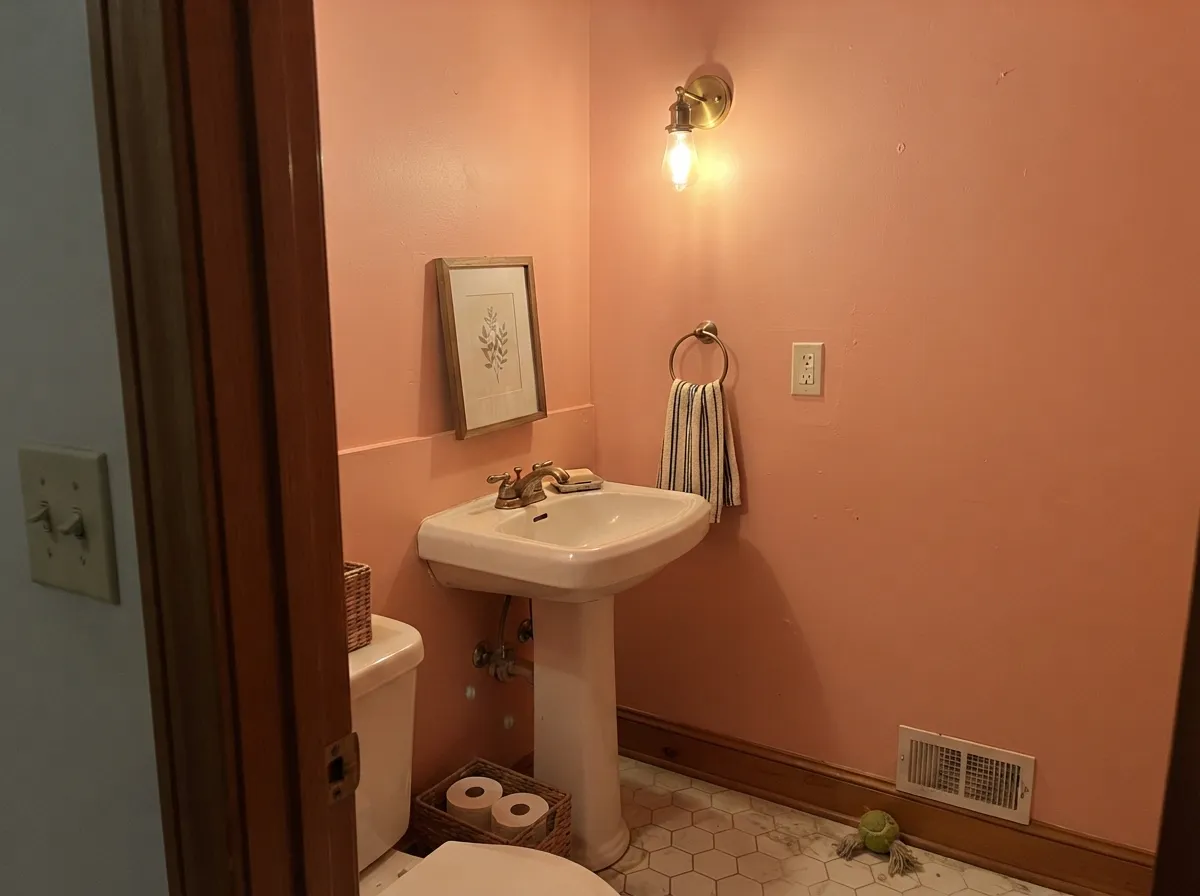
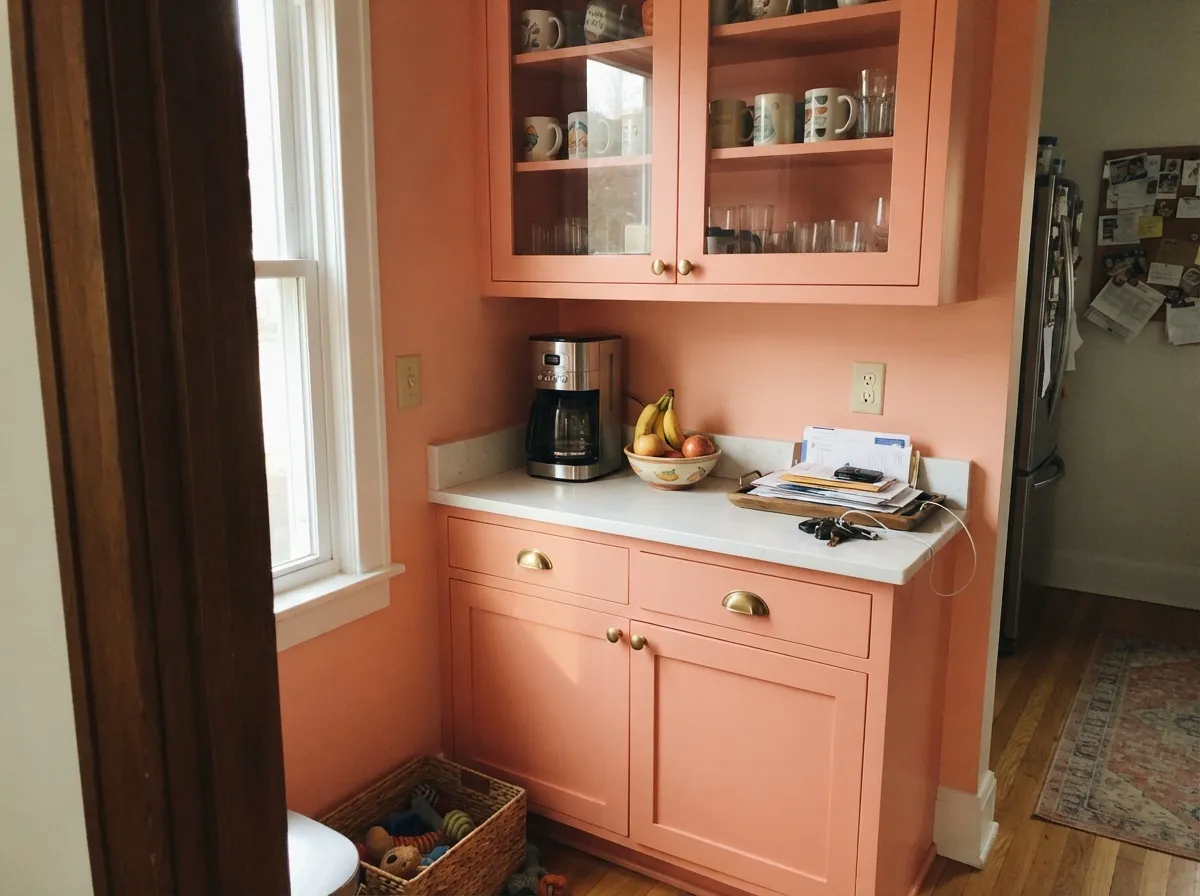
Give it real daylight and warm materials and it does exactly what a grown-up peach should: reads confident and considered, not sugary. It is at its best in doses — a nursery, a powder room, a single accent wall — where the color gets to be the whole point instead of fighting for attention across an entire floor plan. Brass hardware, warm wood, and sage green all bring out its best side.
Where It Fails
Almost every disappointed review of a warm mid-tone color like this comes down to one of three things, and Stone Fruit is no exception. None of them are the paint's fault — but if your room or your plan matches one of these, sample big before you commit.
Cool daylight drains the orange out of any peach and leaves a flat, slightly gray-salmon behind — this is the single most common complaint about colors in this family. Add warm 2700K bulbs, or if the room genuinely gets no direct sun, pick something with less riding on the light, like Vintage Tea Rose.
A bright blue-white trim (think a builder's contractor white) fights the warmth in Stone Fruit and makes the wall look slightly chalky and unfinished by comparison. Trim it in a warm white — White Dove, Swiss Coffee, Alabaster — and the whole room reads intentional instead of accidental.
This is a color built to be a decision, not a backdrop. Run it across a great room, kitchen, and hallway and it stops reading as "confident peach" and starts reading as "everything is pink now." Keep it to one room or one wall and let a neutral carry the rest of the house.
Room by Room
Warm without being sugary-sweet, and genuinely gender-neutral in a way pastel pink isn't. Paired with a sage green dresser or glider it reads considered, not themed. Eggshell wipes cleaner than matte for handprints.
Small rooms take a mid-tone color beautifully, and a windowless powder room lets you control the light entirely — put in a warm 2700K bulb and it stays peachy all day. Satin on a vanity, semi-gloss trim.
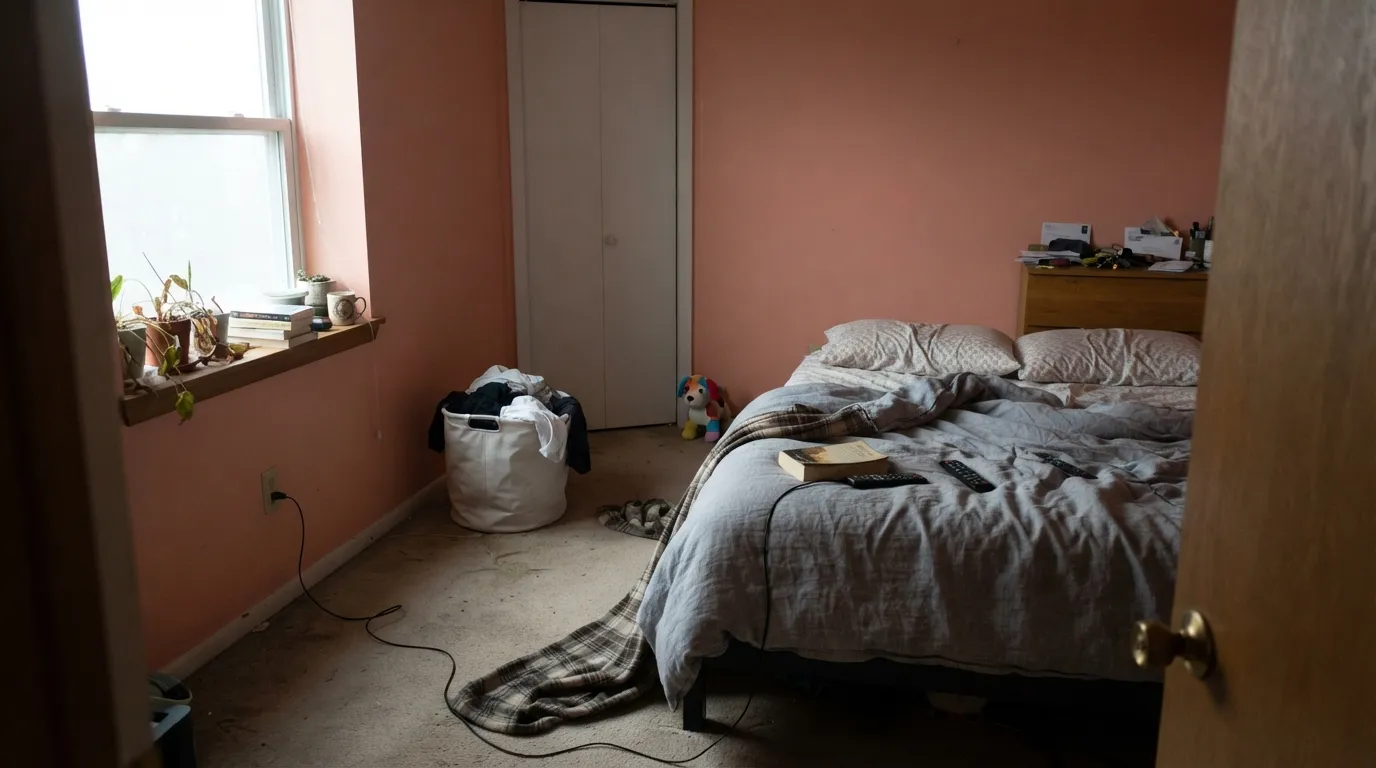
A guest room or kid's bedroom with a real window handles it well; a dim north-facing primary bedroom will drain it toward dusty salmon. Test the sample at the darkest hour of the day, not just at noon.
On cabinetry it is a genuinely unusual, pretty choice against white counters and brass pulls. Painting every kitchen wall Stone Fruit is a much bigger bet — keep it to one piece of furniture-grade cabinetry.
A sunlit entry can carry it well as a warm welcome. A windowless interior hallway lit only by a ceiling fixture is the wrong home for it — the color needs daylight to stay clear instead of muddy.
Too much color for a room people spend all day in, and too specific a peach for most furniture plans. Outdoors, full sun bleaches it toward a plain terracotta-adjacent stucco color — if you want that job, look at a real terracotta instead.
Your Light Is the Risk
Glows like ripe peach skin, warm and clear all day. Whole-room safe wherever it lands.
Cool daylight pulls the orange out and leaves a flat, dusty salmon. Sample big before committing.
Golden hour flushes it a deeper, richer coral; midday light calms it back to an even peach.
2700K lamps deepen it toward coral and it glows. Cool LEDs flatten it toward gray-pink — swap bulbs, not paint.
Most complaints about Stone Fruit are a light mismatch. Upload a photo of your actual room and see it on your walls — then ask for the same wall in north light or evening lamps before you buy a single sample.
Need It From Another Brand?
Any paint counter can custom-tint Sherwin-Williams SW 9699 directly. If you would rather stay in one brand's own deck, these are the closest stock matches, measured as ΔE2000. Under 2 is a difference you will not see on the wall.
| Brand | Closest color | ΔE | LRV | |
|---|---|---|---|---|
| Behr | Peach MimosaHDC-MD-18 · Behr | 0.9 | 47 | Color page → |
| Benjamin Moore | Monticello Peach018 · Benjamin Moore | 0.9 | 47 | Color page → |
| Valspar | Coral Reef2004-4A · Valspar | 2.2 | 46.8 | Color page → |
| PPG / Glidden | Coral SerenadePPG1193-5 · PPG / Glidden | 1.3 | 49 | Color page → |
| Glidden | Coral SerenadePPG1193-5 · Glidden | 1.3 | 49 | Color page → |
| Dutch Boy | Cabana Pink106-4DB · Dutch Boy | 0.9 | 46 | Color page → |
Similar Sherwin-Williams Colors
The nearest shades to Stone Fruit within Sherwin-Williams's own range, ranked by perceptual color distance — useful when you want the same look a touch lighter, darker, or warmer.
WCAG 2.1: AA is 4.5 : 1 for normal text, 3 : 1 for large text, AAA is 7 : 1.
Stone Fruit vs the Colors You're Also Considering
Every Stone Fruit sample board has the same rivals on it. The numbers show the real lightness gap — then it comes down to which risk you would rather live with.
Pick this when you want the peach to actually show up on the wall, not just whisper.
Sherwin-Williams SW 0070 · LRV 50Pink ShadowPick this for the softer, quieter blush-peach — Pink Shadow keeps the same warmth with less visible color.
Pick this for more depth and confidence — Stone Fruit is a full step darker and less pastel.
Clare PNT100-LT-26 · LRV 66PopPick this for a lighter, airier peach-coral that reads almost pastel.
Stone Fruit Coordinating Colors
The rule for coordinating with Stone Fruit: warm whites, sage or olive greens, and one deeper warm accent to ground it — and keep true cool grays and icy blues away from it. These are the partners that keep showing up in rooms that work:
Why Sherwin-Williams Files This Under Orange
Every color has a hue angle buried in its numbers, and Stone Fruit's sits in the high 30s — technically inside the orange band, which is why Sherwin-Williams' own site lists it as an orange rather than a pink. What that number misses is lightness: at LRV 47 with this much white mixed in, the orange reads as warmth rather than as citrus color, and the eye files it as "peach" or "pink" long before it files it as "orange."
It's the same reason a fair-skinned peach and a bright pumpkin can share a hue family and look nothing alike on a wall. Trust what your eye tells you over the family label — the family bucket is a manufacturing convenience, not a styling instruction.
Stone Fruit With Wood Tones and Floors
Warm wood is the easy answer here: honey oak, walnut, and butcher block all sit comfortably with Stone Fruit because both are working the same warm side of the wheel. It's one of the few pinks that actually improves next to golden oak floors instead of fighting them — most warm pinks read too pastel-sweet against honey wood; Stone Fruit's extra orange keeps it grounded.
Cool gray or ashy floors are the pairing to test first. They pull the warmth out of the color by contrast, and the wall can read a little too candy-pink against a cold floor. A jute or wool rug in a warm tone closes that gap in most rooms.
Three Ready Palettes Built on Stone Fruit
A color is never alone on the wall. These are complete combinations in the 60-30-10 pattern, with the reason each one holds together. Every one opens in the visualizer.
Peach and sage are true complements, and both are muted enough to feel calm instead of themed. White Dove trim keeps the room from feeling like a candy box.
Try this palette in your roomDrenching a small windowless room in Stone Fruit works because you control the light with a warm bulb; the deeper San Antonio Rose vanity grounds the color instead of letting the whole room float in pastel.
Try this palette in your roomA neutral shell keeps the risk to one wall; Cinnamon Slate's dusty mauve-red gives the room a grounding dark note so Stone Fruit doesn't feel like the only decision made.
Try this palette in your roomStone Fruit FAQ
Is Stone Fruit pink or orange?
Both, technically — Sherwin-Williams files it in its own Orange family based on the hue angle, but at LRV 47 with this much lightness, almost everyone who sees it on a wall calls it a peach-pink. Think ripe nectarine skin rather than a true orange.
Is it good for a nursery?
Yes — it's one of its best jobs. It's warm and gender-neutral in a way pastel pink isn't, and it pairs naturally with sage green without looking like a theme. Use eggshell so handprints wipe off.
What trim color goes with Stone Fruit?
A warm white — White Dove, Swiss Coffee, or Alabaster. A stark, cool-toned white trim fights the peach and makes the wall look chalky. Semi-gloss on the trim, eggshell on the walls.
Will it look too pink or too orange in my room?
That depends entirely on your light. South and east daylight keep it a clear, balanced peach; cool north light or cool LED bulbs pull it toward a duller, more gray-salmon pink. Sample it on the actual wall, at the darkest hour of your day, before deciding.
Can I use it in a bathroom?
In a powder room or on a vanity, yes — small rooms handle a color this confident well. In a larger bathroom with cool gray or blue tile, test carefully first; the cool tile will fight the warmth.
Can I paint a whole house or exterior in it?
No — this is a doses color. A whole open floor plan turns it from a confident peach accent into "everything is pink," and full sun outdoors bleaches it toward a plain terracotta-adjacent stucco tone. Keep it to one room or one wall.
Have you painted with Stone Fruit?
Rate it — one tap helps the next reader decide.
Ask a Question