Begonia
The coral-red Sherwin-Williams keeps on its own red shortlist, reviewed honestly: the light that makes it glow, the room it overwhelms, and what to paint instead.

Jessica has spec'd whites and neutrals for more than 300 rooms and keeps a sample wall of painted drawdowns in her studio. Every color review is checked against real reader rooms in the comments and re-tested when a formula changes. About the testing process →
- 1Rumors8
- 2Cinnamon Slate19
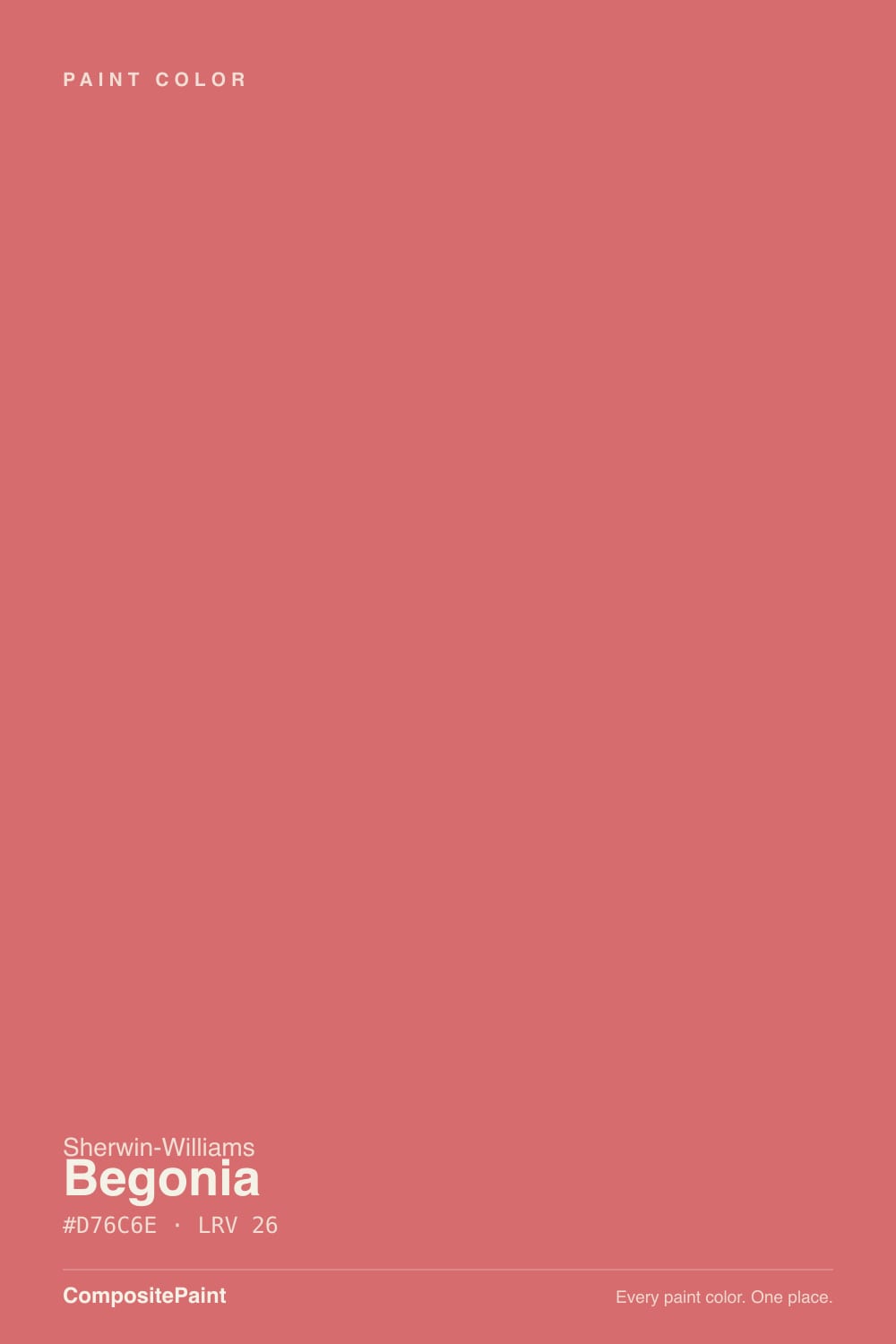
- 3Begonia26
- 4Fresno32
The Fast Verdict
Begonia is coral wearing a red's confidence: pink, orange and red all show up in it, which is why it reads as a happy, welcoming color instead of a shy pastel. It is not a wall-of-the-house color and was never meant to be — Sherwin-Williams itself files it as an accent, and the reviews that go wrong are almost always someone who painted four walls with a color built for one door. In full sun on a front door or inside a small powder room, it is genuinely hard to beat.
One front door · a powder room or small accent wall · a kids' room or playroom wall in doses · a kitchen island or cabinet run
You want a whole-room or whole-house color · your exterior brick or siding already reads orange-red · the room only gets cold north light · you actually want a true red, not a pink-leaning coral
- Genuinely cheerful coral-red without reading as novelty pink
- Confident and finished in small doses — one door, one wall, one run of cabinets
- Deep enough (LRV 26) to hold its saturation instead of washing pastel
- Warms up a flat white or gray exterior instantly
- Reads more red in warm light, more coral-pink in cool light — genuinely versatile in a controlled way
- Overwhelming and exhausting across four full walls
- Fades toward a flat, dusty mauve-pink in cold north light
- Competes rather than coordinates next to orange-brick or terracotta exteriors
- A bold accent decision, not a forever, repaint-never color
What Color Is Begonia, Really?
Begonia is a coral-red with three undertones working at once — pink, orange and a real dose of red — which is why it photographs differently depending on what is next to it. Sherwin-Williams files it in the Red family, and on a bright wall in full light it does read red; drop the light or the saturation and the pink comes forward fast. It is named for the flower for a reason: it has that slightly artificial, saturated-petal brightness rather than the muted brick-red of a barn door.
At LRV 26 it is a genuine color, not a wash — it holds its punch in a bright room instead of fading to pastel, and it needs real coverage: expect two coats minimum over anything light, and a tinted gray primer first if you are covering a darker existing color. That depth is also what keeps it from reading as bubblegum pink; there is enough red in the mix to anchor it.
Undertone in one line: warm coral first, pink second, true red only in strong direct light. If your sample looks dusty and mauve rather than bright coral, that is cool daylight draining the orange out of it — not a bad can of paint.
Where It Shines
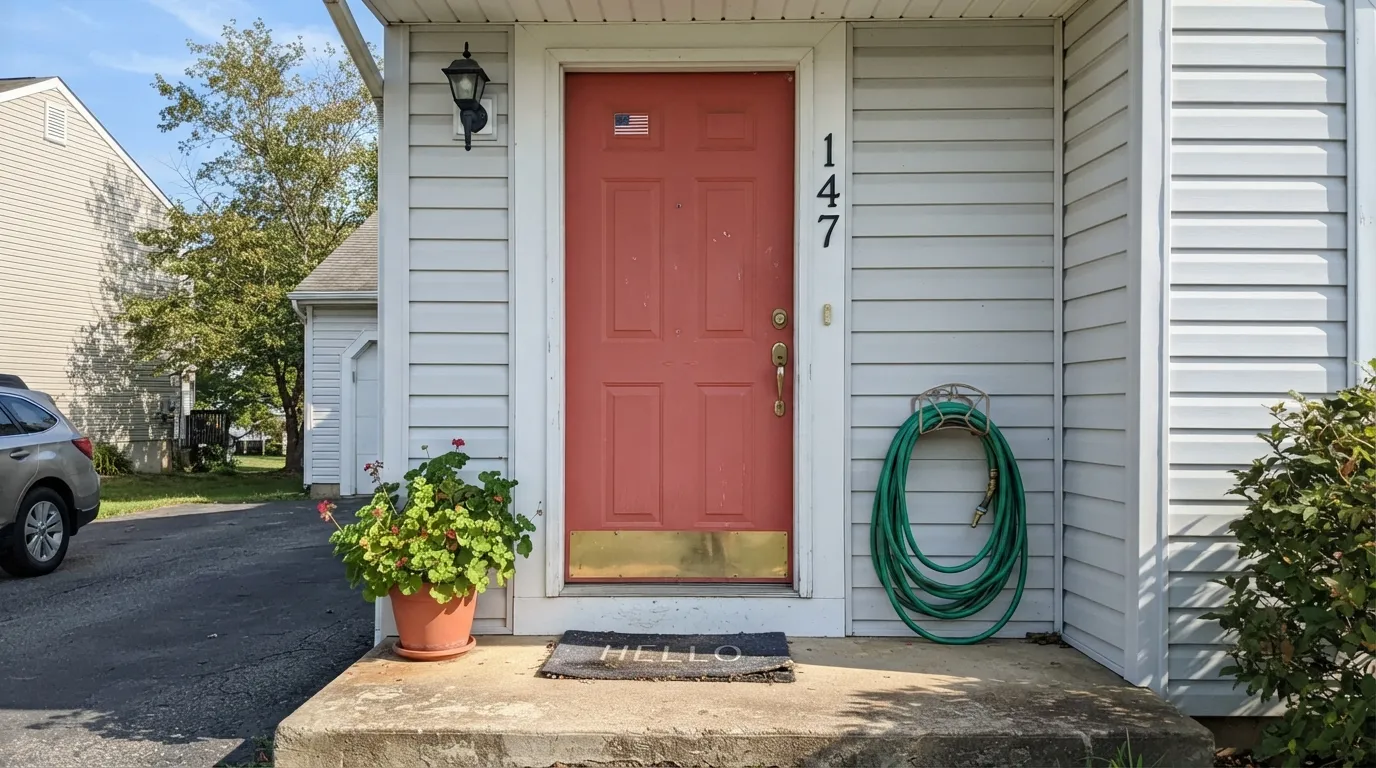
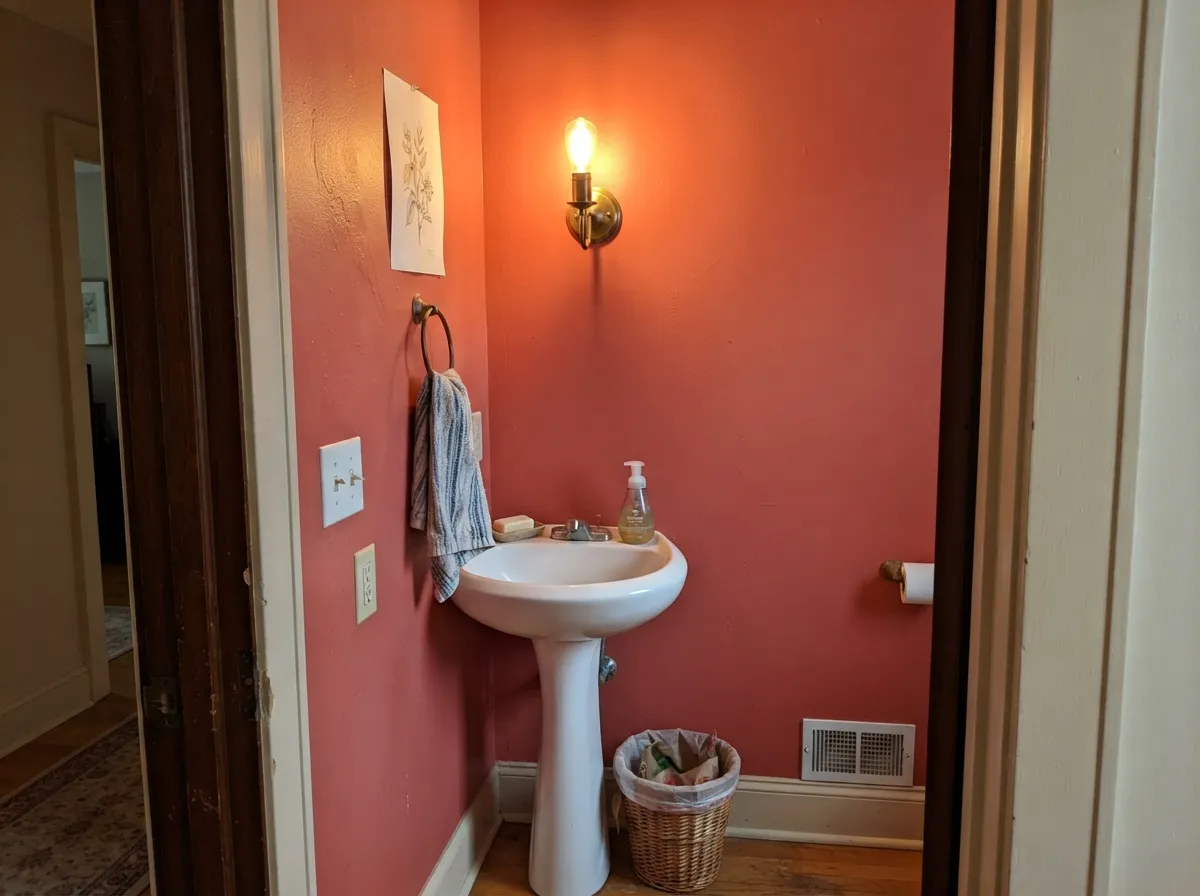
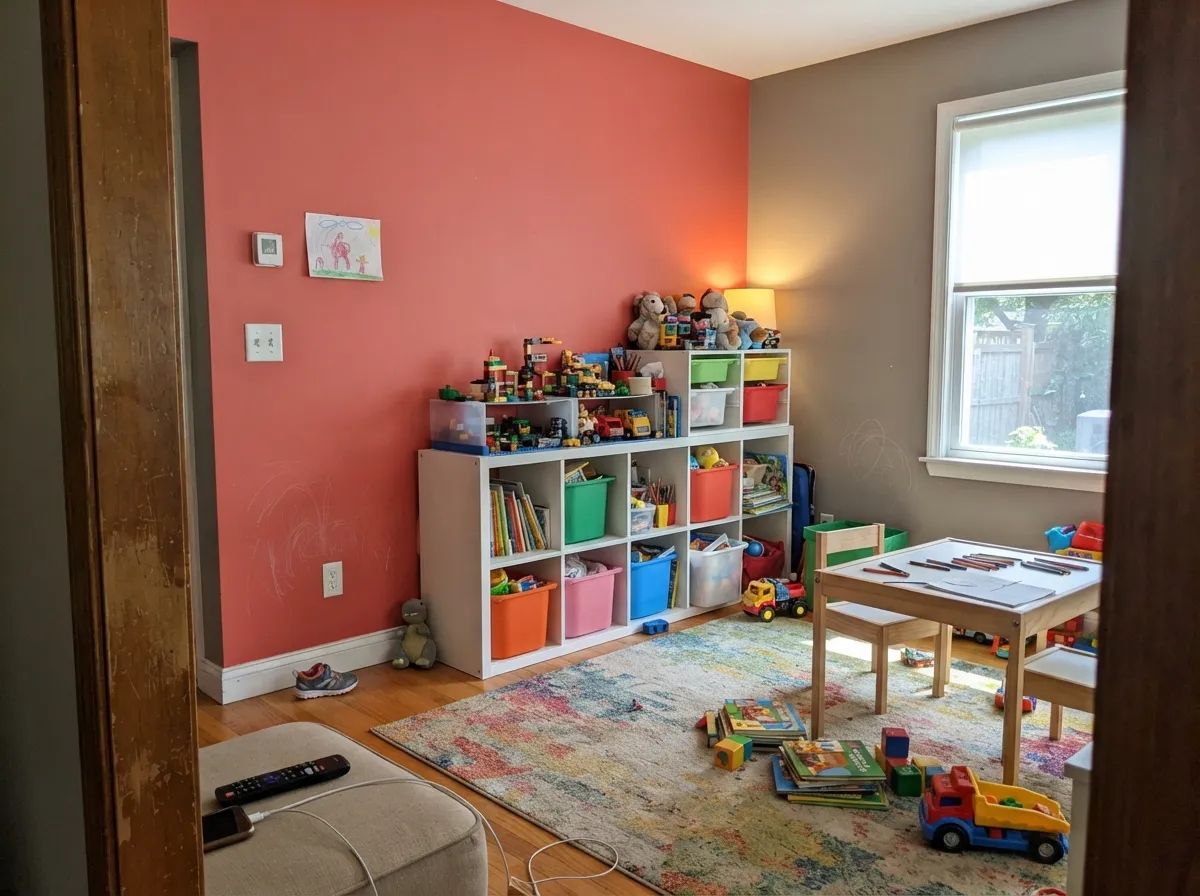
Give it a single surface and real sun and Begonia does exactly what it promises. A front door in full afternoon light reads cheerful and confident without tipping into novelty pink — it is one of the few reds that reads friendly rather than formal. Indoors, its natural home is the small commitment: a powder room, a playroom accent wall, a run of kitchen cabinets, where the color gets to be the whole point of the room without asking four walls to carry it.
Where It Fails
Almost every disappointed review of Begonia comes down to asking it to do a job it was never built for. None of these are the paint's fault — but if your plan matches one of them, this is the wrong color, or at least the wrong dose of it.
Begonia is built as an accent, and Sherwin-Williams markets it that way for a reason: on one door or one wall the coral reads intentional and happy, but on all four walls the same saturation becomes exhausting fast. If you love the color, use it in one dose and let a neutral carry the rest of the room.
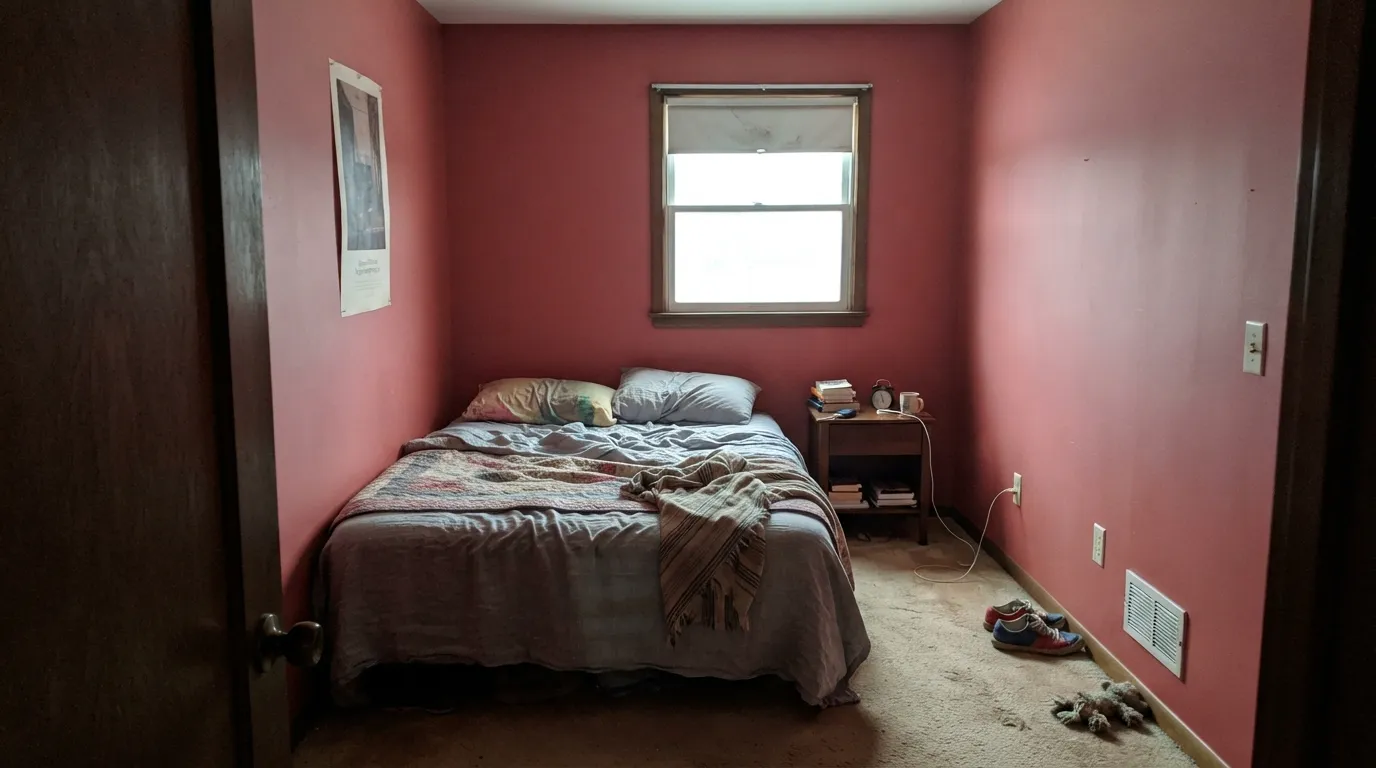
The orange in Begonia is what keeps it reading coral instead of pink, and cool north daylight is exactly the light that strips orange out of a color. In a dim, cold room it drifts toward a flat, dusty mauve-pink — still a color, just not the cheerful one on the fan deck. Warm bulbs and south or west light bring the coral back.
Two different warm reds sitting side by side rarely reads as a coordinated choice — it reads like an accident. A coral front door on a house with orange-toned brick or a terracotta roof competes with itself instead of contrasting. Either match the brick's exact undertone closely or go for real contrast with a crisp white or charcoal door instead.
Room by Room
Full sun brings out the red side and keeps the pink in check; against white, gray or greige siding it reads confident and welcoming rather than novelty. Exterior semi-gloss enamel, two coats minimum.
Small windowless rooms are exactly where a saturated accent color earns its keep — there is no adjacent wall to argue with. Pair with a warm white trim and brass or matte black hardware for a finished, deliberate look.
On an island or a single run of lower cabinets under a neutral wall color it is genuinely cheerful without overwhelming a room people cook in daily. A full kitchen of Begonia cabinets is a much bigger, riskier bet.
Bold and cheerful without reading juvenile the way a true hot pink would. Use it on one wall or as trim around a chair rail rather than floor to ceiling, so the room can still calm down at bedtime.
One wall behind a sofa or a dining table reads like a real design decision. Keep the surrounding walls and trim in a quiet neutral so Begonia stays the single loud note in the room.
This is a color built for one surface, not a facade or a floor plan. Save it for the door, the accent wall, or the cabinets, and let a neutral do the heavy lifting everywhere else.
Your Light Is the Risk
Full, warm daylight is where the red comes forward and the color reads confident coral, not pastel pink. Best light for a front door.
Cold, flat daylight strips the orange out and leaves a dusty, muted mauve-pink. Test a sample on the actual wall before committing a whole surface.
Cooler and pinker in the morning, warmer and more red by late afternoon. Most people who choose it on purpose like the movement.
Warm 2700K bulbs deepen it toward true red at night. Cool white LEDs wash it flatter and pinker — swap the bulb before you swap the paint.
Most complaints about Begonia are a light mismatch. Upload a photo of your actual room and see it on your walls — then ask for the same wall in north light or evening lamps before you buy a single sample.
Need It From Another Brand?
Any paint counter can custom-tint Sherwin-Williams SW 6599 directly. If you would rather stay in one brand's own deck, these are the closest stock matches, measured as ΔE2000. Under 2 is a difference you will not see on the wall.
| Brand | Closest color | ΔE | LRV | |
|---|---|---|---|---|
| Behr | Strawberry TaffyP150-5A · Behr | 3.0 | 26 | Color page → |
| Benjamin Moore | Deco Rose1328 · Benjamin Moore | 4.6 | 27 | Color page → |
| Valspar | Rouge Red1007-1B · Valspar | 3.1 | 28.8 | Color page → |
| PPG / Glidden | Mexican Chile1186-5 · PPG / Glidden | 3.0 | 26 | Color page → |
| Glidden | Legacy Rose10YR 26/442 · Glidden | 1.2 | 26 | Color page → |
| Dutch Boy | Preppy Pink204-5DB · Dutch Boy | 3.4 | 27 | Color page → |
Similar Sherwin-Williams Colors
The nearest shades to Begonia within Sherwin-Williams's own range, ranked by perceptual color distance — useful when you want the same look a touch lighter, darker, or warmer.
WCAG 2.1: AA is 4.5 : 1 for normal text, 3 : 1 for large text, AAA is 7 : 1.
Begonia vs the Colors You're Also Considering
Every Begonia sample board has the same rivals on it. The numbers show the real lightness gap — then it comes down to which risk you would rather live with.
Pick this for the fuller coral punch when a single small dose isn't enough color.
Sherwin-Williams SW 6585 · LRV 30Coming up RosesPick this if you want the same warm-rose family dialed back one notch — a little softer, a little easier as a full accent wall.
Pick this for the friendlier, more playful cousin — Begonia reads happy where Red Tomato reads classic.
Sherwin-Williams SW 6607 · LRV 14Red TomatoPick this if you actually want red, not a pink-leaning coral — Red Tomato skips the pink almost entirely.
Begonia Coordinating Colors
The rule for coordinating with Begonia is simple: give it quiet, warm neutrals to stand on, and reach for a muted green if you want a second color rather than a second neutral. It gets louder, not better, next to other saturated warm colors, so let it be the one loud note in the room.
Begonia as a Front Door Color
This is where the color is used most, and it earns the spot. Against white, light gray or greige siding, Begonia reads cheerful and welcoming rather than gimmicky — full sun keeps the red side dominant, so it avoids the cotton-candy look a lighter pink would risk on an exterior. It photographs well against both traditional and modern facades because the coral has enough red weight to feel grounded.
The one exterior pairing to think through first is brick or roofing with an orange undertone. Two warm reds sitting side by side rarely reads as intentional — it reads like they were never coordinated. If the house has orange-leaning brick, either test Begonia directly against it in daylight before committing, or choose a door color with real contrast instead, like a crisp white or a near-black.
Begonia With Wood Tones and Metals
Wood and metal are mostly on Begonia's side. Warm oak, walnut and butcher block share its temperature, so they make the color read like a deliberate warm scheme rather than a novelty accent. Brass and unlacquered metal hardware add to that warmth; matte black is the easy, foolproof pairing that grounds the coral without competing with it.
The one flooring or surface that argues with Begonia is anything cool: gray-washed wood, polished gray tile, or chrome fixtures. Cool surfaces pull the warmth out of the color the same way cold daylight does, leaving it looking flatter and pinker than intended. It is not a dealbreaker — it just means testing a sample against the actual floor or counter before committing a whole door or wall.
Three Ready Palettes Built on Begonia
A color is never alone on the wall. These are complete combinations in the 60-30-10 pattern, with the reason each one holds together. Every one opens in the visualizer.
A soft warm white keeps the coral from feeling loud on the facade, and near-black shutters give the eye one dark anchor so the door reads as a deliberate design choice, not a stray bright color.
Try this palette in your roomA small windowless room takes full saturation well since there is no neighboring wall to argue with. Alabaster trim keeps the edges crisp and warm, and near-black hardware gives the coral one grounded, grown-up note.
Try this palette in your roomCoral and sage sit close to opposite each other on the color wheel, so the muted green calms the coral just enough to keep a kids' room bright without becoming overstimulating. Agreeable Gray carries the rest of the room quietly.
Try this palette in your roomBegonia FAQ
Is Begonia a pink or a red?
Both, depending on the light. Sherwin-Williams files it under Red, and in strong direct sun it does read red. In softer or cooler light the pink and orange in its undertone come forward and it reads as a bright coral-pink. It is never a true, formal red the way SW Heartthrob is.
Is Begonia good for a front door?
Yes — it is one of the better jobs for this color. Full daylight keeps it reading confident and coral rather than pastel, and it pairs easily with white, gray or greige siding. It reads best with black or dark trim as a grounding note.
What white trim goes with Begonia?
A soft warm white like Alabaster keeps the pairing cohesive without competing; a bright cool white will make the coral look slightly muddier by contrast. Semi-gloss trim against eggshell or matte Begonia gives the sharpest, cleanest line.
Can I paint a whole room in Begonia?
You can, but most people who try regret it — the color is built and marketed as an accent, and four full walls of it can feel overwhelming fast, especially without much daylight. It is much more forgiving as one wall, one door, or a run of cabinets.
How many coats does Begonia need?
Plan on two coats minimum over a light existing color, and a tinted gray primer first if you are covering something dark or saturated. At LRV 26 it has real pigment load, and skipping primer over a dark wall usually means a third coat anyway.
Will Begonia fade in direct sun on an exterior door?
Like any strongly pigmented warm color, a south- or west-facing exterior door will fade faster over years than a shaded one — that is true of nearly every saturated red or coral exterior paint, not something specific to this color. A quality exterior enamel and a fresh coat every several years keeps it looking crisp.
Have you painted with Begonia?
Rate it — one tap helps the next reader decide.
Ask a Question