Dream I Can Fly
The saturated sea-blue everyone pins for a kid's room, reviewed honestly: the rooms it makes, the rooms it wrecks, and why two coats will not cover it.

Jessica has spec'd whites and neutrals for more than 300 rooms and keeps a sample wall of painted drawdowns in her studio. Every color review is checked against real reader rooms in the comments and re-tested when a formula changes. About the testing process →
- 1Salamander6
- 2Hidden Gem14
- 3Dream I Can Fly31
- 4Green Meets Blue36
- 5Wythe Blue48
The Fast Verdict
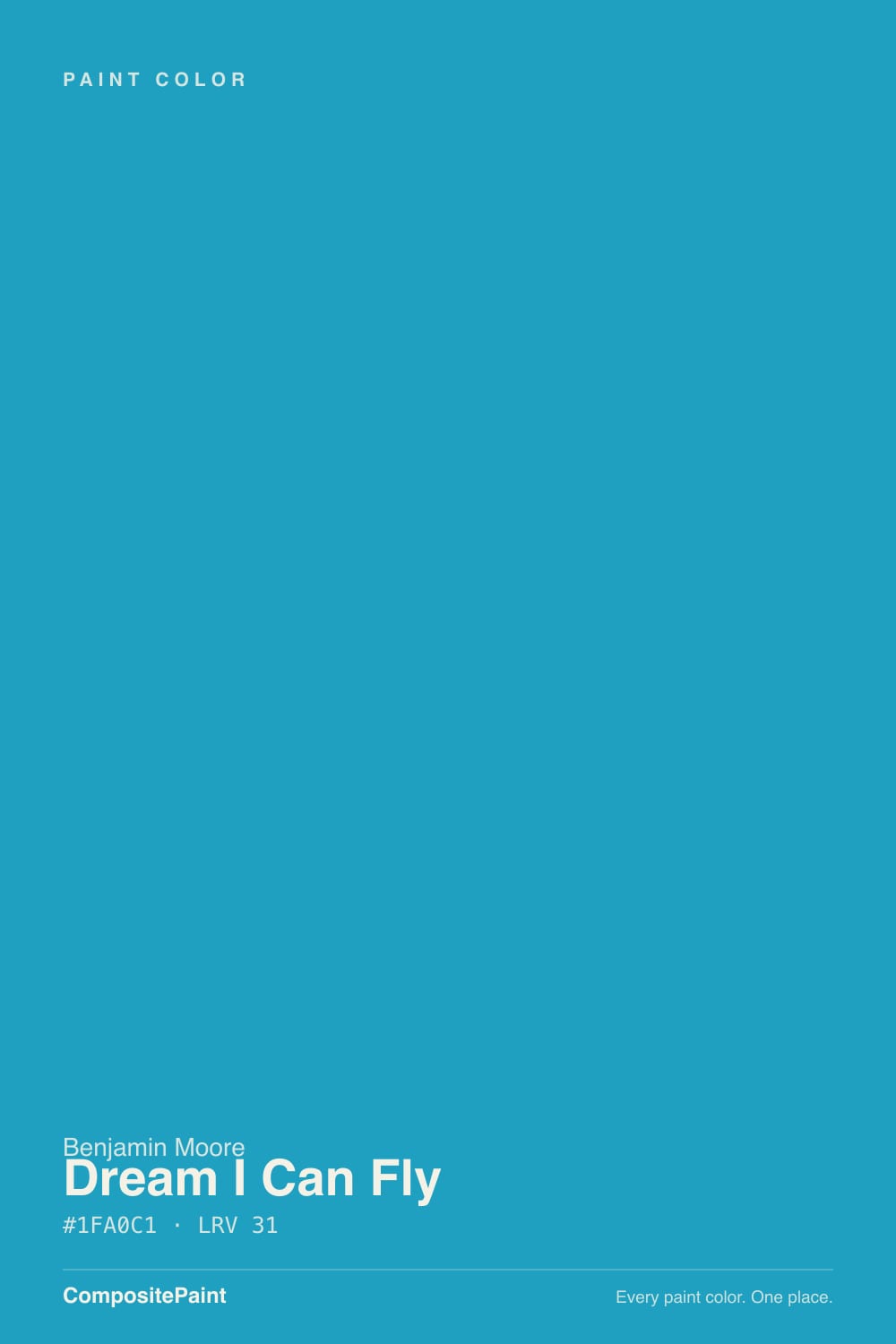
Dream I Can Fly is a full-strength sea blue — cyan with just enough green to read like pool water, and no gray at all to calm it down. That is the whole review in one sentence: it is unmuted. In a playroom, a small bathroom, or on one wall behind a bunk bed it is genuinely joyful and costs forty dollars. On four bedroom walls it turns into a swim-club locker room, and at LRV 31 it takes light out of the room instead of adding it.
Playrooms and craft rooms · one accent wall in a kid's or teen room · small bathrooms, powder rooms and laundry rooms · a front door on a white or gray house
You wanted a soft coastal aqua · the room is a dim north-facing bedroom · you need the space to feel bigger and brighter · you are painting to sell
- Real, undiluted sea blue — no gray, no apology, no muddy middle
- The rare kids' color that is genuinely gender-neutral and not babyish
- Small rooms and single walls turn expensive-looking for one gallon
- Holds its blue-green identity in full sun instead of going dusty
- A Classics-collection color, so it will still be mixable in ten years
- Full chroma with no gray — four walls read institutional fast
- LRV 31 makes a room darker, which is the opposite of what buyers expect
- Poor hide: tinted primer plus two coats, or three coats, and touch-ups flash
- Refuses to sit next to warm greige, tan carpet or golden beige
What Color Is Dream I Can Fly, Really?
A saturated cyan — blue with a real dose of green in it, and almost no gray. Benjamin Moore files it as a sea blue in the Classics collection, and the sea reference is accurate in the tropical-postcard sense, not the foggy-New-England sense. Most colors people call aqua on Pinterest are grayed or lightened versions of this idea; Dream I Can Fly is the undiluted one. That is why it photographs so well and why it surprises so many people on the wall.
At LRV 31 it is a genuine mid-depth color, which is the fact most buyers get wrong. Bright and light are not the same thing: this reflects less than a third of the light that hits it, so a room painted top to bottom in it gets darker, not cheerier. Combine that with the chroma and you get the classic scale effect — a 2-inch chip reads happy, a 12-foot wall reads intense, and four walls read like a facility. Sample big or sample on one plane only.
Undertone in one line: green-leaning blue, full strength — never gray, never navy. If your sample looks deeper and greener than the chip, that is warm lamplight; if it looks electric and almost neon, that is a cool LED. Both are the same paint reacting honestly to your bulbs.
Where It Shines
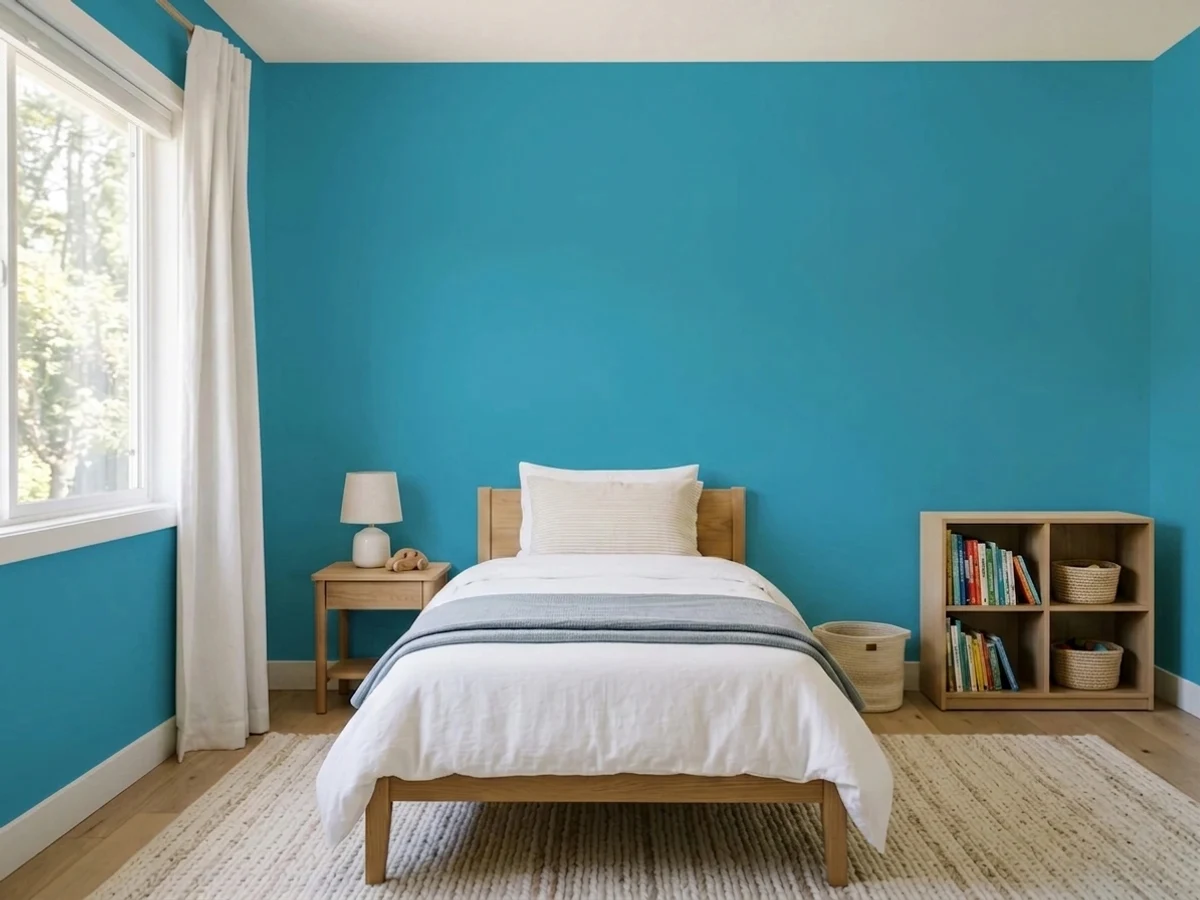
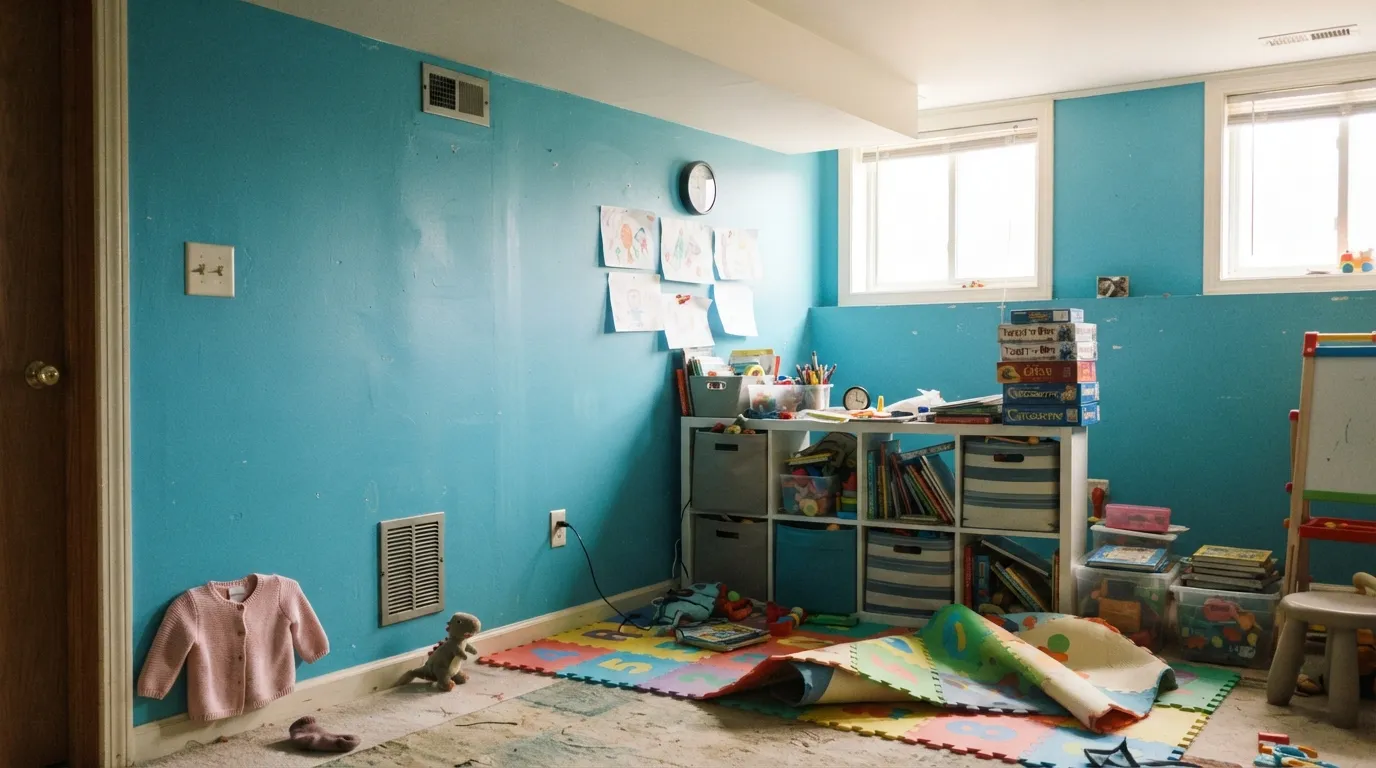
This color is a specialist, and inside its specialty it is very hard to beat. Playrooms are its home: the whole point of a play space is energy, and a saturated blue-green delivers it without the sugar-rush of a red or the headache of a bright yellow. Its second job is the small commitment — a powder room, a laundry room, a set of built-in toy cubbies, a bunk-bed wall — where the intensity becomes a feature because you are only in the room for a while. Give it a bright warm white, natural wood, and one navy anchor and it reads deliberate instead of loud.
Where It Fails
The bad reviews on this color are remarkably consistent, and every one of them was predictable from the chip. None of these are defects in the paint — they are mismatches between what people expected a happy blue to do and what a full-chroma mid-depth blue actually does.
This is not a beach-house neutral. There is no gray in it to take the edge off, so what looks like sea glass on the chip lands closer to pool tile at wall scale. If your reference photos are hazy, weathered and a little faded, you want Peacock Blue or a grayed teal — not this. Buying this one and hoping it calms down after it dries is the single most common regret.
LRV 31 means the walls absorb roughly two-thirds of the light. In a north-facing kid's bedroom with one window, the room is noticeably dimmer after the second coat and goes murky sea-green by late afternoon. Bright refers to the color's saturation, not to the room's light level — they are opposite properties here.
Saturated cyans lean on colorants with weak hide, and they go into a deep base with little white in it. Over a builder-white wall expect patchy, cloudy coverage after two coats, visible roller flashing at the laps, and touch-ups that dry as halos. Budget a gray-tinted primer plus two finish coats, or three finish coats of a high-hide line — and keep a cut-in wet edge, because this color shows every stop.
Room by Room
Full walls are fine here, and this is the one room where that is true. Play spaces are supposed to feel awake, the color is genuinely gender-neutral, and it reads as a decision rather than a theme — no cartoon border required. Eggshell so crayon and sticky hands wipe off, and keep the ceiling a bright warm white so the room does not close in.
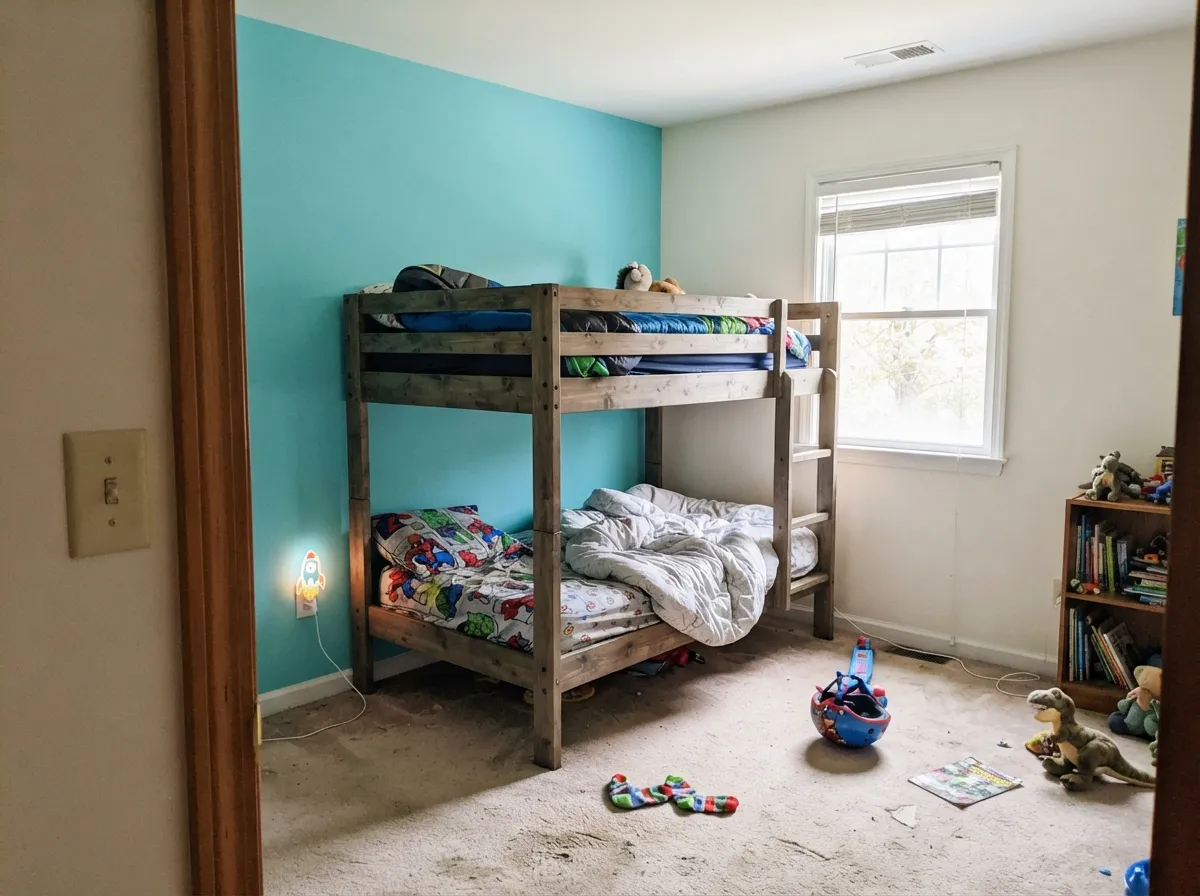
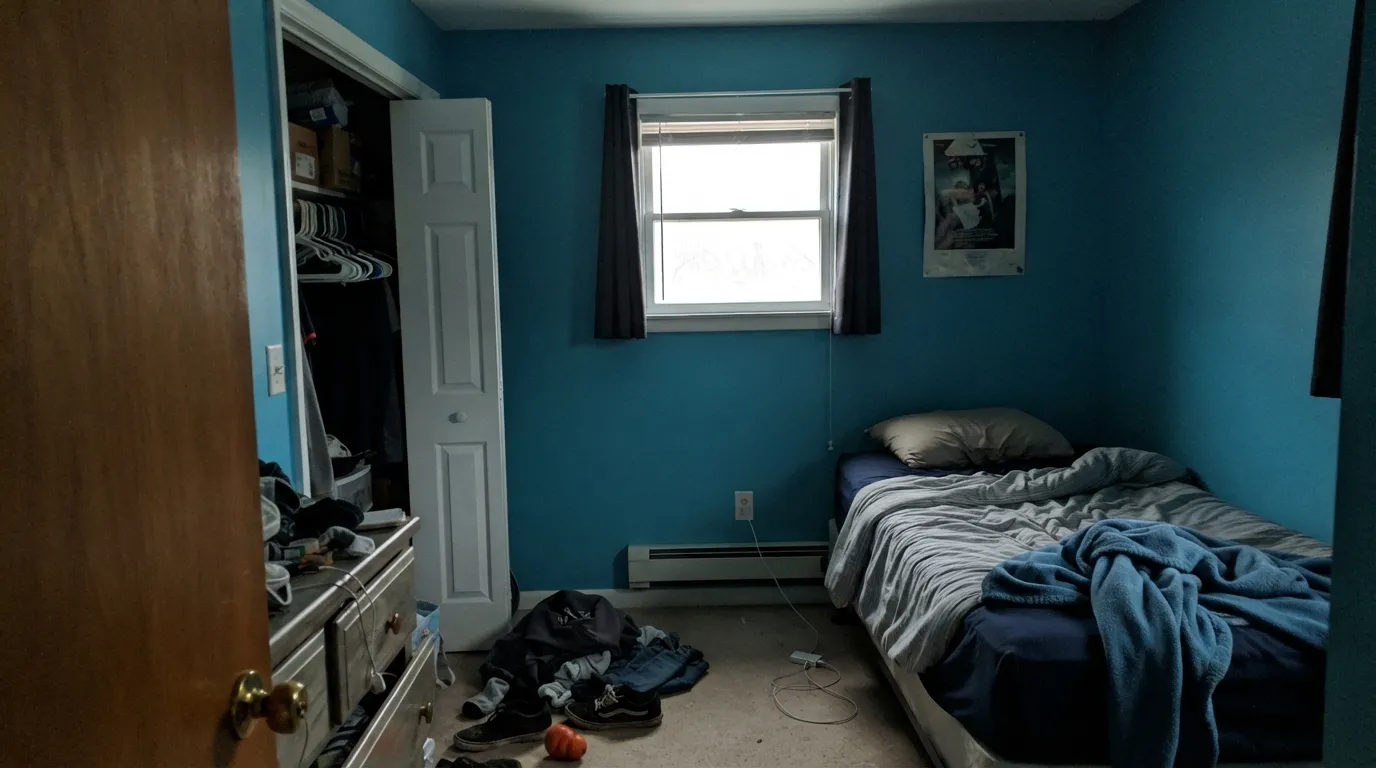
Sleep researchers and designers land in the same place: high-saturation color belongs in play space, not sleep space. Put it on the headboard wall, the bunk frame, the closet doors or the built-in desk, keep the other three walls a soft white, and you get the color a kid asks for without wiring the room for 8pm. It also survives the taste change better — repainting one wall in four years is a Saturday, not a project.
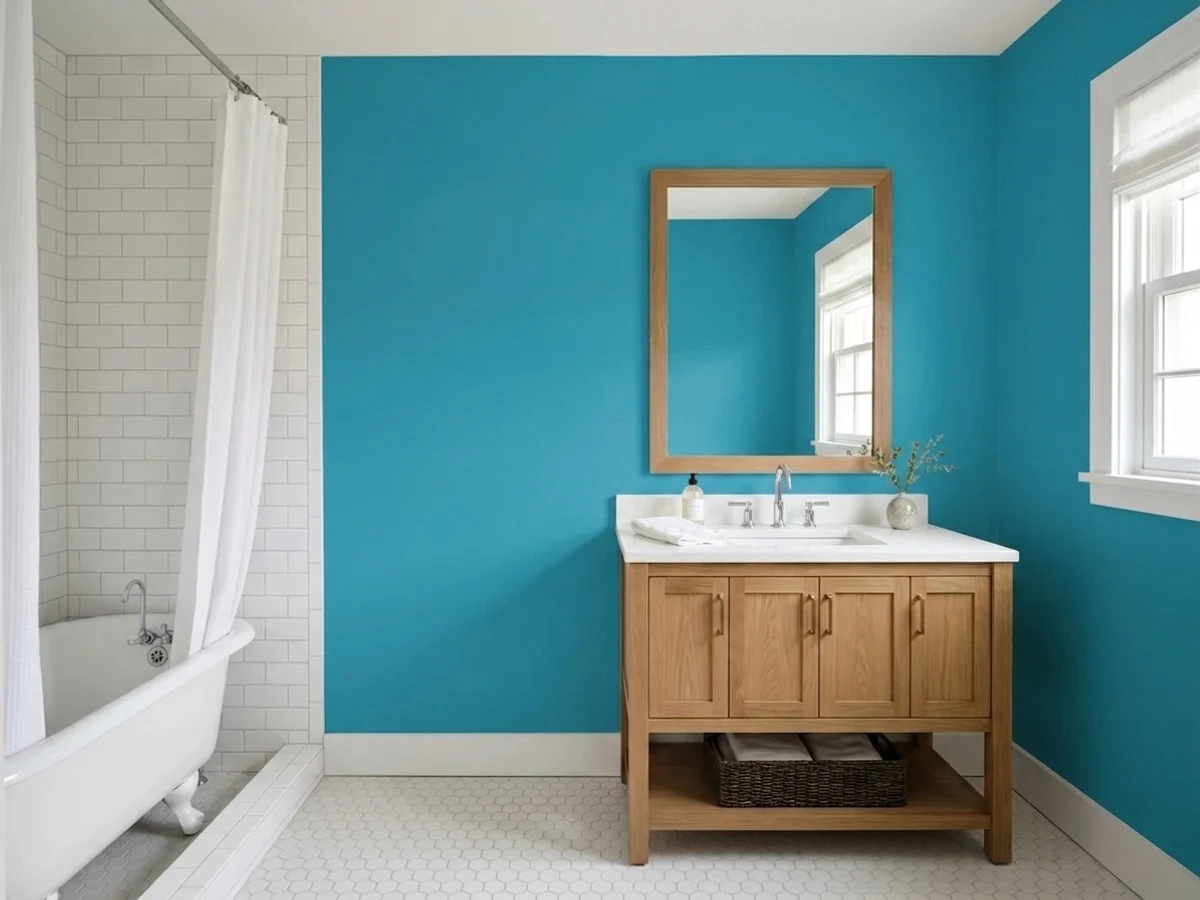
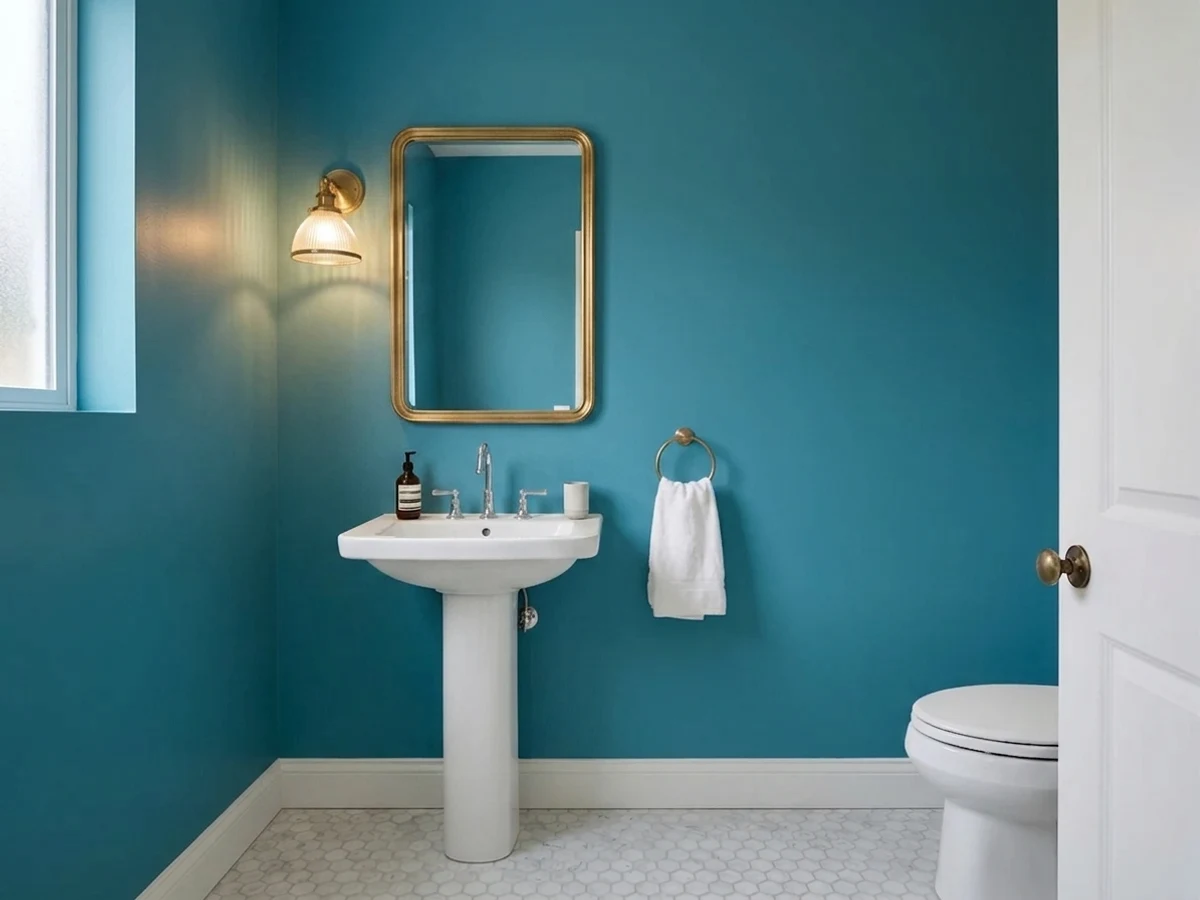
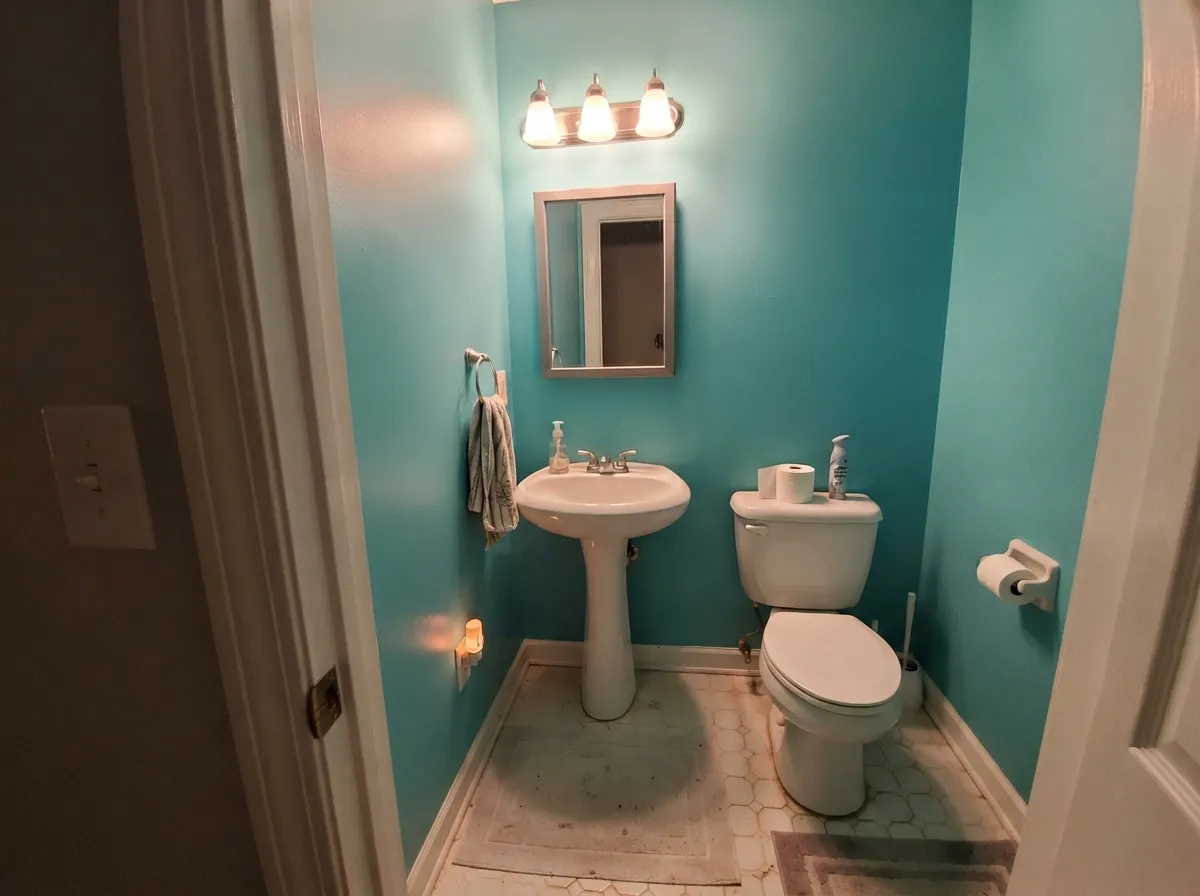
Small rooms take saturation well because you never see the color from far enough away to be shouted at. With a crisp white trim, chrome or brushed nickel, and white subway tile it reads clean and vaguely 1950s in a good way. Satin on the walls for the moisture, and remember that a room this small is where the tinted-primer step actually saves you money.
Nobody sits in a laundry room, so intensity costs you nothing and pays back every time you walk in. One gallon covers most of them, the cabinets can wear it too, and against white appliances it looks like a designer stopped by. This is the lowest-risk way to try the color in your own light before committing anywhere else.
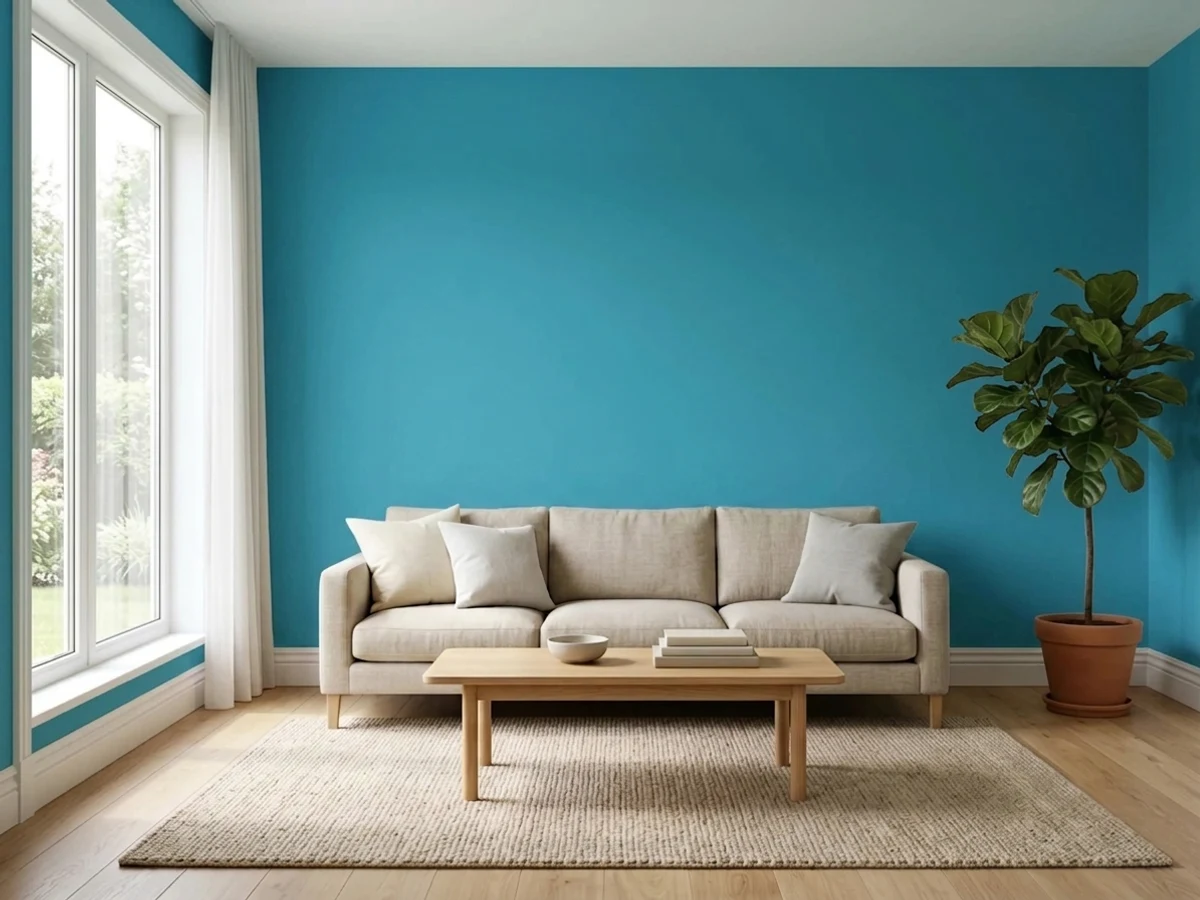
The handoff is the problem. This blue does not negotiate with warm greige, tan carpet or beige adjacent rooms — the seam between them looks like two houses. In an open plan it also has to survive being seen from thirty feet, which is exactly the distance at which the chroma stops being fun. If you love it here, put it on built-ins or a fireplace wall, not on the field.
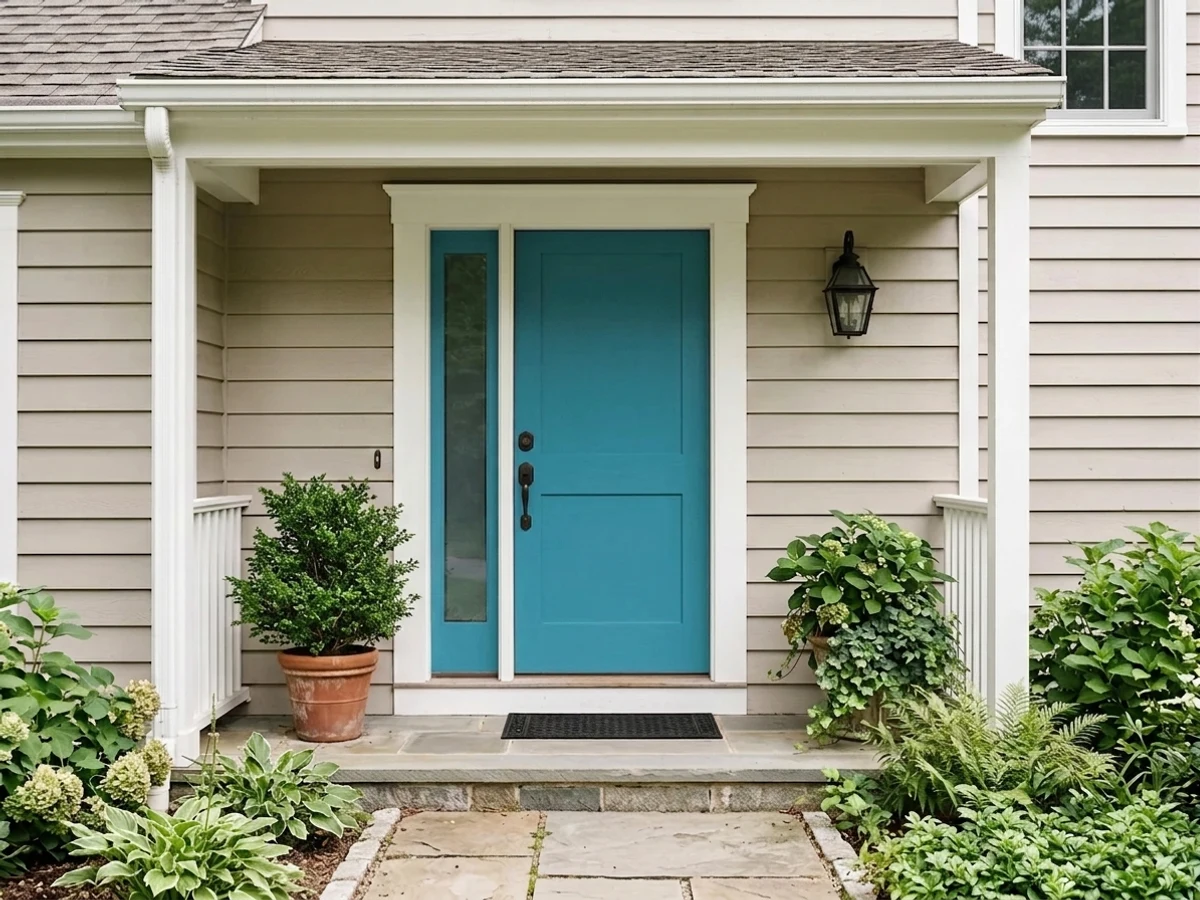
On a white, gray or pale-blue house this is a great door color: strong enough to read from the curb, friendlier than navy, and it stays clearly blue-green in full sun where muted teals just look dusty. Use an exterior-grade door enamel in satin or semi-gloss, and expect a saturated blue to need the same three-coat honesty outdoors that it needs inside.
Your Light Is the Risk
A big south or west window is what this color needs — full light keeps the cyan clean and clear instead of heavy. Light is what pays for the depth.
Without direct sun it sinks toward a dark, murky sea-green and the room feels smaller by dinnertime. The most common one-star situation.
Crisp and almost turquoise in morning east light; low golden sun pulls it greener and deeper by late afternoon. Look at your sample at 5pm before you buy.
2700K lamps mute the blue and push it toward a deeper teal. Cool 4000K LEDs do the opposite and make it read electric — great over a craft table, harsh over a bed.
Most complaints about Dream I Can Fly are a light mismatch. Upload a photo of your actual room and see it on your walls — then ask for the same wall in north light or evening lamps before you buy a single sample.
Need It From Another Brand?
Any paint counter can custom-tint Benjamin Moore 769 directly. If you would rather stay in one brand's own deck, these are the closest stock matches, measured as ΔE2000. Under 2 is a difference you will not see on the wall.
| Brand | Closest color | ΔE | LRV | |
|---|---|---|---|---|
| Sherwin-Williams | Resonant BlueSW 6954 · Sherwin-Williams | 1.0 | 30 | Color page → |
| Behr | YucatanP490-5 · Behr | 1.3 | 29 | Color page → |
| Valspar | Rolling Sea5001-10B · Valspar | 2.5 | 29.6 | Color page → |
| PPG / Glidden | Jamaican SeaPPG1236-6 · PPG / Glidden | 4.7 | 31 | Color page → |
| Glidden | Sticky Note Blue50BG 33/360 · Glidden | 2.1 | 33 | Color page → |
| Dutch Boy | Today's Catch135-6DB · Dutch Boy | 3.0 | 27 | Color page → |
Similar Benjamin Moore Colors
The nearest shades to Dream I Can Fly within Benjamin Moore's own range, ranked by perceptual color distance — useful when you want the same look a touch lighter, darker, or warmer.
WCAG 2.1: AA is 4.5 : 1 for normal text, 3 : 1 for large text, AAA is 7 : 1.
Dream I Can Fly vs the Colors You're Also Considering
Every Dream I Can Fly sample board has the same rivals on it. The numbers show the real lightness gap — then it comes down to which risk you would rather live with.
Pick this when the brightness is the entire point and a softened version would feel like a compromise.
Benjamin Moore 2049-40 · LRV 35Peacock BluePick this if you want the same sea-blue idea with the volume turned down — at LRV 35 and with some gray in it, it survives four adult walls.
Pick this when pale sky blue reads too young and you want a color with some body to it.
Benjamin Moore 2066-60 · LRV 62Honolulu BluePick this for a kid's room that stays light — at LRV 62 it adds color without taking the daylight away, which is the trade Dream I Can Fly makes.
Pick this for the friendlier, lighter version of a statement blue; the green in it keeps it from feeling like a logo.
Benjamin Moore 2065-30 · LRV 15Brilliant BluePick this if you want the intensity without the green — a true electric blue, and at LRV 15 a much heavier commitment.
Dream I Can Fly Coordinating Colors
The rule with a full-chroma blue-green is that everything else in the room should be quieter than it. Clean whites, one deep navy anchor, and at most one second color — that is the whole scheme. Warm greige and tan are the partners to avoid: they make the blue look like it wandered in from another house. Benjamin Moore's own coordinating list for this color leans on bright warm whites, and the following partners are the ones that keep showing up in rooms that actually work:
Painting Over White: Coats, Primer and Touch-Ups
This is the practical part nobody warns you about at the counter. Colors this saturated get mixed into a deep base that carries very little white pigment, and the blue-green colorants doing the work are among the weakest hiders in the tint machine. The result on a builder-white wall is a second coat that still looks cloudy where the light rakes across it — not a mixing error, just physics.
Two ways to solve it. The cheap way is a gray-tinted primer keyed to the color, then two finish coats; the primer kills the white underneath so the blue only has to be blue, not opaque. The other way is three coats of a genuinely high-hide interior line, which costs about the same and takes an extra day. What does not work is stretching one gallon thin and hoping the third coat fixes it — thin coats over white are exactly what produces the streaks people photograph and post.
Two habits matter more here than with a neutral. Cut in and roll each wall in the same session so the cut line never dries before the roller reaches it, and box your gallons together if you bought more than one — saturated colors show a batch difference that a greige would hide. Save a labeled jar for touch-ups, and accept that touch-ups on a satin or eggshell wall in this color will show as a slightly different sheen; on a large repair, repaint corner to corner.
Playroom vs Bedroom: Where Bright Aqua Actually Belongs
Benjamin Moore points this color at children's spaces, and design editors reach for it whenever the brief says fun, nautical or gender-neutral. That recommendation is right, but it hides a distinction worth making: a playroom and a kid's bedroom want opposite things from paint. A play space is supposed to raise the energy in the room, and a saturated blue-green does that without the agitation of red or the glare of a bright yellow. A bedroom is supposed to lower it.
So the honest split is this. Playroom, craft room, homework corner, basement rec space: paint all four walls and enjoy it. Kid's or teen bedroom: one plane only — the headboard wall, the closet doors, the inside of a bookcase, the bunk frame — with the rest in a soft warm white. You get the color the kid asked for and a room they can still fall asleep in, and when the taste changes at eleven you are repainting one wall instead of four.
One more thing to plan for, since it saves an argument later: this is a color kids outgrow. It is not a nursery color that ages into a teen room. If you want the paint to last a decade, put this on furniture, doors and built-ins that can be repainted in an afternoon, and let the walls stay neutral.
Three Ready Palettes Built on Dream I Can Fly
A color is never alone on the wall. These are complete combinations in the 60-30-10 pattern, with the reason each one holds together. Every one opens in the visualizer.
Benjamin Moore's own coordinating list puts Cotton Balls next to this color, and it is the right instinct: a bright warm white keeps the room from going cold and buys back the light the blue takes. The yellow lives inside the cubbies, so the room is cheerful when you look into it and calm when you look at it.
Try this palette in your roomOne aqua wall gives a kid the color they asked for; the other three in Cloud White keep the room restful enough to sleep in. Hale Navy is the anchor that makes the whole thing read nautical and intentional instead of neon — without it, bright aqua and white can tip toward waiting room.
Try this palette in your roomCool, clean color wants a cool, clean white — Chantilly Lace keeps the edges crisp where a creamy white would make the aqua look slightly dirty. The softer Peacock Blue vanity keeps the little room tonal instead of two-toned, and chrome or nickel finishes it; brass fights this blue harder than it looks like it should.
Try this palette in your roomDream I Can Fly FAQ
Is Dream I Can Fly blue or turquoise?
Both, honestly — it is a blue with enough green in it to read turquoise or aqua in most rooms. It is not a navy, not a sky blue, and not a gray-blue. If someone in your house wants blue and someone else wants teal, this is the color they will both be able to live with.
Is it too bright for a kid's bedroom?
On four walls, usually yes. High-saturation color is stimulating by design, which is exactly what you want in a playroom and exactly what you do not want at bedtime. One wall behind the bed, or the closet doors and bunk frame, gets you the same color with none of the fight.
How many coats does it take?
Plan on three, or a gray-tinted primer plus two. Saturated cyan is a weak-hide color mixed into a deep base, so over a white wall the second coat still looks cloudy in raking light. Roll full walls in one session and keep a wet edge — stopping mid-wall leaves a lap mark this color will not hide.
What trim white goes with it?
A clean, cool white. Chantilly Lace is the sharpest partner; Cotton Balls and Cloud White are Benjamin Moore's own coordinating picks if you want the room a touch warmer. Avoid a heavy cream trim — next to a full-chroma blue-green, cream reads yellowed and slightly grubby.
Does it work with oak floors?
Pale white oak and mid-brown oak are fine, and the blue-green actually keeps them from looking flat. Orange-toned honey oak is the coin flip: warm orange sits nearly opposite this blue on the wheel, so the two either look like an intentional beachy pairing or like a fight, depending on how much oak is in the room. In a room that is all honey oak trim plus honey oak floor, pick a grayer teal.
Will it hurt resale?
In a playroom or a laundry room, no — buyers read those as easy repaints. In the main living space, yes: a full-chroma blue is a personal choice, it photographs strongly in listing shots, and covering it takes primer plus two coats. If a sale is in the next year, keep it to one room or one wall.
Have you painted with Dream I Can Fly?
Rate it — one tap helps the next reader decide.
Ask a Question