Cotton Balls
The designer white with almost no internet, reviewed honestly: what LRV 89 plus a real yellow cast actually does to a room, and when to pick White Dove instead.

Jessica has spec'd whites and neutrals for more than 300 rooms and keeps a sample wall of painted drawdowns in her studio. Every color review is checked against real reader rooms in the comments and re-tested when a formula changes. About the testing process →
- 1Classic Gray74
- 2Alabaster82
- 3Cotton Balls89
- 4Ultra Pure White97
The Fast Verdict
Cotton Balls is the rare white that gives you brightness and warmth at the same time. At LRV 89 it throws back nearly all the light a bright white does, but its cast is a clear soft yellow rather than a cool one, so a room lit by it comes out bright without going clinical. That combination is why designers keep it in their back pocket and why almost nobody blogs about it. Just go in knowing what you bought: this is a bright white, not a creamy one.
Family rooms and living rooms that need light without a chill · one-white whole-house schemes · trim, doors and ceilings · rooms with dark wood, antiques and warm floors
You actually want a soft off-white like White Dove · your counters are cool gray quartz or white marble · your existing trim is a blush-warm white · your walls are patched and you will not go flat
- Bright and warm at once — an unusual combination at LRV 89
- Excellent in family rooms with dark wood, leather and warm floors
- One-white houses work: walls, trim, doors and ceiling all in it
- Warm enough for north-facing rooms that usually kill white paint
- A designer favorite that never got trendy, so it never dates
- Not the soft, creamy white most warm-white shoppers are picturing
- Goes visibly creamy beside cool quartz, marble and blue-gray tile
- Shows a faint green next to blush-warm whites or a summer lawn bounce
- Barely any real owner photos online — you are sampling with less help
What Color Is Cotton Balls, Really?
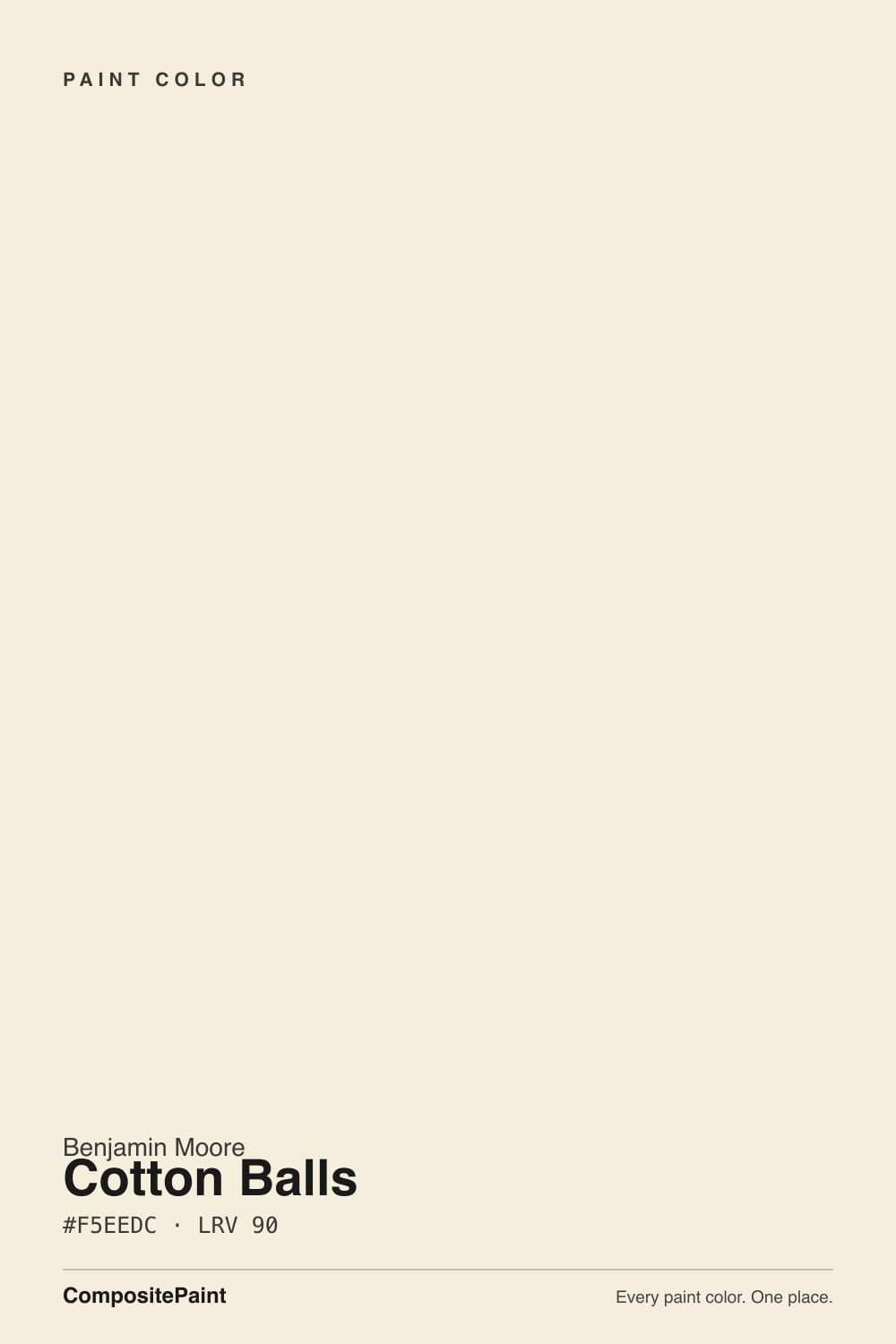
A bright off-white with a genuine trace of yellow in it — Benjamin Moore's own description is exactly that, and for once the marketing line is the whole story. It lives in the Off-White Collection and carries two numbers, OC-122 and 2145-70, which is the same paint sold under two deck systems and the first reason it confuses people at the store. Color-science measurement puts it in the yellow-green hue family at very low chroma: a lot of light, a little tint, and the tint that is there leans warm.
The useful way to place it is on the brightness ladder. At LRV 89 Cotton Balls sits with the bright whites — Simply White is 91, Chantilly Lace is 92 — and well above the soft whites people usually mean when they say warm white, like White Dove at 85 or Swiss Coffee at 84. But its actual color value is warmer than the bright whites it stands next to. So you get a room lit like a bright-white room with a cast like a cream one. That is a genuinely unusual combination, and it is the entire reason to buy this color.
Undertone in one line: warm yellow, with a faint green edge behind it — never pink, never blue. Owners who sample it beside another bright white often report that Cotton Balls looks slightly green in the comparison. That is the yellow-green base showing itself, and it only appears when there is a whiter white in the frame to measure it against.
Where It Shines
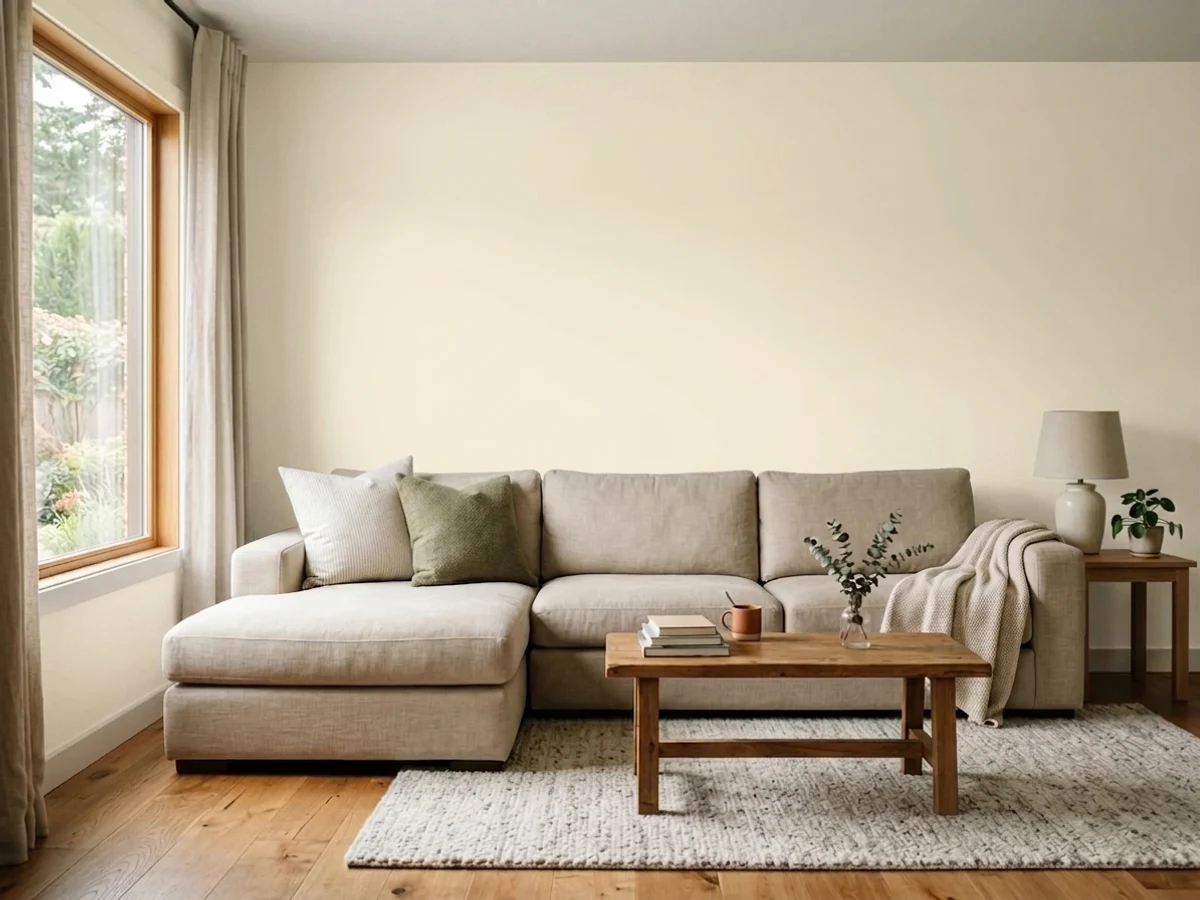
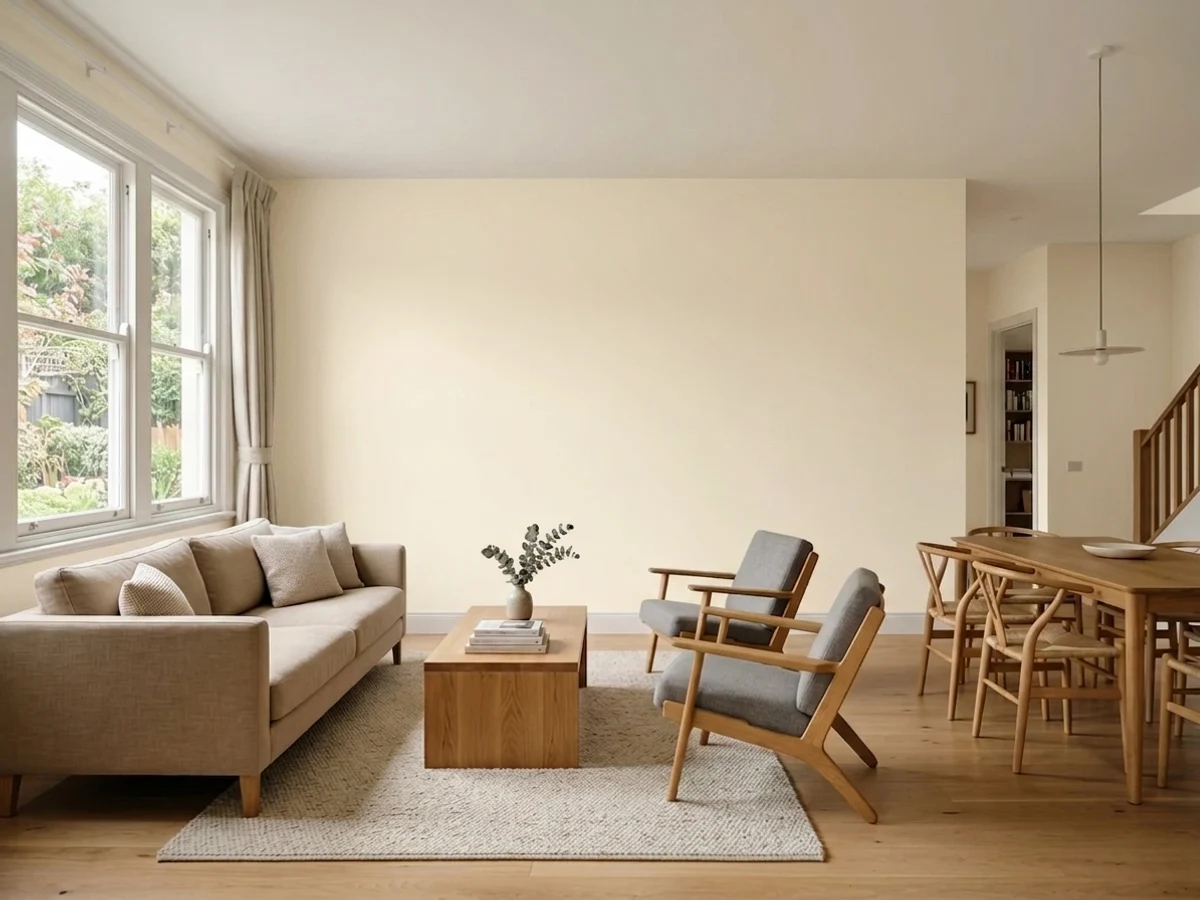
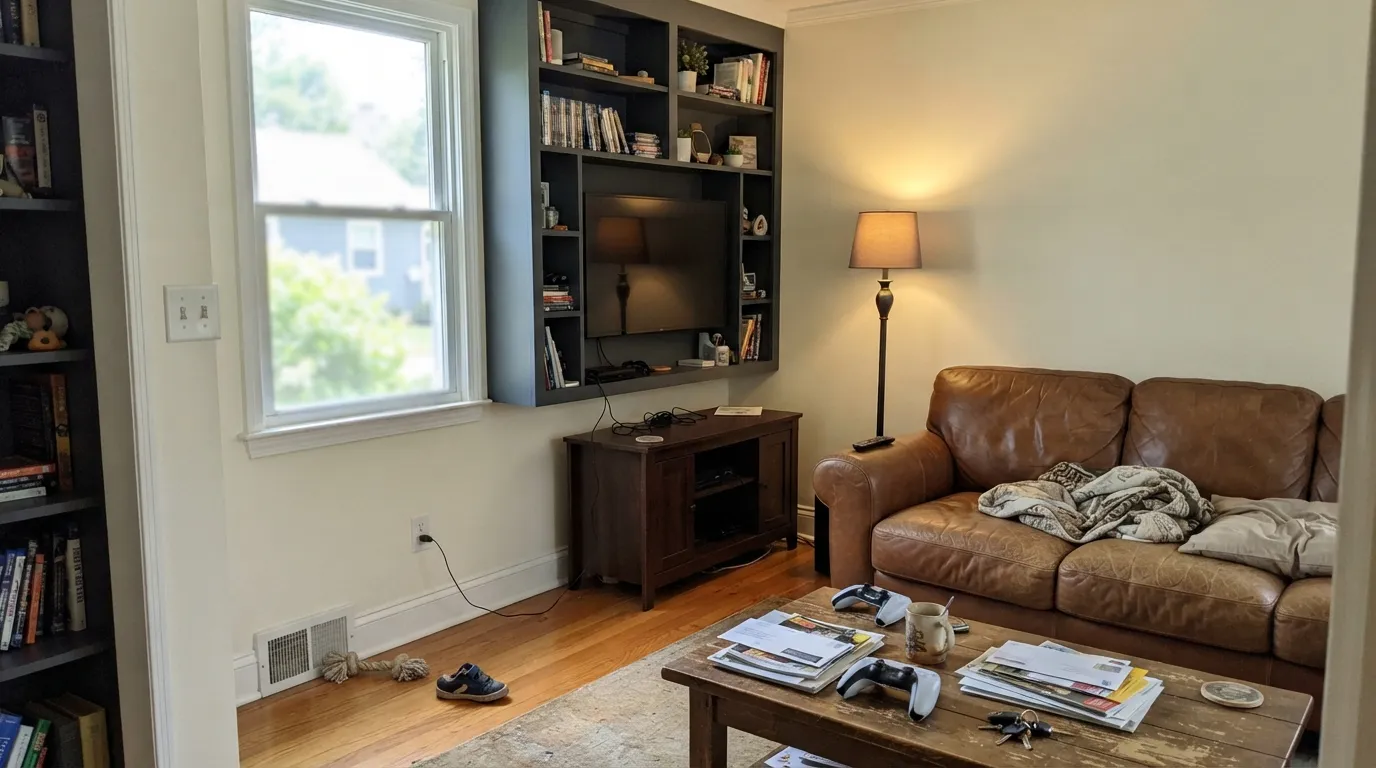
It is at its best in the big everyday room — the family room, the living room, the open main floor — where you need real brightness but the room already has dark wood, leather, a TV wall and a floor that runs warm. A cool bright white in that room looks like a rental; Cotton Balls looks like the room was finished on purpose. Its second home is the one-white house: walls, trim, doors and ceiling all in it, sheen doing the separating, which is exactly how designers who like it actually use it.
Where It Fails
The complaints about Cotton Balls are unusually consistent, mostly because the color itself is consistent — what varies is what buyers expected. All three failures below are decided before you open the can.
This is the big one. People arrive at Cotton Balls searching warm white and picture White Dove — soft, quiet, low-glare. Cotton Balls is five LRV points brighter, and five points at the top of the scale is the difference between a room that feels calm and a room that feels lit. In a sun-filled room with pale furniture the warmth stops registering and you are left with brightness. If cozy was the goal, buy White Dove or Swiss Coffee.
Anything cool and hard sitting at eye level makes the yellow step forward, and Cotton Balls goes from bright white to visibly creamy in a single glance. This is the standard bathroom and kitchen regret: the walls looked white on the wall and yellow the day the counters went in. Sample your paint against the stone, not against the drywall.
Warm whites are not interchangeable. Put Cotton Balls next to a blush-leaning white like BM Alabaster and the yellow-green base shows up as a faint celery cast on the Cotton Balls side. The same thing happens without any neighbor color when a family-room slider looks out at a lawn or a hedge in summer — the bounce is green, the base is green, and they add. Keep the whole house on one white, or at least one temperature.
Room by Room
The room this color is worth knowing for. It brightens a space that has a dark TV wall, a leather sofa and warm floors without going cold on you, and at LRV 89 it keeps a north-facing family room from feeling like a basement. Eggshell on walls, the same color in semi-gloss on trim. Watch a summer green bounce if a slider faces the yard.
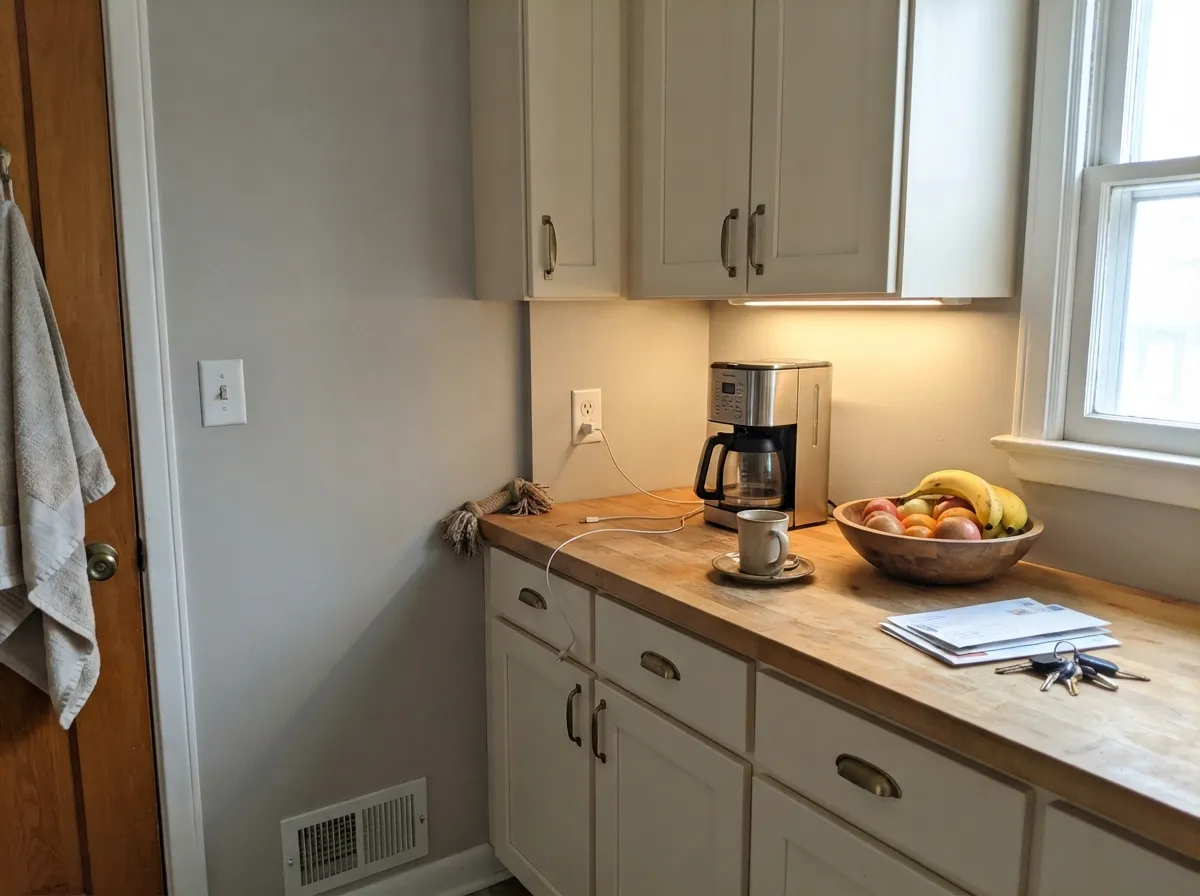
Satin Cotton Balls cabinets under warm stone, butcher block or brass look bright and expensive. Against cool gray quartz or white marble it reads creamy and the kitchen loses. Decide at the slab, not at the paint chip.
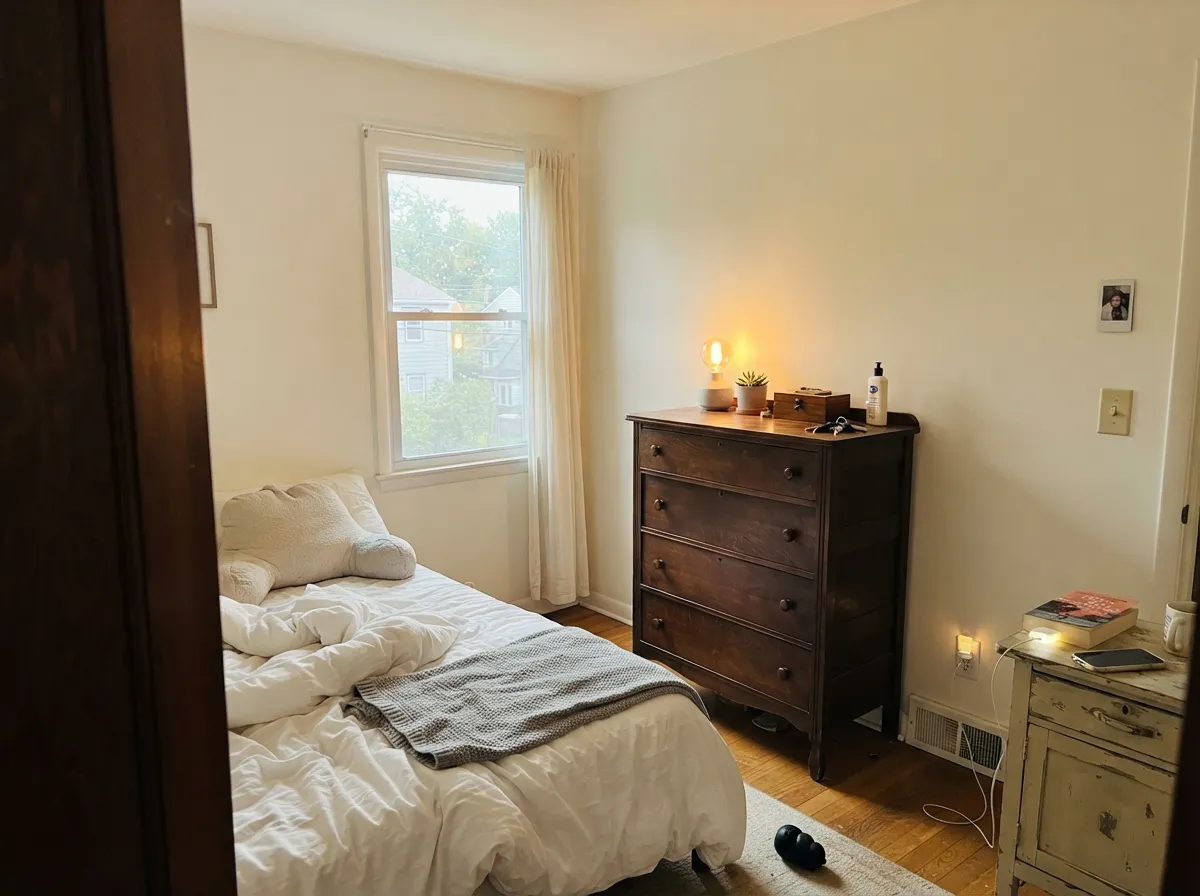
Timothy Corrigan names it one of his two favorite Benjamin Moore whites and uses it in bedrooms against antique furniture, which is the right read: the warmth keeps old wood from looking orange while the brightness keeps the room from getting heavy. Eggshell, 2700K bulbs.
A warm white at LRV 89 is an excellent ceiling: it lifts the plane without the cold flash of a builder ceiling white. On trim it is crisp enough to hold an edge against mid-tone walls and warm enough that it never looks plastic. Flat overhead, semi-gloss on the woodwork.
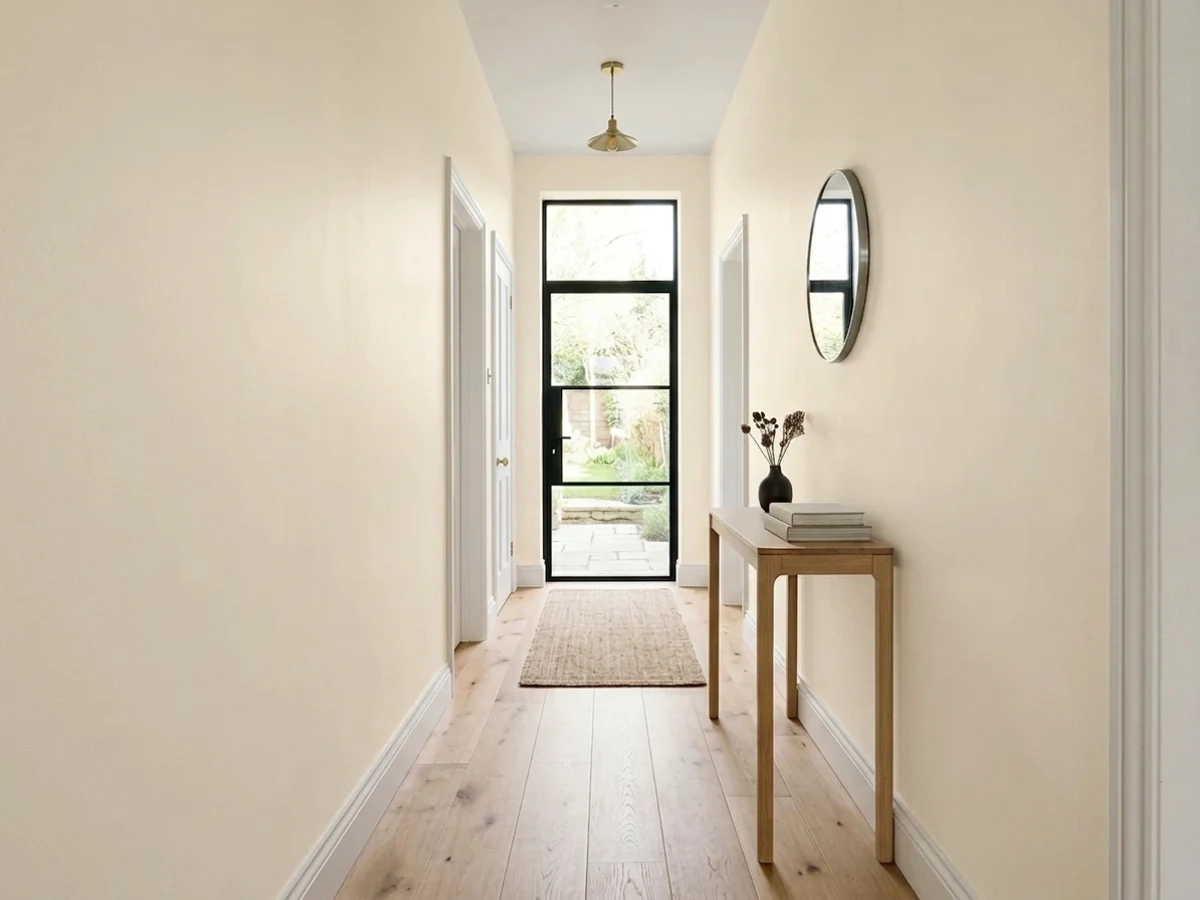
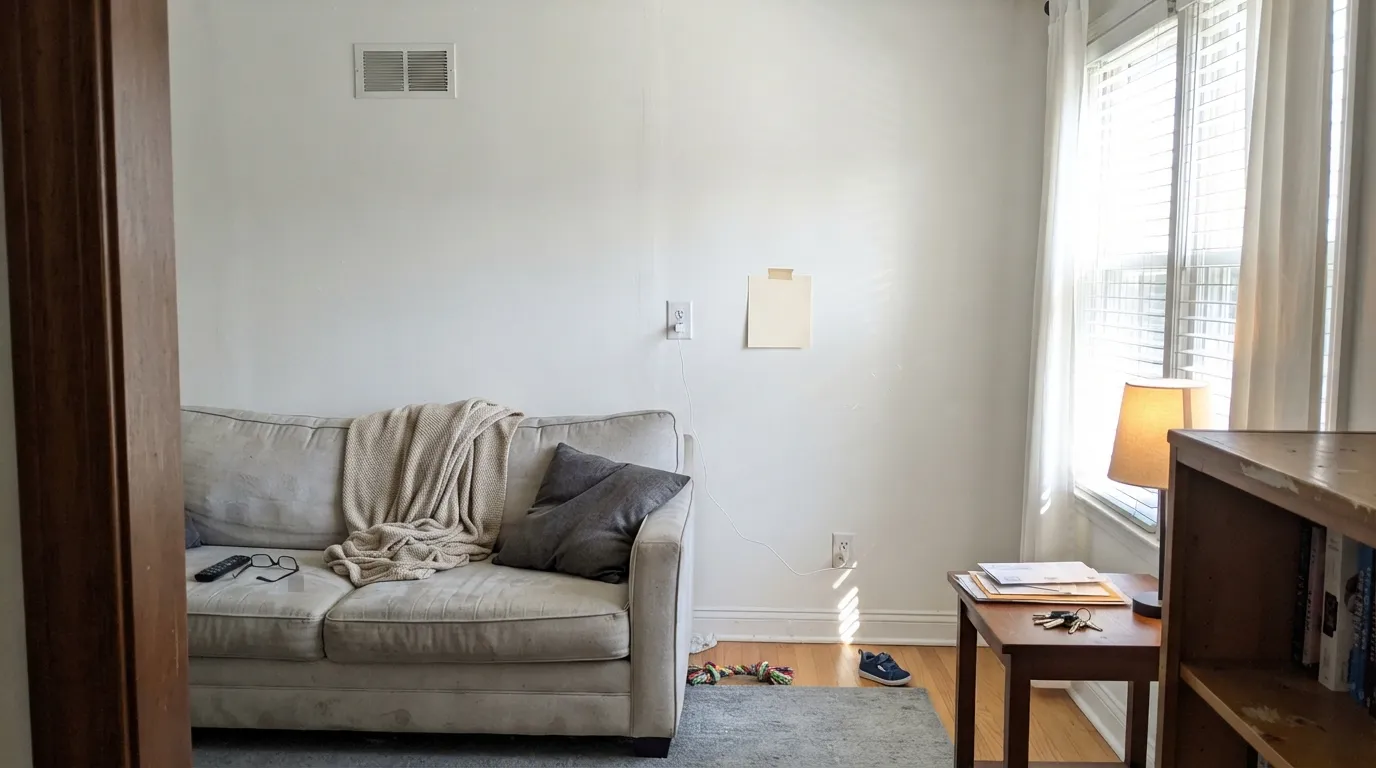
Hallways run dark and narrow and are exactly where a high-LRV white earns its money. One owner reports it holding up through a mostly north-facing historic row house that usually eats white paint. Eggshell, and use the same white on the doors.
Full sun pushes the yellow forward, so a whole house in it reads cream rather than white from the street. It is a better exterior trim white than exterior body white. If you want white siding that stays white in sun, look at a cooler bright white.
Your Light Is the Risk
Full daylight is where the trick lands: bright as any white, warm enough that the room never goes clinical.
Low late sun stacks warmth on warmth and the yellow flashes to cream for an hour. Sample at 6pm.
Cool light drains the yellow and it settles into a quiet, faintly green soft white. Still bright — just less warm.
2700K lamps push it toward cream and cozy. Cool 4000K LEDs flatten it to plain white — swap bulbs, not paint.
Most complaints about Cotton Balls are a light mismatch. Upload a photo of your actual room and see it on your walls — then ask for the same wall in north light or evening lamps before you buy a single sample.
Need It From Another Brand?
Any paint counter can custom-tint Benjamin Moore 2145-70 directly. If you would rather stay in one brand's own deck, these are the closest stock matches, measured as ΔE2000. Under 2 is a difference you will not see on the wall.
| Brand | Closest color | ΔE | LRV | |
|---|---|---|---|---|
| Sherwin-Williams | White SnowSW 9541 · Sherwin-Williams | 2.6 | 90 | Color page → |
| Behr | Sea Salt780C-1 · Behr | 0.7 | 92 | Color page → |
| Valspar | Ewe8007-5A · Valspar | 1.1 | 91 | Color page → |
| PPG / Glidden | Delicate WhitePPG1001-1 · PPG / Glidden | 3.3 | 88 | Color page → |
| Glidden | Crisp Linen White61YY 89/040 · Glidden | 3.6 | 89 | Color page → |
| Dutch Boy | Ultra White002W · Dutch Boy | 2.4 | 91 | Color page → |
Similar Benjamin Moore Colors
The nearest shades to Cotton Balls within Benjamin Moore's own range, ranked by perceptual color distance — useful when you want the same look a touch lighter, darker, or warmer.
WCAG 2.1: AA is 4.5 : 1 for normal text, 3 : 1 for large text, AAA is 7 : 1.
Cotton Balls vs the Colors You're Also Considering
Every Cotton Balls sample board has the same rivals on it. The numbers show the real lightness gap — then it comes down to which risk you would rather live with.
Pick this when Simply White samples thinner or cooler than you hoped and you want the warmth to actually show up on the wall.
Benjamin Moore OC-117 · LRV 91Simply WhitePick this for the same brightness with less visible warmth — a hair lighter, a step less yellow, and vastly easier to research before you commit.
Pick this when White Dove samples dingy on your walls, which is what dim rooms and brighter trim do to it.
Benjamin Moore OC-17 · LRV 85White DovePick this if you want soft and finished rather than bright — five LRV points down is the difference between a calm room and a lit one.
Pick this for warmth — Chantilly Lace is the cleaner white and the harder one to roll, and it will never flatter old wood the way this does.
Benjamin Moore OC-65 · LRV 92Chantilly LacePick this for the crisp gallery look and for rooms full of cool marble, where any warmth would read yellow.
Cotton Balls Coordinating Colors
The rule with Cotton Balls is to keep everything on its side of the temperature line. It sits happily over warm greiges, deep warm charcoals and muted greens, and it argues with blue-grays and anything blush. Benjamin Moore's own coordinating list leans the same way. These are the partners that keep showing up in rooms that work:
The White Designers Keep and Shoppers Never Find
Cotton Balls has a strange profile for a paint color: high professional regard, almost no consumer footprint. Timothy Corrigan lists it as one of his two favorite Benjamin Moore whites, and more than one working designer has said that if forced to pick a single white for everything, this would be it. Meanwhile the forums are nearly silent — an owner posting about it on Houzz complained that they simply could not find more about this white online, which is still roughly true today.
The reason is that it never had a moment. Simply White was Color of the Year in 2016 and White Dove became the default answer on every design blog in America; Cotton Balls just sat in the Off-White Collection doing its job. That is worth something practical to you: a color that never trended cannot look dated later. It is also worth a warning — you will do your sampling with less help than usual, so buy two large peel-and-stick boards instead of one, and move them from the brightest wall to the darkest corner across a full day before you commit.
Cotton Balls With Wood Tones and Floors
Warm wood is this color's natural company, and it is more forgiving than most bright whites about which warm wood. Walnut, cherry, antique furniture and mid-tone oak all look better under it than under a cool white, because the wall meets their warmth instead of exposing it. Even orange-leaning builder oak works: the yellow in the paint takes the edge off the orange rather than amplifying it, which is the opposite of what a crisp bright white does in the same room.
The floor that needs a real sample is cool gray LVP or gray-washed wood. Against a cool floor the walls will read distinctly creamy, and in a family room with a lot of exposed floor that difference is visible from the doorway. It is not automatically wrong — plenty of rooms look good with a warm wall over a cool floor — but you should see it before you buy the paint, not after. Metals are easy: brass, bronze and matte black all sit well with it, and polished chrome is the only finish that looks a little cold beside it.
Three Ready Palettes Built on Cotton Balls
A color is never alone on the wall. These are complete combinations in the 60-30-10 pattern, with the reason each one holds together. Every one opens in the visualizer.
Warm whites fail most often against other whites, so the safest way to use this one is to remove the competition: same color on walls, trim and ceiling, with sheen doing the separating. Wrought Iron doors give the scheme its one hard edge without introducing a second white to argue with.
Try this palette in your roomA family room needs one dark place to put the television and the shelves, and Chelsea Gray at LRV 22 is that place without going black. Edgecomb Gray next door shares the same warm base, so the handoff from the bright room to the quieter one never reads as a temperature change.
Try this palette in your roomCabinets brighter than the walls is the reliable kitchen order, and 16 LRV points of separation reads as intentional rather than as a mismatch. Kendall Charcoal grounds the island; keep the counters warm — cool quartz is the one thing this scheme cannot absorb.
Try this palette in your roomCotton Balls FAQ
Is Cotton Balls warm or cool?
Warm, and more openly warm than most bright whites. Benjamin Moore describes it as a bright white with a trace of yellow, and that is what shows up on a wall. It never reads pink and never reads blue. In cool north light the yellow quiets down and a faint green edge can appear instead.
Is Cotton Balls the same as OC-122 and 2145-70?
Yes — one paint, two catalog numbers. OC-122 is its Off-White Collection number and 2145-70 is its Color Preview number. Order either one and you get the same can. Just do not let a store tell you they are different colors.
Cotton Balls or White Dove?
Brightness decides it. White Dove at LRV 85 is the softer, quieter room; Cotton Balls at 90 is the brighter one that still has warmth in it. Dim rooms and people who want cozy should take White Dove. Rooms that need light — a north-facing family room, a dark hallway — do better with Cotton Balls.
What trim white goes with Cotton Balls walls?
Cotton Balls, in semi-gloss. That is not a cop-out — it is the specific fix for this color, because a brighter or cooler trim white will make the walls read yellow, and a blush-warm trim white will make them read green. One white, two sheens.
Does it work with gray quartz counters?
This is its weakest pairing. Cool gray quartz and white marble pull the yellow forward, and the walls or cabinets go creamy against the stone. Hold a sample directly against the actual slab before you commit — if it looks warm there, it will look warm every day.
Why is it so hard to find photos of this color?
Because it never had a trend moment. It has been quietly recommended by designers for years without becoming a search term, so there is far less owner photography than for White Dove or Simply White. Practically, that means sample bigger than usual: two large boards, moved around the room over a full day.
Have you painted with Cotton Balls?
Rate it — one tap helps the next reader decide.
Ask a Question