Oxblood
The trending leather-red everyone searches for by name, reviewed honestly: the light where it glows like old wine, the light where it's just plain brown, and the rooms where it actually belongs.

Jessica has spec'd whites and neutrals for more than 300 rooms and keeps a sample wall of painted drawdowns in her studio. Every color review is checked against real reader rooms in the comments and re-tested when a formula changes. About the testing process →
- 1Mahogany0
- 2Turkish Coffee5
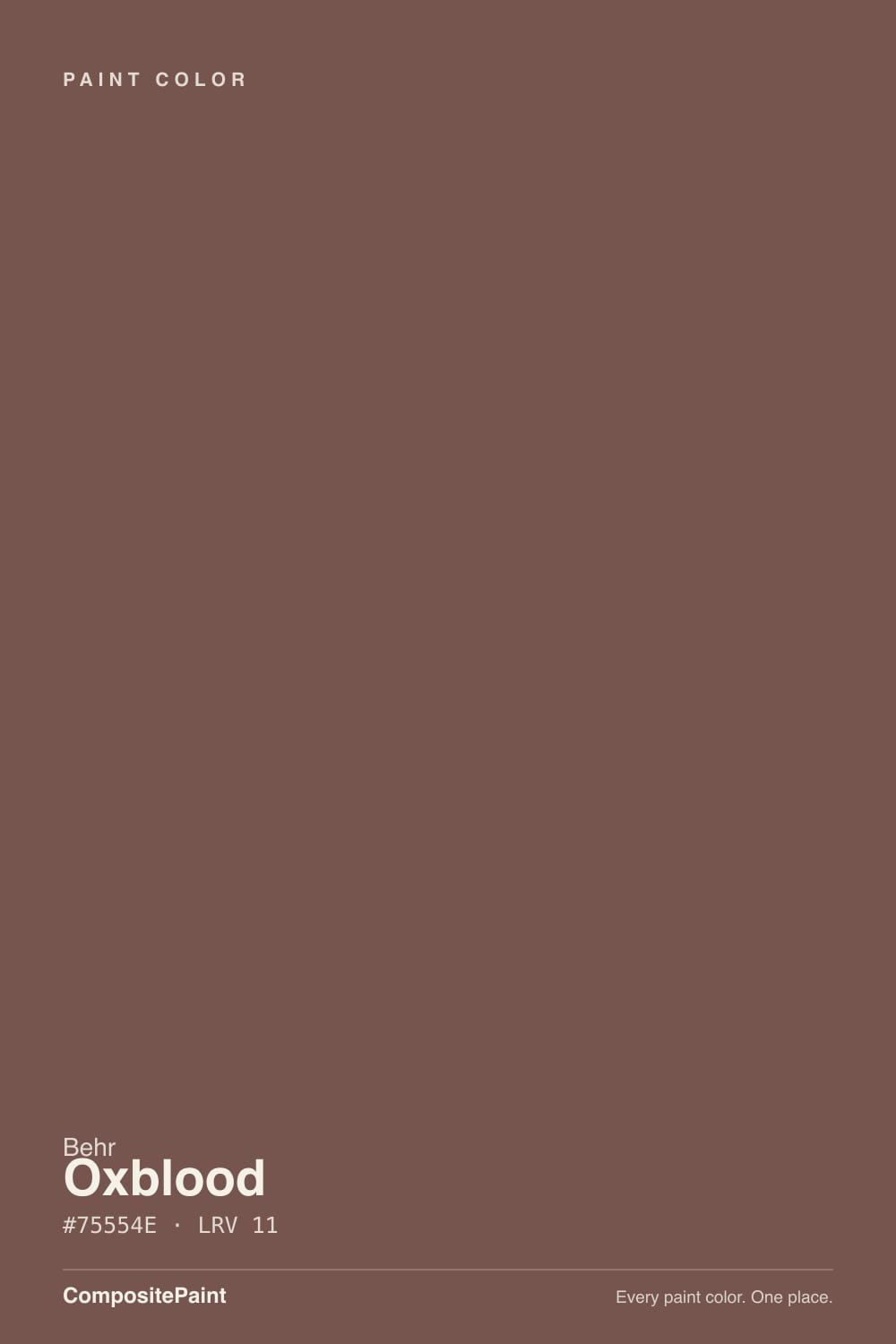
- 3Oxblood11
- 4Cavern Clay20
- 5Redend Point30
The Fast Verdict
Oxblood is a red-brown that is brown first on paper — LRV 11, a genuinely dark neutral — and only turns red when warm light gets involved. Under a lamp or late-day sun it goes velvety, like old wine or a worn leather chair; under a flat overcast sky it settles back into plain chocolate-brown. That is not a flaw so much as the whole point of the color, and it rides a real design moment: oxblood is 2025's most-searched "grown-up red," the color people ask for by name after seeing it on a library wall or a front door. Buy it knowing it is a mood color, not a paint-chip red, and it earns its keep.
A library, den or home office you want to feel like a private club · a front door or shutters that need one confident dark color · a powder room or dining room done in full daylight-avoidant commitment · anyone chasing the 2025 oxblood trend who actually likes brown as much as red
You want a true, saturated red (fire-engine, cherry, lacquer) · your room runs on cool white LEDs with no lamps · you want one color for four walls in a bright, all-day living room · you are painting a full exterior facade rather than a door or shutters
- A genuine 2025 design trend that reads sophisticated, not fad-red
- Under warm light it turns velvety — old wine and worn leather, not flat brown
- LRV 11 hides scuffs and fingerprints better than a mid-tone color
- Pairs naturally with wood, leather and brass without any styling effort
- Works as both an interior mood color and a proven exterior door/shutter color
- Brown-forward — disappoints anyone expecting a true saturated red
- Goes flat and muddy under cool LEDs or a room with no warm materials
- Fades and bronzes over years of direct exterior sun without a UV-rated enamel
- Not a whole-house or all-day-bright-room color — it wants one room or one door
What Color Is Oxblood, Really?
Oxblood is a red-brown that is brown first — the LRV is only 11, low enough to sit as a genuinely dark neutral, and the hex (#75554E) reads closer to aged mahogany or a worn leather boot than a true red on the color wheel. What earns it the name is what happens under warm light: the red steps forward and the brown recedes, so the wall or door starts to look like a glass of old wine or a Chesterfield sofa instead of plain brown paint. That swing between "is this brown or is this red" is the entire personality of the color — reviewers who understand that going in tend to love it, and the ones who expected a saturated red are the ones who come back disappointed.
It also happens to be riding a real trend rather than inventing one. Design writers describe oxblood as a grown-up, browned-down cousin of burgundy — the color of leather-bound books, a good bottle of Bordeaux in low light, and old brass hardware — and it has become one of the most-searched paint colors of the past year for exactly that reason. Behr's version sits at the darker, browner end of the oxblood family: less purple than a true burgundy, more restrained than a lacquer red, which is why it reads as sophisticated rather than dramatic on a door or a den wall.
Undertone in one line: red-brown, leaning warm, never a true fire-engine red. If your sample reads flat chocolate-brown, that is cool light doing its job; if it reads closer to burgundy or wine than brown, that is warm lamps or late-day sun bringing the red forward — both are the same paint being honest about the light in the room.
Where It Shines
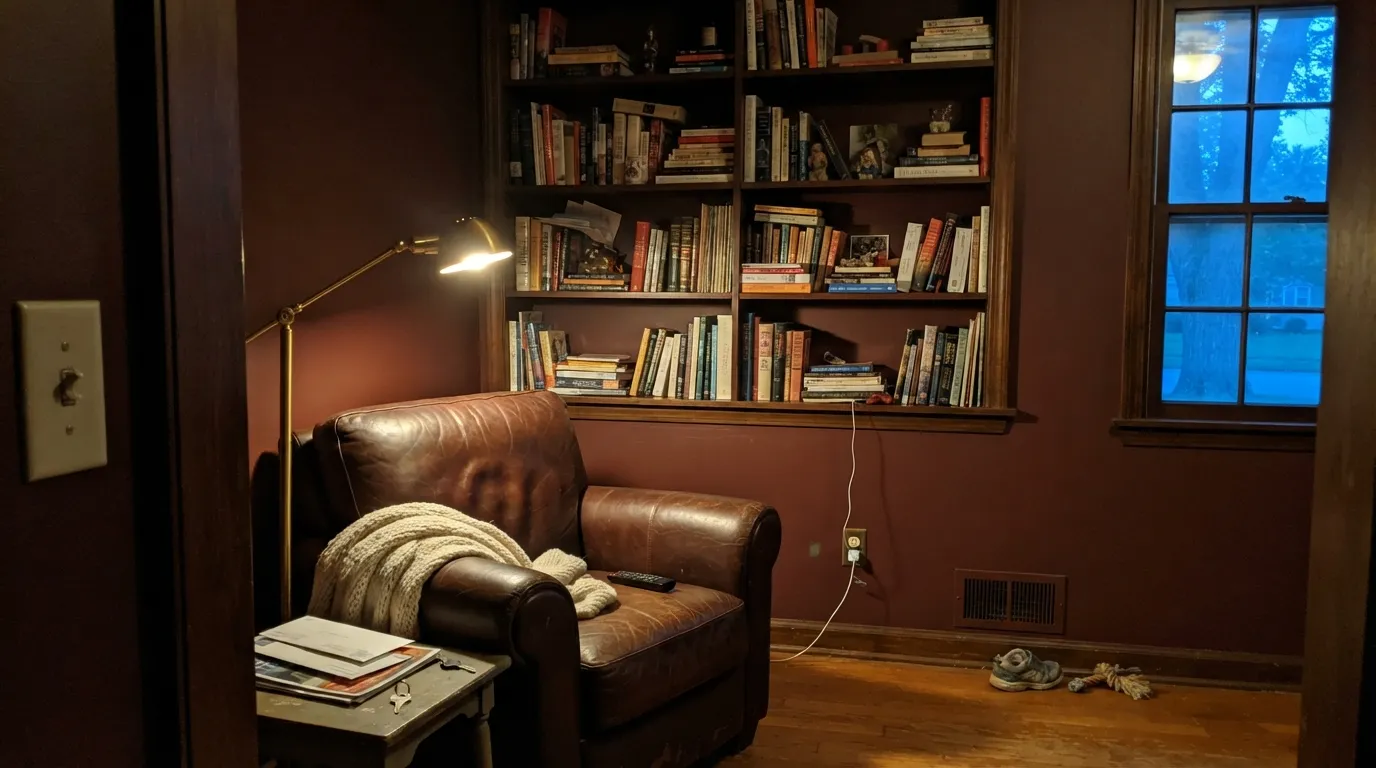
This is a color built for rooms with warm artificial light and real materials to bounce off of. A library or den with leather, walnut shelving and a brass reading lamp is where Oxblood looks expensive rather than just dark — the red comes forward against wood the way it never quite does against drywall alone. Its second home is a single confident dark surface: a front door, a set of shutters, a powder room done in full, or a dining room eaten at mostly by candlelight and pendant bulbs. In all of these, depth is the asset — at LRV 11 it swallows scuffs and fingerprints that a mid-tone color would show.
Where It Fails
Almost every disappointed review of Oxblood follows one of three scripts, and all three are predictable before the first coat goes on. None of them are the paint's fault — but if your room or your expectations match one of these, this is not your color, and a bigger sample will only confirm it.
Oxblood is brown at LRV 11 before it is anything else — the red is a warm-light effect, not a baseline. Buyers picturing a saturated cherry or lacquer red end up with a color that reads like stained wood most of the day. If red is the non-negotiable part, look at a true red instead and accept the higher LRV and the upkeep that comes with it.
Under cool white LEDs, in a room with no wood, leather or brass to bounce warmth off, Oxblood just goes flat and muddy — brown with nowhere to go. It needs a warm bulb (2700K) and at least one warm material nearby to do the trick it is famous for; without either, it is an underwhelming dark brown.
On a front door or shutters, years of direct UV exposure fade and chalk dark saturated colors faster than lighter ones, and reds are especially prone to bronzing toward orange-brown over time. Use a UV-resistant exterior enamel (Behr Marquee or Dynasty, not a builder-grade paint) and expect the color to need a fresh coat sooner than a lighter door would.
Room by Room
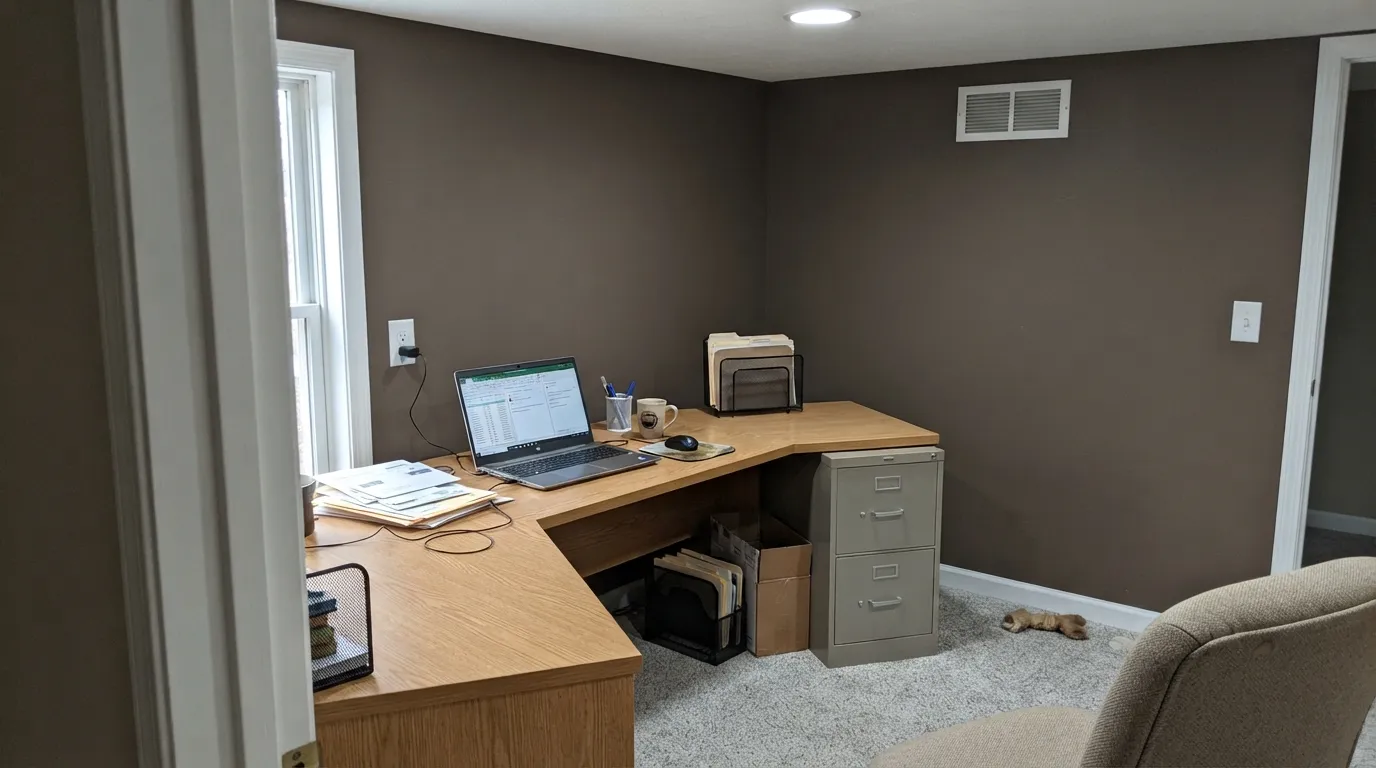
Bookshelves, leather, walnut and a reading lamp are exactly the company Oxblood wants. Eggshell or matte on the walls; it turns genuinely velvety after dark and holds its color through a working day of screen glare and overhead light.
A dining room used mostly at dusk and by candlelight is one of the classic Oxblood moves — deep, cocooning, flattering to skin tones under warm bulbs. In a bright breakfast-nook dining room with all-day sun, it reads more brown than the mood you were picturing.
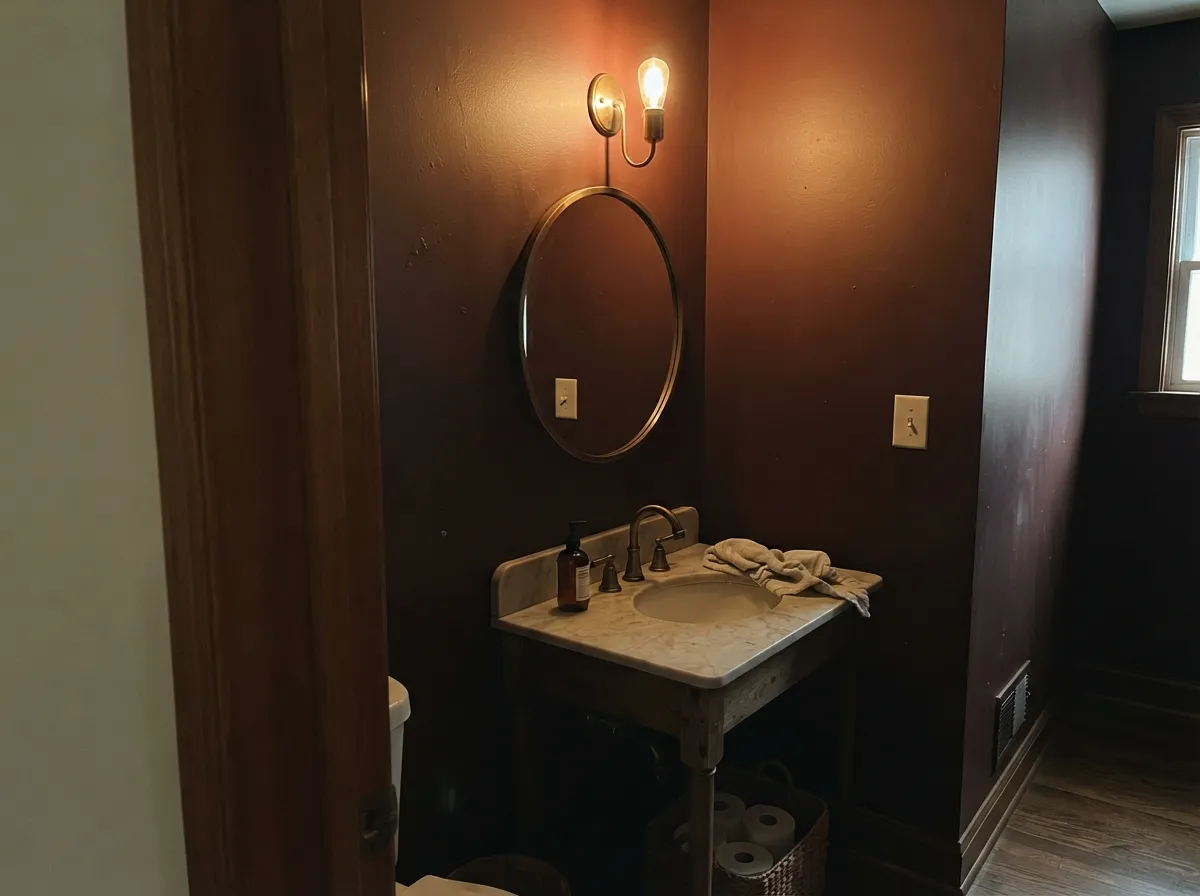
Small, low-traffic, often lit by a single warm sconce: a powder room is where a dark, dramatic color earns its keep without betting the whole house on it. Pair with brass fixtures and a marble or wood vanity top.
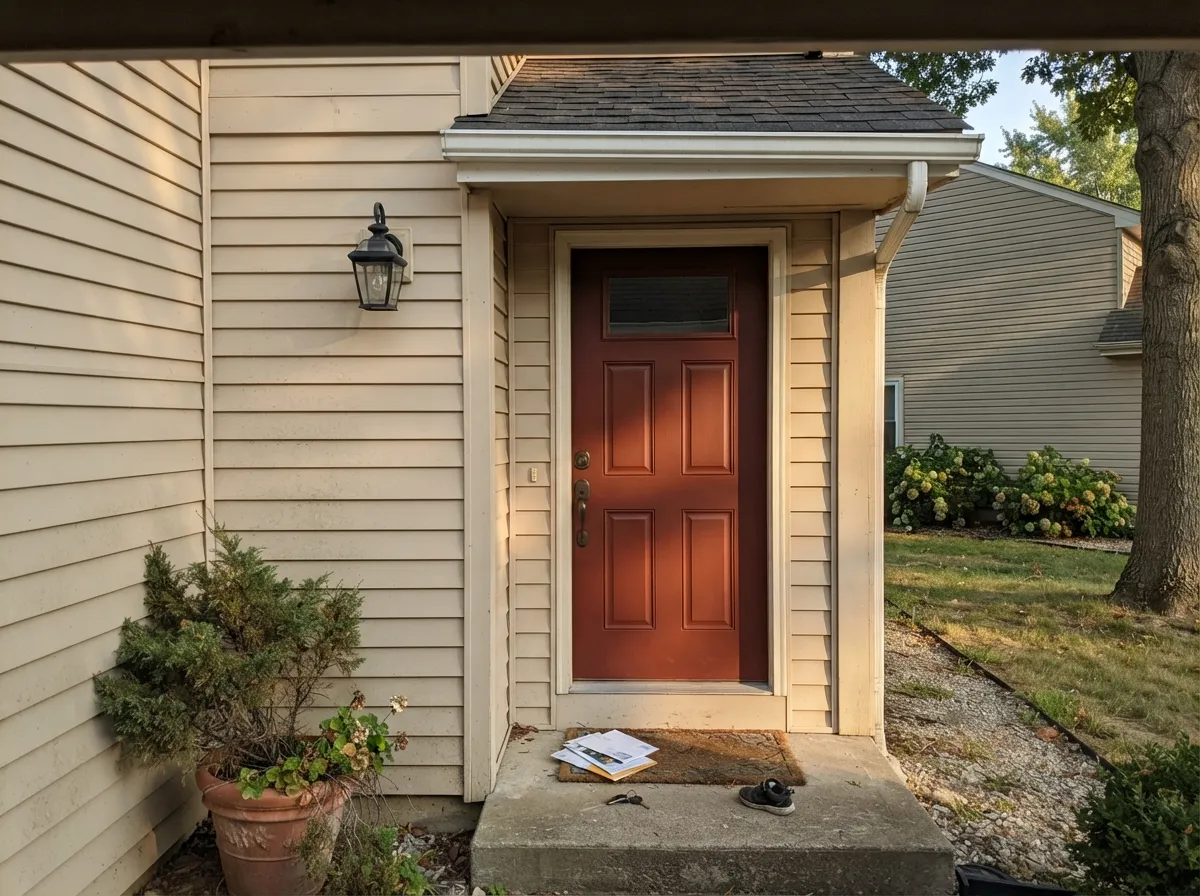
One of Oxblood's most common real-world jobs, and a good one: a single dark red-brown door against a cream, greige or white body reads confident, not trendy. Use a UV-rated exterior enamel and expect it to weather a shade lighter/browner over the years.
On an island or a single hutch under lighter cabinetry, it is a genuinely charming, old-library note. A full kitchen of Oxblood cabinets is a heavy commitment and fights honey-oak floors the same way any warm-dark color does.
A single Oxblood wall behind the headboard, with warm lamps and cream or white bedding, reads cozy and grown-up. Four walls of it in a bedroom with cool overhead light is a much heavier, moodier bet than most buyers expect from the chip.
Your Light Is the Risk
2700K bulbs pull the red forward and the surface turns velvety — old wine, worn leather. This is the light the name was earned in.
On an overcast day or under cool north light, the red drains out and it reads like a plain, slightly muddy brown. Test on a cloudy day before committing.
Midday sun bleaches it toward a flatter brick-brown; the deeper wine-red shows up more at dusk or in shade than at high noon.
2700K lamps deepen it toward wine and leather at night. Cool white or daylight LEDs flatten the red and expose the plain brown underneath.
Most complaints about Oxblood are a light mismatch. Upload a photo of your actual room and see it on your walls — then ask for the same wall in north light or evening lamps before you buy a single sample.
Need It From Another Brand?
Any paint counter can custom-tint Behr PPU2-20 directly. If you would rather stay in one brand's own deck, these are the closest stock matches, measured as ΔE2000. Under 2 is a difference you will not see on the wall.
| Brand | Closest color | ΔE | LRV | |
|---|---|---|---|---|
| Sherwin-Williams | Brevity BrownSW 6068 · Sherwin-Williams | 4.3 | 10 | Color page → |
| Benjamin Moore | Dark Nut Brown2098-30 · Benjamin Moore | 2.8 | 12 | Color page → |
| Valspar | Berry Brandy1005-9B · Valspar | 2.5 | 11.8 | Color page → |
| PPG / Glidden | Caramelized WalnutPPG1074-6 · PPG / Glidden | 4.2 | 10 | Color page → |
| Glidden | Caramelized WalnutPPG1074-6 · Glidden | 4.6 | 10 | Color page → |
| Dutch Boy | County Road407-6DB · Dutch Boy | 3.2 | 10 | Color page → |
Similar Behr Colors
The nearest shades to Oxblood within Behr's own range, ranked by perceptual color distance — useful when you want the same look a touch lighter, darker, or warmer.
WCAG 2.1: AA is 4.5 : 1 for normal text, 3 : 1 for large text, AAA is 7 : 1.
Oxblood vs the Colors You're Also Considering
Every Oxblood sample board has the same rivals on it. The numbers show the real lightness gap — then it comes down to which risk you would rather live with.
Pick this for the redder, more wine-and-leather version of the same warm-dark family.
Sherwin-Williams SW 2806 · LRV 14Rookwood BrownPick this if you want less red and a color that reads more like stained wood than an oxblood mood.
Pick this for the moodier, more restrained brown-forward version, better suited to a den than an exterior in bright light.
Benjamin Moore HC-184 · LRV 11Cottage RedPick this if you want more visible red and less brown — a barn-red door in full sun rather than a library wall.
Oxblood Coordinating Colors
The rule for coordinating with Oxblood: warm whites, warm near-blacks, and one muted green or brown for depth — and give it wood, leather or brass to sit next to. It pairs with cream and warm white far better than with a stark, cool white, and layers well with darker neutrals that don't compete for the "red" spotlight. These are the partners that keep showing up in rooms that work:
The Oxblood Trend: Why a Leather-and-Library Color Is Suddenly Everywhere
Oxblood spent decades as a shoe-polish and handbag word before it became a paint one. Design coverage through 2025 has consistently framed it as the grown-up successor to the gray decade and the greige decade before it: a warm, browned-down red that reads expensive rather than trendy, tied to leather Chesterfield sofas, brass hardware and the idea of a private library rather than a bold accent wall.
That history is exactly why it behaves the way it does on a wall. It was never designed to be a pure, saturated red — it is closer to a stained-leather brown that happens to flash red under the right light, which is also why it plays so well as a front door or a den wall instead of a whole open-plan living room. Expect the trend itself to have real staying power precisely because it is grayed and browned down far enough to read as a neutral, the same reason muted greens and warm blacks have outlasted their own hype cycles.
Oxblood on Exterior Doors and Shutters
This is one of Oxblood's most common real jobs, and it earns the reputation. Against a cream, warm-beige or white body, a single Oxblood door reads confident and a little unexpected without looking like a trend purchase — it has the gravity of a color that could have been on the house for decades. Pair it with black or dark bronze hardware and lighting rather than polished brass or nickel, which read cold against it.
The one real caution is longevity: dark, saturated reds are more prone than lighter colors to fading and bronzing toward orange-brown under years of direct southern or western sun. Use a genuinely UV-resistant exterior enamel — Behr's Dynasty or Marquee lines, not a builder-grade product — apply thin even coats, and expect to recoat a sun-battered door sooner than you would a lighter neutral one.
Three Ready Palettes Built on Oxblood
A color is never alone on the wall. These are complete combinations in the 60-30-10 pattern, with the reason each one holds together. Every one opens in the visualizer.
A warm white keeps the trim from fighting the red-brown, and a warm near-black on the built-ins gives the room one deep, grounding note instead of two competing darks. Add walnut shelving and brass reading lamps and the room does the rest.
Try this palette in your roomA warm beige body lets the door carry all of the color; matte black shutters and fixtures add a second dark note without competing with the door's red. This is the most common real-world way Oxblood gets used.
Try this palette in your roomA warm off-white keeps the room from feeling like a cave, and a muted green case piece gives the eye somewhere to land that is not another shade of red-brown. Best under a dimmable pendant, eaten in mostly at dusk.
Try this palette in your roomOxblood FAQ
Is Oxblood more red or more brown?
Brown, technically — LRV 11 puts it in dark-neutral territory, and in flat or cool light it reads like a plain chocolate-brown. The "oxblood" red only shows up under warm light: lamps, late-day sun, or anything 2700K. Buy it for that swing, not for a guaranteed saturated red.
Does Oxblood work on a front door?
Yes — it's one of the color's most common real-world jobs, and a good one. Pair it with a lighter body color (cream, greige or white) so the door carries the color alone, and use a UV-resistant exterior enamel like Behr Marquee or Dynasty, since dark saturated reds bronze and fade faster than lighter colors in direct sun.
What trim white goes with Oxblood?
A warm white — White Dove or Shoji White territory — softens the transition better than a stark, cool white. A bright cool white next to Oxblood can make the red-brown look slightly muddy by contrast.
Will Oxblood fade in direct sun?
Over years of full southern or western exterior sun, yes — expect gradual bronzing toward orange-brown, which is typical of dark saturated reds outdoors. A UV-rated exterior enamel slows this considerably; a builder-grade exterior paint will not.
Is Oxblood good for a small room like a powder room?
It's one of the best jobs for it. Small, low-traffic rooms take deep, dramatic color well, and a single warm sconce is often all the light Oxblood needs to look intentional rather than dark for its own sake.
How many coats does Oxblood need?
Plan on two coats minimum over a lighter existing color, and expect a paint line with real hide — Behr's Dynasty or Marquee lines are built to one-coat-cover dark colors like this one, which is worth the upgrade over a basic interior paint on a color this deep.
Have you painted with Oxblood?
Rate it — one tap helps the next reader decide.
Ask a Question