Honey Mist
A honey-gold beige with real search demand, reviewed honestly: where it glows like warm light itself, the cool room that turns it dingy, and what to pick instead.

Jessica has spec'd whites and neutrals for more than 300 rooms and keeps a sample wall of painted drawdowns in her studio. Every color review is checked against real reader rooms in the comments and re-tested when a formula changes. About the testing process →
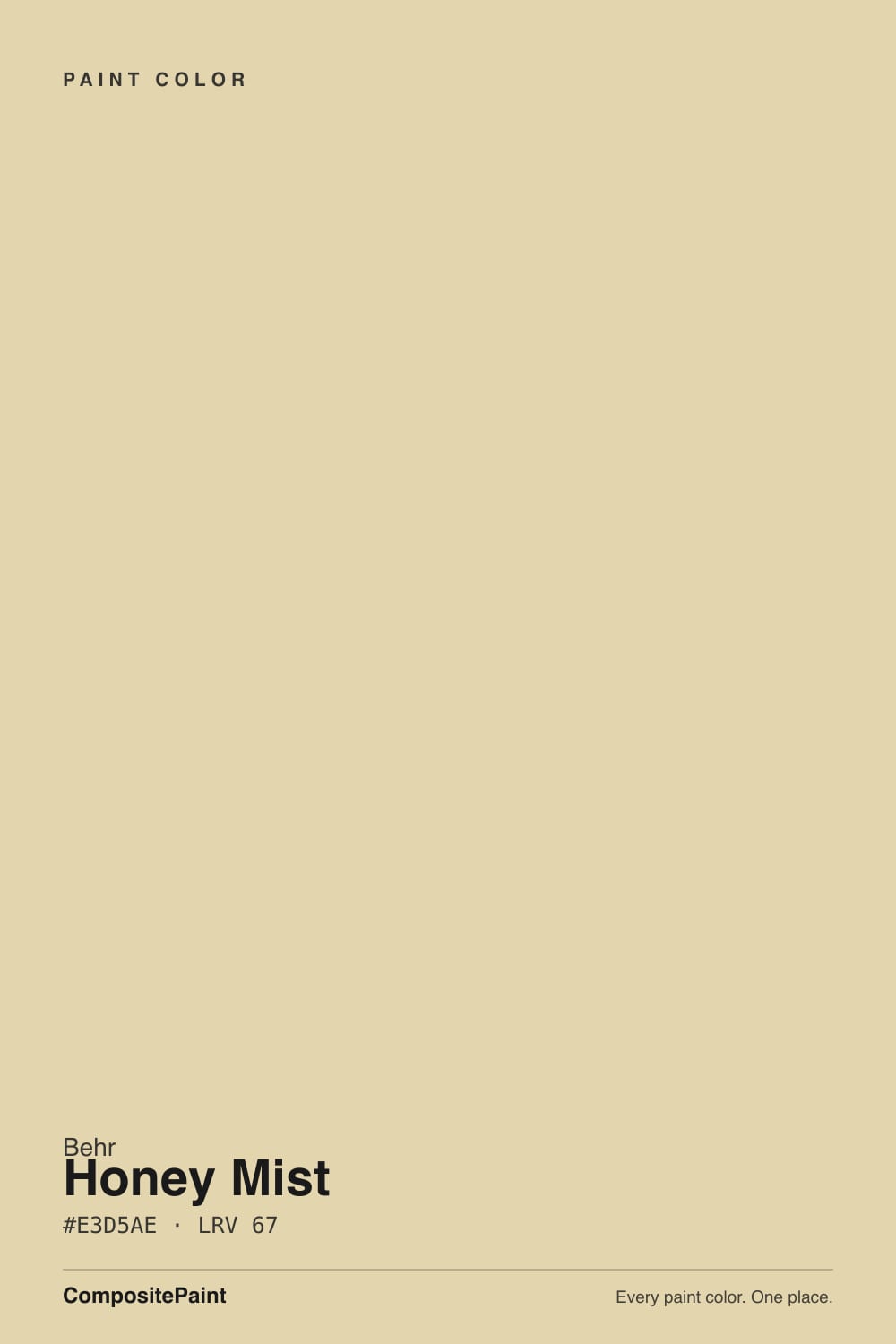
- 1Honey Tea52
- 2Jackfruit62
- 3Honey Mist67
- 4Lemon Twist72
- 5Lemon Chiffon79
The Fast Verdict
Honey Mist is Behr leaning all the way into gold and getting away with it — a light beige with a real dose of honey-yellow instead of the grayed-out whisper most "warm neutrals" settle for. At LRV 67 it is bright enough to run a whole floor, warm enough to fix a cold room, and specific enough that it reads as a color choice, not a default.
The catch is the same thing that makes it work: take the light away and the honey turns muddy fast.
Hallways and entryways that need warmth · kitchens and dining rooms with wood and brass · north-facing rooms that run cold · anyone who wants beige with visible personality, not a gray-beige compromise
Your room is dim with no south or west exposure · you already have gold-toned oak floors you're trying to calm down · you want a true neutral that reads the same in every light · your fixtures and counters are cool gray or white marble
- A genuinely warm honey undertone — not a diluted, hard-to-name greige
- LRV 67 brightens a room without going stark or cold
- Excellent in hallways and entryways that usually get shortchanged on color
- Flatters wood, brass, and warm white trim without fighting them
- Reads as a deliberate color choice, not a default beige
- Goes flat and slightly muddy without real daylight
- Needs warm 2700K bulbs at night — cool LEDs dull it fast
- Clashes with gray or gray-blue counters, floors, and tile
- Too specifically golden for anyone who wanted a true, undertone-free neutral
What Color Is Honey Mist, Really?
A light beige with a real gold cast — not the grayed-down "greige" most brands sell as warm neutral, but an honest honey undertone you can name on sight. Behr files it in the yellow family for exactly this reason: pull the color chip next to a true beige or a taupe and Honey Mist is visibly, unapologetically golden, closer to diluted honey or weak tea than to sand or oatmeal.
At LRV 67 it sits in the same light-reflecting range as many popular warm neutrals (Sherwin-Williams Natural Linen is also LRV 67), so it is not a deep color — it will brighten a room, not darken it. What changes room to room is how much of that honey shows. In strong daylight it reads like a soft, sunny beige; strip the light away and the same wall drifts toward a flatter, slightly greenish tan, because a warm-yellow base with nothing driving it looks muddy rather than warm.
Undertone in one line: yellow-gold, plainly, with a touch of taupe holding it down. If your sample looks green on the wall, that is a cool bulb or a north exposure fighting the yellow — not a different paint.
Where It Shines
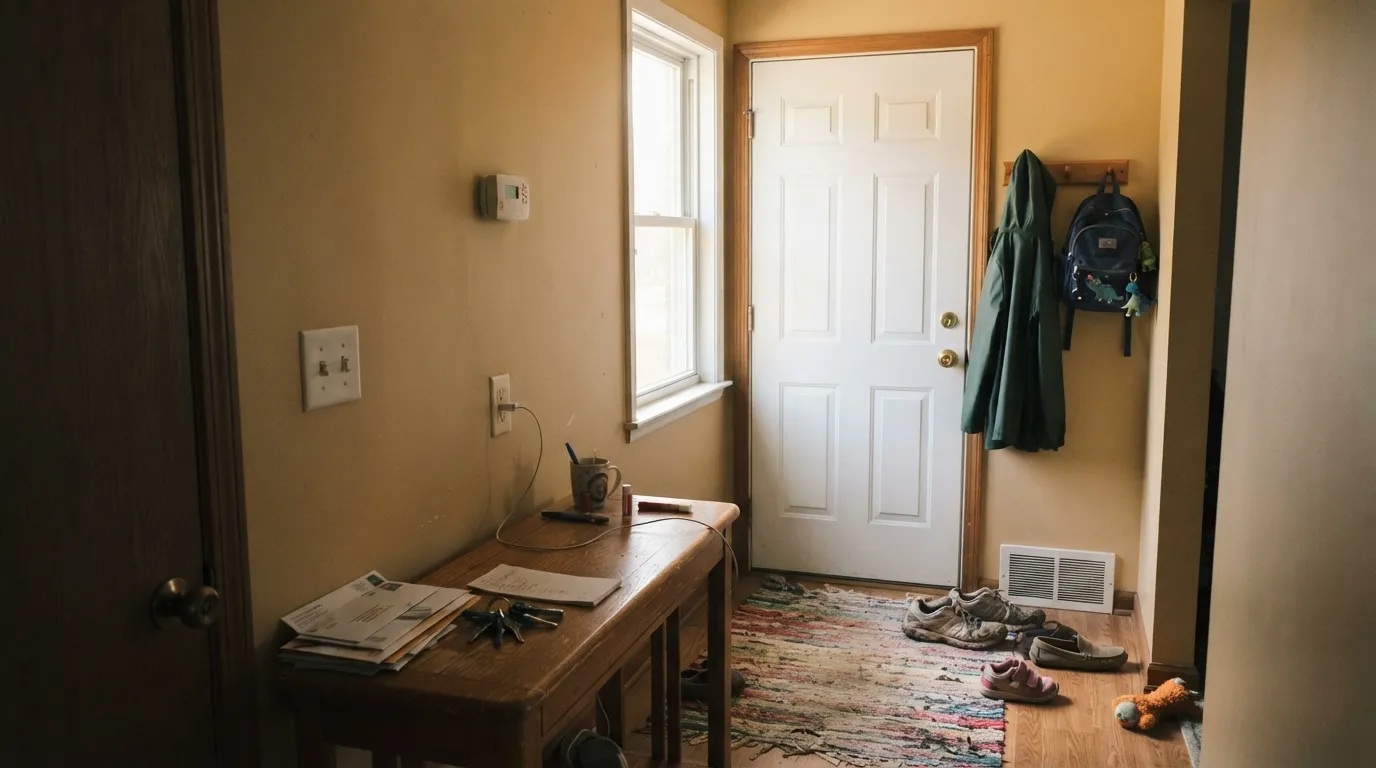
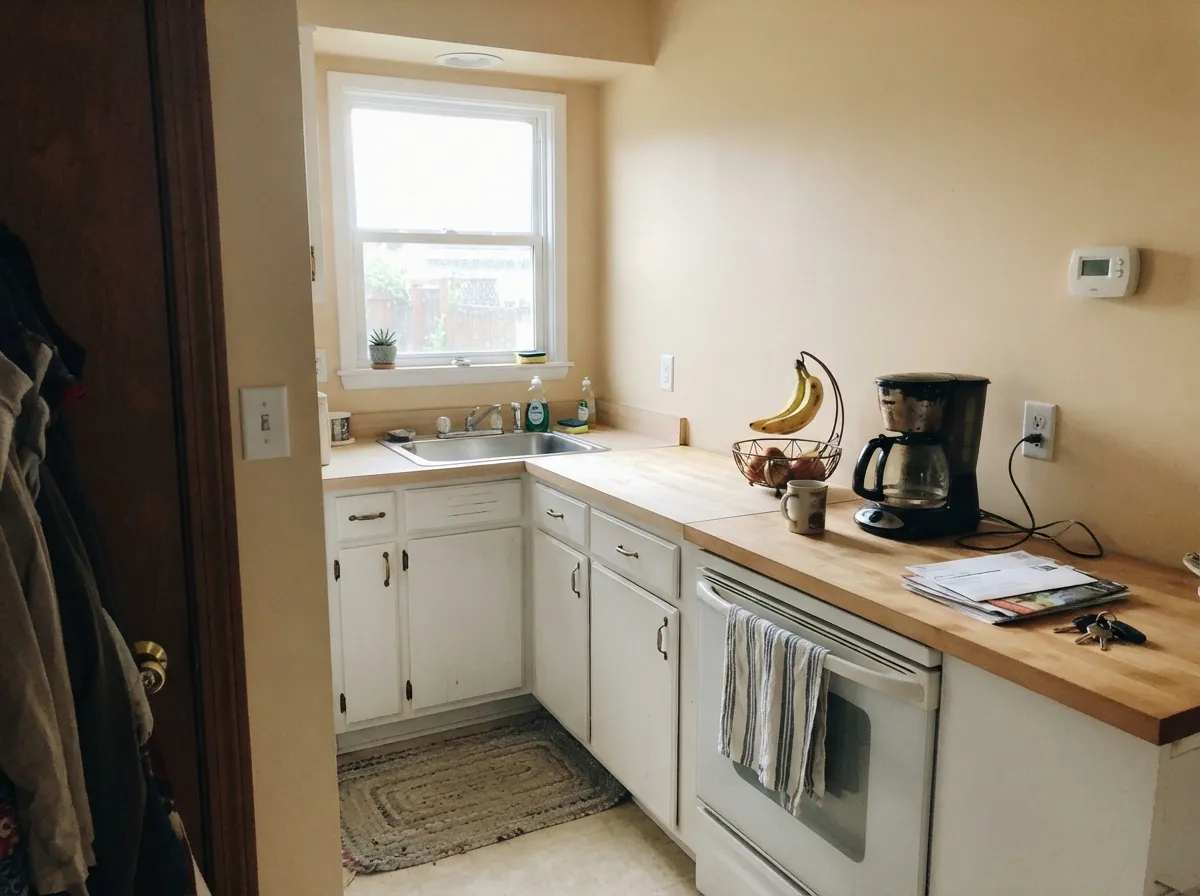
Give it a real window and it does exactly what its name promises: the wall looks lit from inside, even on an overcast afternoon. It is at its best in the rooms builders shortchange on light — hallways, entryways, stairwells — because the honey cast reads as warmth and welcome instead of the beige-on-beige blandness those spaces usually get. Kitchens are its other strong room: against white or wood cabinets and brass hardware, Honey Mist looks intentional, like a color someone picked, not the color that was left over.
Where It Fails
The complaints about a color this specific about its undertone are predictable, and all three come down to the same root cause: this is a color that needs its light to look honest.
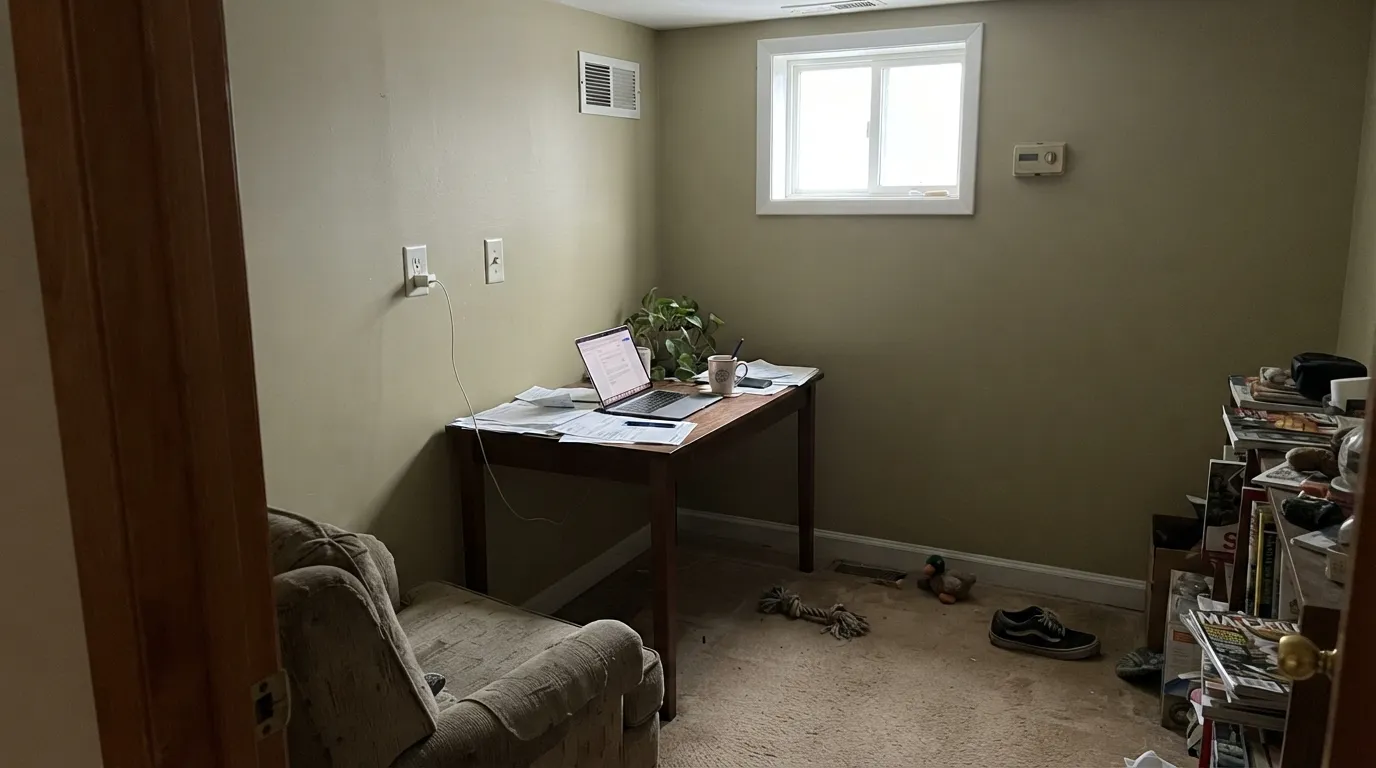
Cool, indirect daylight has almost no warm wavelengths to feed the honey undertone, so the wall goes flat and slightly greenish-tan instead of gold. This is the single most common regret with a yellow-based neutral this light — it is not a defect in the paint, it is a room that never gets the ingredient the color needs.
Swap in daylight or cool-white bulbs (4000K+) and the honey drains out, leaving a dull, slightly sallow beige. This is a bulb problem, not a paint problem — 2700K warm bulbs are part of the job, not optional.
Gray quartz counters, gray floors, or a cool-gray sofa sit at the opposite temperature and make Honey Mist's yellow look louder and slightly dirty by contrast, instead of warm. The fix is company, not paint: keep the metals, wood, and textiles warm too, or pick a cooler neutral if the gray hardscape is fixed and staying.
Room by Room
The exact space it was named for: a windowless or low-light passage gets a lift instead of going beige-flat. Pair with a warm white trim, not a stark cool white, so the honey doesn't have to fight the woodwork.
Butcher block, oak, brass and warm white cabinets all sit comfortably with it. Cool gray quartz or stainless-heavy kitchens should sample carefully before committing — the metals will read colder against this much yellow.
South or west light: excellent, especially with a stone fireplace or leather furniture. North-facing with small windows: sample a large board first, since this is exactly the light situation that dulls it.
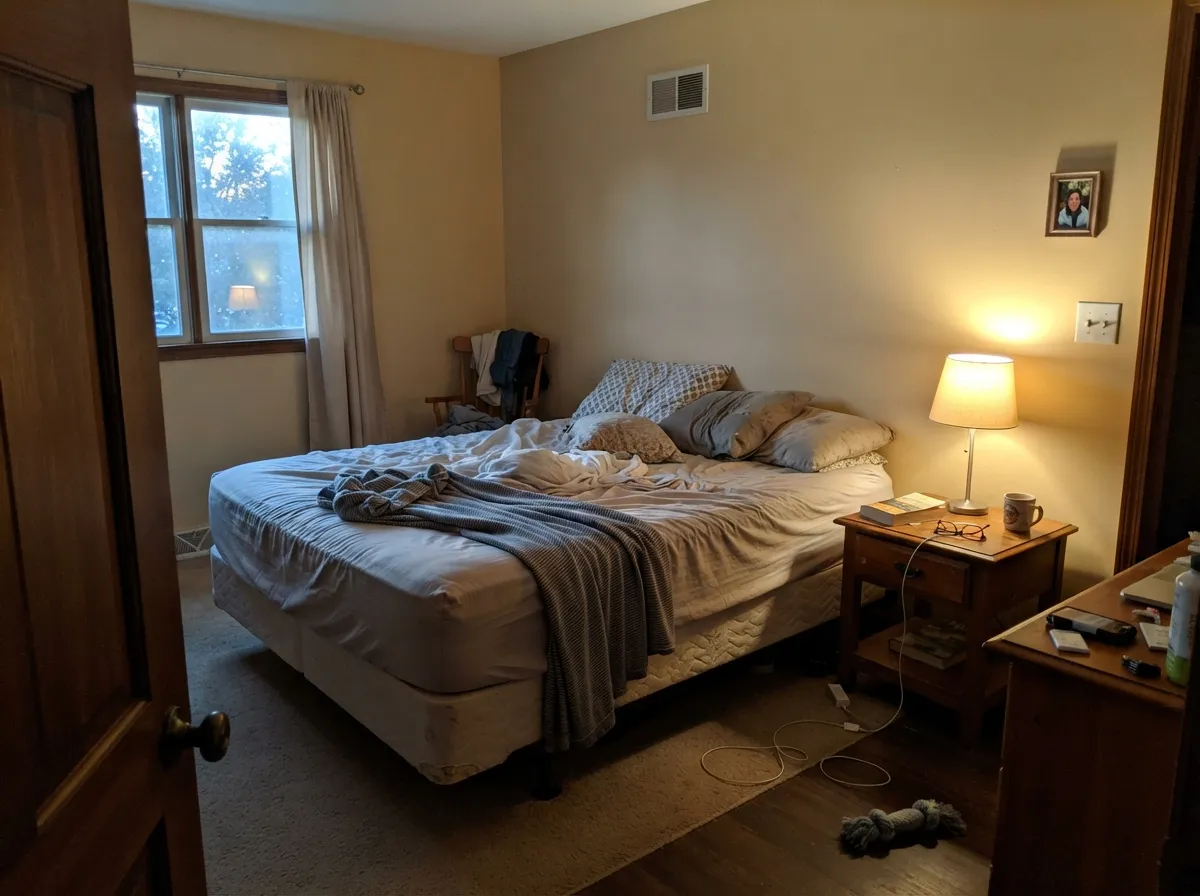
Under 2700K lamps it turns cozy and honey-warm at night, which suits a bedroom well. Skip it if the room only has cool overhead LEDs and you don't plan to change them.
Against white subway tile and brass or matte-black fixtures it's a soft, spa-warm neutral. Against gray or blue-gray tile it will read yellow rather than warm — test the actual tile before painting.
It can work as a soft body color with white trim in full sun, but the honey cast reads more clearly gold-yellow outdoors than most buyers expect from a "beige." Sample it on the actual elevation, in the actual light, before committing to gallons.
Your Light Is the Risk
Direct warm light feeds the honey cast and the wall looks genuinely lit from within, even on a cloudy day.
Cool, indirect daylight starves the yellow undertone and the wall reads flat, slightly greenish-tan instead of golden. Sample a large board here first.
Brightest and most honestly honey at midday; softer and more beige-leaning as the light fades toward evening.
2700K warm bulbs: cozy, glowing honey. Cool white or daylight LEDs: the color drains toward a dull, sallow beige — change the bulb, not the paint.
Most complaints about Honey Mist are a light mismatch. Upload a photo of your actual room and see it on your walls — then ask for the same wall in north light or evening lamps before you buy a single sample.
Need It From Another Brand?
Any paint counter can custom-tint Behr MQ3-42 directly. If you would rather stay in one brand's own deck, these are the closest stock matches, measured as ΔE2000. Under 2 is a difference you will not see on the wall.
| Brand | Closest color | ΔE | LRV | |
|---|---|---|---|---|
| Sherwin-Williams | Rice PaddySW 6414 · Sherwin-Williams | 1.3 | 66 | Color page → |
| Benjamin Moore | Golden Hills262 · Benjamin Moore | 1.5 | 64 | Color page → |
| Valspar | Meadow Dew8003-24B · Valspar | 2.0 | 68 | Color page → |
| PPG / Glidden | Caramelized PearsPPG1105-3 · PPG / Glidden | 2.0 | 67 | Color page → |
| Glidden | Caramelized PearsPPG1105-3 · Glidden | 1.5 | 68 | Color page → |
| Dutch Boy | Minted Tea225-1DB · Dutch Boy | 1.3 | 66 | Color page → |
Similar Behr Colors
The nearest shades to Honey Mist within Behr's own range, ranked by perceptual color distance — useful when you want the same look a touch lighter, darker, or warmer.
WCAG 2.1: AA is 4.5 : 1 for normal text, 3 : 1 for large text, AAA is 7 : 1.
Honey Mist vs the Colors You're Also Considering
Every Honey Mist sample board has the same rivals on it. The numbers show the real lightness gap — then it comes down to which risk you would rather live with.
Pick this when you want the undertone to be unmistakable, not a hint.
Sherwin-Williams SW 9109 · LRV 67Natural LinenPick this if you want the same light level with the yellow toned down to a softer beige — Natural Linen still runs warm but reads less specifically golden.
Pick this for a room that runs cold and needs more honey, not less.
Benjamin Moore OC-14 · LRV 65Natural CreamPick this for a cooler-leaning, more muted warm off-white in a room that already runs a little warm.
Honey Mist Coordinating Colors
The rule for coordinating with Honey Mist is simple: match its temperature. Warm whites, wood tones, brass, and muted greens all sit comfortably next to it; cool grays and blue-grays fight it and make the yellow look louder than intended. These are the partners that keep it looking deliberate rather than dated:
A Color That Sells On Its Name, Not A Moment
Honey Mist hasn't had a Color of the Year push or a viral design-blog moment — it earns its search traffic the plain way, by being findable and doing what its name says. Shoppers looking for "a light yellow that isn't too yellow" or "warm beige for a dark hallway" land on it because the name and the swatch match: it really does look like honey diluted with light mist.
That makes it a useful, honest pick rather than a trend bet. It won't date the way a saturated Color of the Year yellow can, because it never committed that hard in the first place — it's a light neutral with a visible gold lean, closer in spirit to a warm off-white than to an accent color.
Honey Mist With Wood Tones and Floors
Warm wood is the easy pairing: honey oak, golden pine, and butcher block all sit in the same family of warmth as the paint, so the wall and the floor read as one considered palette instead of competing tones. If your existing floor already leans orange-yellow, walk the two side by side before committing — two warm-yellow surfaces at once can occasionally feel like too much of the same note, and a slightly cooler neutral like Natural Cream may be the better handoff.
Cool-toned floors — gray-washed wood, gray LVP, gray-veined stone — are the pairing to test carefully. The floor will look grayer and the wall will look yellower when they're side by side, an effect that gets more obvious the bigger the room. A warm rug and warm-toned furniture close the gap in most rooms, but a large sample board over the actual floor is worth the ten minutes before painting the whole space.
Three Ready Palettes Built on Honey Mist
A color is never alone on the wall. These are complete combinations in the 60-30-10 pattern, with the reason each one holds together. Every one opens in the visualizer.
White Dove's own warmth means the trim never fights the honey walls the way a stark white would, and Urbane Bronze on the door gives the entry one grounded dark note without going cold.
Try this palette in your roomAlabaster's soft warmth keeps the cabinets from reading stark against golden walls, and Evergreen Fog on the island is muted enough not to fight the yellow while giving the room one deeper anchor.
Try this palette in your roomWhite Dove trim keeps the honey walls from feeling closed-in, and one Cracked Pepper accent wall gives the room a quiet, moody counterweight without cooling down the whole palette.
Try this palette in your roomHoney Mist FAQ
Is Behr Honey Mist yellow or beige?
Both, honestly — Behr files it in the yellow family, and on the wall it reads as a light beige with a clear honey-gold cast, not a grayed-out neutral. If you want beige with the yellow minimized, this is the wrong pick; if you want beige with the yellow visible, it's exactly right.
Will it look yellow-green or muddy in my room?
Only if the room lacks real daylight. Without a warm light source feeding it, a light yellow-based color like this can drift toward a flat, slightly green-tan cast. In a north-facing room with small windows, sample a large board before committing to gallons.
What trim white goes with Honey Mist walls?
A warm white, not a stark cool one. A bright blue-white trim will make the walls look dingy by contrast; a warm off-white lets the honey read as intentional. White or warm cream trims from the same brand family work cleanly.
Does it work with gray floors or countertops?
Not its best pairing. Gray and gray-blue surfaces sit at the opposite temperature and make the yellow undertone look louder and slightly off, rather than warm. It performs best with wood tones, brass, and warm white — sample against your actual counters and floor first.
Is Honey Mist good for a hallway with no windows?
It's one of the better choices for exactly that problem, since the honey cast reads as warmth even under artificial light — but it still needs 2700K warm bulbs to look right. Under cool white overhead lighting, any warm neutral will read duller than the chip promises.
How does it compare to a true beige like Even Better Beige?
Even Better Beige is Behr's beige with the yellow deliberately bred out; Honey Mist is the opposite move — it keeps and features the yellow. Pick Honey Mist when you want the warmth to be obvious, and the other when you want beige without any gold flash.
Have you painted with Honey Mist?
Rate it — one tap helps the next reader decide.
Ask a Question