Fresh Apple
Behr's loudest apple green, reviewed honestly: the kids' rooms and doors it makes, the four walls it should never cover, and the coverage nobody warns you about.

Jessica has spec'd whites and neutrals for more than 300 rooms and keeps a sample wall of painted drawdowns in her studio. Every color review is checked against real reader rooms in the comments and re-tested when a formula changes. About the testing process →
- 1Sage Green22
- 2Evergreen Fog30
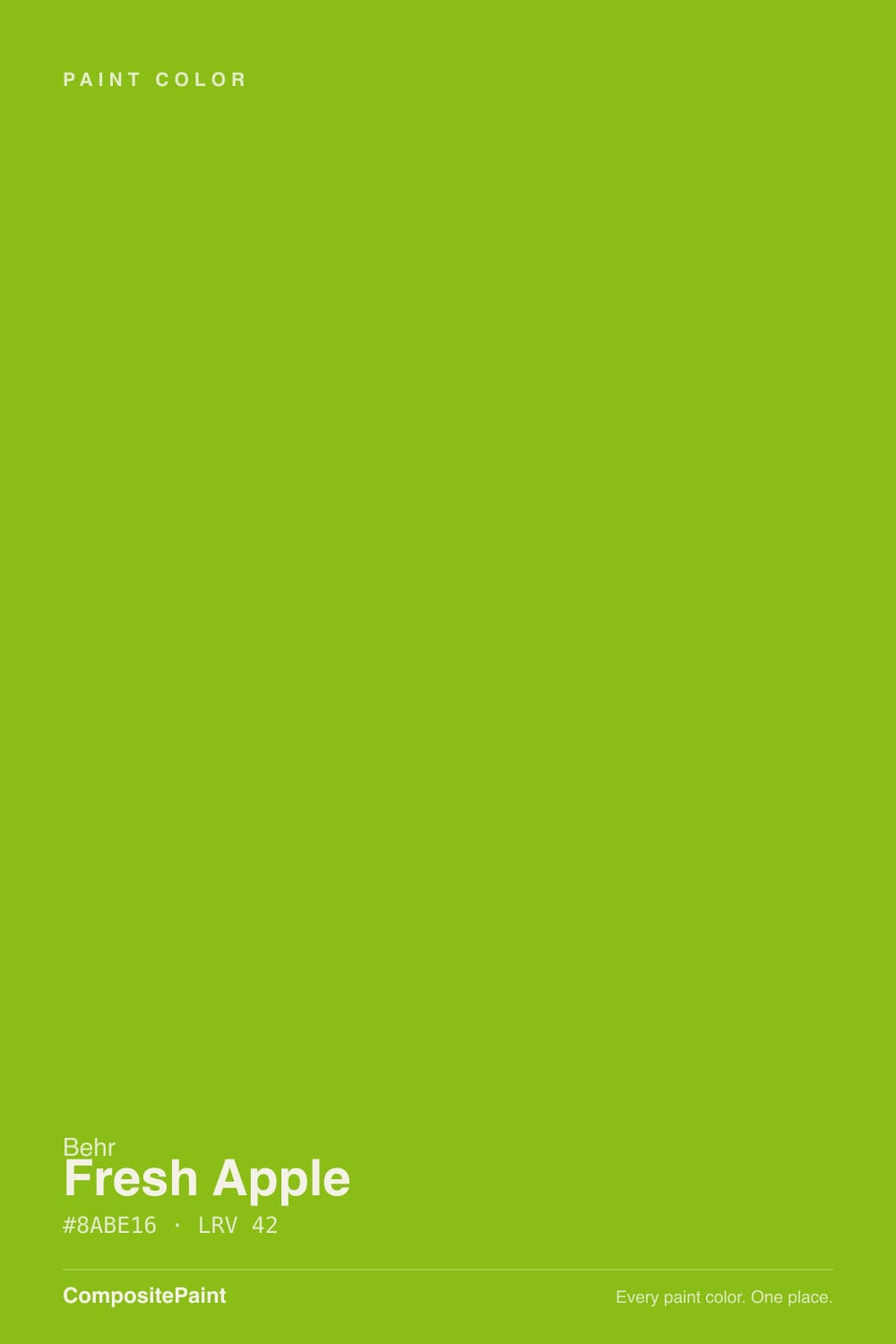
- 3Fresh Apple42
- 4October Mist47
- 5Soft Fern57
The Fast Verdict
Fresh Apple is the crisp yellow-green off the skin of a Granny Smith, and Behr did not water it down. It is bright, warm-leaning and completely un-shy — the opposite of every sage in the deck. On one wall of a kid's room, on a play corner, on a front door, it is a small amount of paint doing a huge amount of work. On all four walls of anything, it takes the room over and starts tinting the ceiling, the trim and everybody's face. Buy it as an accent, not as a wall color, and it is one of the best-value fun colors Behr sells.
Kids' rooms and playrooms, in doses · one accent wall against a calm neutral · laundry rooms, mudrooms and other small hard-working spaces · a front door that should be visible from the street
You actually wanted a sage or a soft green · the room is dim and north-facing · you plan to drench all four walls of a bedroom · your floors and trim are orange-toned honey oak · you repaint rarely and hate redoing rooms
- A genuinely happy green with no gray, no dust, no sage hedging
- One wall or one door does the whole job — cheap fun per quart
- Reads playful in a kids' room without cartoon decals or themes
- Bright enough to lift a dark laundry room, mudroom or hallway nook
- Sold at Home Depot in Premium Plus, Ultra, Marquee and Dynasty, flat through hi-gloss
- Casts green light on ceilings, trim and faces when it covers a whole room
- Coverage is poor — tinted primer and often three coats
- LRV 42 badly undersells how loud it reads on a wall
- Clashes with honey oak, golden beige and most warm builder finishes
What Color Is Fresh Apple, Really?
A saturated yellow-green — chartreuse territory, but pulled back from neon by a warm, sunny base rather than a cold one. Behr's own description of it runs to vibrant and medium-toned with warm undertones, and the SKU tells the same story: P360-6 sits at the deep end of a run of apple greens that starts with the pale P360-2 Iced Green Apple. This is the family's grown-up, full-strength member. There is no gray in it, no dust, no olive murk. If you have spent the last decade looking at sages, the first sample square on your wall is going to feel like someone turned the volume up.
The number that fools people is LRV 42. On paper that is mid-tone — the same neighborhood as a quiet Behr sage like Bitter Sage at LRV 40 or Sherwin-Williams Clary Sage at 41. On a wall it behaves nothing like them, because your eye reads saturation before it reads lightness. LRV tells you how much light comes back; it says nothing about how much color comes with it. Fresh Apple returns a mid amount of light and a very large amount of green, which is why a sample chip that looked reasonable in the store can feel three shades louder once it is four feet wide.
Undertone in one line: yellow-green, warm side, no gray. If your sample looks acid or highlighter-ish, that is strong daylight amplifying the yellow. If it looks swampy and olive, the room is dim and the color has nothing to reflect. Both are the same paint telling you the truth about the light in that room.
Where It Shines
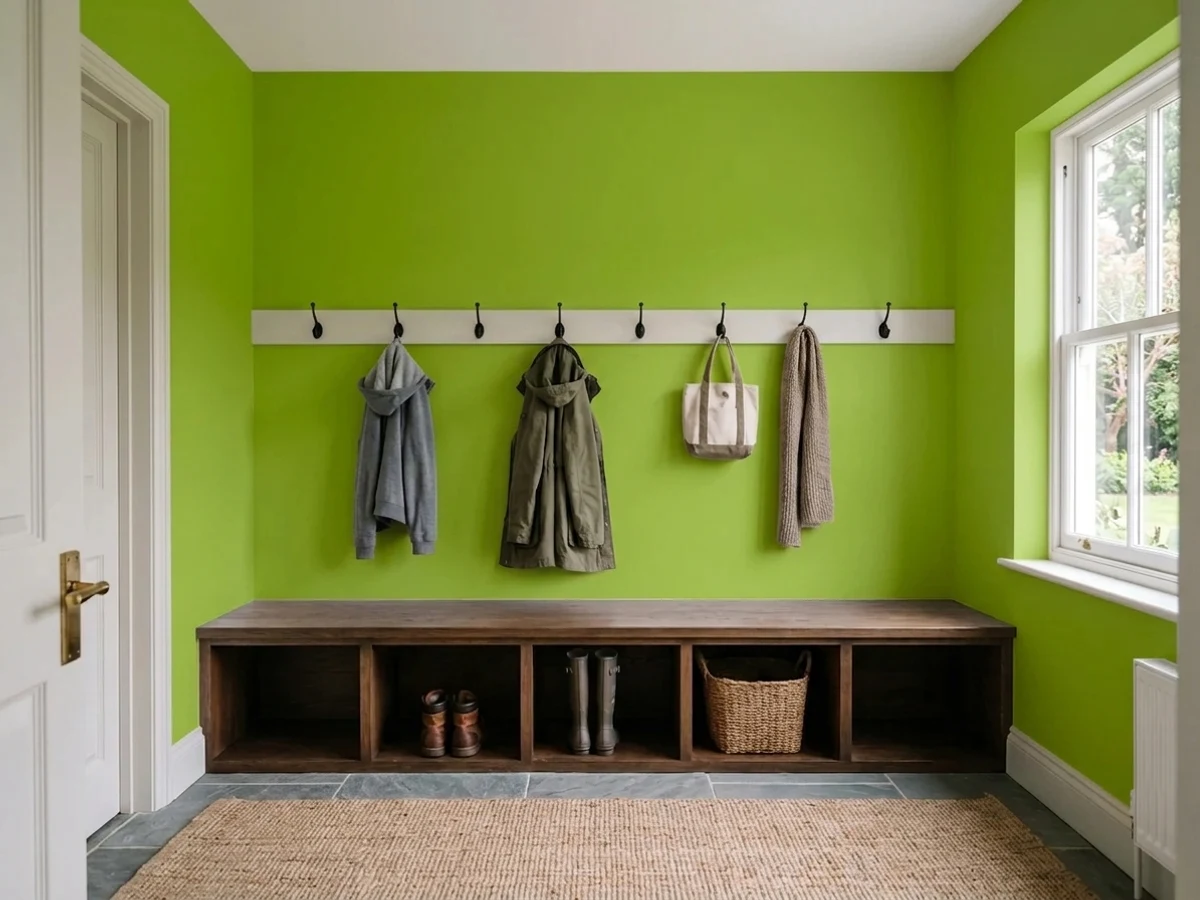
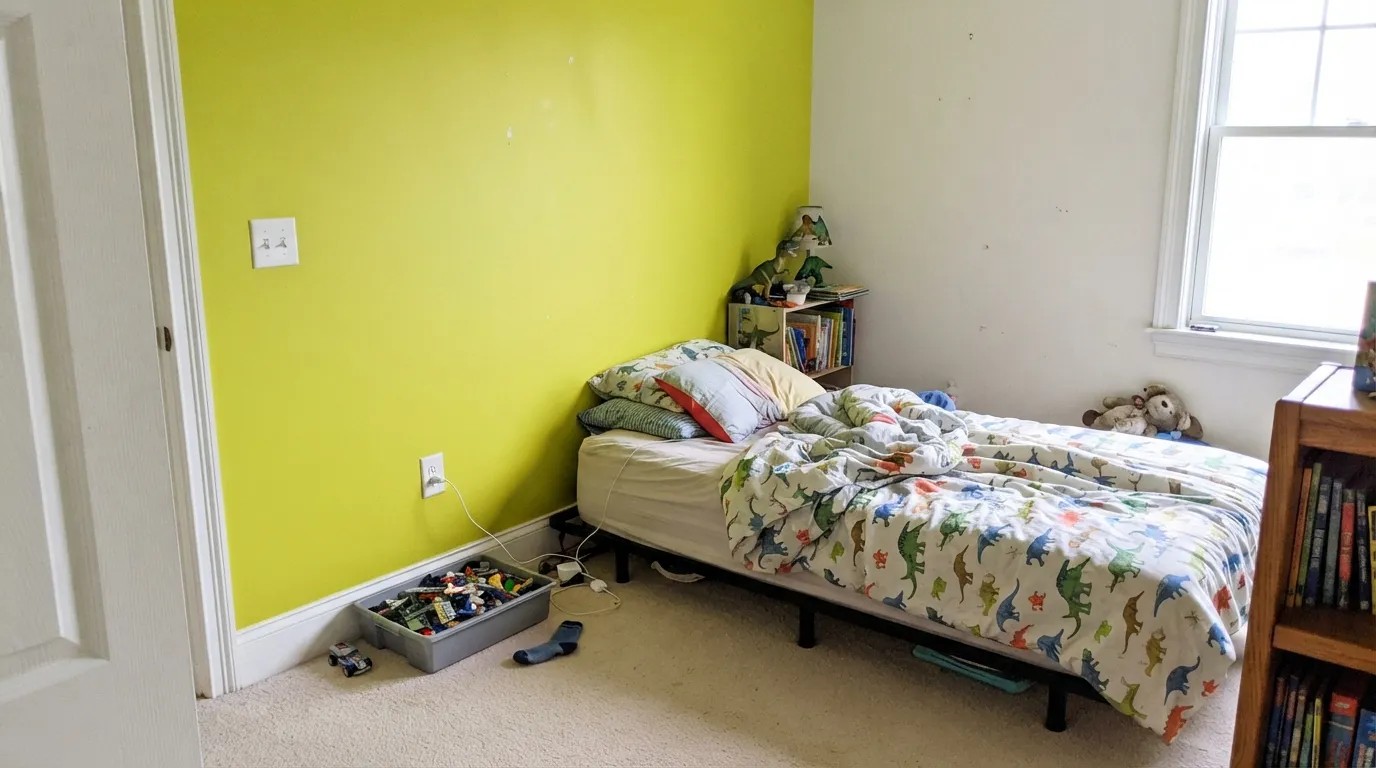
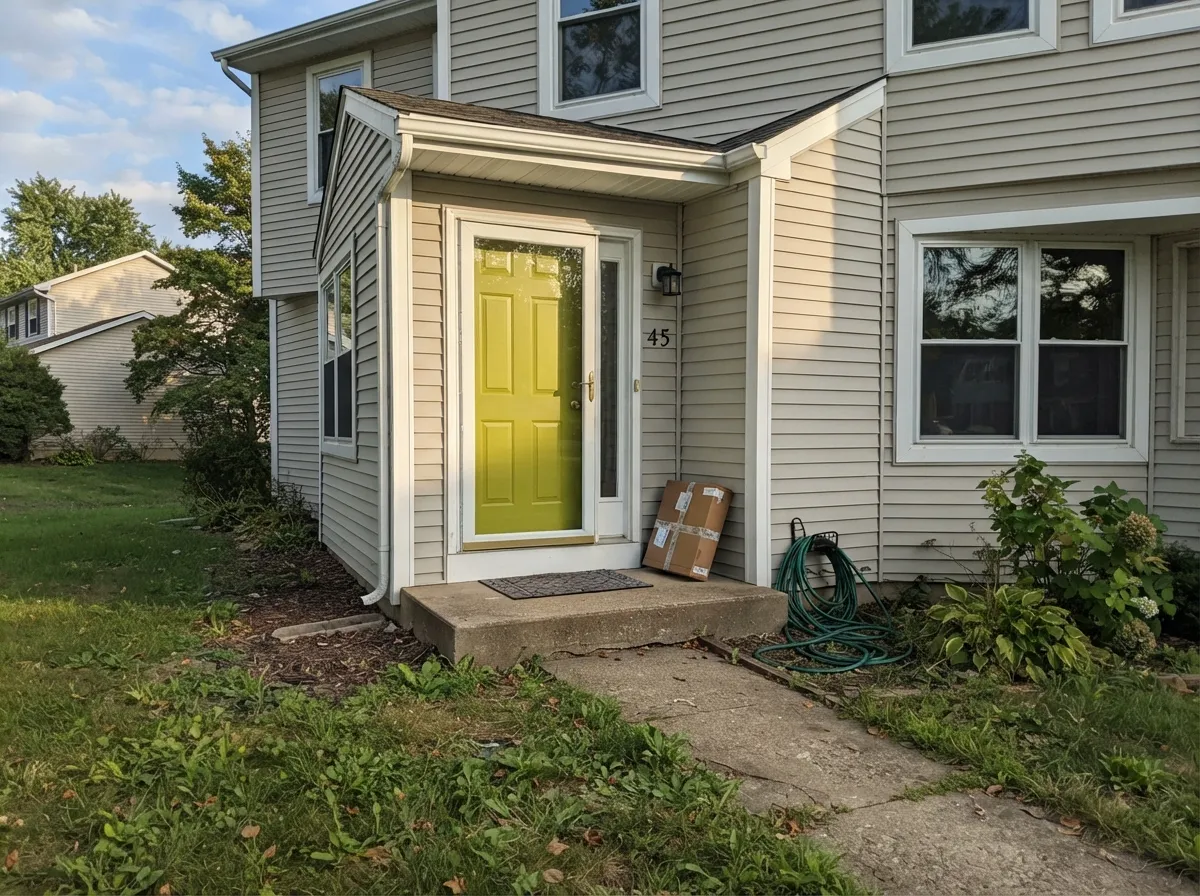
This color is at its best doing one job in one place. A single wall behind a bed or a low playroom half-wall gives it exactly the amount of surface it can handle, and the payoff is real: a room that reads happy without a single decal or licensed character on it. Small utility rooms are its quiet second act — a laundry room or mudroom is already a box you pass through, so a loud green in there reads as personality, not as a decision you have to live inside. And on a front door against pale siding, it is one of the cheapest curb-appeal upgrades in Behr's deck: one quart, one afternoon, and the house has a face.
Where It Fails
The bad Fresh Apple stories are remarkably consistent, and none of them are about the paint being a bad paint. They are about the amount of it. All three are predictable before you open the can — and if your plan matches one, sampling a bigger square will only confirm it faster.
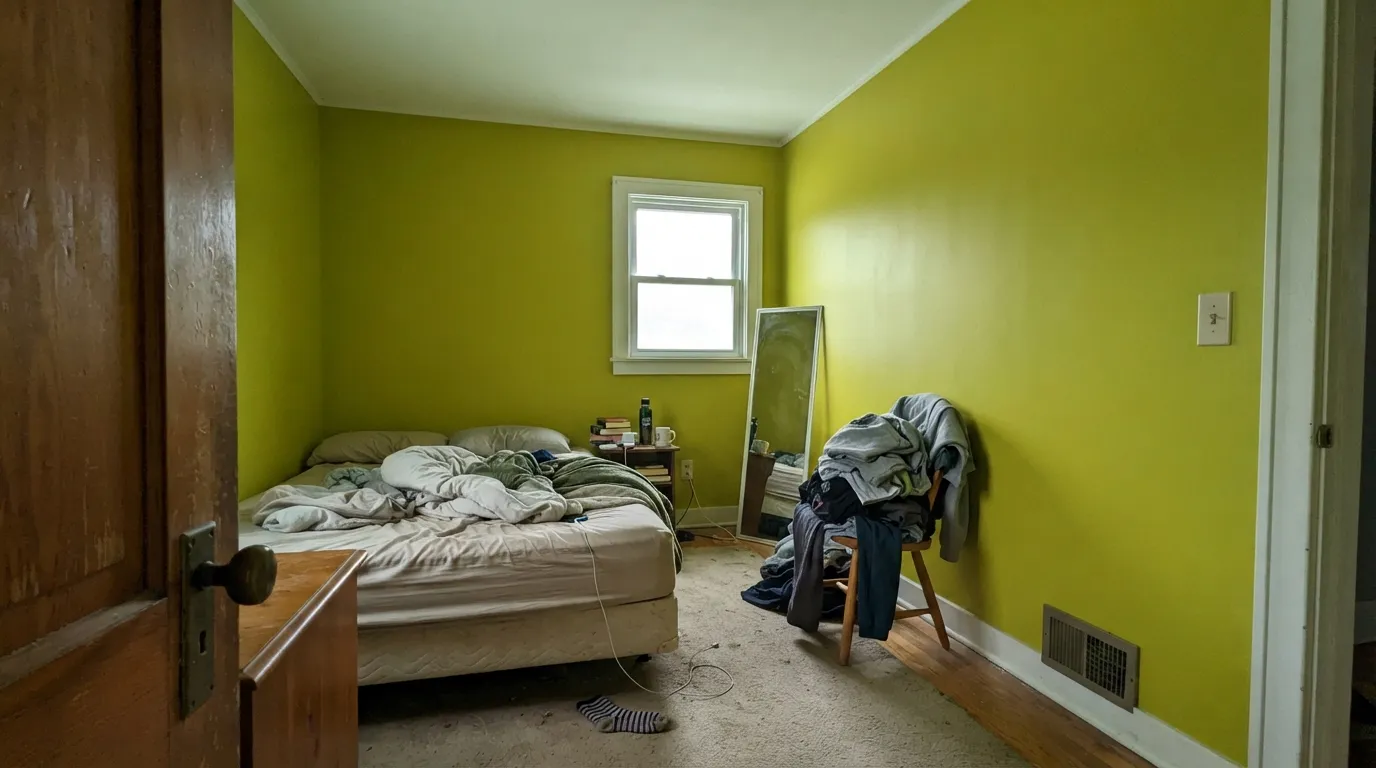
This is the number-one regret, and it is physics, not taste. A high-chroma color bounces its own hue onto everything it faces: the ceiling picks up a green cast, the white trim stops looking white, and skin tones in the room go slightly ill. In photos it is even more obvious than in person. One wall of Fresh Apple is a decision; four walls is a filter over the entire room. If you want the color everywhere, put it on cabinetry, lockers or built-ins instead, and let the walls stay neutral.
Buyers coming from the sage aisle keep reading LRV 42 as "mid-tone, therefore calm." It is not. Fresh Apple has roughly the same lightness as a soft sage and several times the saturation, so it lands closer to a lime than to a green-gray. If what you actually wanted was green-that-behaves-like-a-neutral, this is the wrong end of the deck — Behr Sage Brush at LRV 60 or Bitter Sage at 40 is the color you were picturing.
Saturated yellow-greens are the hardest pigment family in any deck to hide, because the colorant is transparent and there is very little white in the formula to build opacity. Rolled straight over builder white, the first coat looks patchy and streaky and the second still flashes at the roller laps. Have the store tint your primer toward the color, plan on three coats in a cheaper line, and expect touch-ups to show unless you cut and roll the full wall again. Behr Marquee and Dynasty hide it best; Premium Plus in flat is where most of the two-coat complaints come from.
Room by Room
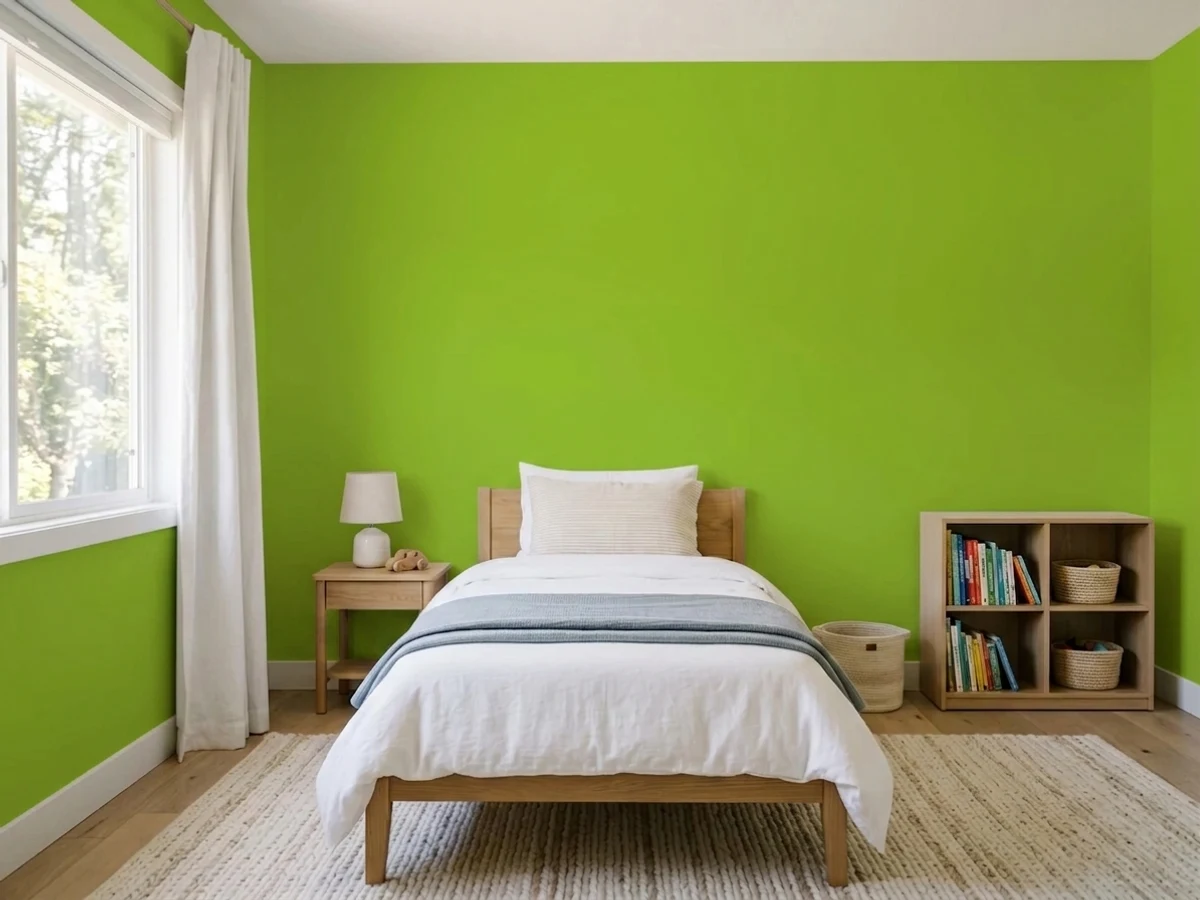
One wall, or the bottom half of the walls with a rail, or the inside of a closet and bookcase. That is the dose. Against a soft white like Behr Polar Bear it reads cheerful and slightly grassy instead of chemical, and it plays with primary-colored toys better than any pastel does. Eggshell is the right sheen — it wipes, and it keeps the color from getting glossy-loud.
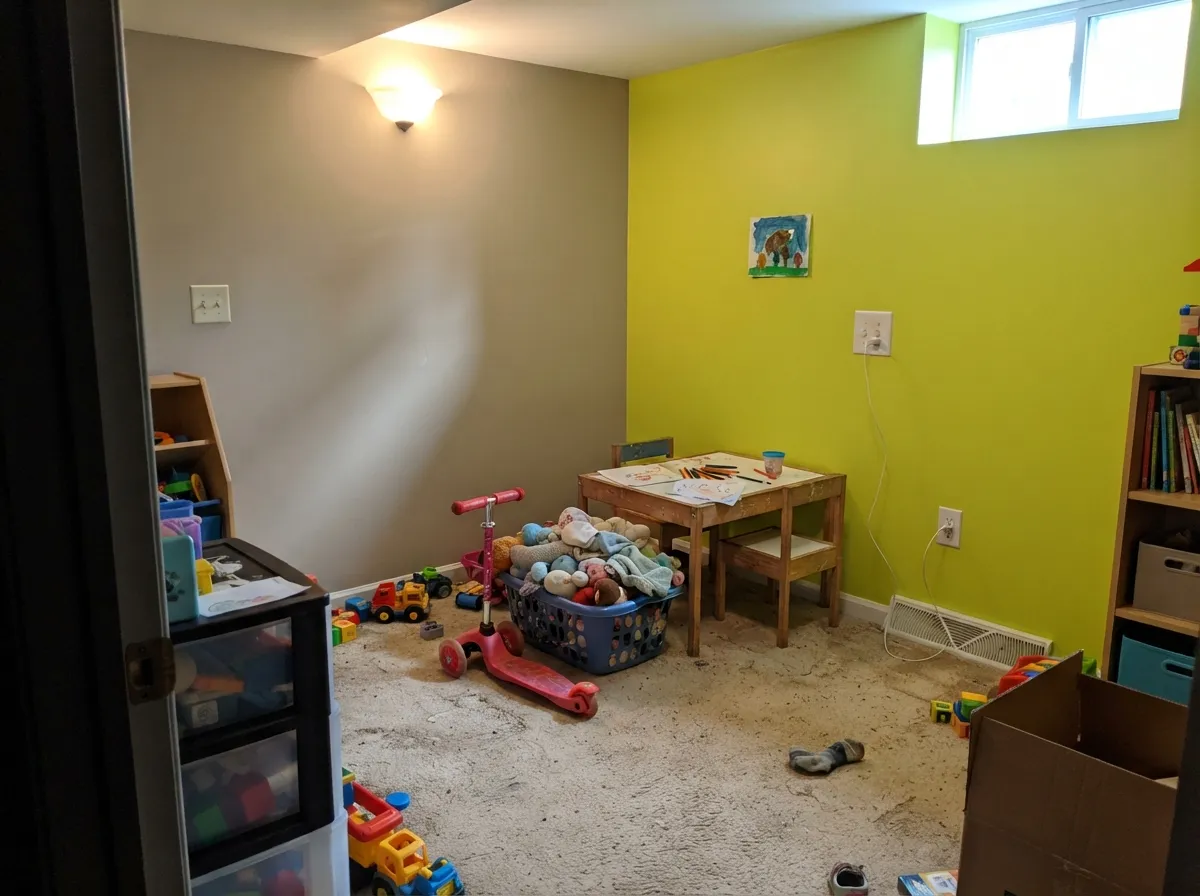
Playrooms are where this color has an actual job: paint the active corner, leave the reading nook a calm greige, and the room tells kids what to do in each half without a single label. It also survives being the loudest thing in a room full of plastic. Satin here — handprints, scooters and crayon all come off it.
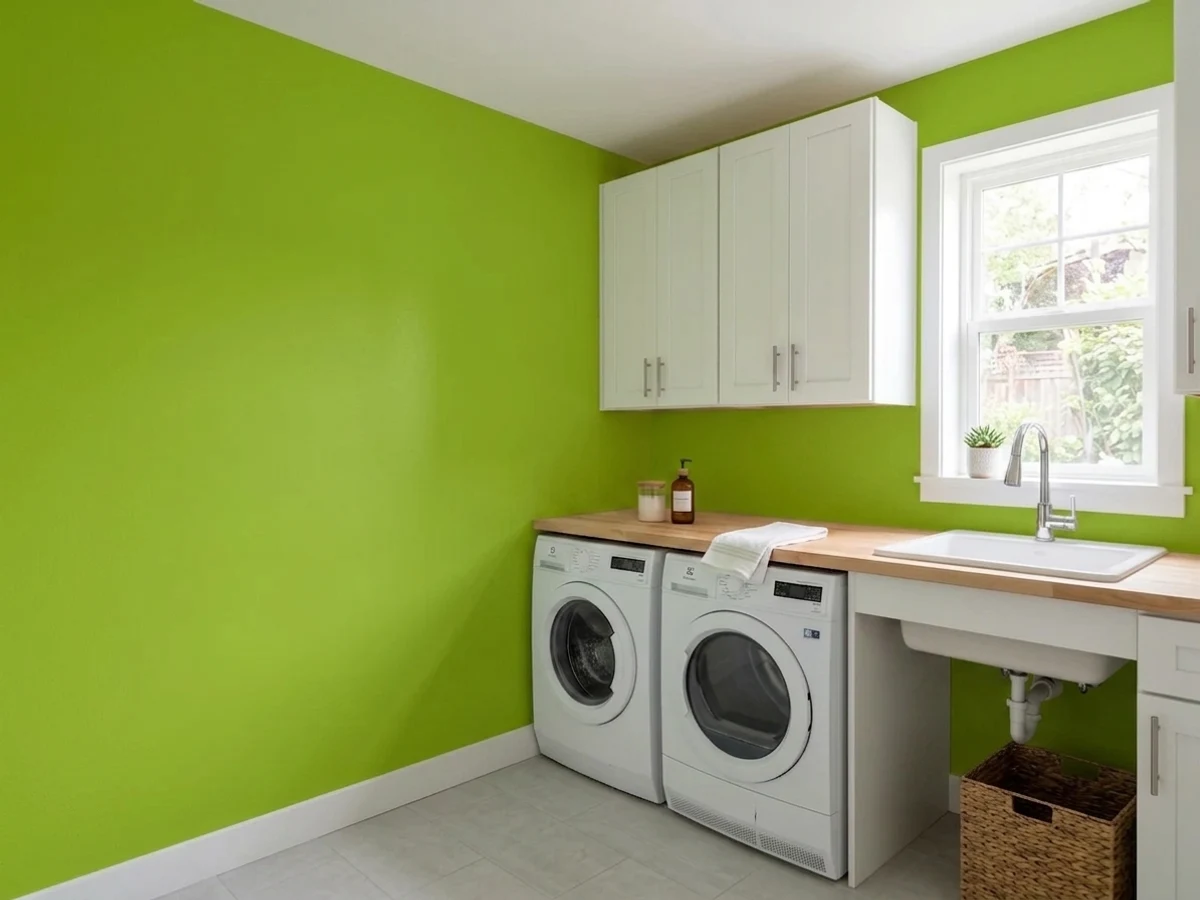
Small, windowless-ish rooms nobody sits in are the safest place to be bold, and a chore room in Fresh Apple is genuinely nicer to walk into. It also holds up as a cabinet or locker color over a neutral wall. Satin or semi-gloss so wet coats and boot scuffs wipe off.
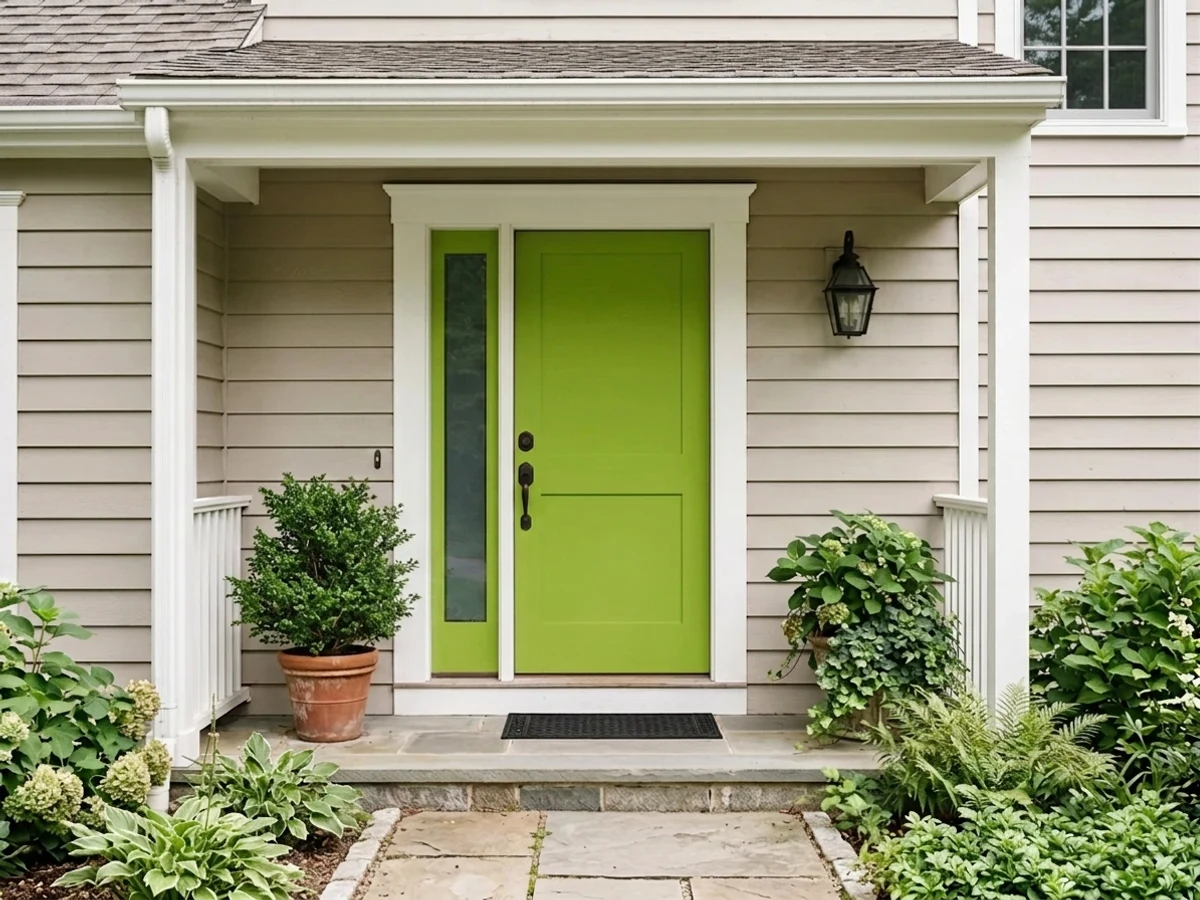
Against pale gray or greige siding with white trim, a Fresh Apple door reads intentional and modern-cottage rather than novelty. Behr's own inspiration content has pushed it as a door color for years and it earns that. Use an exterior line in satin, and understand the fade note in the section below before you commit a whole facade to it.
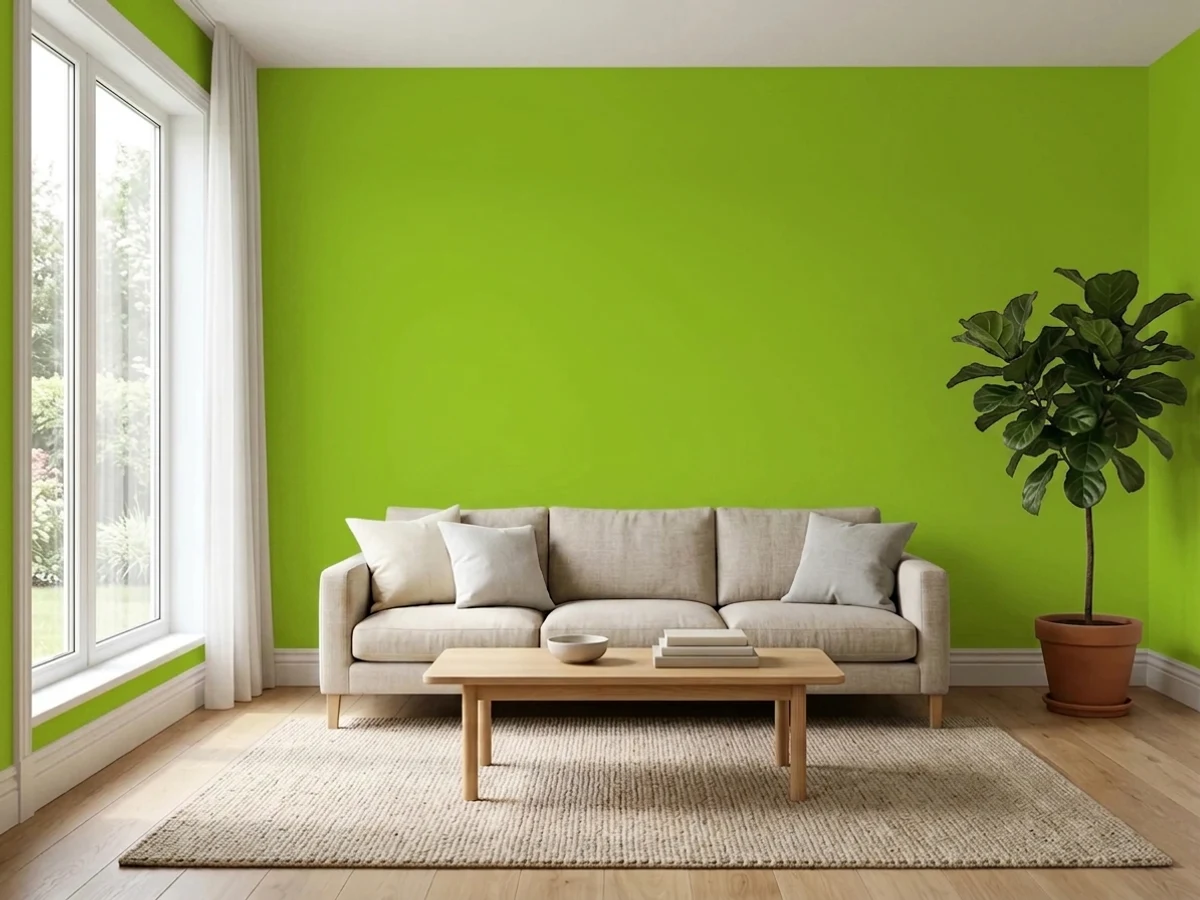
As a single wall, an alcove, the back of open shelving, or a painted bench in a breakfast nook it is great fun. As the whole room it is exhausting after a week, and it fights every warm wood tone and every beige sofa in the space. If you want green in a main living space, go deeper and grayer — that is what those colors are for.
Yellow-green at this saturation is a wake-up color; it is the visual equivalent of a bright morning. Bedrooms want the opposite. There is no lighting trick or sheen choice that makes this restful, so skip it here rather than trying to make it work.
Your Light Is the Risk
A south or east room with plenty of light but no direct beam on the wall is where it reads exactly like the chip — crisp, clean, apple-skin green. This is the light to sample in and the light the color was built for.
Cool, weak light gives a saturated yellow-green nothing to work with. The yellow flattens out and the wall slides toward a dull swamp-olive that looks nothing like the store chip. This is the single worst room in the house for it.
East light in the morning pushes it toward a sharp lime that can feel acidic before coffee. Through midday it settles into true apple green, and low west sun at golden hour floods the yellow forward until it reads almost neon for an hour. If your accent wall faces west, look at it at 6pm before you buy the gallon.
Warm 2700K bulbs add yellow to a color that already has plenty, so the wall goes mustard-lime at night. Cool 4000K LEDs strip the warmth and turn it colder and more chemical. The compromise that keeps it looking like the daytime color is 3000K, and it matters more here than with any neutral.
Most complaints about Fresh Apple are a light mismatch. Upload a photo of your actual room and see it on your walls — then ask for the same wall in north light or evening lamps before you buy a single sample.
Need It From Another Brand?
Any paint counter can custom-tint Behr P360-6 directly. If you would rather stay in one brand's own deck, these are the closest stock matches, measured as ΔE2000. Under 2 is a difference you will not see on the wall.
| Brand | Closest color | ΔE | LRV | |
|---|---|---|---|---|
| Sherwin-Williams | Electric LimeSW 6921 · Sherwin-Williams | 3.3 | 42 | Color page → |
| Benjamin Moore | Lime Green2026-10 · Benjamin Moore | 2.6 | 45 | Color page → |
| Valspar | Awakening6006-10C · Valspar | 4.7 | 39.5 | Color page → |
| PPG / Glidden | Funky FrogPPG1221-7 · PPG / Glidden | 3.4 | 43 | Color page → |
| Glidden | Funky FrogPPG1221-7 · Glidden | 3.1 | 43 | Color page → |
| Dutch Boy | Spring Ivy124-7DB · Dutch Boy | 3.3 | 42 | Color page → |
Similar Behr Colors
The nearest shades to Fresh Apple within Behr's own range, ranked by perceptual color distance — useful when you want the same look a touch lighter, darker, or warmer.
WCAG 2.1: AA is 4.5 : 1 for normal text, 3 : 1 for large text, AAA is 7 : 1.
Fresh Apple vs the Colors You're Also Considering
Every Fresh Apple sample board has the same rivals on it. The numbers show the real lightness gap — then it comes down to which risk you would rather live with.
Pick this when you want the color to be the loudest thing in the room, not a background.
Behr S390-5 · LRV 36Laurel TreePick this for a true leaf green with the acid taken out — the same energy, calmer, and it survives more than one wall. It shares Fresh Apple's coverage complaint, though.
Pick this when Sage Brush looks washed out and you want the color to actually register.
Behr S370-3 · LRV 60Sage BrushPick this if you wanted a green room rather than a green wall — at LRV 60 it is genuinely livable on all four sides.
Fresh Apple Coordinating Colors
The rule with a color this saturated is that its partners should all be quiet. Clean whites, warm-neutral greiges and one near-black — that is the whole list, and it is enough. Avoid putting it next to another bright: chartreuse plus a strong blue or a strong orange stops being a scheme and starts being a logo. These are the Behr partners that keep showing up in rooms where Fresh Apple actually works:
Chartreuse Came Back, and Fresh Apple Was Already Sitting There
Yellow-green is having its loudest moment in twenty years. After a decade of greige and a few years of sage, the design press has landed on chartreuse as the color that finally breaks the neutral streak, and 2026 round-ups are full of muddied, expensive-sounding limes from boutique brands. Fresh Apple is the unglamorous version of the same idea: it has been sitting in Behr's saturated P range at Home Depot the whole time, priced like ordinary wall paint, and Behr itself has spotlighted it as a Color of the Month in its own inspiration series — usually staged on a front door, which is a fair hint about the dose the brand has in mind.
The difference between Fresh Apple and the designer chartreuses is grayness. The fashionable versions are dirtied down with a little olive or brown, which is what makes them survive on four walls of a powder room. Fresh Apple is clean and bright with no mud in it at all. That makes it better for a child's wall and worse for an adult living room, and it is the whole reason this review keeps saying "one wall."
It also means the trend risk is real. A grayed sage ages like a neutral; a clean chartreuse ages like a year. Keep it to surfaces you can repaint in one afternoon and the risk costs you a quart, not a weekend.
Fresh Apple With Wood, Floors and the Rest of the Room
Wood decides this more than the paint does. Pale white oak, birch and light maple are the easy answers — they are quiet enough to let the green be the event, and the room ends up reading Scandinavian rather than chaotic. Walnut and dark-stained floors also work, and work better than people expect: the depth underneath gives a bright color a floor to stand on. The clash is the orange middle — honey oak floors, orange-stained 1990s trim, golden-beige carpet. Yellow-green and yellow-orange are neighbors on the wheel, so instead of contrasting they just amplify each other and the whole room goes cafeteria.
Fabrics and finishes: white, cream, denim blue, charcoal and natural jute all sit comfortably next to it. Warm beige and camel do not — they turn dull and slightly dirty against this much yellow-green. Metals are easy going, with black, brushed nickel and chrome all clean choices; brass is the one to be careful with, because polished brass plus chartreuse tips fast into a late-1970s look unless the rest of the room is very restrained.
Outdoors, one more thing to know: bright yellow-greens are among the first colors to lose their punch on a sun-blasted wall, so a full facade or a south-facing garage door in this color will look noticeably duller in a few summers. A door under a porch roof or on a shaded elevation keeps its color far longer, and a quart-sized repaint is a cheap way to fix it if it does fade.
Three Ready Palettes Built on Fresh Apple
A color is never alone on the wall. These are complete combinations in the 60-30-10 pattern, with the reason each one holds together. Every one opens in the visualizer.
The green needs a large calm surface to bounce off rather than into, and Polar Bear at LRV 86 gives it one on three sides. The blue is the part that keeps the scheme from reading like a nursery theme: a slate-toned blue on the furniture is old enough for a nine-year-old and reads as a real color scheme rather than a primary-color kit. When the child outgrows the green, one wall gets repainted — not the room.
Try this palette in your roomTwo colors do the zoning and one color does the discipline. Silver Drop is quiet enough to keep the room from shouting from every direction, the green marks the half of the room meant for noise, and a near-black panel gives your eye somewhere to rest — without it, high-chroma green plus greige can read unfinished. It also means the mess of toys has a neutral background to sit against instead of competing with the walls.
Try this palette in your roomA bright door only works when everything around it is quiet, so the siding stays a warm-cool greige and the trim stays crisp at LRV 92. Carbon on the shutters and fixtures gives the green something to push against — with no dark note anywhere, a chartreuse door on a pale house reads accidental rather than chosen. One quart of exterior satin does the whole door.
Try this palette in your roomFresh Apple FAQ
Is Fresh Apple too bright for a kid's room?
For one wall, no — that is arguably its best use in the house. For all four walls, yes. At this saturation the color reflects onto the ceiling and the white trim and gives the whole room a green cast, which reads fun for about a week and tiring after that. The setup that keeps working is one accent wall or a painted lower half against a soft white, with the green repeated in small doses on a bookcase or the inside of a closet.
Is Fresh Apple lime green or apple green?
It sits between the two and leans warm. There is real yellow in it, so in bright west light or under 2700K bulbs it tips toward lime; in even daylight it reads like the skin of a green apple, which is what Behr was going for. What it is definitely not is a sage or a gray-green — there is no gray in the formula at all.
What trim white goes with Fresh Apple?
A clean, bright white. Behr Ultra Pure White at LRV 92 or Polar Bear at 86 both hold their own; a creamy white goes slightly dirty next to this much yellow-green. Keep the trim semi-gloss and the wall eggshell so the sheen difference does some of the separating for you.
How many coats does Fresh Apple need?
Plan on a tinted primer plus two coats, and be ready for a third in a cheaper line. Saturated yellow-greens have very little hiding power on their own, so rolled straight over builder white the first coat looks alarming and the second can still flash at the laps. Ask the paint desk to tint the primer toward the color — it is the single change that saves the most work.
Does Fresh Apple work with oak floors?
Pale white oak, yes — the near-neutral floor lets the green be the only loud thing. Orange-toned honey oak floors and trim are the real clash: both are yellow-based, so the room reads like a school cafeteria and neither surface gets to look good. Walnut and dark-stained floors are fine and actually flatter it, because the depth gives the green a boundary.
Is chartreuse going to date itself?
Yellow-green is genuinely trending right now — designers have been calling chartreuse one of 2026's headline colors, and this is the drugstore-priced version of it. Be honest about what that means: a strong trend color will read as "that year" faster than a sage will. The saving grace is the dose. One accent wall or a front door is a repaint you can do in an afternoon; a whole-house commitment to chartreuse is not.
Have you painted with Fresh Apple?
Rate it — one tap helps the next reader decide.
Ask a Question