Dry Brown
Behr's warm taupe-brown workhorse, reviewed honestly: why it lives on cabinets and front doors more than walls, the light that flattens it, and what to pick instead.

Jessica has spec'd whites and neutrals for more than 300 rooms and keeps a sample wall of painted drawdowns in her studio. Every color review is checked against real reader rooms in the comments and re-tested when a formula changes. About the testing process →
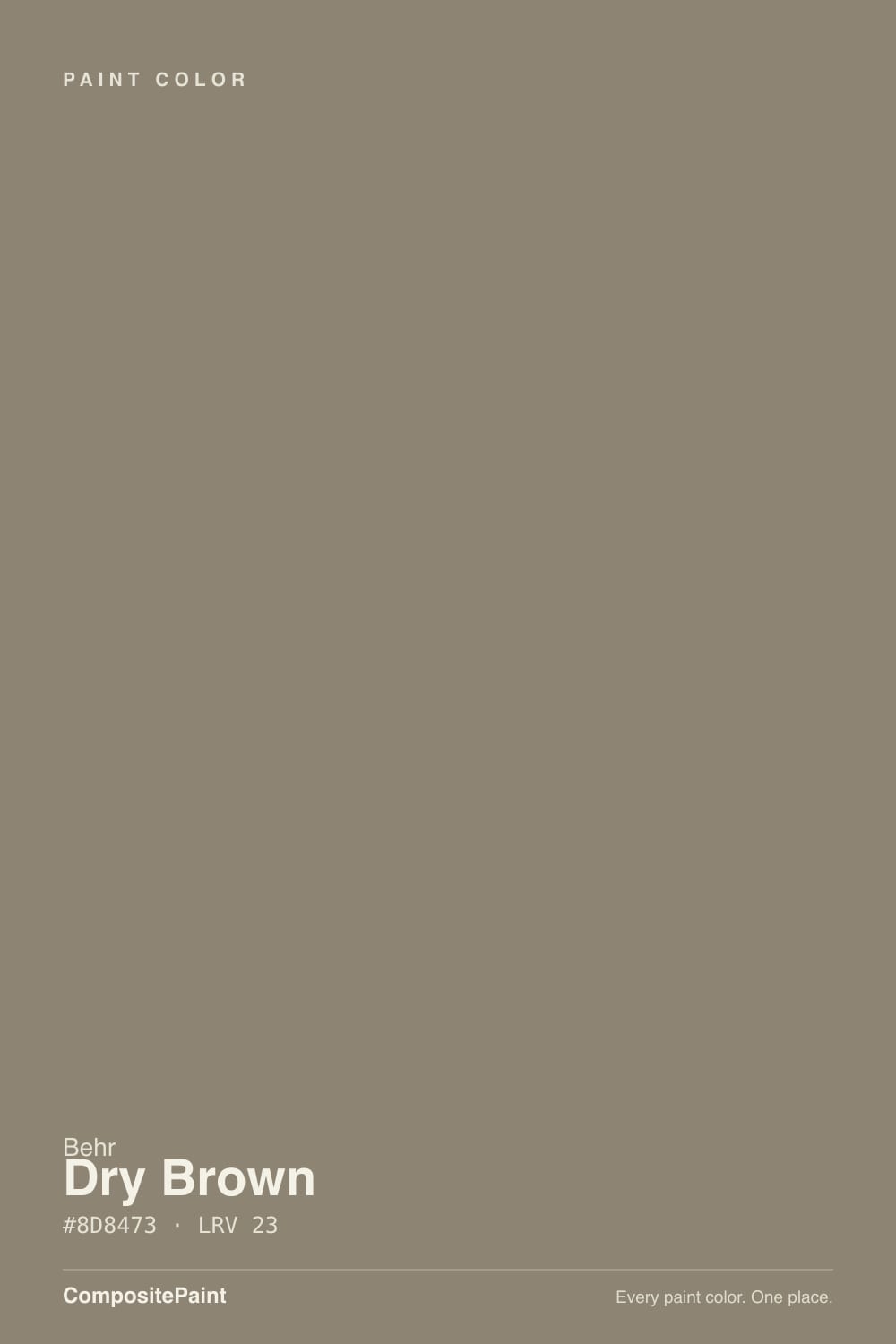
- 1Turkish Coffee5
- 2Porpoise13
- 3Dry Brown24
- 4Redend Point30
The Fast Verdict
Dry Brown is a warm, dusty brown with enough gray in it that Behr itself calls out the "dry" in the name — this is not a rich chocolate, it is clay and weathered wood. Behr sells it in more cabinet, door, trim, and exterior-metal finishes than almost any other color in the N-family, which tells you what it is actually for. On a front door, a shutter, or a kitchen island it is confident and grounded. Painted across four walls of a dim room, it can go flat and muddy fast.
Kitchen and bath cabinets · front doors and shutters · exterior trim, railings and garage doors · dens and offices with warm lamp light
You want a true rich chocolate brown · the room is small, north-facing and dim · you want it to be the wall color for a whole room · your trim and doors stay bright white
- A genuine trim-and-cabinet workhorse — Behr sells it in cabinet, door, trim, exterior and direct-to-metal finishes
- Grayed enough to read taupe and modern, not orange or rustic
- Warms up beautifully under lamp light and afternoon sun
- Hides scuffs and fingerprints on cabinets and doors better than a lighter color would
- Pairs easily with oak, aged brass and natural stone without a fight
- Not a rich chocolate brown — buyers expecting deep cocoa get dusty taupe-gray instead
- Cool, dim light flattens it into a drab, muddy gray-brown
- Rarely used as a whole-wall color in practice — most real use is doors, trim and cabinets
- Heavy and cave-like on all four walls of a small or poorly lit room
What Color Is Dry Brown, Really?
A muted, warm-leaning brown with enough gray and taupe mixed in that it reads dusty and grounded rather than rich or chocolatey — Behr's own name is doing honest work here. It sits in Behr's N (neutral) family next to colors like Rodeo Tan and Brown Velvet, and it is built to behave like a neutral: warm enough to feel natural, gray enough that it never tips orange.
At LRV 23 it is a genuine mid-dark color — noticeably deeper than a greige like Repose Gray, but nowhere near a near-black like Iron Mountain. That depth is exactly why it hides scuffs and handprints well on cabinets and doors, and exactly why it needs real light to avoid looking heavy on a full wall. Deck LRV is 23; independent color-matching sites list it closer to 24, which is within normal measurement noise for the same paint.
Undertone in one line: warm clay-brown with a taupe/gray base — never orange, never truly cool. In strong daylight it reads more taupe and gray; in dim rooms or under warm lamps it deepens and reddens toward true brown. Both are the same paint being honest about the light it is in.
Where It Shines
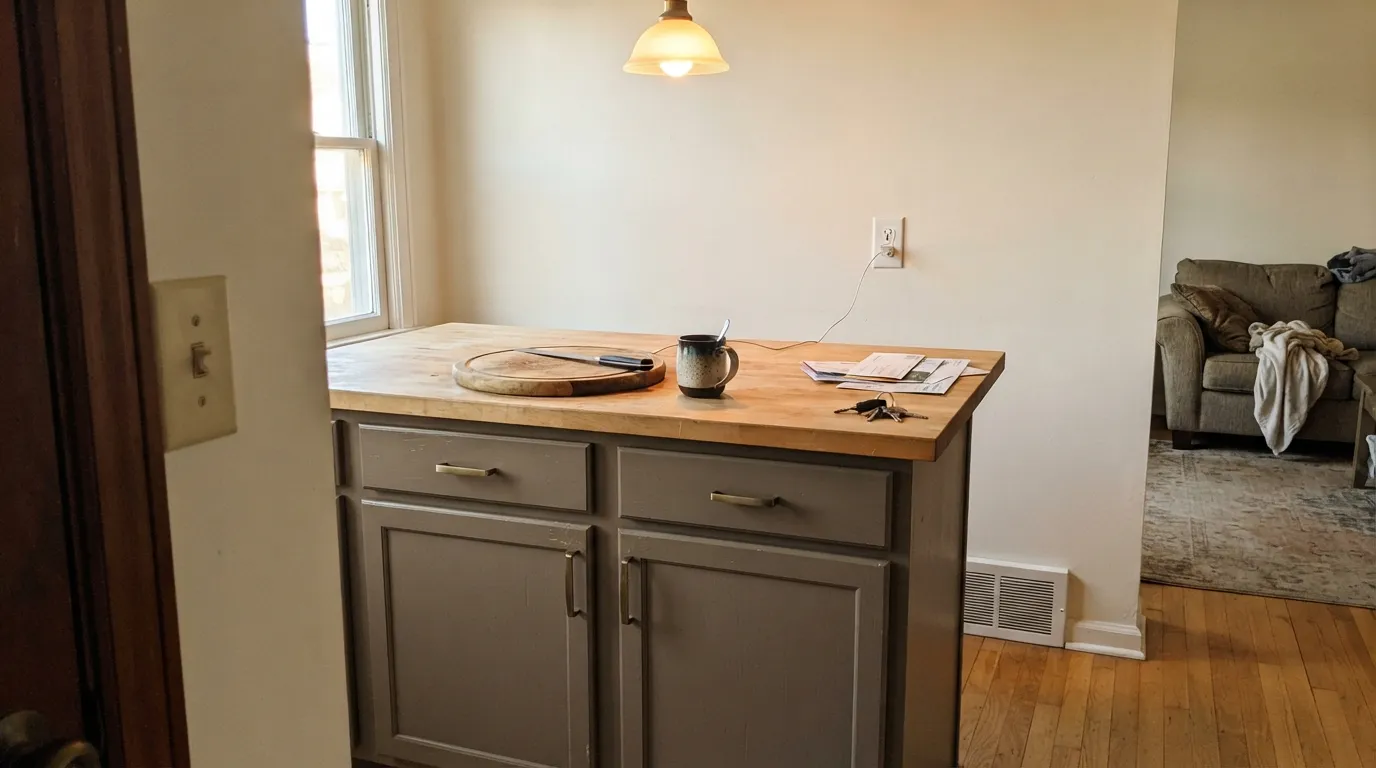
Look at how Behr actually sells this color and the pattern is obvious: cabinet-and-trim enamel, exterior semi-gloss, and a Direct-to-Metal formula for railings, fences and garage doors. It is built to be a workhorse accent, not a hero wall color. On a kitchen island, a front door, or a set of shutters it reads confident and custom-feeling. Under warm 2700K lamplight or afternoon sun it warms up beautifully, and it pairs easily with oak, aged brass and natural stone without any of the fighting a saturated brown can cause.
Where It Fails
Almost every disappointed story about Dry Brown comes down to one of three mismatches, and all three are predictable before the first coat. None of them are the paint's fault — but if your plan matches one, this is not the way to use this color.
Cool, flat daylight strips out the warmth and leaves a dull, muddy gray-brown — the taupe base without the clay warmth that makes the color work. This is the same trap every deep neutral in this family falls into. Test a big sample in your actual room before committing, and plan on warm bulbs.
Dry Brown is deliberately grayed down — that is the whole point of the name. If you pictured a saturated, cocoa-dark brown, this will look washed-out and dusty by comparison. Look at a deeper, truer brown like Benjamin Moore Taupe instead.
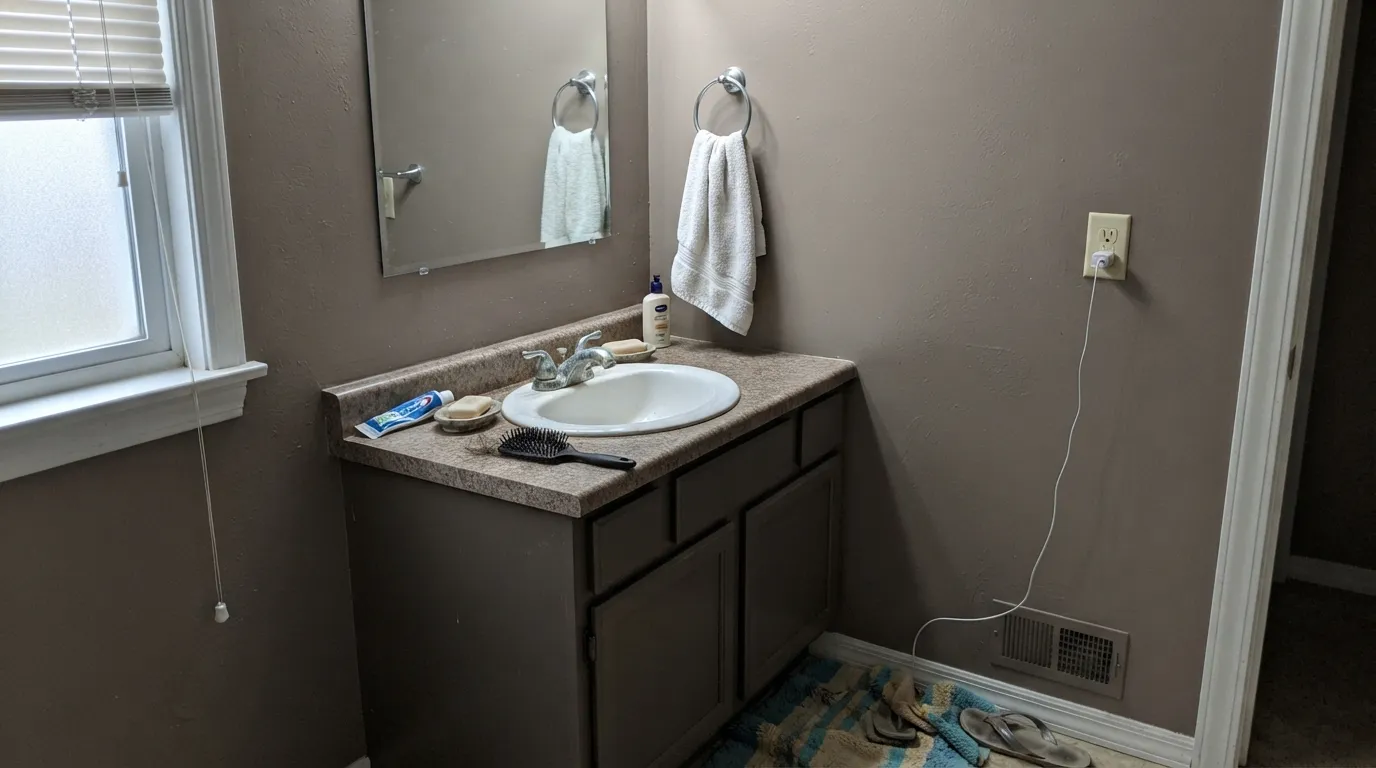
Most of Dry Brown's real-world use is doors, trim, cabinets and exterior metal — not walls. Painted floor-to-ceiling in a small bedroom or hallway with average light, LRV 23 reads heavy and cave-like fast. It works far better as an accent, an island, or a well-lit den than as the main wall color for an everyday room.
Room by Room
Behr sells a dedicated cabinet-and-trim enamel in this exact color for a reason. With brushed nickel or aged brass hardware and butcher block or stone counters, it reads intentional and custom. Satin finish wipes clean and hides fingerprints around handles.
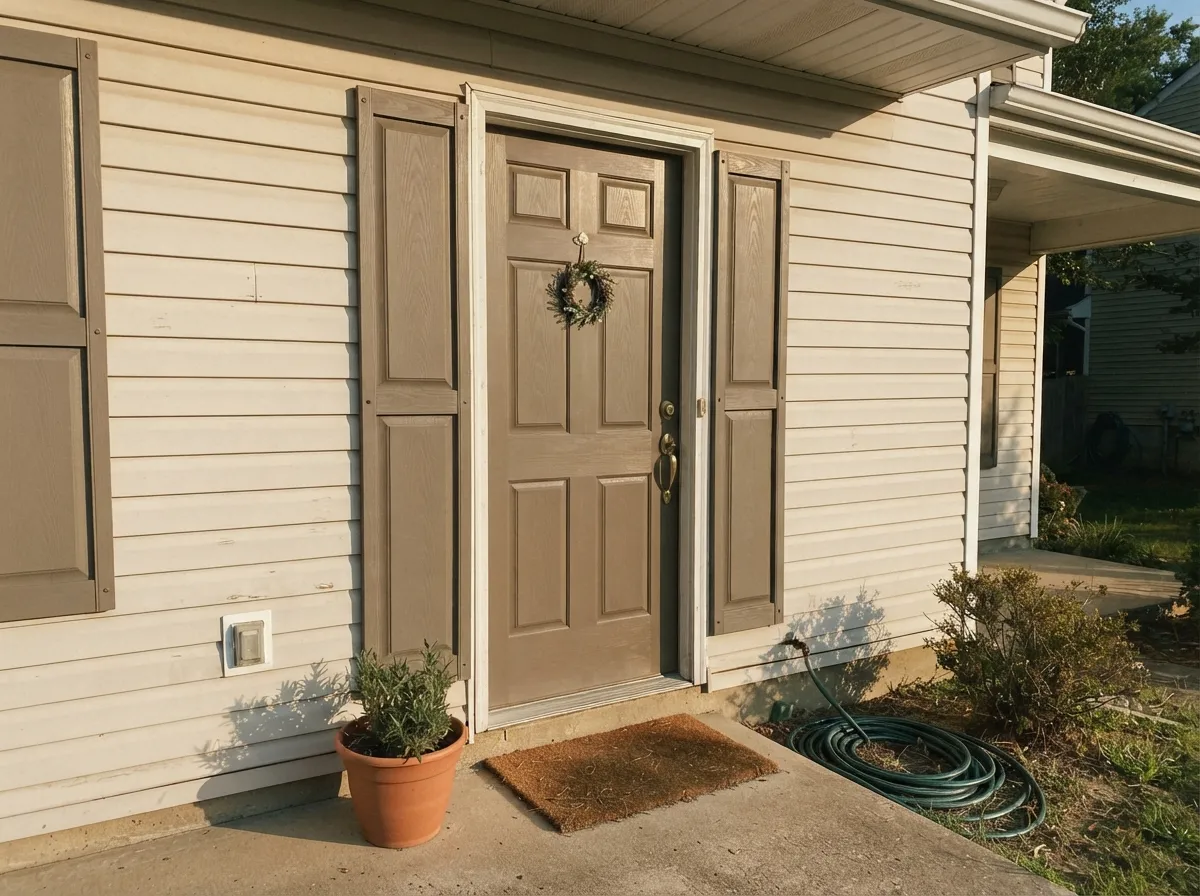
One of the most common real uses of Dry Brown outside is exactly this: a front door or shutter set against a lighter siding. Exterior semi-gloss holds its warmth in full sun and reads as a deliberate, craftsman-adjacent choice rather than a random brown.
The same logic as kitchen cabinets applies at a smaller scale. Against a marble or quartz top and warm-toned tile it looks expensive without repainting the whole room. Satin or semi-gloss for durability.
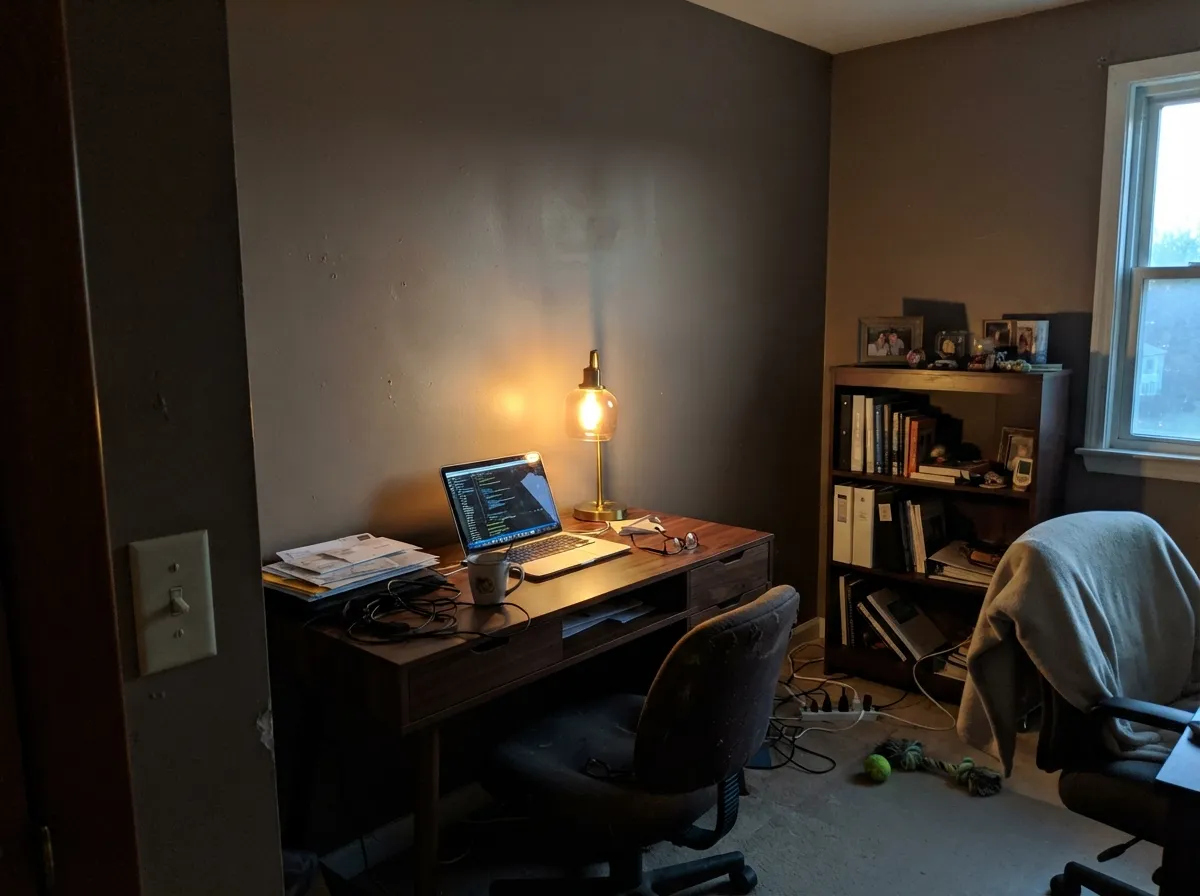
In a room that runs on lamp light more than daylight, Dry Brown turns genuinely cozy — leather, walnut shelving and brass reading lamps are its natural company. Skip it if the room only gets cool overhead LEDs.
As a single accent wall behind a bed or a media unit, with warm white trim, it works. As the color on all four walls of an average room, it needs more daylight than most homes have to spare — this is where the one-star stories come from.
It shows up on doors, shutters, railings and garage doors far more often than as the main body color, and that pattern reflects how it actually reads at house scale: better as a grounding accent than as the dominant color.
Your Light Is the Risk
Direct warm light brings out the clay-brown warmth fully — the color at its most confident, especially on an exterior door or shutters.
Cool, flat daylight drains the warmth and leaves a dull, muddy gray-brown. Test a real sample before painting a whole wall in this light.
Bright, even daylight pushes it toward taupe and gray rather than brown — still handsome, just a cooler read than the chip suggests.
2700K warm bulbs deepen it toward true brown and make it cozy. Cool white LEDs push it back toward flat gray — pick warm bulbs on purpose.
Most complaints about Dry Brown are a light mismatch. Upload a photo of your actual room and see it on your walls — then ask for the same wall in north light or evening lamps before you buy a single sample.
Need It From Another Brand?
Any paint counter can custom-tint Behr N230-5 directly. If you would rather stay in one brand's own deck, these are the closest stock matches, measured as ΔE2000. Under 2 is a difference you will not see on the wall.
| Brand | Closest color | ΔE | LRV | |
|---|---|---|---|---|
| Sherwin-Williams | Dusted TruffleSW 9083 · Sherwin-Williams | 2.5 | 25 | Color page → |
| Benjamin Moore | Driftwood2107-40 · Benjamin Moore | 1.1 | 25 | Color page → |
| Valspar | Tempered Allspice2006-9C · Valspar | 1.7 | 23.4 | Color page → |
| PPG / Glidden | LocomotionPPG1076-5 · PPG / Glidden | 2.1 | 24 | Color page → |
| Glidden | LocomotionPPG1076-5 · Glidden | 1.7 | 24 | Color page → |
| Dutch Boy | Leather Pouch417-5DB · Dutch Boy | 3.8 | 24 | Color page → |
Similar Behr Colors
The nearest shades to Dry Brown within Behr's own range, ranked by perceptual color distance — useful when you want the same look a touch lighter, darker, or warmer.
WCAG 2.1: AA is 4.5 : 1 for normal text, 3 : 1 for large text, AAA is 7 : 1.
Dry Brown vs the Colors You're Also Considering
Every Dry Brown sample board has the same rivals on it. The numbers show the real lightness gap — then it comes down to which risk you would rather live with.
Pick this if you specifically want Behr's cabinet, door and direct-to-metal formulas that Anonymous doesn't come in.
Sherwin-Williams SW 7046 · LRV 20AnonymousPick this for the Sherwin-Williams equivalent — a slightly deeper, quieter earthy neutral with a strong exterior track record.
Pick this when the brown itself is the point, not just depth and warmth.
Sherwin-Williams SW 7018 · LRV 26DovetailPick this if you want less brown and more gray in the mix — Dovetail reads as a warm dark gray first.
Inside Behr, Mocha Accent 720D-5 at #8E8273 and LRV 23 is nearly the same color with a slightly stronger brown. Frontier Brown N190-5 at #908170 and LRV 23 is a touch warmer and more clearly tan. Olive Sprig ECC-55-3 at #8D846D and Mossy Bank PPU8-21 at #8B8670 both hold the same depth while pulling toward green, which is the useful comparison if you want to see how easily this family tips olive.
Across brands, several are effectively the same paint. C2 Paint Charlie Horse C2-906 at LRV 23 has a deltaE of 0.44, Dunn-Edwards Timber Wolf DEBN69 at LRV 23 is 0.56, and both Sherwin-Williams Terrain SW 9613 and Glidden Dark Ash PPG1025-5 sit at LRV 23 with a deltaE of 0.85. Benjamin Moore Iron Gate 1545 at LRV 23 and deltaE 1.50 is visually identical in normal room light.
Farther out, Farrow and Ball Dauphin No. 54 at LRV 22 and deltaE 4.02 is close but visibly different side by side, warmer and more clearly tan.
Dry Brown Coordinating Colors
The rule for coordinating with Dry Brown is simple: keep the whites warm, and it will happily anchor a deep accent color next to it. It flatters warm whites, other muted earth tones, deep greens and inky navies — and it argues with anything stark or icy. These are the partners that show up again and again in the way Behr and other paint sites recommend pairing it:
A Trim Color First: Why Dry Brown Rarely Covers a Whole Wall
Look at how many different finishes Behr sells this exact color in and the pattern tells the real story: cabinet, door and trim enamel in satin and semi-gloss, exterior semi-gloss and satin paint-and-primer, a Direct-to-Metal formula for railings, fences and garage doors, and even a chalk decorative paint. That is a lot of engineering for a color that most owners never put on four walls.
That pattern is useful information, not a limitation. It means Dry Brown has been optimized for durability and hide on high-touch surfaces — the places that take fingerprints, weather, and daily wear — rather than for maximum coverage on drywall. Reach for it first as a door, a cabinet run, a set of shutters or a metal railing, and treat wall use as the exception that needs real daylight to earn its keep.
Dry Brown With Wood Tones and Metals
Oak, butcher block and natural stone all sit comfortably next to Dry Brown because the color's warmth meets theirs without a fight, and unlike a lot of "brown" paint colors it is grayed down enough to avoid an orange clash with medium wood tones.
Metals are where it gets genuinely versatile: aged brass and brushed nickel hardware both look intentional against it, and because Behr sells a Direct-to-Metal formula in this exact color, it can carry straight onto porch railings, garage doors and metal fencing — the same warm brown from the front door to the driveway railing, with no separate metal primer to shop for.
Three Ready Palettes Built on Dry Brown
A color is never alone on the wall. These are complete combinations in the 60-30-10 pattern, with the reason each one holds together. Every one opens in the visualizer.
Swiss Coffee gives Dry Brown cabinets a warm, forgiving wall to sit against instead of a stark white that would make the brown look dusty. The muted green backing is the deep-jewel-tone accent Behr's own pairing guide points to, without betting the whole kitchen on it.
Try this palette in your roomA dependable white body lets the warm brown door and shutters read as a deliberate, craftsman-style choice instead of getting lost. Black windows sharpen the whole front elevation without competing with the brown for attention.
Try this palette in your roomThis is the one room where Dry Brown gets to be a wall color, and it works because a den runs on lamp light, not daylight — exactly the light this color wants. The inky navy is the jewel-tone accent Behr's own coordinating guide suggests, and it grounds the room instead of fighting the brown.
Try this palette in your roomDry Brown FAQ
Is Dry Brown warm or cool?
Warm at heart, but heavily grayed with taupe — never orange, never truly cool. It reads more taupe-gray in strong daylight and deepens toward true brown under warm lamp light or in dimmer rooms.
Is Dry Brown a good wall color?
It can be, but it is not the color's main job. Most of Behr's own product line for Dry Brown is cabinet, door, trim and exterior-metal finishes, not wall paint. As an accent wall or a lamp-lit den it works well; as the color on all four walls of an average, average-lit room it tends to read heavy.
Is it good for kitchen cabinets?
Yes — arguably its best use. Behr sells a dedicated cabinet, door and trim enamel in this exact color, and it flatters brass and nickel hardware while hiding scuffs and fingerprints better than a lighter color would.
What trim or wall white goes with Dry Brown?
A warm white like Behr Swiss Coffee or Blank Canvas, not a stark cool white. Cool whites make the brown look dustier and colder than it is; warm whites let its clay undertone come forward.
Can I use Dry Brown outside, on a front door or shutters?
Yes, and it is one of its most common real-world uses. Behr sells Dry Brown in exterior semi-gloss and Direct-to-Metal formulas specifically for doors, shutters, railings, fences and garage doors.
Does Dry Brown look different in strong daylight versus a dim room?
Yes, noticeably. In bright, direct daylight it leans more taupe and gray; in a dim room or under warm bulbs it deepens and warms toward true brown. Test a large sample in your actual room and light before committing to a full wall or a whole kitchen of cabinets.
Have you painted with Dry Brown?
Rate it — one tap helps the next reader decide.
Ask a Question