Ivy League
PPG’s glowing club emerald, reviewed honestly: the rooms where it looks expensive, the Pewter Green mix-up that ruins it, and when it goes black-teal.

Jessica has spec'd whites and neutrals for more than 300 rooms and keeps a sample wall of painted drawdowns in her studio. Every color review is checked against real reader rooms in the comments and re-tested when a formula changes. About the testing process →
- 1Black Emerald1
- 2Essex Green6
- 3Ivy League15
- 4Sage Green22
- 5Evergreen Fog30
The Fast Verdict
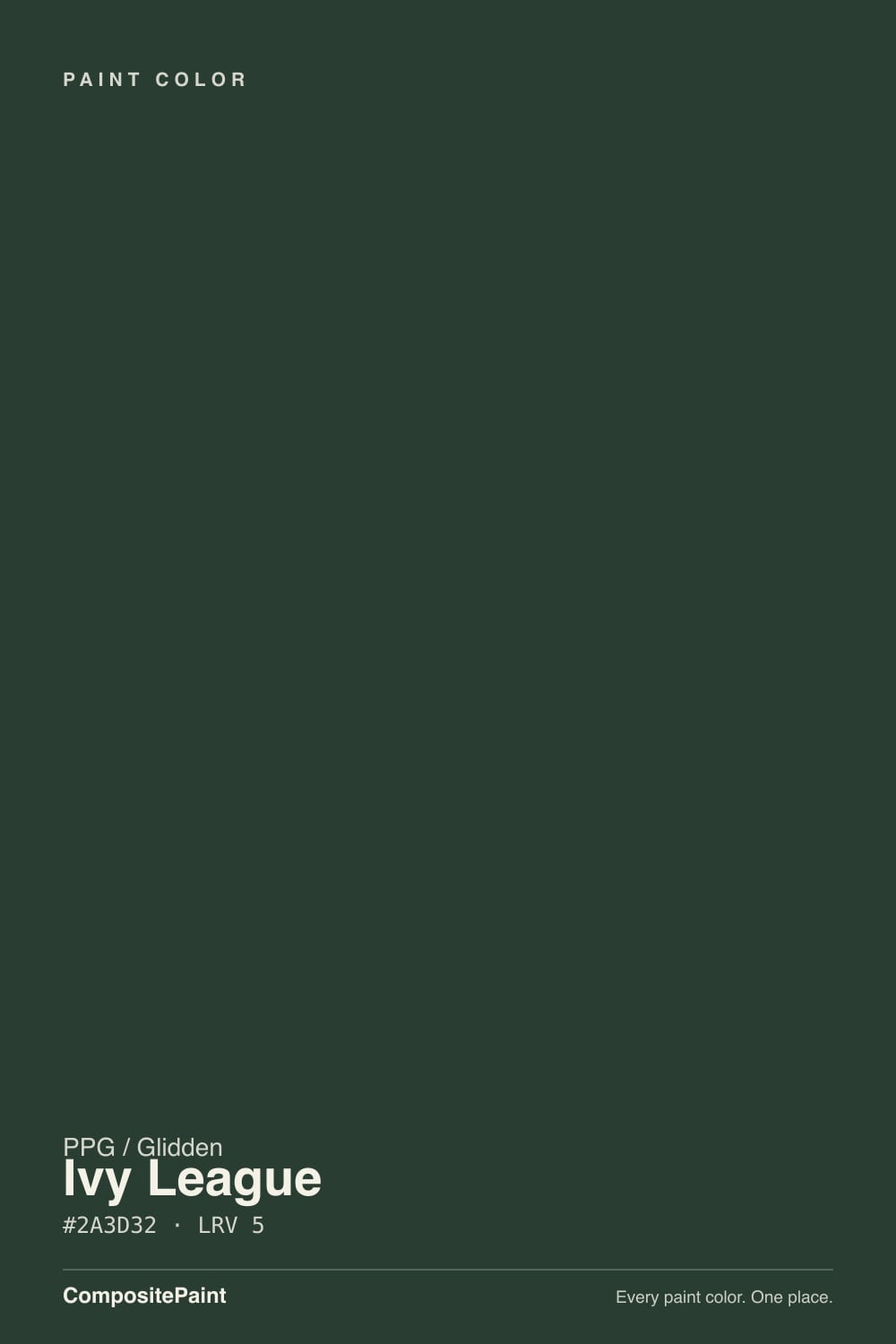
Ivy League is a dark, saturated emerald — jungle-cool, almost zero red in the mix — the kind of green that glows instead of receding. PPG sells it as the Home Depot answer to Pewter Green, and that is the trap: Pewter Green is a muted olive-gray; this is a jewel. Give it a dining room, a library, or a run of cabinets with real daylight and brass, and it reads like a club. Give it four dim walls and you get a teal cave.
Libraries, dining rooms, and kitchens with real daylight · cabinets and islands · powder rooms · anyone who wants emerald, not sage
You actually wanted Pewter Green · the room is dim and north-facing · you need a whole-house wall color · a full-sun exterior
- Saturated emerald that actually glows in daylight and lamps
- Dining rooms, libraries, and powder rooms feel finished with one decision
- Cabinets and islands carry the jewel without painting the whole house
- Loves walnut, mahogany, brass, and cream trim
- Cheaper Home Depot path to a true club green, not a dusty sage
- Not Pewter Green — buyers expecting muted sage get a jewel
- LRV 15 plus zero red: dim north rooms go teal-black
- Cool LEDs shove it toward tropical cyan
- Glidden warns it may fade in sunlight — a poor full-exterior bet
What Color Is Ivy League, Really?
A saturated cool emerald with a jungle-cyan lean — not olive, not sage, not the gray-green on every cabinet Pinterest board. The RGB is the tell: the red channel sits at zero, so the color has no yellow-warmth to fall back on. In good light it reads as a bright, glowing club green; in cool light the cyan comes forward and it tips teal. That is why PPG’s own copy talks library and dining room, not whole-house walls. This is a statement green, and it will not pretend otherwise once it is on four walls.
At LRV 15 it is a genuine dark. It swallows light instead of bouncing it, so the wall always reads a step deeper than the chip — every deep green does this, and a fully saturated one does it harder. Plan for corners and the wall opposite the window to go near-black after dusk. The payoff is that same depth: in a room with daylight and lamps it holds a jewel color instead of washing out to mint. It is in the same depth neighborhood as Pewter Green (LRV 12), which is how the comparison got started. The colors are not cousins in personality.
Undertone in one line: cool emerald first, cyan-jungle second — never olive, never gray. If your sample looks sage, the light is dirty or you are looking at the wrong chip. If it looks teal, that is north light or cool LEDs doing it. Both versions are the same paint being honest about the room.
Where It Shines
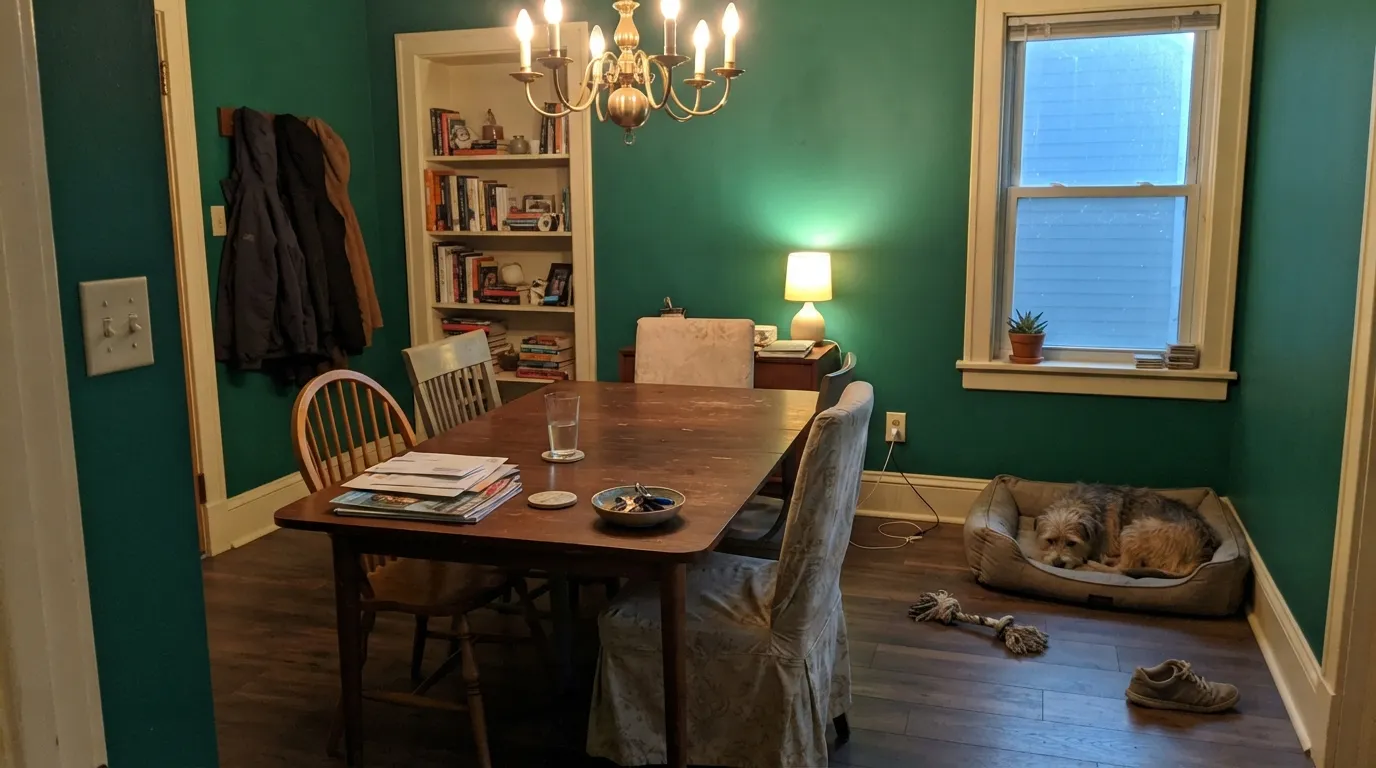
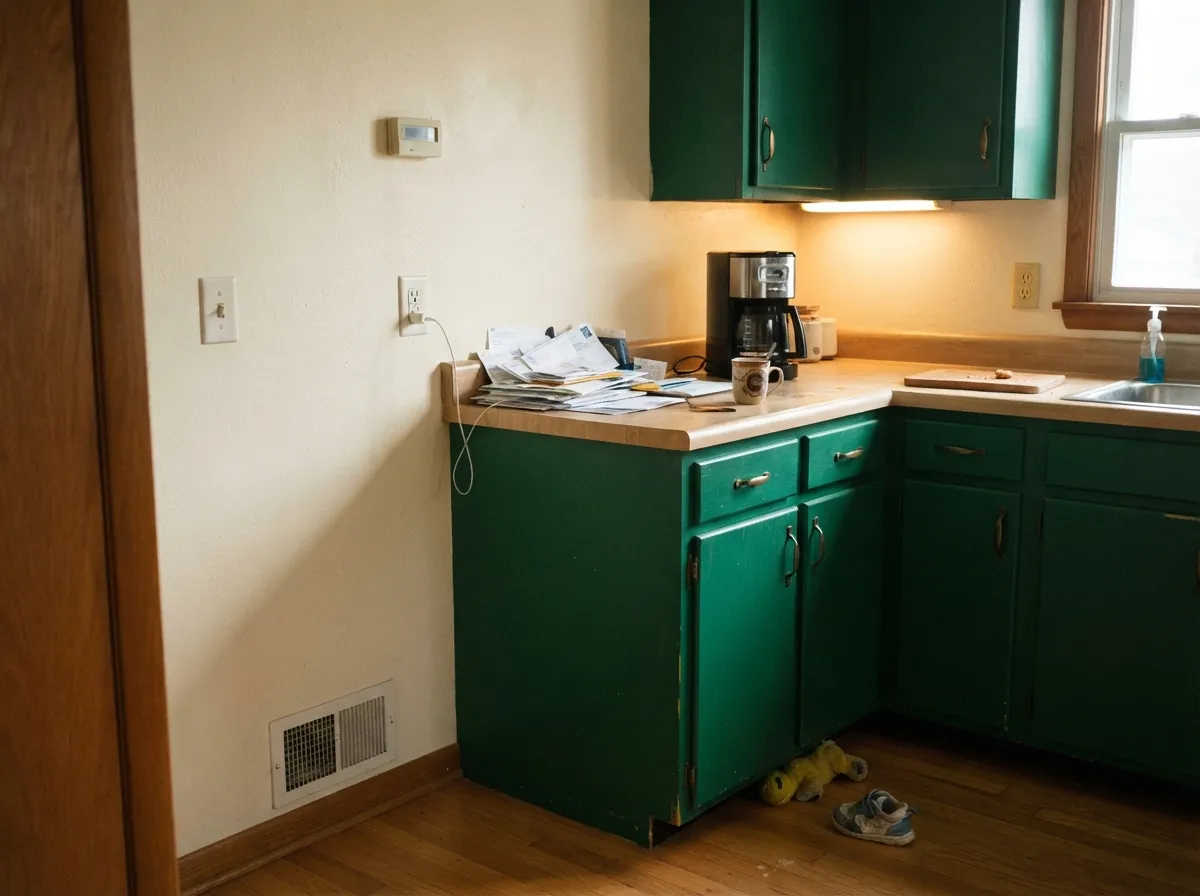
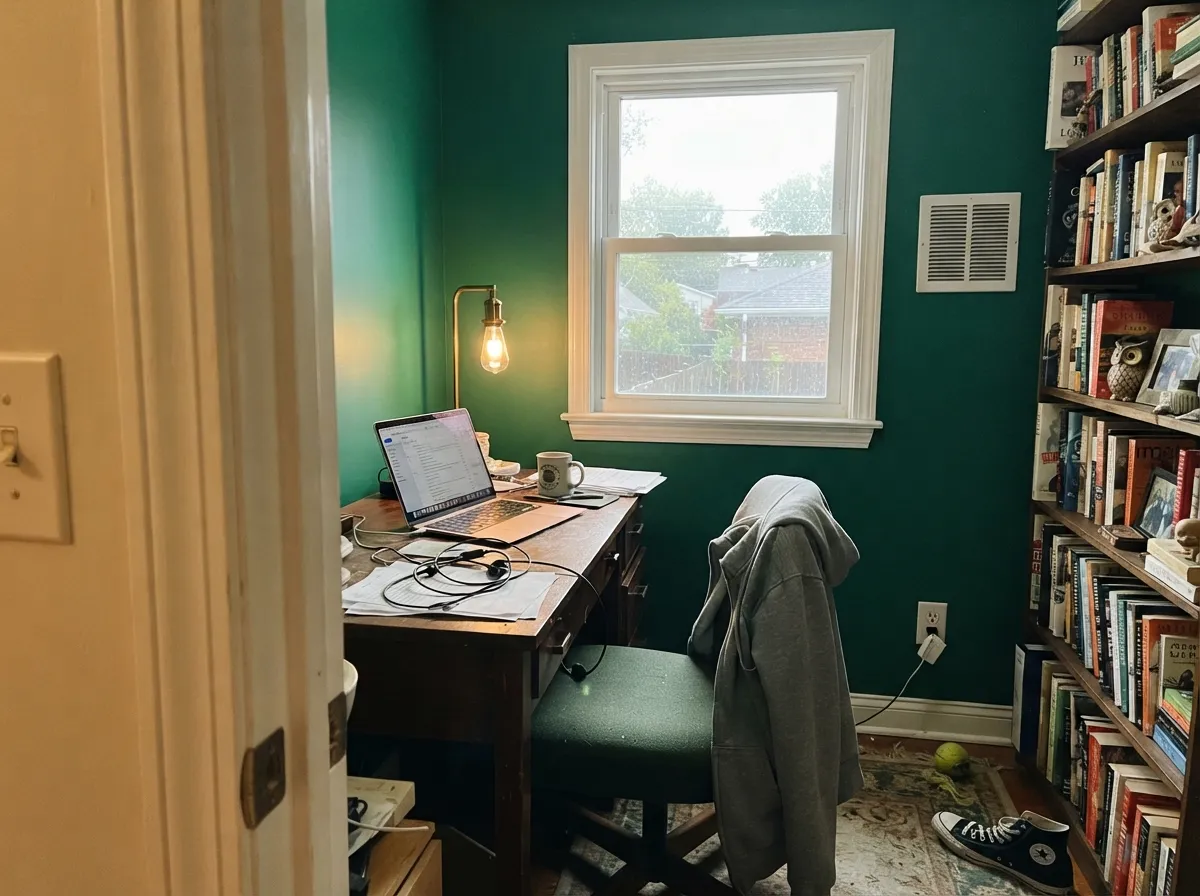
This color is built for rooms that get used at dinner and after dark, with enough daylight so it still reads green at noon. Under 2700K lamps the emerald warms toward forest without going muddy, which is why a dining room or a small library is its natural home. Its second job is the dose: kitchen cabinets, an island, a powder room, where the jewel sits against cream walls and brass and looks custom. Walnut, mahogany, and unlacquered brass are the company it was mixed for.
Where It Fails
Almost every regret about Ivy League is a category error, not a bad batch. People sample it because PPG hangs it next to Pewter Green, then paint a dim room, then wonder why the walls are teal-black. If your room matches one of these three, this is not your green.
Pewter Green (LRV 12) is a muted olive-gray that hides on cabinets. Ivy League is a saturated emerald that announces itself from the hallway. Same depth, opposite personality. If your inspiration photos look dusty and earthy, you will hate this on the wall — go to Pewter Green and stay there.
At LRV 15 with no red in the mix, north light strips the glow and leaves a flat teal-black. Corners die. Readers expecting a rich club green get a cave. This color needs a window it can actually use, plus lamps. If the room stays dim, pick a lighter sage or commit to a near-black on purpose.
4000K and cooler bulbs shove the cyan forward until the wall reads tropical-teal, not ivy. Warm 2700K bulbs are part of this paint job. If you will not change the bulbs, do not buy the paint.
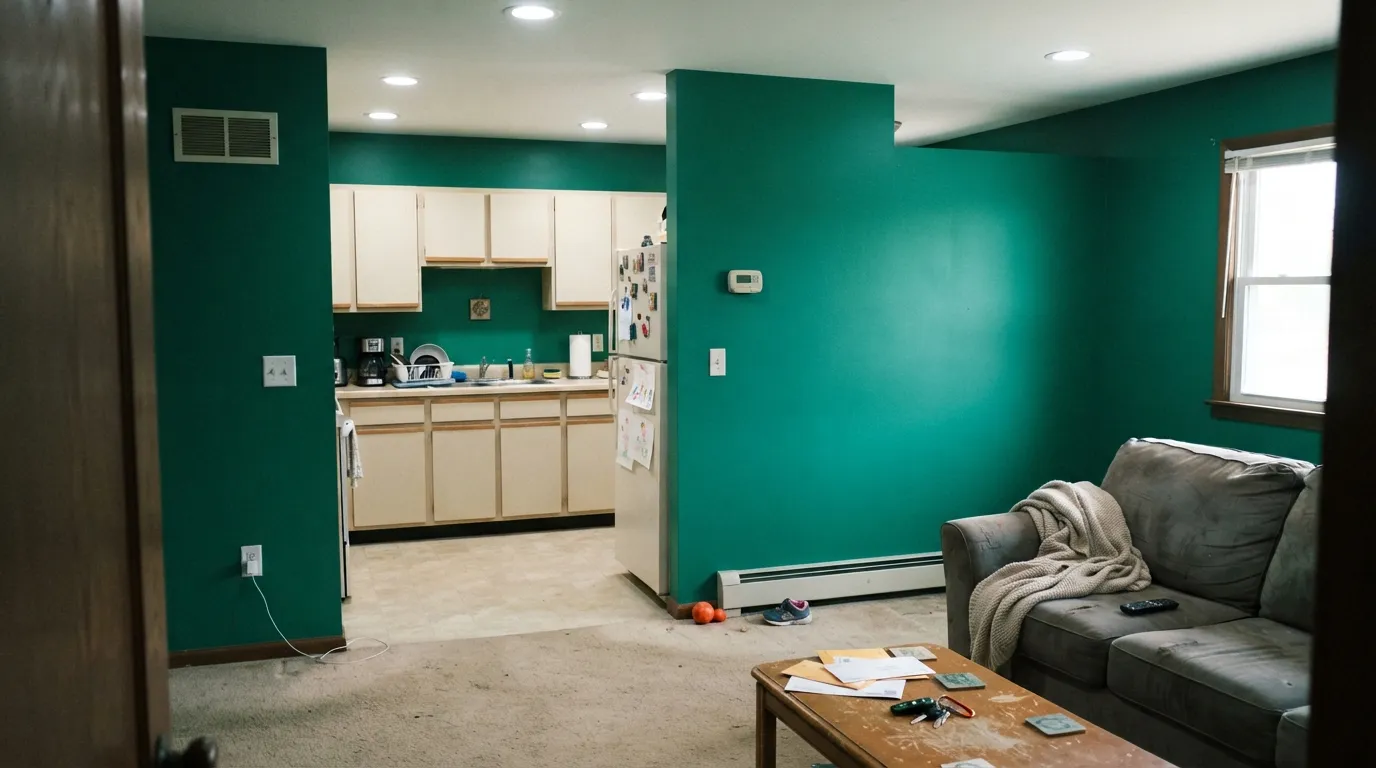
Room by Room
This is the room PPG is describing. Evening lamps wake the emerald, gold flatware and walnut look deliberate, and the dark walls make a modest dining room feel finished. Eggshell on the walls, White Dove (LRV 85) on trim in semi-gloss.
Deep-toned woods, books, a brass lamp: this is club-green territory. Keep a window in play so it does not go black by 4pm, and use eggshell so the wall does not flash. A closed study takes the saturation better than an open plan.
The smart way to use a jewel this dark. Satin Ivy League on an island or a run of cabinets under Alabaster (LRV 82) or White Dove walls looks expensive; a full kitchen of emerald boxes is a bigger bet and fights honey oak. Urethane-fortified satin, brass or unlacquered pulls.
Small rooms take deep color well. Drench the walls, keep the trim a warm white, add one brass sconce on 2700K, and it reads custom without betting the main floor. Satin on a vanity under a cream or marble top works the same way.
Beautiful in a closed, south- or west-lit living room with walnut and cream. Risky in open plans, where the jewel has to negotiate with kitchen wood and whatever the adjacent rooms wear. Do not use it as a whole-house wall color — LRV 15 will close the house in.
Glidden flags that this color may fade in sunlight, and full sun also punches the saturation until it reads toy-emerald from the curb. The only plausible use is a shaded front door on a cream or white house, and even then sample it outside for a week. For a full facade, Pewter Green or Hunter Green are the more honest dark greens.
Your Light Is the Risk
Daylight keeps it clearly emerald; 2700K lamps warm it toward forest at night. This is the light the club-green promise was written for.
Cool gray daylight kills the glow and leaves a flat teal-black. Fine if you wanted a cave; disappointing if you wanted ivy.
Cooler and more cyan in morning shade; greener and brighter in west afternoon sun. Sample the same wall at 8am and 5pm before you commit.
2700K: forest-emerald, the version you bought. 4000K and cooler LEDs: tropical teal. Swap the bulbs before you repaint.
Most complaints about Ivy League are a light mismatch. Upload a photo of your actual room and see it on your walls — then ask for the same wall in north light or evening lamps before you buy a single sample.
Need It From Another Brand?
Any paint counter can custom-tint PPG / Glidden PPG1228-7 directly. If you would rather stay in one brand's own deck, these are the closest stock matches, measured as ΔE2000. Under 2 is a difference you will not see on the wall.
| Brand | Closest color | ΔE | LRV | |
|---|---|---|---|---|
| Sherwin-Williams | GreenbeltSW 6927 · Sherwin-Williams | 4.8 | 12 | Color page → |
| Behr | SoapstoneMQ4-14 · Behr | 2.2 | 15 | Color page → |
| Benjamin Moore | Irish Clover2038-20 · Benjamin Moore | 1.3 | 16 | Color page → |
| Valspar | Shadows of Time8001-34G · Valspar | 3.2 | 12 | Color page → |
| Glidden | Ivy LeaguePPG1228-7 · Glidden | 0.4 | 14 | Color page → |
| Dunn-Edwards | Emerald PoolDE5699 · Dunn-Edwards | 1.9 | 13 | Color page → |
Similar PPG / Glidden Colors
The nearest shades to Ivy League within PPG / Glidden's own range, ranked by perceptual color distance — useful when you want the same look a touch lighter, darker, or warmer.
WCAG 2.1: AA is 4.5 : 1 for normal text, 3 : 1 for large text, AAA is 7 : 1.
Ivy League vs the Colors You're Also Considering
Every Ivy League sample board has the same rivals on it. The numbers show the real lightness gap — then it comes down to which risk you would rather live with.
Pick this when you actually want a glowing emerald — same depth, opposite personality.
Sherwin-Williams SW 6208 · LRV 12Pewter GreenPick this if you want the muted olive-gray that hides on cabinets and reads earthy, not jewel.
Pick this for a hair more glow and a Home Depot tint — Ivy League is the brighter club version of the same idea.
Sherwin-Williams SW 6748 · LRV 10GreensPick this for a slightly deeper jewel green, still a dose color, not a whole-room wall.
Starless Sky (PPG0995-7) shares the same LRV of 5, but it is a neutral charcoal-black with no green in it. Side by side, Ivy League looks unmistakably green while Starless Sky stays flat and gray. Choose Starless Sky when you want true black with no color cast, and Ivy League when you want that dark depth to carry a natural green.
Black Magic (PPG1001-7) is another near-black at LRV 5, reading as a clean, slightly cool black. It is the pick for maximum drama with zero undertone drift.
Napoleon (PPG1013-7), also LRV 5, leans blue-black instead of green. In a room with cool light, Napoleon feels crisp and nautical, while Ivy League feels warmer and more organic. If your space has wood and greenery, Ivy League ties in; if it is more modern and cool, Napoleon or Black Magic may suit better.
Ivy League Coordinating Colors
The rule for coordinating with Ivy League: warm whites, near-blacks, and gold — and keep dusty sage and cool gray at arm’s length if you do not want two greens arguing. Cream trim is non-negotiable; chrome and blue-gray stone make the cyan in this color shout. These are the partners that keep the jewel looking expensive instead of tropical:
Why PPG Hangs This Next to Pewter Green
Ivy League is the deep green PPG puts forward when shoppers walk in asking for Pewter Green. That comparison is useful as a depth cue and misleading as a personality cue. Pewter Green (SW 6208, LRV 12) is outstanding on cabinets and risky on four dim walls because it is a muted olive-gray — it recedes. Ivy League is a fully saturated cool emerald at LRV 15. Same neighborhood on a lightness strip, different job on a wall.
If you arrived here from that comparison, decide which photo you actually liked. Dusty, earthy, almost-gray kitchens: stay with Pewter Green, or with Rosemary if you want the herbal version. Jewel dining rooms, brass, walnut, a library that should feel like a club: this is the paint. There is no verified Color of the Year story and no famous-set credit to lean on — it is a workhorse jewel in the Glidden deck, and it succeeds or fails on light and expectations, not hype.
Ivy League With Wood Tones and Floors
Deep woods are the easy yes. Walnut, mahogany, espresso, and dark-stained oak sit at the same club register as the paint, and the cool emerald makes the red-brown in the wood look richer instead of orange. Pale white oak is safe if you want a cleaner, more modern read; the contrast is the point. Brass, antique bronze, and unlacquered gold all belong. Polished chrome is the metal that turns the cyan up.
The floor that needs a sample first is golden honey oak. Yellow-orange sits across the wheel from this cool green, so the floor can go more orange and the walls more teal. A large rug helps in a dining room; in a kitchen where the oak is wall-to-wall, put the emerald on the island only or pick Pewter Green, which has enough gray and olive to negotiate with builder wood. Cool gray LVP is the other test: it pushes Ivy League toward jewel-teal, which some people want and most Pewter Green shoppers do not.
Three Ready Palettes Built on Ivy League
A color is never alone on the wall. These are complete combinations in the 60-30-10 pattern, with the reason each one holds together. Every one opens in the visualizer.
Cream trim keeps the emerald from going Halloween-green; Wrought Iron is a soft near-black so the room has one darker note without fighting the walls. Walnut shelves and a brass lamp finish the club look.
Try this palette in your roomAlabaster is a superb cabinet-adjacent white; putting the jewel on the boxes instead of the walls is how this color behaves in a working kitchen. Iron Ore on the island or hood grounds LRV 15 so the emerald does not float. Brass pulls, not chrome.
Try this palette in your roomSwiss Coffee next door keeps the handoff creamy instead of stark, so you do not walk from jewel into builder white. White Dove trim is the quiet warm edge; a brighter gallery white would make the emerald look dusty by comparison.
Try this palette in your roomIvy League FAQ
Is Ivy League the same as Pewter Green?
No. They sit at similar depth — Ivy League at LRV 15, Pewter Green at 12 — and PPG promotes them as alternatives, but Pewter Green is a muted olive-gray and Ivy League is a saturated cool emerald. If your inspiration looks earthy and dusty, Pewter Green is the one. If it looks like a glowing club wall, this is the one.
Is Ivy League warm or cool?
Cool. There is no red in the mix, so it has no yellow-warmth to fall back on. Warm 2700K bulbs will pull it toward forest at night; cool daylight and cool LEDs pull it teal. It never reads olive.
What trim white goes with Ivy League?
A warm, soft white — White Dove is the default, Alabaster if the rest of the house is Sherwin-Williams, Swiss Coffee if you want a creamier dining-room look. A stark bright white makes the walls look louder and a little cheap next to the crisp edge. Semi-gloss on the trim, eggshell on the walls.
Can I use it on kitchen cabinets?
Yes — that is one of its best jobs. Satin on an island or a cabinet run under cream walls looks custom. A whole kitchen of emerald boxes is a stronger commitment, and it fights honey oak. Use a urethane-fortified cabinet enamel and brass or unlacquered hardware.
Does it work in a north-facing room?
Only if you add a lot of warm lamps and accept a darker, more teal read. North light is the risk lighting for this color: the glow drops out and the corners go black. A dining room you use at night can survive it; a dim office you use at noon probably cannot.
Can I paint the exterior with Ivy League?
Mostly no. Glidden notes it may fade in sunlight, and full sun also punches the saturation until it reads toy-bright from the street. A shaded front door on a cream house is the only exterior use worth sampling, and even then leave a stick outside for a week. For siding, pick a muted dark green.
Have you painted with Ivy League?
Rate it — one tap helps the next reader decide.
Ask a Question