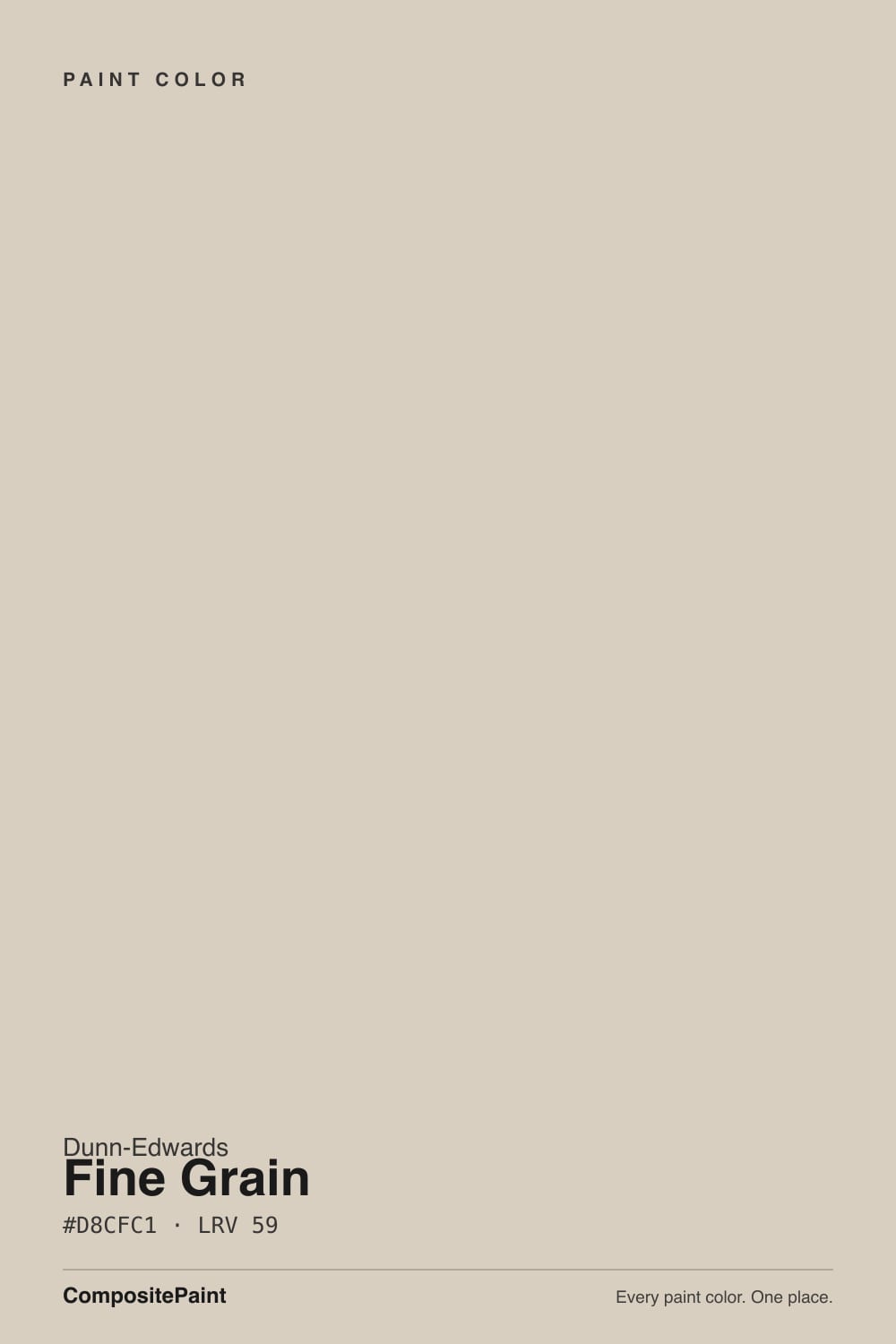
Fine Grain
Dunn-Edwards' light workhorse greige, reviewed honestly: the rooms where the gray-beige holds, the dim light that turns it drab, and what to pick instead.

Jessica has spec'd whites and neutrals for more than 300 rooms and keeps a sample wall of painted drawdowns in her studio. Every color review is checked against real reader rooms in the comments and re-tested when a formula changes. About the testing process →
- 1Mindful Gray48
- 2Light French Gray53
- 3Fine Grain59
- 4Pale Oak69
- 5Shoji White74
The Fast Verdict
Fine Grain is the color a Dunn-Edwards counter hands you when you say greige and mean it. At LRV 59 it sits in the same light-neutral neighborhood as Agreeable Gray, with a balanced gray-beige that does not go yellow in decent daylight. It is a 2006 Warm Neutrals staple — DE's second-most-used warm greige, not a Color of the Year. Give it sun, oak, and a soft white like Whisper and it behaves. Put it in a dim kitchen or a north room with no lamps and the warmth drains out, which is the complaint Houzz already logged.
Whole-house walls in decent daylight · living rooms and bedrooms · kitchens that actually have windows · anyone who wants Agreeable Gray from a Dunn-Edwards can
The room is a dim north cave · you actually wanted gray, or actually wanted beige · you wanted Perfect Greige's depth · your floors are cool gray LVP
- True whole-house greige at LRV 59 — the Dunn-Edwards can in the Agreeable Gray neighborhood
- Low chroma (Munsell 1.0) keeps it off yellow in decent daylight
- Second among DE's most-used warm neutrals, behind only Crisp Muslin
- Kind to white oak, brick, brass, and a soft white on the trim
- Light enough that hallways still bounce; deep enough to look decided against Whisper
- Goes drab gray in dim north rooms and windowless kitchens
- Fence-sitter: beige-wanters see gray, gray-wanters see beige
- Cool LEDs and gray LVP can drain the tan and leave a dirty wall
- Too light if you thought you were getting Perfect Greige (LRV 42)
What Color Is Fine Grain, Really?
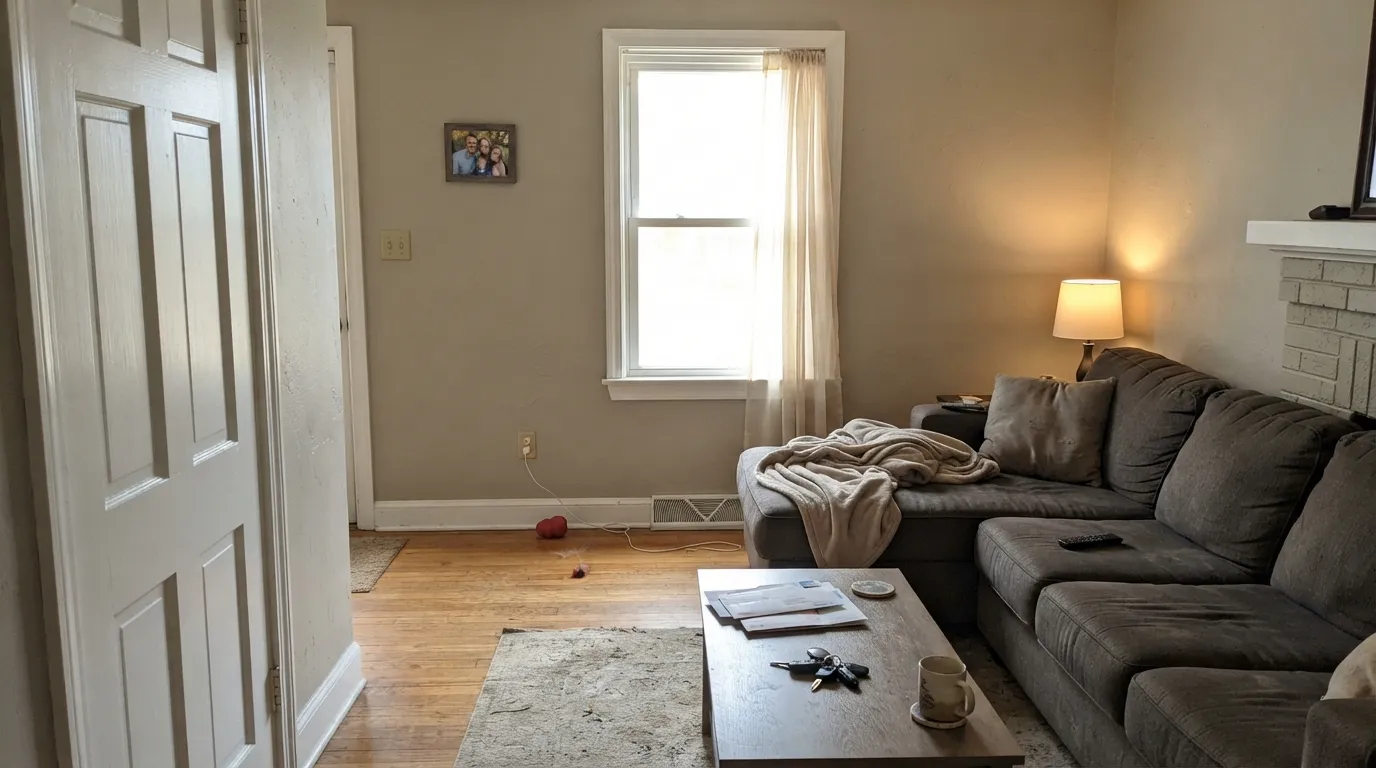
A light greige with the beige and the gray in a near-tie. Dunn-Edwards files DE6213 in the Warm Neutrals collection and measures it at Munsell 1.50Y with chroma 1.0 — a yellow hue with almost no pigment body — which is why the wall reads quiet instead of tan. Their own 2023 popularity roundup ranked it second among the most-used warm neutrals, right behind Crisp Muslin (DE6212), and called out the same trick: enough warmth to stay off yellow, enough gray to stay off beige. It is a 2006 deck color, not a launch. Western consultants keep putting the chip in greige piles next to Pigeon Gray; it has never been a Color of the Year.
At LRV 59 it is a true whole-house depth. Agreeable Gray sits at 60, Accessible Beige at 58, Revere Pewter at 56 — Fine Grain is the Dunn-Edwards can in that cluster. That is the useful part and the trap. On a chip it looks like a polite taupe. On four walls in real daylight it holds as a finished greige: enough color to hide scuffs, enough gray to keep beige from going yellow, light enough that hallways still bounce. It is not Perfect Greige (LRV 42). Houzz shoppers keep asking for a Dunn-Edwards version of that darker original; Fine Grain is the name consultants give them, and then they notice it is a full step paler, especially on an exterior.
Undertone in one line: gray-beige, yellow-family, low chroma — never pink, not green. South and west sun hold both sides in the same frame. Cool north light and overcast days strip the beige and leave a flat gray. Warm 2700K bulbs pull a muted yellow-tan, which is why matchers call it earthy. Both versions are the same gallon being honest about the room. If your sample looks yellow, look at the neighbor white and the afternoon sun before you blame the mix.
Where It Shines
Give it real daylight, warm wood, and a soft white on the trim and Fine Grain does the job the Southwest hired it for: walls that recede so brick, oak, and art look decided. Living rooms and open main floors are its home turf — Patterson Custom Homes ran it through a brick-and-white-oak house that Home Bunch later published, and another California house wore it as a light tan-greige that still felt beachy. Whole-house is the actual use case. Whisper or Milk Glass on the woodwork keeps the edge warm; a Hale Navy door supplies the one dark note.
Where It Fails
Almost every regret story about Fine Grain follows one of three scripts, and all three are visible before the first coat. None of them are a bad batch — but if your room matches one, this is not your color, and a bigger sample will only confirm it.
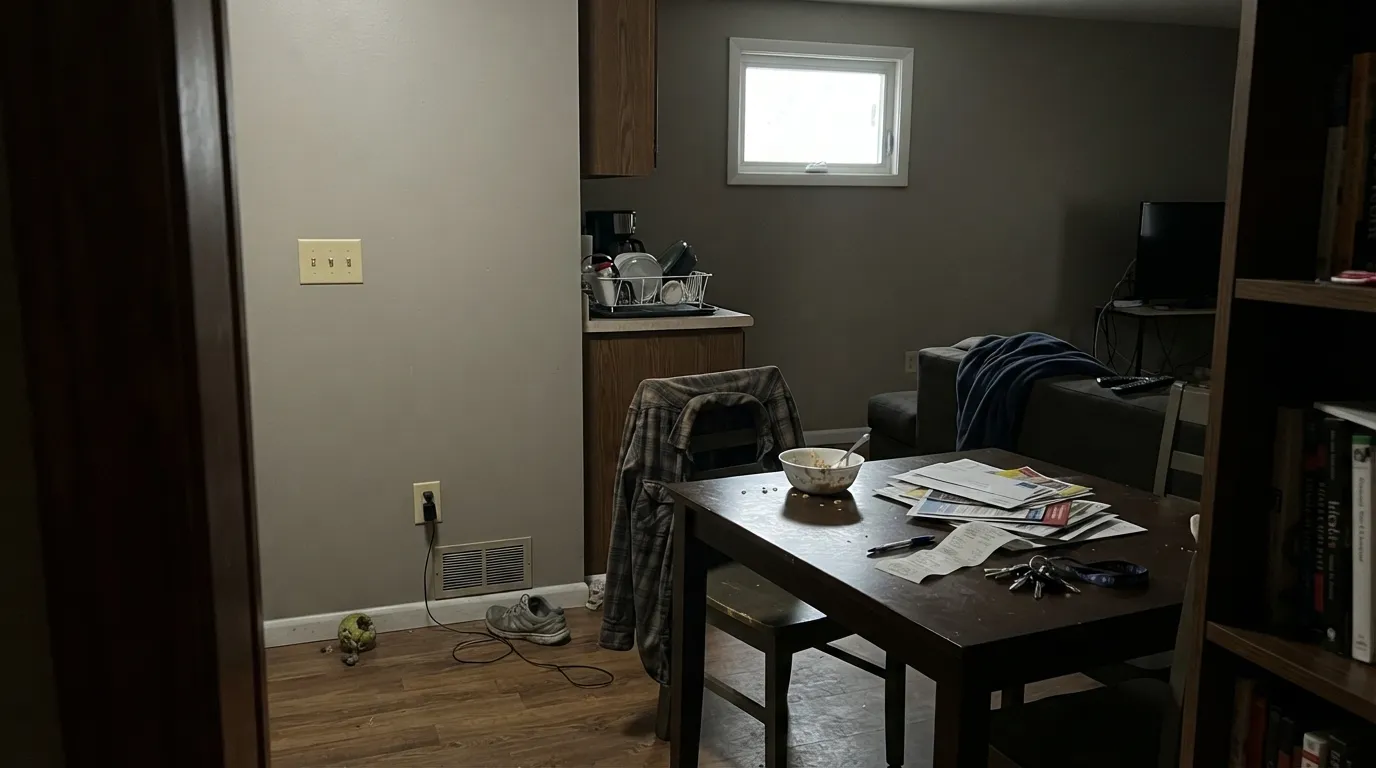
This is the Houzz pattern: Fine Grain was great in the den, which had more light, and fell apart in the kitchen, which did not. Cool, flat daylight kills the beige and leaves a drab gray at LRV 59 — not airy, just tired. Warm lamps help after dark and do nothing at 2 p.m. Step to Crisp Muslin (LRV 71) in the dark connectors, or pick a cream that still glows, and keep this color for rooms with actual sun.
On the chip it passes for whichever side you are hoping for. On four walls it is a fence-sitter, and that is the point of a greige — and the complaint. If you actually want gray, Repose Gray is the modern one with a violet risk, not this. If you actually want beige, Accessible Beige (LRV 58) carries more tan on every wall. Fine Grain will not commit, and buyers who needed it to pick a side feel tricked.
Gray LVP, gray-washed wood, and 4000K bulbs sit on the blue side of neutral. Next to them the yellow-tan drains out and the walls read dirty, slightly lifeless gray — the same floor-mismatch one Houzz shopper logged when Agreeable Gray flattered the plank and Fine Grain did not. Warm the bulbs to 2700K–3000K, or pick a cooler gray that matches the floor instead of arguing with it.
Room by Room
South- and west-facing living rooms are the light this greige was mixed for: gray enough to stay clean, beige enough to feel finished against Whisper or Milk Glass trim. Eggshell on the walls, semi-gloss on the woodwork. A closed, dim living room is the skip — that is where it goes drab.
A kitchen with a window or an open pass-through is a natural whole-house carry. White oak, brass, and satin Milk Glass cabinets all sit comfortably against it. A closed galley with cool under-cabinet LEDs is the Houzz failure mode. Satin on any Fine Grain cabinets; test at night under the actual bulbs.
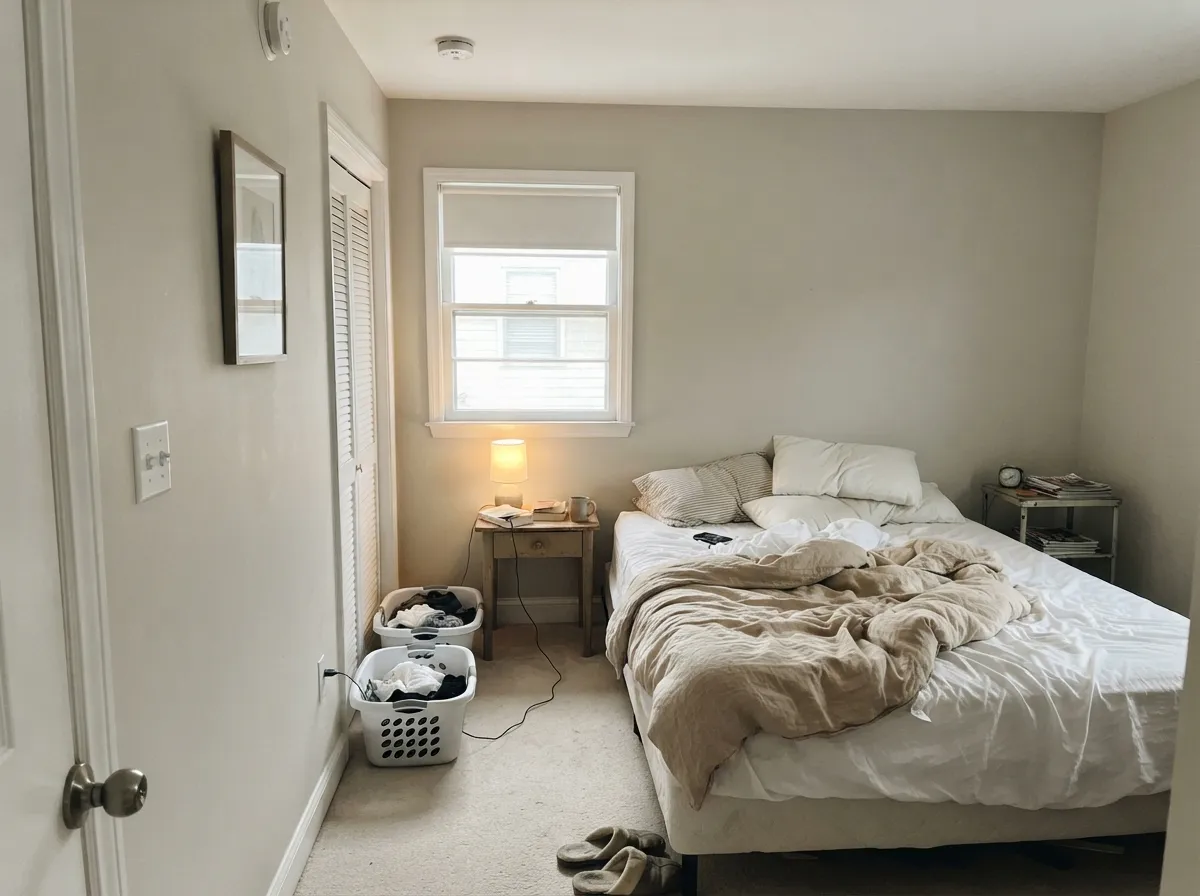
In morning light it stays soft — not cold gray, not yellow beige. Under 2700K bulbs the tan side comes forward and the room feels restful. A north cave will go drab; Crisp Muslin is the lighter neighbor if you need the same family with more bounce.
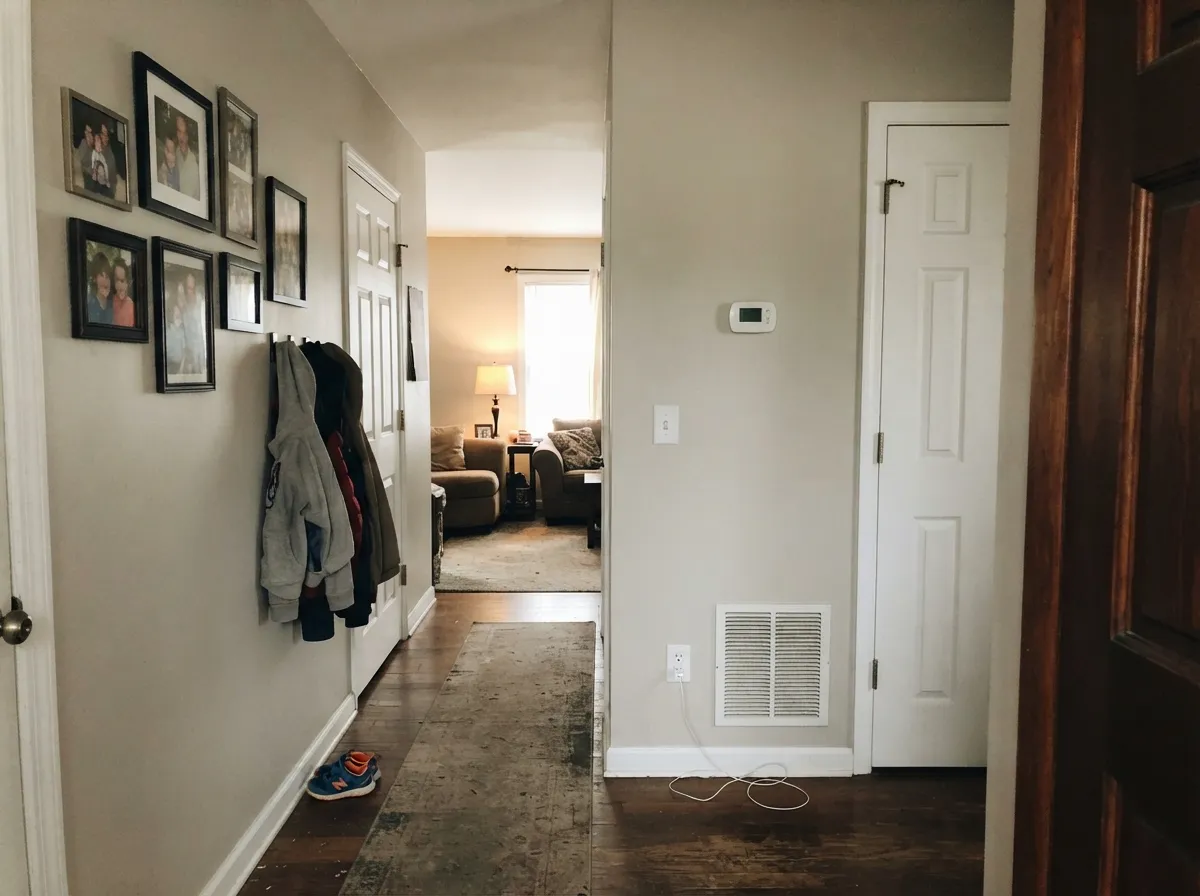
This is the job it actually has. An open hall that borrows daylight from both ends carries room to room without clashing, which is why people paint a good portion of the house and then pop color in the art. Windowless interior halls at this LRV still need a lamp or they read as a tunnel of gray.
An open dining room off the living room is easy. A lamp-only dining room needs 2700K or dinner goes gray. Home offices with a real window are fine — DE's own popularity list names offices as a home for it. Windowless dens are where the dreary reviews come from.
At LRV 59 it is a light body color. Consultants put it in exterior greige piles next to brick, and it can complement red brick and a brown roof, but Houzz already flagged the catch: it can look fairly pale from the street next to Perfect Greige's depth. Full sun lifts it; the shaded north elevation will read grayer. Dark trim — Iron Mountain or Hale Navy — keeps it from looking unfinished.
Your Light Is the Risk
Warm, steady sun holds the beige and the gray in the same frame. This is the light the color was mixed for — neither side winning, the wall looking finished rather than painted.
Cool grey daylight strips the beige and leaves a flat, drab gray. Fine if you half-wanted gray; disappointing if you wanted greige. The dim kitchen in the Houzz thread is this light.
East light is the cooler, grayer read. Midday south is the honest greige. Late west sun pulls a muted yellow-tan for an hour — the same paint, warmer, not a new color. Sample at 8 a.m. and at 5 p.m.
2700K bulbs wake the tan and it goes cozy, almost earthy. Cool 4000K–5000K LEDs sharpen the gray and can make the wall look tired. Swap the bulbs before you repaint.
Most complaints about Fine Grain are a light mismatch. Upload a photo of your actual room and see it on your walls — then ask for the same wall in north light or evening lamps before you buy a single sample.
Need It From Another Brand?
Any paint counter can custom-tint Dunn-Edwards DE6213 directly. If you would rather stay in one brand's own deck, these are the closest stock matches, measured as ΔE2000. Under 2 is a difference you will not see on the wall.
| Brand | Closest color | ΔE | LRV | |
|---|---|---|---|---|
| Sherwin-Williams | DumplingSW 9616 · Sherwin-Williams | 0.8 | 64 | Color page → |
| Behr | Aged BeigePPU7-09 · Behr | 0.5 | 63 | Color page → |
| Benjamin Moore | Cedar Key982 · Benjamin Moore | 0.5 | 61 | Color page → |
| Valspar | Gentle Shadows8005-5A · Valspar | 0.9 | 64 | Color page → |
| PPG / Glidden | Cool ConcretePPG1023-2 · PPG / Glidden | 0.0 | 63 | Color page → |
| Glidden | Cool ConcretePPG1023-2 · Glidden | 0.5 | 64 | Color page → |
Similar Dunn-Edwards Colors
The nearest shades to Fine Grain within Dunn-Edwards's own range, ranked by perceptual color distance — useful when you want the same look a touch lighter, darker, or warmer.
WCAG 2.1: AA is 4.5 : 1 for normal text, 3 : 1 for large text, AAA is 7 : 1.
Fine Grain vs the Colors You're Also Considering
Every Fine Grain sample board has the same rivals on it. The numbers show the real lightness gap — then it comes down to which risk you would rather live with.
Pick this if you are at a Dunn-Edwards counter and want the same gray-beige job in that deck, one LRV point deeper.
Sherwin-Williams SW 7029 · LRV 60Agreeable GrayPick this if your painter is already in Sherwin-Williams — it is the national default greige, a touch lighter, until the light goes cool.
Pick this when Accessible Beige looked too sandy and you want the gray in the greige to show up.
Sherwin-Williams SW 7036 · LRV 58Accessible BeigePick this if you actually want beige — it carries more tan on every wall, and still fails when the light goes cool.
Pick this when Perfect Greige felt heavy and you want the lighter, whole-house version consultants keep substituting.
Sherwin-Williams SW 6073 · LRV 42Perfect GreigePick this if you want the original greige — deeper and warmer than the light copies, with real body on an exterior.
Pick this for the cleaner, slightly lighter gray-beige from the Dunn-Edwards strip, without Revere's extra weight.
Benjamin Moore HC-172 · LRV 56Revere PewterPick this if you want the famous Historic greige — slightly deeper, a touch muddier, with that one real risk in dim rooms.
Fine Grain Coordinating Colors
The rule is a soft warm white, one dark, and stay off cool blue-gray stone. Fine Grain wants Whisper or Milk Glass on the woodwork, not a gallery white that makes the greige look dingy. It sits comfortably next to Crisp Muslin, Light Sage, and a navy or near-black door, and it argues with gray LVP and 4000K LEDs. These are the partners that keep showing up in rooms that work:
A 2006 Workhorse, Not a Famous Greige
Fine Grain has sat in the Dunn-Edwards deck since 2006. It is not a Color of the Year and it has never had a national campaign. What it has is a job: Western painters keep reaching for DE6213 when a client wants greige and the store is Dunn-Edwards. The brand's own 2023 roundup of most-popular gray and brown colors ranked it second among the warm neutrals, behind only Crisp Muslin, and parked it in the modern-farmhouse / transitional bucket. Color consultants on Houzz put the chip in the same pile as Pigeon Gray and Trail Dust when someone asked for a Perfect Greige analog — then noted, correctly, that Fine Grain is much lighter.
The published rooms are modest and specific. Dunn-Edwards itself posted Fine Grain on a Patterson Custom Homes project that Home Bunch later toured: a brick-and-white-oak house where the greige sat quietly behind the masonry. Another Home Bunch California house wore it as a light tan-greige that still felt beachy. That is the pattern: a quiet whole-house neutral, used by people who already shop Dunn-Edwards, not a viral paint. If you wanted the famous name, Agreeable Gray is the national one. If you wanted the can from this counter, this is it.
Fine Grain With Wood Tones and Floors
Warm wood is the easy yes. White oak is the pairing already in print — Patterson's hardwood next to brick. Medium oak, walnut, and butcher block all sit comfortably because the gray in Fine Grain cools orange instead of stacking more yellow on top. Honey oak usually behaves for the same reason; it is kinder here than against a true beige. Brass and unlacquered hardware look clean rather than dated. Cream carpet is fine.
The flooring that needs a sample first is cool gray LVP or gray-washed wood. Gray plank pulls the tan out, and at least one Houzz shopper found Agreeable Gray flattered the floor while Fine Grain did not. Grey-veined quartz can do the same trick on a kitchen wall. Tape a large sample above the actual floor in late-afternoon light before you roll the whole house. Metals are simple: unlacquered brass and matte black both work; polished chrome is the one that leans cold against it.
Three Ready Palettes Built on Fine Grain
A color is never alone on the wall. These are complete combinations in the 60-30-10 pattern, with the reason each one holds together. Every one opens in the visualizer.
Whisper is Dunn-Edwards' White Dove analog, so the wall-to-trim handoff stays warm instead of plastic-bright. Hale Navy is the single dark note an LRV-59 whole house needs. This is the scheme that lets Fine Grain recede and the oak and brick do the talking.
Try this palette in your roomMilk Glass is the quietly creamy cabinet white in the same deck — luminous against the greige, kind to brass and butcher block. Iron Ore on the island is the near-black that keeps the kitchen from looking like one pale wash. Sample against cool gray quartz before you commit; that stone is the miss.
Try this palette in your roomCrisp Muslin is the chip above Fine Grain on the same Warm Neutrals strip — DE's most-used warm neutral, twelve LRV points lighter. Running Muslin in the dark connectors and Fine Grain in the daylit living rooms is how you keep one family without painting a tunnel. Whisper ties both back to the woodwork.
Try this palette in your roomFine Grain FAQ
Is Fine Grain gray or beige?
Both, on purpose. Official undertone is a balanced gray-beige, and the Munsell (1.50Y, chroma 1.0) is a yellow hue with almost no body, so neither side shouts. In south sun it reads greige; in cool north light it reads gray; under 2700K bulbs it pulls a muted tan. If you actually want beige, pick Accessible Beige (LRV 58). If you actually want gray, this is the wrong chip.
What trim white goes with Fine Grain?
Whisper is the Dunn-Edwards default — a White Dove analog that keeps the edge soft. Milk Glass is the slightly cleaner yellow-white if you want the woodwork to still read as white. Warm White (LRV 93) will snap brighter and can make Fine Grain look beige by comparison, so sample a board first. A cool gallery white (Lighthouse, Chantilly Lace) will shove the yellow-tan into the open. Semi-gloss on the trim, eggshell on the walls.
Is it a good whole-house color?
In a house with real daylight, yes — that is the job it has. LRV 59 is the Agreeable Gray neighborhood, light enough for halls that borrow sun. It is not whole-house-safe in a north ranch with windowless connectors; those rooms go drab. Run Fine Grain in the daylit rooms and step up to Crisp Muslin (LRV 71) in the dark ones.
Does Fine Grain work with oak floors?
White oak and medium oak are the easy yes — Home Bunch rooms have already run it over white oak hardwood next to brick. Honey oak usually works because the gray in Fine Grain cools the orange instead of stacking more yellow. The miss is cool gray LVP: one Houzz shopper found Agreeable Gray flattered the floor and Fine Grain did not. Tape a big sample above the actual plank in afternoon light.
How does it compare to Agreeable Gray or Perfect Greige?
Agreeable Gray (LRV 60) is the national twin — a touch lighter, same greige job, same cool-light risk. Perfect Greige (LRV 42) is the original, deeper and warmer; consultants offer Fine Grain as the Dunn-Edwards stand-in and then people notice it is much paler, especially outside. If you wanted Perfect Greige's body, this is not a match. If you wanted Agreeable Gray from a DE can, it is.
Can I use it on cabinets or the exterior?
Cabinets in doses: satin Fine Grain on an island or lower boxes under Milk Glass or Whisper walls can look custom; a whole kitchen of it is a bigger beige-gray bet. Outside it is a light body color at LRV 59 — fine with brick and a dark door, pale from the street if you expected Perfect Greige. Sample the sunny south wall and the shaded north wall before you commit the stucco.
Have you painted with Fine Grain?
Rate it — one tap helps the next reader decide.
Ask a Question