Black Bean
A warm charcoal Dunn-Edwards keeps for cabinets and accent walls, reviewed honestly: where the brown shows up, the rooms where it just goes black, and why it is not the Sherwin-Williams color of the same name.

Jessica has spec'd whites and neutrals for more than 300 rooms and keeps a sample wall of painted drawdowns in her studio. Every color review is checked against real reader rooms in the comments and re-tested when a formula changes. About the testing process →
- 1Black Bean7
- 2Pewter Green12
- 3Retreat21
The Fast Verdict
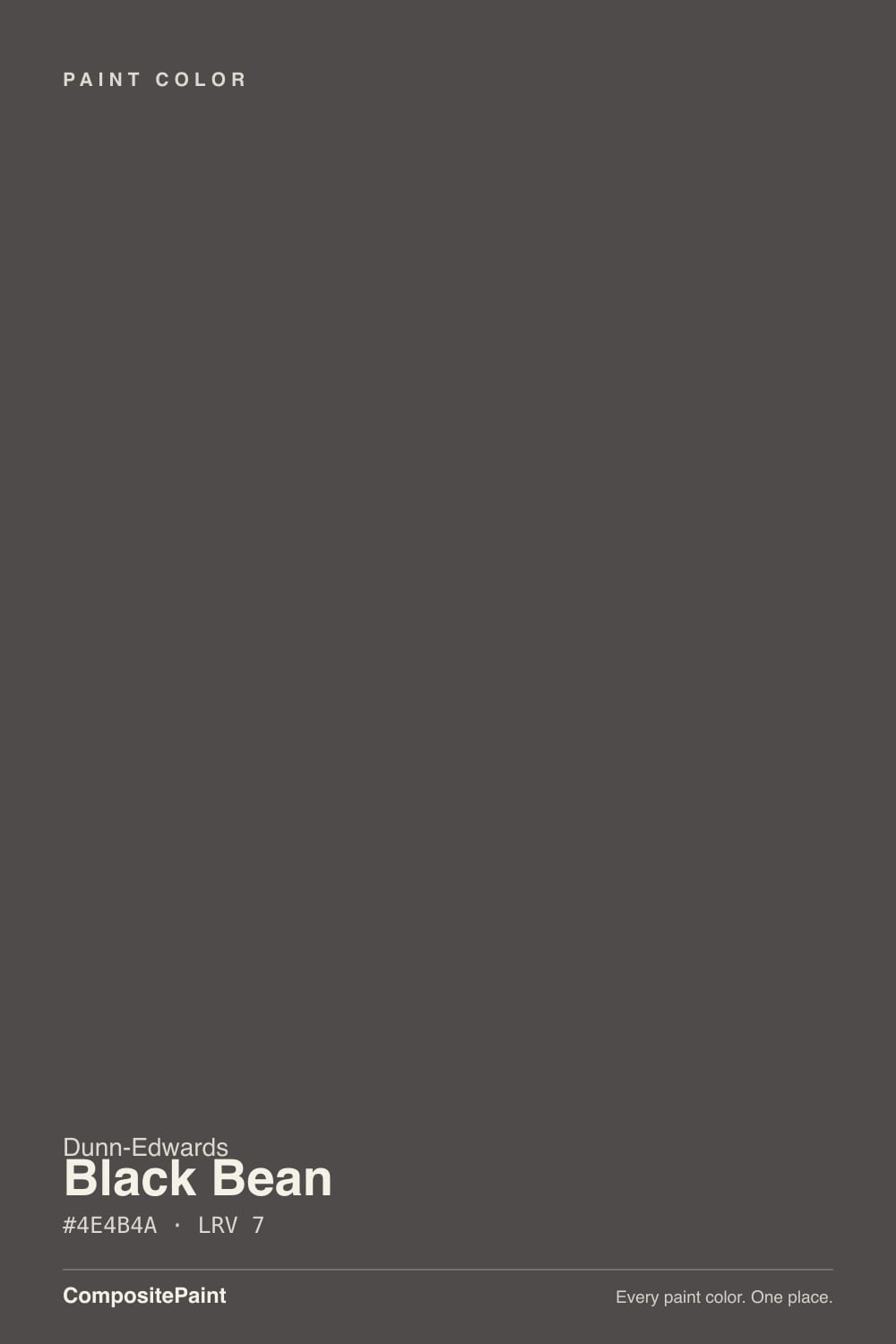
Black Bean is a deep warm charcoal with the chroma knocked almost out of it — black from across the room, earthy brown only when real light hits. Dunn-Edwards files it for cabinetry and accent walls, and that is the honest job: an island, a vanity, one well-lit wall, next to brass and a creamy white. Ask it to carry four dim walls, or to match Sherwin-Williams Black Bean, and the chip will feel like a different color.
Kitchen islands, cabinets, and vanities · a well-lit accent wall · powder rooms with warm lamps · anyone who wants charcoal with a little earth in it, not a hole
You are painting four walls of a dim room · you wanted true black or Sherwin-Williams' cocoa Black Bean · your floors and bulbs are cool gray · you need a nationally famous color with thousands of photos
- Warm charcoal that still reads as a color in good light, not a flat black hole
- Built for cabinets, islands, and vanities — the job Dunn-Edwards actually sells
- Sits next to cream, brass, walnut, and leather without a fight
- Deep enough (LRV 7) to hold in a bright kitchen without washing out
- Never a Color of the Year, so it will not age like one
- Dim interiors flatten it to a hole — four walls are almost never the use
- Not the Sherwin-Williams Black Bean people save photos of — less cocoa, more charcoal
- Cool gray floors and cool LEDs strip the brown and leave a dirty faded black
- Thin national photo record compared with Iron Ore or Black Fox
What Color Is Black Bean, Really?
A low-chroma warm charcoal, not espresso and not a true black. The undertone is a muted brown-red so grayed down that the chip looks like charcoal with a coffee stain, and that is the whole personality: smoky first, brown second. Dunn-Edwards files it in the Perfect Palette under Cool Neutrals, which tells you how little color is actually in it — chroma this low will pass for a cool gray-black until warm light names the earth. It is a workhorse in Western stores, not a launch color, and it has never been a Color of the Year because Dunn-Edwards does not run one.
At LRV 7 it absorbs almost everything that hits it. A wall in this paint starts behaving like a shadow the moment the light drops, which is useful on a cabinet door and punishing on four sides of a bedroom. Plan for the wall or the box to read a step deeper and blacker than the chip — every near-black does this, and it is the number-one surprise when people sample it on a card and then paint a field. The useful comparison is Sherwin-Williams Black Bean (SW 6006) at LRV 5: same name, different color. That one is a cocoa-brown near-black. This one is charcoal that only flashes brown.
Undertone in one line: earthy brown-red so muted it reads charcoal first — never blue, never green, never a rich mocha. If your sample looks purple, the bulbs are cool. If it looks orange, you are seeing bounce from terracotta, honey oak, or late west sun. If it looks like a hole, you do not have enough light. The paint itself is a warm charcoal, and the name promises more bean-brown than a dim room will give you.
Where It Shines
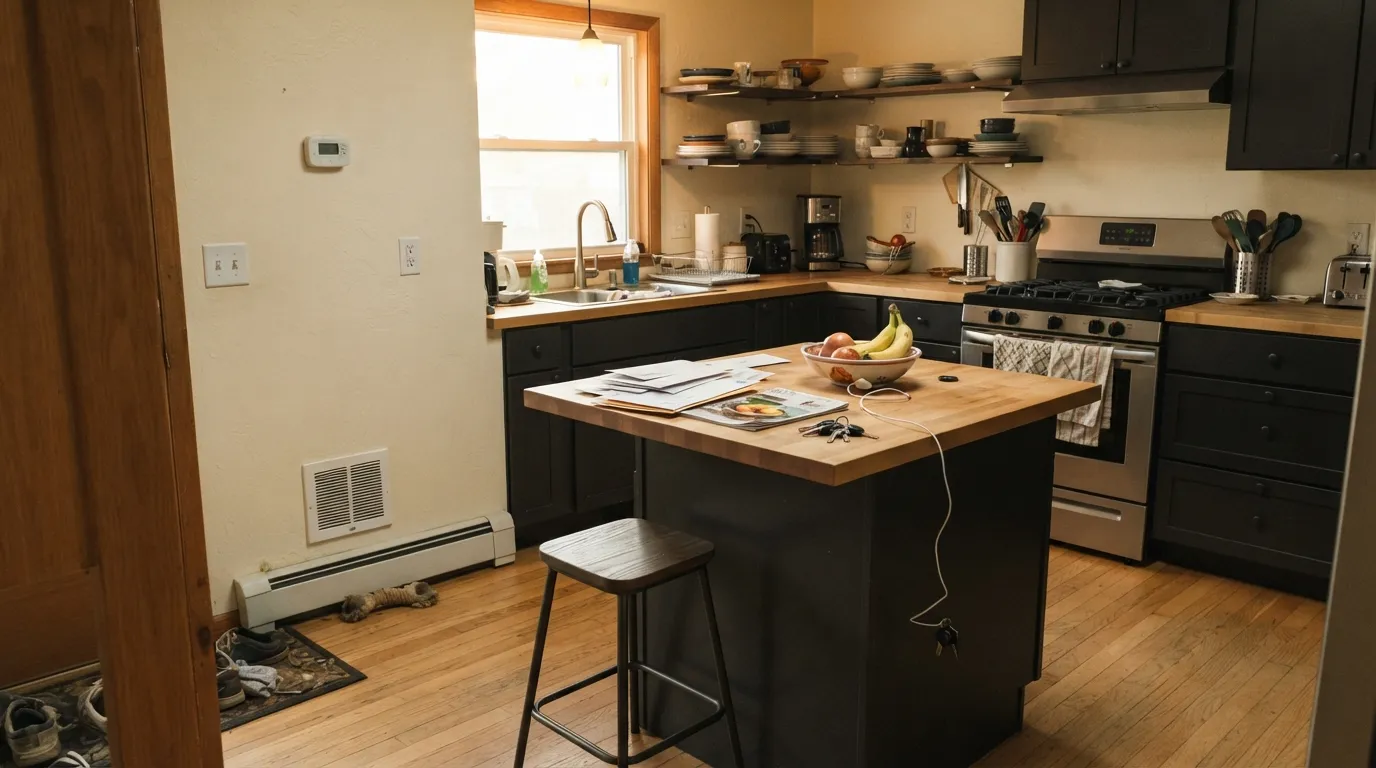
Give it a cabinet run, an island, or one wall that actually sees a window, and it earns the job Dunn-Edwards wrote it for. Against Swiss Coffee or Whisper the charcoal reads decided instead of cave-like; brass, walnut, and cream linen pull the brown forward so it looks custom rather than just dark. Satin on doors and drawers is what keeps fingerprints from etching a matte field. This is a dose color — the dark note in a bright room — not a whole-house field.
Where It Fails
Almost every regret about this color is a lighting or identity problem, not a bad batch. The chip is a warm charcoal. Shade, dim rooms, and a head full of the other Black Bean will all make you think you bought the wrong can.
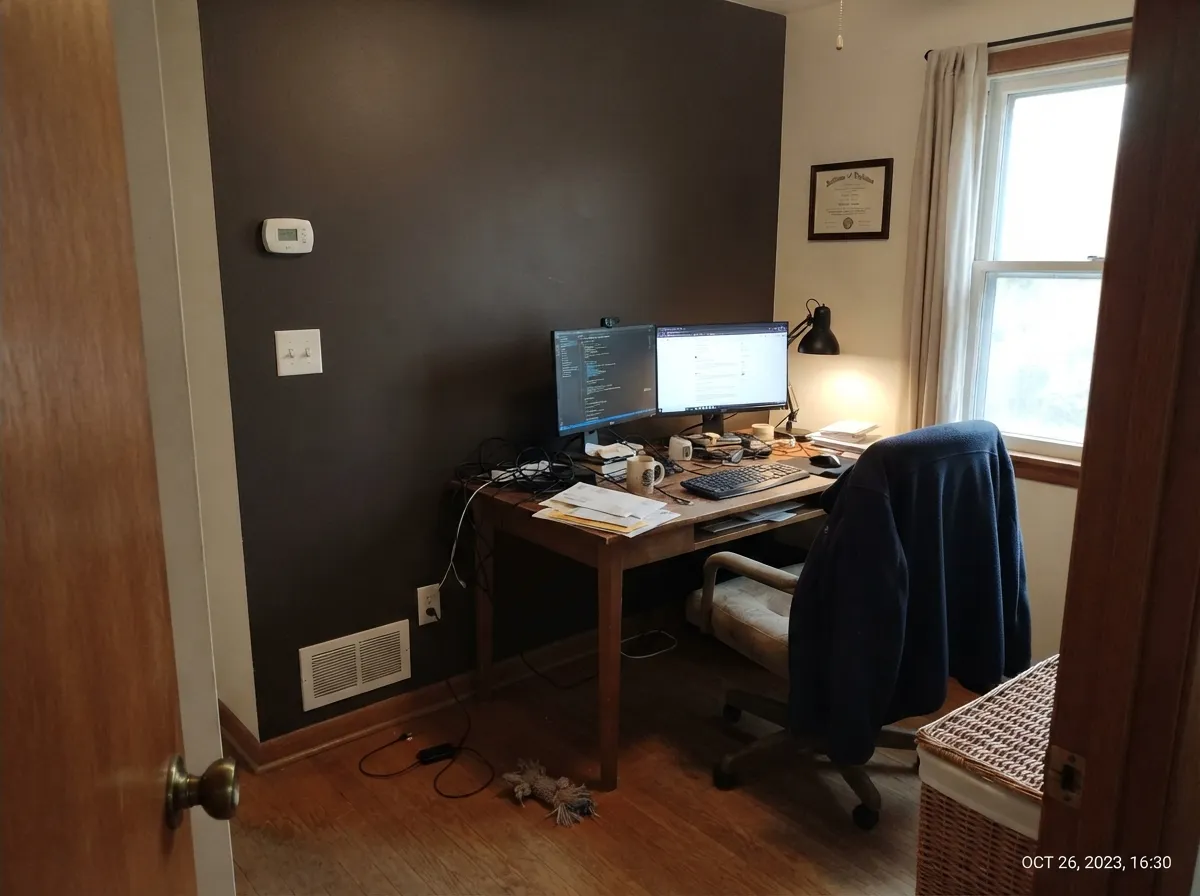
Without real light, LRV 7 stops being a color and starts being a hole. A north bedroom, a basement office, a hallway with one overhead LED — the brown disappears, art disappears, and the trim gets swallowed. Dunn-Edwards itself points this can at cabinetry and accent walls, not at a field. Keep it to a box, a vanity, or one wall that actually sees a window.
Sherwin-Williams Black Bean (SW 6006, LRV 5) is a cocoa-brown near-black. This Dunn-Edwards can is charcoal that only flashes earth. Buyers who saved an SW island photo see less brown than they expected; buyers who wanted a flat true black see more. If zero brown is the point, Iron Ore (LRV 6) or Tricorn Black (LRV 3) is the cooler, blacker answer. If the cocoa is the point, you wanted the Sherwin-Williams can, or Espresso Macchiato (DET680) in this same deck.
Cold light kills the brown-red and leaves a dirty charcoal that looks like a faded black, not a warm one. Cool gray LVP, blue-gray stone, and 4000K LEDs all do it. The company this color was mixed for is cream, walnut, brass, and 2700K lamps. If the house is already a cool-gray box, pick Iron Ore and stop asking a warm charcoal to pretend.
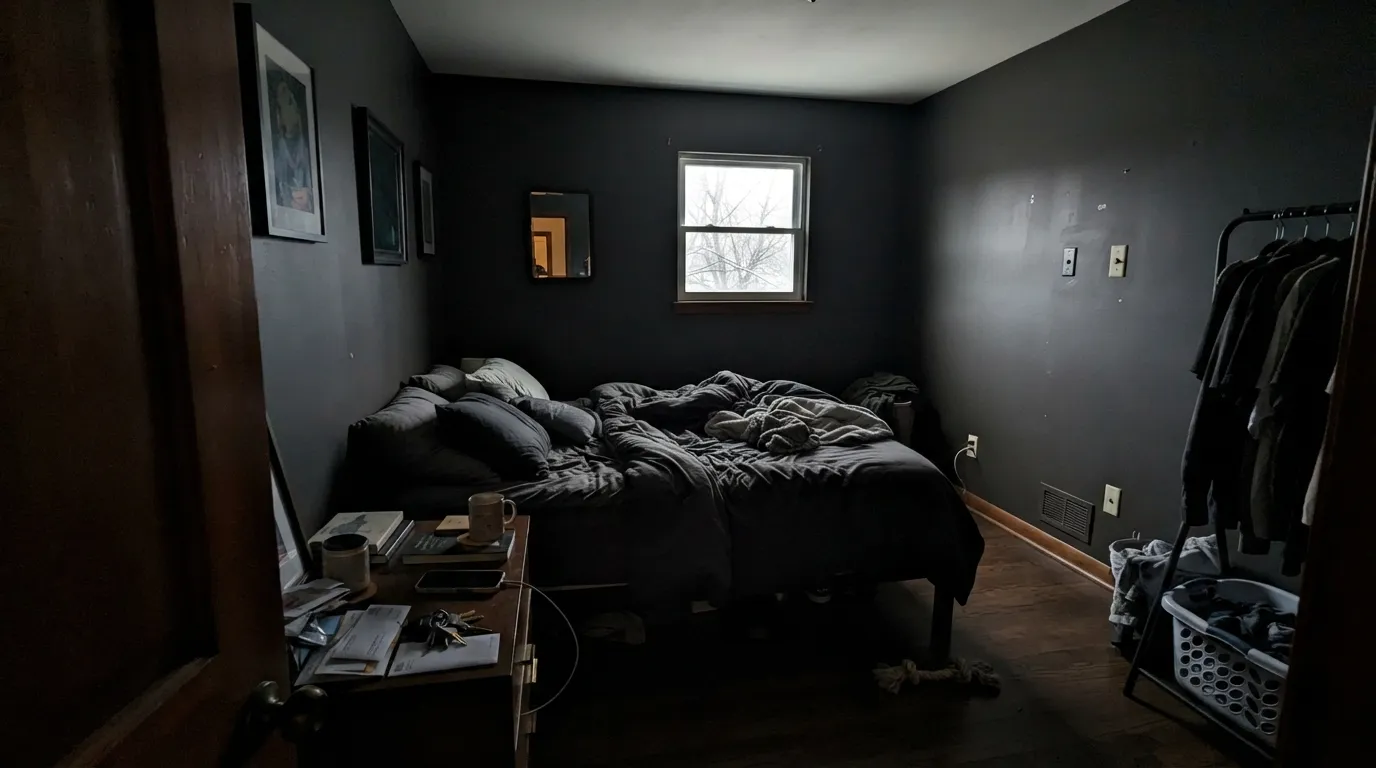
Room by Room
Satin Black Bean on an island or a lower run under Swiss Coffee or Whisper walls is the move the color was mixed for: one charcoal note, plenty of bounce light, brass or aged-bronze pulls. Perimeter boxes stay light so the dark actually reads as color instead of a hole. Cabinet enamel, not wall paint — fingerprints and cooking film will etch a matte door.
One fireplace wall or a headboard wall in a room with a real window looks intentional and earthy. In a windowless nook it just disappears into shadow. Sample a large board on that wall for a full day before you commit — noon charcoal and 6 p.m. brown are both this paint.
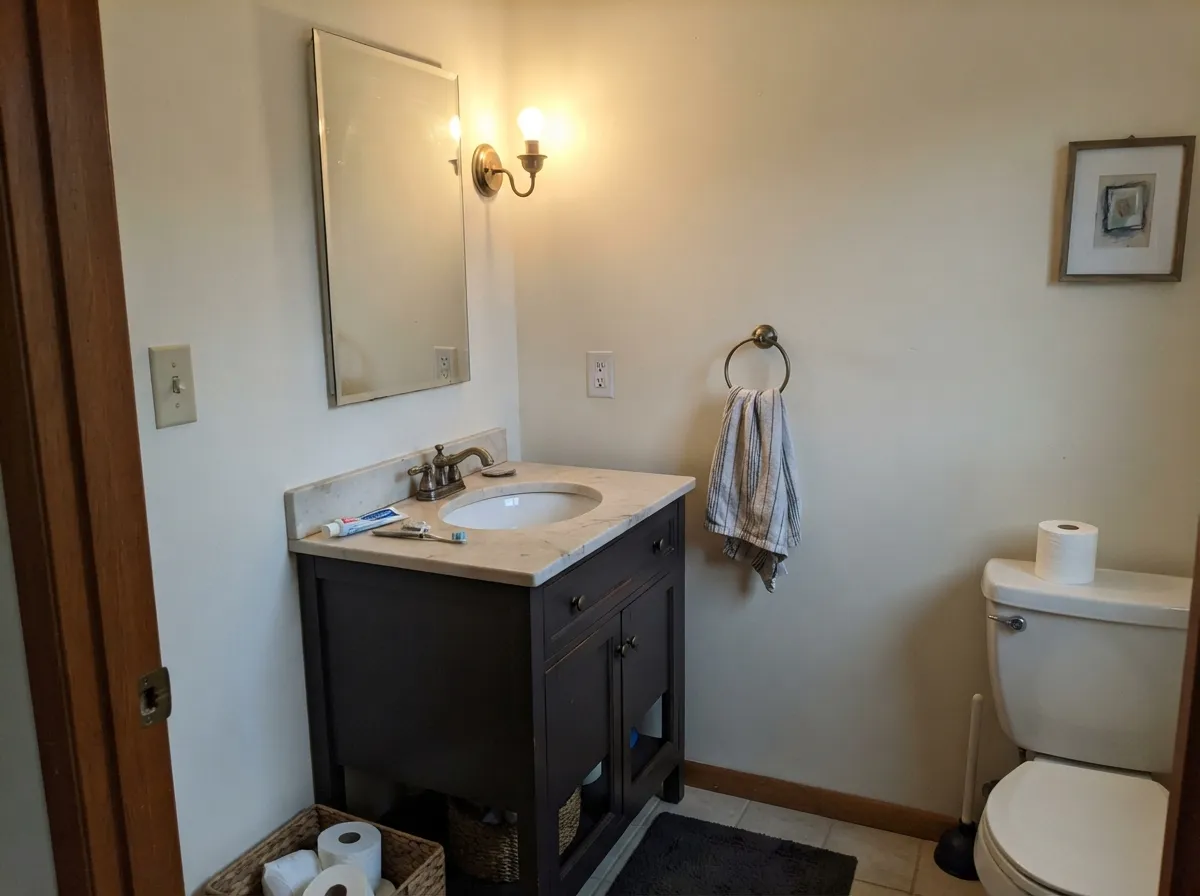
A Black Bean vanity under a stone top, or a drenched powder room with a window and warm sconces, reads custom without betting the house. Satin so it wipes. A windowless powder with one cool overhead is the cave version of the same idea — 2700K bulbs are part of the paint job.
One wall behind the desk, or built-ins in satin, in a room that has a window plus two warm lamps. Color-drenching four walls only works if the room is genuinely bright. Matte on the wall, satin on the shelves; Whisper or Swiss Coffee on the remaining walls keeps the dark from eating the trim.
Behind the headboard it is calm and expensive-looking. All the way around a bedroom it goes from cozy to cave fast, especially with north light. If you want a full dark bedroom, step up in light or pick a color with more LRV left — Peppercorn (LRV 11) still reads as a color after dark.
It can do a door against cream stucco, but Espresso Macchiato is the Dunn-Edwards can Western painters actually pull for that job — more coffee in the sun, same depth. As a whole-house body, LRV 7 shows every dust streak and water spot. Satin or semi-gloss on a door; walk the sunny and shaded sides with a sample before you even think about siding.
Your Light Is the Risk
Hard daylight on a cabinet door or an accent wall is the light this charcoal was mixed for. It lifts off black, shows the earthy brown, and looks like a designed box instead of a void. Sample it on the sunny side first.
Cool, weak daylight kills the brown-red and the surface reads as flat near-black. North bedrooms, covered halls, and rooms with one overhead LED are where people decide they hate it.
Midday is the honest charcoal read — smoky, almost gray-black. Late west light warms it a step toward earth for an hour, then it settles back. Sample at noon and at 6 p.m. on the same wall.
2700K bulbs keep the brown civil after dark. Cool 4000K–5000K LEDs strip the warmth and leave a dirty charcoal. If you use this inside, the bulbs are part of the paint job.
Most complaints about Black Bean are a light mismatch. Upload a photo of your actual room and see it on your walls — then ask for the same wall in north light or evening lamps before you buy a single sample.
Need It From Another Brand?
Any paint counter can custom-tint Dunn-Edwards DE6385 directly. If you would rather stay in one brand's own deck, these are the closest stock matches, measured as ΔE2000. Under 2 is a difference you will not see on the wall.
| Brand | Closest color | ΔE | LRV | |
|---|---|---|---|---|
| Sherwin-Williams | Rock BottomSW 7062 · Sherwin-Williams | 4.8 | 7 | Color page → |
| Behr | Harvest OakBNC-33 · Behr | 2.8 | 7 | Color page → |
| Benjamin Moore | Midsummer Night2134-20 · Benjamin Moore | 2.6 | 7 | Color page → |
| Valspar | Vintage FrameV142-6 · Valspar | 3.1 | 7.1 | Color page → |
| PPG / Glidden | Black ElegancePPG1004-7 · PPG / Glidden | 4.5 | 7 | Color page → |
| Glidden | Deepest Earth Green30YY 07/041 · Glidden | 2.5 | 7 | Color page → |
Similar Dunn-Edwards Colors
The nearest shades to Black Bean within Dunn-Edwards's own range, ranked by perceptual color distance — useful when you want the same look a touch lighter, darker, or warmer.
WCAG 2.1: AA is 4.5 : 1 for normal text, 3 : 1 for large text, AAA is 7 : 1.
Black Bean vs the Colors You're Also Considering
Every Black Bean sample board has the same rivals on it. The numbers show the real lightness gap — then it comes down to which risk you would rather live with.
Pick this when you want charcoal that only flashes brown, not an espresso stain, and your painter already works in Dunn-Edwards.
Sherwin-Williams SW 6006 · LRV 5Black BeanPick this if the cocoa-brown is the point — that is the near-black people save island photos of, a genuinely warm near-black as long as you give it real light.
Pick this when the job is a cabinet or an accent wall that should read charcoal first, espresso second.
Dunn-Edwards DET680 · LRV 7Espresso MacchiatoPick this for the West's espresso near-black on doors, trim, and garage doors — more coffee in the sun, same depth.
Pick this when the dark note should stay warm next to cream, walnut, and brass, and the job is a box or one wall, not a facade.
Sherwin-Williams SW 7069 · LRV 6Iron OrePick this if you want the deeper black that can carry a whole house — the best black for a whole house, if you respect LRV 6, and it stays cooler at noon.
Pick this when you want the smokier, more charcoal-leaning version of the same near-black, especially on a cream-walled kitchen in the West.
Sherwin-Williams SW 7020 · LRV 7Black FoxPick this if your painter is already in Sherwin-Williams — same depth, a beautiful warm black that only looks warm half the time.
Black Bean Coordinating Colors
The rule for coordinating with Black Bean: stay on the warm side of the fence, and keep the dark in doses. Creamy whites, warm greiges, and a slightly browner near-black for doors — and keep cool gray and icy white at arm's length. These are the partners that keep showing up in rooms that work:
Not the Other Black Bean
Search this name and you will mostly get Sherwin-Williams SW 6006 — a cocoa-brown near-black at LRV 5 that has had a real run on kitchen islands and front doors. Dunn-Edwards DE6385 shares the name and almost none of the hue. This can is charcoal with a muted brown-red flash; that can is espresso with the lights on. Conversion charts put DE6385 closer to Rock Bottom than to SW Black Bean, which is another way of saying the names are a coincidence.
The mix-up is the color's actual story, because it does not have a famous-use story. No Color of the Year, no viral room, no TV set. It sits in the Perfect Palette as a Cool Neutral that is not actually cool once the sun hits it, and Western painters pull it for cabinets and accent walls the way they pull Espresso Macchiato for doors. If you arrived from an SW Black Bean photo, sample both. If you arrived from a Dunn-Edwards fan deck, you already have the quieter charcoal.
Black Bean With Wood Tones and Floors
This decision gets made at the floor and the box, not the paint store. Walnut and espresso are the color's best friends — the dark red-brown depth makes the charcoal read smoky and deliberate. White oak and pale unstained oak are safe and keep the kitchen from going cave. Brass, unlacquered bronze, and matte black hardware all sit on it; polished chrome is the one that leans cold.
Golden honey oak is a maybe, not a no: yellow-orange pulls the brown-red forward, so the cabinets look earthier and the floor looks more orange. Some kitchens want that. If yours does not, put a large rug between them or keep Black Bean on the island only. The honest no is cool gray LVP, gray-washed wood, and blue-gray stone — opposite temperature, dirty faded-black result. Test a big sample above the actual floor before the painter shows up.
Three Ready Palettes Built on Black Bean
A color is never alone on the wall. These are complete combinations in the 60-30-10 pattern, with the reason each one holds together. Every one opens in the visualizer.
Swiss Coffee is the Southwest's default cream, and it keeps the kitchen bright enough for Black Bean to read as charcoal instead of a hole. Whisper — Dunn-Edwards' answer to White Dove — frames the boxes without the graphic cut of a true white. Brass pulls finish the argument.
Try this palette in your roomAccessible Beige is the safest warm neutral until the light goes cool, so it hands off to Black Bean without a temperature fight. Alabaster trim — a superb cabinet white — keeps the edge soft. One dark wall, not four, is how this charcoal stays a color.
Try this palette in your roomMilk Glass is the quietly creamy workhorse white in this deck, so the little room stays airy while the vanity carries the charcoal. Espresso Macchiato on the door is the same depth with a little more coffee, so the scheme reads layered instead of one flat dark. Warm sconces are not optional.
Try this palette in your roomBlack Bean FAQ
Is Dunn-Edwards Black Bean gray, brown, or black?
Charcoal first, brown second, black only when the light drops. On the chip it passes for a warm gray-black. On a sunlit cabinet door the earthy brown shows. On four dim walls it just reads as a hole. If you need it to stay brown in weak light, this is the wrong can — look at Espresso Macchiato or Sherwin-Williams Black Bean.
Is it the same as Sherwin-Williams Black Bean?
No. Same name, different color. SW 6006 is a cocoa-brown near-black at LRV 5. DE6385 is a warm charcoal at LRV 7 that only flashes brown. If you saved an island photo of the Sherwin-Williams color, sample both on the actual box before you commit — they will not match.
Is it good for kitchen cabinets?
That is its best job. Satin on an island or a lower run, light cream walls, brass or aged-bronze pulls, and enough daylight or under-cabinet light to keep it from going black. A full kitchen of it needs a glass-walled room; most kitchens do not have that light. Use a urethane-fortified cabinet enamel.
Can I paint a whole room Black Bean?
Almost never. At LRV 7 four walls absorb the room. A south-facing study with real lamps can take a drench if you sample a large board for a full day; a north bedroom or a hallway cannot. One accent wall, a vanity, or the cabinets is the version that works.
What trim white goes with Black Bean?
A soft creamy white — Dunn-Edwards Swiss Coffee or Whisper are the in-house answers. Whisper is Dunn-Edwards' answer to White Dove and keeps the edge calm. Warm White (DEW380) is a true white wearing a warm name, so it makes a graphic, high-contrast sash against the charcoal; use it when you want the cut, not when you want cream. A cool bright white (Chantilly Lace territory) pushes the brown until it looks dirty.
Does Black Bean work with oak floors?
Warm woods love it. Walnut, espresso, and white oak are the easy yes. Golden honey oak pulls more brown out of the charcoal — some people like that, some see mud. Cool gray LVP and gray-washed floors are the honest no: they sit at the opposite temperature and leave a dirty faded black. Sample a board above the actual floor.
Have you painted with Black Bean?
Rate it — one tap helps the next reader decide.
Ask a Question