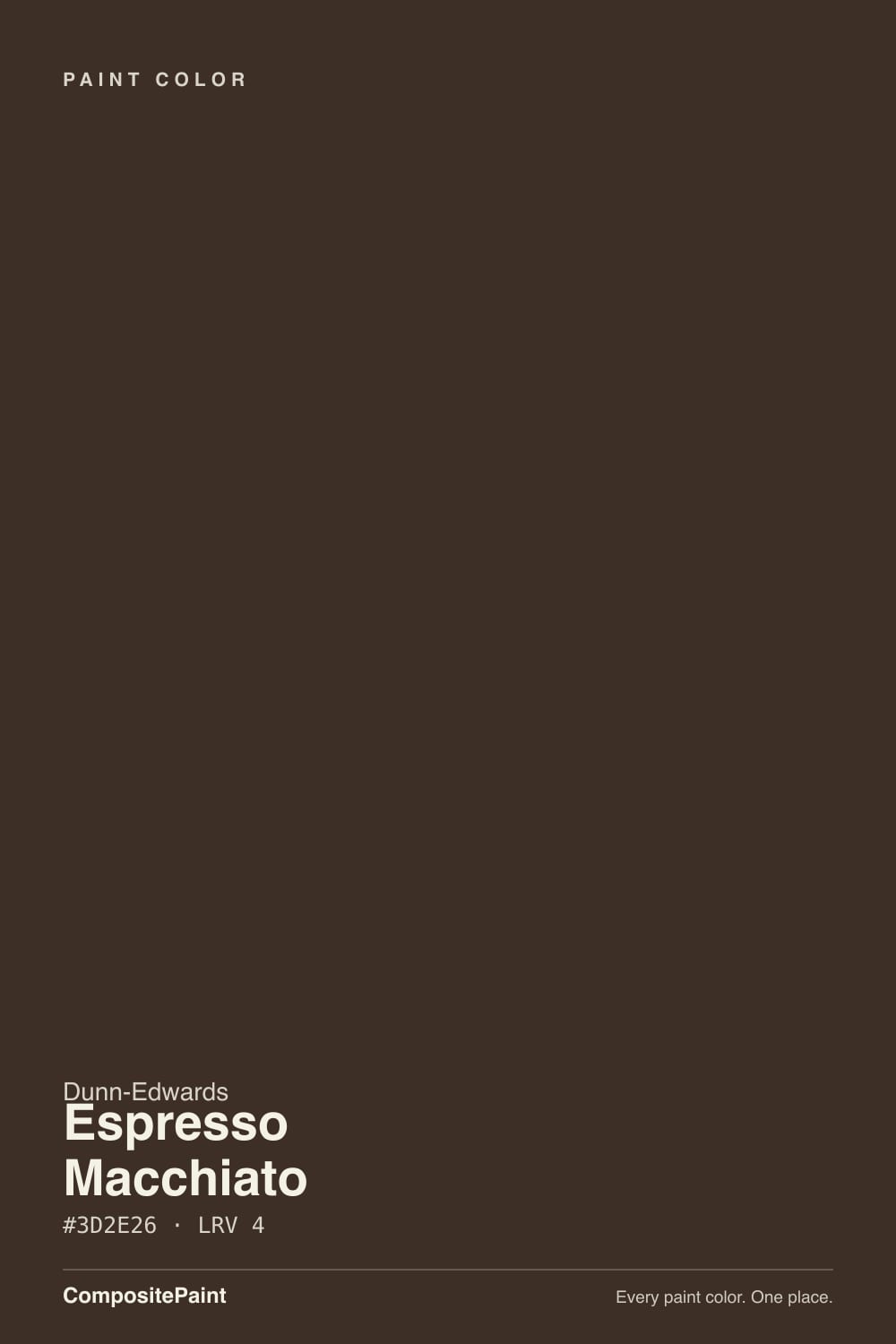
Espresso Macchiato
Dunn-Edwards' smoky near-black, reviewed honestly: the cream-stucco doors where it reads espresso, the noon sun that proves it is not black, and why four walls of it is a cave.

Jessica has spec'd whites and neutrals for more than 300 rooms and keeps a sample wall of painted drawdowns in her studio. Every color review is checked against real reader rooms in the comments and re-tested when a formula changes. About the testing process →
- 1Cordovan Brown0
- 2Espresso Macchiato7
The Fast Verdict
Espresso Macchiato is a brown-black with the chroma knocked almost out of it — coffee in name, charcoal in the shade, espresso only when real daylight hits. At LRV 7 it is a door, a garage panel, a fascia line, not a living-room field. Give it cream stucco and Western sun and it looks decided. Ask it to stay true black, or to fill four dim walls, and the chip will feel like a lie.
Front doors, garage doors, fascia, and window trim on cream stucco · kitchen islands and cabinets against a warm white · anyone who wants near-black with a little coffee in it
You need a true black that stays black at noon · you are painting four walls of a dim room · your floors and bulbs are cool gray · you need a nationally famous color with thousands of photos
- Near-black with real espresso-brown in sun — contrast without a black hole
- The door, garage, and dark-trim color Western painters actually use
- Sits next to cream stucco, brass, walnut, and leather without a fight
- Hides garage-door dirt better than any mid-brown
- Never a Color of the Year, so it will not age like one
- Not black — noon sun on a garage door proves the brown
- Dim interiors flatten it to a hole in the wall
- The name promises more coffee-chroma than the wall delivers
- Thin national photo record compared with Iron Ore or Black Fox
What Color Is Espresso Macchiato, Really?
A muted brown-black, not a mocha and not a true espresso. The yellow-red in it is grayed so far down that the chip looks like charcoal with a coffee stain, and that is the whole personality: smoky first, brown second. Dunn-Edwards files it in the Front Door collection and in Then, Now & Forever — which is a polite way of saying Western painters have been pulling this can for doors, garage panels, and dark trim for years, not that it was ever a Color of the Year. Joshua Tree designer Paul Heintz has called it his go-to front door: contrast without the black-hole look, and it sits next to almost any hardware metal. That is the job. It is not a viral interior color, and pretending otherwise is how people end up with a cave.
At LRV 7 it absorbs almost everything that hits it. A wall in this paint starts behaving like a shadow the moment the light drops, which is useful on a door and punishing on four sides of a bedroom. Outdoors, full sun is what makes the brown show — the same number that looks near-black under an overhang reads as a smoky espresso from the sidewalk at noon. Plan for both reads. They are the same paint being honest about the light, and the outdoor one is the reason to buy it.
Undertone in one line: yellow-red so muted it smokes toward charcoal — never blue, never green, never a rich red-brown. If your sample looks purple, the bulbs are cool. If it looks orange, you are seeing bounce from terracotta tile, a clay roof, or late west sun on beige stucco. If it looks like a hole, you do not have enough light. The paint itself is a low-chroma brown-black, and the name promises more coffee than the wall will give you.
Where It Shines
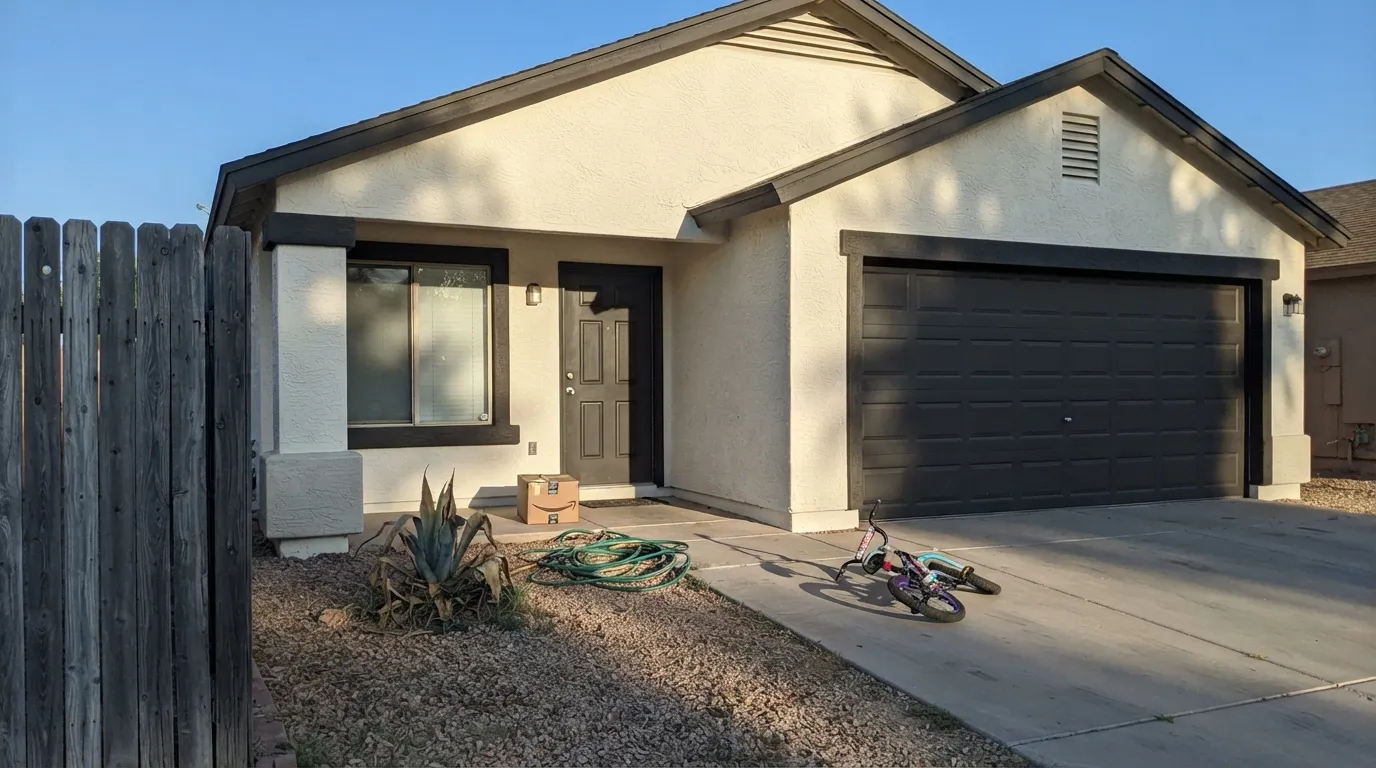
This color earns its keep outside, on the jobs Dunn-Edwards actually sells in the Southwest: a front door, a garage door, fascia and window trim against Swiss Coffee or Stonish Beige stucco. Hard daylight is what keeps it espresso instead of inky, and satin or semi-gloss is what keeps desert dust from etching a matte field. Its indoor job is the same idea in doses — an island, a vanity, a well-lit cabinet run — next to Whisper or Swiss Coffee, where the dark is the one coffee note and not the whole room.
Where It Fails
Almost every regret about this color is a lighting or identity problem, not a bad batch. The chip is a smoky brown-black. Shade, dim rooms, and a head full of true-black Instagram doors will all make you think you bought the wrong can.
At noon on a south garage door or fascia, LRV 7 is not black. It lifts to a smoky espresso-brown you can name from the sidewalk. Houzz threads in Phoenix debate this exact choice — brown-black versus charcoal or true black — and the only difference is the tone. If the photo you saved was inky, you wanted Iron Ore (LRV 6) or Tricorn Black (LRV 3). This can is the one that still shows coffee in Western sun, which is a feature on a cream-stucco door and a failure if black was the point.
Without real light, LRV 7 stops being a color and starts being a hole. A north bedroom, a basement office, a hallway with one overhead LED — the brown disappears, art disappears, and the trim gets swallowed. Keep it to a door, an island, or one wall that actually sees a window. A whole dim room in this paint is a cave with extra steps.
Cold light kills the yellow-red and leaves a dirty charcoal that looks like a faded black, not espresso. Cool gray LVP, blue-gray stone, and 4000K LEDs all do it. The fix is the company this color was mixed for: cream stucco or Whisper walls, walnut or oak, 2700K lamps. If the house is already a cool-gray box, pick Iron Ore and stop asking a brown-black to pretend.
Room by Room
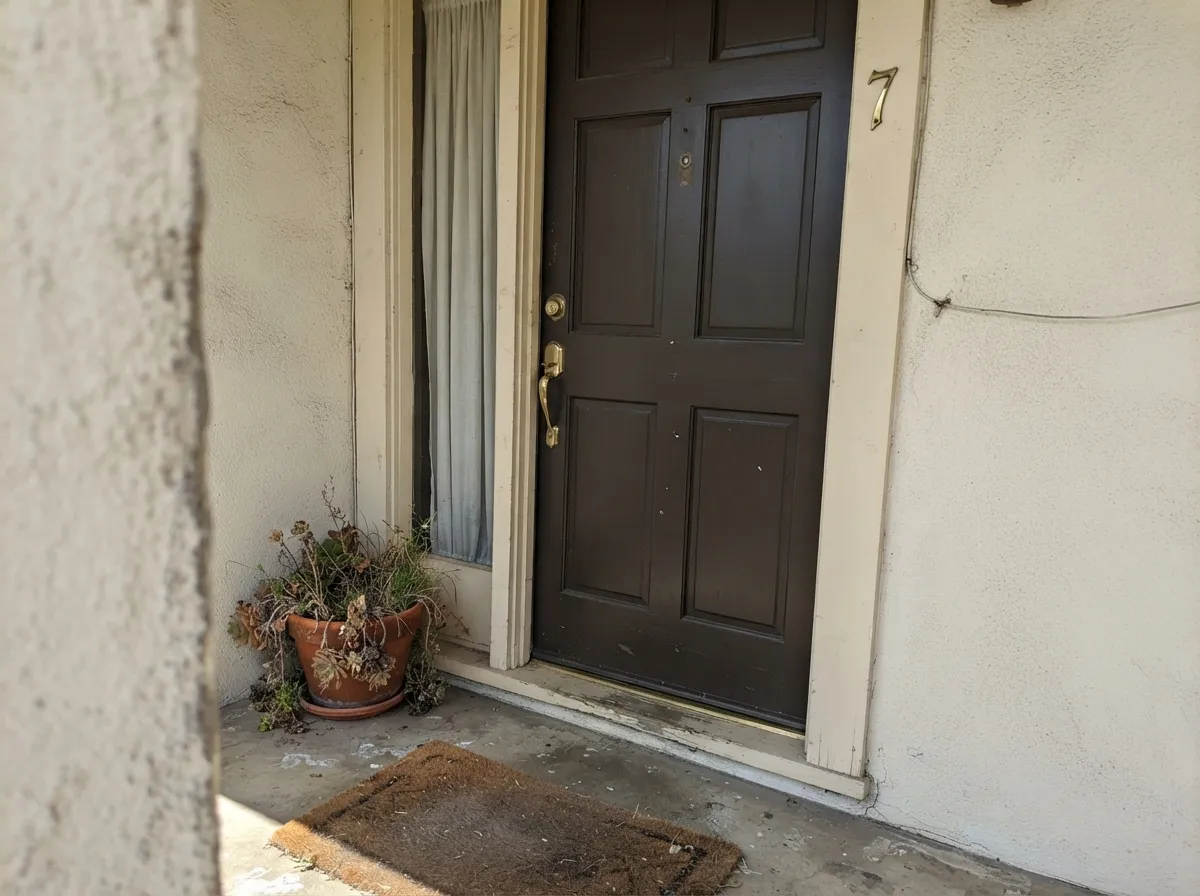
Semi-gloss on a paneled door against Swiss Coffee or Stonish Beige stucco is the move Dunn-Edwards designers keep specifying: bold contrast that still feels warm. Brass, black, and oil-rubbed bronze hardware all sit on it. Sample the sunny and shaded sides of the door — they will not match — and that shift is the color working, not a defect.
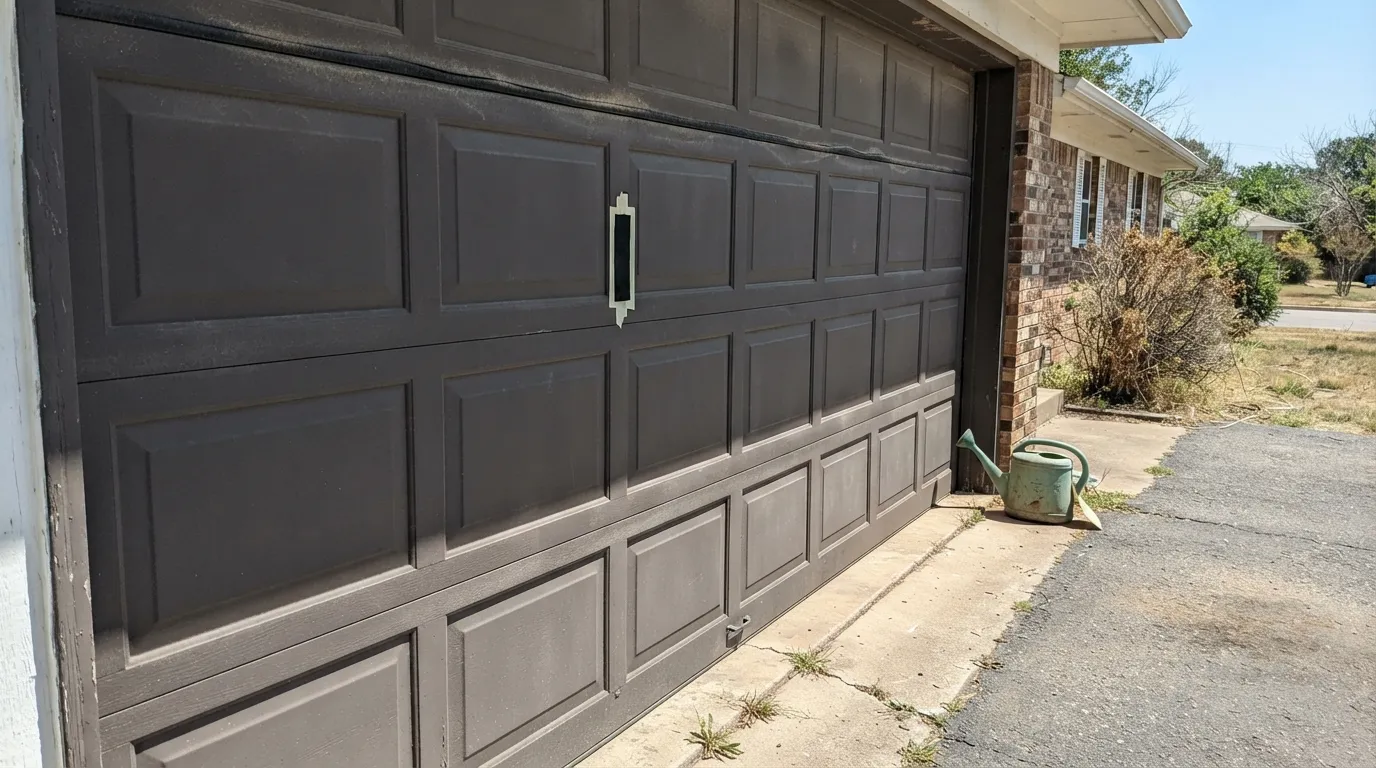
Arizona painters put it on garage doors for a reason: it hides oil drips and road dust that would blotch a cream panel, and it ties the door to dark fascia instead of leaving a white hole in the elevation. Satin or semi-gloss; confirm the door manufacturer's heat notes before you go this dark on steel in full south sun. Shutters and window trim in the same can keep the house from looking pieced together.
Dunn-Edwards' own outdoor gallery pairs it as trim on Swiss Coffee stucco — the Creamy Courtyard scheme — and Houzz Spanish-revival threads keep landing on the same combo. Body stays cream or beige; Espresso Macchiato does the dark work. A whole house body in LRV 7 is a bunker. Walk the sunny and north elevations with a sample board before you even think about it.
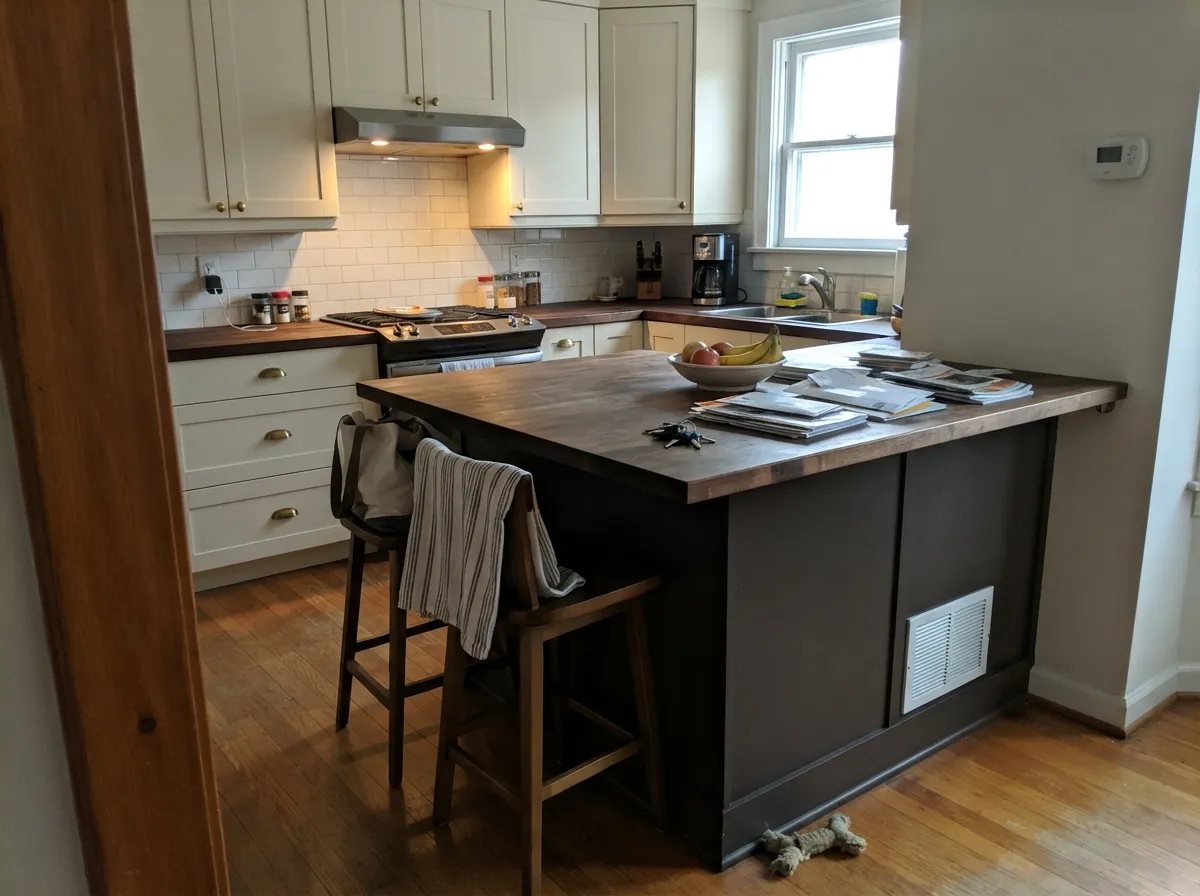
Satin Espresso Macchiato on an island or a cabinet run under Whisper or Swiss Coffee perimeter boxes is the indoor version of the door job: one coffee note, plenty of bounce light. Brass pulls, not chrome. A full kitchen of it needs a glass-walled room; most kitchens do not have that light. Cabinet enamel, not wall paint.
A door, a vanity, one well-lit wall behind a desk. Matte or eggshell on the wall, satin on the vanity. 2700K lamps are part of the paint job. Drenching all four powder-room walls only works if there is a window or enough warm light to keep it from reading as a closet.
Bedrooms, living rooms, and hallways do not want this as a field color. At LRV 7 the room shrinks and every scuff around a light switch becomes a highlight. The exception is a genuinely bright, south-facing room you are deliberately drenching — sample a large board for a full day before you bet four walls on it.
Your Light Is the Risk
Hard Western sun is the light this brown-black was mixed for. It lifts off black, shows the espresso, and looks like a designed door instead of a void. Sample it on the sunny elevation first.
Without bounce light the brown collapses and the wall, fascia, or door reads as flat near-black. North rooms, covered porches, and windowless halls are where people decide they hate it.
Morning shade is the darkest, near-black read. Midday south sun is the honest smoky espresso. Late west light warms it a step toward coffee for an hour, then it settles back. Sample at noon and at 6 p.m.
2700K bulbs keep the espresso civil after dark. Cool 4000K–5000K LEDs strip the yellow-red and leave a dirty charcoal. If you use this inside, the bulbs are part of the paint job.
Most complaints about Espresso Macchiato are a light mismatch. Upload a photo of your actual room and see it on your walls — then ask for the same wall in north light or evening lamps before you buy a single sample.
Need It From Another Brand?
Any paint counter can custom-tint Dunn-Edwards DET680 directly. If you would rather stay in one brand's own deck, these are the closest stock matches, measured as ΔE2000. Under 2 is a difference you will not see on the wall.
| Brand | Closest color | ΔE | LRV | |
|---|---|---|---|---|
| Sherwin-Williams | Black FoxSW 7020 · Sherwin-Williams | 2.1 | 7 | Color page → |
| Behr | Tribal DrumT12-13 · Behr | 1.3 | 7 | Color page → |
| Benjamin Moore | Midsummer Night2134-20 · Benjamin Moore | 2.1 | 7 | Color page → |
| Valspar | Moon RockT501 · Valspar | 0.6 | 6.7 | Color page → |
| PPG / Glidden | Dark GranitePPG1005-7 · PPG / Glidden | 1.9 | 6 | Color page → |
| Glidden | French ToastPPG15-24 · Glidden | 3.0 | 7 | Color page → |
Similar Dunn-Edwards Colors
The nearest shades to Espresso Macchiato within Dunn-Edwards's own range, ranked by perceptual color distance — useful when you want the same look a touch lighter, darker, or warmer.
WCAG 2.1: AA is 4.5 : 1 for normal text, 3 : 1 for large text, AAA is 7 : 1.
Espresso Macchiato vs the Colors You're Also Considering
Every Espresso Macchiato sample board has the same rivals on it. The numbers show the real lightness gap — then it comes down to which risk you would rather live with.
Pick this when you want the smokier, more charcoal-leaning version of the same near-black, especially on a cream-stucco door in the West.
Sherwin-Williams SW 7020 · LRV 7Black FoxPick this if your painter is already in Sherwin-Williams — same depth, a hair warmer on the chip, and it only looks warm half the time.
Pick this when you want the coffee to stay smoky instead of going more bronze, and a door that still looks espresso at noon.
Sherwin-Williams SW 7048 · LRV 8Urbane BronzePick this if you want more bronze and less charcoal — the warm dark that reads black the moment the light goes wrong.
Espresso Macchiato Coordinating Colors
The rule is cream or soft white on the field, espresso on the edge. This color wants Swiss Coffee or Whisper next to it, Stonish Beige if the body is already tan stucco, and a sage only if the elevation has trees and real sun. Cool, icy whites make the brown look dirty; yellow-gold trims make it look cooler by comparison. These are the partners that keep showing up on houses that work:
Front Doors, Garage Doors, and the Western Exterior
This is not a famous interior. It is a working Western exterior color. Dunn-Edwards lists it in the Front Door collection; the outdoor gallery hangs it as trim on Swiss Coffee stucco; Phoenix Houzz threads reach for it on garage doors, fascia, and window trim in the same pass. Local painters in Arizona post garage-door refreshes in it because the brown hides dirt and still reads richer than a flat black from the street.
That is also the limit. A whole stucco body in LRV 7 will heat up, chalk, and read as a bunker from the sidewalk. Keep the cream or beige on the field and let Espresso Macchiato do the dark punctuation — door, garage, fascia, shutters. On steel garage doors in full south sun, check the manufacturer's reflectance notes before you commit; dark colors on metal in Phoenix and Las Vegas are a warranty conversation, not just an aesthetic one. Recoat the sun faces first. UV on a low-LRV brown-black is maintenance, not a bad batch.
Espresso Macchiato With Wood Tones and Floors
Walnut, espresso-stained oak, and richly grained woods are the easy yes — the paint is already in that family, so the wood looks intended instead of leftover. Pale white oak and grayed cedar are safe and keep the room from going all-coffee. Honey oak and orange builder stain will make the walls (or the door) look cooler and the floor louder; a large rug helps inside, but on an elevation with orange-stained garage trim, sample before you match the house to it.
Cool gray LVP and blue-gray stone are the honest no indoors: they strip the yellow-red and leave a dirty charcoal. Cream tile, terracotta, and warm stone are the company this color was mixed for. Metals are simple: unlacquered brass and antique bronze show; matte black disappears into it; polished chrome is the cold one.
If you are in Sherwin-Williams country and this can is inconvenient, Black Fox (SW 7020, LRV 7) is the closest cousin — nearly the same chip, a hair warmer, and it only looks warm half the time. Stay in Dunn-Edwards if the rest of the house is already Swiss Coffee and Whisper. Do not color-match one into the other and expect the same door.
Three Ready Palettes Built on Espresso Macchiato
A color is never alone on the wall. These are complete combinations in the 60-30-10 pattern, with the reason each one holds together. Every one opens in the visualizer.
This is the pairing Dunn-Edwards hangs in its own outdoor gallery: Swiss Coffee stucco, Espresso Macchiato on the dark work. Whisper on the sash and porch ceiling keeps the whites in the same warm family so the cream body does not look dingy next to a cooler white. Mediterranean, courtyard, and Phoenix tract houses all land here.
Try this palette in your roomStonish Beige is the Southwest's default stucco beige; Whisper trim keeps it from reading builder-tan; the Espresso door is the coffee punctuation that charcoal would make too cool. Same house as the cream scheme, one step earthier.
Try this palette in your roomWhisper boxes keep the kitchen bright enough to feed the island real light; Foggy Day walls are the quiet near-white that will not fight a brown-black; the island gets to be the one coffee note. Brass pulls, not chrome.
Try this palette in your roomEspresso Macchiato FAQ
Is Espresso Macchiato black or brown?
Both, depending on the light. In shade or at night it reads near-black. In full sun on a door, garage, or south fascia it is clearly a smoky espresso-brown you can name from the street. If you need it to stay black at noon, Iron Ore (LRV 6) or Tricorn Black (LRV 3) are the deeper cans.
Is it good for a front door?
Yes — that is the job that makes this color worth knowing. Dunn-Edwards puts it in the Front Door collection, and at least one featured designer has called it a go-to for the same reason: contrast without the black-hole look, and it takes brass, black, or bronze hardware. Semi-gloss, and sample the sunny and shaded sides of the door before you commit.
What white goes with an Espresso Macchiato door?
Swiss Coffee (DEW341) is the cream body Dunn-Edwards pairs with it on stucco. Whisper (DEW340) is the softer White Dove-like trim and sash white. Stonish Beige (DEC716) if the house is already beige, not cream. A crisp cool white like Lighthouse will push this toward muddy brown; stay on the warm side of the Dunn-Edwards counter.
Can I paint a whole room this color?
Only if the room is genuinely bright and you are drenching it on purpose. At LRV 7, four walls of a normal bedroom or living room will shrink the space and swallow the art. A door, a vanity, an island, or one south wall with a window is the version that works. Sample a large board for a full day before you bet the room.
Will it work on kitchen cabinets?
In doses. An island or a cabinet run against Whisper or Swiss Coffee perimeter boxes is the version that works. A full kitchen of espresso boxes needs a lot of daylight and a satin cabinet enamel. Most kitchens should keep this on the island and the interior door, not on every box.
Is this a Color of the Year or a trending color?
No. It sits in Dunn-Edwards' Front Door collection and Then, Now & Forever — a working palette, not a campaign color. Nearby SKU Art and Craft (DET682) was a Dunn-Edwards Color of the Year; this can was not. That is a feature: it will not date like a COTY, and it will not come with a pile of national before-and-afters to copy.
Have you painted with Espresso Macchiato?
Rate it — one tap helps the next reader decide.
Ask a Question