Soft Chamois
The warm off-white nobody names on purpose, reviewed honestly: the daylight it needs, the beige it turns into indoors, and what to pick instead.

Jessica has spec'd whites and neutrals for more than 300 rooms and keeps a sample wall of painted drawdowns in her studio. Every color review is checked against real reader rooms in the comments and re-tested when a formula changes. About the testing process →
- 1Heirloom Shade63
- 2First Star69
- 3Soft Chamois77
- 4Alabaster82
- 5Chantilly Lace91
The Fast Verdict
Soft Chamois is what happens when a warm off-white skips the marketing budget: no Color of the Year run, no design-blog fan club, not even a forum thread arguing about its undertone. What it actually is on the wall is honest and a little undersold — a soft oatmeal-tan, warmer and more present than White Dove, filed one number away from two other quiet siblings in Benjamin Moore's deck. It rewards a real daylight room and warm wood; it does nothing for a dim one.
Whole-house warm neutral in a daylight room · farmhouse and cottage interiors with oak or rattan · kitchens leaning sage or olive green · anyone who wants tan-warm without committing to a named "beige"
You actually want a white, even a warm one · your room is north-facing and dim · your trim and floor already match its warmth exactly · you want a color with a known track record to point to before you buy
- Genuinely warm without tipping pink or green
- Easy, unfussy partner for oak, rattan, and other warm wood
- Pairs naturally with muted sage and olive greens
- Light enough (LRV 78) to keep a room bright, not stark
- Quiet enough to age well instead of reading trend-dated
- Reads as a soft beige, not a white — the name oversells it
- Goes dull and muddy in dim, north-facing rooms
- Can flatten into a matching wood-and-trim room with no edges
- Almost no real-world reviews or photos to check before buying
What Color Is Soft Chamois, Really?
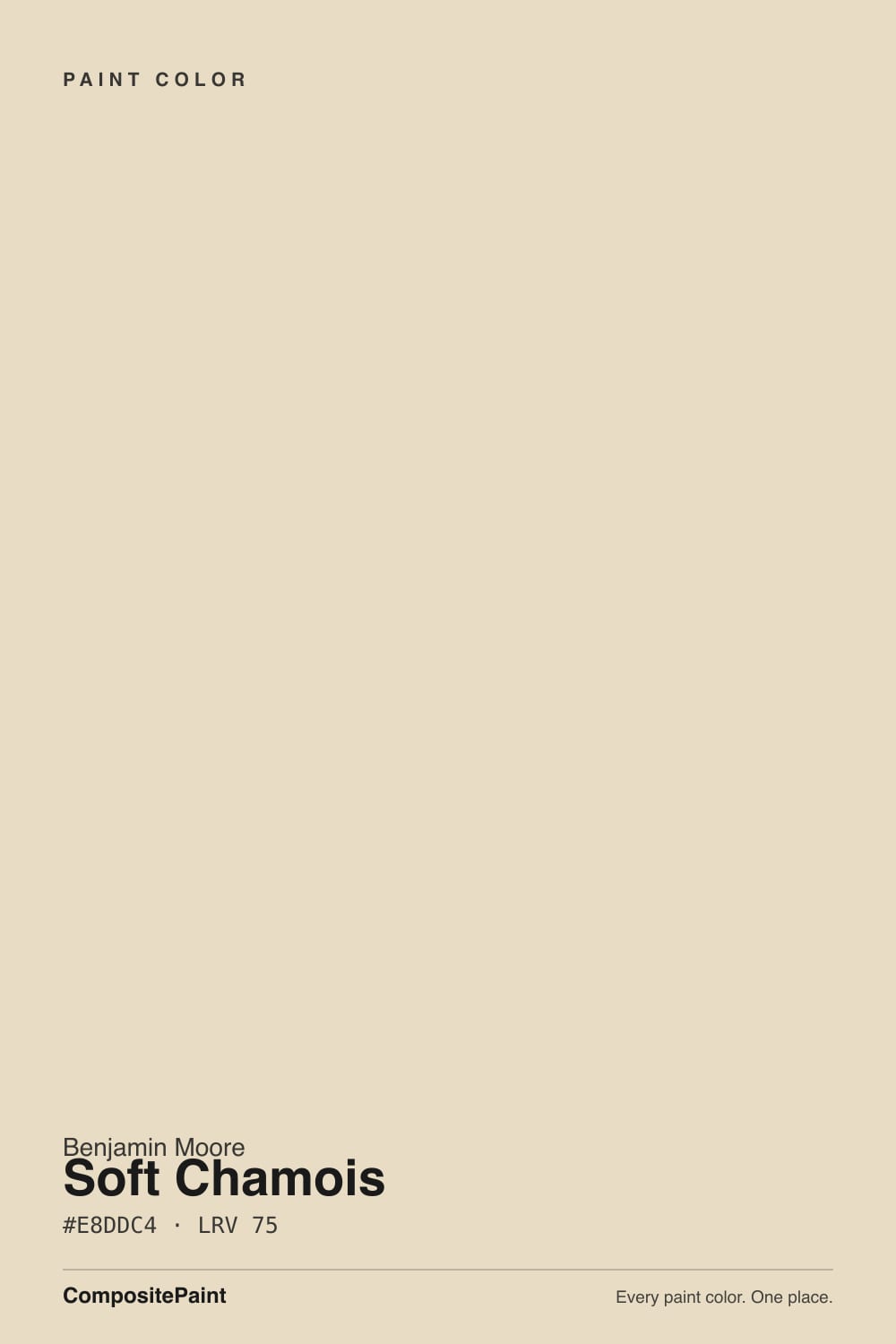
A soft, warm oatmeal — Benjamin Moore's own file calls it "a soothing white with a warm, delicately shaded cast," and that is honest as far as it goes, but on four walls the word doing the work is "shaded," not "white." It lives in the Off-White Collection next to famous names like White Dove and Swiss Coffee, and it shares their warm base, but Soft Chamois carries noticeably more tan than either — it reads as a pale beige that happens to be light, not a white with a hint of color. The name is accurate: chamois leather is exactly this soft tan-gold, and the paint commits to it.
It is also not alone. Soft Chamois is OC-13 in the deck, and the two colors right next to it — Natural Cream (OC-14, LRV 65) and Baby Fawn (OC-15, LRV 63) — are darker steps of the same warm-neutral idea. Soft Chamois is the lightest rung of that ladder, which is probably why it gets overlooked: it is easy to reach for OC-14 or OC-15 when you want visible color, and easy to reach for White Dove when you want a safe white, and Soft Chamois sits in the gap between those two decisions that most people never have to make.
Undertone in one line: warm yellow-tan, no pink and no green at the base. What moves is how much of that tan shows: strong daylight and warm wood pull it toward a soft honey-oatmeal; cool overcast light flattens it toward a dull, slightly grey beige. Either read is the same paint being honest about the room, not a flaw in the can.
Where It Shines
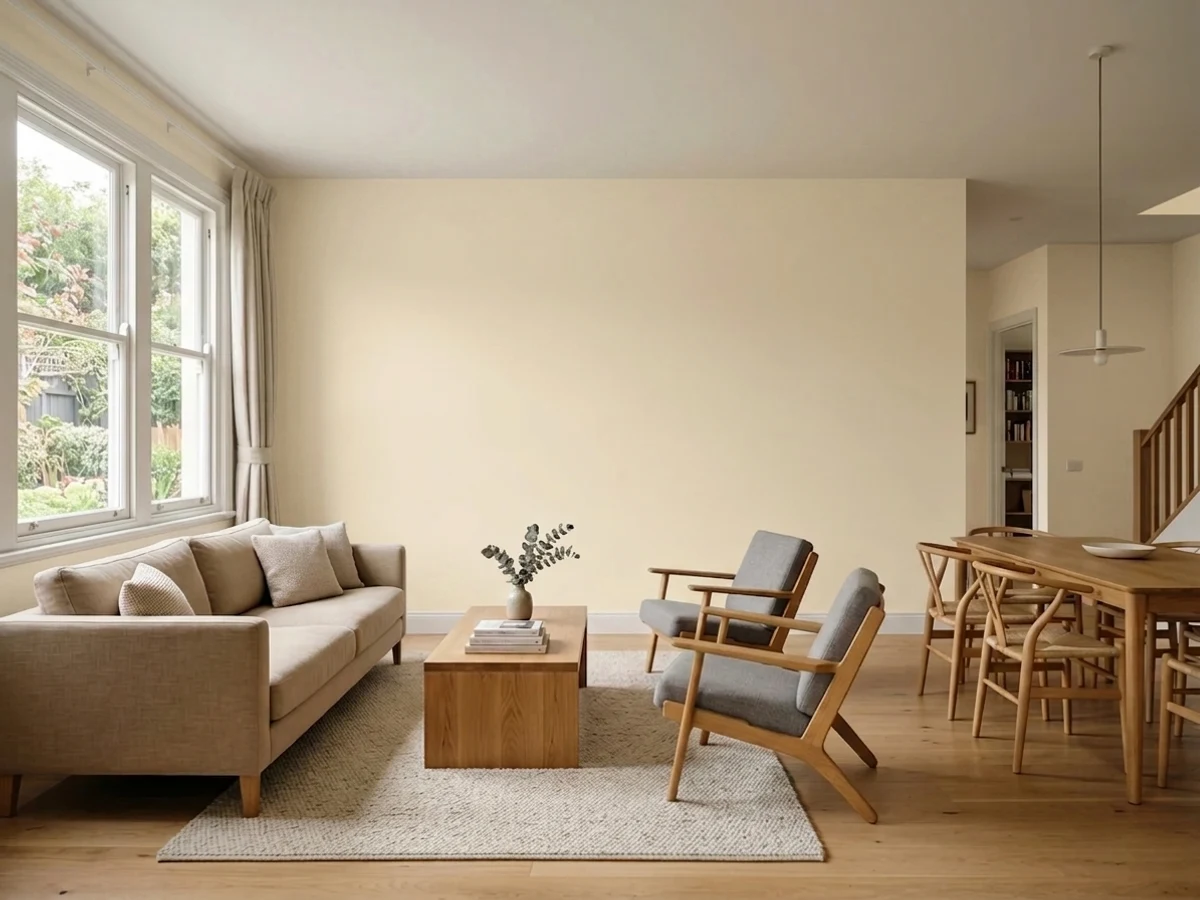
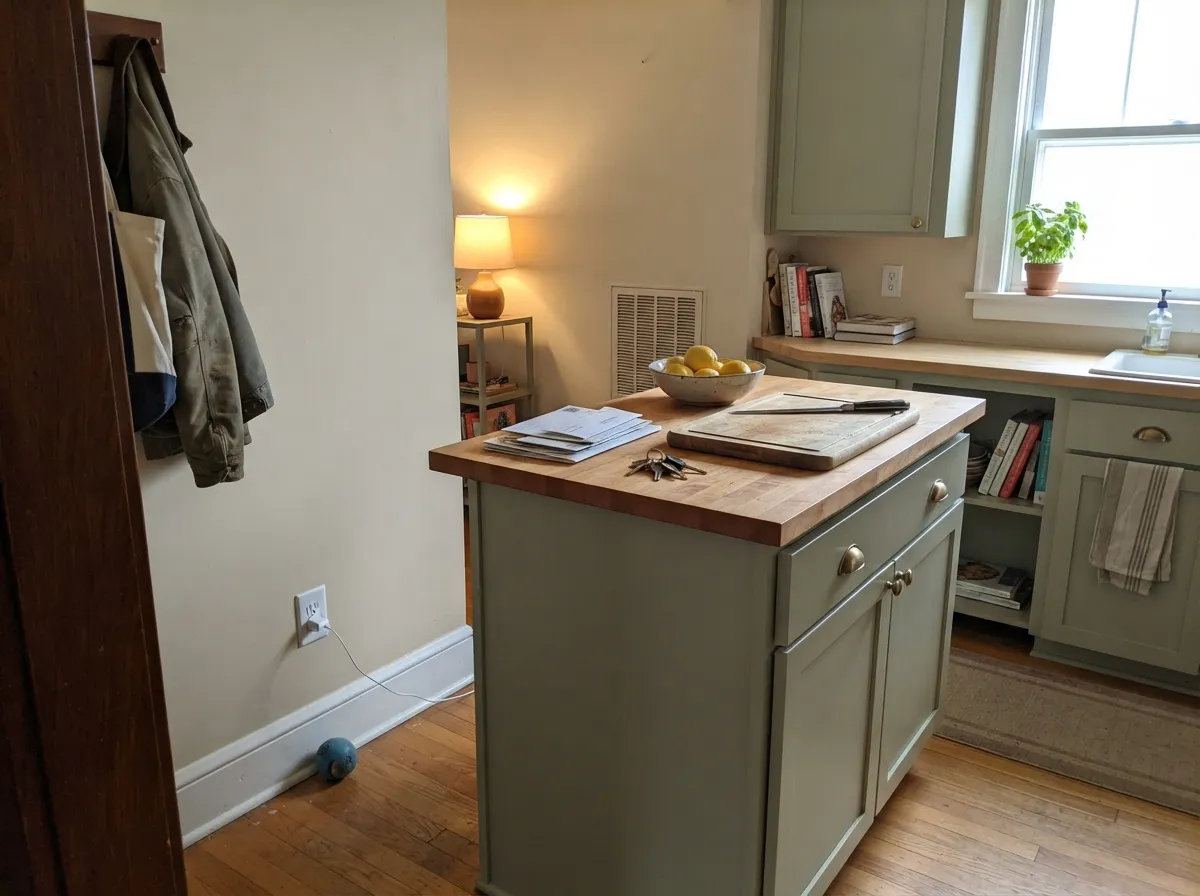
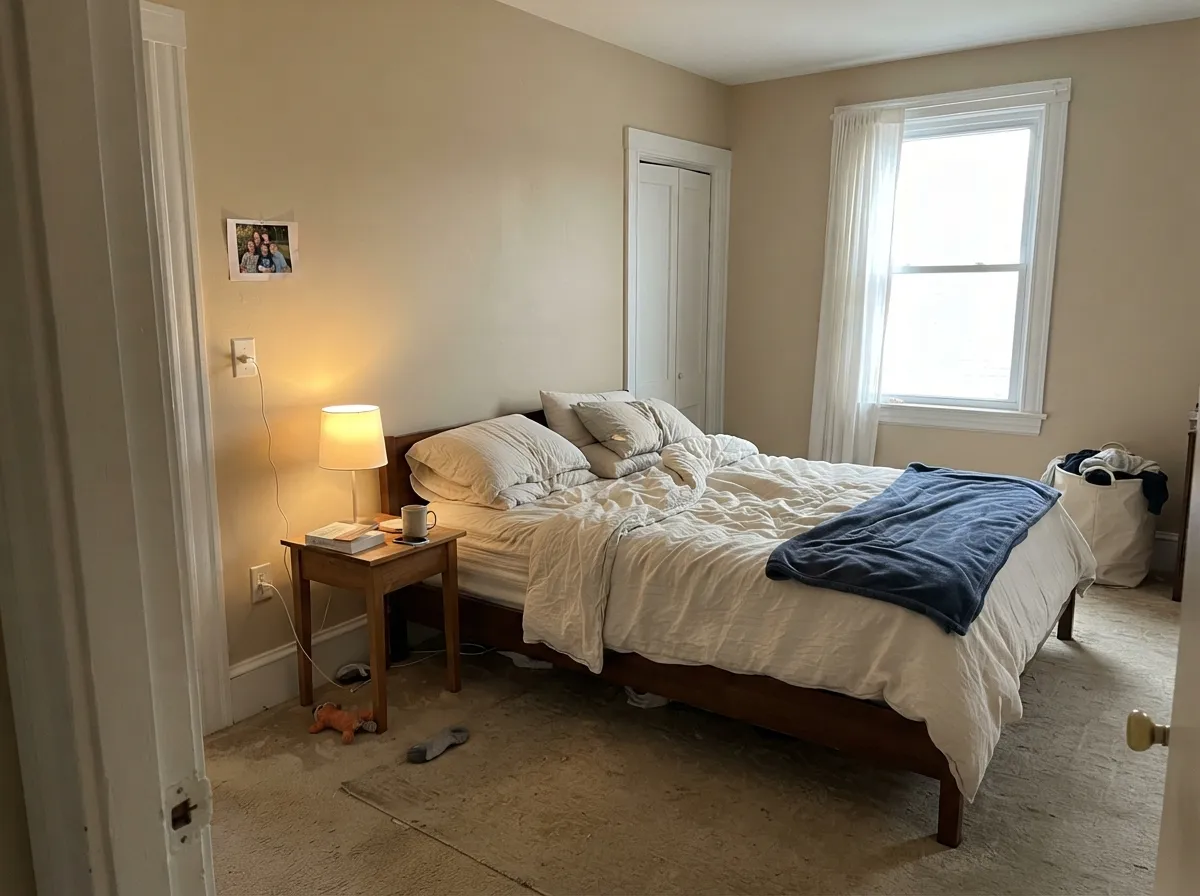
Put it in a room with real daylight and warm materials and the tan reads soft and deliberate instead of dated. It is a genuinely easy whole-house color for oak floors, rattan, wicker, and cottage or farmhouse trim, because it never fights the wood the way a stark white can. Paired with a muted sage or olive green — cabinetry, an island, a front door — it does a quiet, expensive-looking job that a lot of buyers pay a designer to find.
Where It Fails
There is no pile of one-star reviews to point to here — Soft Chamois barely shows up in forum threads or design blogs at all, which is its own kind of tell. The failure modes below come from what the color actually does in a room, not from a complaint archive, and all three are predictable before the first coat.
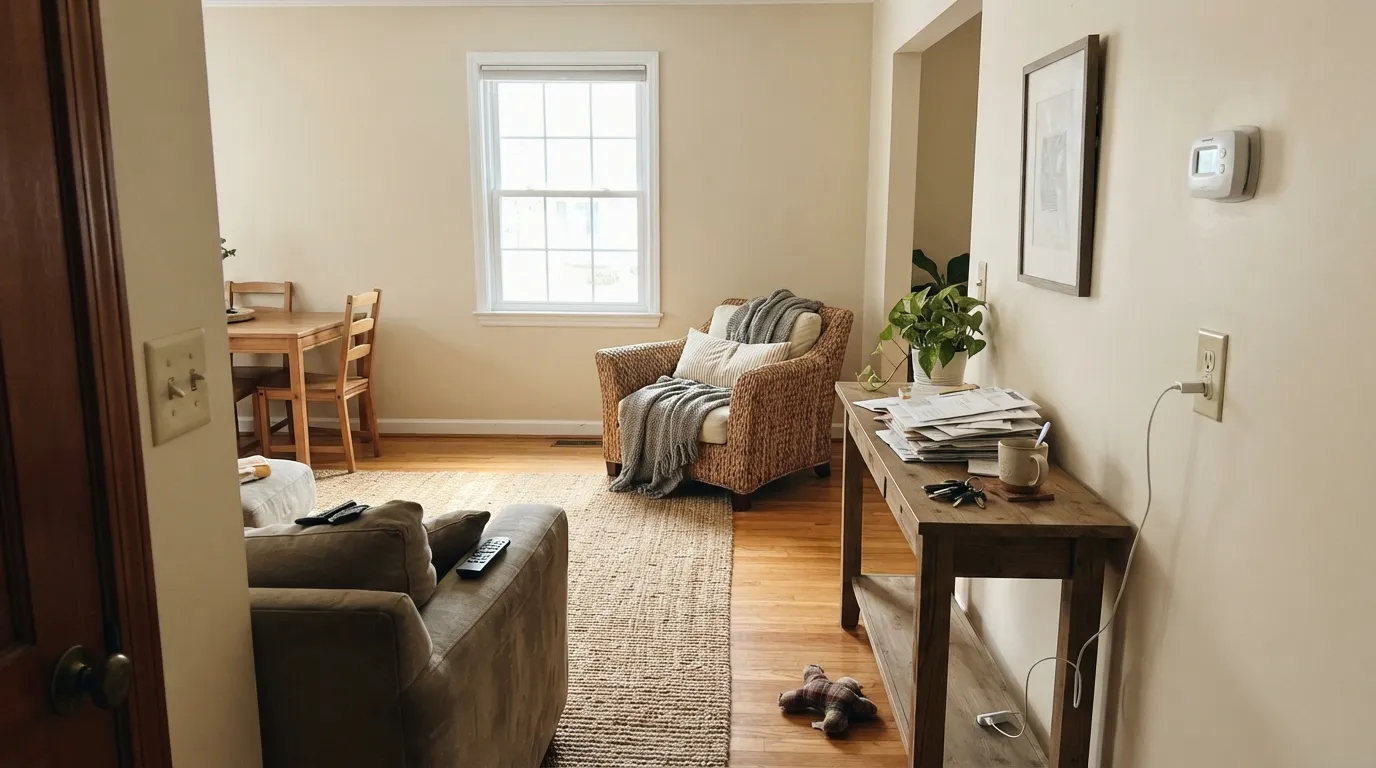
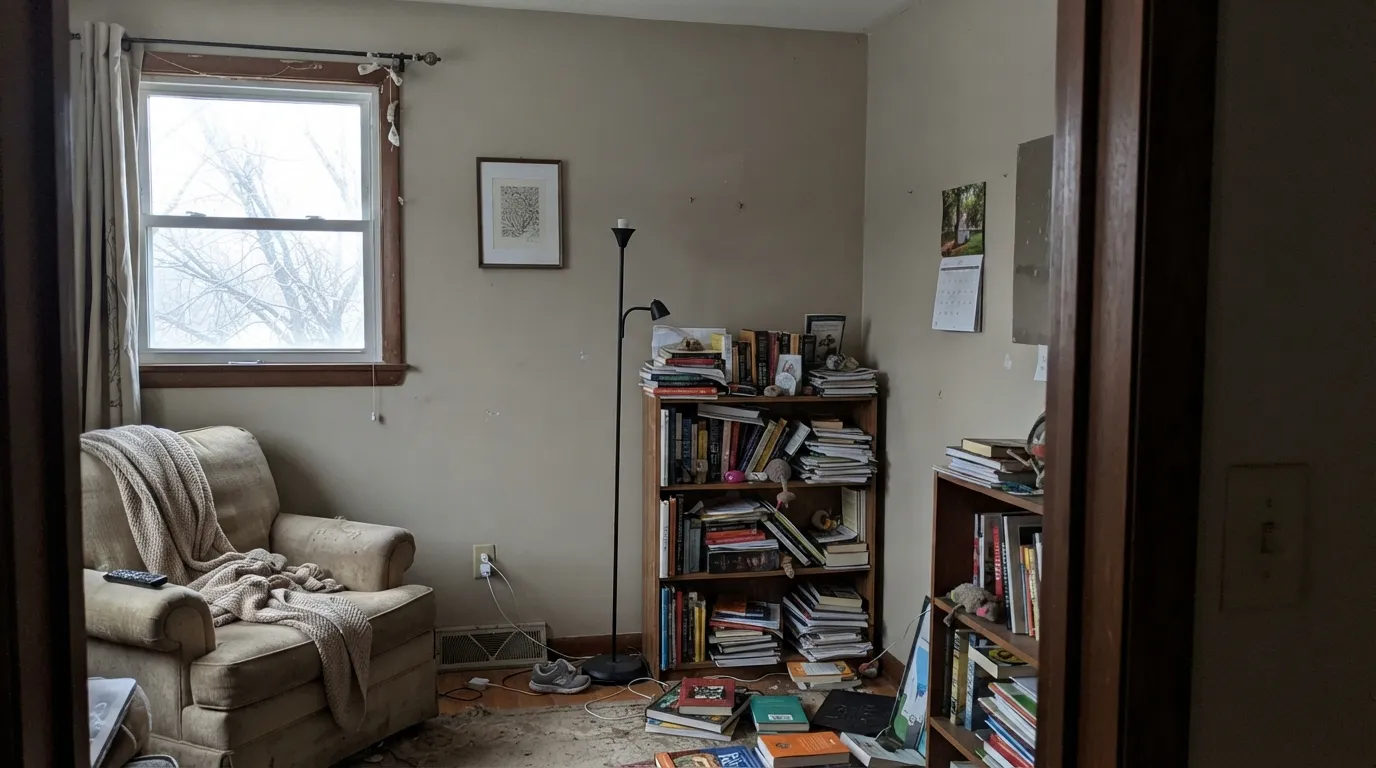
Cool overcast daylight flattens the warmth and leaves a dull, slightly muddy beige-grey — the opposite of the soft oatmeal glow it gives in real sun. The color did not fail; the light did. Save this one for a room that gets real daylight, or lean on warm 2700K lamps to do the work north light won't.
"Off-white" undersells how much tan is actually in this can. Buyers who pick it expecting something close to White Dove or Swiss Coffee are often surprised at how clearly beige it reads once it covers a whole wall. If you want the warmth without the visible color, go lighter and less saturated — White Dove is the safer bet.
Because it is such a close cousin to honey oak and natural wood tones, a room that is Soft Chamois walls plus matching warm trim plus matching warm floor can lose all its edges and read flat instead of cozy. It needs at least one cooler or darker note — a black fixture, a deeper wood, a painted door — to keep the room from blurring into itself.
Room by Room
In a sunny room it is a calm, warm backdrop for wood furniture and neutral upholstery. Eggshell finish; give it at least one darker or cooler accent so the room doesn't flatten into one tone.
Walls in Soft Chamois with sage-green cabinetry (Saybrook Sage is Benjamin Moore's own suggested pairing) and butcher block reads warm and collected rather than trendy. Satin on cabinets for cleanup.
Cozy under 2700K lamplight; in a north-facing bedroom with cool LEDs it can go dull. Cream or white bedding keeps it from reading too monochrome-tan.
With warm wood vanities and brass it is easy and quiet. Against cool grey tile or chrome it starts to look like an undecided beige rather than a deliberate warm one.
It reads better as a wall color than a trim white — save the trim for a genuinely brighter white like Dove Wing, which Benjamin Moore lists as a near-match alternative, and let Soft Chamois carry the walls.
There is little real-world exterior evidence for this one either way. Full sun should push it brighter and more golden the way it does any warm off-white; sample a large board on the actual elevation before committing a whole house to it.
Your Light Is the Risk
Real sun warms it into a soft honey-oatmeal glow without pushing it orange. Its best and most flattering light by far.
Cool, overcast daylight flattens the warmth and leaves a dull, slightly grey beige. Test on the actual wall before trusting a chip.
Golden and soft at the sun hours, quieter and more neutral once the direct light passes. A normal, gentle shift through the day.
2700K lamps deepen the tan into something cozy. Cool white LEDs flatten it toward grey-beige — keep the bulbs warm.
Most complaints about Soft Chamois are a light mismatch. Upload a photo of your actual room and see it on your walls — then ask for the same wall in north light or evening lamps before you buy a single sample.
Need It From Another Brand?
Any paint counter can custom-tint Benjamin Moore 969 directly. If you would rather stay in one brand's own deck, these are the closest stock matches, measured as ΔE2000. Under 2 is a difference you will not see on the wall.
| Brand | Closest color | ΔE | LRV | |
|---|---|---|---|---|
| Sherwin-Williams | Ivory LaceSW 7013 · Sherwin-Williams | 2.0 | 79 | Color page → |
| Behr | ShoelaceOR-W13 · Behr | 2.0 | 78 | Color page → |
| Valspar | Hint of CreamM213 · Valspar | 1.5 | 78.7 | Color page → |
| PPG / Glidden | Prairie WindsPPG1111-1 · PPG / Glidden | 0.5 | 78 | Color page → |
| Glidden | Cold FoamPPG1097-1 · Glidden | 0.6 | 78 | Color page → |
| Dutch Boy | Antiquated Lace017W · Dutch Boy | 1.5 | 79 | Color page → |
Similar Benjamin Moore Colors
The nearest shades to Soft Chamois within Benjamin Moore's own range, ranked by perceptual color distance — useful when you want the same look a touch lighter, darker, or warmer.
WCAG 2.1: AA is 4.5 : 1 for normal text, 3 : 1 for large text, AAA is 7 : 1.
Soft Chamois vs the Colors You're Also Considering
Every Soft Chamois sample board has the same rivals on it. The numbers show the real lightness gap — then it comes down to which risk you would rather live with.
Pick this for a warmer, more amber cast at the exact same LRV.
Benjamin Moore OC-22 · LRV 75CalmPick this for the same light reflectance with a greener, quieter lean instead of straight tan.
Pick this when you want real, committed color on the wall instead of a warm-leaning near-white.
Benjamin Moore OC-17 · LRV 85White DovePick this for a true, brighter warm white that behaves in almost any room — trade the visible tan for ten more points of LRV.
Barely Beige, in either the 1066 or CC-140 listing, matches Soft Chamois almost exactly at #E9DDC5 against #E8DDC4, sitting two LRV points lower at 73. On a wall you would struggle to tell them apart. Sandy White 2148-50 at LRV 74 is the closest in brightness, while Pale Almond 951 and Frappe AF-85 at LRV 69 are clearly deeper and read as light beige rather than off-white.
Cross-brand, PPG Heavy Cream PPG1098-2 at LRV 73 has a deltaE of 0.48 and Dunn-Edwards Natural Radiance DET660 at LRV 72 sits at 0.75, so both are the same color for practical purposes. Behr Ecru PPL-76 at LRV 73 and deltaE 1.3, and Sherwin-Williams Antique White SW 6119 at LRV 72 and deltaE 1.37, are visually identical in normal room light.
Farrow and Ball Ringwold Ground No. 208 at LRV 73 and deltaE 1.4 falls in the same band. Magnolia Home Castle Cream JG-153 at LRV 74 and deltaE 3.23 is very close but worth sampling first.
Soft Chamois Coordinating Colors
Benjamin Moore's own coordinating list keeps it simple: pair the tan with muted green, a brighter off-white for trim, and a genuinely dark note somewhere in the room so the warmth doesn't flatten out. These are the partners that actually do that job:
A Quiet Corner of the Off-White Collection
There is no trend story to tell here, and that is worth saying plainly: Soft Chamois has never been a Color of the Year, never gone viral on a renovation account, and barely turns up in the paint-color blogs that pick apart every White Dove and Agreeable Gray decision in detail. It sits in Benjamin Moore's Off-White Collection — the same designer-curated library that holds White Dove and Swiss Coffee — as one of the quieter, more tan-leaning entries most people never search for by name.
That obscurity cuts both ways. There's no long paper trail of reader complaints to learn from, but there's also no hype to see past — what you get is closer to the actual paint chip than a color that has been photographed in a thousand staged living rooms. If you found it while comparing OC-numbers or scrolling past the famous names for something with a little more visible warmth, that instinct is sound; just sample it big before you commit a whole room.
Soft Chamois With Wood Tones and Floors
Warm wood is the easy pairing: oak, pine, rattan, and wicker all sit comfortably with it because the color shares their base tone instead of contrasting against it. Builder-grade honey oak, which fights cooler whites, actually looks settled next to Soft Chamois.
The catch is the same warmth that makes it easy can also make it forgettable. Wall-to-wall Soft Chamois over matching oak trim and matching oak floors can read as one flat tan field with no depth. Break it up with a darker floor stain, a black or bronze fixture, or a cooler-toned rug so the room keeps some contrast instead of dissolving into a single warm note.
Three Ready Palettes Built on Soft Chamois
A color is never alone on the wall. These are complete combinations in the 60-30-10 pattern, with the reason each one holds together. Every one opens in the visualizer.
Straight from Benjamin Moore's own coordinating list: Saybrook Sage gives the room one real color note, and Dove Wing — brighter and cooler than Soft Chamois itself — keeps the trim from disappearing into the walls.
Try this palette in your roomWhite Dove cabinets stay brighter than the walls so the room keeps depth instead of blurring warm-on-warm, and Wrought Iron supplies the one cool, dark note the fails section says this color needs.
Try this palette in your roomThree consecutive numbers in the same deck, layered by depth instead of contrast: the room reads as one warm idea getting quietly deeper toward the accent wall, with Soft Chamois doing double duty as the lightest trim in the family.
Try this palette in your roomSoft Chamois FAQ
Is Soft Chamois a white or a beige?
Beige, honestly, even though Benjamin Moore files it as an off-white. It has enough warm tan in it that on four walls it reads as a soft oatmeal color, not a white with a hint of warmth. If you want something closer to true white, White Dove is the safer pick from the same collection.
Is the undertone warm or cool?
Warm — a straightforward yellow-tan with no pink or green at the base. In dim, cool light it can flatten toward a grey-beige, but that is the light draining the warmth out, not a hidden cool undertone showing through.
Will it work in a north-facing room?
Not its best case. Cool north daylight flattens the tan into a dull, slightly muddy beige. It needs real daylight or warm 2700K lamps to look the way it does on a sunny sample board.
What trim color goes with Soft Chamois walls?
A brighter, cleaner off-white — Dove Wing is Benjamin Moore's own suggested near-match, and it works because it stays a step whiter than the walls instead of matching them exactly. Matching trim in the same tan can make the room lose its edges.
How is it different from Calm or Natural Cream?
Calm (OC-22) sits at the same LRV 78 but leans a touch greener and quieter. Natural Cream (OC-14) is the next number down in the deck, ten points darker and more clearly beige. Soft Chamois is the lightest, most tan-forward of the three.
Is there much real-world track record for this color?
Honestly, very little. It doesn't show up in the design-blog or forum discussions that colors like White Dove or Repose Gray get, so there's no pile of before-and-after photos to check. That's not a red flag on its own, but if you want proof before you commit, sample it big and live with it a few days rather than trusting a single search.
Have you painted with Soft Chamois?
Rate it — one tap helps the next reader decide.
Ask a Question