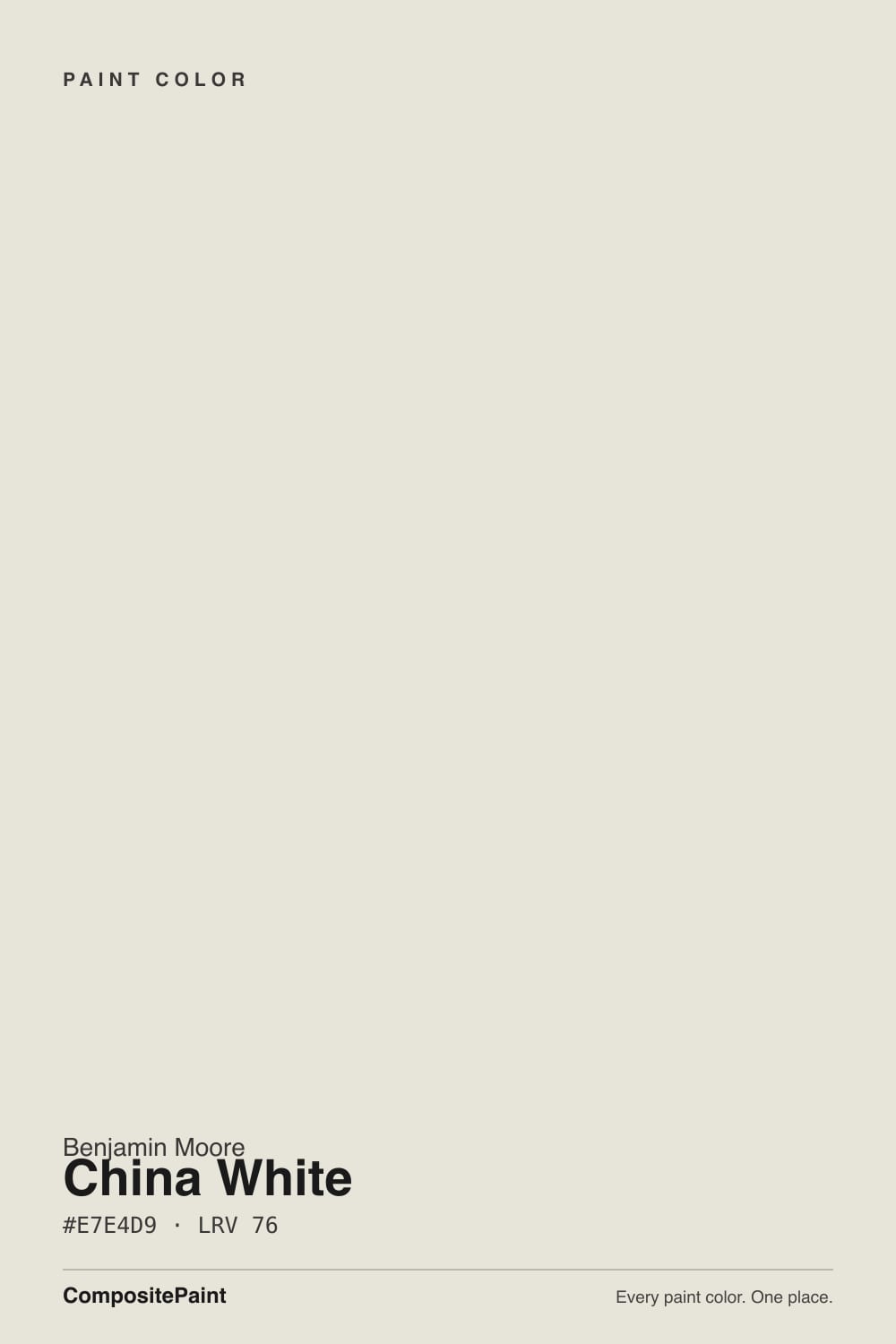
China White
The greige-leaning off-white that reads warm and soft in one room and cool grey in the next, reviewed honestly: where it stays settled, the exposures where it goes shadowy, and what to pick instead.

Jessica has spec'd whites and neutrals for more than 300 rooms and keeps a sample wall of painted drawdowns in her studio. Every color review is checked against real reader rooms in the comments and re-tested when a formula changes. About the testing process →
- 1Heirloom Shade63
- 2First Star69
- 3China White76
- 4Alabaster82
- 5Chantilly Lace91
The Fast Verdict
China White is Benjamin Moore's quiet chameleon: a grey-beige off-white built to skip the yellow that haunts most warm whites, at the cost of real consistency. Give it steady daylight and warm wood and it settles into a soft, grounded neutral that reads more grown-up than a straight white. Move the same can to a dimmer or cooler-lit room and it can go flat grey on you. It has no Color of the Year moment and no viral kitchen — just a well-liked, honestly unpredictable off-white that BM quietly files among 150 others in its Off-White Collection, next to louder names like White Dove.
Rooms with steady, decent daylight · anyone who wants warmth without any yellow · kitchens and cabinets next to wood and brass · exteriors with brown shingle, stone, or copper accents
Your room is windowless or dim · you're committing sight-unseen off the paint chip · you want one predictable color in every room of the house · your painter isn't careful about lap marks
- Warm-without-yellow — the exact gap most off-whites can't fill
- Sits in a useful mid-LRV band: quiet without going flat or beige
- Flatters wood, brass, and copper on both interiors and exteriors
- A real alternative once the famous warm whites have tested too creamy
- Works across walls, trim, cabinets, and exterior siding
- Genuinely inconsistent room to room — the same can reads warm here, grey there
- Shows roller lap marks and uneven coats more than deeper colors do
- Goes dull fast in windowless or naturally dim rooms
- Overshadowed in BM's own deck, so fewer real-room reference photos to sample against
What Color Is China White, Really?
A grey-beige off-white with no visible yellow — and the lack of yellow is the whole reason people reach for it. Benjamin Moore's own site describes it as having cool grey undertones; independent colorimetry instead places China White in a warm, yellow-leaning hue family. Both readings are true at different times, and that disagreement is not a flaw in the research — it's the color's actual personality. It sits in BM's Off-White Collection, a set of roughly 150 related colors, mostly overshadowed by the deck's bigger names, which is exactly why professional painters who know the deck reach for it: it is the answer when a client wants warmth without a hint of cream.
At LRV 76 it sits in the middle ground between a true soft white like White Dove (LRV 85) and a committed greige like Pale Oak (LRV 67). That gap is the point — it holds enough body to read as a deliberate neutral rather than disappearing into the walls, but it still reads as a white on the can, not a beige. It is quieter and less reflective than the brighter whites in the BM deck, so it will not bounce as much light into a dim room.
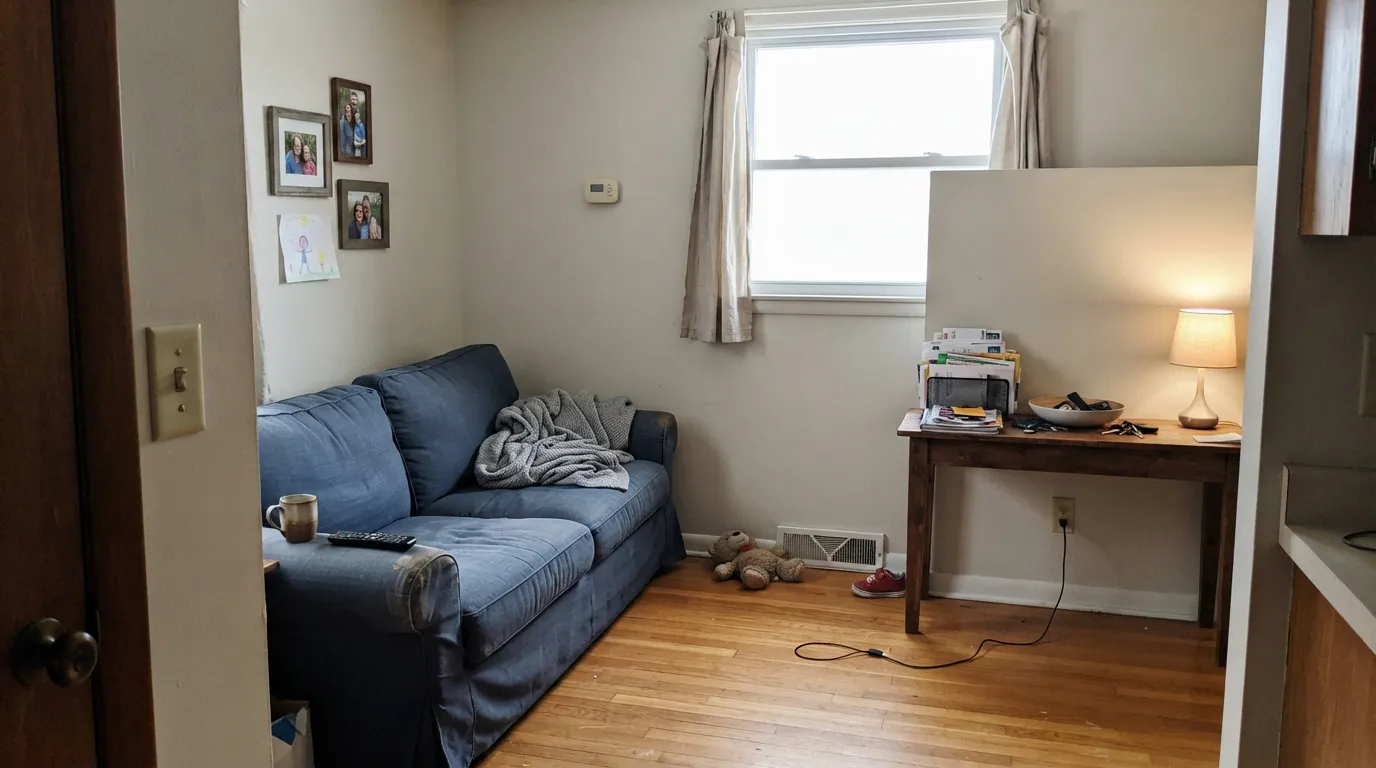
One repeat buyer's story sums up the whole review: the same can of China White looked "perfect, soft, clean, reads as white but not stark" in one house's morning light, then went "very grey and shadowy" in a different room with a different exposure. Same paint code, two different colors. That is not a defect — it is what an off-white this close to neutral does when the light itself is the variable, and it is the single fact to know before you buy the gallon.
Where It Shines
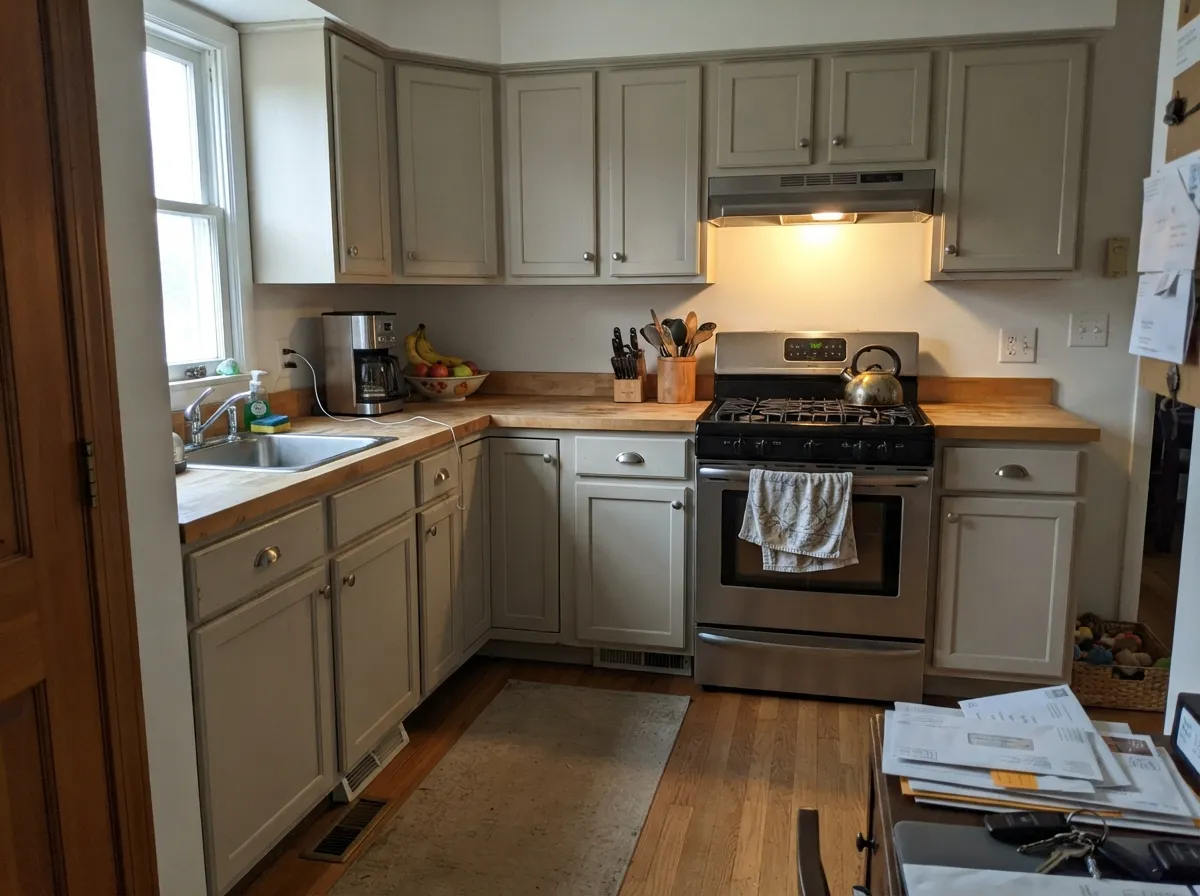
Give it steady daylight and it becomes the off-white that reads "expensive and undecided-on-purpose" rather than "builder beige." It is at its best next to warm materials — oak, walnut, brass, copper, unlacquered hardware — where the grey keeps it from tipping cream and the lack of yellow keeps it from tipping dated. On cabinets and exteriors especially, it has a following among people who tried the famous warm whites first and found them too creamy.
Where It Fails
Almost every regret story about China White comes down to one of three predictable situations, and none of them are really about the paint failing — they're about a color this close to neutral being asked to do a job daylight won't let it do.
This is the color's defining risk: it genuinely reads differently by room, more than most whites in the BM deck. A north-facing room, an overcast climate, or even an unusually shaded south or west exposure can turn the same can grey and flat instead of warm and soft. Sample it in the actual room, at the actual time of day you use it — not the room down the hall.
Without real daylight to work with, the grey side wins by default and the color reads dull rather than crisp. If the room only gets artificial light, warm 2700K bulbs are non-negotiable, or step up to a brighter, more reflective white instead.
Because it is so close to neutral, lap marks, roller stipple, and uneven coats show up more visibly than they would on a deeper color — there is no saturation to hide behind. Keep a wet edge, use a quality microfiber roller, and plan on two full coats minimum.
Room by Room
In a room that gets real daylight for most of the day it settles into a calm, grounded neutral that flatters wood furniture without competing with it. Eggshell on the walls, same color semi-gloss on trim if you want the one-color look.
Popular with people who tried White Dove or Swiss Coffee and found them too creamy. It flatters brass, copper, and butcher block, and reads clean against most stone. Use a satin urethane-fortified cabinet enamel and a careful hand — this is the finish where lap marks show fastest.
Excellent in a room with morning or steady daylight; the exact room to sample first if the exposure is weak, shaded by trees, or north-facing. Warm lamps at night help it stay soft rather than grey.
With daylight and warm fixtures it is crisp and calm. In a windowless interior bathroom it tends to lean dull — budget for stronger, warmer artificial light or pick a brighter white instead.
Semi-gloss China White trim under a warmer wall color reads clean without the stark cut of a brighter white. Because it can shift toward grey, pair it with warm-side wall colors rather than cool ones to keep the whole room reading warm.
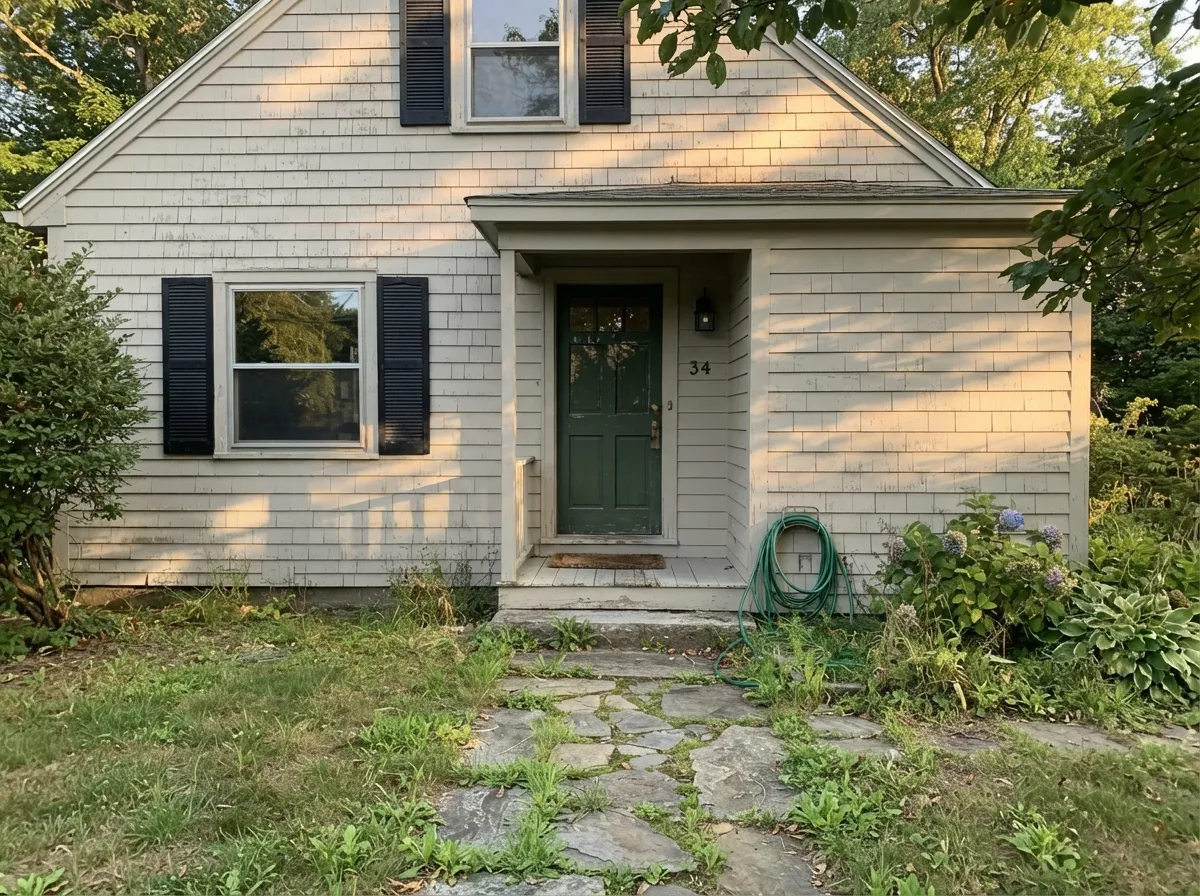
Available in BM's Regal Select Exterior line, and it has real fans on brown-shingle, stone, and copper-accented houses, where its lack of yellow keeps it from looking chalky against natural materials. Full sun tends to read it warmer and more settled than a dim interior room does.
Your Light Is the Risk
Warm and beige-toned, settled and grounded — the color at its most reliable and the reading most owners expect from the chip.
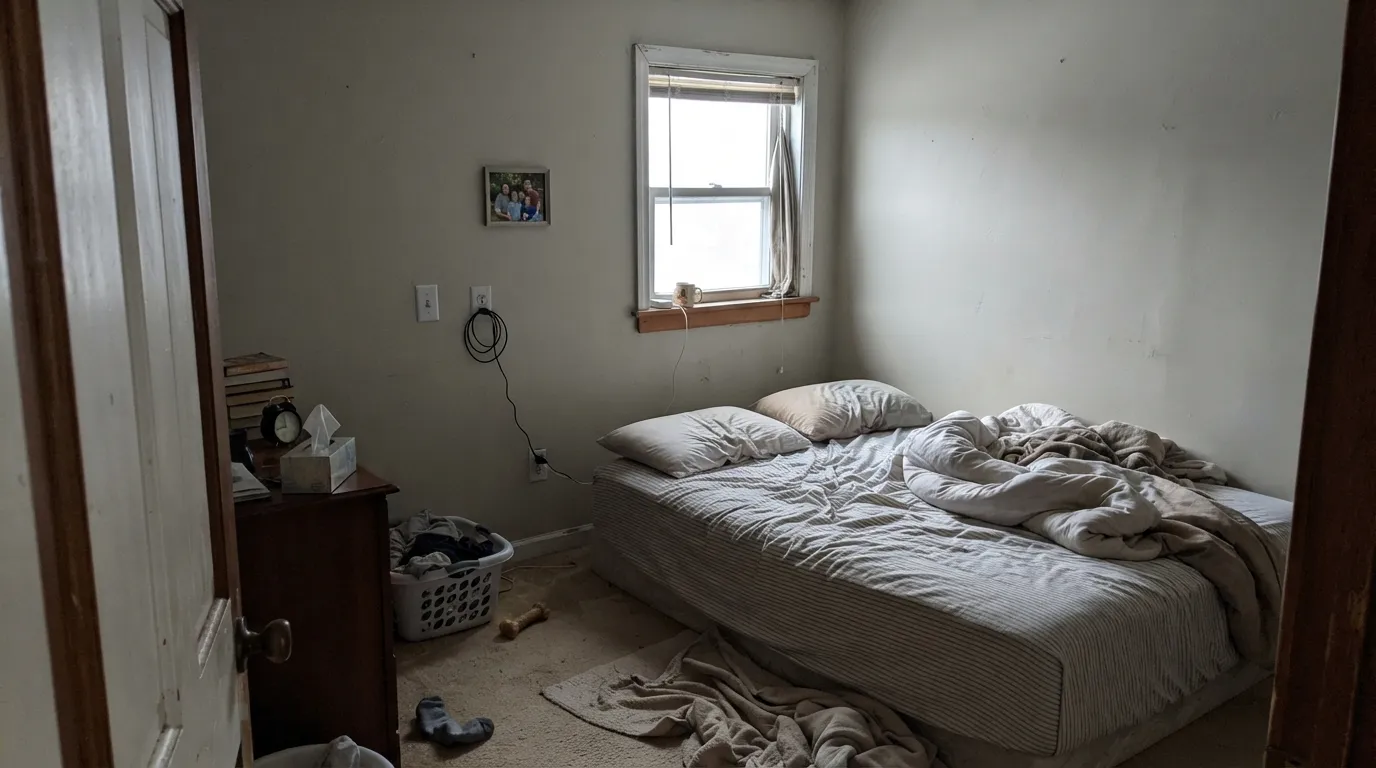
Reads noticeably more grey and can go flat or shadowy. Even an unusually shaded south or west room can land here — test the actual room, not the assumption.
More movement than most off-whites: warmer and beige at sun hours, cooler and quieter once the direct light passes. Most owners who sample it first are fine with the shift; it is the ones who skip the sample who get surprised.
2700K warm bulbs keep it soft and settled after dark. Cool white LEDs push it toward the grey side — swap the bulbs before you consider repainting.
Most complaints about China White are a light mismatch. Upload a photo of your actual room and see it on your walls — then ask for the same wall in north light or evening lamps before you buy a single sample.
Need It From Another Brand?
Any paint counter can custom-tint Benjamin Moore OC-141 directly. If you would rather stay in one brand's own deck, these are the closest stock matches, measured as ΔE2000. Under 2 is a difference you will not see on the wall.
| Brand | Closest color | ΔE | LRV | |
|---|---|---|---|---|
| Sherwin-Williams | Pearly WhiteSW 7009 · Sherwin-Williams | 1.2 | 77 | Color page → |
| Behr | White PepperPPU24-13 · Behr | 0.9 | 77 | Color page → |
| Valspar | Divine Cream7006-8 · Valspar | 1.2 | 77.1 | Color page → |
| PPG / Glidden | Oyster WhitePPG10-05 · PPG / Glidden | 0.5 | 78 | Color page → |
| Glidden | Oyster WhitePPG10-05 · Glidden | 0.5 | 78 | Color page → |
| Dutch Boy | Antiquated Lace017W · Dutch Boy | 1.5 | 79 | Color page → |
Similar Benjamin Moore Colors
The nearest shades to China White within Benjamin Moore's own range, ranked by perceptual color distance — useful when you want the same look a touch lighter, darker, or warmer.
WCAG 2.1: AA is 4.5 : 1 for normal text, 3 : 1 for large text, AAA is 7 : 1.
China White vs the Colors You're Also Considering
Every China White sample board has the same rivals on it. The numbers show the real lightness gap — then it comes down to which risk you would rather live with.
Pick this when you want more grey grounding and less cream — China White reads like a quiet neutral, not a soft white.
Benjamin Moore OC-17 · LRV 85White DovePick this for the safer, more dependable warm white — White Dove barely shifts with light, where China White visibly does.
Pick this when you still want it to read as a white on the can, with the greige only taken as far as a white can go.
Benjamin Moore OC-20 · LRV 67Pale OakPick this to commit fully to greige — Pale Oak is nine LRV points deeper and reads as a genuine light neutral, not a white.
Pick this for the cooler, greige-leaning version of the same anti-yellow idea — less cream, more quiet grey.
Sherwin-Williams SW 7008 · LRV 82AlabasterPick this if your painter works in Sherwin-Williams and you want a warmer, more dependable soft white with less orientation risk.
Seapearl OC-19 is the closest relative and is effectively the same paint, sharing hex #E7E4D9 and LRV 76. Soft Chamois OC-13 at LRV 78 and hex #E8E5D8 is slightly brighter and marginally more yellow. Cascade Mountains 862 at LRV 78 and #E5E6DC is the cool alternative, leaning green-gray instead of cream.
Across brands the matches are unusually tight. Watermist DE6240 by Dunn-Edwards sits at a deltaE of 0.22 and Oyster White PPG10-05 at 0.45, both close enough to be the same color in use. White Pepper PPU24-13 by Behr at LRV 77 is 0.89 and Chit Chat C2-964 at LRV 79 is 0.69.
A step further out, Pearly White SW 7009 at LRV 77 and Shiplap JG-22 by Magnolia Home at LRV 77 come in at 1.22 and 1.14, visually identical in normal room light, and Farrow's White No. 9812 at LRV 78 is 1.37. On Point by Clare, at 2.55, is very close but worth sampling first since it leans pinker. Benjamin Moore is sold through independent dealers, which is worth knowing when matching to a store-brand line.
China White Coordinating Colors
The rule for coordinating with China White: keep everything on the warm-neutral to warm-dark side, and let a brighter or much darker partner anchor the room so the chameleon shifting in the China White reads as depth, not accident. These are the partners that keep showing up in rooms that work:
The Quiet One in a 150-Color Collection
China White has never had a Color of the Year moment or a viral kitchen photo, and it probably never will — it sits inside Benjamin Moore's Off-White Collection, a family of roughly 150 closely related colors where a handful of names (White Dove, Chantilly Lace, Simply White) get nearly all the attention. That obscurity is not a knock on the color. It is exactly why professional painters who know the full deck reach for it: it solves a specific problem — warmth without any yellow — that the famous names don't quite solve the same way.
The genuine disagreement over its undertone is part of that story. Benjamin Moore's own marketing describes cool grey undertones; independent colorimetry places the color in a warm, yellow-based hue family. Neither source is wrong — China White is close enough to neutral that both readings show up depending on the room. That is unusual even among off-whites, most of which pick a clear lean and hold it. China White holds the middle, which is its whole appeal and its whole risk in the same fact.
China White With Wood, Copper, and Exteriors
Warm materials are this color's best company. Oak, walnut, butcher block, unlacquered brass, and copper all sit comfortably against China White because none of them are fighting a yellow undertone that isn't there — the wood and metal supply the warmth, the paint stays quiet. It is a common alternative once a homeowner has already tried a creamier white and found it too sweet against their existing wood tones.
Outside, it has a genuine following on houses with brown wood shingle, natural stone, or copper gutters and flashing, where a yellow-leaning white would look chalky or slightly off against the material's own warmth. It ships in Benjamin Moore's Regal Select Exterior line for exactly that use. As with interiors, walk the exterior at different times of day before committing — a shaded north elevation and a sun-struck south wall of the same house will not read as the same color.
Three Ready Palettes Built on China White
A color is never alone on the wall. These are complete combinations in the 60-30-10 pattern, with the reason each one holds together. Every one opens in the visualizer.
White Dove trim gives the walls a brighter, more dependable neighbor so any grey drift in the China White reads as intentional depth, not a mistake. The navy supplies the one dark anchor the room needs.
Try this palette in your roomCabinets and walls share the same grey-beige family, so the handoff is seamless instead of matchy. The near-black island keeps the light cabinets from washing out and gives brass hardware something to shine against.
Try this palette in your roomThe lack of yellow in China White is what makes it work against natural wood shingle, stone, and copper — a creamier white would fight those materials. Near-black shutters and a navy door give the facade the contrast a full-strength off-white needs to avoid looking chalky.
Try this palette in your roomChina White FAQ
Is China White warm or cool?
Genuinely both, depending on the room. Benjamin Moore's own description calls it cool grey undertones; measured colorimetry places it in a warm hue family. On the wall it reads warm-but-not-yellow in steady daylight and cooler, greyer in dim or north-facing rooms. That range is the color's real character, not a contradiction in the research.
How is China White different from White Dove?
White Dove is nine LRV points brighter (85 vs 76) and much more consistent — it reads as a warm soft white in nearly any room. China White sits deeper and greyer, and it visibly shifts more with the light. Pick White Dove for predictability, China White for a quieter, more grounded neutral in a room you've already tested.
Will it look the same in my house as it did in photos or the store?
Don't count on it. This is one of the more light-sensitive off-whites in the BM deck — owners report the same can looking soft and clean in one room and grey and shadowy in another, purely from a different exposure. Sample a large swatch on your actual wall, in your actual light, before committing to gallons.
Is it good for kitchen cabinets?
Yes, and it has a real following among people who found the more famous warm whites too creamy. Use a satin, urethane-fortified cabinet enamel, and have a careful painter — lap marks and roller stipple show up faster on a color this close to neutral than they would on a deeper one.
Does China White work on exteriors?
Yes — it is available in Benjamin Moore's Regal Select Exterior line and does well on houses with brown shingle, stone, or copper accents, where its lack of yellow keeps it from reading chalky against natural materials. Walk the house at different times of day before committing, since exterior exposure varies by elevation just like interior rooms do.
What's the biggest mistake people make with this color?
Buying it off the chip or a photo of someone else's room. Because it shifts more than most off-whites with exposure, the single biggest predictor of happiness is sampling it big, on your own wall, at the time of day you'll actually see it. The second mistake is a rushed paint job — this color has nowhere to hide a sloppy roller.
Have you painted with China White?
Rate it — one tap helps the next reader decide.
Ask a Question