Silhouette
Benjamin Moore's 2026 Color of the Year, reviewed honestly: the rooms where it looks expensive, the bulbs that turn it purple, and who should pick something else.

Jessica has spec'd whites and neutrals for more than 300 rooms and keeps a sample wall of painted drawdowns in her studio. Every color review is checked against real reader rooms in the comments and re-tested when a formula changes. About the testing process →
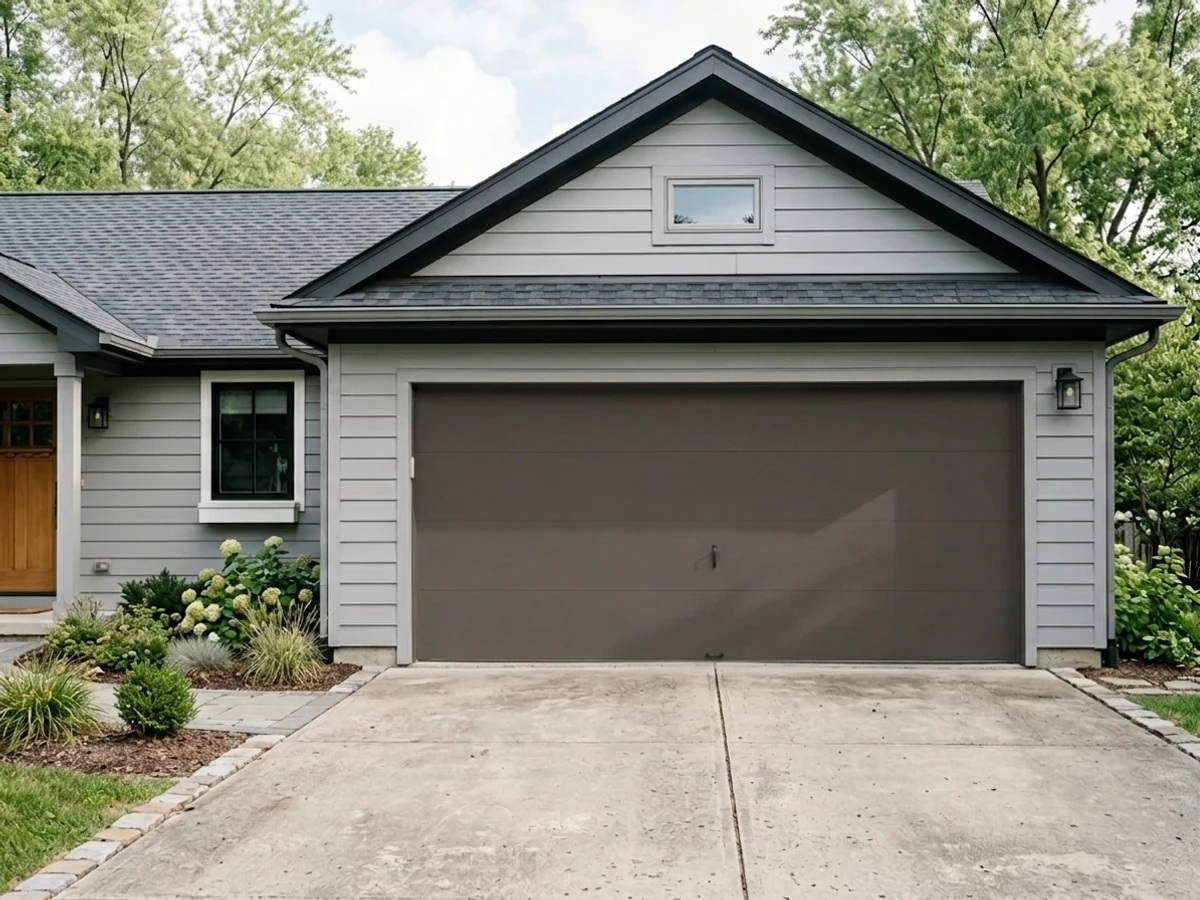
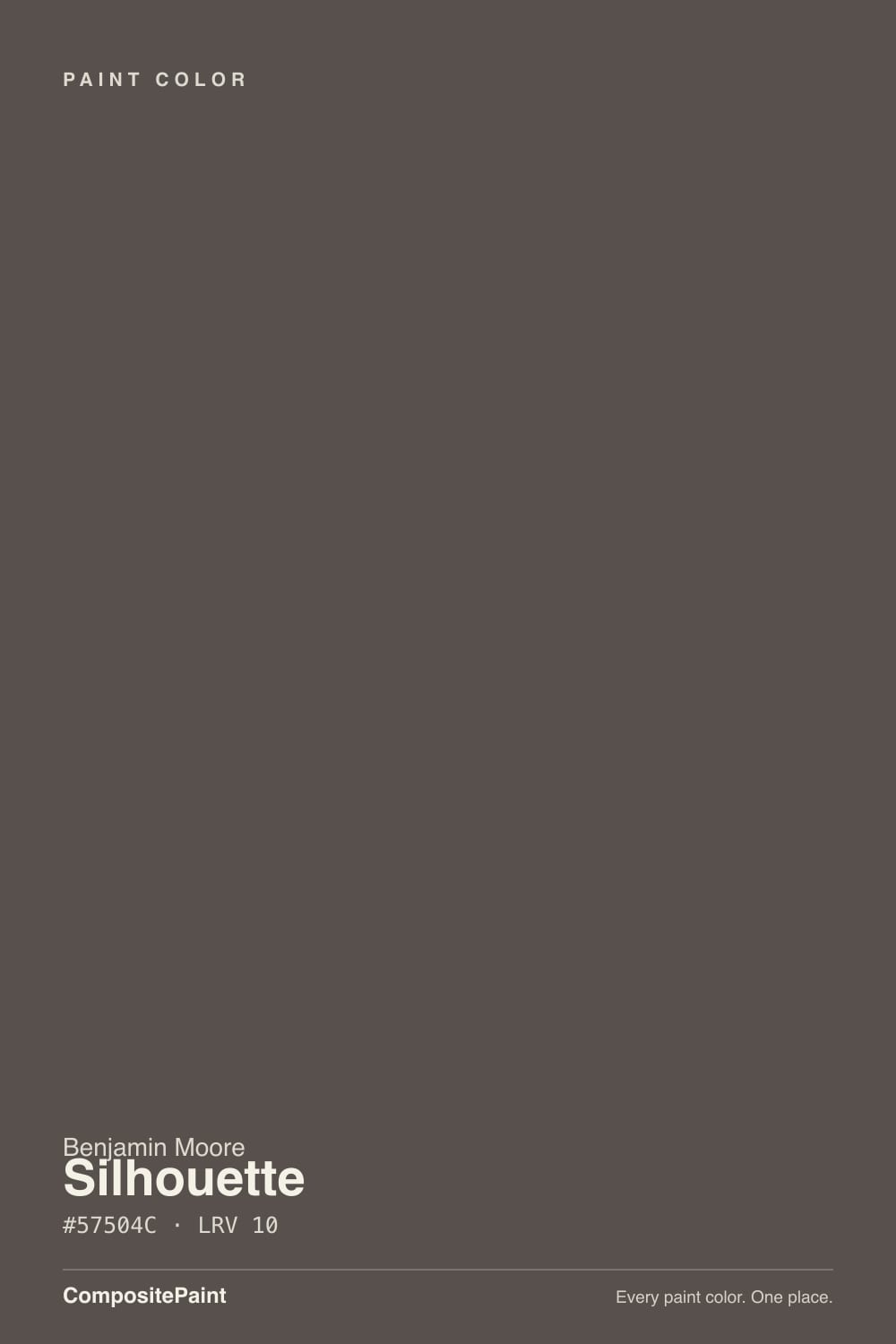
- 1Fired Bronze5
- 2Silhouette10
- 3Kendall Charcoal15
- 4Retreat21
The Fast Verdict
Silhouette is a dark chalky brown that behaves like a charcoal — soft enough to live with, deep enough to change a room completely. It is the rare Color of the Year that normal houses can actually use, mostly on cabinets, millwork, one room, or an exterior.
The catch is a violet streak that shows up under cool bulbs and next to strong yellows, and at LRV 10 there is no such thing as a light coat of it. Sample it in your own light, at night, before you buy four gallons.
Powder rooms and studies you want drenched · kitchen islands and lower cabinets · millwork, built-ins and interior doors · exterior trim, gutters and rooflines
Your bulbs are cool 4000K and you can't change them · you want one color for a whole open floor · your creams and woods run strongly yellow · you need a room to feel bigger
- A dark that still has a color in it — not a flat black
- Cabinets, islands, and millwork look custom in it
- Chalky and grayed, so it reads soft instead of harsh
- Pairs easily with brass, bronze, leather, and warm stone
- Proven on exteriors for trim, gutters, and rooflines
- Goes visibly violet under cool 4000K bulbs
- Strong yellow creams and orange oak pull the mauve out
- At LRV 10 it is too dark for a whole open floor
- Deep base means poor hide and touch-ups that show
What Color Is Silhouette, Really?
On paper Silhouette is a warm color: the hue sits at 22 degrees, the red-orange side of the wheel, with only about 7 percent saturation. On a wall that math does something odd. The red is real but so buried in gray that most people do not read it as brown at all — they read it as violet. Ask ten people what is in this color and you get espresso, charcoal, plum, aubergine, mushroom. All of them are seeing the same thing: a red base held under a heavy gray, which is exactly the recipe for a violet cast. Benjamin Moore calls it burnt umber with charcoal. That is fair on the swatch. It is not always what the wall does.
At LRV 10 it absorbs almost everything that hits it. That is a real step darker than Kendall Charcoal HC-166, the dark most people already know, and a step lighter than Wrought Iron 2124-10, which is effectively black. Practically, that means Silhouette still shows its color instead of collapsing into a shadow — you can see the brown in it — but a room painted in it will never feel bright again. There is no way to soften it by choosing a lighter sheen or thinning the second coat. The value is the value.
Undertone in one line: red-brown on the fan deck, violet on the wall — how much violet depends entirely on your bulbs.
Where It Shines
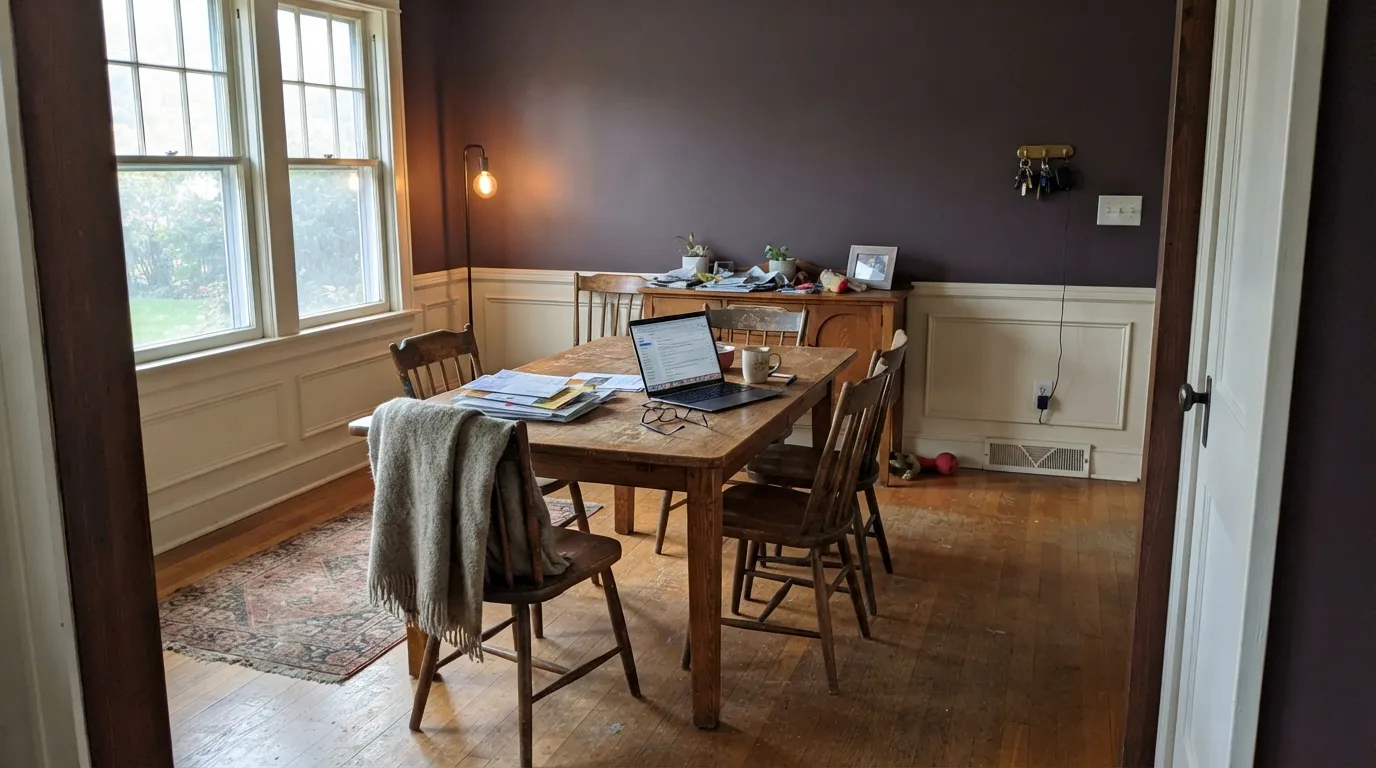
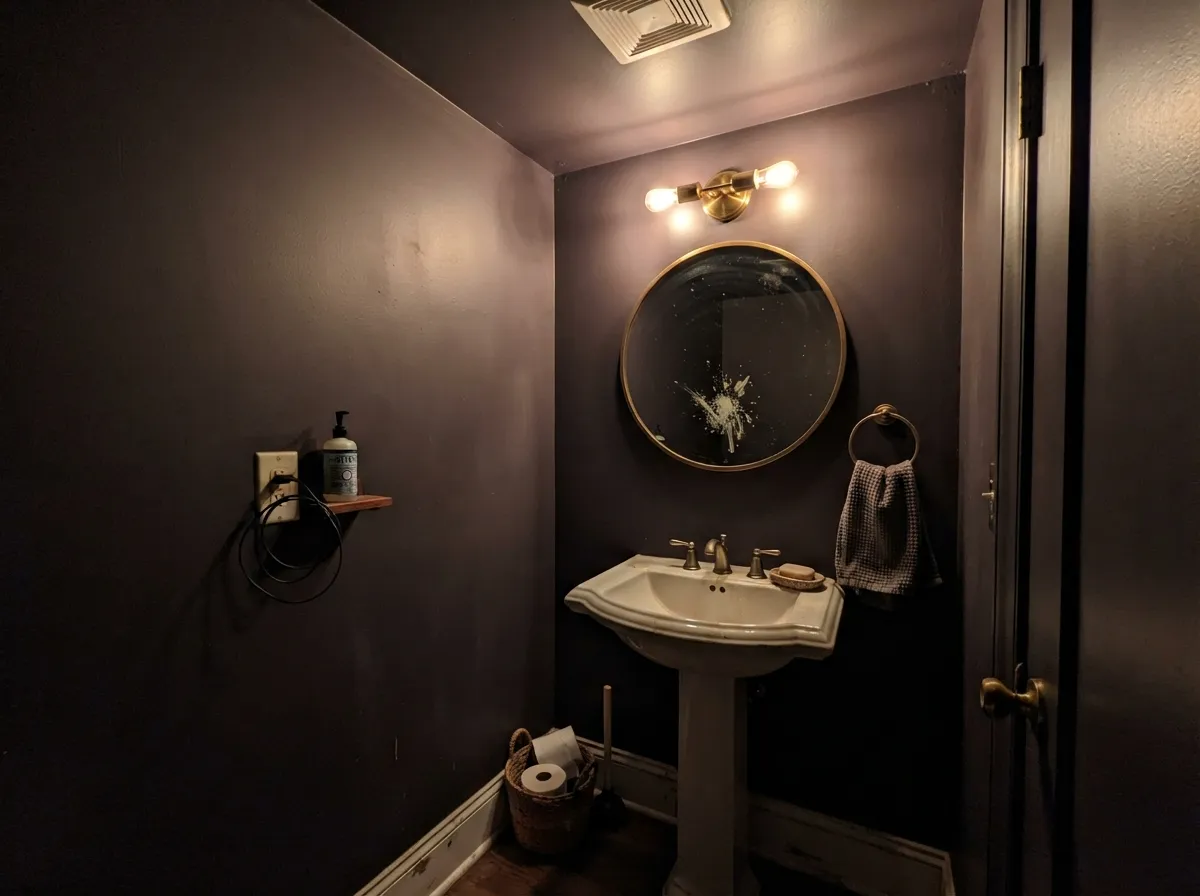
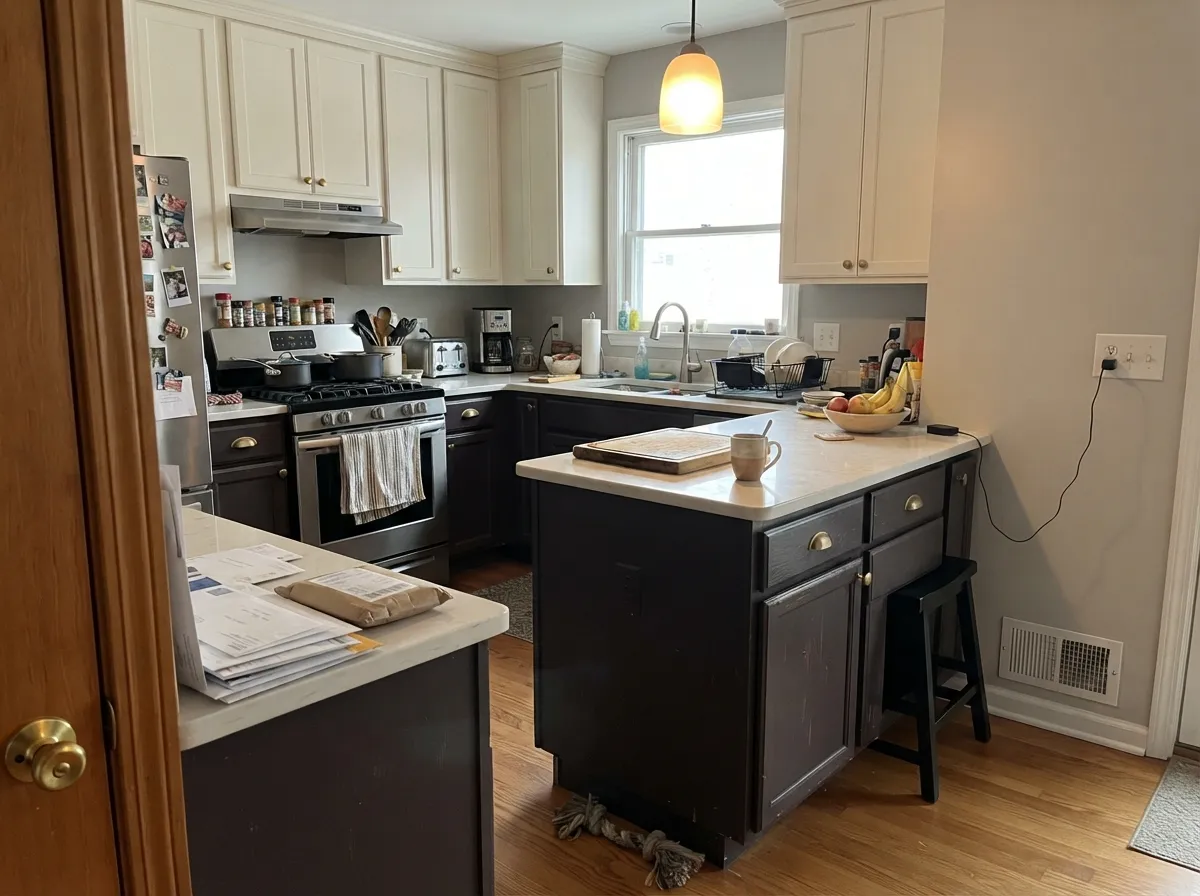
Give it a small room, warm bulbs, and permission to be dark and it looks like money. Drenched powder rooms, studies, and dining rooms are where it earns its reputation, and on cabinets and millwork it does the thing black cannot: it holds shadow without going hard.
Where It Fails
The complaints about Silhouette are remarkably consistent, and none of them are about the paint being bad. They are about three specific situations where this color stops being a warm brown and starts being something you did not order.
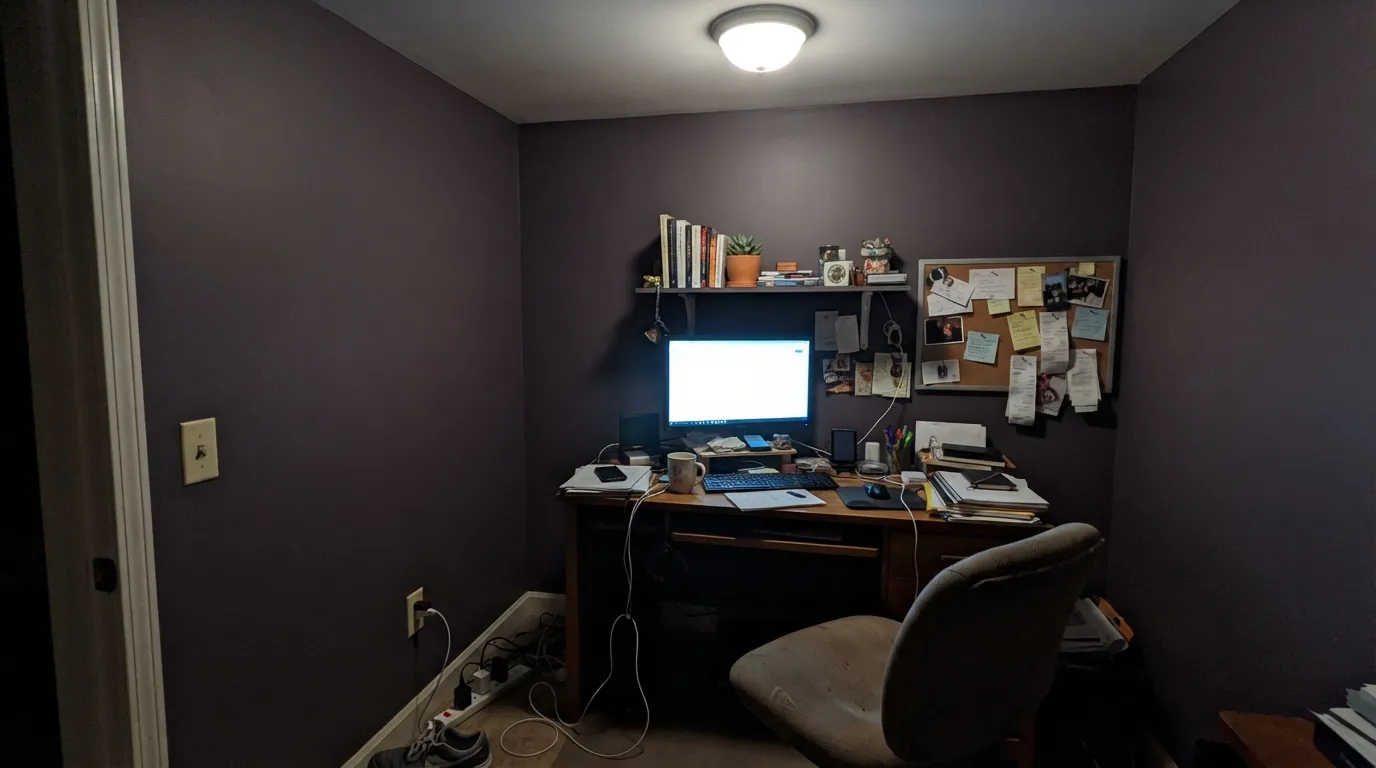
This is the number one problem. Blue-toned 4000K and 5000K bulbs strip the warmth and pull the violet straight to the surface, and the wall reads plum-gray at night. Swap to 2700K before you blame the paint. If your fixtures are sealed and cool, pick Iron Mountain 2134-30 instead — same depth, no purple in it.
Warm yellow is the opposite of violet, so it does not soften the cast — it exaggerates it. Cream trim like Windswept OC-94 and heavily orange builder oak both push Silhouette toward mauve. Use a quieter warm white, or if the yellow is fixed, go with Willow CC-542 for a cleaner, browner dark.
People see the Color of the Year photos and paint the entire first floor. At LRV 10 that gets heavy fast, and open plans give it no wall to stop at. Keep Silhouette for one closed room or for cabinetry, and run something like Pashmina AF-100 through the open areas instead.
Room by Room
Drench it: walls, ceiling, and trim, all Silhouette, matte on the walls and semi-gloss on the trim. Small windowless rooms have nothing to lose by going dark, and brass fixtures throw back just enough light. Keep the vanity light warm.
A closed room with a door is exactly where a dark like this belongs. Walls plus built-ins in Silhouette, Cloud White OC-130 on the trim if you want a line, or no line at all. Add a second lamp; one ceiling fixture is not enough.
On an island or the lower run it is one of the best dark cabinet colors in the deck, in satin, with White Dove OC-17 uppers. Do not put it on kitchen walls: the room needs the reflected light for prep work.
Dining rooms are used after dark, which is when this color is at its best under candles and warm bulbs. Matte walls, Swiss Coffee OC-45 trim to keep it from feeling like a cave. Test it against your table wood first.
Color-drenched bedrooms in Silhouette photograph beautifully and sleep beautifully. The honest catch is mornings: a north bedroom in this color stays dim until you turn something on. Lamps on both sides, 2700K.
Long before it was Color of the Year, designers used it for rooflines, gutters, window frames, and garage doors on warm-toned houses. As a full body color it works with heavy tree cover. Ask your dealer which exterior line handles a color this deep.
Your Light Is the Risk
Warm daylight brings the brown forward. This is the exposure where it looks like the swatch.
Cool gray daylight strips the warmth and the violet shows. Sample this wall first.
2700K bulbs: rich espresso. 4000K bulbs: purple-gray. The bulb decides, not the paint.
Direct sun opens it up to a warm mushroom-brown. Shaded elevations stay near-black.
Most complaints about Silhouette are a light mismatch. Upload a photo of your actual room and see it on your walls — then ask for the same wall in north light or evening lamps before you buy a single sample.
Need It From Another Brand?
Any paint counter can custom-tint Benjamin Moore AF-655 directly. If you would rather stay in one brand's own deck, these are the closest stock matches, measured as ΔE2000. Under 2 is a difference you will not see on the wall.
| Brand | Closest color | ΔE | LRV | |
|---|---|---|---|---|
| Sherwin-Williams | MetropolisSW 9575 · Sherwin-Williams | 2.4 | 8 | Color page → |
| Behr | Willow WoodECC-41-2 · Behr | 1.0 | 8 | Color page → |
| Valspar | Semi-Sweet4003-2C · Valspar | 1.3 | 8.6 | Color page → |
| PPG / Glidden | SarsaparillaPPG1018-7 · PPG / Glidden | 4.2 | 8 | Color page → |
| Glidden | Burnt Bark30YY 08/082 · Glidden | 3.9 | 8 | Color page → |
| HGTV Home by Sherwin-Williams | Urbane BronzeHGSW 3481 · HGTV Home by Sherwin-Williams | 2.5 | 8 | Color page → |
Similar Benjamin Moore Colors
The nearest shades to Silhouette within Benjamin Moore's own range, ranked by perceptual color distance — useful when you want the same look a touch lighter, darker, or warmer.
WCAG 2.1: AA is 4.5 : 1 for normal text, 3 : 1 for large text, AAA is 7 : 1.
Silhouette vs the Colors You're Also Considering
Every Silhouette sample board has the same rivals on it. The numbers show the real lightness gap — then it comes down to which risk you would rather live with.
Pick this for the softer, chalkier version with a plum lean.
Sherwin-Williams SW 7048 · LRV 8Urbane BronzePick this if your painter buys Sherwin-Williams — it is the same idea, greener and grittier.
Pick this when you want real depth and a hint of brown.
Benjamin Moore HC-166 · LRV 13Kendall CharcoalPick this for a dark you can live with on more walls — it is lighter and safer.
Dragon's Breath 1547 at #55514A and LRV 9 is the closest comparison inside the line. It is marginally darker and pulls slightly toward green-brown where Silhouette pulls toward red-brown. Van Buren Brown HC-70 at #5F4F46 shares the LRV of 10 but reads clearly as a brown rather than a gray, so it is the choice when you want the warmth to be the point. Tavern Charcoal CW-90 at #524F44 and LRV 10 is the olive-leaning option.
Across brands, Behr Willow Wood ECC-41-2 at deltaE 0.96 and Dunn-Edwards Weathered Brown DEC756 at 1.12 are effectively the same color, though both are listed at LRV 8 and will read a touch deeper. Valspar Semi-Sweet 4003-2C at LRV 8.6 comes in at 1.29, visually identical in normal room light.
Sherwin-Williams Metropolis SW 9575 at deltaE 2.41 is very close but worth sampling first, as is HGTV Home by Sherwin-Williams Urbane Bronze HGSW 3481 at 2.50. Farrow and Ball Tar No. CC1 at 4.23 is close but visibly different side by side, since it drops the warmth for a straight neutral dark.
Silhouette Coordinating Colors
Silhouette wants quiet company. Muted warm neutrals, soft creamy whites, and grayed greens all sit comfortably next to it; anything bright and saturated will fight its smoky quality, and anything strongly yellow will drag out the violet. Benjamin Moore released seven partners alongside it for 2026, and the useful ones are below along with the trim whites that actually work.
If you want a rule: choose partners with some gray or green in them rather than clean warm colors. A greige or a stone green reads as a natural neighbor to a plum-brown, while a clean butter cream reads as an argument.
Silhouette on Cabinets and Millwork
This is where the color is least risky, because cabinets and trim get seen in pieces rather than as a whole enveloping surface. On a kitchen island, a lower run, a bathroom vanity, or a wall of built-ins, Silhouette gives the weight people want from black without the flat, cut-out look black has next to wood. Satin is the right sheen: enough shine to clean, not enough to turn the doors into mirrors that show every brush mark.
Two practical warnings. Deep-base cabinet enamel hides poorly, so plan on a tinted gray primer and two full finish coats, sprayed if you can. And dark enamel shows repairs — a touched-up door often flashes a slightly different sheen, so keep the leftover paint labeled and expect to redo a whole door rather than a spot.
For hardware and metals, warm wins. Unlacquered brass, antique bronze, and matte black all read intentional against it. Polished chrome and cool nickel look clinical next to a plum-brown, and stainless appliances need a warm counter or backsplash between them and the cabinets to keep the kitchen from feeling cold.
Silhouette on Exteriors
Outside is where this color has quietly worked for years, long before the Color of the Year announcement. Color consultants use it along rooflines, on gutters and downspouts, window frames, and garage doors, because it gives a warm-toned house a dark edge without the harshness of black. On brown or tan brick it is close to perfect, since the shared warmth keeps the trim from looking pasted on.
As a full body color it needs the right house. Heavy tree cover, deep porches, or strong architectural detail give it shadows to play with; a flat suburban box in full sun just looks like a dark box. Expect direct sunlight to open the color up considerably — the sunny elevation reads warm mushroom-brown while the shaded side stays near-black, and that spread is much wider than it is indoors.
Two practical notes. Dark exterior colors absorb heat, so ask the dealer which exterior line is rated for a color this deep, especially on vinyl or on doors that face west. And walk a sample around all four sides of the house at different hours before you commit — this is a color that changes more between elevations than most people expect.
Three Ready Palettes Built on Silhouette
A color is never alone on the wall. These are complete combinations in the 60-30-10 pattern, with the reason each one holds together. Every one opens in the visualizer.
Silhouette takes the whole box so the room reads as one deep shape instead of chopped-up walls. Swiss Coffee is creamy enough to warm the violet instead of fighting it, and the terracotta vanity supplies the one warm note that keeps the room from going somber.
Try this palette in your roomDark below and light above keeps the working sightlines bright while the base cabinets hide everything a kitchen throws at them. Pashmina's green-gray warmth sits beside Silhouette's plum without either one looking dirty.
Try this palette in your roomOne dark room reads best when the hallway outside it stays warm, so the door becomes a threshold instead of a hole. Cloud White is soft enough to draw the millwork without the hard white line that makes dark rooms look striped.
Try this palette in your roomSilhouette FAQ
Is Silhouette purple?
It can be, and this is the question everyone asks. The measured hue is red-orange, but with that much gray over it the red reads as violet in cool light and next to yellow-based colors. Under 2700K bulbs and warm daylight it looks like a chalky espresso brown instead.
Is Silhouette warm or cool?
Technically warm, practically in between — which is why designers argue about it. It is a warm brown that has been grayed so far it behaves like a cool one. Treat it as a neutral dark and let your bulbs and your wood tones decide which way it tips.
Silhouette or Urbane Bronze?
They are close enough that most people would not name them apart on a wall, and plenty of readers said Silhouette felt like a repeat of Urbane Bronze SW 7048. Urbane Bronze runs a touch greener and grittier; Silhouette is chalkier with a plum lean. Pick whichever brand your painter already buys.
What white trim goes with Silhouette?
Warm and soft, not bright. White Dove OC-17 is the safest, Swiss Coffee OC-45 is what Benjamin Moore itself used in the Color of the Year rooms, and Cloud White OC-130 sits between them. Avoid a hard bright white, which turns the wall into a black rectangle.
Can I use Silhouette on kitchen cabinets?
Yes, and it is one of its best uses. Put it on the island or the lower run in satin, keep the uppers in a warm white, and use a urethane-fortified cabinet enamel. Warm brass or bronze hardware suits it far better than polished chrome.
Can I paint my whole house Silhouette?
No. At LRV 10 an entire open floor in this color gets oppressive and there is nothing to break it up. Use it for one closed room, an accent wall, cabinetry, or millwork, and run a mid-tone neutral through the open areas.
How many coats does it take?
Two over a primed or already-dark surface, and often three over a light wall because deep-base paint carries very little white pigment and hides badly. Have your dealer tint the primer gray, cut and roll each wall wet-to-wet, and keep a labeled jar for touch-ups — dark flashes at every patched spot.
Have you painted with Silhouette?
Rate it — one tap helps the next reader decide.
Ask a Question