Hunters Hollow
The sage-gray exterior workhorse Behr files under "gray," reviewed honestly: where it reads green, the light that flattens it, and what to pick instead.

Jessica has spec'd whites and neutrals for more than 300 rooms and keeps a sample wall of painted drawdowns in her studio. Every color review is checked against real reader rooms in the comments and re-tested when a formula changes. About the testing process →
- 1Black Fox7
- 2Pewter Green12
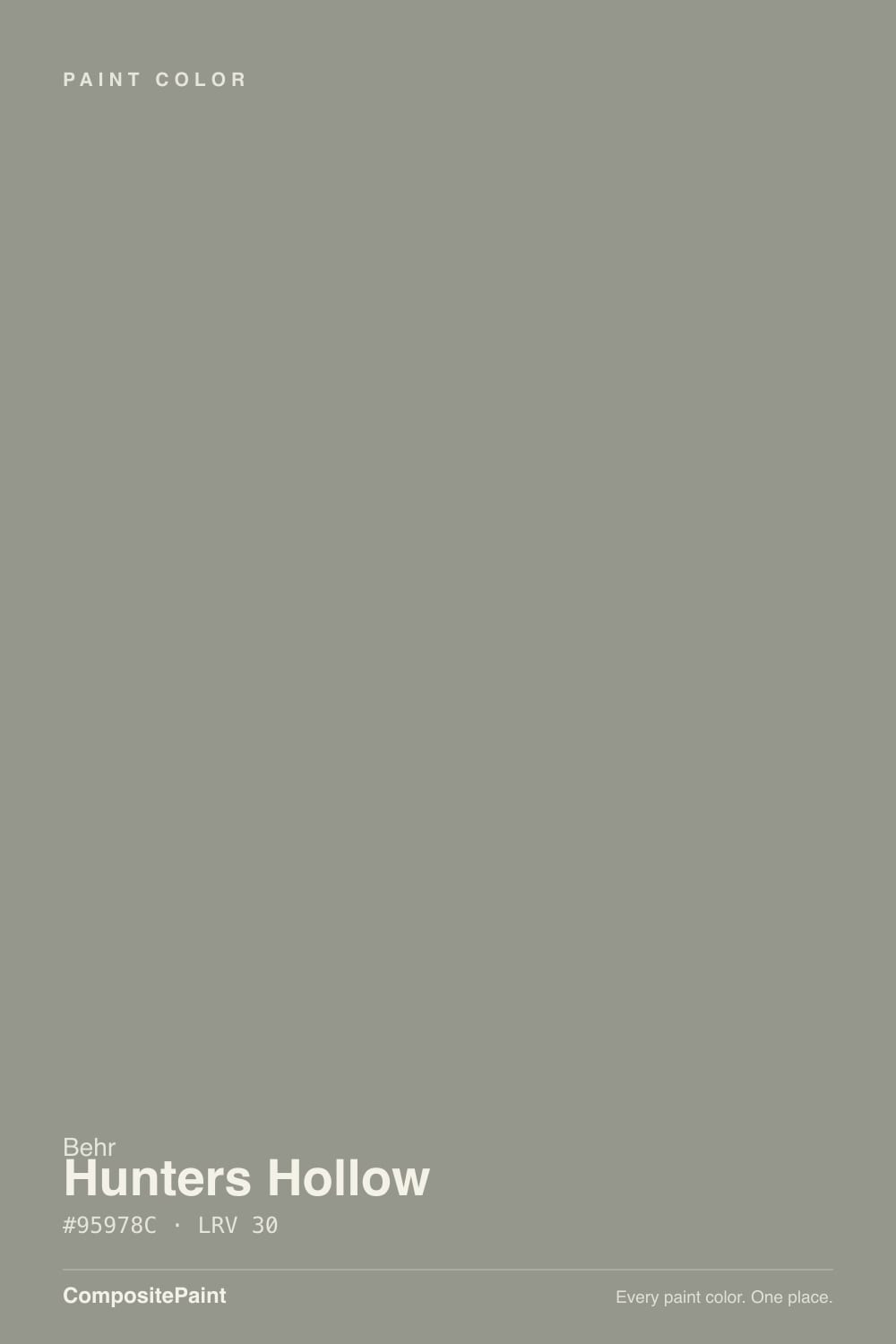
- 3Hunters Hollow30
- 4Stardew43
- 5Palladian Blue60
The Fast Verdict
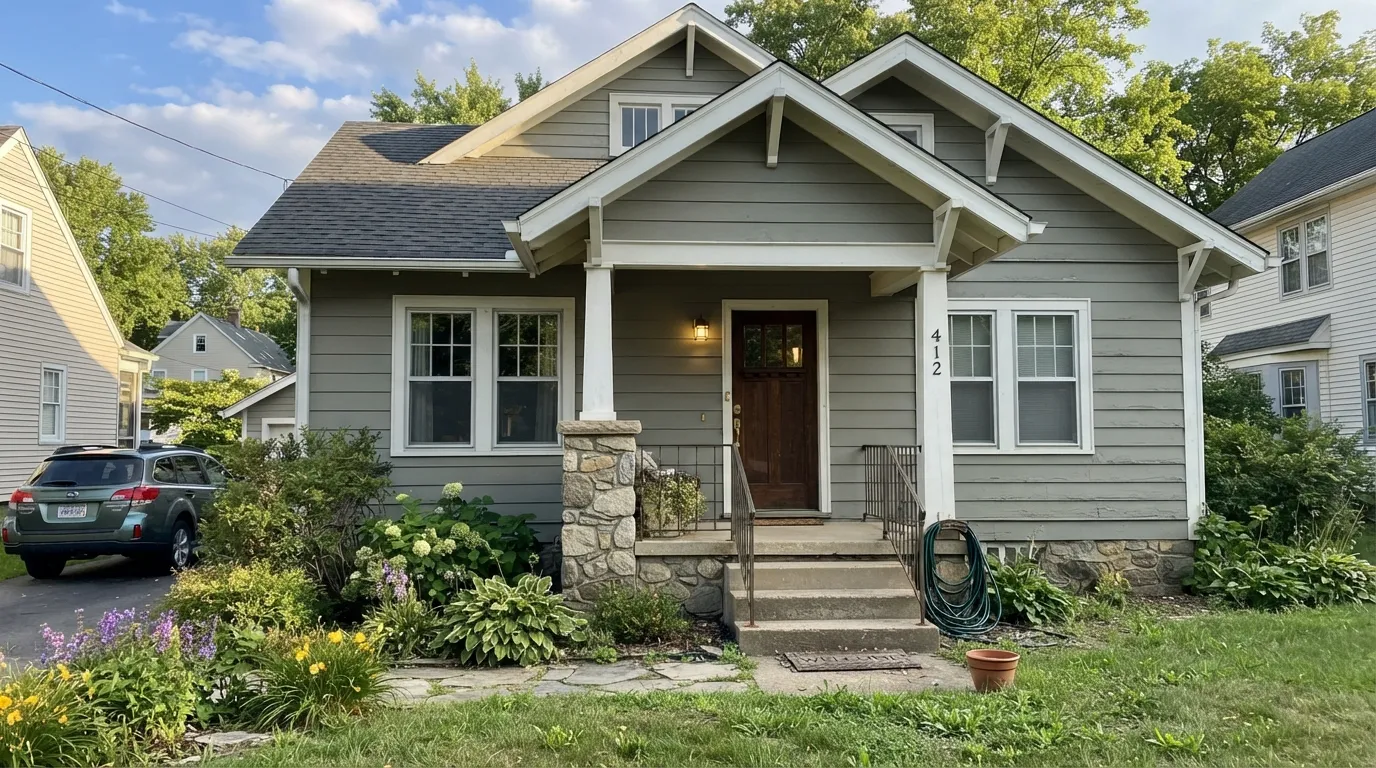
Hunters Hollow is a muted sage caught between two families. Behr's own catalog files it under gray, but put it on a house or a kitchen island and the green comes forward the moment daylight or wood tones warm it up. At LRV 30 it's deep enough to read as a real color, not a whisper, and it does its best work outside — siding, shutters, front doors — where it has become a quiet craftsman-exterior favorite. Indoors it works the same trick on cabinets and accent walls, as long as the room gets some real light.
Exterior siding and shutters on craftsman, farmhouse or cottage-style houses · front doors on a white or greige house · kitchen cabinets or an island that wants sage without full commitment · living rooms and offices with good daylight
You want an unambiguous, no-argument gray · your brick or stone has a pink or peach cast · the room runs on cool LEDs with no warm light to balance it · you want a saturated, obviously-green green
- Genuine sage-green that also passes as a sophisticated gray
- Holds its color in full exterior sun without washing out
- Craftsman and farmhouse exteriors love it with stone and white trim
- Cabinets get a real green without committing to a saturated one
- Deep enough (LRV 30) to read as a statement, not a whisper
- Goes flat, dull gray under cool light or cool LEDs
- Clashes with pink-toned brick and peachy stone
- Buyers shopping for "gray" are sometimes surprised by how green it reads
- Needs real daylight or warm bulbs indoors to earn its reputation
What Color Is Hunters Hollow, Really?
A warm, grayed-down sage — Behr's own color-family page puts Hunters Hollow in "gray," and the marketing copy in the same breath calls it "a deep, rich green." Both are technically true, and that contradiction is the whole personality of the color: in flat, overcast light or under cool bulbs it settles into a stony gray-green with barely any color left; in real daylight, or next to warm wood and stone, the green steps forward and it reads unmistakably like sage. It is a chameleon color, not a confused one — once you know which light you're getting, it behaves predictably.
At LRV 30 it sits in the same mid-deep band as Sherwin-Williams' Evergreen Fog and Illusive Green — deep enough to read as a genuine color statement on a whole elevation of siding, not so dark that it swallows architectural detail or reads black from the curb at dusk. That depth is also why it works as an exterior color in the first place: pale sage-grays wash out in full sun, but Hunters Hollow holds its color from morning to golden hour.
Undertone in one line: warm sage-green first, gray second, never blue or teal. If your sample reads flat concrete-gray, the light in the room or the time of day is cool and overcast; if it reads distinctly green, that's warm daylight or a warm bulb doing exactly what this color is built to do.
Where It Shines
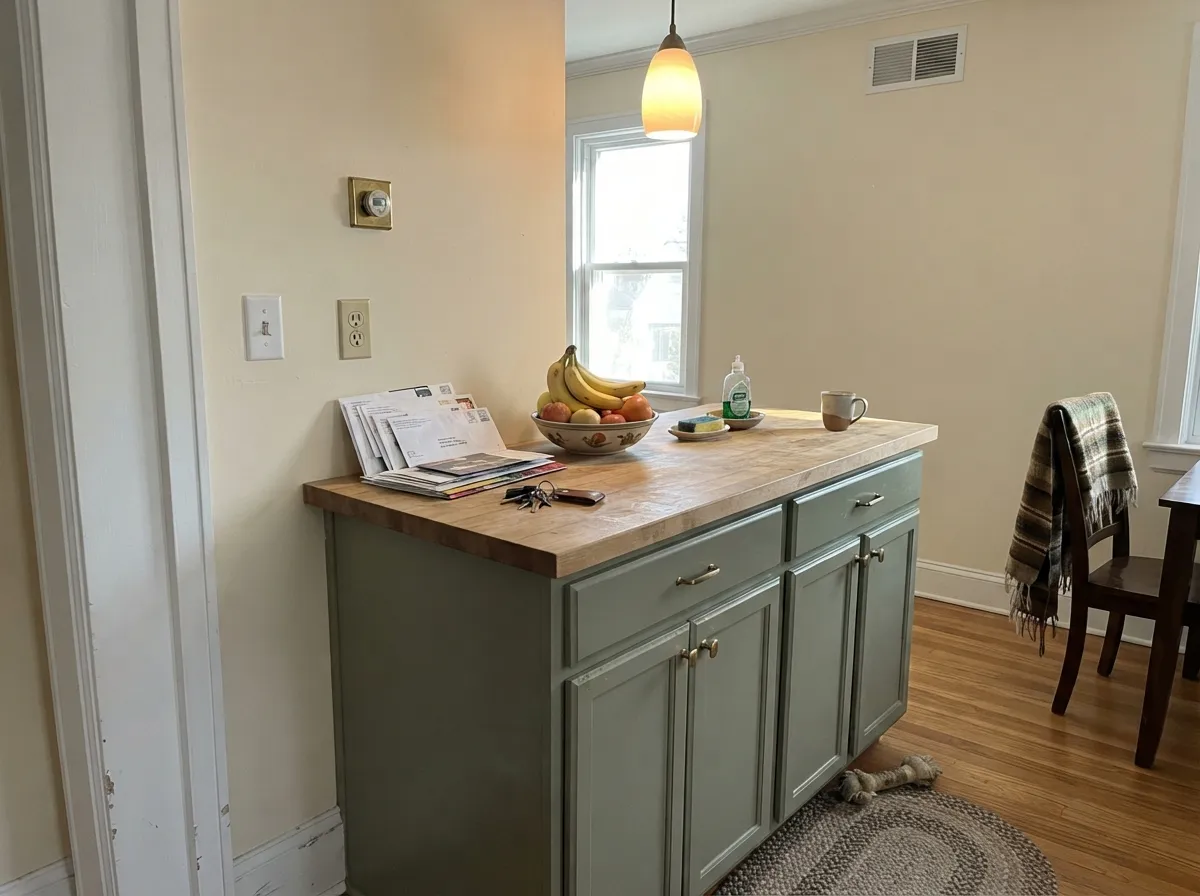
This is an exterior color first and an interior color second, and it shows. On craftsman and farmhouse siding, paired with stone accents or a covered porch, it reads sophisticated and grounded rather than trendy-green — which is why Behr sells it across the Marquee, Dynasty, Ultra and Premium Plus exterior lines. Indoors, its best job is the same idea in miniature: a kitchen island or a full run of cabinets that wants the current sage-green mood without the commitment of a saturated green. Give it real daylight, white trim and warm wood, and it looks like it was chosen on purpose.
Where It Fails
Almost every disappointed review of Hunters Hollow comes down to one of three mismatches, and all three are predictable before the first coat goes on. None of them are the paint's fault — but if your situation matches one, sample it big before you commit.
Behr's own site lists it under gray, so buyers shopping the gray family sometimes end up with green walls or a green house and feel misled. On the chip it can pass for a stony taupe-gray; on a full wall or elevation the sage is unmistakable. If gray is the actual goal, look at Behr Chic Gray instead — same family, far less green.
Green and pink sit close to complementary on the wheel, so a warm-pink brick foundation or peachy natural stone fights the sage instead of grounding it — both sides end up looking slightly off. It pairs far better with gray, tan or true-red brick and stone than with anything blush-toned.
Under cool 4000K+ bulbs or flat north daylight, the green drains out almost completely and what's left is a dull, slightly muddy gray that readers describe as "lifeless." The paint isn't failing — it needs warm 2700K bulbs indoors, or direct daylight outdoors, to show what it's actually built to do.
Room by Room
Full sun and shade both flatter it; it reads sage-green in direct light and settles to a quiet stone-gray in shade, and either read works on a craftsman or farmhouse elevation. White or cream trim keeps it crisp; stone accents ground it further.
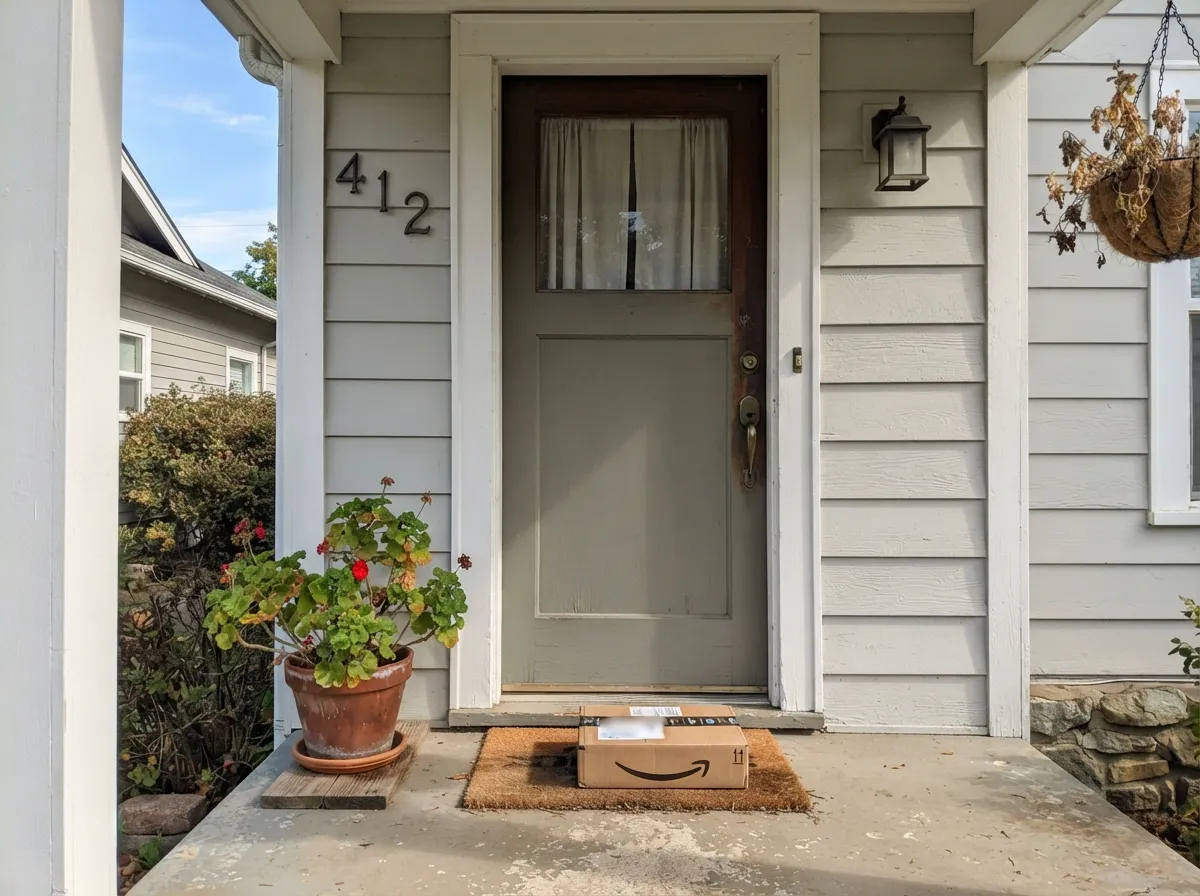
On a white, greige or light-gray house it's a confident, unfussy statement that reads as considered rather than trendy. Semi-gloss for durability and easy cleaning.
Softer and more livable than a saturated green cabinet color, and it doesn't fight warm wood counters or brass hardware. Satin urethane-fortified cabinet enamel; test the sample under your actual kitchen lighting first.
In a bright room it's a grounded, sophisticated neutral-that-isn't. In a dim or north-facing room it goes flat and can read as an indecisive gray rather than a deliberate green — check the light before committing a full room.
Under warm 2700K lamps it's calm and earthy at night. Under cool white LEDs it can feel cold and institutional. If you're not willing to change the bulbs, this probably isn't your bedroom color.
With warm wood vanities, brass and stone it's fine; against cool white tile and chrome it reads colder and grayer than intended. Sample first if your fixtures lean cool.
Your Light Is the Risk
Full sun on siding brings the sage forward and holds it all day — this is the color's home turf.
Flat, cool daylight drains the green and leaves a dull, slightly muddy gray. Sample it on an overcast day before you commit.
Greener and warmer at the sun hours, quieter and grayer once the direct light passes. A normal, honest shift.
2700K lamps keep the green alive after dark. Cool white LEDs kill it — swap the bulbs before you blame the paint.
Most complaints about Hunters Hollow are a light mismatch. Upload a photo of your actual room and see it on your walls — then ask for the same wall in north light or evening lamps before you buy a single sample.
Need It From Another Brand?
Any paint counter can custom-tint Behr MQ6-21 directly. If you would rather stay in one brand's own deck, these are the closest stock matches, measured as ΔE2000. Under 2 is a difference you will not see on the wall.
| Brand | Closest color | ΔE | LRV | |
|---|---|---|---|---|
| Sherwin-Williams | Evergreen FogSW 9130 · Sherwin-Williams | 0.9 | 30 | Color page → |
| Benjamin Moore | Graystone1475 · Benjamin Moore | 3.5 | 31 | Color page → |
| Valspar | Gray Expose5007-2A · Valspar | 1.0 | 30.6 | Color page → |
| PPG / Glidden | Steeped TeaPPG0999-4 · PPG / Glidden | 3.7 | 30 | Color page → |
| Glidden | Steeped TeaPPG0999-4 · Glidden | 3.6 | 30 | Color page → |
| Dutch Boy | Padlock Gray438-4DB · Dutch Boy | 4.5 | 31 | Color page → |
Similar Behr Colors
The nearest shades to Hunters Hollow within Behr's own range, ranked by perceptual color distance — useful when you want the same look a touch lighter, darker, or warmer.
WCAG 2.1: AA is 4.5 : 1 for normal text, 3 : 1 for large text, AAA is 7 : 1.
Hunters Hollow vs the Colors You're Also Considering
Every Hunters Hollow sample board has the same rivals on it. The numbers show the real lightness gap — then it comes down to which risk you would rather live with.
Pick this if you specifically want Behr's exterior formulations (Marquee, Dynasty) and a slightly more gray-leaning read.
Sherwin-Williams SW 9130 · LRV 30Evergreen FogPick this if you want the more famous, more widely stocked sage at the exact same depth — the deck's default cabinet sage.
Pick this for Behr's exterior product lineup and a near-identical result.
Sherwin-Williams SW 9164 · LRV 29Illusive GreenPick this for an almost identical chameleon effect in the SW deck, if your painter doesn't carry Behr.
Sherwin-Williams Evergreen Fog SW 9130 shares the same LRV of 30 and a deltaE of 0.89, which means the two are the same color for practical purposes. HGTV Home by Sherwin-Williams Hunters Pointe HGSW 3264 matches at the same deltaE. Valspar Gray Expose 5007-2A at LRV 30.6, deltaE 1.02, and Diamond Vogel Everlasting Sage 0422 at LRV 32, deltaE 1.36, are visually identical in normal room light. Dunn-Edwards Smoke and Ash DET514 at deltaE 1.76 belongs in that group too.
Within Behr, Laurel Leaf PMD-56 at LRV 32, hex #969B8B, is slightly lighter and a little greener. Milk Thistle MQ6-26 at LRV 31, hex #9B9886, tips warmer and more olive. Iron Gate MQ2-60 at LRV 30, hex #99948C, drops the green and reads as a plain warm gray. Benjamin Moore Graystone 1475 at LRV 31, deltaE 3.53, is close but visibly different side by side, reading browner.
Hunters Hollow Coordinating Colors
The rule for coordinating with Hunters Hollow is to stay warm and stay away from pink: it flatters warm whites, near-blacks, warm wood, and stone in gray or tan tones, and it argues with anything blush or cool-blue. These are the partners that keep showing up in rooms and elevations that work:
Hunters Hollow on Exteriors
This is where Hunters Hollow does its most convincing work. It's sold across Behr's full exterior lineup — Marquee, Dynasty, Ultra and Premium Plus — which is a strong signal for how often it actually goes on siding rather than staying a kitchen accent. Full sun brings the sage forward and holds it there for most of the day; shaded elevations settle into a quieter stone-gray, and both reads work on a craftsman, farmhouse or cottage-style house.
The pairing decides how it lands. White or cream trim keeps it crisp and prevents it from reading muddy against the sky; gray, tan or true-red stone and brick sit comfortably next to it. The one real mismatch is pink-toned brick or peachy natural stone — that undertone fights the green instead of grounding it, and no amount of trim color fixes the clash.
Hunters Hollow With Wood Tones and Cabinets
Indoors, this color's second job is cabinets, and it earns it. Warm wood counters, butcher block and brass hardware all sit comfortably against the sage — the warmth in the wood meets the warmth in the paint's undertone, so neither one fights. It gives a kitchen the current sage-green mood without the risk of a fully saturated green.
Floors matter less than lighting does here. Honey oak, walnut and white oak all pair fine underneath cabinets in this color; the bigger variable is whether the kitchen gets warm daylight or runs on cool overhead LEDs, since that decides whether the cabinets read as a confident green or a flat, undecided gray.
Three Ready Palettes Built on Hunters Hollow
A color is never alone on the wall. These are complete combinations in the 60-30-10 pattern, with the reason each one holds together. Every one opens in the visualizer.
Bright white trim keeps the sage-gray siding from reading muddy, and near-black shutters and a door give the elevation the one dark note it needs to look finished rather than flat.
Try this palette in your roomCream walls keep the room from tipping too cool, and the near-black accent gives the sage cabinets one grounding contrast point without competing with them.
Try this palette in your roomA soft off-white keeps the sage accent from feeling like a full commitment, and Chic Gray next door shares enough undertone that the handoff between rooms feels intentional rather than mismatched.
Try this palette in your roomHunters Hollow FAQ
Is Hunters Hollow green or gray?
Both, depending on the light. Behr's own website files it under the gray family, but in real daylight and next to warm wood it reads as a clear sage green. Under flat overcast light or cool bulbs, the green drains out and it settles into gray. If you need it to be reliably one or the other, sample it in your actual light before committing to a wall or a whole house.
Is it a good exterior color?
Yes — it's one of the stronger cases for this color. Behr sells it across its Marquee, Dynasty, Ultra and Premium Plus exterior lines, and at LRV 30 it holds its color in full sun without washing out or reading black at dusk. It's a common pick for craftsman and farmhouse siding paired with stone and white trim.
What trim color goes with Hunters Hollow?
A clean white or off-white — Behr White or Polar Bear — keeps the sage-gray from reading muddy on siding. Indoors, the same rule holds: a warm off-white trim lets the color read as a deliberate green rather than an accident.
Does it work with brick or stone?
With gray, tan or true-red brick and stone, yes — those undertones sit comfortably next to the sage. Pink-toned or peachy brick and stone are the one real clash; green and pink sit near-opposite on the color wheel and the two fight instead of pairing.
Can I use it on kitchen cabinets?
Yes, and it's a common use for this color. It gives cabinets a real sage-green without the commitment of a fully saturated green, and it pairs well with warm wood counters and brass hardware. Use a satin urethane-fortified cabinet enamel and test the sample under your kitchen's actual lighting first.
Will it look good in a north-facing room?
Be cautious. North light is cool and flat, and it strips most of the green out of Hunters Hollow, leaving a dull, slightly muddy gray. It can still work with warm lamps and warm wood furniture to compensate, but sample a large piece on the actual wall before you commit a whole room.
Have you painted with Hunters Hollow?
Rate it — one tap helps the next reader decide.
Ask a Question