Conifer Green
Behr's quiet, gray-filed forest green, reviewed honestly: the cabinets and doors where it grounds a room, the dim light that turns it plain charcoal, and what to pick instead.

Jessica has spec'd whites and neutrals for more than 300 rooms and keeps a sample wall of painted drawdowns in her studio. Every color review is checked against real reader rooms in the comments and re-tested when a formula changes. About the testing process →
- 1Essex Green6
- 2Vintage Vogue12
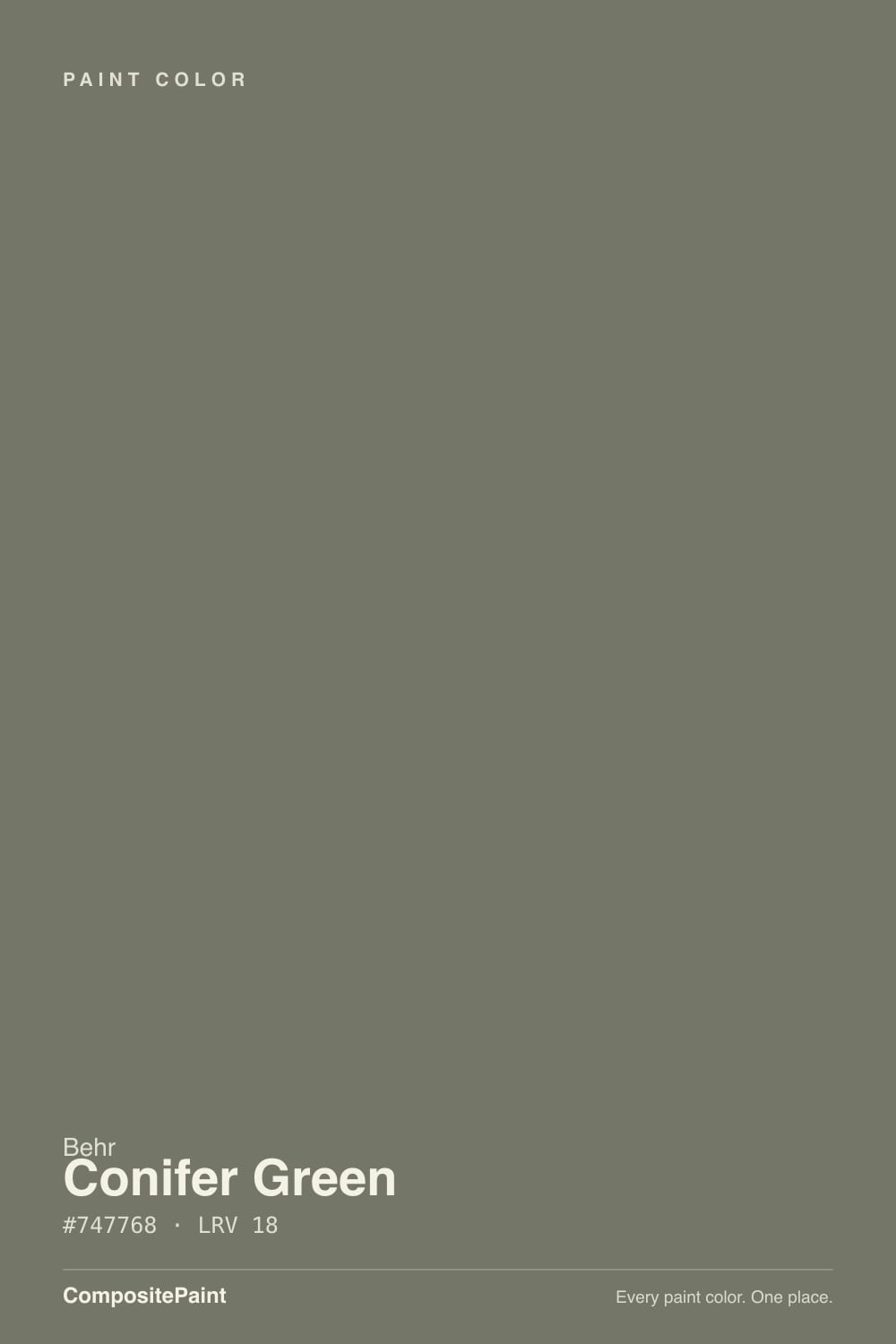
- 3Conifer Green18
- 4Evergreen Fog30
- 5Clary Sage41
The Fast Verdict
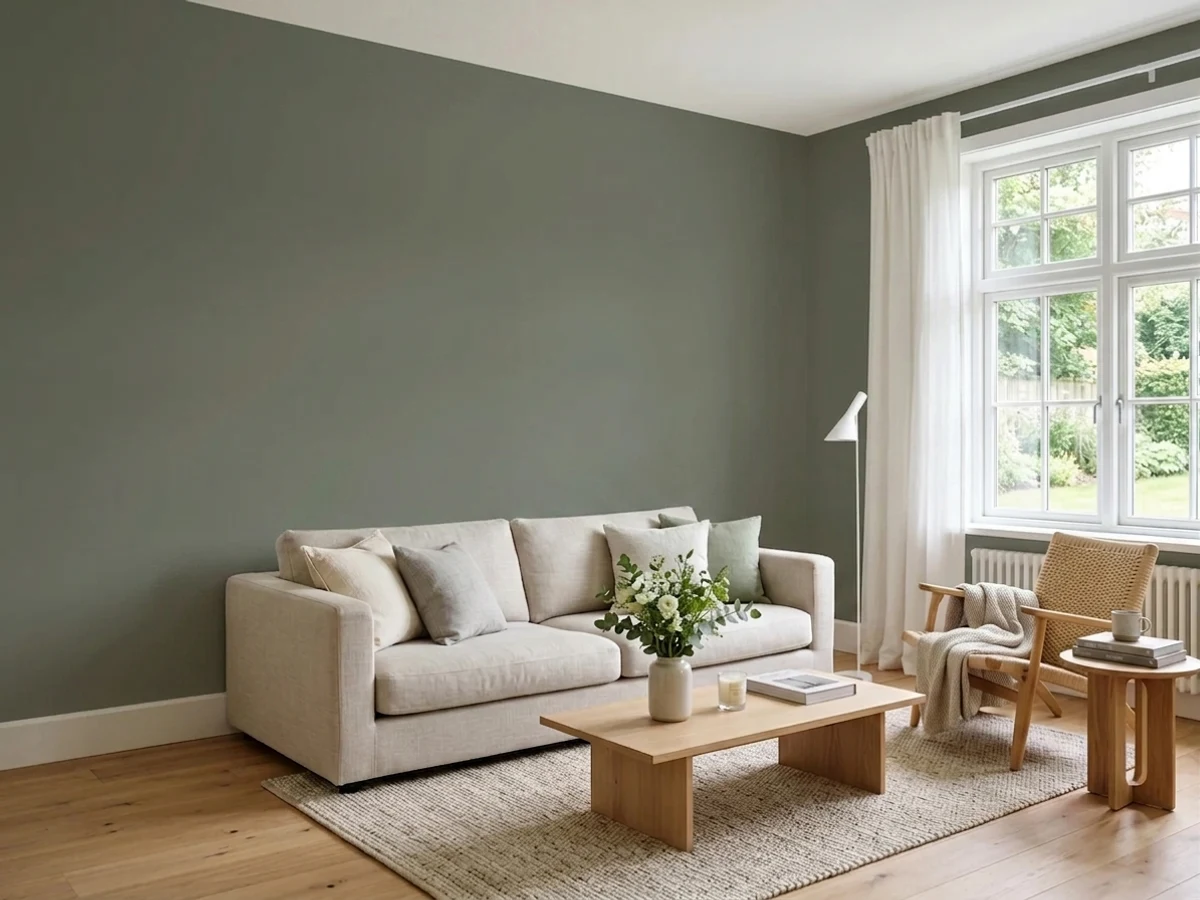
Conifer Green is Behr's grayed-down forest green — filed in the brand's own Gray family because color engineers know it behaves like a neutral half the time. Give it real daylight, warm wood, and brass hardware and it reads as an honest, cool-blooded green with real depth. Take the light away and it slides straight into plain charcoal. There is no Color-of-the-Year moment here and almost no online chatter about it — just a dependable dark green-gray doing quiet work on doors, cabinets, and built-ins.
Kitchen islands and lower cabinets with brass hardware · front doors and exterior trim against stone or wood siding · studies, libraries and built-ins under a warm lamp · anyone who wants gray-palette flexibility with real green underneath
Your room is small, north-facing and short on accent light · you're pairing it with cool gray quartz or marble · you want a bright, warm rustic green rather than a gray-toned one · you're painting all four walls with no lamps planned
- Genuinely grounded dark green-gray, not a loud or trendy green
- Filed in Behr's own Gray family, so it slots into a gray-heavy palette while still reading as green
- Excellent on lower cabinets and islands against warm wood and brass
- A credible, weather-ready front door and exterior trim color
- LRV 18 is dark enough to hold real color without tipping into near-black
- Dim, north-facing rooms drain the green and leave plain charcoal
- Four walls with no accent lighting can feel like a cave, not a cabin
- Cool gray stone countertops cancel its color instead of complementing it
- Almost no real owner reviews online — you're testing mostly on your own
What Color Is Conifer Green, Really?
A dark gray-green that Behr itself files under its Gray color family, not Green — which tells you most of what you need to know before you open the can. The company's own copy calls out "subtle blue undertones," and independent color databases echo it, describing a cool cast that keeps the green from ever reading rustic or yellow-warm. It is not a famous color. It has no Color-of-the-Year run, no viral room, barely any owner reviews on the usual forums — just a steady, unglamorous presence in Behr's deck that designers reach for when a client wants "green, but make it neutral."
At LRV 18 it sits in genuinely dark territory — deeper than popular cabinet sages like Dried Thyme or Retreat (both LRV 21), right alongside Benjamin Moore's Cushing Green (also LRV 18) but read cooler and grayer than that warmer, more yellow-leaning cousin. That depth is exactly why it needs help from real light or a lamp: a color this dark has less reflected light to work with, so the room around it does more of the work than the paint can do alone.
Undertone in one line: a cool gray-green base with a whisper of blue-charcoal that only shows up in shade. In bright, direct light it reads as an honest, muted forest green; under flat overcast or in a north room it slides toward plain dark gray. Neither version is wrong — it is the same paint being honest about the light it's in.
Where It Shines
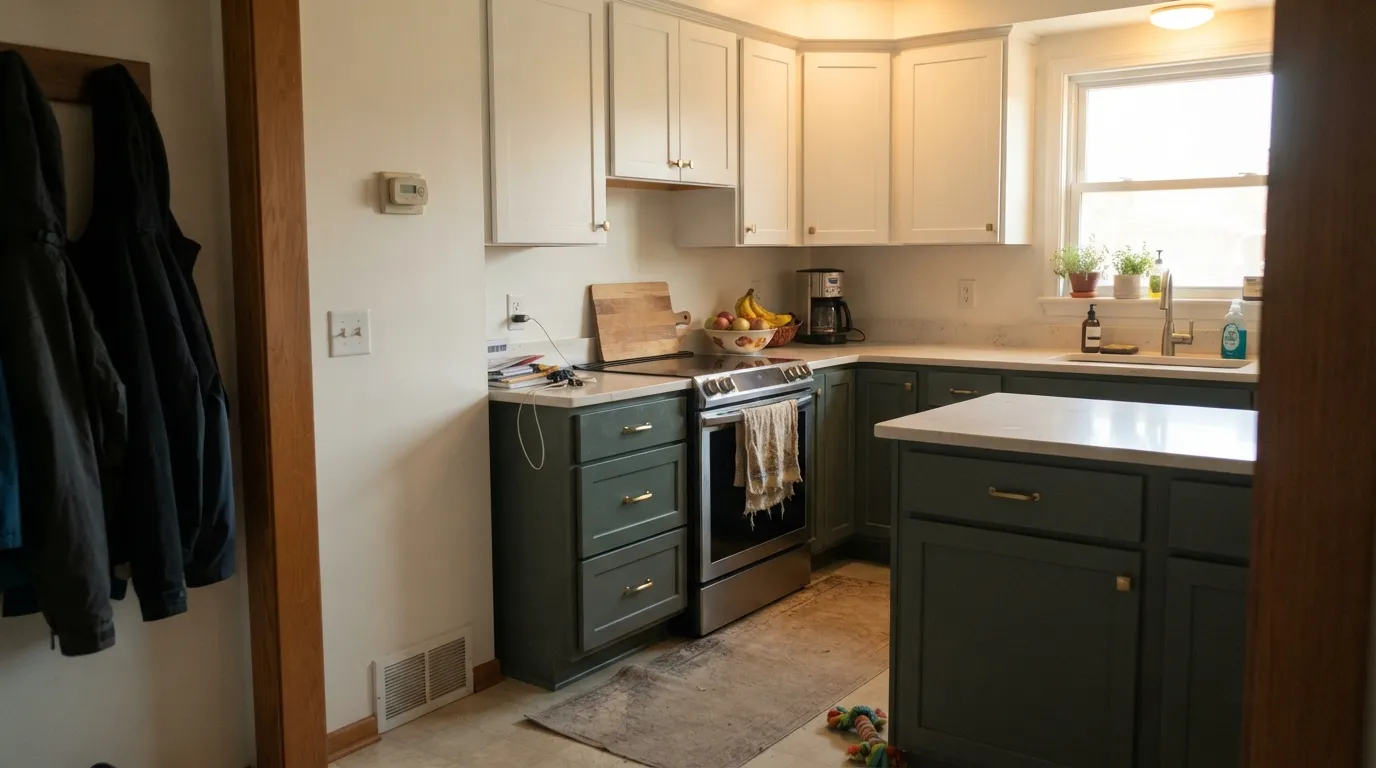
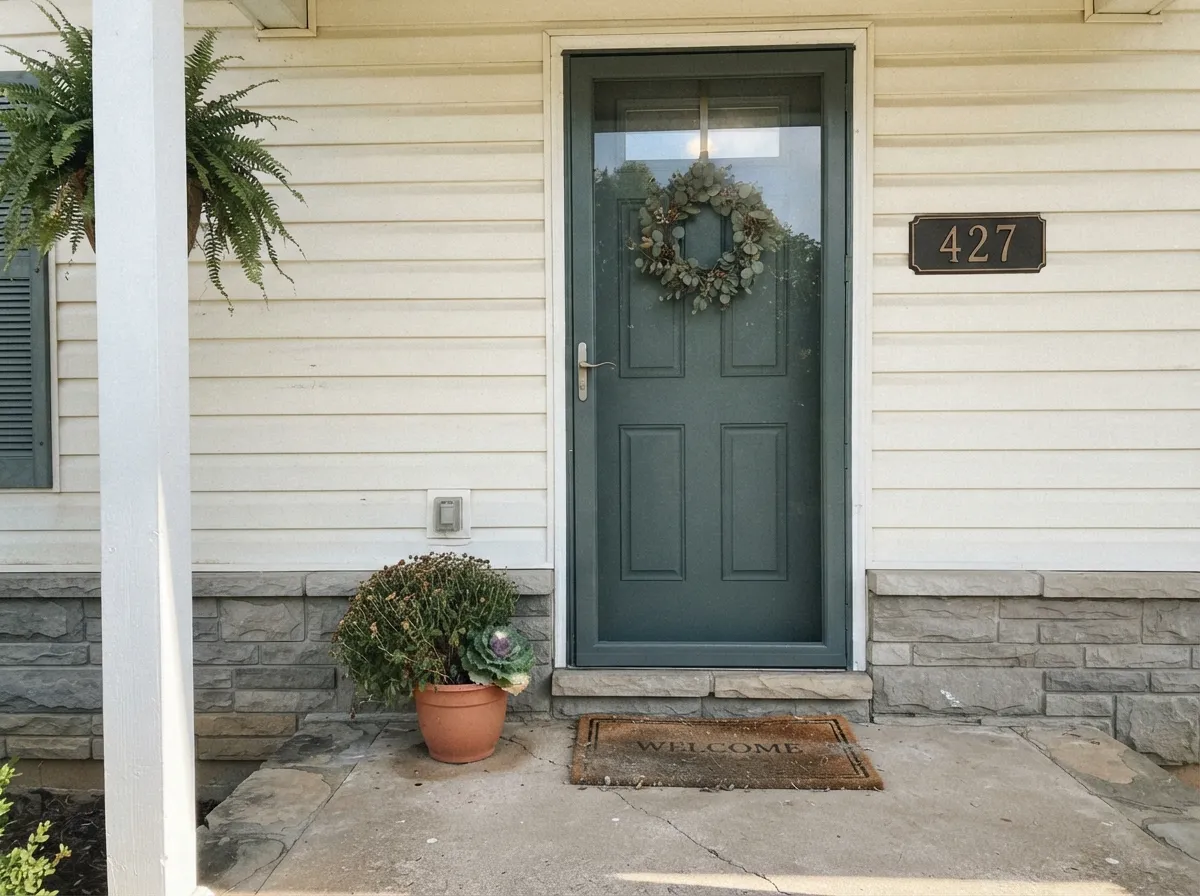
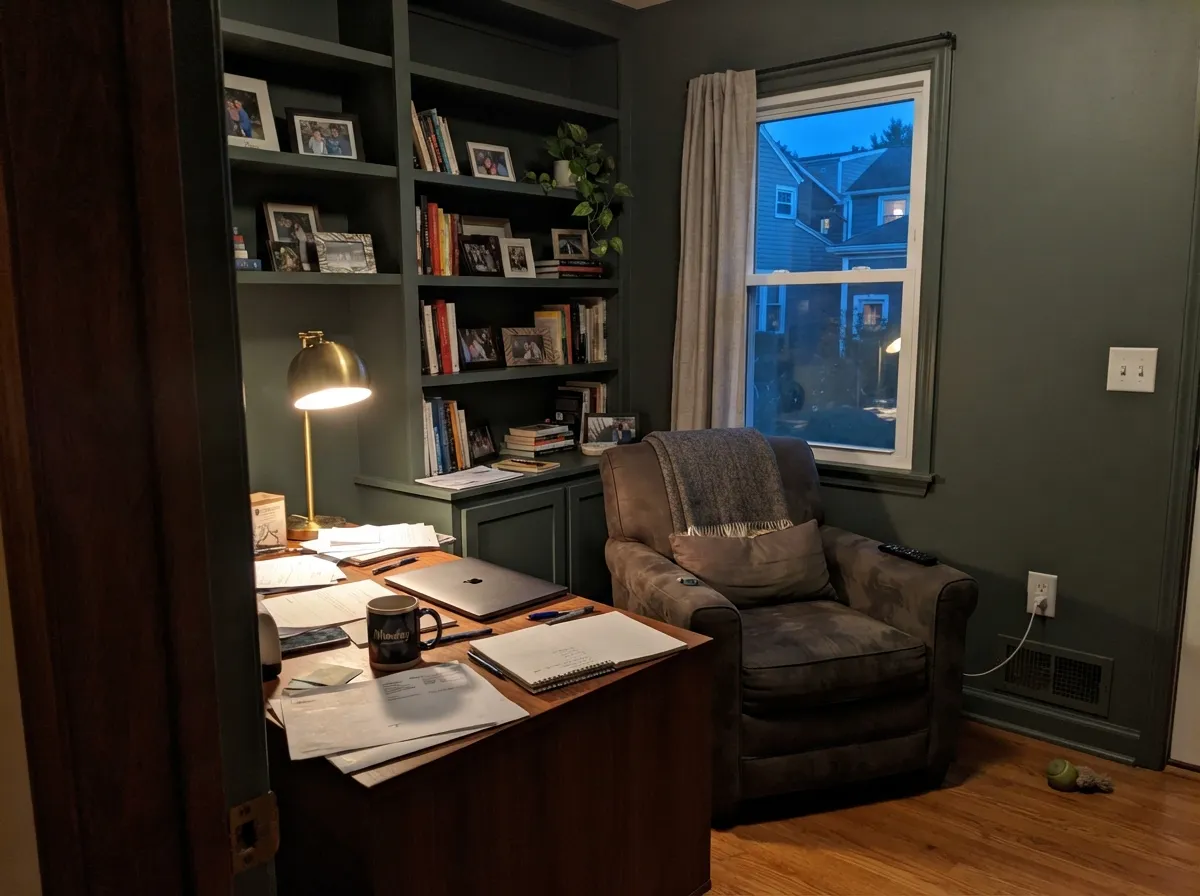
Give it real daylight, warm wood, and metal with some age to it — brass, unlacquered gold, worn bronze — and Conifer Green does exactly what a good grounding color should: it makes the room feel deliberate instead of decorated. Its two best jobs are lower kitchen cabinets or an island under bright warm-white uppers, and a front door or exterior trim against stone, brick, or natural wood siding, where Behr specifically markets it for weather-ready performance. A book-lined study or a set of built-ins under a warm lamp is its best interior room — the color barely registers as "dark" once walnut shelving and reading light are in the mix.
Where It Fails
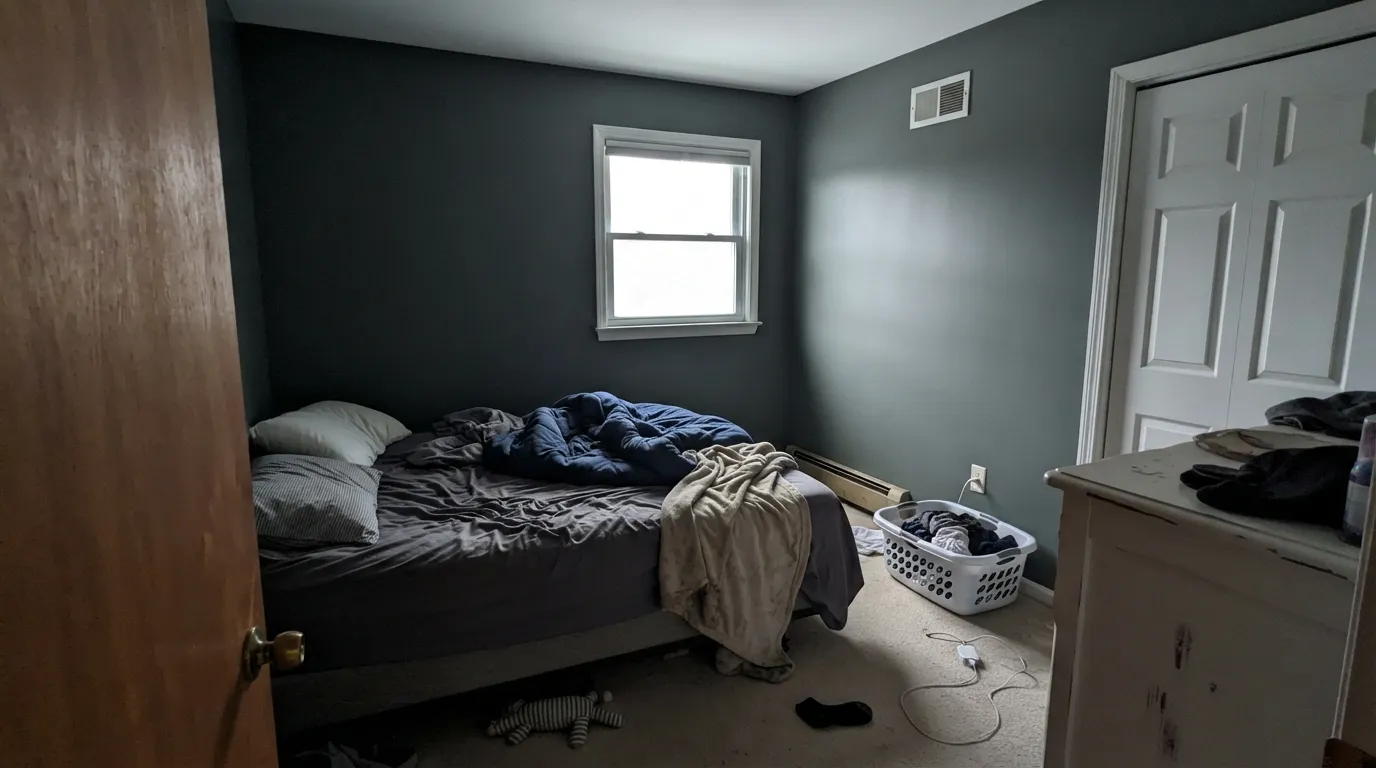
Almost every disappointment with Conifer Green comes down to one of three predictable setups, and all three are visible before the first coat goes on. None of them are the paint's fault — a color this dark needs light or a warm partner to work with, and when neither shows up, the green simply isn't there to see.
In flat, cool daylight the green drains out and what's left reads close to plain charcoal-black — not "forest," just dark. The color isn't failing; the light is. Add warm 2700K lamps, or save it for a wall that gets real sun.
At LRV 18 this is a genuinely dark color, and a small room with no window and the lights off can feel like a cave rather than a cabin retreat. Behr's own pairing suggestions — bright warm-white trim, gold hardware — exist because this color wants a bright partner in the room, not four walls of itself.
Conifer Green already leans cool in shade; put it next to cool gray stone and both sides cancel each other's temperature. The green disappears and you're left with two different flat grays doing nothing for each other. Warm-toned counters — butcher block, warm quartzite, honed cream stone — let it stay green.
Room by Room
On base cabinets or an island under bright warm-white uppers, with brass or unlacquered gold pulls, it reads exactly like the "gray-green with gold hardware" combination designers keep returning to. Satin cabinet enamel; keep the uppers a bright warm white so the kitchen doesn't go dark overhead.
Behr markets it for exterior use, and against stone, brick, or natural wood siding a Conifer Green door reads deliberate and grounded rather than trend-chasing. Semi-gloss holds up to weather and shows the depth better than a flat finish would.
Low, warm lamp light is this color's natural habitat, and a book-lined study with walnut shelving barely notices the darkness — the depth is the point, not a problem. Matte or eggshell keeps texture soft.
Beautiful under a chandelier at dinner-hour lamplight; underwhelming in the flat daylight of a quick lunch. Works best in a room that's mostly used after dark or gets strong afternoon sun.
A grounded, cocoon-like accent wall behind the bed works well under 2700K sconces. In a north-facing bedroom lit only by overhead cool light it goes flat and can feel gloomy rather than restful.
At this depth, with a color this dependent on light, four walls in every room is a bigger bet than the paint's quiet reputation suggests. Save it for cabinets, doors, and one committed room instead.
Your Light Is the Risk
Full sun reads it as a clear, honest forest green — the color at its most confident. Sample it here first.
Cool, flat daylight strips the green and leaves a charcoal-blue-gray veil. Test on the actual wall before committing a whole room.
Green and grounded at the sun hours, quieter and grayer once the light moves off. Expect it to change through the day, not sit still.
2700K warm bulbs bring soft olive edges forward. Cool white LEDs push it toward flat slate — pick the bulb before you judge the paint.
Most complaints about Conifer Green are a light mismatch. Upload a photo of your actual room and see it on your walls — then ask for the same wall in north light or evening lamps before you buy a single sample.
Need It From Another Brand?
Any paint counter can custom-tint Behr PPU10-19 directly. If you would rather stay in one brand's own deck, these are the closest stock matches, measured as ΔE2000. Under 2 is a difference you will not see on the wall.
| Brand | Closest color | ΔE | LRV | |
|---|---|---|---|---|
| Sherwin-Williams | Crooked RiverSW 9524 · Sherwin-Williams | 2.2 | 18 | Color page → |
| Benjamin Moore | Rooftop GardenCSP-765 · Benjamin Moore | 1.2 | 19 | Color page → |
| Valspar | Lush Sage5003-2B · Valspar | 2.5 | 18.2 | Color page → |
| PPG / Glidden | Thyme GreenPPG1128-6 · PPG / Glidden | 2.3 | 19 | Color page → |
| Glidden | Thyme GreenPPG1128-6 · Glidden | 2.6 | 19 | Color page → |
| Dutch Boy | Wild Basil424-5DB · Dutch Boy | 2.8 | 19 | Color page → |
Similar Behr Colors
The nearest shades to Conifer Green within Behr's own range, ranked by perceptual color distance — useful when you want the same look a touch lighter, darker, or warmer.
WCAG 2.1: AA is 4.5 : 1 for normal text, 3 : 1 for large text, AAA is 7 : 1.
Conifer Green vs the Colors You're Also Considering
Every Conifer Green sample board has the same rivals on it. The numbers show the real lightness gap — then it comes down to which risk you would rather live with.
Pick this for the deeper, more grounded end of the same gray-green family — Dried Thyme is a half-step paler.
Sherwin-Williams SW 6186 · LRV 21Dried ThymePick this for a slightly brighter, more forgiving cabinet green with a bit more room to spare in dim light.
Pick this when you want it to read distinctly darker and more forest, not just a lighter twin.
Sherwin-Williams SW 6207 · LRV 21RetreatPick this if you want nearly the identical gray-green a shade lighter — the two swatches confuse people side by side.
The nearest Behr neighbor is an exact one. Halls Of Ivy HDC-AC-20 shares the same hex, #747768, and the same LRV 18, so the two are interchangeable on a wall. In The Woods T17-13 at #72786F and LRV 18 leans slightly greener and cooler. Slippery Shale PPU24-06 at #7B766C and Caffeine N210-5 at #7D7765, both LRV 18, are warmer and browner. Rooftop Garden QE-38 at #7C756A sits between them.
Across brands, Dunn-Edwards Armored Steel DE6279 at LRV 17 and deltaE 0.44 is a true match. Benjamin Moore Rooftop Garden CSP-765 at LRV 19 and deltaE 1.17, Clare Field Trip PNT100-DP-66 at deltaE 1.65, and Rodda Wheatgrass CA174 at deltaE 1.75 are all visually identical in normal room light. Sherwin-Williams Crooked River SW 9524 at deltaE 2.19 and Valspar Lush Sage 5003-2B at LRV 18.2 and deltaE 2.46 are very close, so sample first. Farrow and Ball Green Smoke No. 47 at LRV 19 and deltaE 4.55 is close but visibly greener and bluer side by side.
Conifer Green Coordinating Colors
The rule for coordinating with Conifer Green is simple: give it a bright warm partner and keep cool gray stone at arm's length. Because Behr files it under Gray, it slots comfortably into an otherwise-neutral scheme — but it still needs a lighter color nearby to keep the room from reading as one dark block. These are the pairings that do the most work:
Conifer Green Outdoors: Front Doors and Exteriors
This is the job Behr itself markets Conifer Green for, and it earns the recommendation. Against natural stone, brick, or wood siding, the cool gray-green reads as a grounded, intentional accent rather than a loud color statement — the same restraint that makes it a good Gray-family neutral indoors works in its favor outside, where a lot of "trendy" greens can look garish against a facade.
Full sun brings out the clearest, most honest version of the green; a shaded, north-facing entry will look noticeably grayer and cooler, so walk a sample around to the actual door location before committing. Semi-gloss or gloss trim-grade paint holds up best on doors and shutters, and pairing it with a warm, un-stark body color keeps the whole facade from feeling cold.
Conifer Green With Wood Tones and Metals
Warm woods are the easy win: walnut, butcher block, and honey-toned oak all sit comfortably against Conifer Green because their warmth balances the paint's cool base. Very cool, gray-washed or ashy wood tones can push the whole combination toward flat and colorless — the opposite of what a green accent is supposed to add.
Metals follow the same logic as the coordinating colors above: brass, unlacquered gold, and aged bronze bring exactly the warmth the color is asking for, and it's the pairing Behr's own coordinating palette leans on. Cool chrome or plain stainless can work in small doses — hardware, a faucet — but avoid surrounding the color with cool metal on every surface, for the same reason cool gray stone fights it at the counter.
Three Ready Palettes Built on Conifer Green
A color is never alone on the wall. These are complete combinations in the 60-30-10 pattern, with the reason each one holds together. Every one opens in the visualizer.
A bright warm-white trim gives the dark green somewhere to bounce light off of, so the room reads grounded instead of dim. Iron Mountain tucked inside open shelving adds one deeper note without competing with the walls.
Try this palette in your roomA warm, un-stark white body keeps the whole front elevation from turning cold, and the warm greige trim bridges the door color to real stone or brick without doubling down on gray. The door gets to be the one deliberate dark note.
Try this palette in your roomWhite Dove uppers keep the kitchen bright while the dark island grounds it; Oyster White on the walls is warm enough to bridge a wood floor without competing with either cabinet color. Brass or unlacquered gold pulls finish the look Behr's own pairing guide points toward.
Try this palette in your roomConifer Green FAQ
Is Conifer Green warm or cool?
Cool. Behr files it under its Gray family, not Green, and the undertone is a gray-green with a whisper of blue rather than the yellow-warm lean of a rustic olive. In shade it can read close to plain charcoal; in real light it reads as a clear, cool-blooded forest green.
Is it too dark for a small room?
At LRV 18, yes, unless the room has strong daylight or you're planning warm lamps. A small, north-facing room with no accent light will feel more like a closet than a cabin. It works best on cabinets, a door, or one room you're committed to, not as a default small-room color.
What trim white goes with it?
A bright, warm white — Behr's own Whisper White or Benjamin Moore White Dove both work — gives the dark green something to bounce light off of. A cool, stark white makes the green read even flatter and darker by contrast.
Does it work as a front door color?
Yes — this is arguably its best-known job. Behr markets it for exterior use, and against stone, brick, or wood siding it reads as a deliberate, grounded choice rather than a trend color. Use semi-gloss for weather resistance and to show the depth.
Is it good for kitchen cabinets?
Very good on lower cabinets and islands, especially under bright warm-white uppers with brass or gold hardware. A full kitchen in Conifer Green cabinets top to bottom is a bigger, darker bet — pair it with plenty of natural light if you go that far.
Does it fade or hold up outdoors?
Behr positions it as fade-resistant for exterior use, in line with how the brand markets its exterior lines generally. As with any dark exterior color, expect more UV exposure on south- and west-facing surfaces to show wear sooner than shaded elevations — a normal maintenance consideration, not a defect specific to this color.
Have you painted with Conifer Green?
Rate it — one tap helps the next reader decide.
Ask a Question