Room Colors · Black Trim
8 Best Black Trim Paint Colors for 2026
ideas, combinations, and real rooms
8 curated picks from real black trims — with the exact colors, honest reasons why, and the combinations that hold the room together.

Former interior stylist who can spot a green undertone from across a room. Jessica writes the color and mood pieces — what to choose, what pairs, and why your "white" looks pink.
The Fast Answer
Don't want to read 8 picks? These four are the safe answers.

Top Picks for the Black Trim
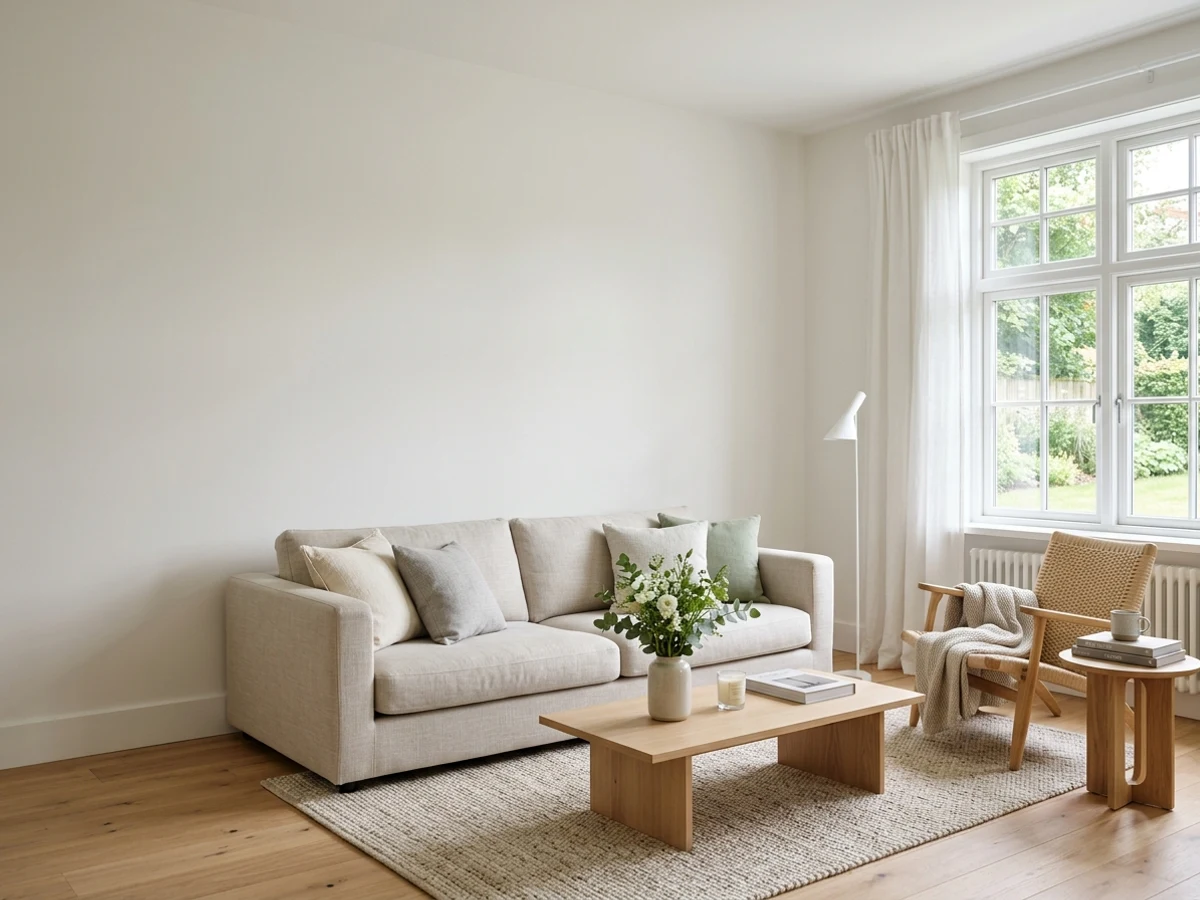
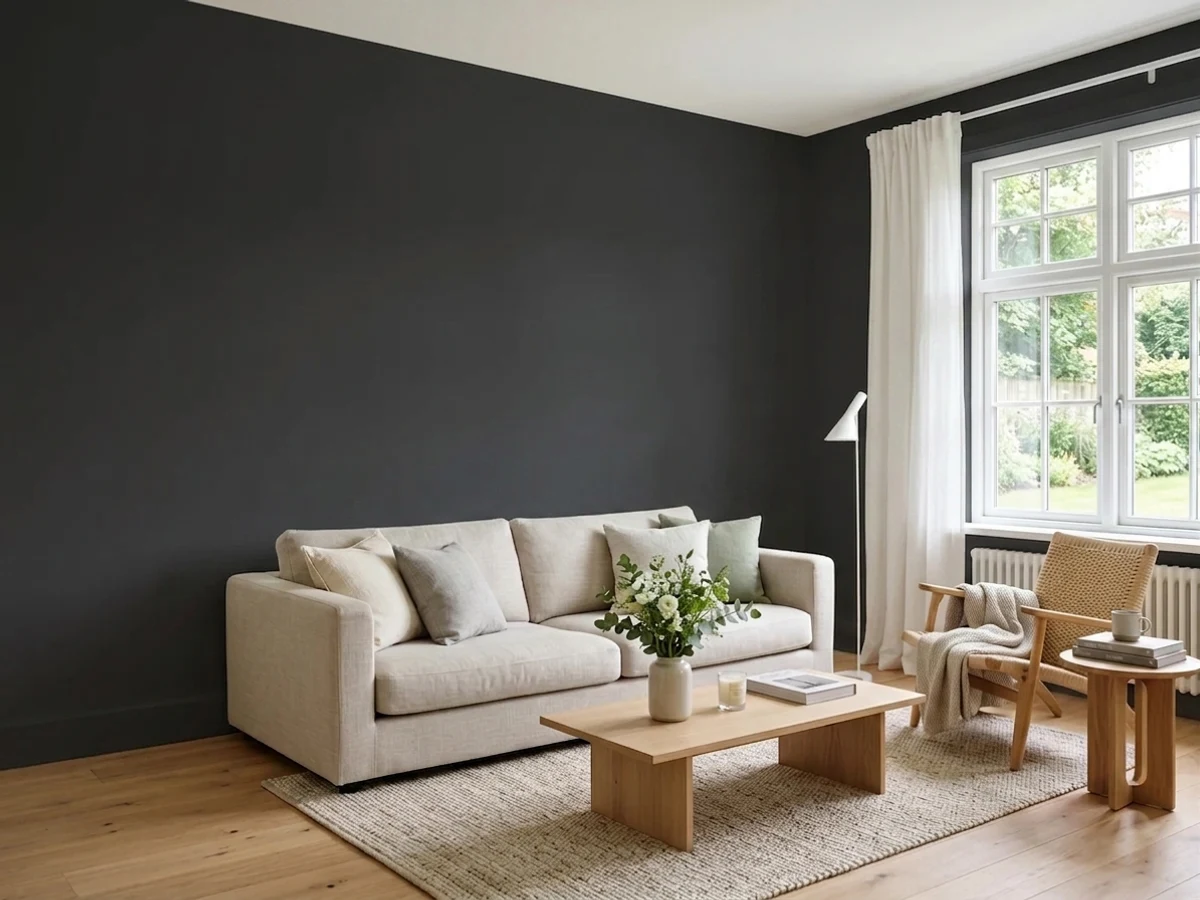
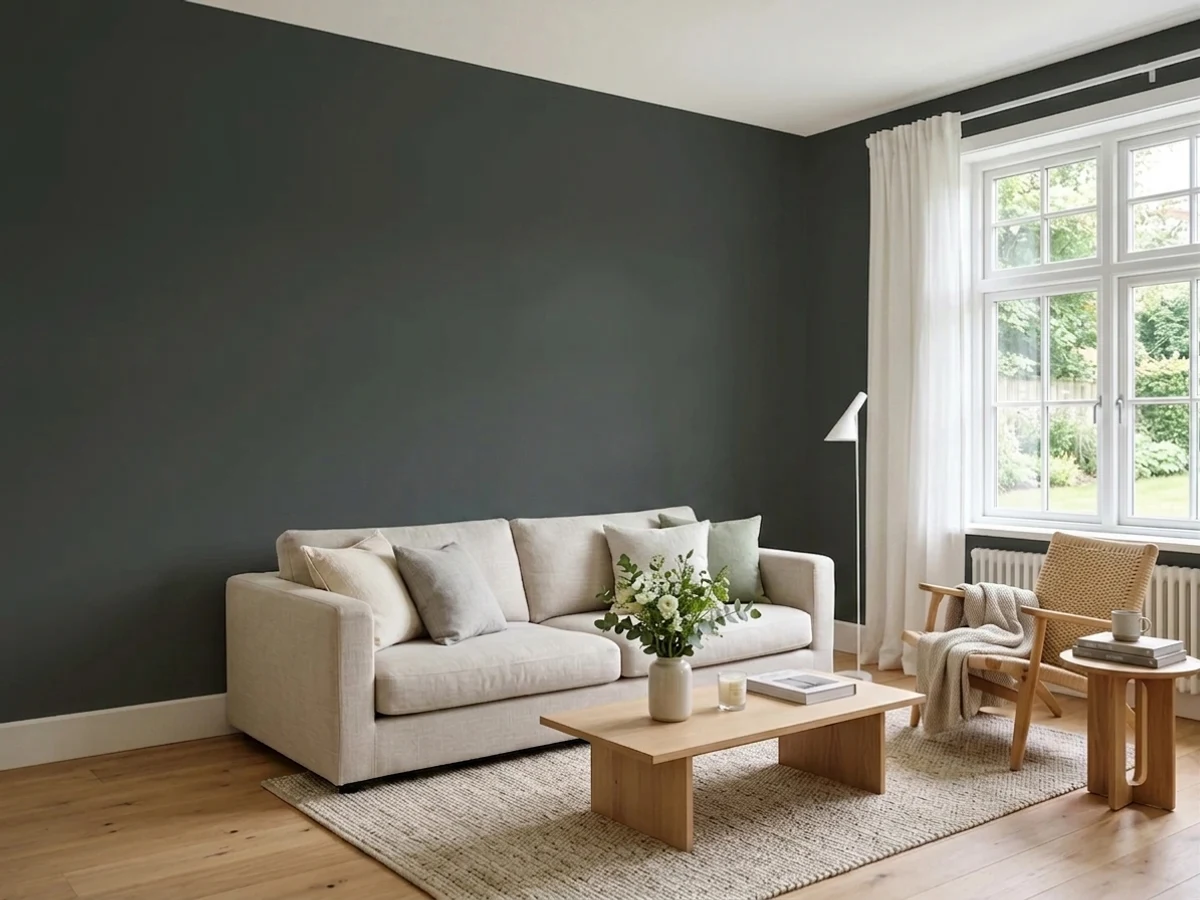
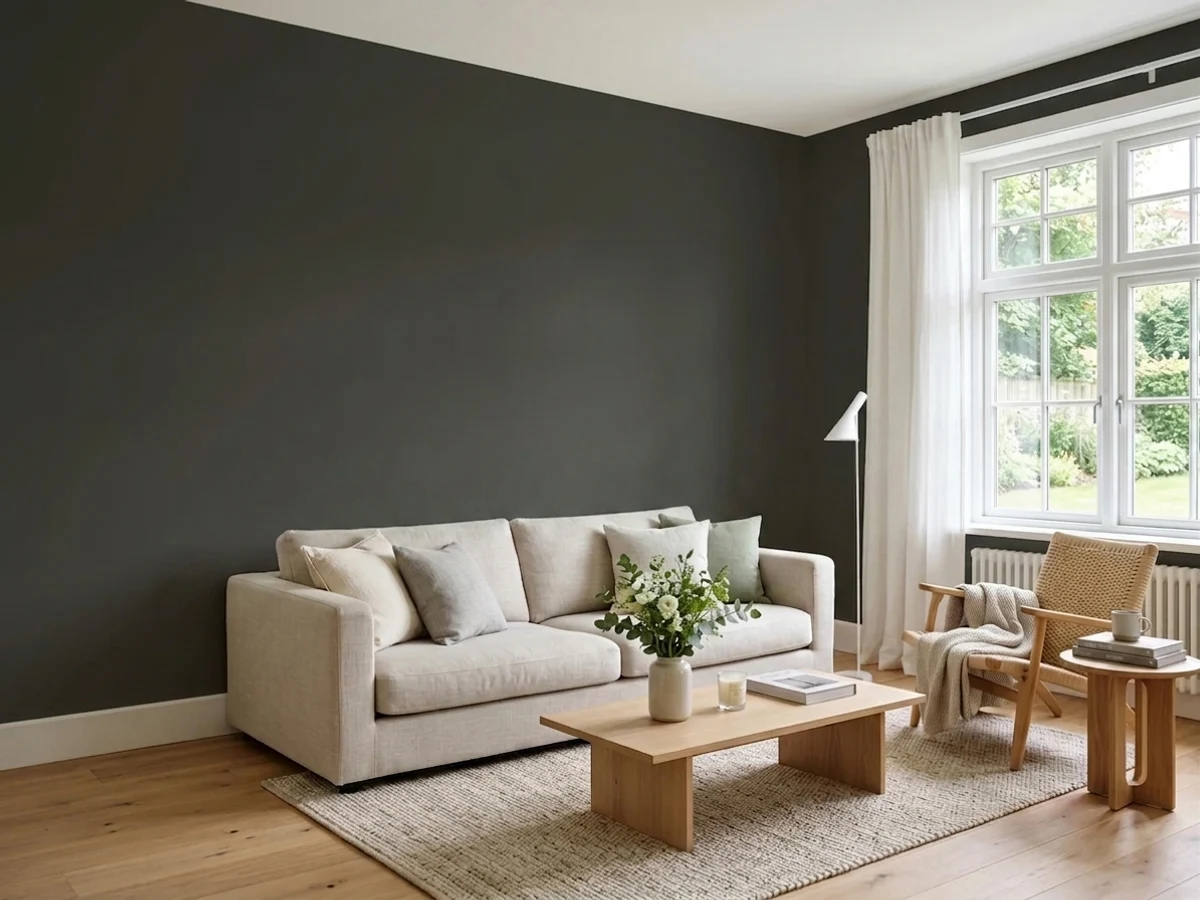
Tap a shade to see the black trim in it, then try it on your own room.
Black Trim Color Trends 2026 — What's In, What's Out


- Black Trim On Every Wall In The House — Painting all trim black throughout an entire house is starting to feel like an overused modern-farmhouse cliché rather than a deliberate design choice.
- Cool Jet-Black Trim — True, blue-leaning jet black trim is giving way to warmer soft blacks and charcoals that pair more naturally with warm wood tones.
- Black Trim Against Cool Gray Walls — The high-contrast black-trim-on-cool-gray-wall combo is starting to feel dated next to 2026's warmer, earthier wall palettes.
The 8 Best Black Trim Paint Colors
Every pick below is a real rendered black trim, not a chip. The lead color first; the swatches are the full scheme in the photo — walls, furniture, textiles, accent.

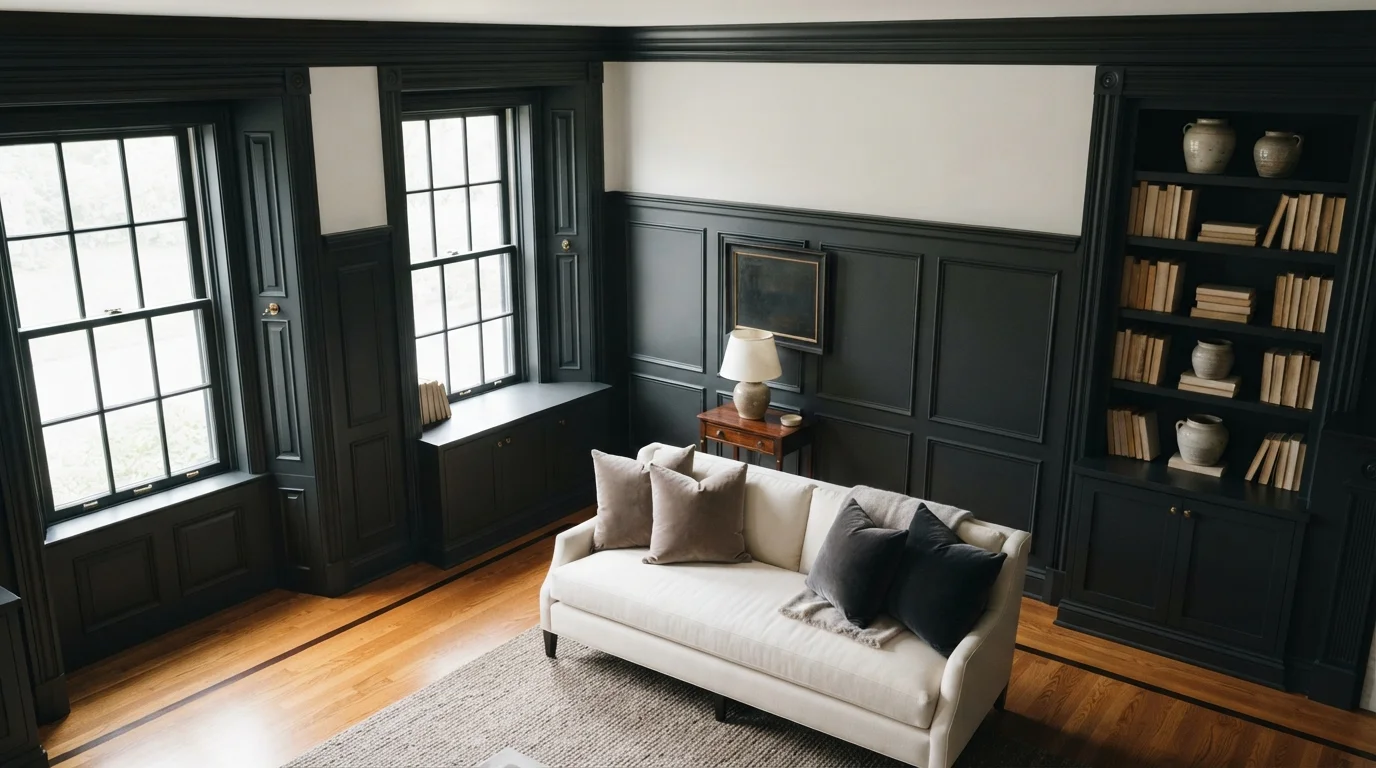
Rich charcoal black trim and creamy walls create a grounded, timeless atmosphere that feels effortlessly refined and cozy.
Charcoal black is a deep, velvety dark shade that adds instant sophistication. In this room, dark paint covers the ornate wainscoting, built-in shelving, and heavy crown molding, while upper walls shine in crisp off-white. The cream sofa and warm wood floors keep the space feeling cozy rather than cold. This combo works because the sharp contrast highlights the historic woodwork without making the room feel dark. It is perfect for anyone wanting classic architecture with a striking, modern twist.
SEE IT ON YOUR WALLS →
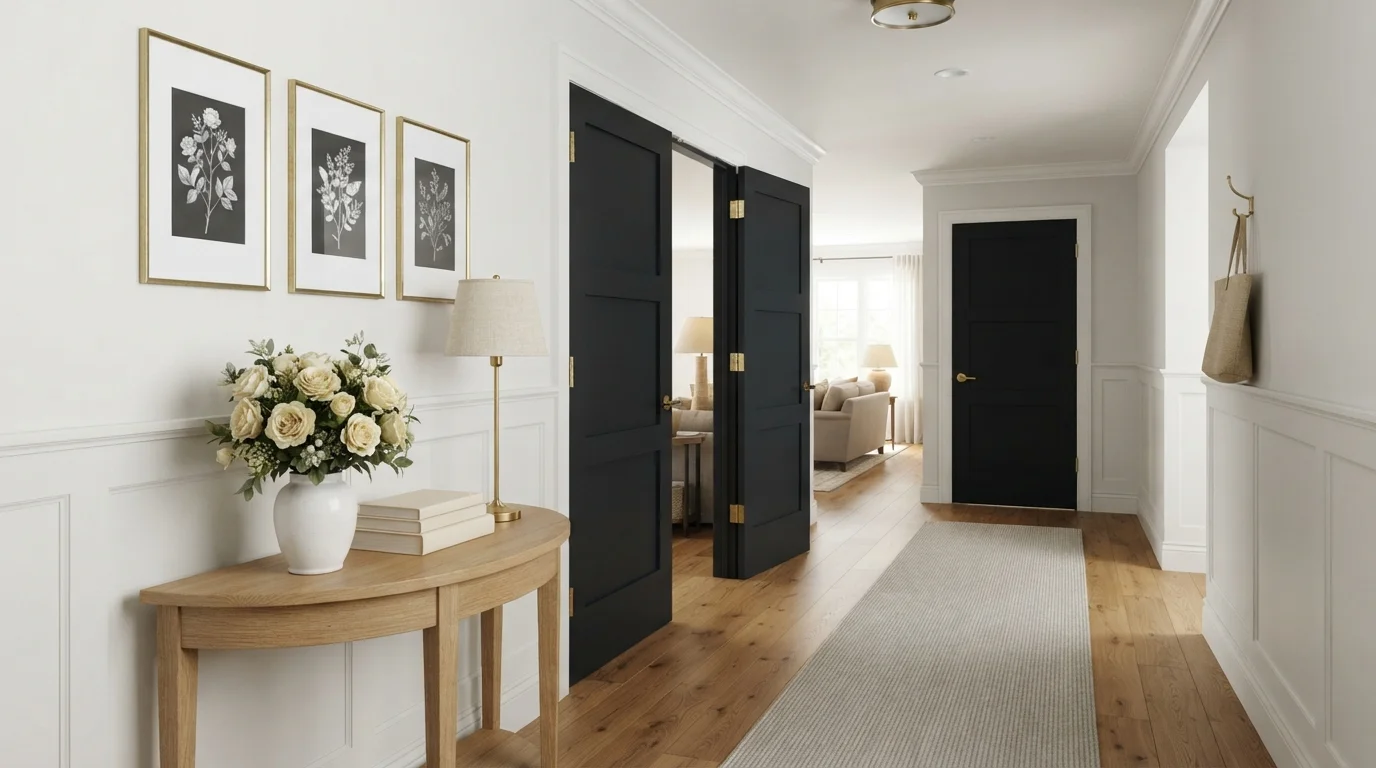
Crisp white hallway walls contrast sharply against dramatic matte black doors for a timeless, tailored architectural entrance.
Matte black is a deep, dramatic charcoal-black. In this hallway, crisp off-white coats the paneled walls, while velvety black wraps the interior doors and door frames, grounded by warm wood floors and a woven runner. The space feels polished, elegant, and instantly tailored. The combination works seamlessly because bright white walls bounce natural light around the room, keeping the dark woodwork from feeling heavy. It is a fantastic choice if you want to give everyday interior doors an upscale, custom look.
SEE HOCUS POCUS ON YOUR WALLS →
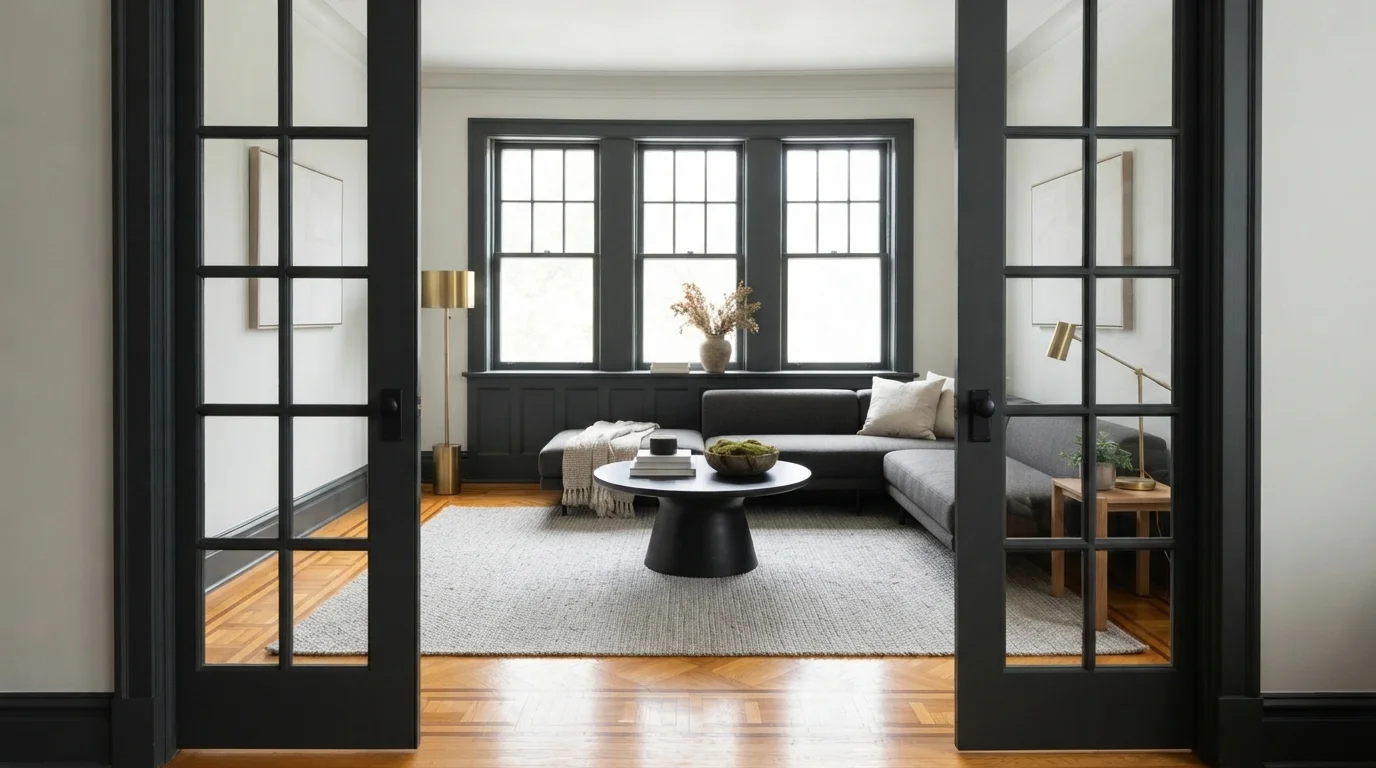
Crisp off-white walls framed by bold charcoal trim create an architectural, sophisticated living space bathed in daylight.
Charcoal is a deep, velvety slate black with subtle cool depth. In this room, bold charcoal covers the heavy crown molding, window trim, and double glass French doors, while the walls stay a soft, creamy white. A low charcoal sectional and matte black coffee table ground the space over warm parquet floors. The look feels sleek, grounded, and striking. Crisp light walls keep the room open, allowing the dark trim to outline the architecture like a picture frame. It is ideal for anyone who loves tailored, classic modern style.
SEE INKWELL ON YOUR WALLS →
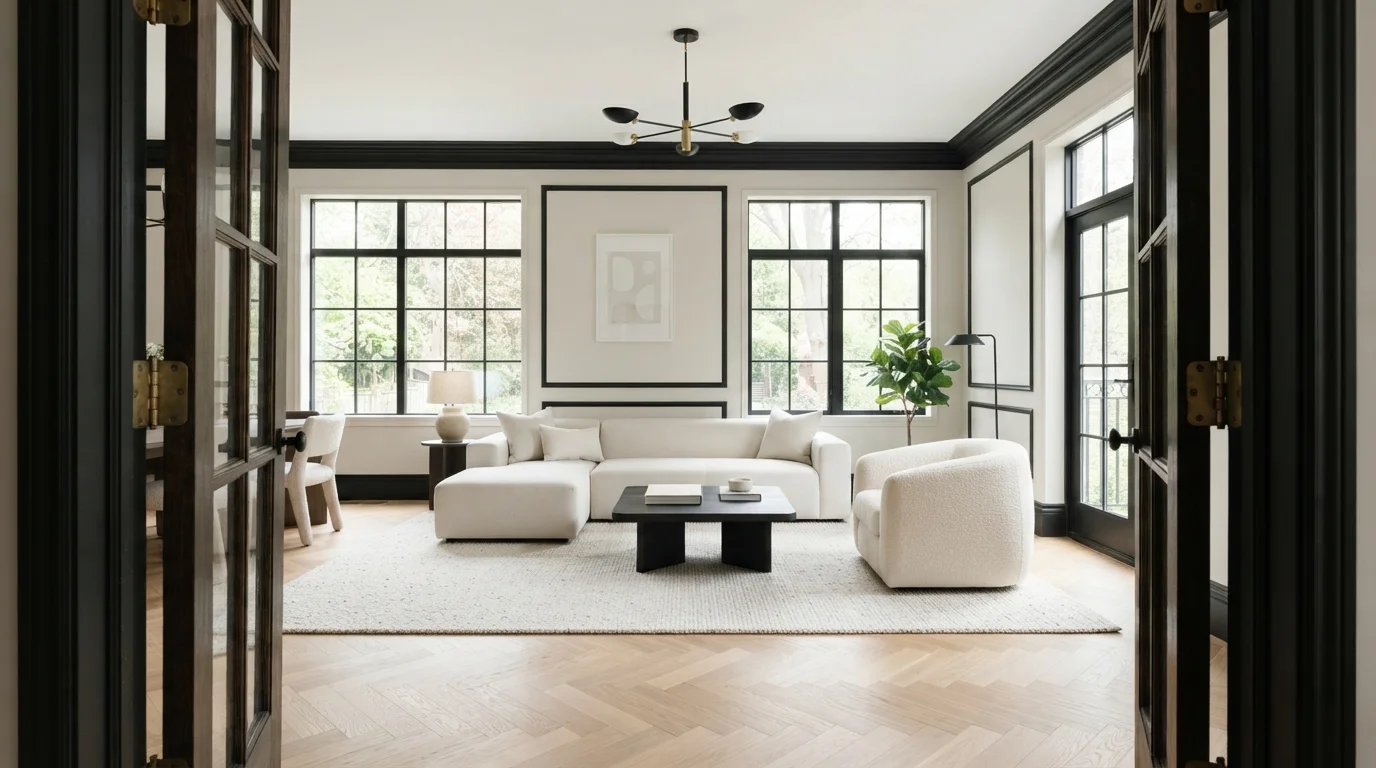
Crisp off-white walls and bold charcoal moldings create an elegant, gallery-like space filled with soft cream seating.
Charcoal black is a deep, dramatic near-black that adds instant architecture. In this room, bold dark paint frames the doorways, crown molding, and wall panels, while soft cream covers the walls and modular sectional. The space feels tailored, calm, and effortlessly high-end. This combination works because the sharp dark lines outline the room like tailored suit piping while the light walls keep everything airy. It is perfect for anyone who loves Parisian apartment elegance and timeless graphic style.
SEE FACTORY BLACK ON YOUR WALLS →

It creates a crisp, bold outline that makes your walls instantly pop.
SEE BLACK MAGIC ON YOUR WALLS →
Choose this soft black to frame your doors with relaxed, modern elegance.
SEE CAVIAR ON YOUR WALLS →
This deep black frames your doors and windows with a crisp, modern outline.
SEE BLACK ON YOUR WALLS →Black Trim Wall Color Combinations
A wall color never works alone. These are the full schemes from the rooms above — the lead color first, then the supporting colors that make the photo work.
Rich charcoal black trim and creamy walls create a grounded, timeless atmosphere that feels effortlessly refined and cozy.
TRY THIS PALETTE →Crisp white hallway walls contrast sharply against dramatic matte black doors for a timeless, tailored architectural entrance.
TRY THIS PALETTE →Crisp off-white walls framed by bold charcoal trim create an architectural, sophisticated living space bathed in daylight.
TRY THIS PALETTE →Crisp off-white walls and bold charcoal moldings create an elegant, gallery-like space filled with soft cream seating.
TRY THIS PALETTE →The classic pairing is black trim against a bright white or off-white wall — it's the highest-contrast option and the one most people mean when they picture black trim. Tricorn Black or Black (2132-10) against a crisp white wall gives you clean, architectural lines with zero ambiguity about where the trim ends and the wall begins. If that much contrast feels severe, move the wall color toward warm white or greige and keep the trim in one of the softer blacks like Off-Black or Railings — the drop in contrast makes the whole room feel calmer without losing the definition.
For wood tones, match the trim's undertone to the floor instead of fighting it. Black Fox and Black Mocha both carry warm, brown-leaning undertones that sit well next to oak, walnut, or other warm wood floors and doors, while a true cool black like Tricorn or Off-Black looks better with gray-toned or whitewashed floors. Railings, a favorite for baseboards specifically, works as a softer transitional pick when the walls are a mid-tone color rather than white — it holds its own as an accent without competing with a colored wall the way a stark black would.
More Trim Color Ideas
Set on a color family already? Each page has its own real rooms and picks.
Light or Dark Black Trim Colors?
Go Light (LRV 60+) If…
The room is small, faces north, or has to work at every hour. Light warm colors make it feel bigger and stay calm in evening light — the light you actually live in.
Go Dark (LRV Under 20) If…
You want the cocoon effect and the room has real daylight. Dark works best on one feature wall — or fully color-drenched in a large room with good windows.
Because trim is a thin, high-contrast surface, the LRV gap between your darkest and lightest option matters more here than it does on walls. Tricorn Black and Benjamin Moore Black both sit at LRV 3 — as dark as paint gets — and they photograph as true black in any light, which is why they're the go-to for a stark black-and-white look. Valspar's Dark Kettle Black (4011-2, LRV 4) is nearly as dark but has a touch more depth to it up close instead of reading flat.
The LRV 6–7 options — Wrought Iron, Railings, Black Fox, Black Mocha — are the better call in rooms with less natural light, because trim that dark can start to disappear into shadow at the LRV 3 range, especially on baseboards that get less direct light than doors and window casings. In a bright room with big windows, go as dark as you want; in a hallway, north-facing bedroom, or any room lit mostly by lamps at night, one of the softer charcoals keeps the trim readable as black without it turning into a black hole in the corners.
See It. Love It.
Paint It.
Upload one photo of your black trim and try every color on this page on your own walls — in your own light, before you buy a drop of paint.

Tricorn BlackBeforeSheen Matters More On Black Trim Than Any Other Color
Trim gets touched, kicked, and bumped more than any wall, and dark colors show every scuff and fingerprint under the wrong sheen. Semi-gloss is the standard choice for doors, casings, and baseboards because the harder finish resists scratches and wipes clean, and its extra reflectivity makes panel details and molding profiles pop — which is exactly what you want on trim that's meant to be noticed.
Satin is the alternative if you want the black to feel more like ink than lacquer. It has enough sheen to clean easily but scatters light instead of bouncing it, so it hides small dents and old wood grain better than semi-gloss does. It's become the more common pick for baseboards specifically, since baseboards take more scuffs from shoes and vacuums than door casings do. Whichever you choose, keep it consistent through the whole room — mixing satin doors with semi-gloss baseboards reads as an inconsistency, not a design choice.
Where Black Trim Works And Where It Doesn't
Black trim earns its keep on rooms with real millwork — paneled doors, deep window casings, crown molding, staircases. The color's whole job is to trace an outline, so the more outline there is to trace, the better it looks. A room with tall baseboards and substantial door casings will read dramatically different in black than the same room in white; a room with thin, flat, builder-grade trim won't get that payoff, because there's no profile for the black to catch shadow on.
It also depends on how much white or light wall you're giving it to frame. In a small room with low ceilings, a full black trim package on all four walls can visually shrink the room by darkening the edges. Restricting black to just the doors and windows, and leaving baseboards white or a lighter charcoal like Wrought Iron, is a common compromise that keeps the drama at eye level without weighing down the whole room.
Getting Clean Lines Between Black Trim And The Wall
Black against white or any light wall color is the least forgiving line in the house — any bleed or waviness shows immediately. Use a painter's tape rated for sharp edges and press it down firmly along the wall side before cutting in the trim color, then seal the tape edge with a thin coat of the wall's own color first so any seepage happens in a color that already matches, not in black.
Paint the trim in two coats regardless of how dark the color looks after one — LRV 3 and 4 colors like Tricorn Black or Dark Kettle Black often look opaque after a single coat but show streaking or the primer through in raking light once the room is fully lit. Let each coat cure fully before removing tape, and pull the tape at a low angle away from the wet edge to avoid tearing a ragged line into the black.
About Black Trim Paint Colors
Black trim works because it does the opposite of what trim usually does. White trim blends into the wall and quietly frames a room; black trim draws a hard line around every door, window, and baseboard and makes the architecture the point. A true black like Tricorn Black from Sherwin-Williams (LRV 3) gives you the sharpest possible outline, while Wrought Iron from Benjamin Moore (2124-10, LRV 6) or Off-Black from Farrow & Ball (No. 57, LRV 7) soften that outline into a deep charcoal that reads as black from across the room without going flat and matte-looking up close.
The trick with this combination is that trim color changes how a whole room reads, not just the millwork. Run Tricorn Black or Benjamin Moore's Black (2132-10, LRV 3) around doors and windows in an otherwise light room and you get crisp, gallery-style contrast — the walls stay bright, the trim carries all the drama. Switch to a warmer option like Black Fox from Sherwin-Williams (SW 7020, LRV 6) or Behr's Black Mocha (PPU24-01, LRV 6) and the trim reads more like espresso than ink, which pairs better with wood floors and warm-toned walls that would otherwise clash with a stone-cold black.
Black trim isn't a neutral, low-risk choice the way white trim is — it's a design decision, and it holds up best when the rest of the room has something to frame: real moldings, panel doors, a staircase, windows worth outlining. On flat, builder-grade trim with no profile, black just makes the lack of detail more obvious.

The Questions Everyone Asks
What color should I paint my black trim?
If you want one answer, start with the safe picks above — Tricorn Black, Black Magic, Caviar, Black. They read well in any light and survive furniture changes. Then check the light: strong afternoon sun wants a step cooler, a north-facing room wants a step warmer.
does black trim make a room look smaller
It can, but only if you use it everywhere. Black trim on every wall of a small, low-ceilinged room does visually shrink it by darkening the edges of the space. Restricting black to doors and windows, or choosing a softer charcoal like Wrought Iron (LRV 6) instead of true black like Tricorn Black (LRV 3), keeps the drama without the room feeling boxed in.
what sheen should I use for black trim
Semi-gloss is the standard for doors, casings, and baseboards — it resists scuffs and wipes clean, and its reflectivity makes molding details stand out. Satin is a common alternative if you want the black to look more matte and ink-like; it hides small dents better but shows fingerprints faster. Either works, but keep the sheen consistent across every piece of trim in the room.
does black trim go with white walls
Yes — it's the most common black-trim pairing and the highest-contrast option, especially with a true black like Tricorn Black or Benjamin Moore's Black (2132-10). If bright white against black feels too stark, warm the wall to an off-white or greige and pair it with a softer charcoal like Off-Black or Railings instead, which lowers the contrast without losing the outline.
should baseboards and doors be the same black
Usually yes, for consistency, but it's not a rule. Railings from Farrow & Ball (No. 31) is specifically popular as a baseboard color, and pairing it with a slightly different door color like Off-Black still reads as one cohesive black scheme since both sit close in value. What matters more than matching exactly is keeping the sheen the same across all the trim in one room.
is black trim a passing trend or worth the investment
Black and white trim combinations have been used in classic architecture for decades, so it isn't tied to a specific design trend the way an accent-wall color might be. It works with traditional millwork as easily as modern homes. The bigger consideration than trend risk is whether your trim has enough molding detail to show off — flat, thin trim gets less visual benefit from going black than deep casings or paneled doors do.
What two-color combination works best in a black trim?
The reliable pattern is a quiet main color plus one deep accent on a single wall. Keep trim and ceiling in one warm white so the two colors are the only event in the room — the combination cards above show complete schemes from real rooms.
What colors make a black trim look bigger?
High-LRV, slightly warm colors — LRV 60–75 is the sweet spot. Paint the walls and trim close to the same light color so the corners blur, and keep the ceiling white. Stark cool white actually works against you; it creates hard shadows that show the room's edges.


Ask a Question