Navajo White
Sherwin-Williams' deepest, yellowest cream reviewed honestly: the light where it glows, the 1990s reputation it can't quite shake, and what to pick instead.

Jessica has spec'd whites and neutrals for more than 300 rooms and keeps a sample wall of painted drawdowns in her studio. Every color review is checked against real reader rooms in the comments and re-tested when a formula changes. About the testing process →
- 1Agreeable Gray60
- 2Balboa Mist66
- 3Navajo White72
- 4Pearly White77
- 5Dover White83
The Fast Verdict
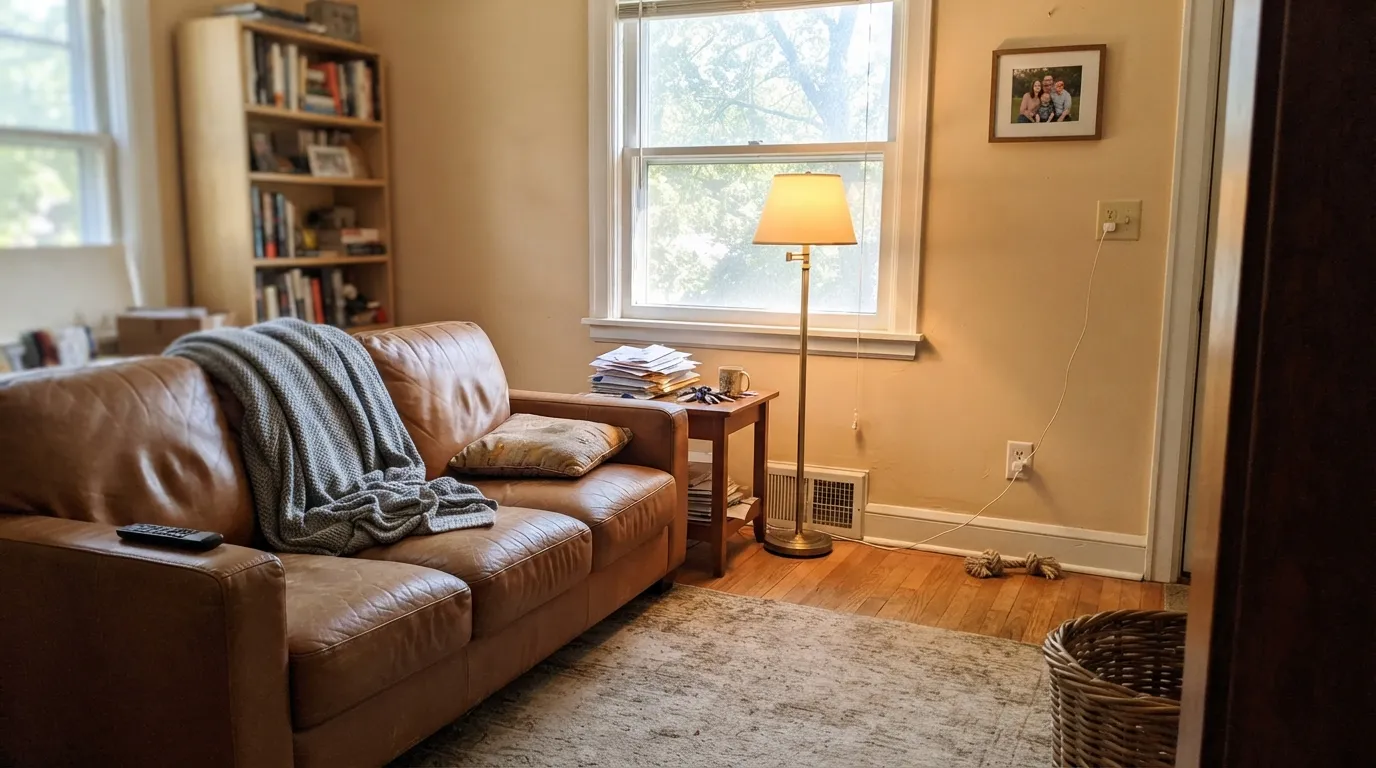
Navajo White is the cream Sherwin-Williams sold before "warm white" became a marketing term — a genuine peachy-yellow off-white that never pretends to be anything cooler. Give it south light, oak floors and brass and it looks rich and settled, the way a farmhouse looked before farmhouse became a look. Give it a dim north room or a cool countertop and it looks exactly like what people mean when they say a paint job feels dated. It is not the trend right now — Alabaster and Creamy get that job in 2026 — but if you actually want yellow warmth instead of a warm white that reads neutral, this is the honest, unfashionable answer.
South- or west-facing rooms with real daylight · oak, walnut and butcher-block wood tones · brass and copper hardware · classic farmhouse exteriors with black or dark trim · anyone who wants an unapologetically warm cream, not a trend-safe warm-white
Your room is north-facing or naturally dim · your counters or tile are cool grey or white quartz · you want the color to read as white, not cream · you're chasing the current warm-white trend (Creamy and Alabaster are the cooler picks designers reach for now)
- Genuinely, unapologetically warm — no cool bait-and-switch on the wall
- Flatters oak, walnut, butcher block and brass better than cooler whites
- Deep enough (LRV 72) to hide scuffs and handprints better than a bright white
- Classic pairing with black or dark bronze trim on a farmhouse exterior
- Reads instantly cozy — the anti-gray, anti-sterile choice
- Reads dated or "1990s" fast in a small, dim, or poorly lit room
- The peachy undertone tips toward orange in north or cool daylight
- Clashes with cool grey quartz, marble-look tile and chrome fixtures
- Overshadowed by cooler, trendier siblings (Alabaster, Creamy) that get recommended more often now
What Color Is Navajo White, Really?
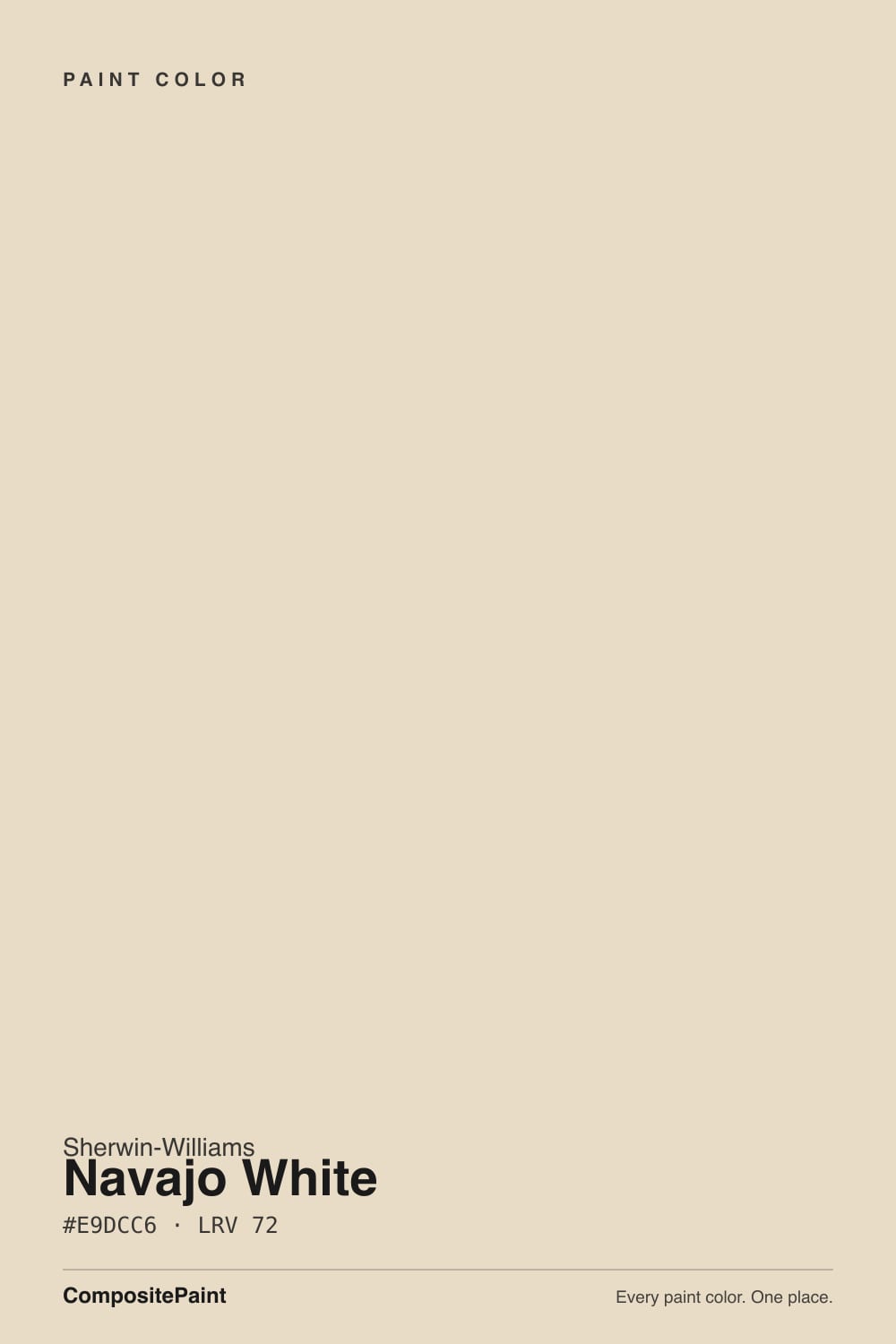
A yellow-beige cream with a distinct peachy cast — the deepest and most insistently warm of Sherwin-Williams' off-white family. Where colors like Alabaster and Creamy soften their warmth to stay flexible, Navajo White leans all the way in: it is closer to a true antique-white than to a "warm white that mostly reads neutral." That commitment is the whole personality. It has been in the SW deck for decades, long before anyone needed to distinguish "warm white" from "greige," and it still reads exactly like what a 1990s or early-2000s builder called a nice cream wall — because it is.
At LRV 72 it sits right at the edge between a soft white and a genuine cream: lighter than a beige, but noticeably deeper and yellower than Sherwin-Williams' Alabaster (LRV 85) or Creamy (LRV 81). It is nearly a twin of the brand's own Dover White (LRV 73) — the two are close enough that painters sometimes have to double-check the can. That places Navajo White among the deepest colors that still function as a wall-and-trim off-white rather than a committed beige.
Undertone in one line: yellow-beige with a peachy cast, never gray, never pink on its own terms. If your sample looks orange, that is cool daylight or a north exposure fighting the peach — not a paint defect. And a footnote worth knowing: Benjamin Moore also sells a color called Navajo White (BM 947, LRV 78) — a different, lighter, less yellow formula from a different company. Same name, two unrelated paints; don't assume a contractor's quote for "Navajo White" means this one.
Where It Shines
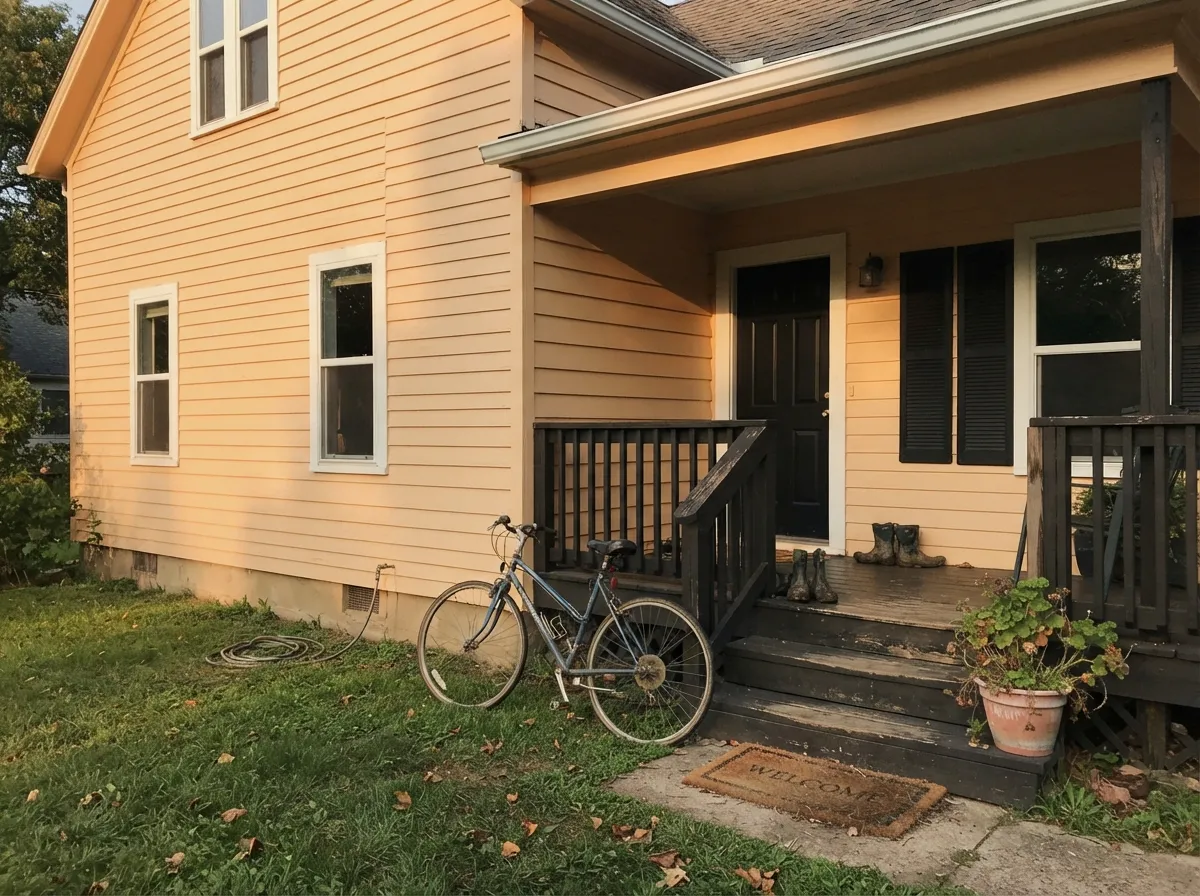
This is a color for rooms that get real sun and real wood. Under south or west daylight the peachy warmth glows rather than flashes orange, and next to oak floors, walnut furniture or brass hardware it looks settled and expensive instead of dated. Its other honest home is the exterior: on siding with black or dark bronze shutters and trim, Navajo White gives the classic warm-farmhouse look that cooler, trendier whites can't quite match — it simply has more yellow to give.
Where It Fails
Almost every complaint about Navajo White traces back to one of three predictable mismatches. None of them are the paint failing — they're the color being exactly as warm as it says it is, in a spot that needed something cooler.
Cool, indirect daylight strips out the softening warmth and leaves the peachy base exposed on its own — readers describe it as "orange" or a straight flashback to a 1990s builder cream. The paint didn't change; the light did. Test a large sample on the actual wall before committing a whole room.
Grey quartz, white marble-look tile and polished chrome sit at the opposite temperature and make Navajo White look dingy rather than warm by comparison. Either commit to warm materials (butcher block, brass, warm stone) around it, or pick a cooler off-white like Alabaster instead.
Yellow undertones amplify on large outdoor surfaces in full sun — homeowners who loved the chip often find the finished house reads distinctly golden. Paint a real test panel on the actual elevation, in the actual light, before ordering enough for the whole house.
Room by Room
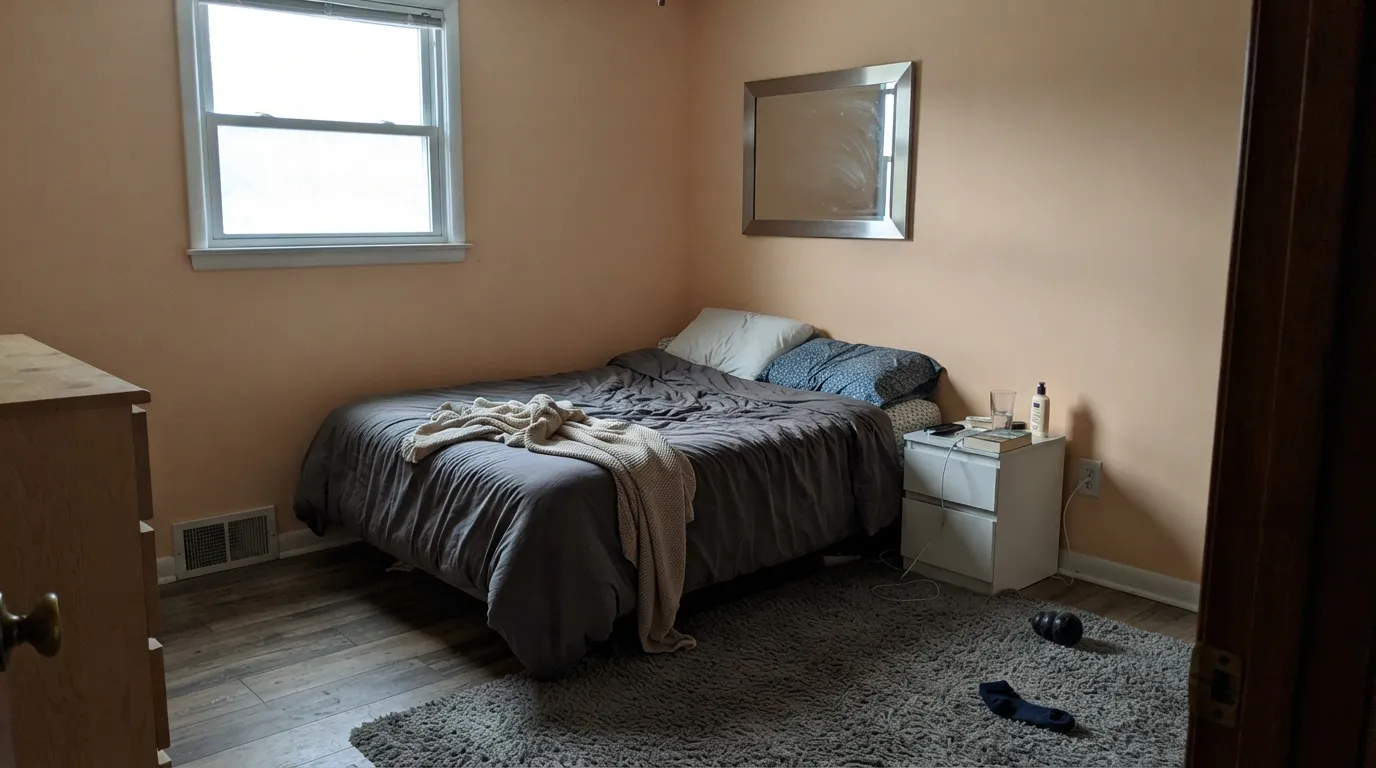
South or west exposure with wood furniture is where this color earns its keep: warm, settled, never sterile. In a dim or north room, step up to a lighter cream like Dover White before committing.
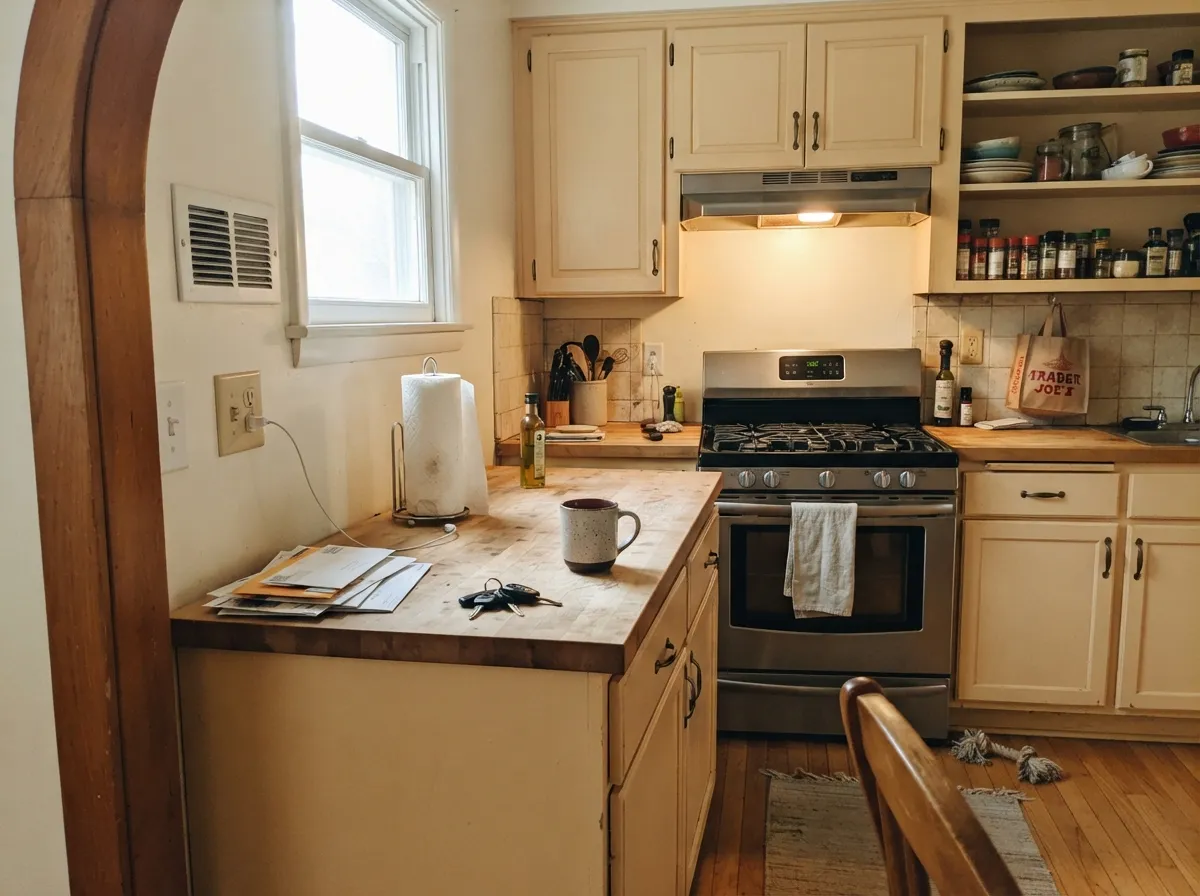
On cabinets or walls next to oak, walnut, butcher block and brass pulls it looks custom, not dated. Against cool white quartz or stainless it starts to look yellow rather than warm — check your countertop first.
Pairs beautifully with black or dark bronze shutters and trim for a traditional farmhouse read. Always test a large panel on the actual siding in real sun; the yellow reads stronger outdoors than the chip suggests.
Under 2700K bulbs it turns rich and buttery at night. A north-facing bedroom with cool LEDs and no lamps is the fastest way to end up disappointed by this color.
With warm stone, wood vanities and brass fixtures it's a genuine cream classic. With cool grey or white tile it argues with the room — pick Alabaster or Dover White instead.
It's too deep and too yellow to serve as the single bright ceiling-and-trim white in a daylight-heavy home; use it on walls or cabinets and let a lighter cream (Dover White, Alabaster) carry the trim if you want more contrast.
Your Light Is the Risk
Full daylight is where the peachy-cream reads warm and settled without tipping orange — this is the color you see on the chip.
Cool, indirect daylight strips the softening warmth and exposes the peach as something closer to orange. Test a big sample first.
Golden and rich at the sun hours, especially west-facing golden hour — the most yellow the color ever looks. Quieter the rest of the day.
2700K warm bulbs: rich and buttery, the cream deepens nicely. Cool 4000K+ LEDs: fights the undertone and can look muddy — use warm bulbs only.
Most complaints about Navajo White are a light mismatch. Upload a photo of your actual room and see it on your walls — then ask for the same wall in north light or evening lamps before you buy a single sample.
Need It From Another Brand?
Any paint counter can custom-tint Sherwin-Williams SW 6126 directly. If you would rather stay in one brand's own deck, these are the closest stock matches, measured as ΔE2000. Under 2 is a difference you will not see on the wall.
| Brand | Closest color | ΔE | LRV | |
|---|---|---|---|---|
| Behr | Authentic TanN290-2 · Behr | 0.4 | 73 | Color page → |
| Benjamin Moore | Lambskin1051 · Benjamin Moore | 0.7 | 73 | Color page → |
| Valspar | BubblyV090-1 · Valspar | 1.3 | 72.3 | Color page → |
| PPG / Glidden | Heavy CreamPPG1098-2 · PPG / Glidden | 1.9 | 73 | Color page → |
| Glidden | Heavy CreamPPG1098-2 · Glidden | 1.2 | 73 | Color page → |
| Dutch Boy | Antique White011W · Dutch Boy | 0.5 | 72 | Color page → |
Similar Sherwin-Williams Colors
The nearest shades to Navajo White within Sherwin-Williams's own range, ranked by perceptual color distance — useful when you want the same look a touch lighter, darker, or warmer.
WCAG 2.1: AA is 4.5 : 1 for normal text, 3 : 1 for large text, AAA is 7 : 1.
Navajo White vs the Colors You're Also Considering
Every Navajo White sample board has the same rivals on it. The numbers show the real lightness gap — then it comes down to which risk you would rather live with.
Pick this if you're set on the longer-running, more insistently yellow original.
Sherwin-Williams SW 6385 · LRV 73Dover WhitePick this if you want almost exactly this depth of cream under Sherwin-Williams' newer name — the two sit close enough on the chip rack that painters double-check the can.
Pick this if you want real yellow warmth — Alabaster can look flat and pale next to heavy wood trim.
Sherwin-Williams SW 7008 · LRV 82AlabasterPick this for the cooler, lighter, trend-forward warm white designers reach for over Navajo White right now.
Pick this if you want it deeper and more saturated — Creamy is airier and can read pale next to heavy wood.
Sherwin-Williams SW 7012 · LRV 81CreamyPick this for a lighter cream with the same yellow-forward warmth, without the dated reputation to shake.
Pick this for the deeper, more insistently yellow original — always confirm which brand's can a contractor means.
Benjamin Moore 947 · LRV 78Navajo WhitePick this if your painter or store only stocks Benjamin Moore — same name, different company, noticeably lighter and less yellow. Never assume the two match.
Antique White SW 6119, at #E8DCC6 and LRV 72, is one hex step away and is effectively the same color on a wall. Biscuit SW 6112, at #EBDDCB and LRV 74, is slightly lighter and pinker. Polar Bear SW 7564, at #E8DFCA and LRV 74, is lighter with a touch less yellow, which makes it read a little cleaner. Warm Beige SW 35, at #EEDAC3 and LRV 73, is more peach.
Across brands, HGTV Home by Sherwin-Williams Navajo White HGSW 4046 carries the identical hex. Diamond Vogel Yellow Page 0286, Dutch Boy Antique White 011W, and Benjamin Moore Lambskin 1051 at LRV 73 are all true matches at a deltaE under 1. Dunn-Edwards Cream Wave DE6198 is also a true match on hex, though its published LRV of 67 is lower, so sample it rather than trusting the number. Behr Writers Parchment N280-2 and Valspar Bubbly V090-1 are visually identical in normal room light. Clare Greenish PNT100-LT-68 at LRV 72 is close but visibly different side by side.
Navajo White Coordinating Colors
The rule for coordinating with Navajo White: stay warm, and let dark accents carry their own warm undertone too. It flatters warm greiges, dark warm blacks and bronzes, and other members of the SW warm-neutral family — and it argues with cool greys and anything blue-based. These are the partners that keep it looking intentional rather than dated:
The Two Navajo Whites (And Why the Name Confuses Everyone)
Sherwin-Williams and Benjamin Moore each sell a paint called "Navajo White," and they are not the same color — a genuinely common source of confusion at the paint counter. Sherwin-Williams' version (SW 6126) is the deeper, more insistently yellow of the two at LRV 72. Benjamin Moore's Navajo White (BM 947) sits at LRV 78, lighter and less committed to the peach.
Neither company invented the phrase — "navajo white" is also a named web/CSS color, part of why the name shows up so often as a generic descriptor for a warm cream rather than a specific product. If a contractor's estimate, a listing photo caption, or an online forum mentions "Navajo White" without a brand, treat it as a color family, not a single can, and confirm the SKU before matching paint.
Navajo White With Wood Tones and Floors
Warm wood is this color's best friend. Oak, walnut, cherry and butcher block all sit comfortably against Navajo White because their warmth meets its warmth halfway — nothing has to fight for temperature. It's especially forgiving of orange-leaning builder oak, since the wall's own yellow keeps the floor from looking like the odd one out.
The flooring that needs a sample first is anything cool: grey-washed wood, cool LVP, or a floor with a strong grey undertone. Against those, Navajo White's warmth stands out in a way that can read as a mismatch rather than a pairing — the paint looks yellow instead of warm. Test a large sample above the actual floor in the room's real light before committing to the whole space.
Three Ready Palettes Built on Navajo White
A color is never alone on the wall. These are complete combinations in the 60-30-10 pattern, with the reason each one holds together. Every one opens in the visualizer.
Warm cream siding with black shutters is the classic farmhouse move that cooler, trendier whites can't quite deliver. Accessible Beige grounds the base in the same warm family instead of introducing a second, competing cream.
Try this palette in your roomTwo whites a half-step apart give the cabinets depth against the walls without a jarring line. Urbane Bronze's own warm undertone means it won't fight the cream's yellow the way a cool black island would.
Try this palette in your roomAccessible Beige and Navajo White share the same warm base, so the trim doesn't fight the walls the way a cooler white would. Black Fox's warm undertone keeps the whole scheme in one family front to back instead of introducing a cold accent.
Try this palette in your roomNavajo White FAQ
Is Navajo White warm or cool?
Warm — genuinely and deeply so. It's a yellow-beige cream with a peachy cast, one of the most committed warm colors in the Sherwin-Williams off-white lineup. It never reads neutral the way Alabaster or Creamy can; it's meant to look like cream, not a warm-adjacent white.
Is Sherwin-Williams Navajo White the same as Benjamin Moore Navajo White?
No — despite the identical name, they're different formulas from different companies. Benjamin Moore's Navajo White (BM 947, LRV 78) is noticeably lighter and less yellow than Sherwin-Williams' version (SW 6126, LRV 72). If a contractor or paint store quotes "Navajo White," confirm which brand's can they mean before buying.
Will Navajo White look dated?
It can, and that reputation is earned — it's the exact cream a lot of 1990s and early-2000s builders used, and in a small, dim room it can still read that way. In a bright, wood-heavy room with brass hardware it looks intentional and settled rather than dated. It's an honest, unfashionable choice right now, not a trend pick.
Is it good for kitchen cabinets?
Yes, if the rest of the kitchen is warm — wood, brass, butcher block. It looks custom and settled there. Against cool white quartz, stainless steel or chrome, it starts to look yellow instead of warm; sample it against your actual countertop first.
Does it work on exteriors?
Yes, and it's a classic pairing with black or dark bronze shutters and trim for a traditional farmhouse look. Test a large panel on the actual siding in real sun before ordering — the yellow reads noticeably stronger outdoors and at full-house scale than it does on a small chip.
What white goes with Navajo White for trim?
A lighter cream in the same family — Dover White or Alabaster both work, and neither will clash the way a stark, cool white can. If you want contrast instead of a soft handoff, go darker with a warm black like Black Fox rather than brighter.
Have you painted with Navajo White?
Rate it — one tap helps the next reader decide.
Ask a Question