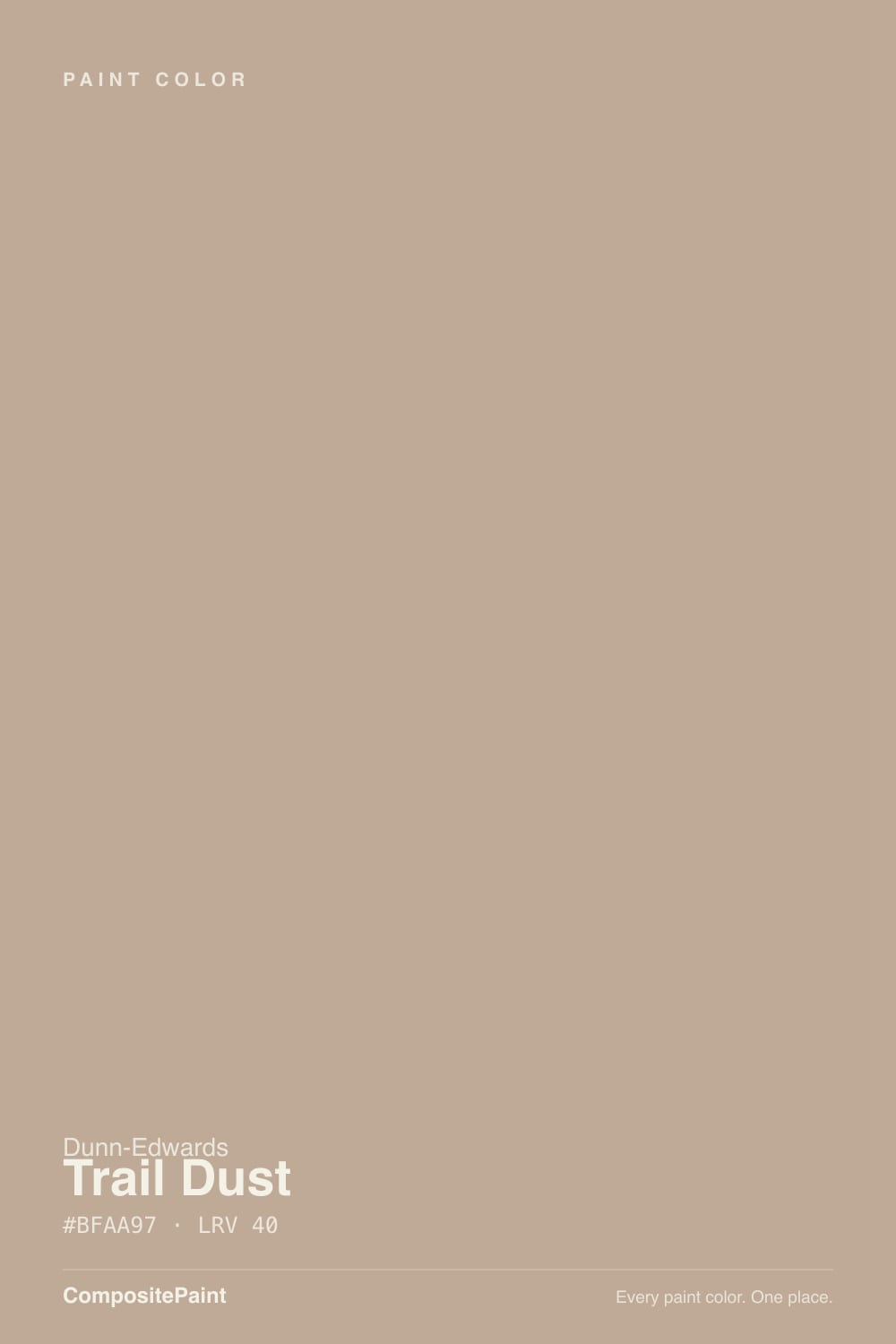
Trail Dust
A dusty midtone beige with a red-yellow pulse, reviewed honestly: why Southwest HOAs already picked it, the rooms where it goes muddy, and what to pick instead.

Jessica has spec'd whites and neutrals for more than 300 rooms and keeps a sample wall of painted drawdowns in her studio. Every color review is checked against real reader rooms in the comments and re-tested when a formula changes. About the testing process →
- 1Anonymous20
- 2Felted Wool28
- 3Trail Dust40
- 4Agreeable Gray60
- 5Pale Oak69
The Fast Verdict
Trail Dust is a warm, dusty midtone beige with a touch of red — not greige, not builder-light, and not a color that went viral. Dunn-Edwards files it in Warm Neutrals; Arizona HOA decks already voted by putting it on stucco. At LRV 40 it is a real wall color, a stop darker than the beige most people think they sampled. Give it desert sun and wood and it reads as dirt-road tan in the best way. Give it a dim north room and it reads as dirty beige in the worst way.
Southwest stucco body color · sunlit living rooms and bedrooms · wood floors, leather, brass · anyone who wants beige, not greige
You wanted a light beige · dim north rooms and cool LEDs · cool gray marble and chrome · your painter cannot get Dunn-Edwards
- Real beige with a dusty red-yellow pulse — not greige in disguise
- Holds in harsh Southwest sun instead of blowing out to bone
- Already proven as a stucco body color in Arizona HOA decks
- Flatters oak, walnut, leather, and brass without fighting them
- Deep enough at LRV 40 to hide the dirt a pale tan would show
- Darker and dustier on four walls than the chip ever suggested
- Cool north light and cool LEDs leave a dirty taupe-brown
- The red flash reads peach against gray stone, chrome, and brick
- Dunn-Edwards is a Western brand — hard to buy or color-match casually in the East
What Color Is Trail Dust, Really?
A warm midtone beige with a touch of red, filed in Dunn-Edwards' Warm Neutrals. The red is quiet — Munsell 8.48YR at chroma 2.0, so this is dusty tan, not pumpkin and not pink on purpose — but it is the reason the color can flash peach in west sun and look a little rosier under 2700K lamps. It is beige first. People hunting for gray will be disappointed, and that is useful information before the gallon, not after.
At LRV 40 it is not a light beige. Accessible Beige sits at 58, Kilim Beige at 57, Balanced Beige at 47; Trail Dust is in Mega Greige depth territory. The chip looks friendly. Four walls eat a stop of light. Outdoors that depth is the point — pale tan blows out to bone under Phoenix sun. Indoors, if you sampled a fan-deck chip in a store bay and skipped a large board on the actual wall, the finished room will feel duskier than you budgeted for.
Undertone in one line: dusty yellow-red — never gray, never green. If the sample goes peach, that is west sun or warm bulbs pulling the red. If it goes dirty taupe-brown, your light is cool. Both versions are the same paint telling the truth about the room.
Where It Shines
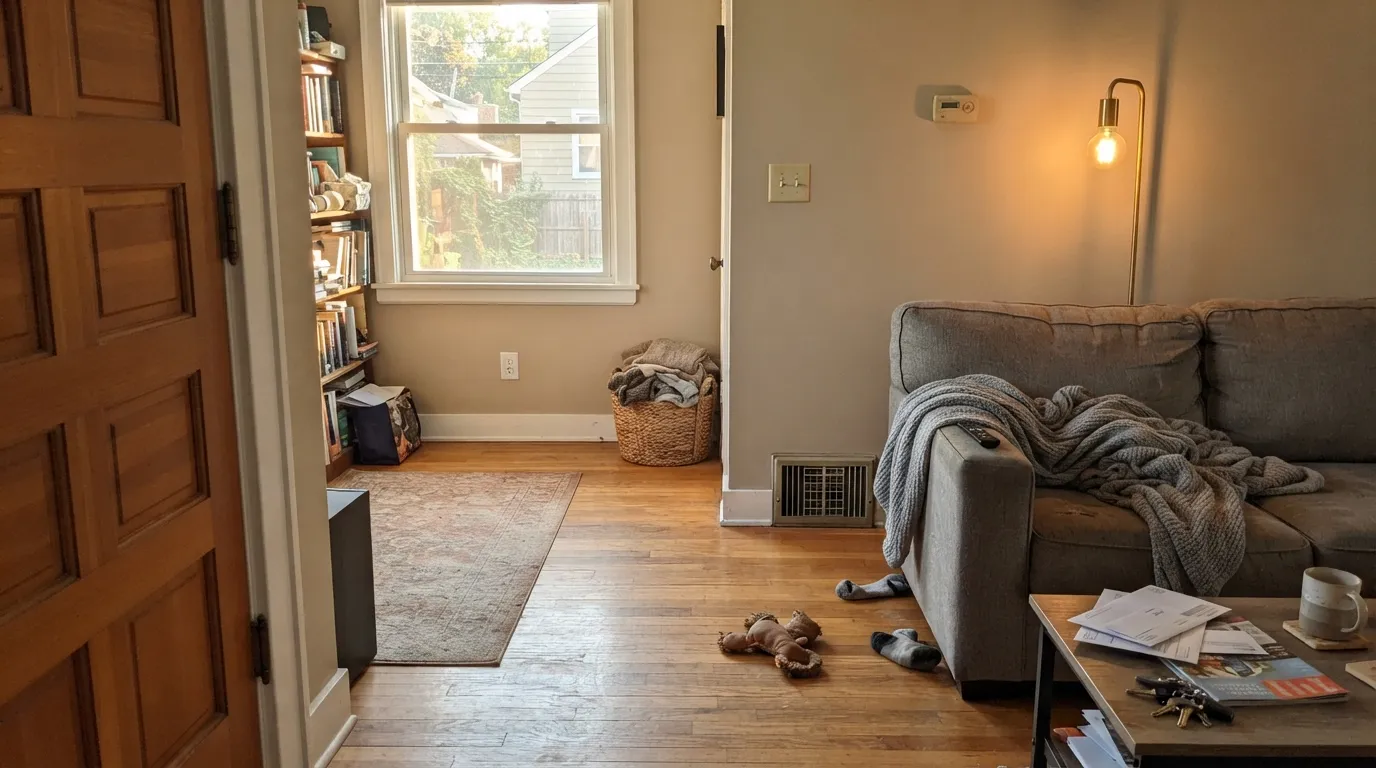
This color's real job is Western stucco. Harsh daylight is what it was mixed for: low chroma so it does not go neon, enough warmth so it does not go concrete, enough depth so it still reads as a color at noon. Inside, the same rules apply at smaller scale — south or west light, oak or walnut, linen, leather, unlacquered brass. Organic materials are not a mood board here; they are the company that does not fight the yellow-red.
Where It Fails
Almost every miss with Trail Dust is a depth miss or a temperature miss. The chip is friendly. The wall is not. If your room matches one of these, a bigger sample will only confirm it — pick something lighter or cooler before the first coat.
LRV 40 is a midtone. On four interior walls the dusty tan takes over and the room loses brightness the chip never warned you about. If you came in wanting a whole-house beige that stays airy, this is too much color and too little light. Step up to Accessible Beige (LRV 58) or Kilim Beige (LRV 57) and keep the warmth without the cave.
Cool gray daylight strips the yellow-red and leaves a dirty taupe-brown — the beige is gone, the dust is all that is left. Cool-white bulbs do the same after dark. Trail Dust needs warm light to stay tan. If the room is north-facing, dim, and you will not add 2700K lamps, this is not your beige.
Dunn-Edwards' own Color-Ark notes say not to use it on brick — body and trim only — and that advice holds. Cool gray marble, chrome, and true-gray walls push the red so the beige reads peachy and a little dirty. Pair it with warm whites, wood, and brass, or pick a greige that can sit next to gray stone.
Room by Room
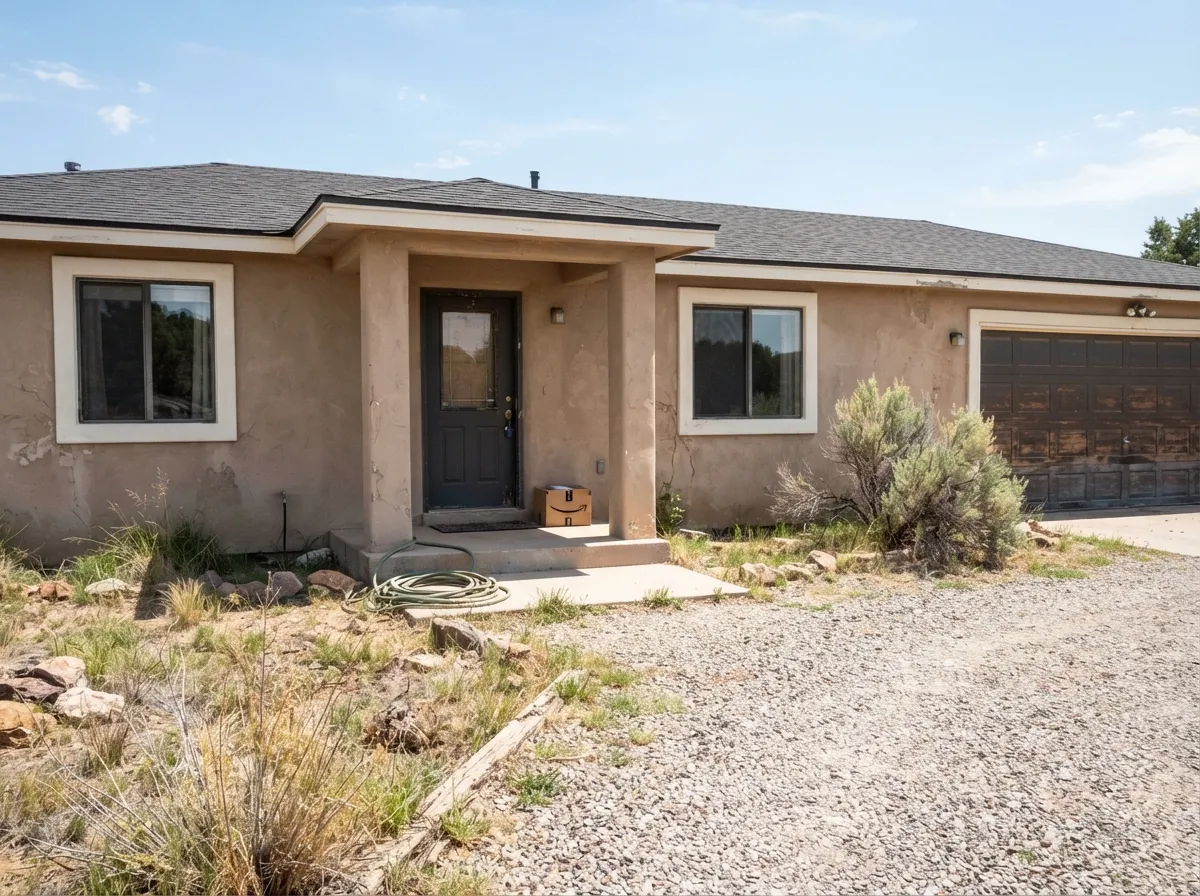
This is where Trail Dust earns the name. Arizona and Southern California HOA decks keep listing it as a body color because desert sun does not wash it to bone and does not turn it orange. Flat or velvet on stucco; a soft white on trim; a near-black door so the house has a face. Do not put it on brick.
South or west light keeps it a dusty tan instead of a muddy one. Oak floors, a worn sofa, brass lamp light — this is the interior it was built to sit in. Eggshell; same-family warm white on trim. Open to a cool-gray kitchen and the red will start an argument.
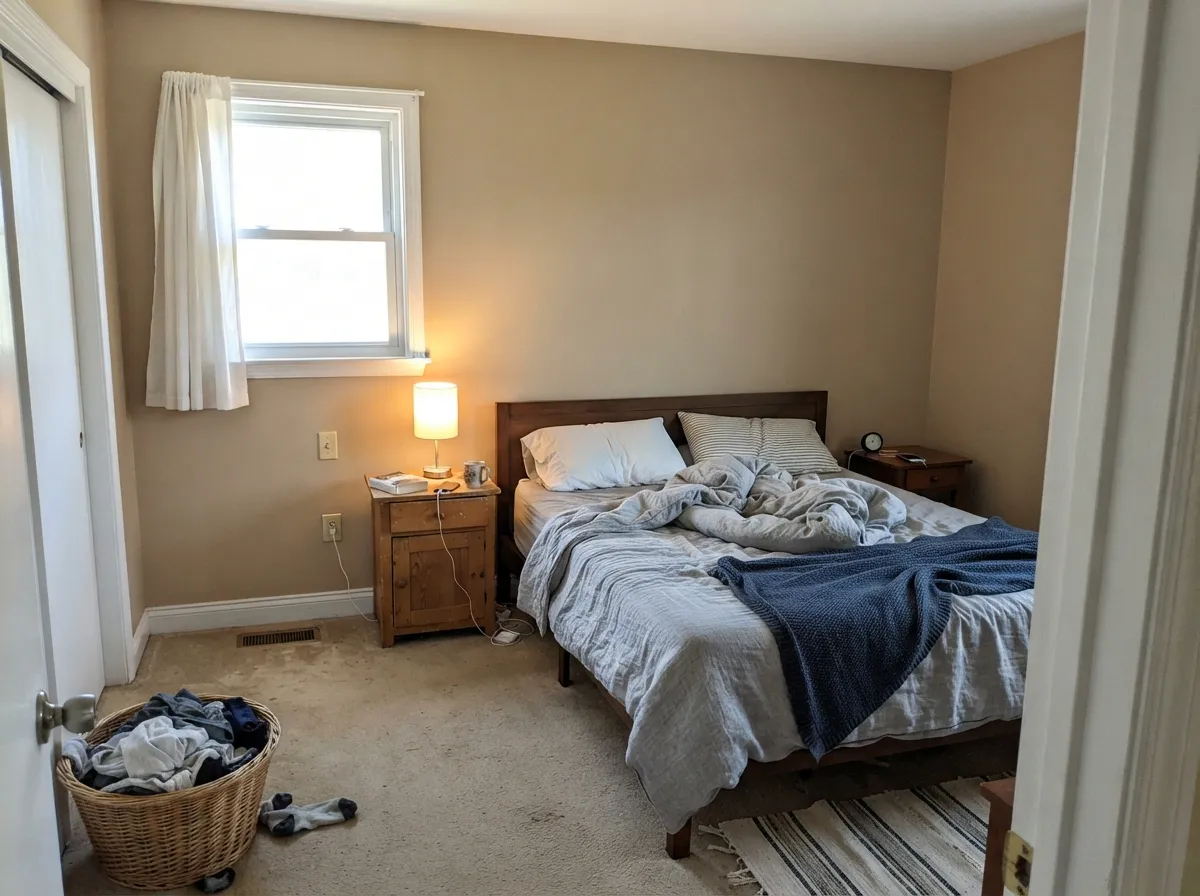
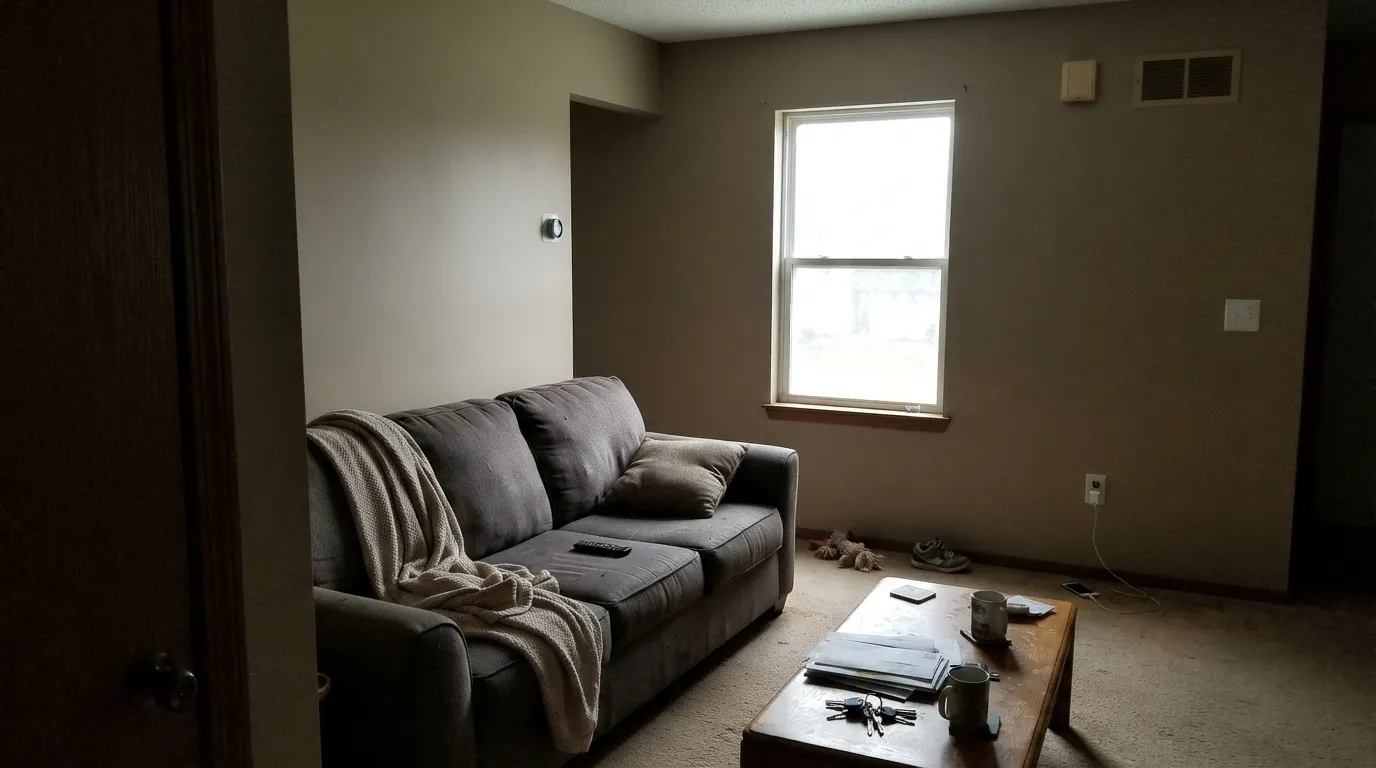
In a sunlit bedroom it is restful, like a dirt road at dusk, not like a nursery beige. Matte or eggshell; White Dove trim. A north bedroom with one window will go drab — sample on that wall at 7am and 7pm before you commit.
Walnut or oak tables, linen chairs, a warm chandelier: the yellow-red looks intentional instead of leftover-builder. These rooms often have mixed light, which is fine as long as the bulbs are warm. Skip it if the only light is a cool recessed grid.
At LRV 40 it hides the scuffs a pale beige would broadcast and does not glare on camera. Best in a room with a real window. Cool monitor light plus cool overheads will gray it out — swap the bulbs, not the paint.
Dusty tan on every kitchen wall can feel closed-in, especially with typical recessed LEDs. A better use is an island or a hutch under a lighter warm white, or skip interior walls and keep this color on the stucco outside. Satin if it lands on cabinets.
Your Light Is the Risk
The dusty tan stays clean and warm. This is the light the color was mixed for — stucco at noon, a south living room all afternoon.
Cool gray daylight strips the yellow-red. What is left is a dirty taupe-brown that looks like the beige failed, not like the light did.
Morning is the honest dusty tan. West afternoon pulls the red so it can flash peach for an hour. Sample at 5pm, not just at noon.
2700K bulbs keep it beige and a little rosier. Cool white LEDs gray it into dirty brown — swap the bulbs before you blame the gallon.
Most complaints about Trail Dust are a light mismatch. Upload a photo of your actual room and see it on your walls — then ask for the same wall in north light or evening lamps before you buy a single sample.
Need It From Another Brand?
Any paint counter can custom-tint Dunn-Edwards DE6123 directly. If you would rather stay in one brand's own deck, these are the closest stock matches, measured as ΔE2000. Under 2 is a difference you will not see on the wall.
| Brand | Closest color | ΔE | LRV | |
|---|---|---|---|---|
| Sherwin-Williams | PorticoSW 7548 · Sherwin-Williams | 3.1 | 42 | Color page → |
| Behr | Fall MoodPWL-87 · Behr | 1.3 | 43 | Color page → |
| Benjamin Moore | PensiveAF-140 · Benjamin Moore | 1.5 | 42 | Color page → |
| Valspar | Ivory Brown6006-1C · Valspar | 3.1 | 42.2 | Color page → |
| PPG / Glidden | NotoriousPPG1074-4 · PPG / Glidden | 1.3 | 41 | Color page → |
| Glidden | NotoriousPPG1074-4 · Glidden | 0.8 | 41 | Color page → |
Similar Dunn-Edwards Colors
The nearest shades to Trail Dust within Dunn-Edwards's own range, ranked by perceptual color distance — useful when you want the same look a touch lighter, darker, or warmer.
WCAG 2.1: AA is 4.5 : 1 for normal text, 3 : 1 for large text, AAA is 7 : 1.
Trail Dust vs the Colors You're Also Considering
Every Trail Dust sample board has the same rivals on it. The numbers show the real lightness gap — then it comes down to which risk you would rather live with.
Pick this when you need the deeper dusty tan, especially on stucco that has to hold in full sun.
Sherwin-Williams SW 7037 · LRV 47Balanced BeigePick this if your painter is Sherwin-Williams and you want the same real-beige idea a step lighter — LRV 47 keeps more daylight in the room.
Pick this when light beige reads too pale and you actually want a midtone tan with some dust in it.
Sherwin-Williams SW 7036 · LRV 58Accessible BeigePick this if you want the safer whole-house beige — lighter, still warm, and much less likely to make a room feel duskier than you planned.
Pick this when the oak is walnut or medium, and you want the dirt-road version, not the sunnier one.
Sherwin-Williams SW 6106 · LRV 57Kilim BeigePick this if the floors are honey oak and you truly want beige — Kilim is the lighter one that flatters the gold instead of stacking dust on it.
Pick this when you want beige, not greige: Trail Dust stays yellow-red instead of sliding toward taupe-gray.
Sherwin-Williams SW 7031 · LRV 37Mega GreigePick this if you want the same outdoor-body job with more gray and less tan — Mega Greige was built for the outside of the house.
Trail Dust Coordinating Colors
The rule is warm whites, a slightly lighter beige for adjacent rooms, and one near-black for a door — keep cool gray and chrome at arm's length. These are the partners that keep the dusty tan looking deliberate:
A Spec Color, Not a Famous One
Trail Dust is not a Color of the Year and it does not have a pile of interior blog posts. What it has is paperwork. Dunn-Edwards Color-Ark decks list DE6123 as a stucco body color across Southwest subdivisions — Johnson Ranch in San Tan Valley, Canyon Trails, Carriage Trails, Ocotillo Landing in Chandler, Ventana Serena — usually with a darker pop-out and a lighter trim. One Ventana Serena note is blunt: do not use this paint color on brick; Trail Dust is for body and trim only.
That is the honest fame: HOA beige that holds in desert light. If you came here hoping for a viral living room, this is the wrong file. If you came here because the architectural committee already named the gallon, you are in the right place — sample the sunny side and the shaded side of the elevation, because LRV 40 still shifts.
Trail Dust With Wood Tones and Floors
Yellow-red beige wants brown, not gray. Walnut, medium oak, rustic alder, and leather all make the dust look expensive. Pale white oak is fine and reads a little more modern. Saltillo, terracotta, and beige stone are native company — this is a Western paint.
Honey oak is not a geometric fight the way it is with violet or blue-gray paints, but two golds in one room can feel dated. If the orange floor is staying and you want beige, Kilim Beige is the lighter, sunnier version of the same idea. Gray-washed floors and cool porcelain push Trail Dust toward peach; if those finishes are staying, look at Mega Greige or a true greige instead.
Metals are simple: unlacquered brass, oil-rubbed bronze, and matte black. Polished chrome is the one that makes the red look out of place.
Three Ready Palettes Built on Trail Dust
A color is never alone on the wall. These are complete combinations in the 60-30-10 pattern, with the reason each one holds together. Every one opens in the visualizer.
This is the scheme Color-Ark keeps reprinting under different subdivision names: dusty tan body, a soft white that does not go stark, and a near-black door so the house has a face. Iron Ore is LRV 6 — one door, not the whole elevation.
Try this palette in your roomWhite Dove is the trim that stays warm without turning the walls dingy. Balanced Beige next door is the same beige family a step lighter, so the house does not drop from dusty tan into a cooler greige at the doorway.
Try this palette in your roomPale Oak takes the rooms that need more light; Trail Dust takes the ones that can handle dust and depth. White Dove trim is the through-line so it reads as one house getting quieter, not a beige accident at the den.
Try this palette in your roomTrail Dust FAQ
Is Trail Dust beige or greige?
Beige — dusty, yellow-red, and not pretending to be gray. If it looks taupe on your wall, the light is cool. If gray is what you actually want, Mega Greige is the closer outdoor cousin and Agreeable Gray is the lighter interior one.
Is it too dark for interior walls?
It can be. LRV 40 is a midtone, and four walls will read duskier than the chip. It works in south- or west-lit living rooms and bedrooms. For a whole-house interior beige, Accessible Beige or Kilim Beige will keep more light in the room.
What trim white goes with Trail Dust?
A soft warm white. White Dove is the default if you are in Benjamin Moore; Alabaster if the painter is Sherwin-Williams. A stark bright white makes the dusty tan look dirty at the cut line. Semi-gloss on the trim, eggshell on the walls.
Does Trail Dust work with oak floors?
Medium oak, walnut, and rustic woods are its natural company — the yellow-red in the paint and the brown in the floor agree. Honey oak is not a complement clash the way it is with violet paints, but it can stack gold-on-gold; if the floor is very orange, Kilim Beige is the safer beige.
Is it a good exterior color?
Yes — that is the job it actually has. Southwest HOA decks list it as a stucco body color because it holds in hard sun. Use it on body and trim, not on brick. Pair with a soft white fascia and a dark door.
What is the closest Sherwin-Williams color?
Balanced Beige is the nearest true beige, a bit lighter. Mega Greige is the nearest in depth but greiger. If you cannot get Dunn-Edwards, pick between those two by whether you want tan or taupe, then sample in your light — do not assume a gallon match.
Have you painted with Trail Dust?
Rate it — one tap helps the next reader decide.
Ask a Question