Charcoal Smudge
A dead-neutral charcoal Dunn-Edwards still sells at LRV 11, reviewed honestly: the islands and front doors where it looks designed, the noon sun that proves it is gray, and the dim rooms that swallow it.

Jessica has spec'd whites and neutrals for more than 300 rooms and keeps a sample wall of painted drawdowns in her studio. Every color review is checked against real reader rooms in the comments and re-tested when a formula changes. About the testing process →
- 1Cyberspace6
- 2Charcoal Smudge11
- 3Retreat21
- 4Dovetail26
The Fast Verdict
Charcoal Smudge is a true charcoal with almost no chroma in it — gray-black from across the room, a faint green-yellow whisper only when the light is cold or the neighbor color names it. Dunn-Edwards files it in Cool Neutrals and in the Front Door collection, and those are the honest jobs: a kitchen island against cream boxes, a door against stucco, one well-lit wall. Ask it to stay black at noon, or to carry four dim walls, and the chip will feel like a lie.
Kitchen islands and cabinet runs · front doors and shutters · a well-lit accent wall · anyone who wants charcoal, not brown-black
You are painting four walls of a dim room · you wanted true black that stays black at noon · floors and bulbs are cool gray · you need a nationally famous color with thousands of photos
- True charcoal — not brown, not blue, not a soft black pretending
- The island, door, and contrast color Western counters actually mix
- Stays gray in full sun instead of going inky and heat-dead
- Neutral enough to sit next to cream stucco, sage, or a soft white
- Never a Color of the Year, so it will not age like one
- Not black — noon sun on a door or island proves it
- Dim interiors flatten it to a hole in the wall
- Cool LEDs and gray LVP can pull a dirty green-flat read
- Thin national photo record compared with Peppercorn or Iron Ore
What Color Is Charcoal Smudge, Really?
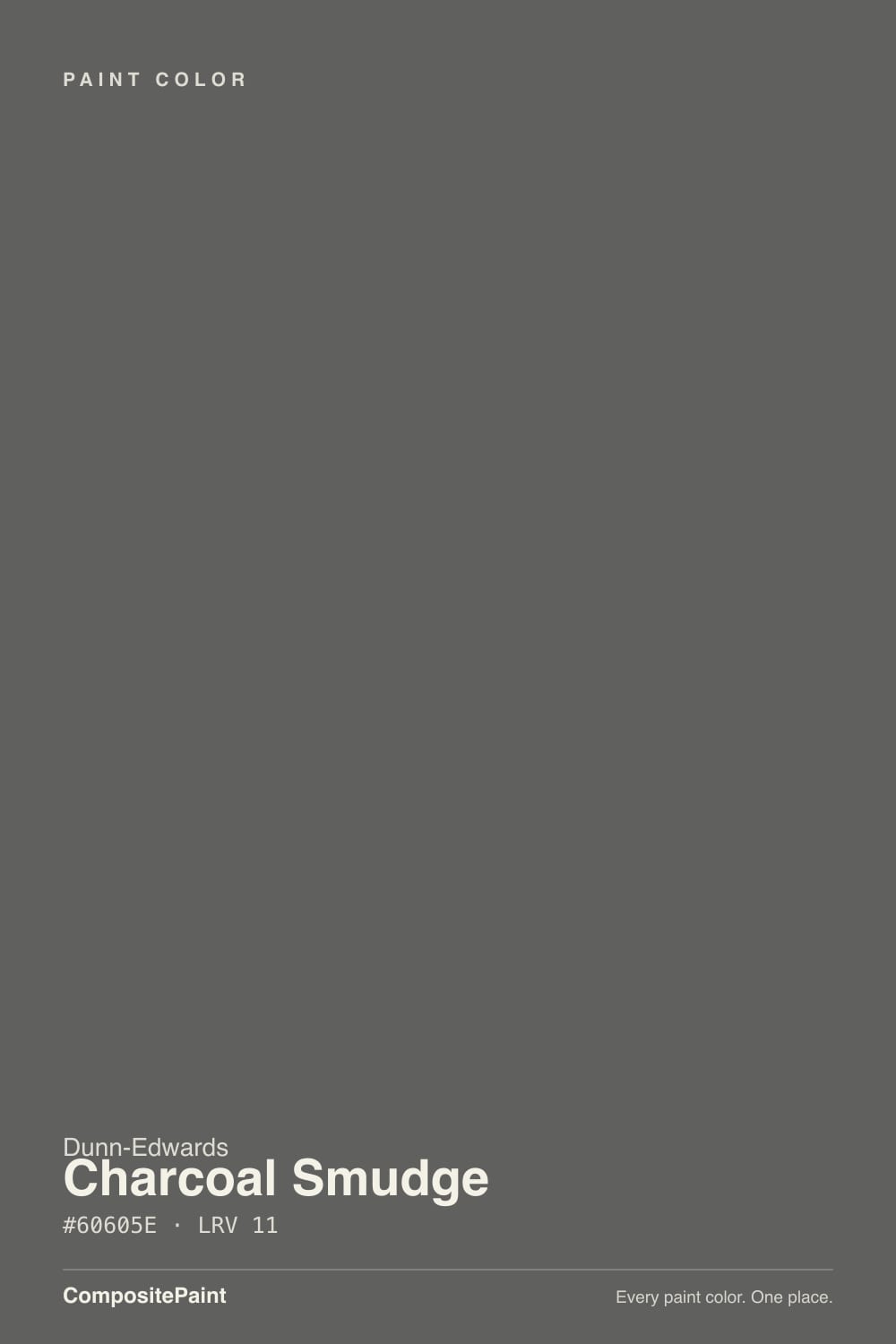
A dead-neutral charcoal, not a brown-black and not a blue-black. The hex sits at 96, 96, 94 — two points of yellow, chroma so low Dunn-Edwards files it under Cool Neutrals in the Perfect Palette, and that is the whole personality: smoky gray first, a green-yellow rumor second. It is also in the Front Door collection, which tells you the job Western painters actually sell: a door, an island, a contrast note next to Swiss Coffee, not a launch color. It has never been a Color of the Year because Dunn-Edwards does not run one, and the photo record is thin on purpose — this is a counter chip, not a viral room.
At LRV 11 it lives in the same near-black band as Peppercorn and Benjamin Moore Iron Mountain, deep enough that a wall starts behaving like a shadow the moment the light drops. Outdoors that number is useful: full sun on a door or a modern body lifts it off black and shows the gray, so the house still reads charcoal instead of a hole in the street. Indoors it is a dose color. Plan for the field to read a step deeper and blacker than the chip — every charcoal does this, and it is the number-one surprise when people sample a card and then paint a room.
Undertone in one line: essentially none, with a green-yellow whisper so quiet most rooms never name it. If your sample looks brown, you are seeing bounce from stucco, terracotta, honey oak, or late west sun. If it looks green, check the tree canopy, the cool LEDs, or a cream that is actually yellow. If it looks purple, the bulbs are cool. If it looks like a hole, you do not have enough light. The paint itself is charcoal.
Where It Shines
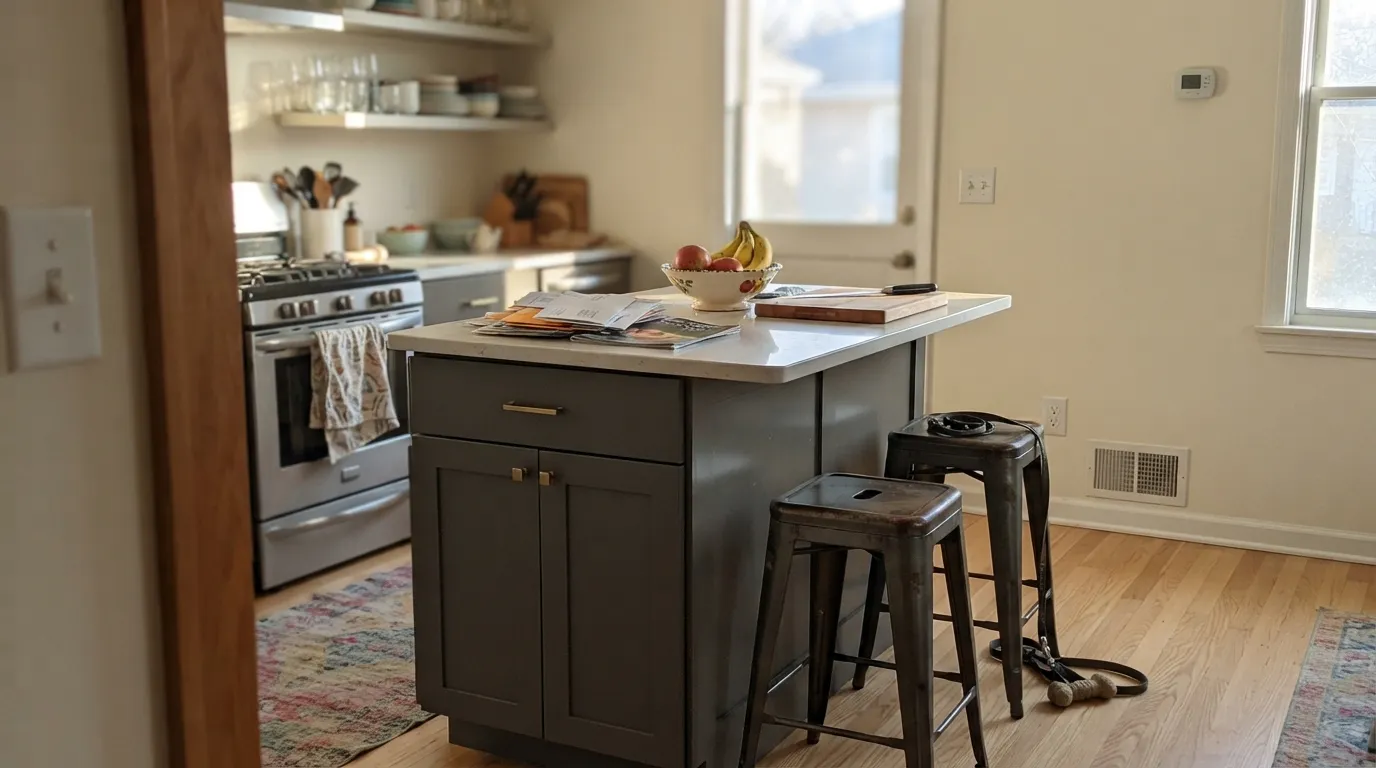
Give it an island, a front door, or one wall that actually sees a window, and it earns the jobs Dunn-Edwards wrote it for. Against Swiss Coffee or Whisper the charcoal reads decided instead of cave-like; brass, walnut, and cream linen keep it from going industrial. Hard daylight is what keeps it charcoal instead of inky. Satin on cabinets and semi-gloss on a door are what keep fingerprints and hose-water from etching a matte field. This is the dark note in a bright room — not the whole house.
Where It Fails
Almost every regret about this color is a lighting or identity problem, not a bad batch. The chip is charcoal. Shade, dim rooms, and a head full of true black will all make you think you bought the wrong can.
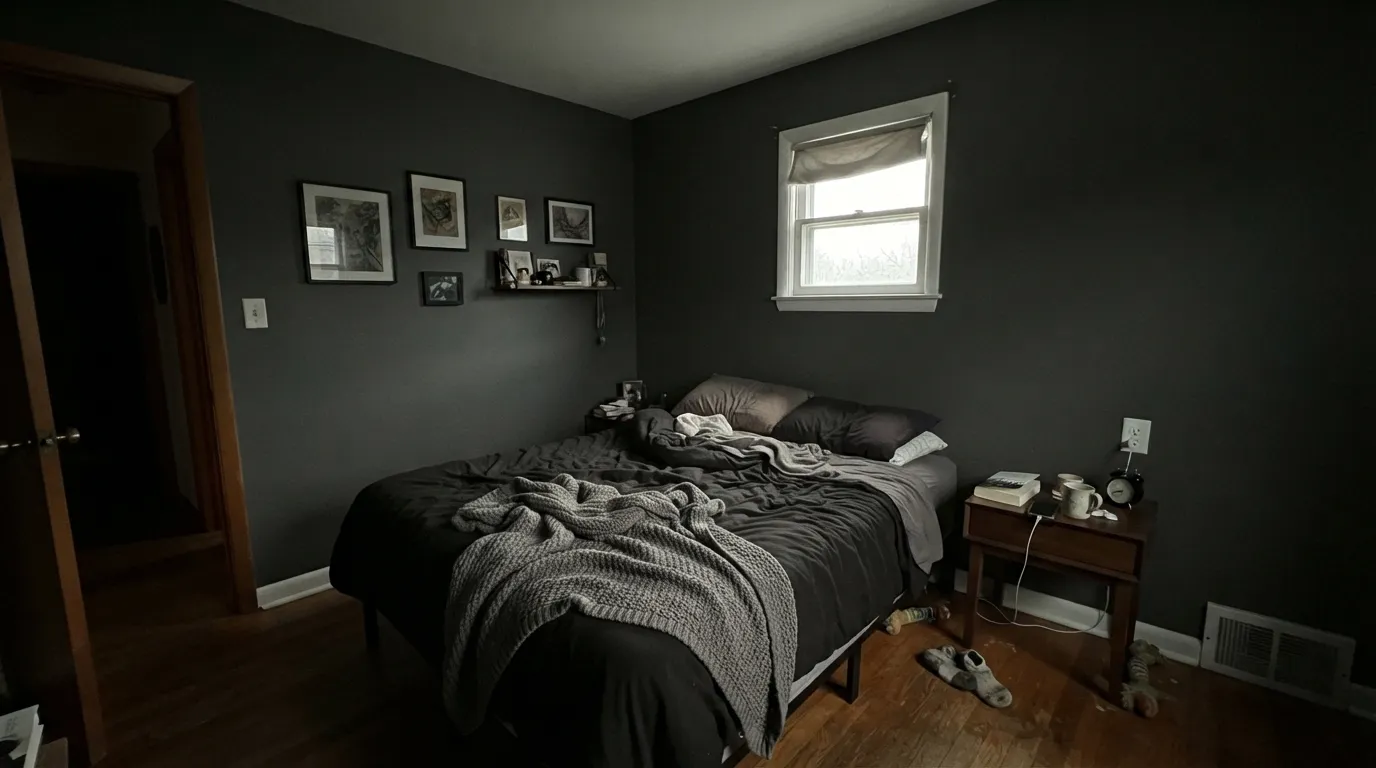
Without real light, LRV 11 stops being a color and starts being a hole. A north bedroom, a basement office, a hallway with one overhead LED — the gray disappears, art disappears, and the trim gets swallowed. Keep it to a door, an island, or one wall that actually sees a window. A whole dim room in this paint is a cave with extra steps.
At noon on a south door, island, or siding, LRV 11 is not black. It lifts to a clear medium-dark gray — charcoal you can name from the sidewalk. If the photo you saved was inky, you wanted Iron Ore (LRV 6) or Tricorn Black (LRV 3). This can is the one that still shows gray in Western sun, which is a feature on a door and a failure if black was the point.
Cold light is what finally names the green-yellow whisper. Cool gray LVP, blue-gray stone, and 4000K LEDs all pull a dirty, slightly olive-flat charcoal that looks faded rather than designed. The company this color was mixed for is cream, walnut, brass, and 2700K lamps. If the house is already a cool-gray box, pick Iron Ore and stop asking a Cool Neutral to pretend it has no hue.
Room by Room
Satin Charcoal Smudge on an island or a lower run under Swiss Coffee or Whisper walls is the move Dunn-Edwards itself has photographed: one charcoal note, plenty of bounce light, brass or aged-bronze pulls. Perimeter boxes stay light so the dark actually reads as color instead of a hole. Cabinet enamel, not wall paint — fingerprints and cooking film will etch a matte door.
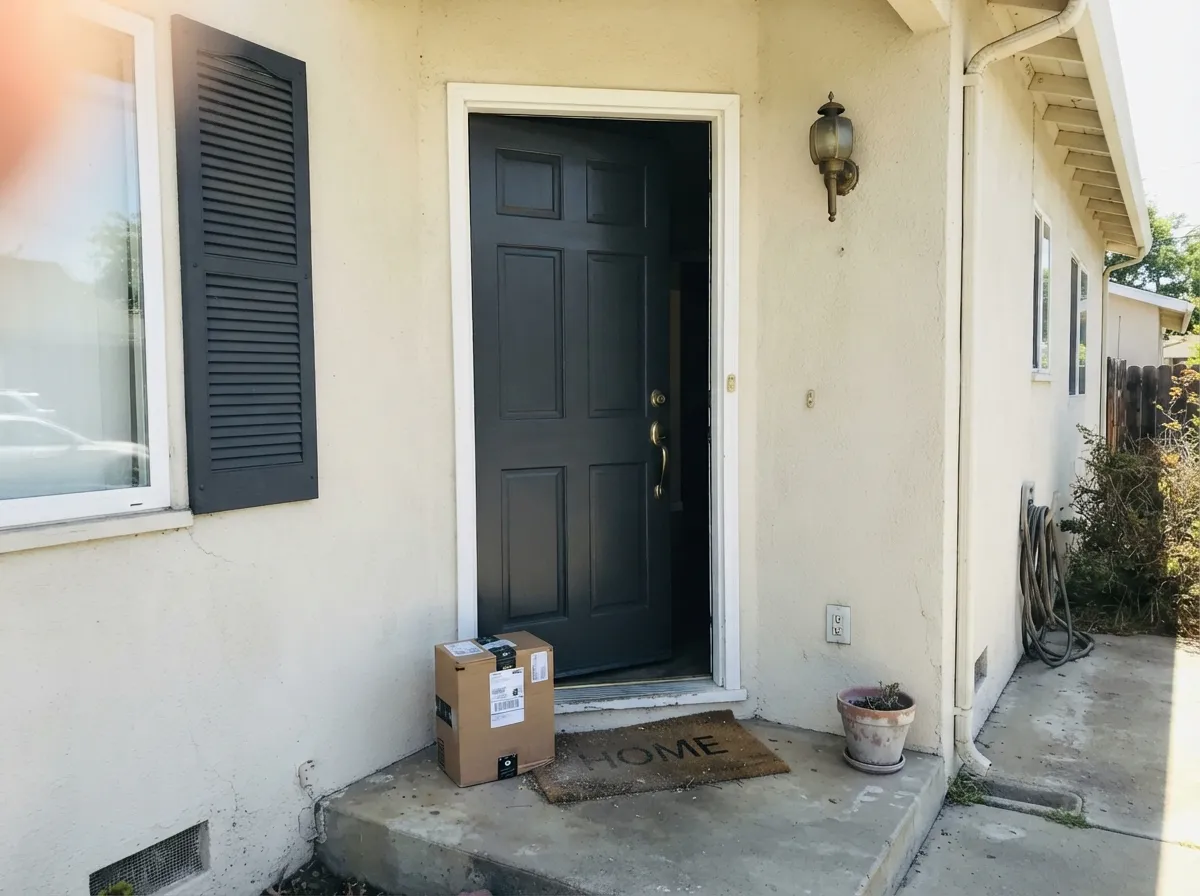
It sits in the Front Door collection for a reason. Semi-gloss on a door against Swiss Coffee, Whisper, or Stonish Beige stucco is the classic Western contrast: cream body, charcoal punctuation. Shutters in the same can look intentional rather than applied. Check the door manufacturer's heat notes before you go this dark on steel in full south sun; LRV 11 is right on the line some warranties care about.
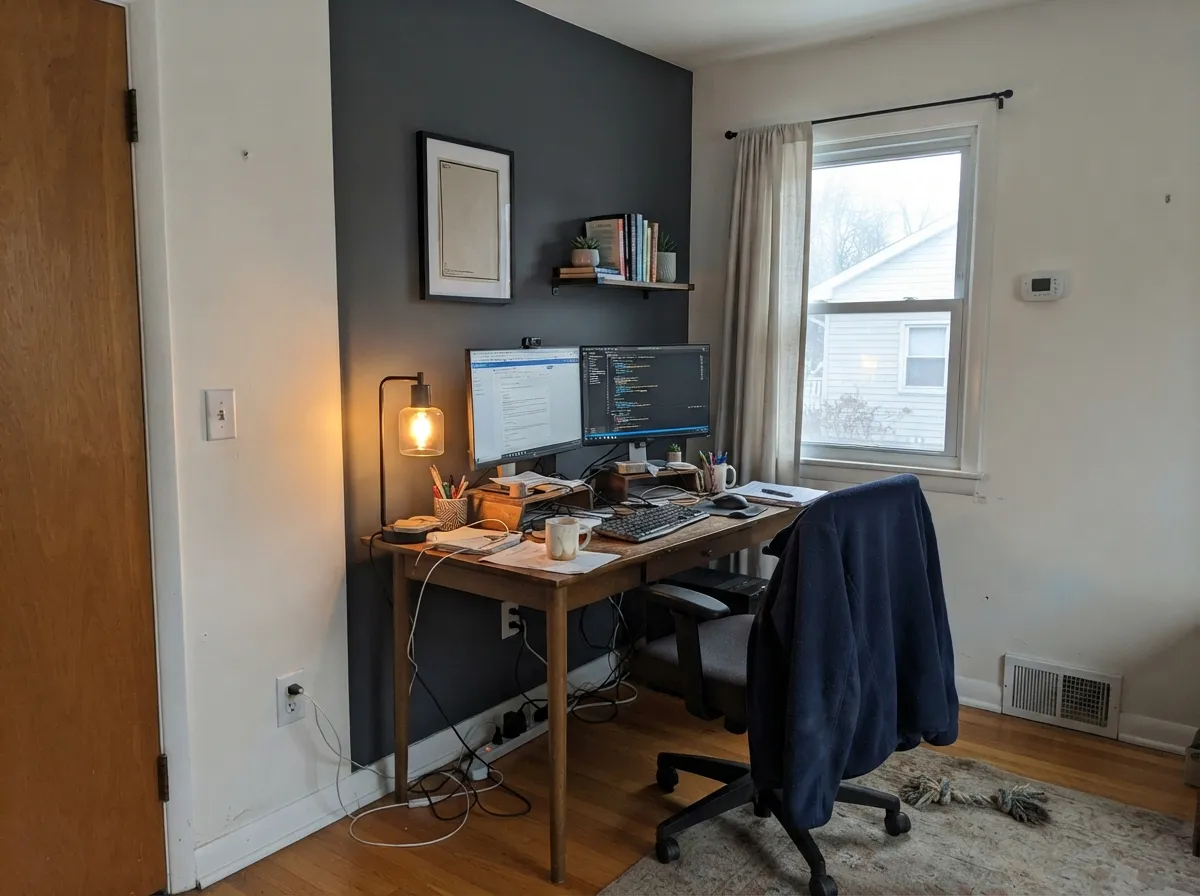
One fireplace wall or a wall behind the desk, in a room with a real window, looks tailored and modern. In a windowless nook it just disappears into shadow. Sample a large board on that wall for a full day before you commit — noon charcoal and 6 p.m. near-black are both this paint. Eggshell holds up to a rolling chair.
A Charcoal Smudge vanity under a stone top, or a drenched powder room with a window and warm sconces, reads custom without betting the house. Satin so it wipes. A windowless powder with one cool overhead is the cave version of the same idea — 2700K bulbs are part of the paint job.
Designers already list it as a dark-gray body next to Kendall Charcoal: a whole modern stucco or Hardie elevation can carry it if the architecture already has big windows, white trim, and a light roof. Full sun will read it as charcoal, not black; the shaded north elevation will look a full step darker. Walk the house at noon and at 6 p.m. with a sample board. A closed ranch with small windows is the wrong building for a charcoal body.
Bedrooms, living rooms, and hallways do not want this as a field color. At LRV 11 the room shrinks, art disappears, and every scuff around a light switch becomes a highlight. Dunn-Edwards' own gallery once used it on a ceiling — that is a designer dose, not a four-wall plan. The exception is a genuinely bright, south-facing room you are deliberately drenching — sample a large board for a full day before you bet the room on it.
Your Light Is the Risk
Hard daylight on a cabinet door, island, or front door is the light this charcoal was mixed for. It lifts off black, shows the gray, and looks like a designed box instead of a void. Sample it on the sunny side first.
Without bounce light the gray collapses and the wall, door, or box reads as flat near-black. North bedrooms, covered porches, and windowless halls are where people decide they hate it.
Morning shade is the darkest, near-black read. Midday south sun is the honest charcoal. Late west light can flash a faint warm edge for an hour; it is bounce from the sky and the stucco, not a new undertone. Sample at noon and at 6 p.m. on the same surface.
2700K bulbs keep it charcoal and civil after dark. Cool 4000K–5000K LEDs push it steely and a little green-flat — that is the Cool Neutrals whisper finally speaking. If you use this inside, the bulbs are part of the paint job.
Most complaints about Charcoal Smudge are a light mismatch. Upload a photo of your actual room and see it on your walls — then ask for the same wall in north light or evening lamps before you buy a single sample.
Need It From Another Brand?
Any paint counter can custom-tint Dunn-Edwards DE6370 directly. If you would rather stay in one brand's own deck, these are the closest stock matches, measured as ΔE2000. Under 2 is a difference you will not see on the wall.
| Brand | Closest color | ΔE | LRV | |
|---|---|---|---|---|
| Sherwin-Williams | Cloak GraySW 6278 · Sherwin-Williams | 4.8 | 11 | Color page → |
| Behr | HematiteN460-6 · Behr | 1.2 | 12 | Color page → |
| Benjamin Moore | Bracken SlateCW-690 · Benjamin Moore | 2.9 | 14 | Color page → |
| Valspar | WeathervaneM360 · Valspar | 2.4 | 12.1 | Color page → |
| PPG / Glidden | Dark WoodsPPG0999-7 · PPG / Glidden | 2.9 | 12 | Color page → |
| Glidden | Summer ShadowPPG0996-7 · Glidden | 0.9 | 11 | Color page → |
Similar Dunn-Edwards Colors
The nearest shades to Charcoal Smudge within Dunn-Edwards's own range, ranked by perceptual color distance — useful when you want the same look a touch lighter, darker, or warmer.
WCAG 2.1: AA is 4.5 : 1 for normal text, 3 : 1 for large text, AAA is 7 : 1.
Charcoal Smudge vs the Colors You're Also Considering
Every Charcoal Smudge sample board has the same rivals on it. The numbers show the real lightness gap — then it comes down to which risk you would rather live with.
Pick this when you want the cleaner, more stable charcoal that does not pick up brown or green from the neighbors.
Sherwin-Williams SW 7674 · LRV 11PeppercornPick this if your painter is already in Sherwin-Williams — same depth, a great dark gray that borrows its undertone from your room.
Pick this when you want a true charcoal with almost no brown in it, especially on a door, island, or modern exterior.
Benjamin Moore 2134-30 · LRV 11Iron MountainPick this if you wanted the warm near-black blogs mean — bronze-brown that needs light to stay brown, not gray.
Pick this when you still want to see gray in full sun, and a door or island should read charcoal, not inky.
Sherwin-Williams SW 7069 · LRV 6Iron OrePick this if you want the deeper, slightly steely black that can carry a whole house — it stays darker at noon, if you respect LRV 6.
Pick this when the job is a door, island, or modern body that needs to sit deeper than Kendall and stay a true gray.
Benjamin Moore HC-166 · LRV 15Kendall CharcoalPick this for a slightly lighter, better-documented dark gray that is easier on interiors — the BM deck's best-behaved charcoal, with one dim-room trap.
Charcoal Smudge Coordinating Colors
The rule is cream or soft white on the field, charcoal on the edge. Charcoal Smudge is the dark punctuation in a Dunn-Edwards house: it wants Whisper or Swiss Coffee next to it, Stonish Beige if the body is stucco, Foggy Day if the walls should stay quiet, and a sage only if the elevation already has trees and real sun. Cool, icy whites make it look a little dirty; yellow-gold trims make it look colder. These are the partners that keep showing up in rooms that work:
A Cool Neutral That Does Door and Island Duty
Charcoal Smudge is not a famous color, and pretending otherwise would be the wrong review. There is no Color of the Year plaque, no TV set, no pile of Reddit before-and-afters. What exists is quieter and more useful: Dunn-Edwards keeps it in Cool Neutrals and in the Front Door collection, has photographed it on a dark kitchen island in a white open-concept kitchen, and has used it as a ceiling in one of its own accent galleries. Designers who work the West list it next to Kendall Charcoal as a dark gray with neutral undertones for exteriors. That is the track record — a workhorse chip, not a launch.
If you sampled Dunn-Edwards Iron Mountain years ago and liked a true charcoal at LRV 11, this is the live can in that neighborhood. The old DET637 chip is no longer that color. Stay on DE6370, sample it on the actual door or box, and do not shop by the retired name.
Charcoal Smudge With Wood Tones and Floors
This decision gets made at the floor and the box, not the paint store. Walnut and espresso are the color's best friends — the dark red-brown depth makes the charcoal read smoky and deliberate. Pale white oak and gray-washed-just-barely oak are safe and keep a kitchen from going cave. Brass, unlacquered bronze, and matte black hardware all sit on it; polished chrome is the one that leans cold.
Golden honey oak is a maybe, not a no: yellow-orange can pull a faint earthy edge forward, so the cabinets look a hair warmer and the floor looks more orange. Some kitchens want that. If yours does not, put a large rug between them or keep Charcoal Smudge on the island only. The honest no is cool gray LVP, gray-washed wood, and blue-gray stone — opposite temperature, dirty faded-charcoal result. Test a big sample above the actual floor before the painter shows up.
Three Ready Palettes Built on Charcoal Smudge
A color is never alone on the wall. These are complete combinations in the 60-30-10 pattern, with the reason each one holds together. Every one opens in the visualizer.
Swiss Coffee is the Southwest's default cream, and it keeps the kitchen bright enough for Charcoal Smudge to read as charcoal instead of a hole. Whisper — Dunn-Edwards' answer to White Dove — frames the boxes without the graphic cut of a true white. Brass pulls finish the argument.
Try this palette in your roomSwiss Coffee is the warm cream body; Lighthouse is the crisp cool white that needs real sun to stay clean; the Charcoal Smudge door is the one dark note. Same LRV on the two whites, different jobs — cream field, cool trim, charcoal punctuation. Sample Lighthouse on the shady elevation; it earns its keep only in real light.
Try this palette in your roomFoggy Day is the quietest near-white in this deck, so it hands off to charcoal without a temperature fight. Milk Glass — the quietly creamy workhorse white — keeps the edge soft. One dark wall, not four, is how this charcoal stays a color.
Try this palette in your roomCharcoal Smudge FAQ
Is Charcoal Smudge black or gray?
Charcoal — which means both, depending on the light. In shade or at night it reads near-black. In full sun on a door, island, or south wall it is clearly a medium-dark gray you can name from the street. If you need it to stay black at noon, Iron Ore (LRV 6) or Tricorn Black (LRV 3) are the deeper cans.
Is it the same as Benjamin Moore Iron Mountain?
No. Same LRV (11), different paint. Benjamin Moore 2134-30 is a warm near-black with a bronze-brown lean that needs light to stay brown. Charcoal Smudge is a dead-neutral charcoal with almost no brown in it. If you liked the BM photos, sample that can. If you want a clean gray-charcoal for a door or island, stay here.
Is it good for kitchen cabinets?
That is its best indoor job. Satin on an island or a lower run, light cream walls, brass or aged-bronze pulls, and enough daylight or under-cabinet light to keep it from going black. A full kitchen of it needs a glass-walled room; most kitchens do not have that light. Use a urethane-fortified cabinet enamel.
What white goes with a Charcoal Smudge door or island?
A soft creamy white — Dunn-Edwards Swiss Coffee or Whisper are the in-house answers. Whisper is Dunn-Edwards' answer to White Dove and keeps the edge calm. Lighthouse is the crisper modern trim in real sun. Warm White (DEW380) is a true white wearing a warm name, so it makes a graphic, high-contrast sash; use it when you want the cut, not when you want cream. A cool bright white (Chantilly Lace territory) can make the charcoal look slightly dirty by comparison.
Can I paint a whole house this color?
Only if the building already has big glass, light trim, and a roof that will not turn the mass into a bunker. Modern stucco with white windows can carry it — designers already list it next to Kendall Charcoal as a dark-gray body. A small-window ranch cannot. Sample the sunny and shaded elevations — they will not match — and treat the door and island as the safer first move.
Does Charcoal Smudge work with oak floors?
Warm woods love it. Walnut, espresso, and pale white oak are the easy yes. Golden honey oak is a maybe: yellow-orange can pull a faint earthy edge out of the charcoal — some kitchens want that, some see mud. Cool gray LVP and gray-washed floors are the honest no: they sit at the opposite temperature and leave a dirty faded charcoal. Sample a board above the actual floor.
Have you painted with Charcoal Smudge?
Rate it — one tap helps the next reader decide.
Ask a Question