White Diamond
The off-white that reads cool without a drop of blue in it, reviewed honestly: the rooms it rescues, the trim that ruins it, and what to pick instead.

Jessica has spec'd whites and neutrals for more than 300 rooms and keeps a sample wall of painted drawdowns in her studio. Every color review is checked against real reader rooms in the comments and re-tested when a formula changes. About the testing process →
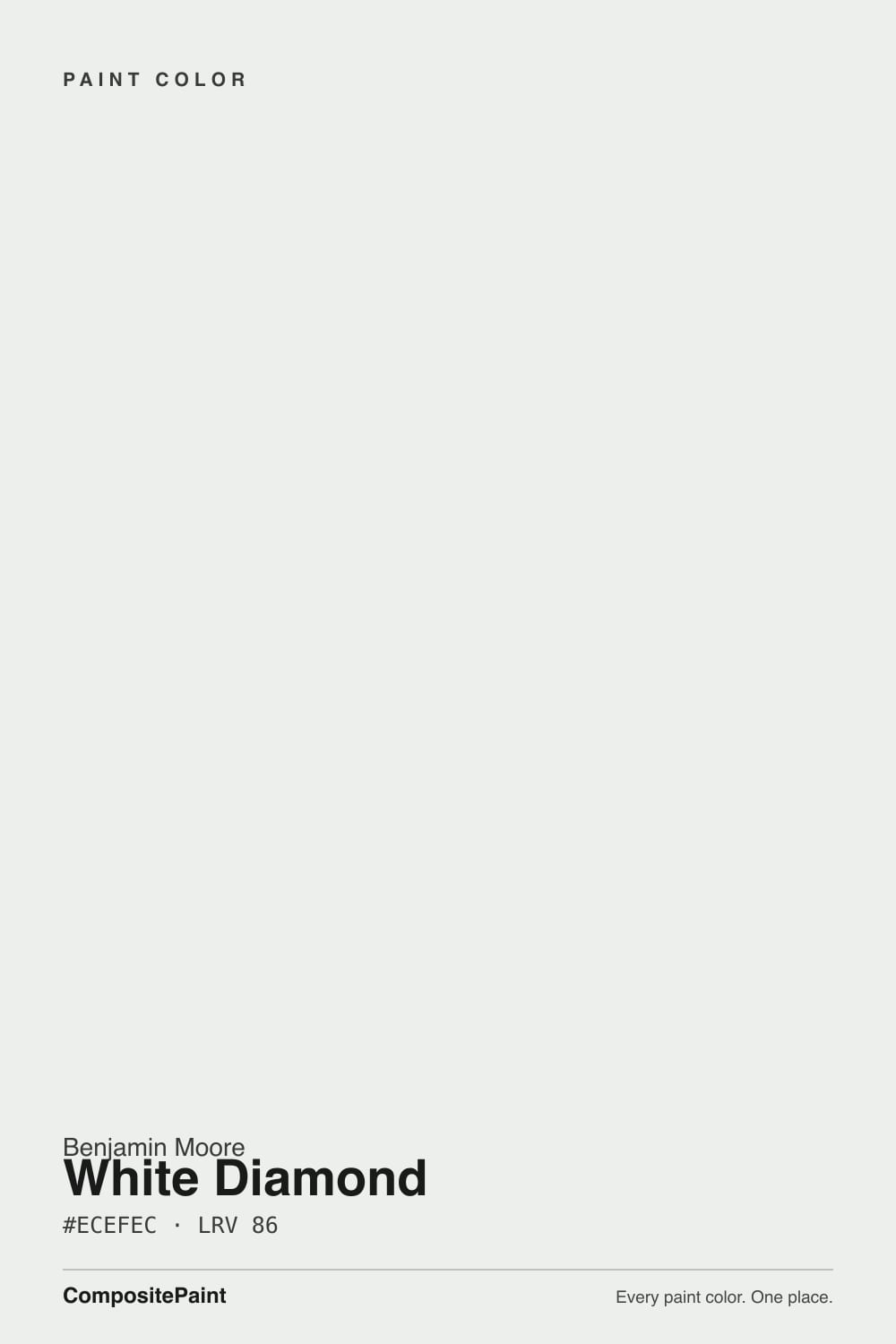
- 1First Star69
- 2Classic Gray74
- 3White Diamond86
- 4Chantilly Lace91
- 5Ultra Pure White97
The Fast Verdict
White Diamond is a white with almost no color in it — a hair of green-gray at a strength you would need a spectrophotometer to argue about. That is the whole product. It reads clean and modern because nothing warm is dragging on it, and it never goes icy because there is no real blue in it either. Bright rooms, bathrooms and daylight-free basements are where it earns its money; warm cream trim and honey oak floors are where it falls apart.
Bathrooms and kitchens with cool stone · basements and rooms with no daylight · trim, doors and ceilings · anyone who wants crisp without buying a blue-white
Your existing trim is cream or builder-warm · your floors are honey oak · you want a cozy, soft-white bedroom · your only light is 4000K shop bulbs
- Bright at LRV 86 without being a hard, glaring white
- Near-zero undertone — it does not yellow stone, tile or appliances
- One of the few whites that survives a daylight-free basement
- Cool without the icy blue flash of true blue-whites
- Sits equally well on walls, trim, cabinets and ceilings
- Reads gray next to cream or builder-warm trim
- No warmth to soften honey oak floors and orange wood
- Goes institutional under 4000K and cooler bulbs
- Too crisp for anyone chasing a cozy, soft-white bedroom
What Color Is White Diamond, Really?
An off-white sitting almost exactly on the neutral line. Benjamin Moore files it in the Off-White collection and sells it as a white brightened with blue, and nearly every blog repeats that as cool gray-blue undertones — but the measured hue lands on the green-yellow side at a chroma so low the color is effectively achromatic. Both descriptions are trying to name the same thing: a white that has been stripped of cream without being pushed into ice. On a wall you do not see blue, and you do not see green. You see white, and then you see whatever is next to it.
At LRV 86 it is genuinely bright — brighter than White Dove (LRV 85) and brighter than Decorator's White (LRV 84), a step below Super White (LRV 87), and well short of Chantilly Lace at LRV 92. That number is why it keeps showing up in dark rooms: it gives back nearly all the light you feed it, which matters far more in a basement than any undertone debate. It also carries two numbers — 2121-60 and OC-61 — so order it by name and read the chip, because paint desks pull it from either collection.
Undertone in one line: none worth naming, with the faintest green-gray tell in flat light. It sits at the top of the same Color Preview strip as Benjamin Moore Gray 2121-10, a family with no color agenda at all — and it behaves exactly like that lineage suggests. Put it beside cream and it reads cool; put it beside Chantilly Lace and it reads soft and slightly warm. Designer Elaine Griffin once described it as a gallery white that spent an hour at the beach, and that is the most useful sentence anyone has written about it.
Where It Shines
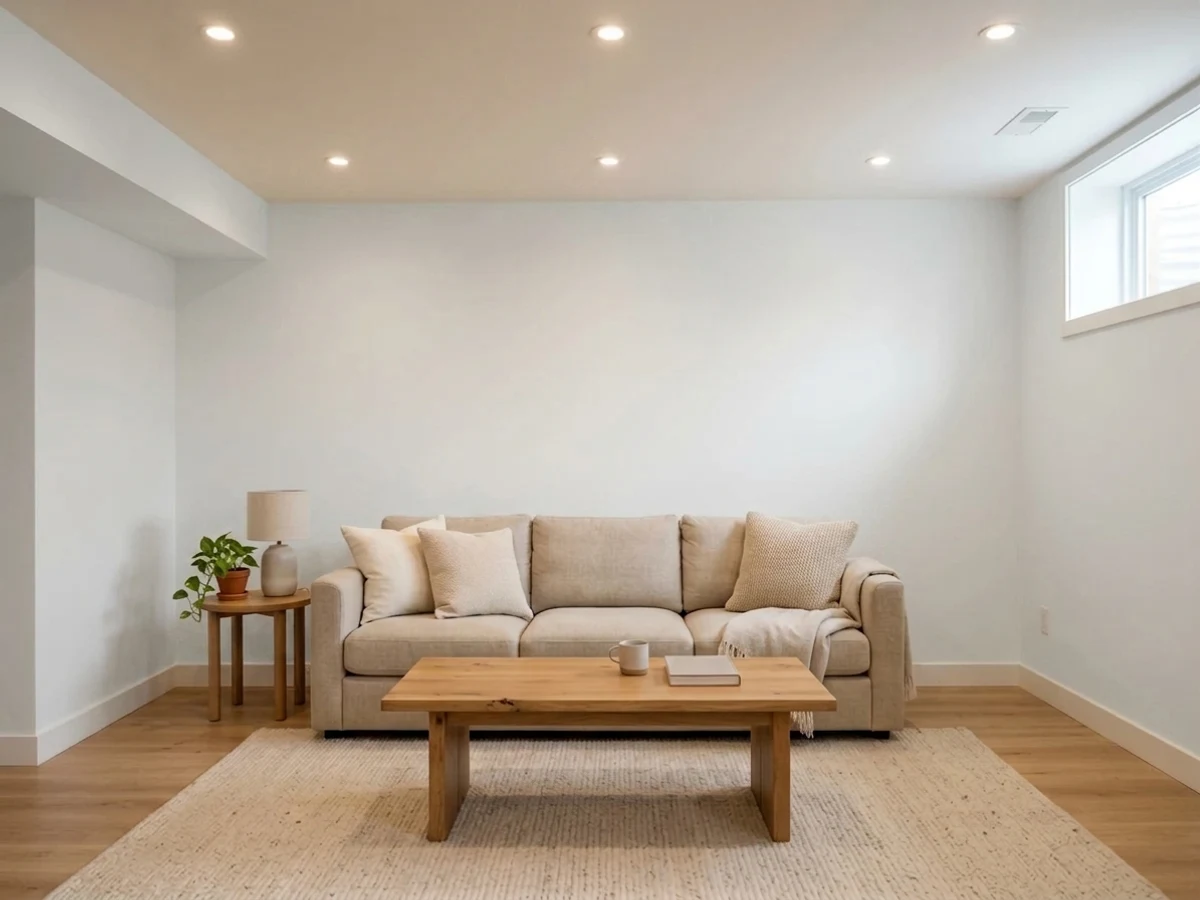
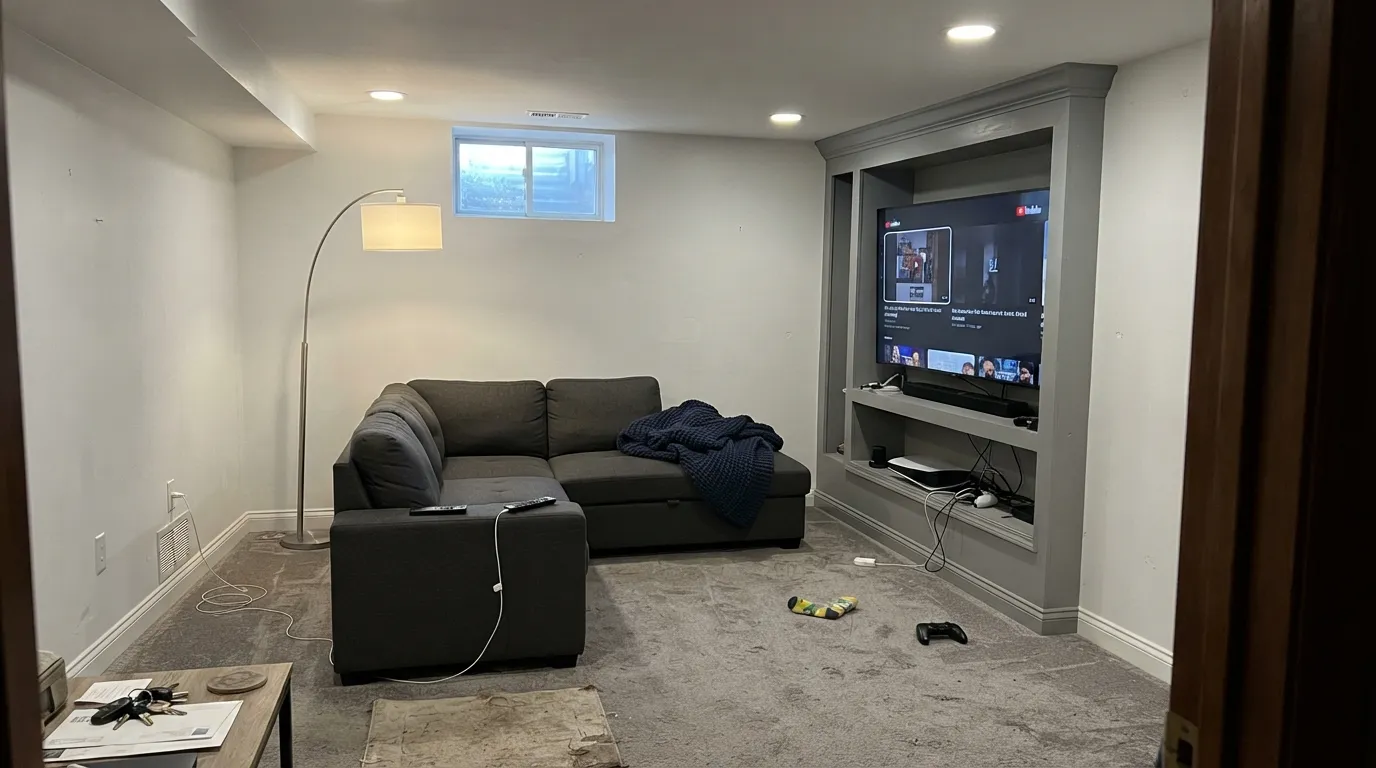
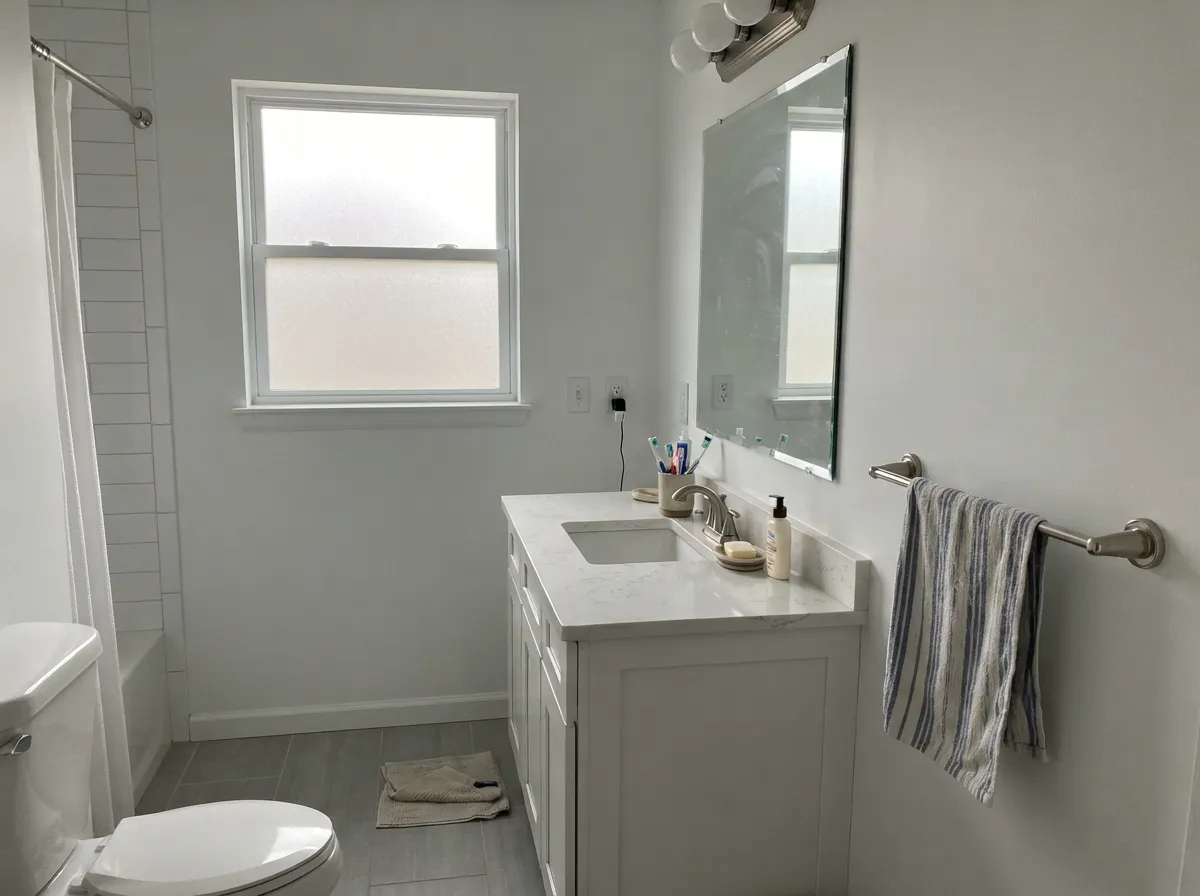
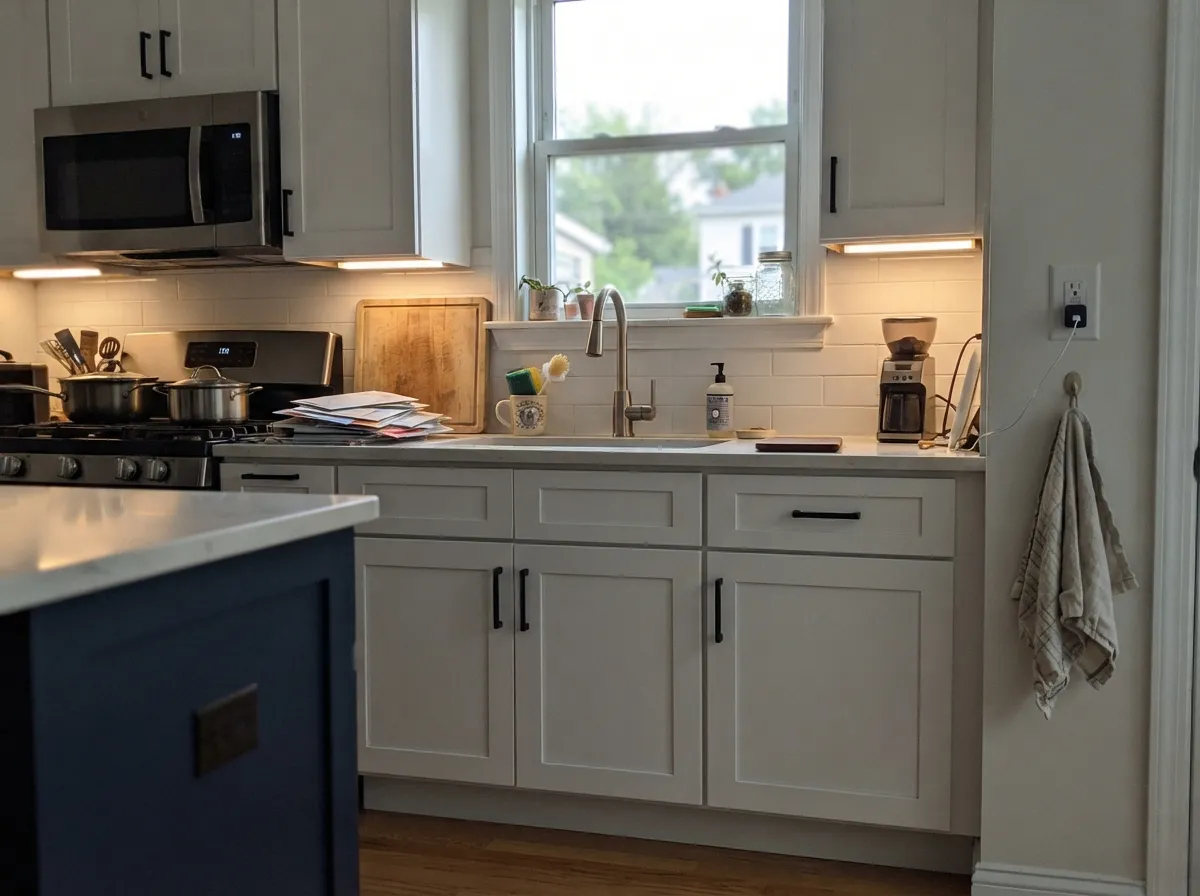
This color is at its best where warmth would be a liability. In a bathroom with white quartz, Carrara or gray tile, it is the white that does not turn the stone yellow. In a kitchen with cool counters and black hardware it stays clean without going surgical. And in a basement — no daylight, low ceiling, LED cans — LRV 86 plus zero cream is the combination that keeps the room from reading like a storage box. Give it warm bulbs and one mid-gray to look at, and it does a job most whites cannot do at all.
Where It Fails
The complaints about White Diamond are not about the paint being ugly — they are about the paint being neutral in a room full of warm things. All three failure modes are visible before you open the can, and none of them get better with another coat.
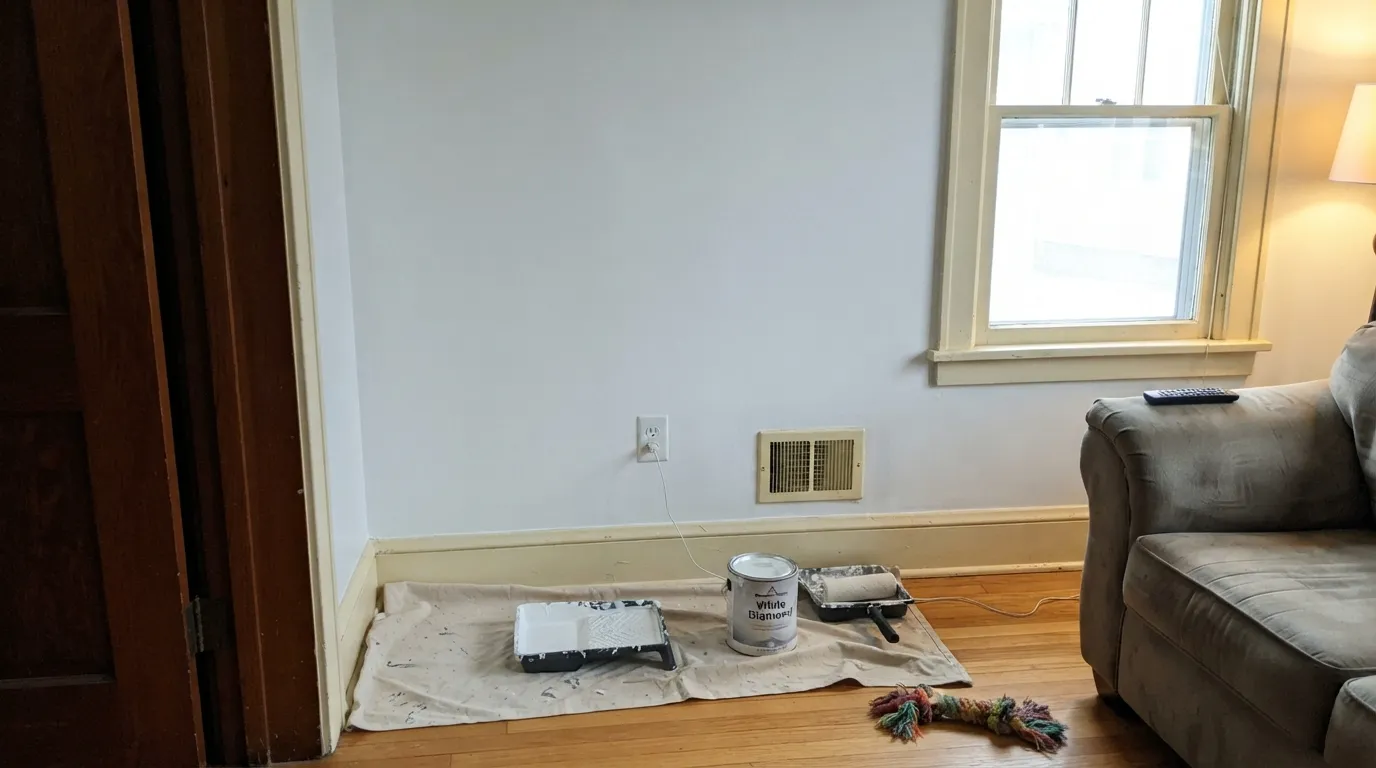
This is the number-one regret. White Diamond walls beside existing builder-cream or Swiss Coffee (LRV 84) trim turns into a fight: the trim looks yellowed and dirty, the walls look gray. There is no fix short of painting both. Either the trim gets repainted in White Diamond or a near-neutral white, or you go with a warm white on the walls instead.
A near-neutral white has no warmth to meet golden oak halfway, so the floor's orange gets louder and the wall reads gray-green above it. Pale white oak, walnut, gray LVP and tile are all fine. Wall-to-wall honey oak is the one flooring that should send you to White Dove (LRV 85) instead.
Cool LEDs and old shop fixtures strip out the last trace of warmth and leave a flat, institutional white — the hospital-corridor look people describe in finished basements and garages. The paint did not do that; the fixtures did. Swap to 2700K or 3000K before you blame the color.
Room by Room
With white quartz, Carrara or gray tile it reads clean and modern, and it never yellows the stone the way a cream white does. Eggshell or satin on the walls so steam wipes off; chrome and polished nickel both sit right against it.
LRV 86 gives back nearly all the artificial light you feed it, and having no cream in the mix means it does not go dingy under LEDs. Non-negotiable conditions: 2700K–3000K bulbs and the ceiling painted the same color in flat. Details in the basement section below.
On cabinets it is crisp without the glare of a bright white, and it flatters cool counters, black hardware and stainless. Satin cabinet enamel. If your counters are warm-flecked granite or butcher block, this is the wrong white.
Semi-gloss on trim under gray or blue-gray walls gives a clean edge without the hard flash of Chantilly Lace (LRV 92). On ceilings in flat it stays a true white overhead instead of glowing cream.
Rooms that should read scrubbed rather than cozy. High reflectance in a windowless laundry, and it does not fight white appliances the way an off-white does. Eggshell walls, semi-gloss on any built-in bench or lockers.
It works beautifully in a modern room with pale oak, walnut or a lot of glass, and it reads cool and unfinished in a traditional room with golden trim and warm furniture. For a bedroom that should feel soft rather than crisp, White Dove (LRV 85) is the better buy.
Your Light Is the Risk
Any exposure with real light: it reads as clean white with no color story at all. That blankness is the point.
Low light drains it to a flat gray-white with a faint green cast. Bright rooms or good lamps — it needs one or the other.
Cool and clean in morning light, briefly cream at golden hour, back to neutral after. The swing is small.
2700K lamps make it a soft, livable white. 4000K LEDs make it a hospital wall. Spec the bulbs with the paint.
Most complaints about White Diamond are a light mismatch. Upload a photo of your actual room and see it on your walls — then ask for the same wall in north light or evening lamps before you buy a single sample.
Need It From Another Brand?
Any paint counter can custom-tint Benjamin Moore 2121-60 directly. If you would rather stay in one brand's own deck, these are the closest stock matches, measured as ΔE2000. Under 2 is a difference you will not see on the wall.
| Brand | Closest color | ΔE | LRV | |
|---|---|---|---|---|
| Sherwin-Williams | Extra WhiteSW 7006 · Sherwin-Williams | 1.2 | 86 | Color page → |
| Behr | Day SpaPWN-16 · Behr | 1.0 | 85 | Color page → |
| Valspar | Tambourine8007-3B · Valspar | 0.6 | 86 | Color page → |
| PPG / Glidden | Spring RainPPG1137-1 · PPG / Glidden | 1.5 | 86 | Color page → |
| Glidden | Shooting StarPPG1154-1 · Glidden | 1.2 | 86 | Color page → |
| Dutch Boy | White003W · Dutch Boy | 1.2 | 86 | Color page → |
Similar Benjamin Moore Colors
The nearest shades to White Diamond within Benjamin Moore's own range, ranked by perceptual color distance — useful when you want the same look a touch lighter, darker, or warmer.
WCAG 2.1: AA is 4.5 : 1 for normal text, 3 : 1 for large text, AAA is 7 : 1.
White Diamond vs the Colors You're Also Considering
Every White Diamond sample board has the same rivals on it. The numbers show the real lightness gap — then it comes down to which risk you would rather live with.
Pick this when Decorator's White fights the wood, the rug or the counters; White Diamond is the more forgiving, slightly brighter version of the same idea.
Benjamin Moore OC-149 · LRV 84Decorator's WhitePick this for the sharper, more committed cool white — the classic gallery trim in a room with nothing warm in it.
Pick this when Chantilly Lace is too bright for the walls — at LRV 86 White Diamond forgives drywall flaws that LRV 92 puts on display.
Benjamin Moore OC-65 · LRV 92Chantilly LacePick this when you want maximum brightness and a hard, clean edge on trim and cabinets.
White Diamond Coordinating Colors
The rule for coordinating with White Diamond is the mirror image of the warm-white rule: stay on the cool and true-neutral side. It partners cleanly with true grays, blue-greens and navies, and it looks unfinished next to cream, tan and warm greige. These are the colors that keep showing up beside it in rooms that work:
The Undertone Argument: Blue, Green, or Nothing at All
Search this color and you will get two confident, contradictory answers. Benjamin Moore's own listing puts it in the Off-White collection and describes it as a white brightened with blue, and the design blogs have repeated cool gray-blue undertones ever since. Run the color through a hue analysis instead and it lands on the green-yellow side of neutral at a chroma barely above zero — the opposite direction, at a strength that is almost theoretical.
Both camps are describing the same experience from different ends. There is no meaningful blue and no meaningful green in this paint; what there is, is an absence of cream. That absence is what people read as cool. It also explains the reviews that call it clean but not sharp, and designer Elaine Griffin's line about a gallery white that spent an hour at the beach — she was reaching for the same not-quite-cold, not-quite-warm quality from the warm side.
The practical takeaway beats either label: this is a borrowing white. It will look cool in a room full of cream, warm in a room full of bright white, and green over a green lawn seen through a big window. Sample it against the things you are keeping — the trim, the floor, the counter — not against a piece of printer paper.
White Diamond in Basements and Rooms Without Daylight
Dark rooms are the case this color is genuinely good at, and the reason is arithmetic rather than taste. In a basement there is no daylight to lose, so the only light in the room is what your fixtures throw and what the surfaces give back — and at LRV 86 White Diamond gives back nearly all of it. Warm whites lose that contest twice: a lower LRV to start with, and a cream base that turns dingy under LED cans instead of bouncing them.
Three conditions make or break it. First, bulbs: 2700K–3000K, everywhere, no exceptions — 4000K shop-light color is what turns this paint into a hospital corridor, and it is the single most common complaint in windowless rooms. Second, the ceiling: paint it the same White Diamond in flat. A low basement ceiling in a different white draws a hard line exactly where you want the room to feel taller. Third, something to look at: a mid gray on built-ins, a wood console, a rug with real color — an all-white windowless box reads unfinished no matter which white you pick.
Two practical notes for below grade. Use eggshell rather than flat on the walls so you can wipe them, and if the basement has ever taken on moisture, fix the water before you paint anything — no paint sheen is a waterproofing plan. The same rules carry over to windowless powder rooms, interior laundry rooms and garages.
Three Ready Palettes Built on White Diamond
A color is never alone on the wall. These are complete combinations in the 60-30-10 pattern, with the reason each one holds together. Every one opens in the visualizer.
In a room with no daylight every surface has to give light back, so walls and a low ceiling in the same LRV 86 white erase the shadow line where they meet. Stonington Gray is a true gray rather than a greige, so the built-ins stay in the same cool family and give the eye something to land on without eating the light a dark cabinet color would.
Try this palette in your roomNothing here is fighting about temperature: a near-neutral white, a cool blue-green gray and a navy all sit on the same side of the line, which is what makes white quartz and Carrara look intentional instead of accidental. Save this one for a kitchen with real windows — Hale Navy at LRV 6 needs the light.
Try this palette in your roomGreen-blue walls are exactly where a cream trim white turns sour, and White Diamond is the fix — it frames Palladian Blue without adding yellow to the edge. Coventry Gray on the vanity carries enough blue of its own to belong, and chrome or polished nickel finishes the scheme.
Try this palette in your roomWhite Diamond FAQ
Is White Diamond warm or cool?
Neither, honestly. Benjamin Moore describes it as blue-brightened and most blogs call it cool gray-blue, but the measured hue is a whisper of green-yellow at almost no strength. On four walls it takes its temperature from the room: cool beside cream, soft and slightly warm beside a bright white like Chantilly Lace (LRV 92).
Will it feel cold in a basement?
Only if your bulbs make it cold. At LRV 86 it returns nearly all the light in a room that has none to spare, and with no cream in it, it does not go dingy the way a warm white does under LEDs. Run 2700K–3000K bulbs, paint the ceiling the same color in flat, and add one mid gray or a wood tone so the room is not a white box.
What trim white goes with White Diamond walls?
White Diamond itself, in semi-gloss — that is the safest answer, and the sheen change is enough separation. If you want brighter trim, Chantilly Lace (LRV 92) works because it is also a clean white. What does not work is cream: Swiss Coffee (LRV 84) or builder-cream trim makes the walls read gray and the trim read yellow.
White Diamond or Decorator's White?
Decorator's White is the crisper, harder version and the less forgiving one — it wants a room with nothing warm in it. White Diamond is two LRV points brighter in our deck and softer in company, so it is the safer pick for walls, for basements, and for any room that still has a warm floor or a wood table in it.
Is it good for cabinets and trim?
Yes, and it is one of the more underrated cabinet whites for cool kitchens — crisp against black hardware and stainless without the glare of a bright white. Use a satin urethane-fortified cabinet enamel. The one thing it will not do is flatter warm-flecked granite or butcher block; that job belongs to a warm white.
Why does White Diamond have two numbers?
It appears in more than one Benjamin Moore collection, so you will see it as 2121-60 and as OC-61 depending on which fan deck or store display you are holding. It is the same paint. Order it by name, and check the chip against the wall rather than trusting a number printed on a website.
Have you painted with White Diamond?
Rate it — one tap helps the next reader decide.
Ask a Question