Shadow Mountain
The true mid-charcoal with no undertone, reviewed honestly: where it stays gray, the rooms where it goes black, and what to pick instead.

Jessica has spec'd whites and neutrals for more than 300 rooms and keeps a sample wall of painted drawdowns in her studio. Every color review is checked against real reader rooms in the comments and re-tested when a formula changes. About the testing process →
- 1Fired Bronze5
- 2Shadow Mountain10
- 3Kendall Charcoal15
- 4Retreat21
The Fast Verdict
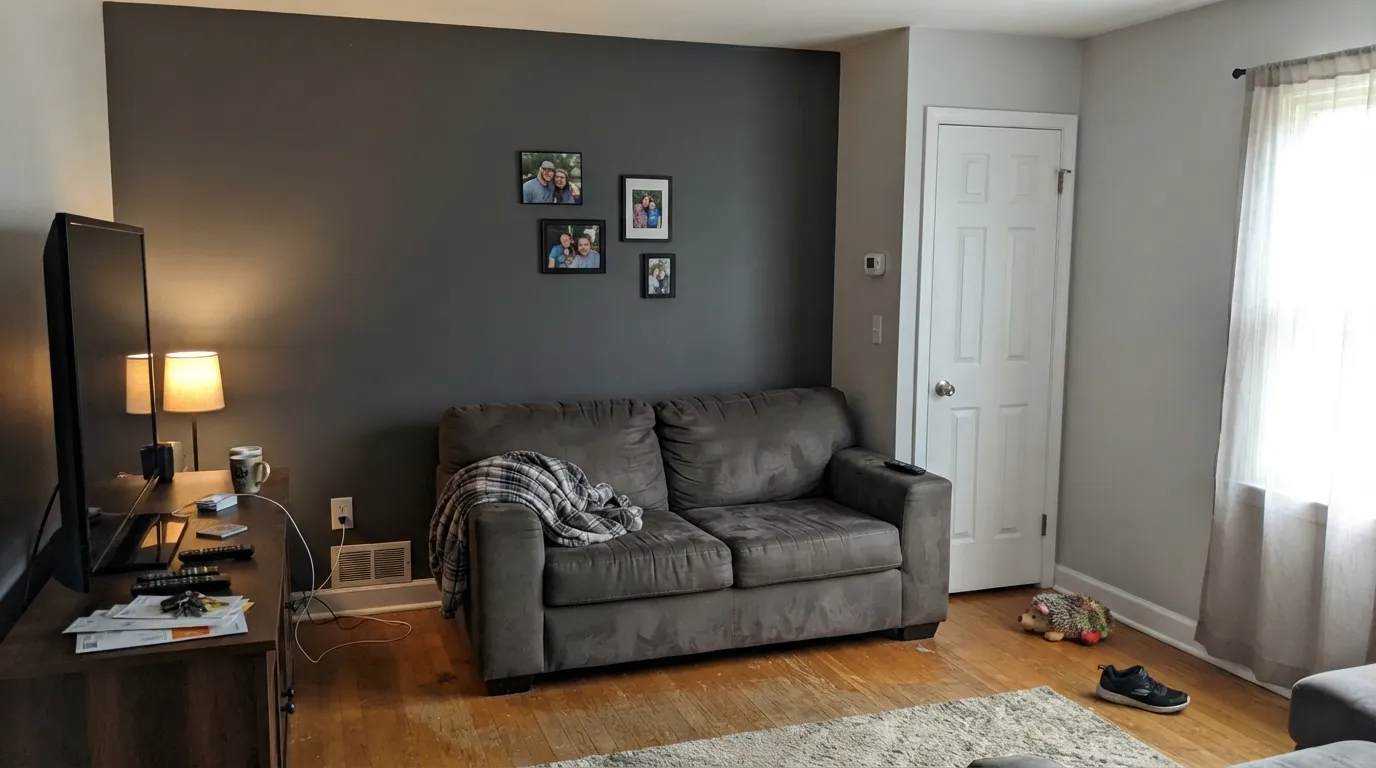
Shadow Mountain is charcoal that refuses to pick a team: equal red, green, and blue, so it has no blue, no brown, and no green of its own. At LRV 10 it is a genuine mid-dark — gray in full sun, black the minute the light drops. Behr files it as a charcoal black; on a wall or a shutter it is simply the gray that does not argue. Buy it for accent walls, shutters, a front door, or an exterior body. Do not buy it hoping four interior walls will still feel like a room after dark.
Accent walls · shutters, garage doors, and exterior body color · lamplit offices and media rooms · powder rooms · anyone who wants charcoal, not black and not greige
You actually want black · you were going to drench four dim interior walls · the room is north, windowless, or lamp-shy · your vinyl siding or steel garage door cannot take LRV 10 heat
- True-neutral charcoal — no blue, no brown, no green to manage
- Ideal depth for accent walls, shutters, doors, and exterior body
- Reads gray in sun, so it is not another black house
- Pairs with almost any white and most woods because it has no fight in it
- Easy to sample and buy — a Home Depot staple, interior and exterior
- Not black — buyers expecting black see gray the first sunny afternoon
- At LRV 10, four interior walls go cave without strong light and lamps
- Heat risk on vinyl, PVC, and many garage doors
- Dark exteriors fade and show dirt faster than mid-tones
What Color Is Shadow Mountain, Really?
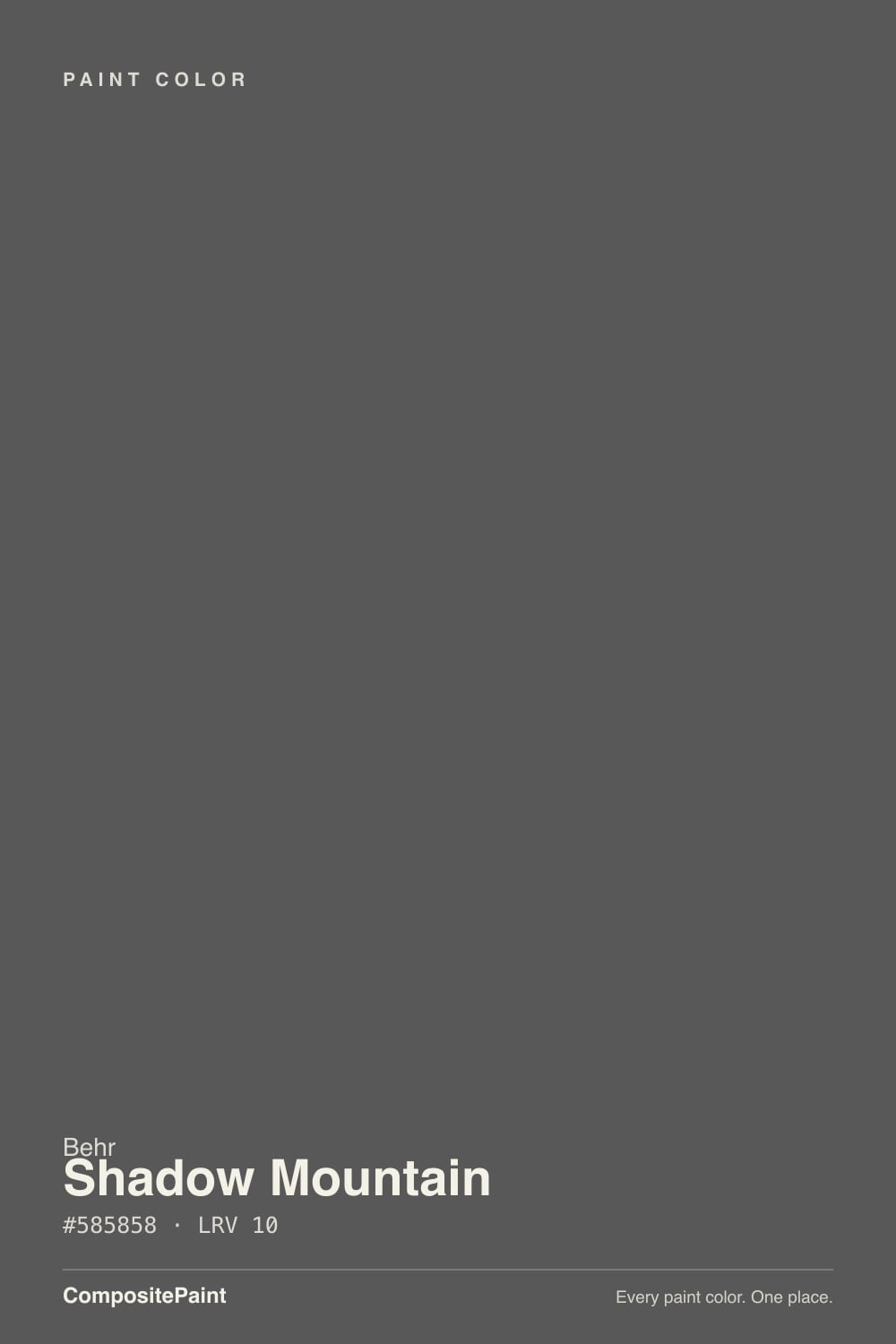
A true mid-charcoal with nothing hiding in it. The hex is #585858 — the same number three times — which is the whole personality. Most dark grays people reach for on shutters and accent walls are either a little brown (Urbane Bronze), a little blue (Graphite), or a chameleon that borrows whatever undertone the room already has (Peppercorn). Shadow Mountain sits in the middle and stays there. Behr files it as a charcoal black; on a chip in the store it can pass for black. On a sunlit shutter or a daylit accent wall it is unmistakably gray, the color of a mountain face in shade, not a can of black enamel.
At LRV 10 it is a real dark. That number is the review. Next to Kendall Charcoal (LRV 15) it looks a step deeper and stricter — Kendall is the better-behaved four-wall gray; this one is the harder charcoal. Next to Iron Ore (LRV 6) it looks the friendlier, more readable option — still dark, still a decision, but you can still see it is gray when the sun hits it. Pale grays wash out on an accent wall; this one holds a hard charcoal in full daylight and then sinks toward black after dusk. Plan for any large surface to read a step deeper than the chip. Depth always does that. Here the surprise is not an undertone — it is how fast the gray disappears when the light does.
Undertone in one line: none. Neutral gray, no blue, no brown, no green, no violet. If the sample looks blue, that is a north window or a cool LED. If it looks brown, that is a brick wall, an oak floor, or 2700K bulbs bouncing into it. If it looks black, the room is too dim. All three are the same paint being honest about where you put it.
Where It Shines
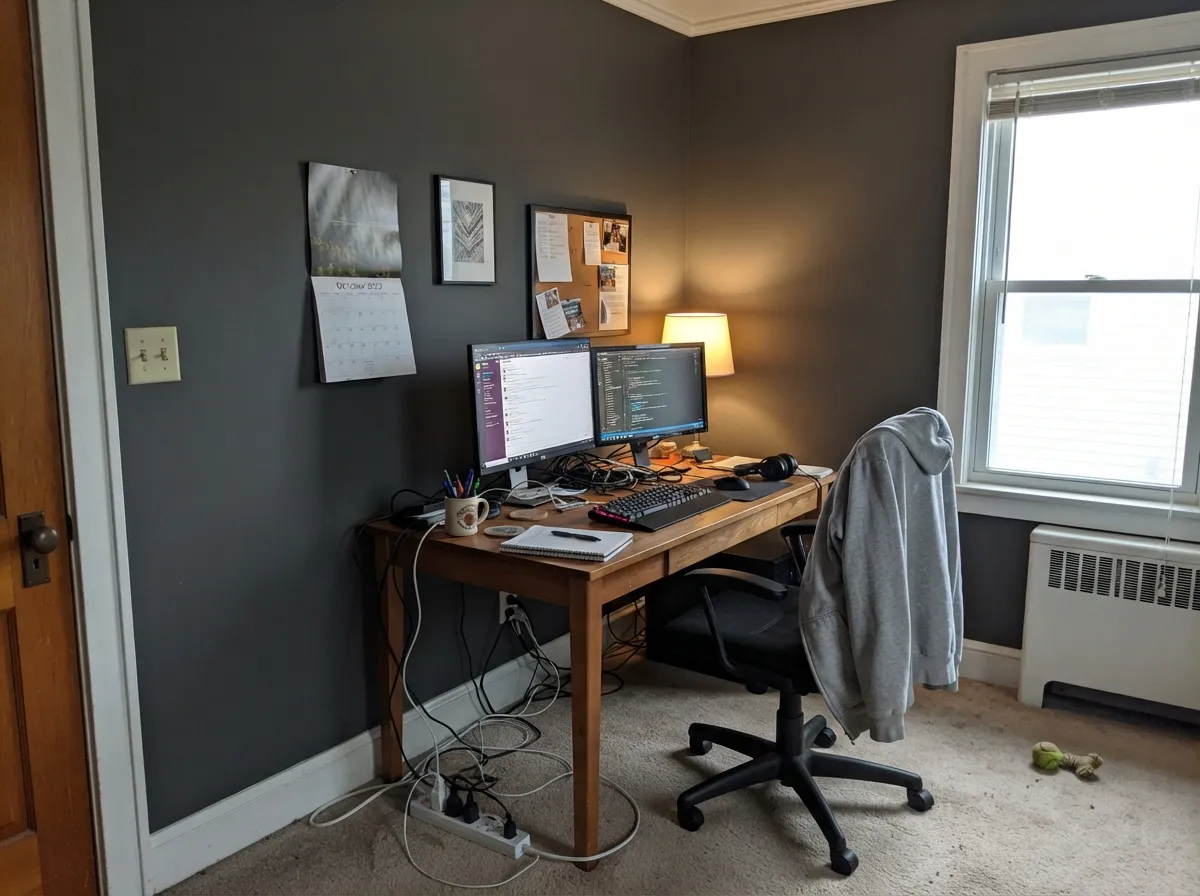
This color is built for surfaces that should read as architecture, not as a mood. On an accent wall, a run of shutters, a garage door, or a whole exterior body, LRV 10 gives you the charcoal designers keep trying to get from black without the deadness of actual black. Full sun is the friend: the gray comes forward, the house looks finished, and nothing in the color fights the brick, the roof, or the trim. Its indoor second home is the lamped room — a home office, a media wall, a powder room — where you want cinematic depth and you are willing to keep the bulbs on. Give it a clean white trim and it looks like it was always the plan.
Where It Fails
Almost every regret story about Shadow Mountain follows one of three scripts, and all three are visible before the first coat. None of them are the paint's fault — but if your room or your siding matches one, this is not your charcoal, and a third coat will not fix it.
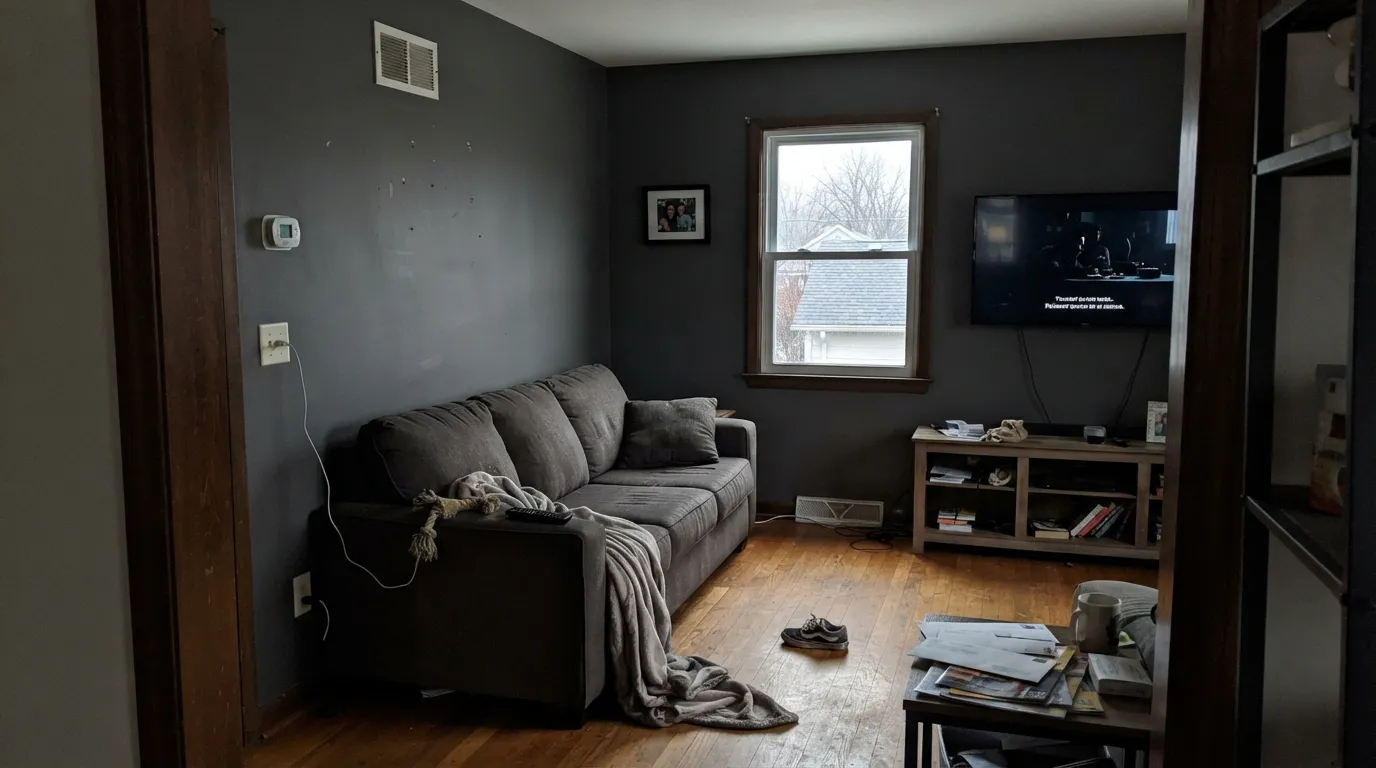
On one accent wall it is charcoal. On four walls in a dim living room it is a cave. LRV 10 reflects almost nothing, so north light, overcast days, and rooms that run on a TV instead of a lamp all turn it into a flat, slightly dusty black. Readers who wanted moody gray get a parking-garage den. The fix is not more paint: keep it to one wall, add 2700K lamps, or pick Kendall Charcoal (LRV 15) and give the room a little air.
On the chip, and in a shaded corner, it passes for black. In daylight it is gray — clearly, cleanly gray — and next to Tricorn Black (LRV 3) or Iron Ore (LRV 6) the gap is obvious. If the goal is a true black door, black window sash, or a black house, this is the wrong can. Shadow Mountain is the color you pick when you want people to ask whether it is black, then decide it is not.
LRV 10 soaks up heat. On wood, fiber cement, and masonry that is a non-issue. On vinyl siding, PVC trim, vinyl windows, and many steel or composite garage doors, dark colors can warp, oil-can, and void the warranty. Factory-baked dark doors exist for a reason. If the manufacturer will not sign off on a color this deep, do not DIY it darker — paint the shutters and the wood door instead.
Room by Room
One wall, real daylight, white trim. That is the interior this color was built for. Behind a sofa, a dining table, or a headboard it gives the room a hard edge without asking the other three walls to live in a cave. Matte or eggshell; Polar Bear or Extra White on the trim. Keep the adjacent walls in a greige (Agreeable Gray, Revere Pewter) so the charcoal is a decision, not a drench.
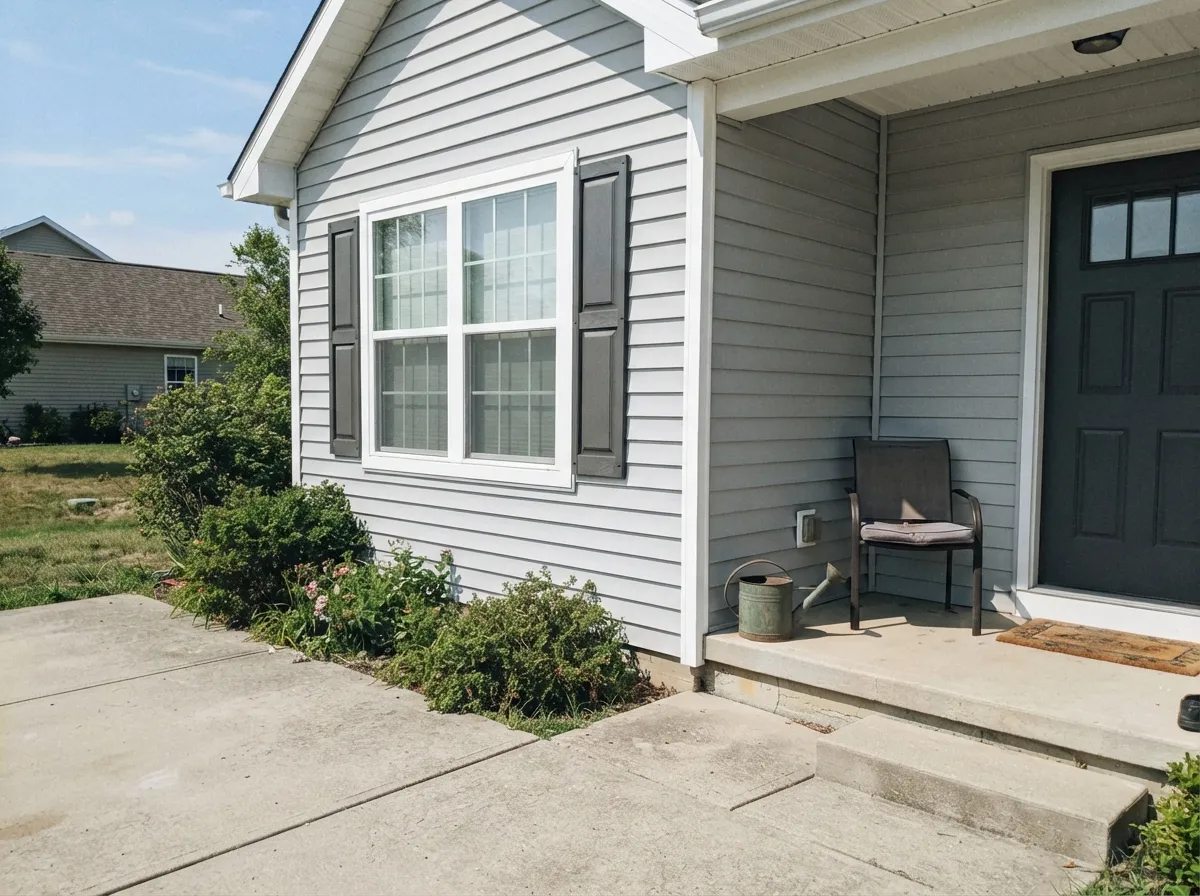
Full sun does what a dim interior cannot: it lifts the gray out of the charcoal so the house reads as a dark, even gray from the street, not a black box. Fiber cement, wood, and stucco take it well. Pair it with a clean white trim — Ultra Pure White or Polar Bear — or reverse it the way a Kansas City Tudor did, with Silver Ash on the body and Shadow Mountain on the trim. Expect to repaint a dark exterior sooner than a light one, especially in hard southern sun.
This is the Home Depot workhorse use. Satin on wood shutters and a wood or fiberglass door is the high-contrast classic against cream, greige, or light-gray siding. A garage door in the same charcoal ties the facade together — but only if the door material can take LRV 10 heat. If it cannot, leave the door factory-dark or pick a lighter gray, and let the shutters carry the color.
It shows up on home-office and home-theater walls for a reason: at LRV 10 the room goes cinematic the minute the lamps are on, and a screen wall in this gray does not compete with the picture. Eggshell for wipeability, 2700K bulbs as part of the paint job. A single north window and no lamps is the version that feels like a basement. Sample that wall at 4pm with the overheads off before committing.
Small rooms take deep color. All four powder-room walls in Shadow Mountain, a white vanity, and one warm sconce is a weekend project that reads custom. Satin on any millwork. Skip it in a windowless hall bath you actually shower in — steam plus LRV 10 plus a builder-white vanity light is how charcoal turns dingy.
A headboard wall or the wall the sofa faces can look expensive. All four walls in an average bedroom, especially a north one, tips from cozy to cave by dinner. Open-plan living rooms have the extra problem of the charcoal having to negotiate with kitchen light and whatever greige the rest of the floor wears. If you love the look and the light is average, keep three walls light and let one wall do the work.
Your Light Is the Risk
Strong sun is the only light that fully keeps the promise: you can see it is charcoal, not black, and the gray looks crisp and even. This is the light the exterior photos were taken in — the reason to buy it.
Cool, weak daylight plus LRV 10 is a black wall. The gray drops out, corners go dead, and a room that looked moody on the chip looks unfinished. Fine on a shutter; disappointing on four walls.
Morning and midday are the honest gray read. Late-day west sun warms the room around it — brick, grass, oak — but the paint itself does not go brown or blue. After dusk it simply goes dark. Sample at noon and at 6pm; you are checking depth, not a hidden undertone.
2700K bulbs keep it a soft charcoal after dark, which is the only indoor version that still feels like a color. Cool 4000K LEDs — including a lot of office tubes and under-cabinet strips — strip any warmth from the room and leave a parking-garage gray. Swap bulbs before you swap paint.
Most complaints about Shadow Mountain are a light mismatch. Upload a photo of your actual room and see it on your walls — then ask for the same wall in north light or evening lamps before you buy a single sample.
Need It From Another Brand?
Any paint counter can custom-tint Behr PPU24-22 directly. If you would rather stay in one brand's own deck, these are the closest stock matches, measured as ΔE2000. Under 2 is a difference you will not see on the wall.
| Brand | Closest color | ΔE | LRV | |
|---|---|---|---|---|
| Sherwin-Williams | PeppercornSW 7674 · Sherwin-Williams | 0.0 | 10 | Color page → |
| Benjamin Moore | Gray2121-10 · Benjamin Moore | 0.0 | 12 | Color page → |
| Valspar | Sable Evening5006-2C · Valspar | 3.8 | 9.9 | Color page → |
| PPG / Glidden | Black WidowPPG0997-7 · PPG / Glidden | 2.0 | 10 | Color page → |
| Glidden | Black WidowPPG0997-7 · Glidden | 1.5 | 10 | Color page → |
| Dutch Boy | Ship's Anchor437-6DB · Dutch Boy | 0.0 | 10 | Color page → |
Similar Behr Colors
The nearest shades to Shadow Mountain within Behr's own range, ranked by perceptual color distance — useful when you want the same look a touch lighter, darker, or warmer.
WCAG 2.1: AA is 4.5 : 1 for normal text, 3 : 1 for large text, AAA is 7 : 1.
Shadow Mountain vs the Colors You're Also Considering
Every Shadow Mountain sample board has the same rivals on it. The numbers show the real lightness gap — then it comes down to which risk you would rather live with.
Pick this when you want a step deeper, a true-neutral gray, and a can you can grab at Home Depot.
Benjamin Moore HC-166 · LRV 15Kendall CharcoalPick this if you want the famous, slightly lighter BM charcoal — more air in the room, still dark, the better four-wall gray.
Pick this when you want the color to stay gray and not pick a fight with the brick, the floor, or the sofa.
Sherwin-Williams SW 7674 · LRV 11PeppercornPick this if you want a dark gray that borrows its undertone from the room — warmer or cooler depending on the light and the neighbors.
Inside the Behr deck, Carbon Copy PPU25-01 at #545554 and LRV 9 is the nearest match and is very slightly darker. Maximum Gray QE-62 at #555657 and LRV 9 leans a touch cooler, while Peppery MQ2-62 at #5D5A57 and LRV 10 and Wright Brown N140-6 at #5D5B58 and LRV 11 both carry warmer, browner casts. Dark Shadows MQ5-02 at #5B595D and LRV 10 is the one with a faint violet lean.
Across brands the matches are unusually exact. Sherwin-Williams Peppercorn SW 7674 at LRV 10, Dutch Boy Ship's Anchor 437-6DB at LRV 10, and Benjamin Moore Gray 2121-10 all share the hex #585858 with a deltaE of 0, though Benjamin Moore publishes an LRV of 12 for theirs. Rodda Iron CA207 at LRV 9 is a deltaE of 1.01 and Glidden Black Widow PPG0997-7 at LRV 10 is 1.5, both visually identical in normal room light. Valspar Sable Evening 5006-2C at LRV 9.9 comes in at 3.79, close but visibly different side by side, reading warmer and slightly greener.
Shadow Mountain Coordinating Colors
The rule for coordinating with Shadow Mountain is contrast, not temperature matching. Because the color has no undertone of its own, it will sit next to warm greige, cool white, oak, and brick without picking a fight — the job is to give it a lighter neighbor so it still reads as gray. These are the partners that keep showing up in rooms and facades that work:
Shadow Mountain on Exteriors
Outside is where this color stops being a mood and starts being a tool. Exterior designers put it in the same dark-charcoal bucket as Kendall Charcoal and Peppercorn: not black, not greige, a curb-side gray that still photographs as a decision. Full sun is required for that read. The shaded north wall will look a full step darker than the south wall — walk a large sample around the house at noon before you commit the body.
Two practical limits come with LRV 10. First, heat: vinyl siding, PVC trim, vinyl windows, and many garage doors are not candidates unless the manufacturer explicitly allows a color this dark. Second, upkeep: dark exteriors show irrigation splash and dirt, and they fade faster than mid-tones — a three-to-five-year repaint cycle in hard sun is the honest expectation, not an eight-to-ten. Satin hides more than flat and still looks like paint, not plastic. If you want the black-house look, Iron Ore or Tricorn Black is the can; if you want the house to still be gray from the street, stay here.
Shadow Mountain With Wood Tones and Floors
No undertone means fewer floor fights than almost any other dark gray. Walnut, espresso, pale white oak, and gray-washed floors all sit comfortably against it because the wall is not pushing them warmer or cooler. Honey oak is the one pairing to sample in place: a true charcoal makes orange oak look more orange by contrast, but it will not go purple the way a violet-gray would. A large rug splits the difference if the oak is staying.
Brick, concrete, black metal, and pale stone are the natural outdoor company. Metals indoors are easy: matte black, antique bronze, unlacquered brass, and chrome all work, because there is no color in the wall for them to argue with. The decision that actually matters is still the light — wood cannot save a four-wall drench in a dim room.
Three Ready Palettes Built on Shadow Mountain
A color is never alone on the wall. These are complete combinations in the 60-30-10 pattern, with the reason each one holds together. Every one opens in the visualizer.
One hard charcoal wall against a safe greige is how this color earns its keep indoors. Agreeable Gray keeps the rest of the room light; Polar Bear trim cuts a clean edge so the accent reads intentional instead of like a leftover dark wall.
Try this palette in your roomThe Kansas City Tudor move, scaled to any light-bodied house: a pale gray body, charcoal on the shutters and door, and the sharpest Behr trim white so the dark reads as architecture. Ultra Pure White belongs on the trim here, not on the walls.
Try this palette in your roomWhite Dove is the softer trim white, so the office stays charcoal instead of high-contrast gallery. Revere Pewter in the hall is a greige handoff that will not make the charcoal look dusty, and 2700K desk lamps are not optional.
Try this palette in your roomShadow Mountain FAQ
Is Shadow Mountain gray or black?
Gray — a mid-charcoal that only looks black when the light is gone. Behr markets it as a charcoal black, and in a shaded corner the chip will fool you. In daylight, next to Iron Ore or Tricorn Black, it is clearly gray. If black is what you actually want, this is the wrong color.
What trim white goes with Shadow Mountain?
A clean, bright white on exteriors and accent walls — Polar Bear, Ultra Pure White, or Extra White — so the charcoal has a hard edge. White Dove or Alabaster if you want a softer, warmer cut. A creamy off-white will make the gray look a little dirty by comparison; a yellowed builder white will make it look blue. Semi-gloss on the trim, matte or eggshell on the wall.
Can I paint a whole house Shadow Mountain?
Outside, yes, on wood, fiber cement, or stucco, with white trim and a plan to repaint sooner than a light color. Inside, almost never on every wall. LRV 10 on four walls of an average room is a cave. Use it as the accent, the door, the shutter, or the office — not as the whole-house interior.
Can I paint vinyl siding or a garage door this color?
Only if the manufacturer says a color at LRV 10 is allowed. Dark paint soaks up heat; vinyl, PVC trim, vinyl windows, and many steel or composite garage doors can warp, and the warranty often dies with the first coat. Wood shutters and a wood or fiberglass front door are the safe version of the same look.
Is it good for an accent wall?
That is its best indoor job. One wall, real daylight, white trim, and a lighter greige on the other three. Matte hides texture; eggshell wipes. Skip the four-wall drench unless the room is small, lamped, and you already know you like living in the dark.
Shadow Mountain or Kendall Charcoal?
Kendall Charcoal (LRV 15) is the lighter, more famous dark gray and the better four-wall interior. Shadow Mountain (LRV 10) is deeper, more strictly neutral, and the better shutter, door, and accent-wall charcoal if you shop Behr. If the room is dim, Kendall. If the job is exterior contrast, Shadow Mountain.
Have you painted with Shadow Mountain?
Rate it — one tap helps the next reader decide.
Ask a Question