Cottage Hill
Behr's dusty Home Decorators sage, reviewed honestly: the cabinets and mudrooms where it looks farmhouse, the light that turns it avocado, and what to pick instead.

Jessica has spec'd whites and neutrals for more than 300 rooms and keeps a sample wall of painted drawdowns in her studio. Every color review is checked against real reader rooms in the comments and re-tested when a formula changes. About the testing process →
- 1Sage Green22
- 2Evergreen Fog30
- 3Cottage Hill44
- 4Softened Green49
- 5Soft Fern57
The Fast Verdict
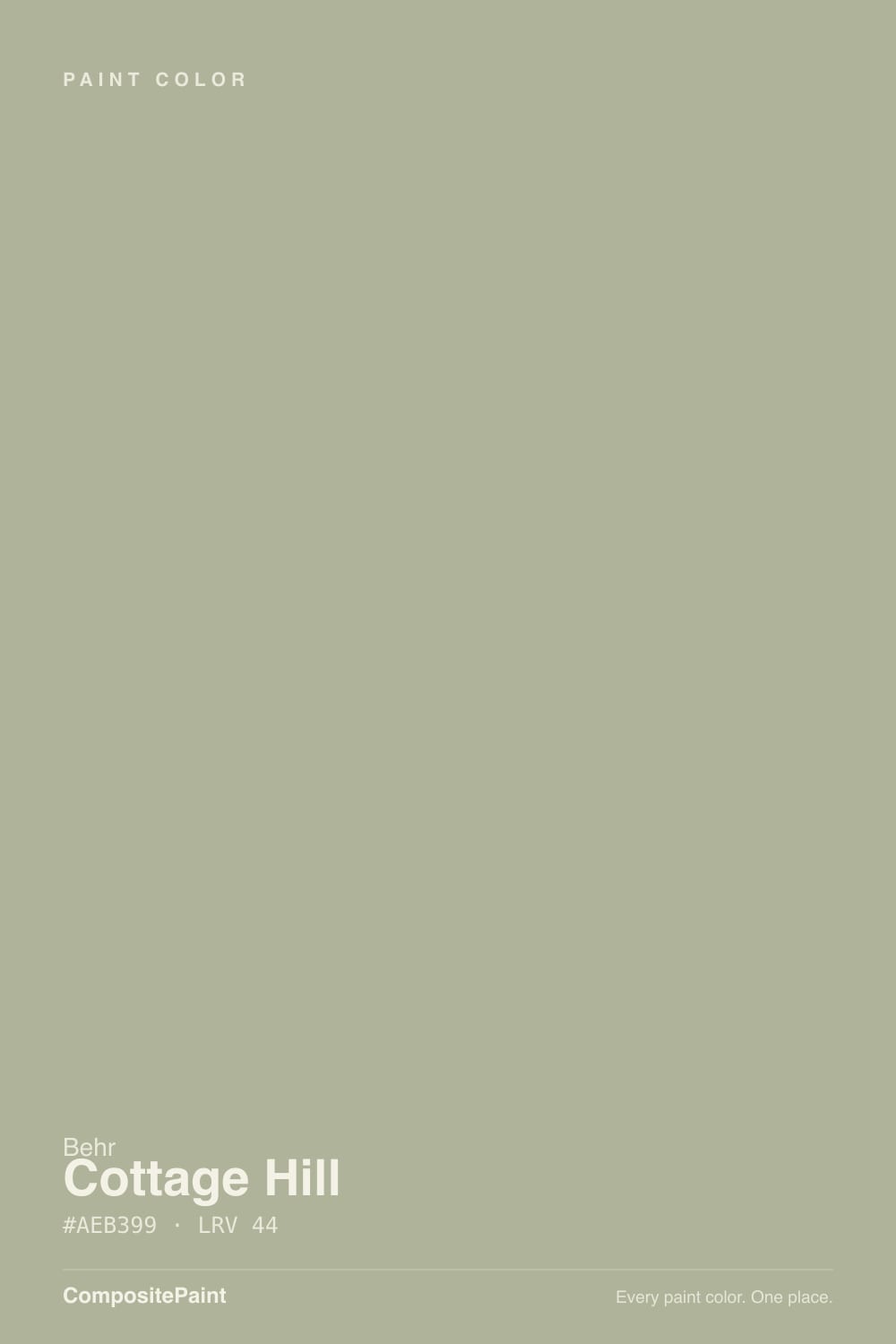
Cottage Hill is a dusty mid-light sage with a yellow-olive lean — greener than Simply Sage, lighter than Evergreen Fog, and exclusive to Home Depot's Home Decorators Collection. At LRV 44 it works as a whole-room wall and as satin cabinets. South light keeps it weathered and herbal. North light and warm bulbs pull a yellow that owners call avocado. Buy it for mudrooms, painted boxes, and daylit farmhouse walls. Do not buy it hoping for a gray sage.
Kitchen cabinets and mudrooms · daylit living rooms and bedrooms · farmhouse walls with cream trim and oak · anyone who wants a dusty yellow-sage they can buy at Home Depot on Saturday
You wanted a gray sage like Evergreen Fog · the room is small, north, and dim · you hate any yellow or avocado lean · your floors are cool gray LVP · you need a famous Sherwin-Williams name for resale talk
- LRV 44 — light enough for four walls, deep enough for satin cabinets
- Actually reads as sage, not as another Home Depot gray
- Home Depot stocks the same code as wall paint and cabinet enamel
- Warm yellow-olive meets honey oak, walnut, and brass halfway
- South and west light make it look weathered and expensive, not pastel
- Not a gray sage — buyers expecting Evergreen Fog see yellow-green by the second wall
- Small north rooms pull it darker and toward avocado
- Cool gray floors and 4000K LEDs make the yellow look dirty
- Almost no famous-room track record — you are sampling without a crowd
What Color Is Cottage Hill, Really?
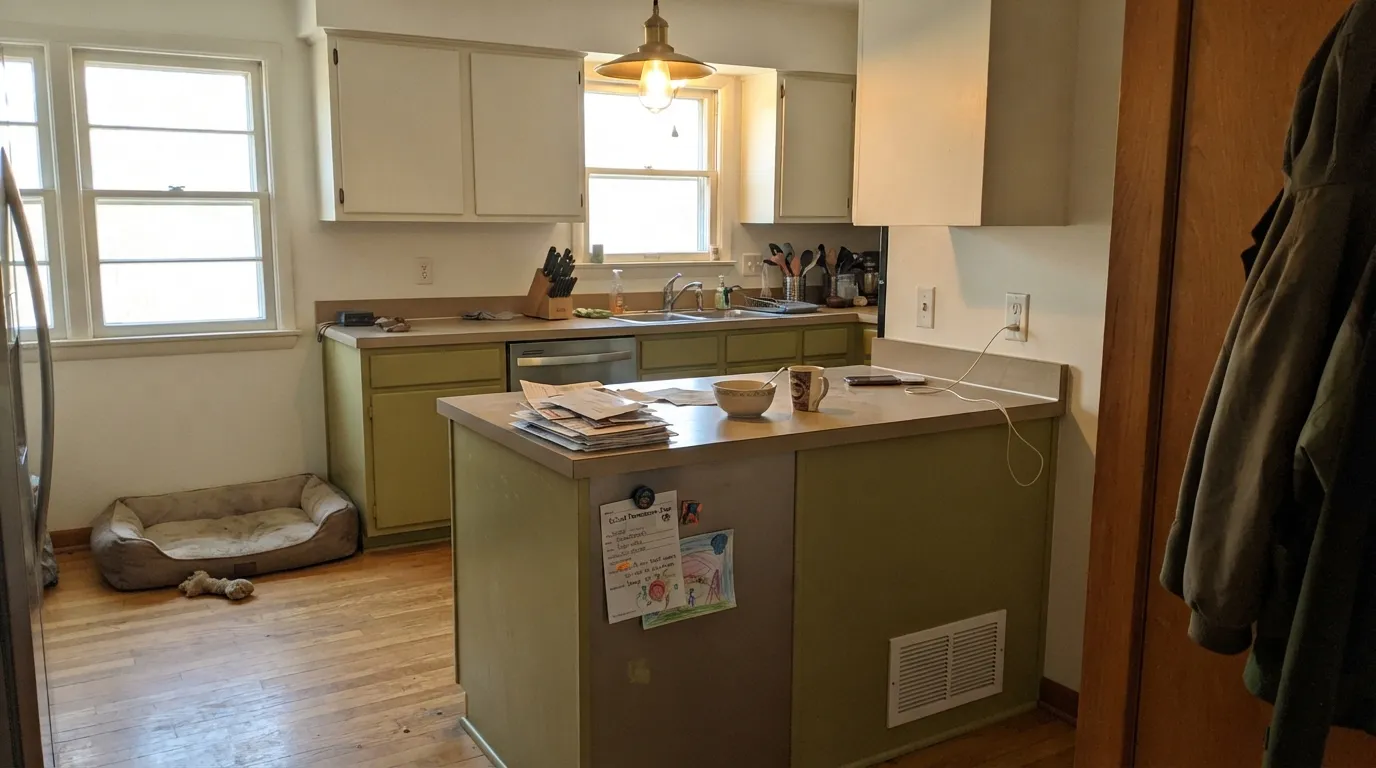
A dusty yellow-green sage with a soft olive cast — farmhouse herb, not mint, not pine. Saturation is only about 15 percent, so on a chip it can pass for a weathered greige; on four walls the green is obvious. Hue 72 sits in the yellow-green part of the wheel, which is the whole personality: Cottage Hill is the Home Depot sage that still looks like a plant, not a stone. Behr files HDC-CT-28 in the Home Decorators Collection, sold only at The Home Depot, and the same code is already mixed as a satin and semi-gloss cabinet, door, and trim enamel. That is how the store thinks of it: a furniture color that also works on walls. It is not a Color of the Year and it has no famous room attached to it.
At LRV 44 it sits in the useful middle of the sage shelf. Clary Sage (SW 6178, LRV 41) is a hair deeper and the genuinely easy herbal sage most people should sample first. Simply Sage (PPU10-16, LRV 38) is the grayer Behr cousin that almost forgets to be green. Evergreen Fog (SW 9130, LRV 30) is a full step deeper and the cabinet sage with a decade of owner photos. Frosted Sage (N400-2, LRV 62) is the pale mint version. Cottage Hill is the lighter, yellower farmhouse chip: deep enough that cabinet doors read as painted furniture, light enough that a living room still breathes. Plan for four walls to read a half-step deeper and more olive than the card. Every yellow-green does this once it leaves the aisle.
Undertone in one line: yellow-olive first, dusty gray second — never blue, never mint. If the sample looks like a weathered garden wall, that is south or west light doing its job. If it looks avocado or a little 1970s, the room is small, north, or running on warm bulbs with no daylight. If it looks like plain stone, you are standing it next to a saturated green. All three versions are the same gallon being honest about the room.
Where It Shines
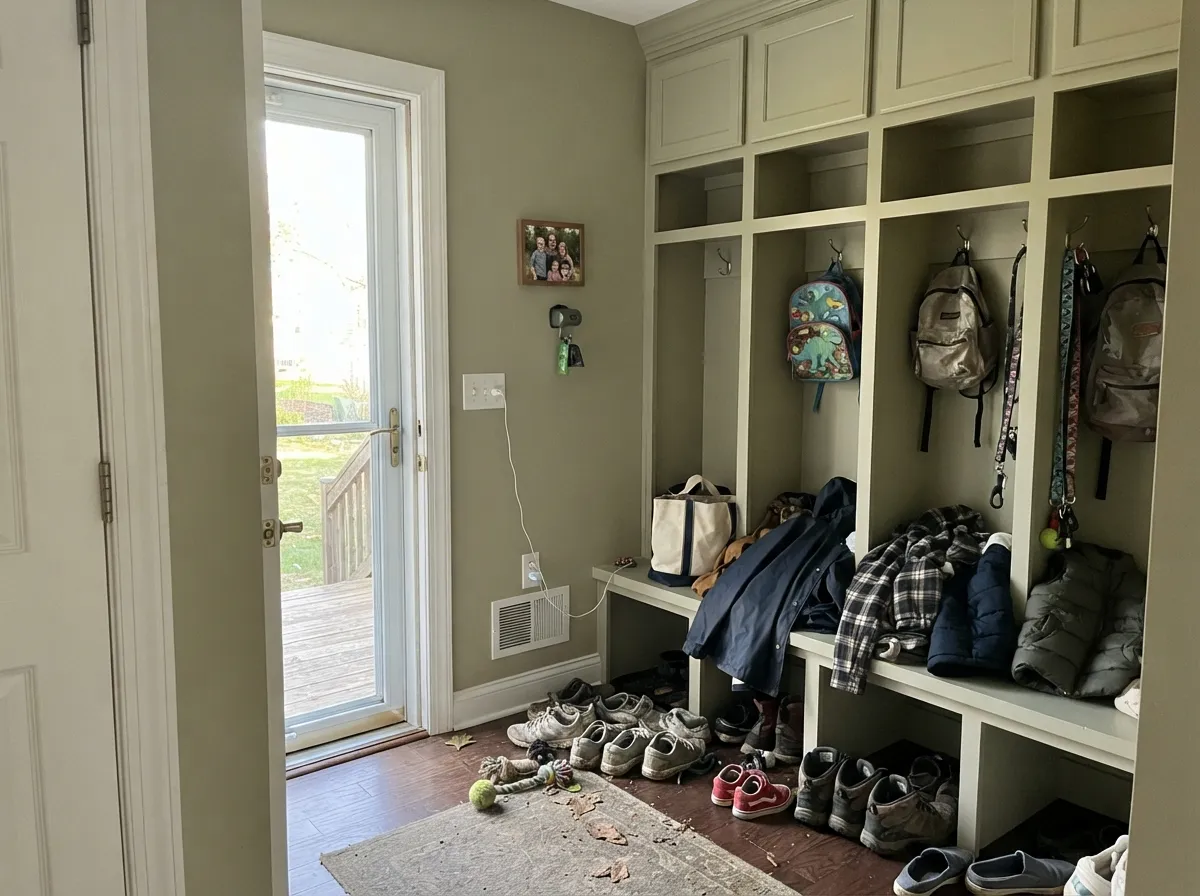
This color is built for surfaces that should feel collected, not decorated: satin cabinets, a mudroom of lockers, four walls in a daylit living room with oak and cream linen. Give it south or west light and the yellow stays dusty instead of loud — the exact muted farmhouse green people come to the HDC rack for. Its second home is the small commitment: a vanity, an island, a run of built-ins, where LRV 44 reads custom without asking the whole house to go green. Pair it with White Dove or Alabaster, unlacquered brass, and real wood, and it looks like it came with the house.
Where It Fails
Almost every unhappy story about Cottage Hill follows one of three scripts, and all three are visible on a sample board before you open a gallon. None of them are a coverage problem. If your room matches one, this is not your sage, and a third coat will not fix it.
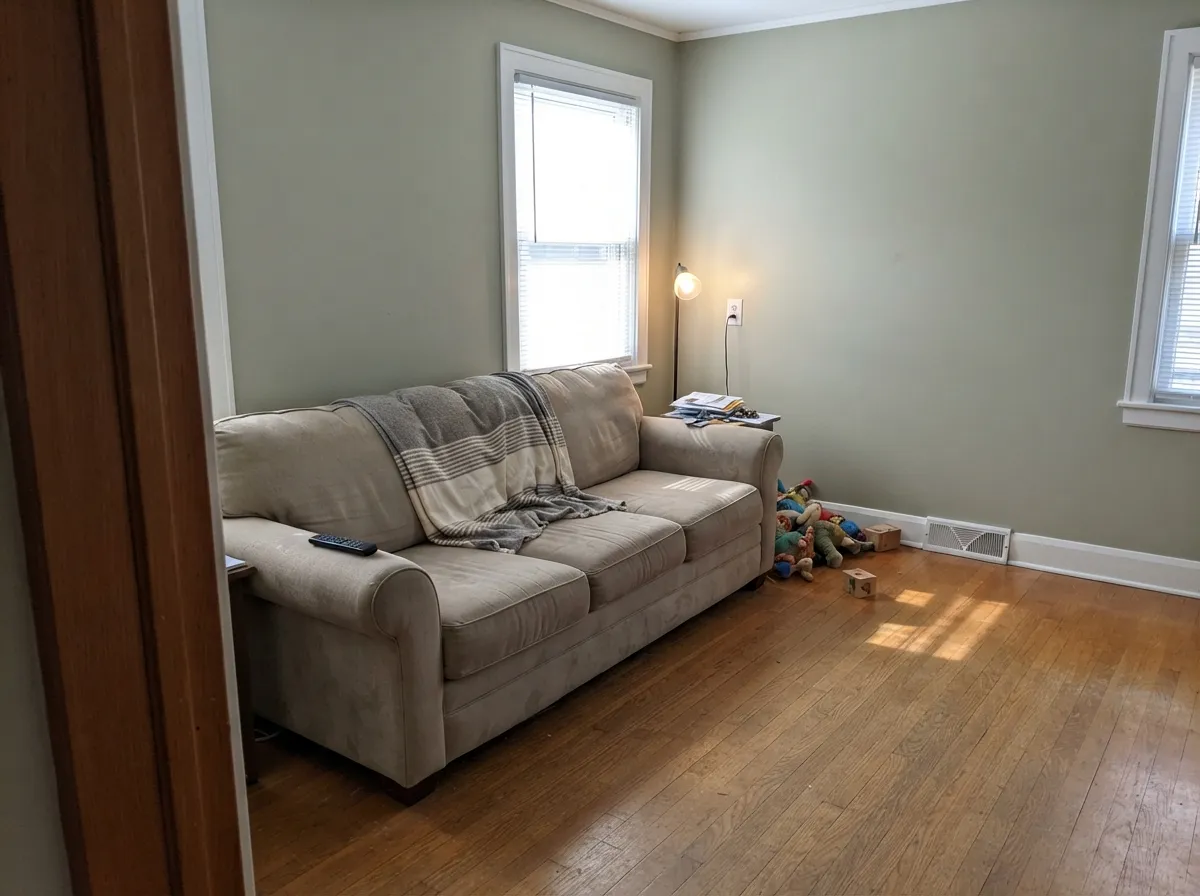
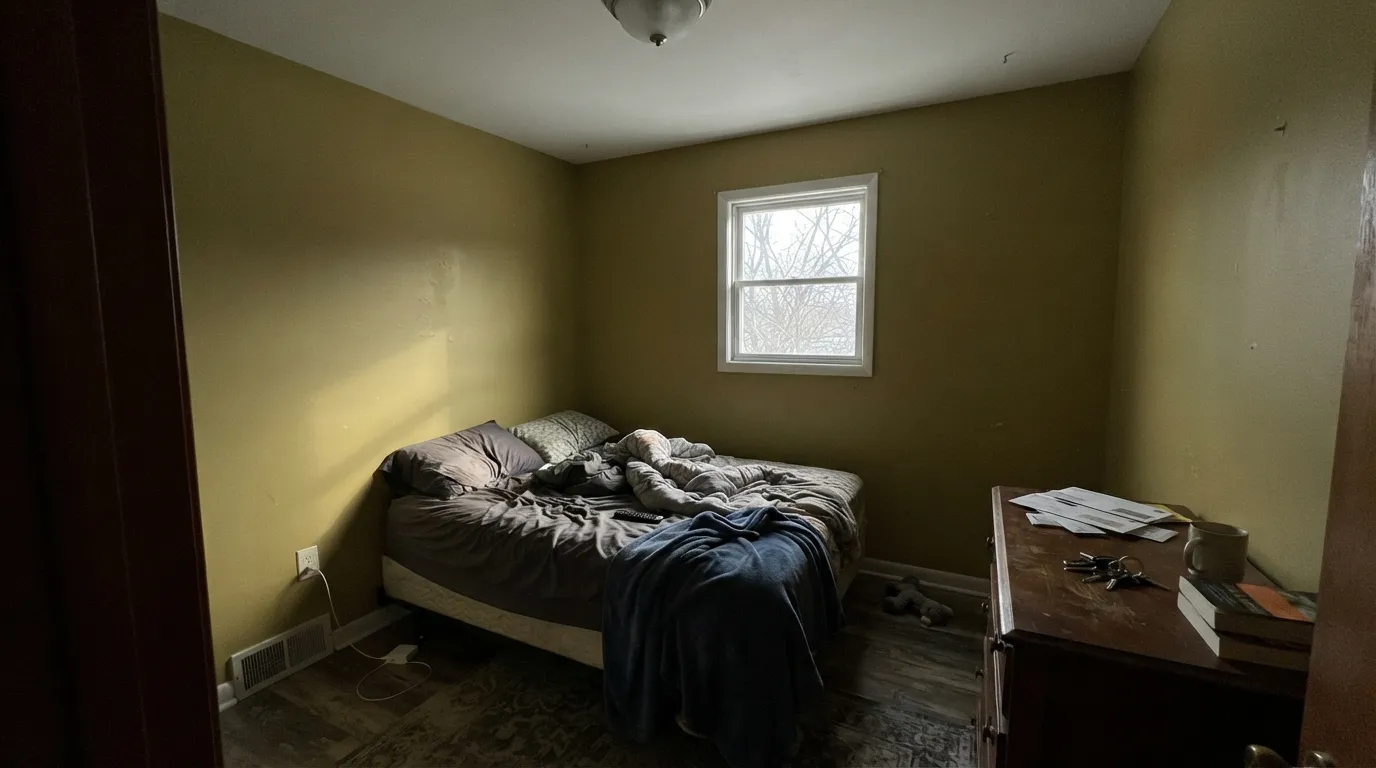
Cool, weak daylight plus four close walls is the version owners actually post: Cottage Hill pulls a lot darker than the chip, and the yellow that was supposed to fight the blue light becomes the only thing you see. A tiny north bedroom is the documented miss — one window, overheads only, walls that bounce olive onto themselves. At LRV 44 there is not enough bounce to rescue that room. Warm lamps help after dark; they will not rewrite the daylight. In that light go lighter and cooler with Sea Salt (LRV 63) or Frosted Sage (LRV 62), or pick a greige and stop asking a yellow-sage to brighten a cave.
On the chip the dust does the selling. On four walls — or a full run of cabinets — the green is unmistakable, and in warm light it can lean avocado. That is the owner complaint that keeps showing up: too green, too saturated, a yellow undertone they did not see in the aisle. If the Pinterest save was Evergreen Fog or Simply Sage, this chroma is too high and this yellow is too loud. Step to Simply Sage (LRV 38) when you want the Behr that files as gray, or to Evergreen Fog when you want the famous cabinet sage. Keep Cottage Hill for people who actually wanted the herb to show.
Yellow-olive sits across the wheel from blue-gray. Cool gray LVP, gray-washed wood, and leftover 4000K kitchen LEDs all push Cottage Hill toward mustard while the floor goes colder. Both sides lose. Swap every bulb to 2700K–3000K before you blame the paint. If the cool floor is staying, this is the wrong green — Sea Salt or a true gray-green will argue less.
Room by Room
This is the job the collection was mixed for, and Home Depot already sells HDC-CT-28 as a satin and semi-gloss cabinet, door, and trim enamel. Satin on the boxes or an island, a light perimeter in Alabaster or White Dove, oak or walnut, brass or bronze pulls. At LRV 44 the doors read as painted furniture without the cave of Pewter Green (SW 6208, LRV 12) or the fame-tax of Evergreen Fog. Full uppers and lowers in a small, dark kitchen is the version that closes in and goes olive — keep the perimeter light unless the room is large and south-facing. 2700K under-cabinet strips are part of the spec.
Lockers, a bench, and a row of hooks in satin Cottage Hill is why this chip exists. The mid-light sage hides scuffs better than a cream, and it still reads as a color when the back door opens. Eggshell on the walls, satin on the built-ins, White Dove or Polar Bear on the trim. A window helps. A windowless mudroom on a cool shop light is the avocado-box version — warm the bulbs or keep the color on the lockers only.
A south or west bedroom with cream bedding and warm lamps is restful, not themed. Eggshell, White Dove trim. The documented fail is the small north bedroom: four walls at LRV 44 read a step darker and yellower than the card, and owners who wanted a soft sage get an olive box. If you love the chip but the light is average, keep three walls in White Dove and let one headboard wall carry the green.
A south living room with oak, a worn sofa, and cream linen can wear Cottage Hill as a whole-room dusty sage without the farmhouse weight of a deeper green. It behaves like a colored neutral as long as the sun is in the room. A north living room will look like someone mixed olive with a rumor of khaki. Eggshell walls; do not run it whole-house if half the rooms face north.
Small rooms take this mid-light sage well, and you can control the bulbs. Satin on a vanity under a warm stone top, or all four powder-room walls in eggshell with brass and a cream towel. It looks custom without betting the house. Cool gray tile is still a no — it will push the yellow into mustard.
Behr tints HDC-CT-28 into exterior bases, and the dusty sage can sit well as a body color among trees or on shutters and a garage door against cream siding. Full sun pulls a little more herb; the shaded north side will read a step deeper and more olive. It is not a headline exterior color. Sample the sunny side and the shade before you commit a facade, and keep trim in a separate warm white — Ultra Pure White on the casings will make the body look dingy from the street if you wanted dusty, not mint.
Your Light Is the Risk
Warm daylight keeps the yellow dusty and the sage herbal. This is the exposure the color was mixed for — cabinets, mudrooms, and living rooms that actually see the sun.
Cool gray daylight plus close walls make Cottage Hill read darker and yellower than the chip. A small north bedroom is the documented miss. Test first, or pick a lighter cooler green.
East morning is the cooler, dustier read. West afternoon and golden hour pull the olive forward and the wall looks a half-step greener and more yellow for an hour. Sample both hours on the same wall.
2700K–3000K bulbs wake the yellow and the sage stays warm after dark — too many of them in a dim room is how the avocado note shows. 4000K and cool white LEDs flatten it to a dirty gray-green. Swap the bulbs, not the paint.
Most complaints about Cottage Hill are a light mismatch. Upload a photo of your actual room and see it on your walls — then ask for the same wall in north light or evening lamps before you buy a single sample.
Need It From Another Brand?
Any paint counter can custom-tint Behr HDC-CT-28 directly. If you would rather stay in one brand's own deck, these are the closest stock matches, measured as ΔE2000. Under 2 is a difference you will not see on the wall.
| Brand | Closest color | ΔE | LRV | |
|---|---|---|---|---|
| Sherwin-Williams | Cascade GreenSW 66 · Sherwin-Williams | 2.9 | 43 | Color page → |
| Benjamin Moore | Urban NatureAF-440 · Benjamin Moore | 1.7 | 44 | Color page → |
| Valspar | Green Trellis5006-3C · Valspar | 3.5 | 43.3 | Color page → |
| PPG / Glidden | GargoylePPG1127-4 · PPG / Glidden | 2.6 | 43 | Color page → |
| Glidden | GargoylePPG1127-4 · Glidden | 2.1 | 43 | Color page → |
| Dutch Boy | Refuge Green327-3DB · Dutch Boy | 1.8 | 45 | Color page → |
Similar Behr Colors
The nearest shades to Cottage Hill within Behr's own range, ranked by perceptual color distance — useful when you want the same look a touch lighter, darker, or warmer.
WCAG 2.1: AA is 4.5 : 1 for normal text, 3 : 1 for large text, AAA is 7 : 1.
Cottage Hill vs the Colors You're Also Considering
Every Cottage Hill sample board has the same rivals on it. The numbers show the real lightness gap — then it comes down to which risk you would rather live with.
Pick this when you want the slightly lighter, yellower Home Depot dusty version, and you are already in that aisle.
Sherwin-Williams SW 6178 · LRV 41Clary SagePick this if you want the genuinely easy herbal sage — a hair deeper, famous, and the one lighting weakness is worth it when green is the point.
Pick this when the herb should still show from the doorway. Cottage Hill is the one that actually looks like a plant.
Behr PPU10-16 · LRV 38Simply SagePick this if you want the grayer Behr sage that almost files as stone — less yellow, less green, safer if avocado is your fear.
Pick this when you want the same farmhouse idea lighter and more yellow, and you are tinting at Home Depot.
Sherwin-Williams SW 9130 · LRV 30Evergreen FogPick this for the best cabinet sage in the SW deck — a full step deeper, famous, and the one most people should sample first.
Within Behr, Dill Seed PPU9-20 at LRV 43 is a hair warmer and slightly less green. Field Khaki BXC-22 at LRV 44 carries more yellow, so it leans khaki rather than sage. Spring Walk PPU10-06 at LRV 42 is a touch darker and yellower again. Environmental PPU11-09 at LRV 45 is the grayest and lightest of the group, useful if Cottage Hill looks too green in your room.
Across brands, C2 Ming C2-686 at LRV 45 and deltaE 1.24, Magnolia Home Seasonal JG-51 at LRV 43 and deltaE 1.34, and Benjamin Moore Urban Nature AF-440 at LRV 44 and deltaE 1.72 are all visually identical in normal room light. Sherwin-Williams Cascade Green SW 66 at LRV 43 and deltaE 2.89 is very close but worth sampling first, since it sits a little grayer. Farrow and Ball French Gray No. 18 at LRV 42 and deltaE 3.63 is close but visibly different side by side, reading warmer and more olive.
Cottage Hill Coordinating Colors
The rule for coordinating with Cottage Hill: warm whites, deeper gray-sages, and one near-black — and keep icy whites and cool gray floors at arm's length. It wants a soft farmhouse edge, not a gallery one. These are the partners that keep showing up in rooms that work:
Why This Chip Lives in the Home Decorators Aisle
Cottage Hill is not in Behr's main numbered strips. It is HDC-CT-28, a Home Decorators Collection color mixed only at The Home Depot, which is why you will not find a famous designer room attached to it and why the owner photos that do exist are bedrooms, mudrooms, and cabinet projects rather than magazine kitchens. The collection is built for people who want a finished farmhouse look without a Sherwin-Williams fan deck: dusty greens, putty neutrals, and cabinet-ready mid-tones you can grab on a Saturday.
That origin is also the honest limit. There is no Color of the Year story, no viral island, no decade of resale talk. What you get instead is a color Home Depot already sells as wall paint and as cabinet enamel, at a depth that works on both. If you need a name a buyer will recognize, sample Evergreen Fog or Clary Sage. If you need the dusty yellow-sage and you are already in that aisle, this is the can.
Cottage Hill With Wood Tones and Floors
This decision gets made at the floor, not the paint store. Honey oak, walnut, butcher block, and pale unstained white oak all sit comfortably against Cottage Hill because the yellow-olive meets their warmth halfway — one of the few sages that softens orange builder oak instead of fighting it. Rattan, linen, unlacquered brass, and aged bronze are the easy extras.
The one honest no is cool gray: gray LVP, gray-washed wood, blue-gray tile, and a stark blue-based trim white. Each side exaggerates the other — the floor goes colder, the wall goes mustard-olive, and no amount of coats fixes geometry. If the gray floor is staying, put a large warm rug between it and this paint, or choose Sea Salt or Simply Sage and keep the green without the yellow fight.
Metals are simple: unlacquered brass, antique bronze, and matte black all work. Polished chrome is the one that leans cold against it.
Three Ready Palettes Built on Cottage Hill
A color is never alone on the wall. These are complete combinations in the 60-30-10 pattern, with the reason each one holds together. Every one opens in the visualizer.
Alabaster is a superb cabinet white, so Cottage Hill on the boxes reads furniture, not a themed kitchen. Evergreen Fog on one deeper piece is the same farmhouse sage family a step down — two depths, one mood, brass hardware. Skip this scheme over cool gray LVP.
Try this palette in your roomWhite Dove is the safest warm white against this yellow-sage — a stark bright casing would make the walls look dingy. Iron Ore is the best black for a whole house if you respect LRV 6, and one near-black note keeps the mudroom from reading as a pastel box. Warm the bulbs; this scheme dies under a cool shop light.
Try this palette in your roomAccessible Beige is the safest warm neutral, and it shares Cottage Hill's yellow-warm lean, so a sage dining room or mudroom off a beige main floor reads like the same house getting quieter, not a color change. White Dove trim ties both back together. Cool light will gray the beige and yellow the sage — sample the doorway.
Try this palette in your roomCottage Hill FAQ
Is Cottage Hill green or gray?
Green — dusty, yellow-leaning, but green. On a chip the gray dust can fool you. On four walls or a run of cabinets nobody will call it greige. In south light it reads as weathered sage; in a small north room it goes olive. If you want a color that stays gray-first from the doorway, this chroma is too high — look at Simply Sage or Evergreen Fog.
What trim white goes with Cottage Hill?
A warm, slightly grayed white. White Dove is the default; Alabaster if you want the Sherwin-Williams version of the same calm. Polar Bear is the Home Depot same-aisle option and it behaves. Ultra Pure White on the casings is the crisp Home Depot pairing some guides suggest, but at LRV 97 it can make this dusty sage look dingy next to the bright edge. Behr Swiss Coffee is the miss in the other direction — it is the warmest of the safe off-whites, and stacked on this already-yellow sage it shows. Semi-gloss on the trim, eggshell on the walls.
Is it good for kitchen cabinets?
Yes — that is its best use. Home Depot already sells the code as a satin and semi-gloss cabinet, door, and trim enamel. It works on lowers, an island, or a full perimeter in a daylit kitchen with Alabaster or White Dove walls. A whole kitchen of Cottage Hill cabinets over cool gray floors is a color fight, and a small dark kitchen of all-sage boxes is how the avocado note wins. Satin urethane-fortified enamel either way.
Does Cottage Hill work with oak floors?
Warm wood is the easy pairing. Honey oak, walnut, and pale white oak all meet the yellow undertone halfway, which is why this dusty sage is kinder to builder oak than a cool mint like Frosted Sage. The honest no is cool gray LVP and gray-washed wood: they push the yellow into relief and the wall looks dirty. Sample a big board over the actual floor.
How does it compare to Clary Sage and Evergreen Fog?
Clary Sage (SW 6178, LRV 41) is the genuinely easy herbal sage — a hair deeper, clearly green, with a decade of rooms. Evergreen Fog (SW 9130, LRV 30) is a full step deeper and the cabinet sage most people should sample first. Cottage Hill is lighter and yellower than both. It is the Home Depot dusty sage, not the famous one. If resale talk matters, sample Evergreen Fog first.
Will it look too dark in a bedroom?
In a south or west bedroom, no — LRV 44 is a mid-light, not a cave. In a small north bedroom with one window, yes: owners report it pulling a lot darker and yellower than the chip once all four walls are done. If that is your room, sample a big board at night and at noon, or keep Cottage Hill on one wall and paint the rest White Dove.
Have you painted with Cottage Hill?
Rate it — one tap helps the next reader decide.
Ask a Question