Black Evergreen
Behr's deep gray-green reviewed honestly: the light where it actually reads as a color, the light where it goes flat black, and where it earns its keep — mostly outside the front door.

Jessica has spec'd whites and neutrals for more than 300 rooms and keeps a sample wall of painted drawdowns in her studio. Every color review is checked against real reader rooms in the comments and re-tested when a formula changes. About the testing process →
- 1Black Evergreen8
- 2Kendall Charcoal15
- 3Retreat21
The Fast Verdict
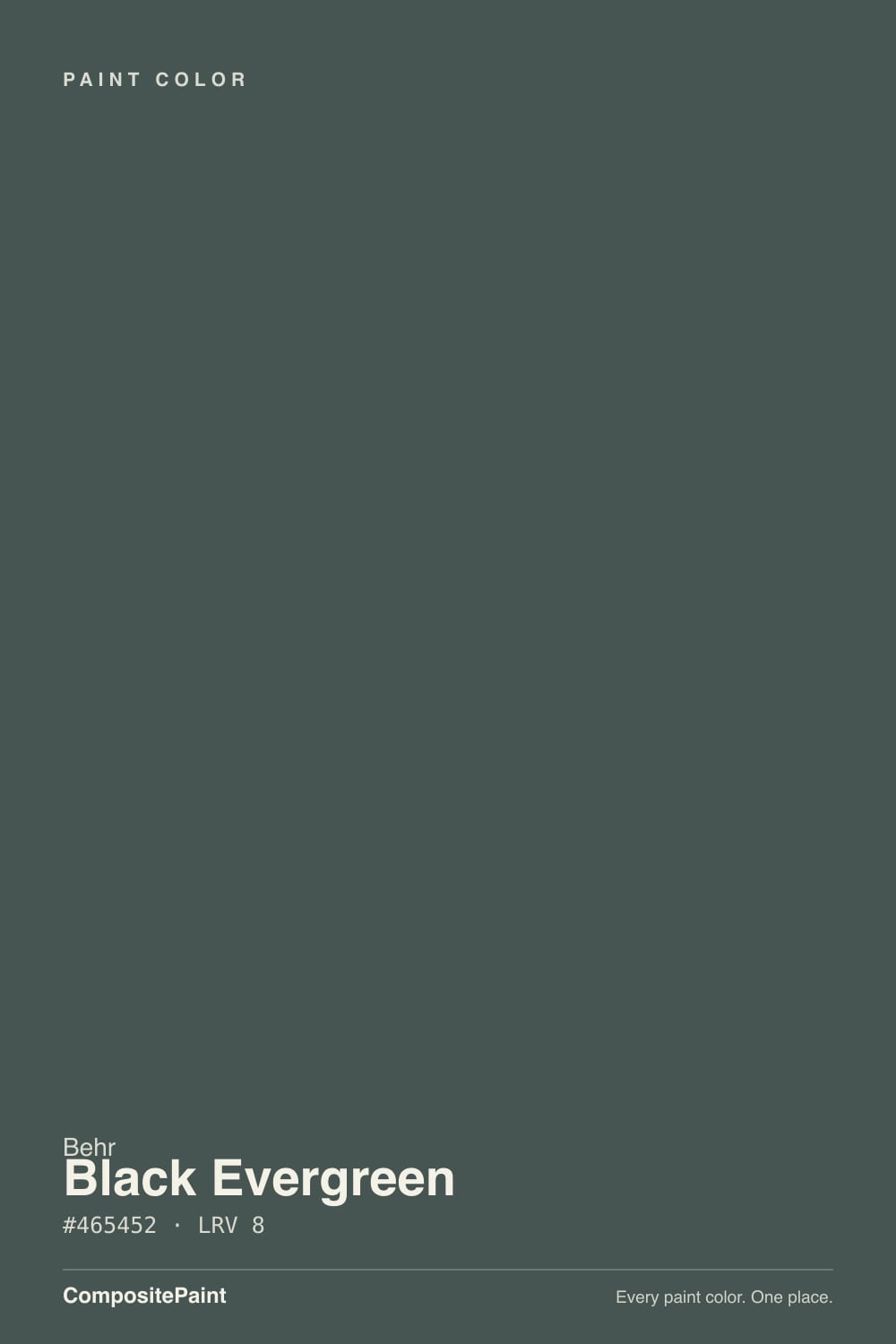
Black Evergreen is what a near-black looks like when a paint company starts with a forest color and grays it down instead of starting with black and adding a hint of green. At LRV 8 it behaves like most of the other designer near-blacks — dark enough to disappear in low light — but catch it in real sun, on a shutter or an island, and the blue-green surfaces clearly. It has no Color of the Year story and no viral moment; it is a quiet workhorse that shows up most often on exteriors, not walls.
Exterior shutters, doors and trim on a traditional or modern-farmhouse house · kitchen islands paired with a cool white · dens and home offices that want a near-black with more character than true black · anyone who wants "designer black" without paying for the famous name
You want a true neutral black with zero color (pick Iron Ore or Tricorn Black instead) · the room is dim with no direct light source · your trim and floors are warm honey oak with nothing cool to balance them · you're chasing a color with name recognition — almost nobody at the paint counter has heard of this one
- A genuine gray-green, not a flat void, whenever real light reaches it
- One of the more dependable near-blacks for exterior shutters, doors and trim
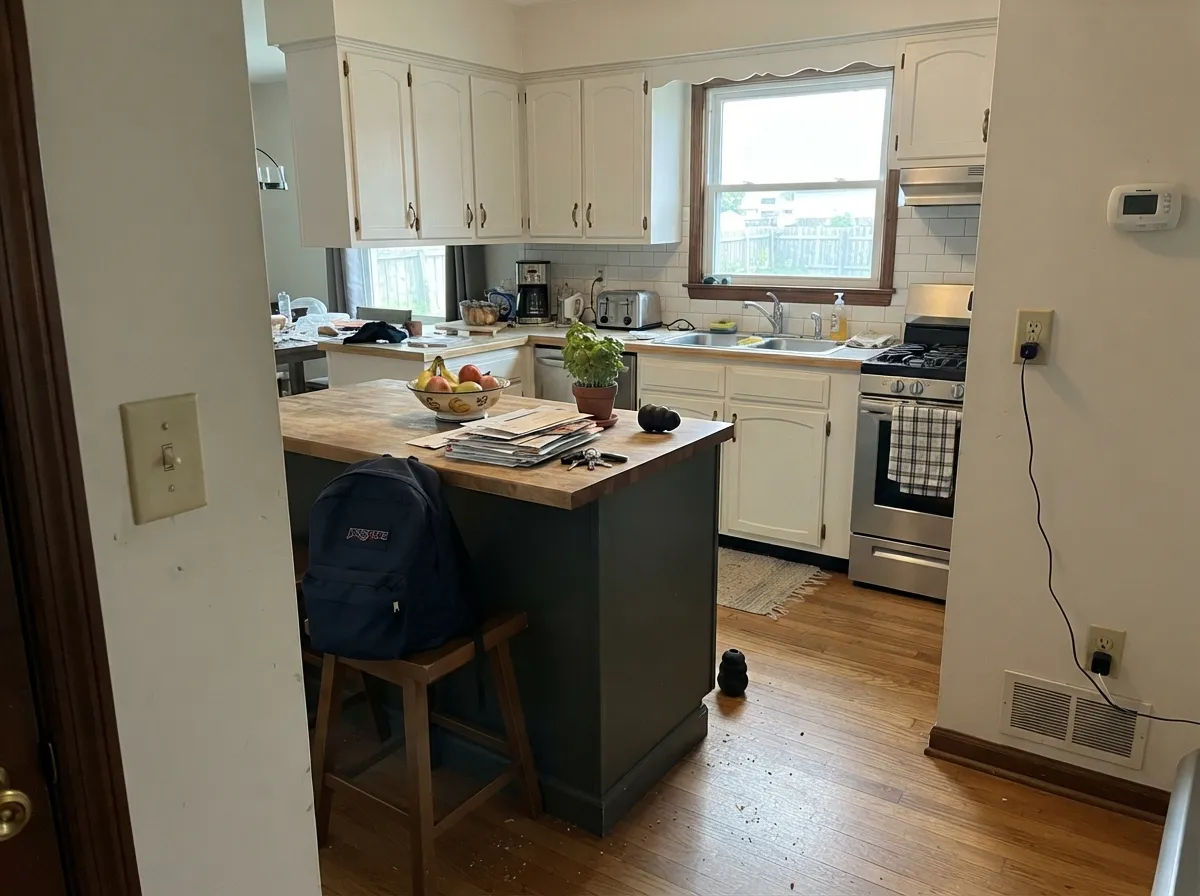
- Kitchen islands and vanities take it well against a cool white
- Deep enough (LRV 8) to hide scuffs and hold its color in strong sun
- A quieter, cheaper way into the "designer near-black" look than the famous names
- Reads as plain flat black in any room without direct light — the green vanishes
- Warm 2700K bulbs and honey wood push it toward a muddy, undefined dark
- No brand recognition — almost nobody at the paint counter will know the name
- Easy to buy for the wrong reason: if you actually want true black, this isn't it
What Color Is Black Evergreen, Really?
Black Evergreen starts from the green side of the wheel and gets grayed and darkened until it sits right at the edge of black. That order matters: colors like Tricorn Black or Iron Ore are built to stay neutral no matter the light, but Black Evergreen keeps a real blue-green cast underneath, so it never quite goes fully colorless the way a true black does. Think of it as Behr's version of the deep, muted exterior greens — Essex Green, Rosemary — pushed one notch darker until it crosses the line most people call "black."
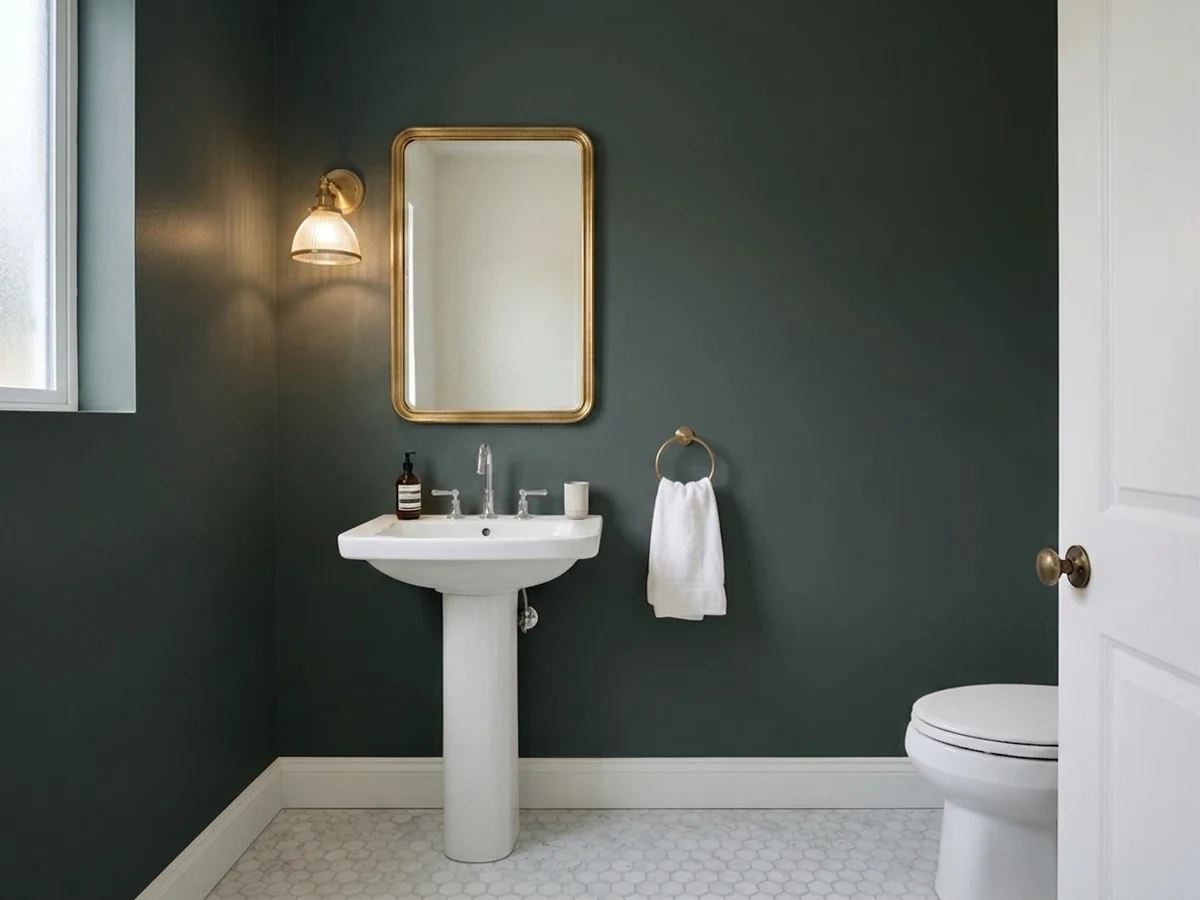
At LRV 8 it reflects almost none of the light hitting it, and in an average interior room with indirect daylight it will simply read as black — flat, no visible hue. The green only surfaces where there's real, direct light: full sun on an exterior shutter, a bright window catching a kitchen island, a picture light aimed at an accent wall. That's the honest trade with this color — buy it for the green, and you need to give it light to prove it; buy it for the black, and it works in any room, same as any other deep neutral.
Undertone in one line: cool blue-green, never brown, never true-neutral. If your sample looks like plain charcoal with no green at all, that's dim or artificial light doing exactly what it does to this color — not a bad can.
Where It Shines
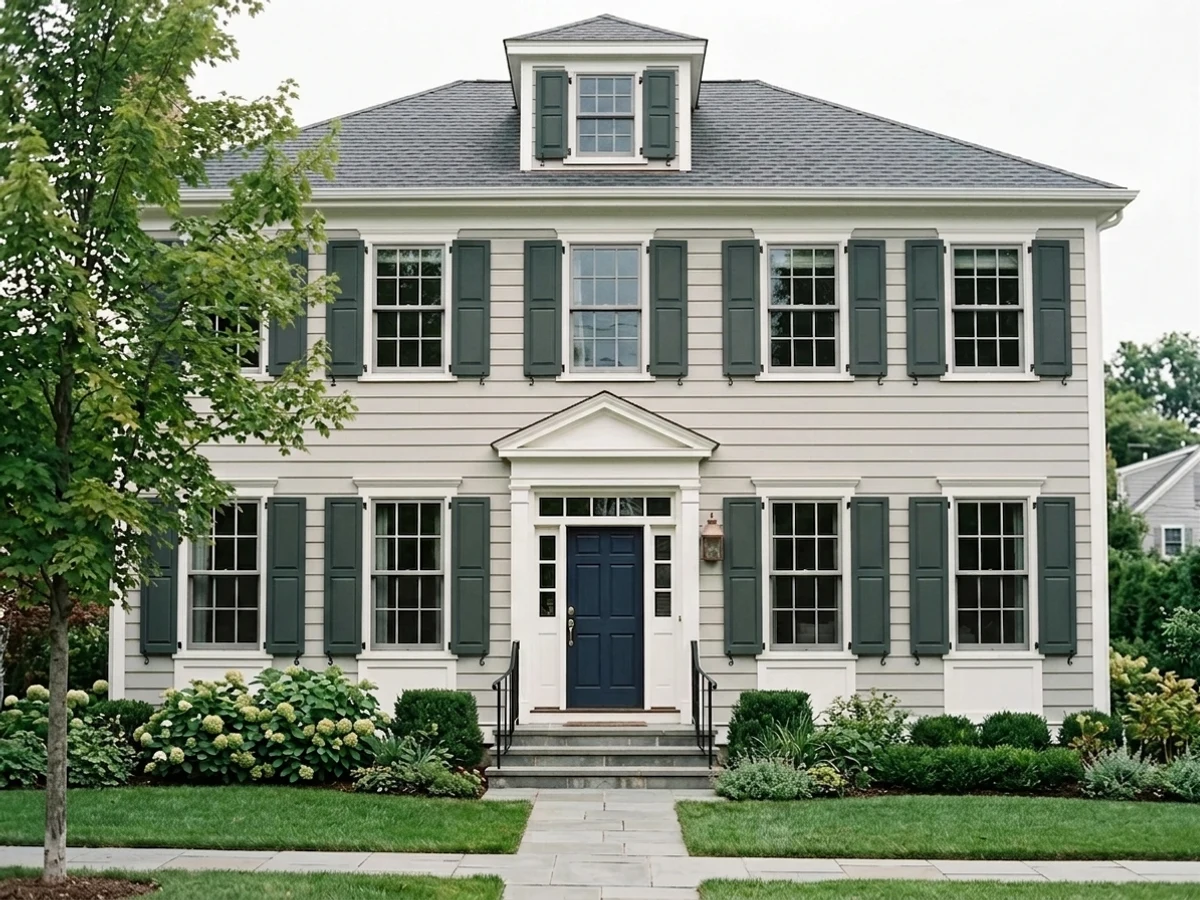
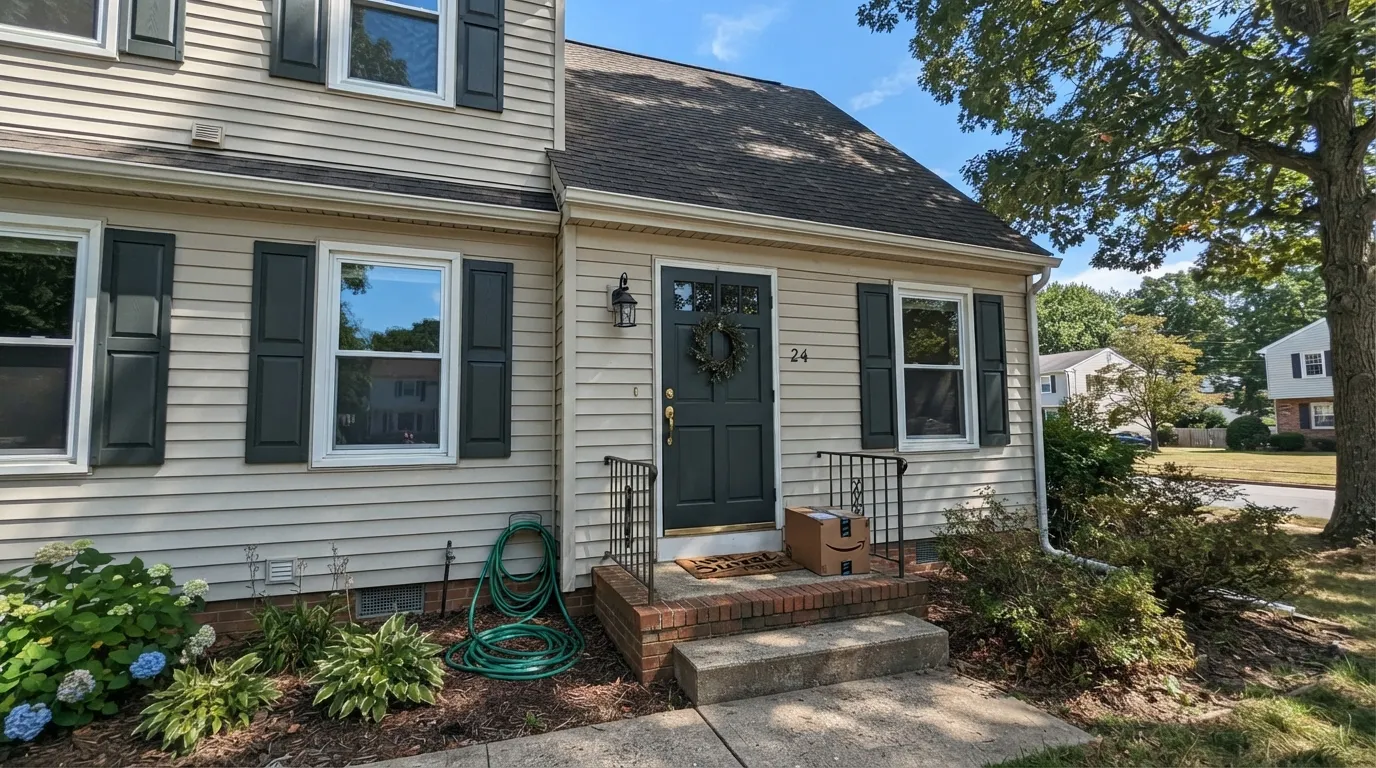
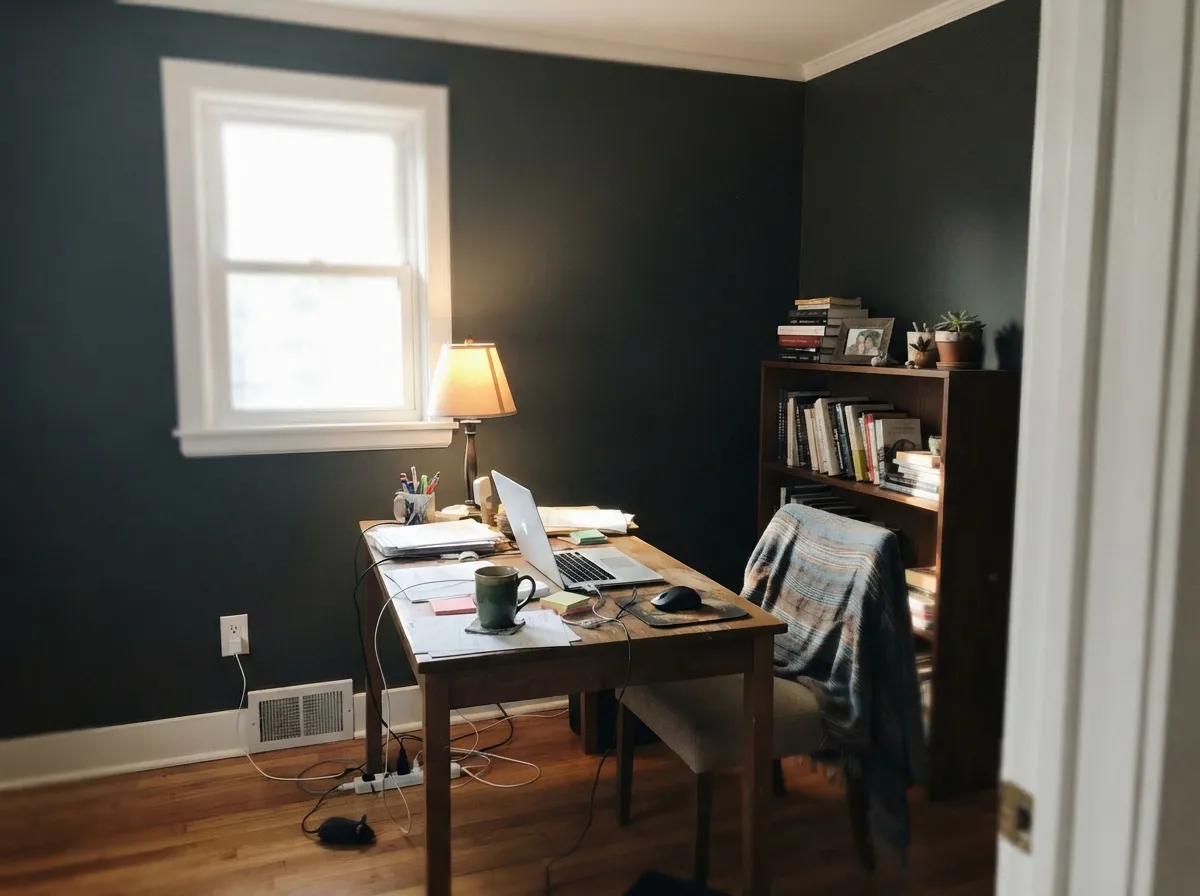
This is an exterior and small-dose color first. On shutters, a front door, or garage trim in real daylight, the green reads clearly enough to look intentional rather than just "the dark house color," which is exactly the traditional-home look it turns up in — real listings show it used on shutters against a light-colored siding, not as a whole-house wrap. Indoors, it does its best work as an island, a vanity, or a den wall under a window, where direct light keeps reminding the room it's a green and not a void.
Where It Fails
The complaints this color would get, if it had enough reviews to generate them, all trace back to the same mismatch: buying it expecting either more black or more green than the light in the room can deliver. All three are avoidable before the first coat.
If the goal was a flat, colorless black like Tricorn Black or Iron Ore, Black Evergreen will occasionally show its hand — a green cast in strong sun that a true black never would. That's not a flaw in the paint, it's the wrong paint for that specific goal. Pick a true black instead.
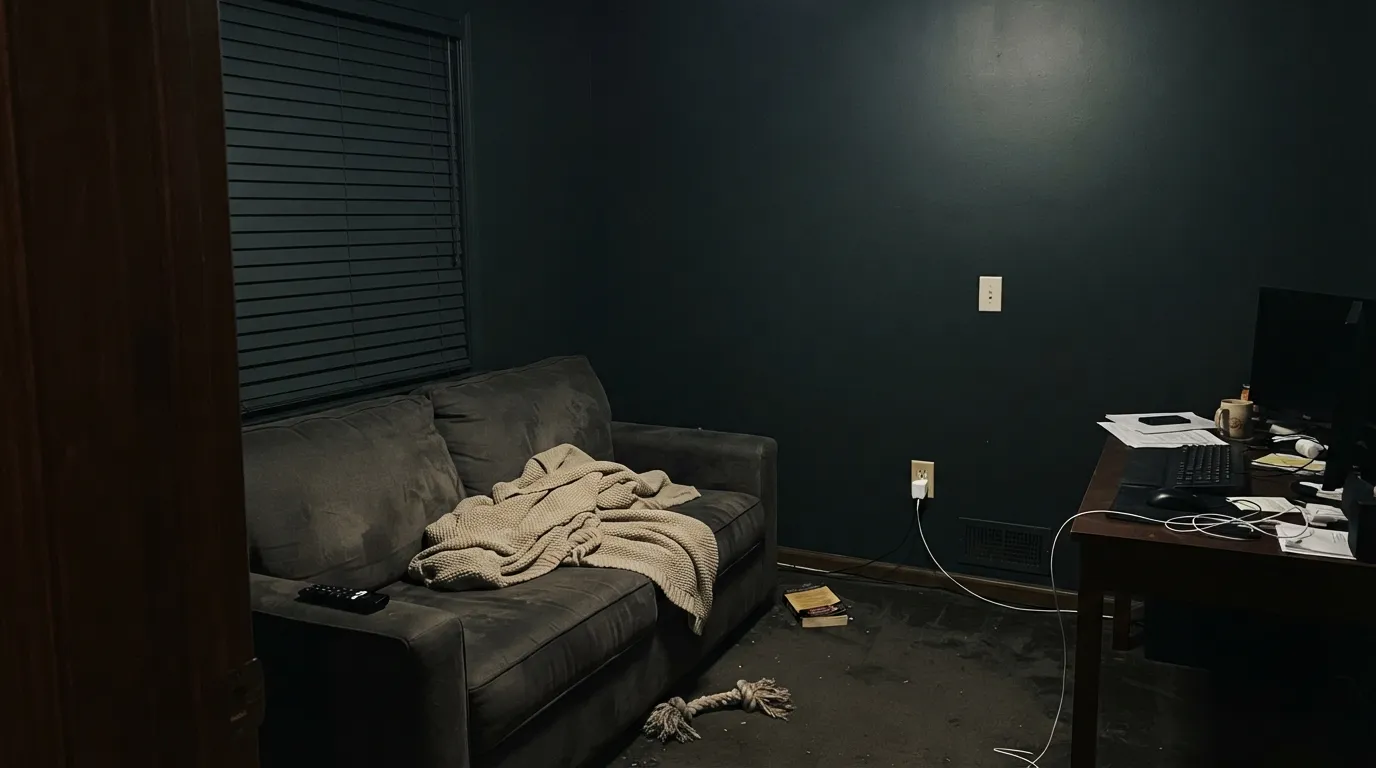
At LRV 8, low indirect daylight is enough to flatten this color to plain black — the entire reason to choose it over a cheaper true black (the green) disappears. If the room has no window that gets direct sun and no lamp aimed at the wall, you're paying a designer-green price for a black result.
Warm 2700K bulbs and honey-toned wood push this color toward a muddy, undefined dark — it loses the crisp blue-green and just looks murky. It needs at least one cool-white or cool-metal partner nearby (a crisp trim, chrome or black hardware) to keep the undertone legible.
Room by Room
Full daylight is where the green actually shows, and it's the one setting real photos confirm this color is used for. Pairs cleanly with a crisp light siding; semi-gloss for doors and shutters.
A single island in Black Evergreen against Chantilly Lace or another cool-white perimeter reads as intentional and current. Satin cabinet enamel; keep the surrounding whites on the cool side so the green doesn't get pulled toward mud.
Deep and quiet, the way a good reading room should be, but only if there's a window nearby doing real work. A north-facing den with no direct light will just read as a flat dark box.
One of the more reliable single-surface uses: a front door gets enough direct exposure over the course of a day to keep showing the green, even if the rest of the house stays neutral.
Behind a sofa on a wall that catches afternoon light, it's a confident, current dark. On an interior wall with no window, it collapses to a plain black backdrop — decide which one you're actually buying before you commit a full wall.
A vanity or a fully drenched small powder room takes the depth well, and the confined space means even modest light bounces around enough to keep the green from disappearing entirely.
Your Light Is the Risk
Full daylight on an exterior shutter or a sunlit island is the only light that reliably shows the green — the whole reason to pick this over a true black.
Ordinary room light, even a bright but sunless interior, flattens it to plain black. Fine if that's what you wanted; a letdown if you paid for the green.
Midday direct sun shows the coolest, clearest green-blue; the same wall by late afternoon shadow reads noticeably blacker. Expect the color to change more than a lighter paint would.
Warm 2700K lamps mute the green into a soft, murky dark. Cool white LEDs or a spotlight keep the blue-green legible after dark — the opposite of what most warm colors want.
Most complaints about Black Evergreen are a light mismatch. Upload a photo of your actual room and see it on your walls — then ask for the same wall in north light or evening lamps before you buy a single sample.
Need It From Another Brand?
Any paint counter can custom-tint Behr MQ6-44 directly. If you would rather stay in one brand's own deck, these are the closest stock matches, measured as ΔE2000. Under 2 is a difference you will not see on the wall.
| Brand | Closest color | ΔE | LRV | |
|---|---|---|---|---|
| Benjamin Moore | Hidden Falls714 · Benjamin Moore | 2.2 | 9 | Color page → |
| Valspar | Cobalt Cannon5001-2C · Valspar | 4.0 | 8.7 | Color page → |
| PPG / Glidden | ObsidianPPG1035-7 · PPG / Glidden | 4.1 | 8 | Color page → |
| Glidden | Deep Forest Pine30GG 09/106 · Glidden | 4.9 | 9 | Color page → |
| Dutch Boy | Minnesota Pines328-7DB · Dutch Boy | 3.1 | 8 | Color page → |
| Dunn-Edwards | Dark ShadowsDEA183 · Dunn-Edwards | 3.5 | 8 | Color page → |
Similar Behr Colors
The nearest shades to Black Evergreen within Behr's own range, ranked by perceptual color distance — useful when you want the same look a touch lighter, darker, or warmer.
WCAG 2.1: AA is 4.5 : 1 for normal text, 3 : 1 for large text, AAA is 7 : 1.
Black Evergreen vs the Colors You're Also Considering
Every Black Evergreen sample board has the same rivals on it. The numbers show the real lightness gap — then it comes down to which risk you would rather live with.
Pick this for a slightly lighter, more usable near-black that still shows its green in direct light, indoors or out.
Benjamin Moore PM-22 · LRV 4Essex GreenPick this for the traditional, darker exterior green — the New England shutter classic that reads black the moment you bring it indoors.
Pick this when you want that same near-black depth to read as an actual color, not just a shade of black.
Sherwin-Williams SW 7069 · LRV 6Iron OrePick this if you actually want a true neutral black-gray with zero green — Iron Ore is the safer whole-house choice.
Evergreen Field HDC-WR16-05 at #47534F and New Forest QE-48 at #46514E are the closest Behr neighbors, both at LRV 8. All three read as near-black greens and the differences only appear on large surfaces. Chimney PPU25-22 at #4A5257 swaps the green for blue-gray, so side by side Black Evergreen looks warmer and greener. Dark Everglade HDC-CL-21A at #3D554F is the more clearly green option at the same LRV 8.
Across brands, Farrow and Ball Chine Green No. 35 at deltaE 1.4 is visually identical in normal room light. Benjamin Moore Hidden Falls 714 at deltaE 2.17 and Dutch Boy Minnesota Pines 328-7DB at deltaE 3.15 are very close, but sample first. Dunn-Edwards Dark Shadows DEA183 at deltaE 3.45 pulls bluer. PPG Obsidian PPG1035-7 at deltaE 4.07 and Glidden Deep Forest Pine at deltaE 4.89 are close but visibly different side by side.
Black Evergreen Coordinating Colors
The rule for coordinating with Black Evergreen: stay cool. It wants crisp whites, true grays, and warm-metal or terracotta accents used sparingly — a warm cream white or a golden beige will make its undertone read muddy instead of green. These are the partners that keep it legible:
An Honest Case of a Quiet Color
Black Evergreen has no Color of the Year headline and no viral before-and-after — the paid searches and blog posts turn up color-matching tools and cross-brand equivalent charts, not designer features. The clearest real-world reference is a traditional home exterior with the color used on the shutters, which is a fair summary of the color's actual reputation: a steady, dependable exterior choice, not a moment.
That's not a knock. Behr's own catalog leans on forest and grove imagery for the name, and the color does deliver a real green when the light is right — it's simply positioned as a workhorse near-black rather than a headline color, closer in spirit to a deep exterior green like Essex Green than to a famous name like Tricorn Black. If you want a color other people will recognize at a dinner party, this isn't it. If you want a dependable dark that happens to be a real color instead of a flat void, it earns the slot.
Black Evergreen With Wood Tones and Floors
Dark wood is the safest partner: walnut, espresso stain and black-stained oak all sit at a similar depth and don't fight the cool undertone. White oak and pale gray-washed floors also work cleanly, since neither pulls warm enough to argue with the green.
Honey oak and other warm golden wood tones are the one combination to sample first. They don't clash outright the way a true complementary pair would, but the warm-yellow cast in the wood tends to gray the paint's green down toward a flatter, muddier dark, and the paint in turn makes the wood look slightly duller. A rug or a cool-white wall between the two usually solves it; a whole room of Black Evergreen cabinetry directly against honey floors is the riskiest version of this pairing.
Three Ready Palettes Built on Black Evergreen
A color is never alone on the wall. These are complete combinations in the 60-30-10 pattern, with the reason each one holds together. Every one opens in the visualizer.
A cool near-black body wants an equally cool, crisp trim white — a warm white would fight the blue-green undertone instead of framing it. The terracotta door is the one warm note that keeps the whole facade from reading cold.
Try this palette in your roomAll three sit on the same cool side of the wheel, so the island is the only saturated note and doesn't have to fight anything. Stonington Gray is a true gray, not a greige, so it keeps the crisp white cabinets from looking stark against it.
Try this palette in your roomWhite Dove's warmth is doing real work here — it keeps the cool green-black from reading flat and cold, the way a brass lamp warms up a dark room. Chelsea Gray on the built-ins gives the room a third depth so it reads layered, not just "one dark wall."
Try this palette in your roomBlack Evergreen FAQ
Is Black Evergreen actually green, or does it just read as black?
Both, depending on the light. In direct sun or bright light it's a clear, cool blue-green at near-black depth. In ordinary indirect room light — which is most rooms, most of the time — it flattens to plain black. Buy it expecting that trade, not a color that glows green in every room.
Does it work on kitchen islands and cabinets?
Yes, especially as a single island against a cool white perimeter. Use a satin, urethane-fortified cabinet enamel — flat or eggshell wall paint won't hold up to daily use on cabinetry.
Is it a good exterior shutter and door color?
It's the color's strongest, best-documented use — real home exteriors show it on shutters against lighter siding. Full sun keeps the green legible in a way many interior rooms can't match.
What white trim pairs with Black Evergreen?
A cool, crisp white — Chantilly Lace is the reference point — rather than a warm cream white. Because Black Evergreen already leans cool, a warm trim white creates a muddier contrast than a matching-temperature white does.
How many coats does it take to cover?
Two coats over an existing mid-tone color; going over white or a pale wall, start with a gray- or black-tinted primer first, or expect a third finish coat to get full, even depth.
Will it look the same on my wall as it does on the chip?
No — assume it will read darker and less green than the chip in most rooms. The chip is small and often lit better than an average wall. Paint a large sample and check it in the room's dimmest hour before committing to a full wall or a whole exterior.
Have you painted with Black Evergreen?
Rate it — one tap helps the next reader decide.
Ask a Question