Room Colors · Pink Nursery
8 Best Pink Nursery Paint Colors for 2026
ideas, combinations, and real rooms
8 curated picks from real pink nurserys — with the exact colors, honest reasons why, and the combinations that hold the room together.

Former interior stylist who can spot a green undertone from across a room. Jessica writes the color and mood pieces — what to choose, what pairs, and why your "white" looks pink.
The Fast Answer
Don't want to read 8 picks? These four are the safe answers.

Top Picks for the Pink Nursery
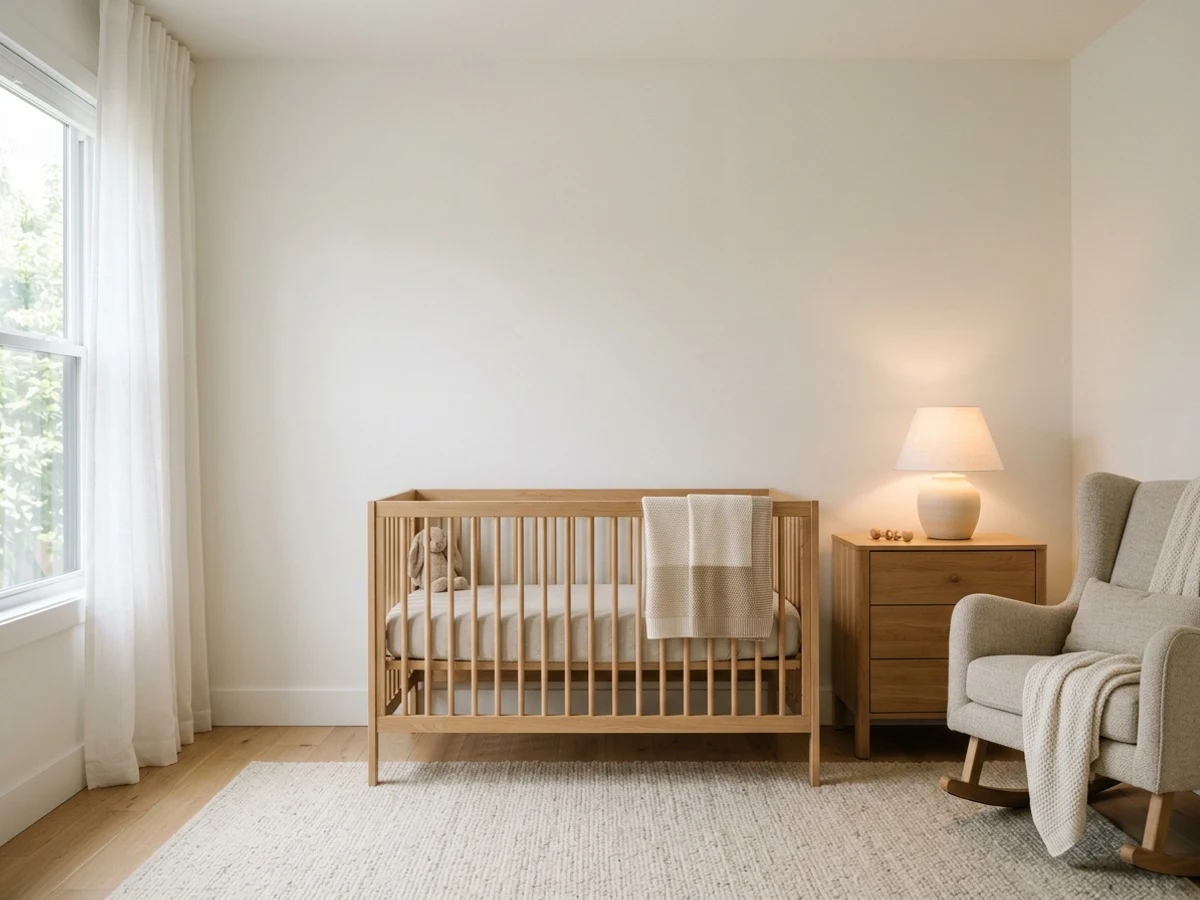
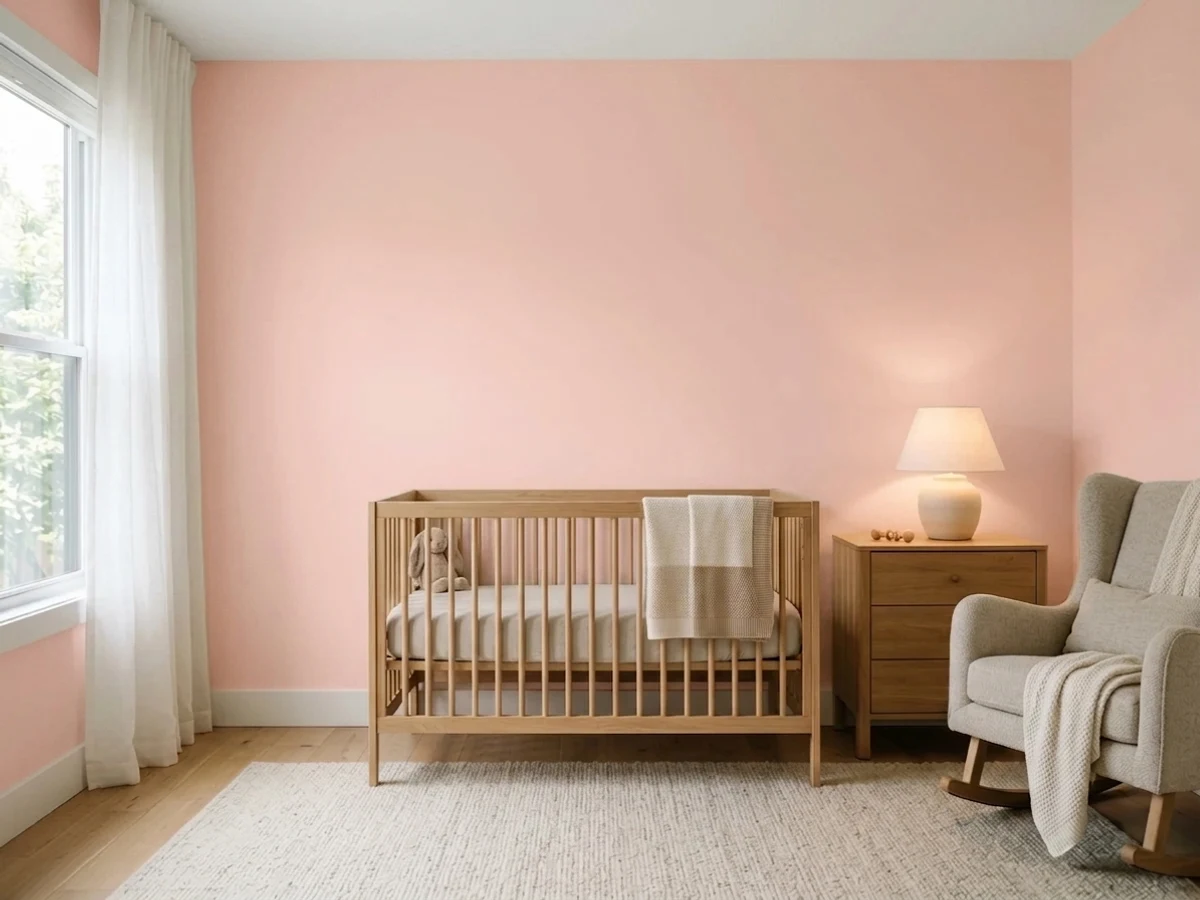
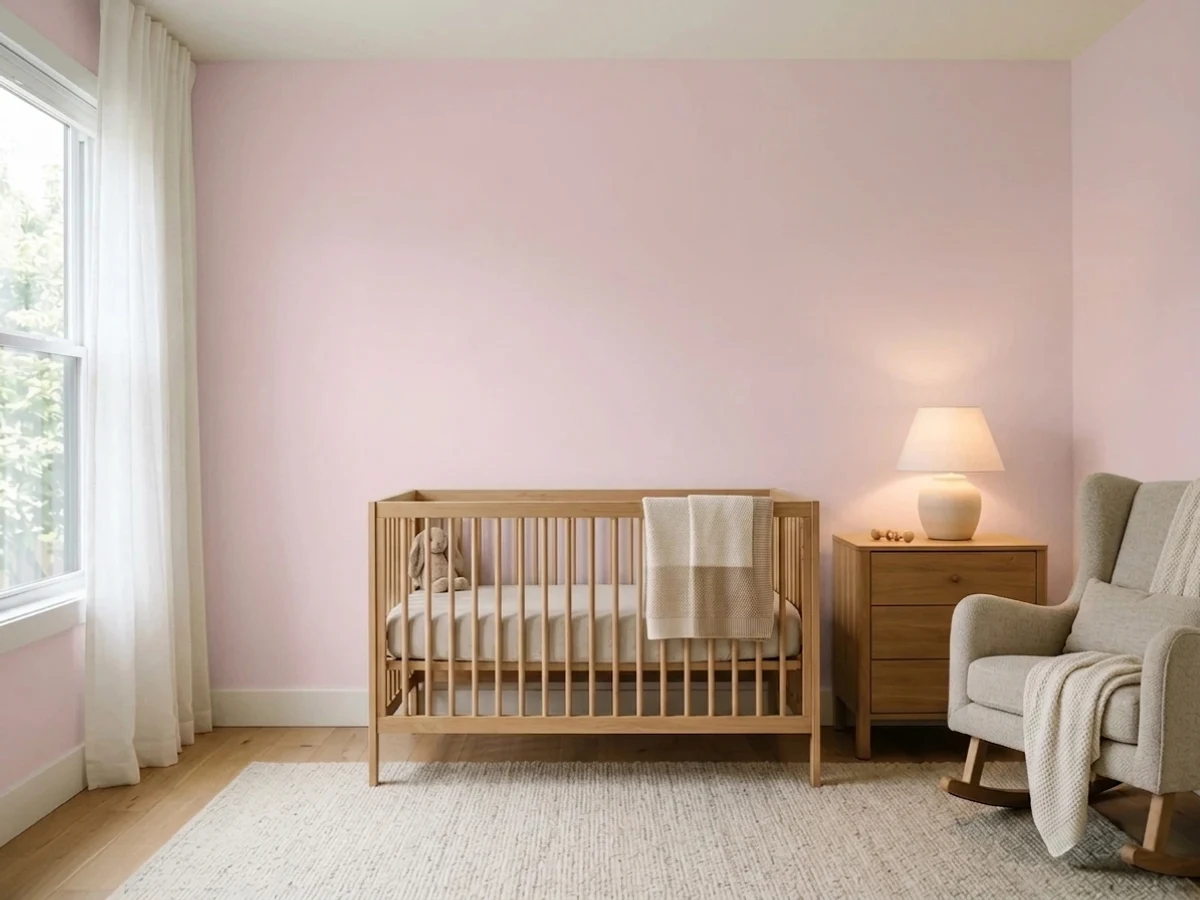
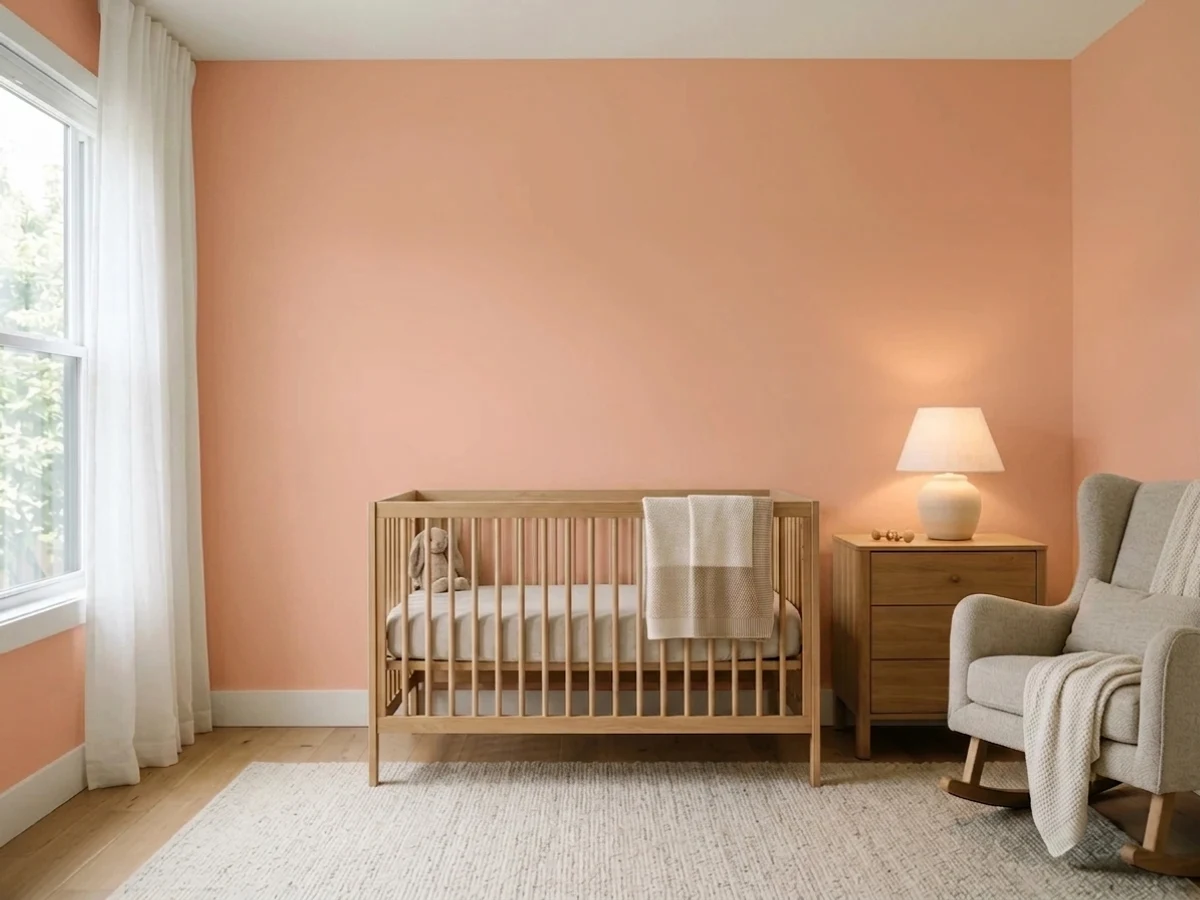
Tap a shade to see the pink nursery in it, then try it on your own room.
Pink Nursery Color Trends 2026 — What's In, What's Out


- Pastel Bubblegum Pink — The sweet, high-LRV bubblegum pink that filled nurseries for years now reads dated next to 2026's deeper, dustier pink tones.
- All-Pink Gender-Stereotyped Room — A nursery painted pink on every surface with no other accent color feels like an outdated approach compared to 2026's more layered palettes.
- Cool Lavender-Pink — Cool, purple-leaning pinks are losing ground to warmer blush and dusty rose tones that read softer under nursery lighting in 2026.
The 8 Best Pink Nursery Paint Colors
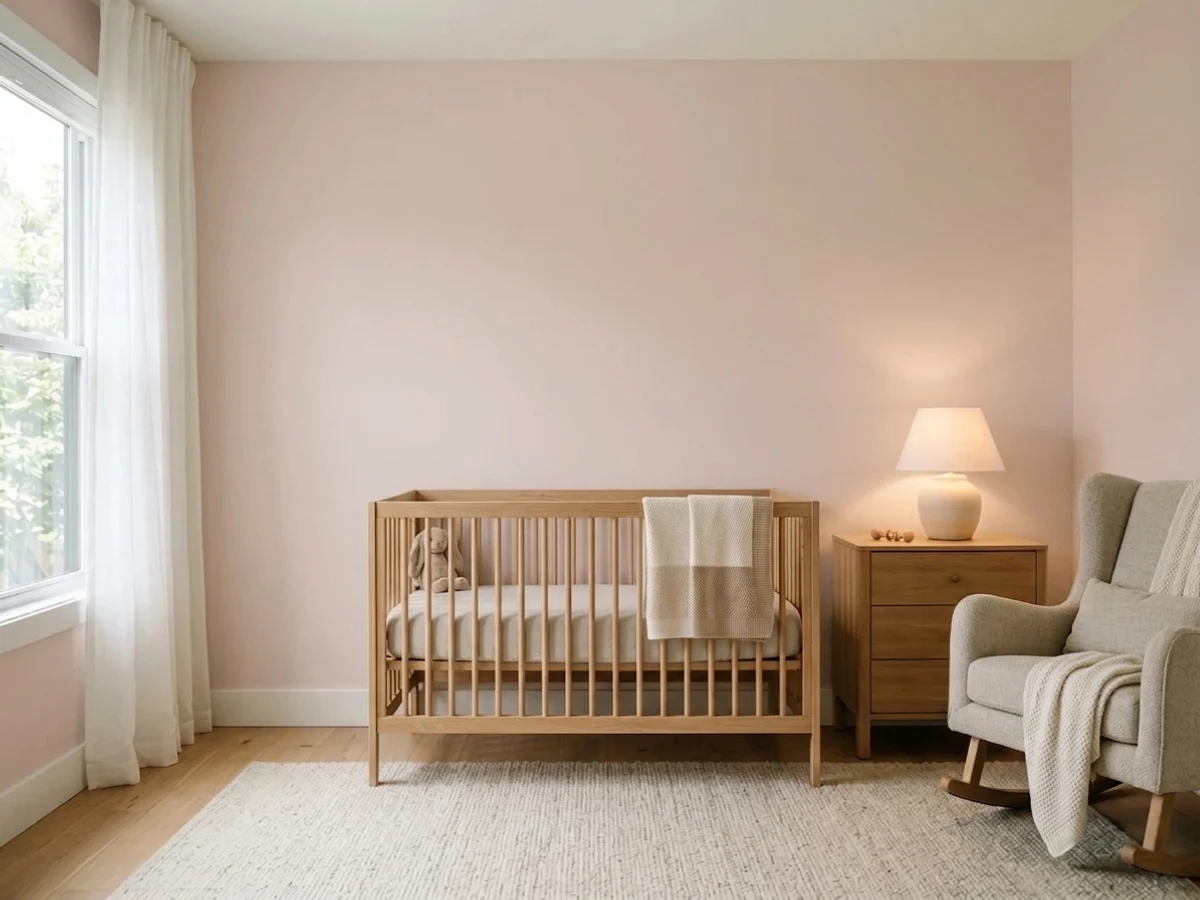
Every pick below is a real rendered pink nursery, not a chip. The lead color first; the swatches are the full scheme in the photo — walls, furniture, textiles, accent.

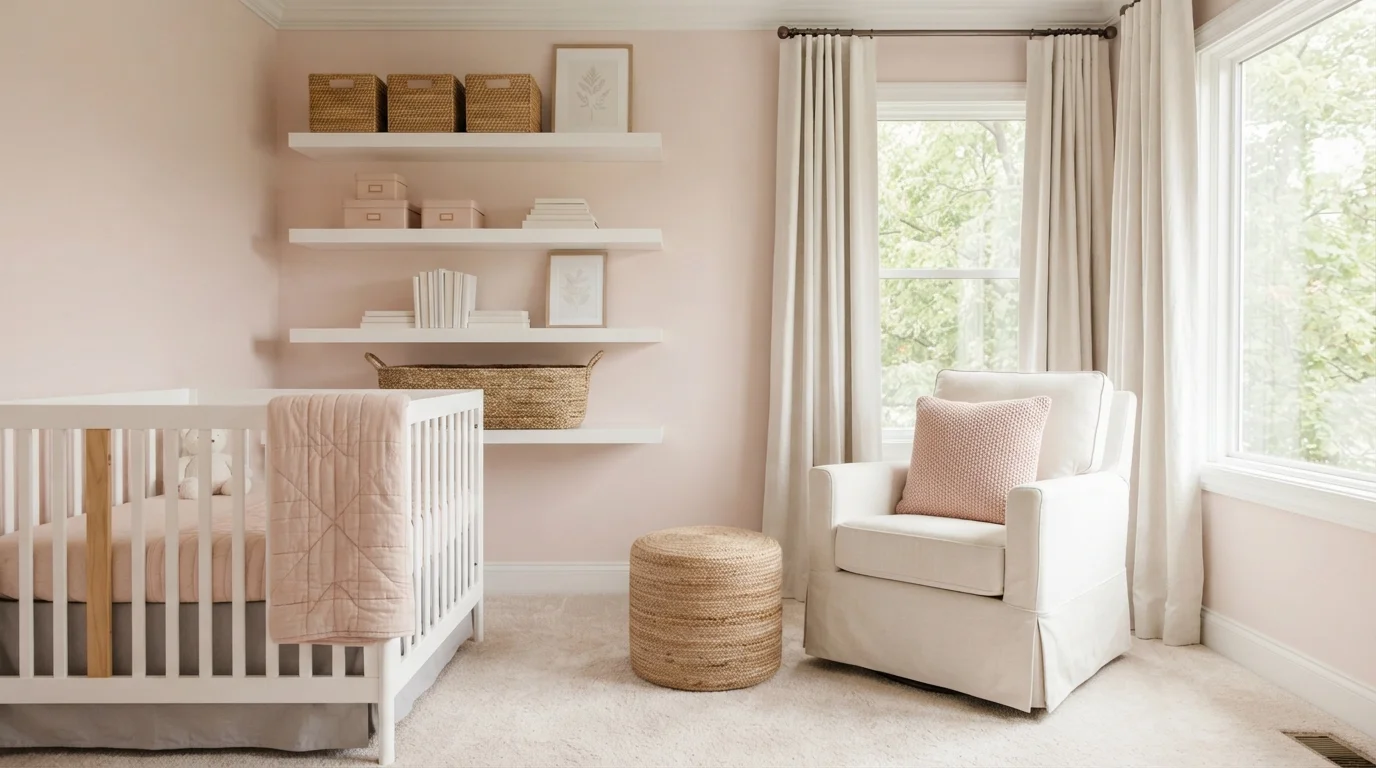
Soft blush walls and woven textures wrap this gentle nursery in a soothing, dreamy warmth.
Soft blush is a delicate, warm pastel pink. In this nursery, the walls are painted in tender blush, paired with clean white floating shelves, a creamy glider armchair, and a classic white crib. The entire space feels snug, tranquil, and cheerful. The look works so well because natural woven textures and warm whites balance the sweetness of the pink. It is a lovely design choice for anyone looking to build a peaceful, charming sanctuary for a new baby.
SEE BIRTHDAY CAKE ON YOUR WALLS →
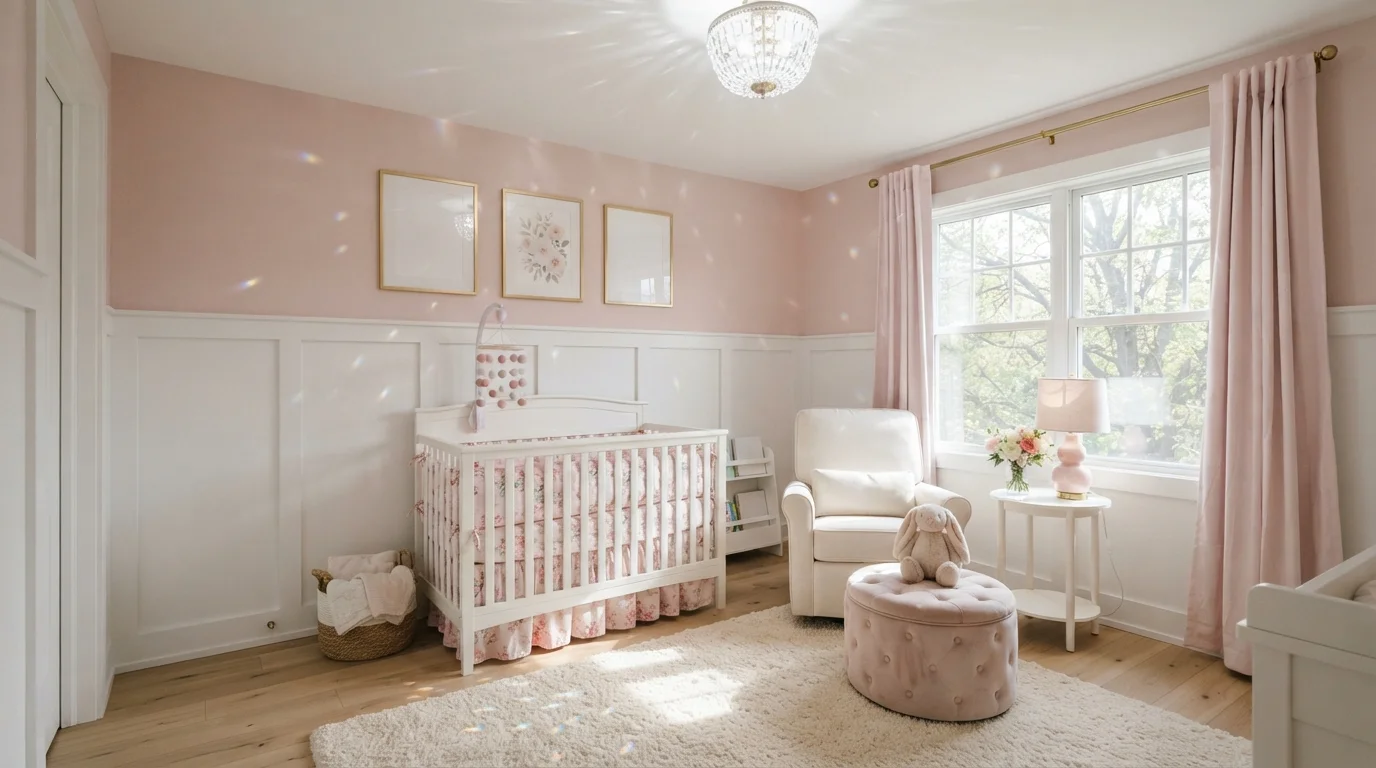
Dreamy sunlight filters through soft pink curtains into a gentle floral nursery filled with plush textures and sweetness.
Blush pink is a soft, gentle pastel pink. In this nursery, it coats the upper walls above crisp white wainscoting, beautifully framing the white wooden crib, cream glider chair, and tufted pink velvet ottoman over a deep shag rug. The space feels calm, sweet, and wonderfully cozy for quiet afternoons. Pairing pale pink with clean white trim works because it keeps the room bright and fresh while letting the floral accents shine. It is perfect for anyone creating a timeless, gentle baby room with a fairytale touch.
SEE FANTASTIC PINK ON YOUR WALLS →
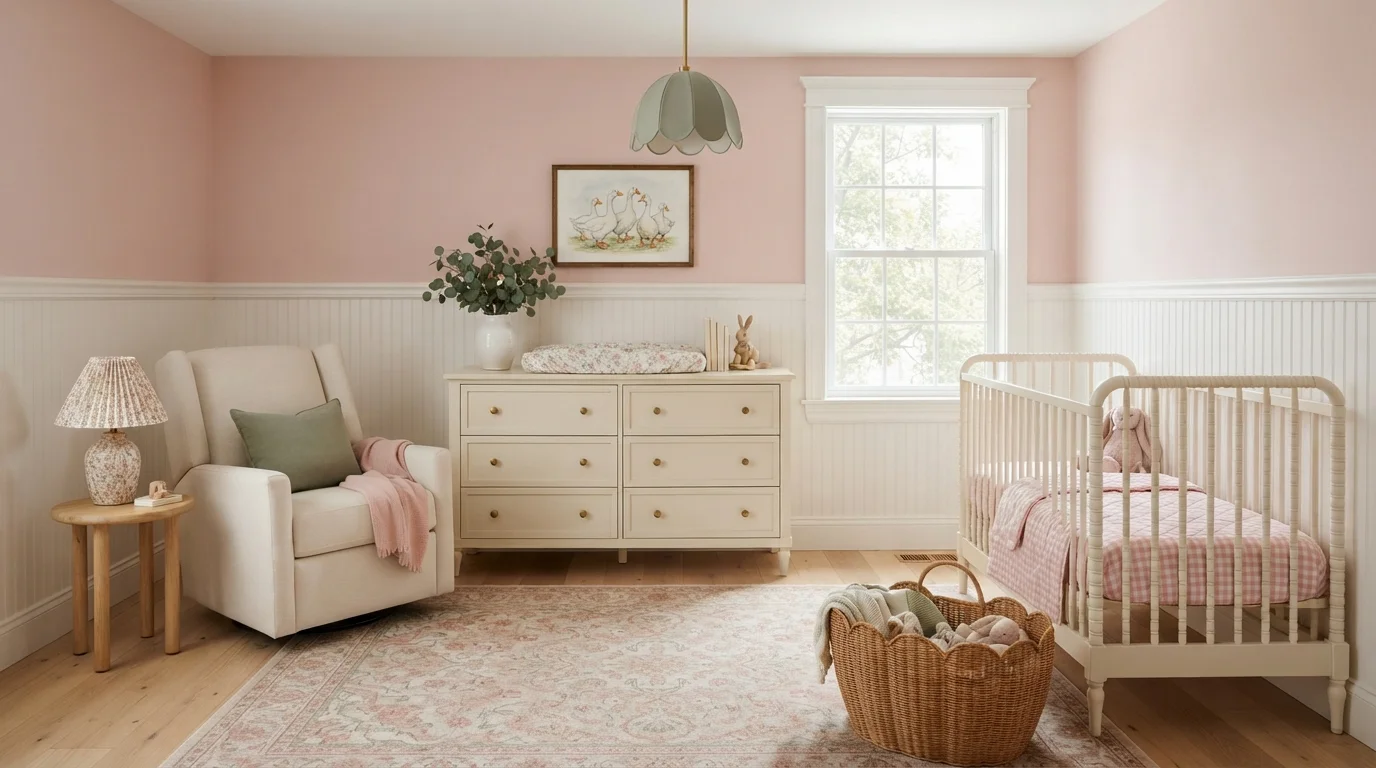
Soft pastel pink walls pair with garden sage and creamy beadboard for a timeless, storybook-inspired nursery retreat.
Blush pink is a tender, powdery rose shade with a cozy warmth. Here, soft pink covers the upper walls above warm off-white beadboard wainscoting, paired with an ivory dresser, a spindle crib, and delicate sage green botanical accents. The room feels calm, tender, and beautifully nostalgic. The pairing works because leafy sage tones ground the soft pink, keeping the space looking fresh rather than overly sweet. It is ideal for parents who love a vintage, heirloom-inspired aesthetic that feels timeless.
SEE ERASER PINK ON YOUR WALLS →
Gentle rose walls and cozy bouclé textures create a dreamy, soothing sanctuary tailored for quiet nursery moments.
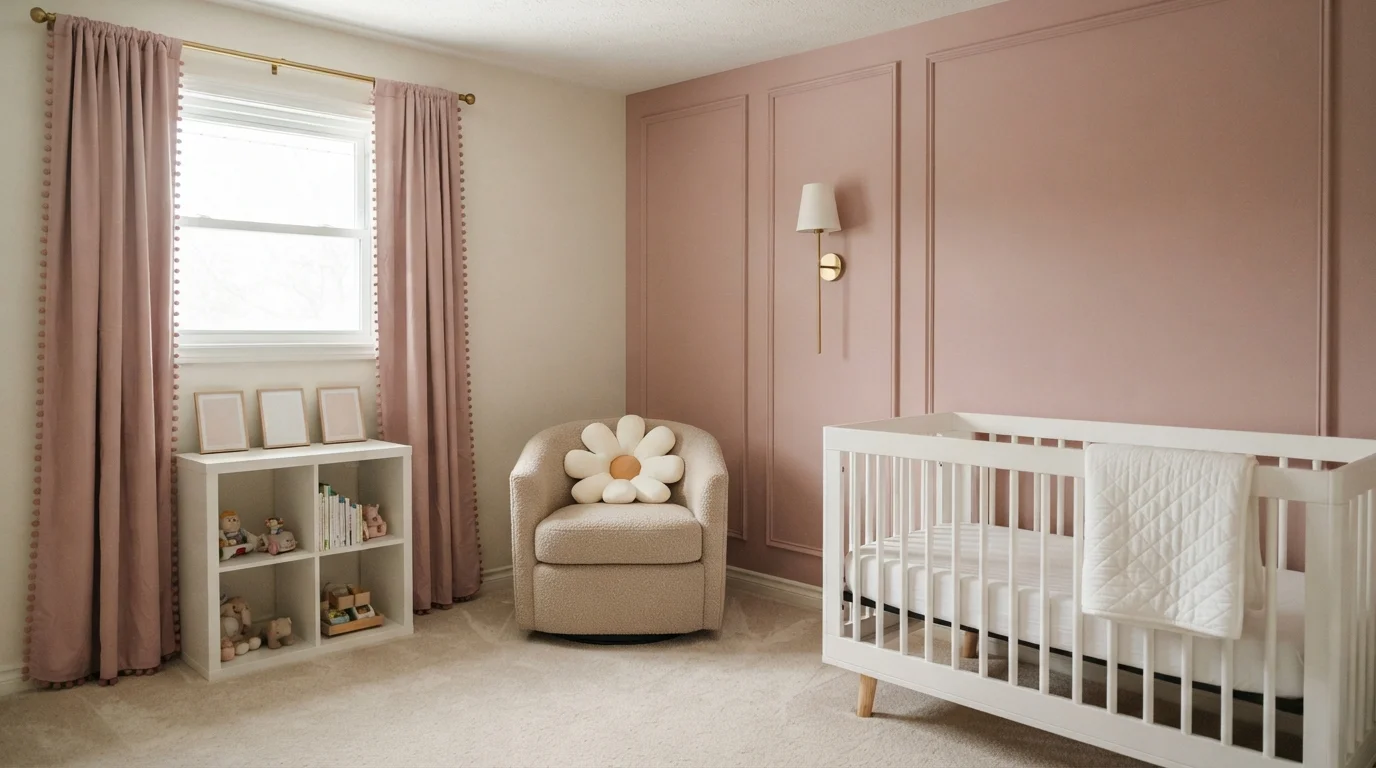
Dusty rose is a soft, muted blush pink with a soothing and gentle feel. In this nursery, a paneled accent wall is painted in dusty rose, balanced by creamy off-white walls, a warm beige armchair, and a crisp white crib. The whole space feels peaceful, sweet, and comforting. The combination works because the muted pink brings warmth and charm while the cream walls and white furniture keep the room airy. It is perfect for parents wanting a classic, calming space for a baby girl.
SEE IT ON YOUR WALLS →
Warm rosy trim and glowing brass accents make this sweet nursery feel like stepping into a vintage storybook.
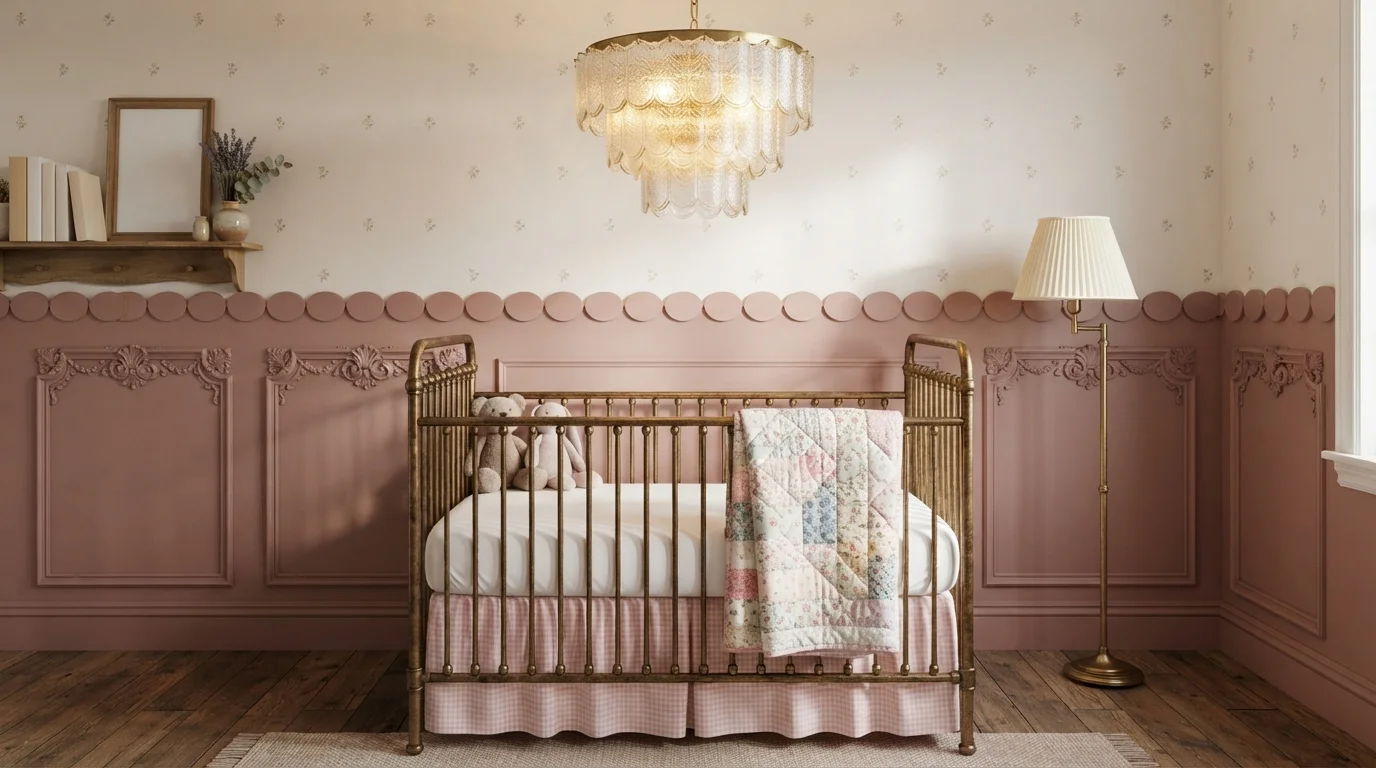
Dusty rose is a gentle, muted pink with a soft brownish warmth. In this room, that cozy rose color coats the lower paneled walls and ornate trim, framing a brass crib and delicate cream wallpaper. The space feels snug, nostalgic, and incredibly sweet. Pairing muted rose with warm brass and creamy whites works because soft warm colors naturally flatter antique metals without looking harsh. It is the perfect setup for anyone who loves heirloom nursery charm.
SEE RITA'S ROUGE ON YOUR WALLS →
Soft dusty pink wainscoting and delicate scalloped details create a nostalgic, storybook corner bathed in gentle daylight.
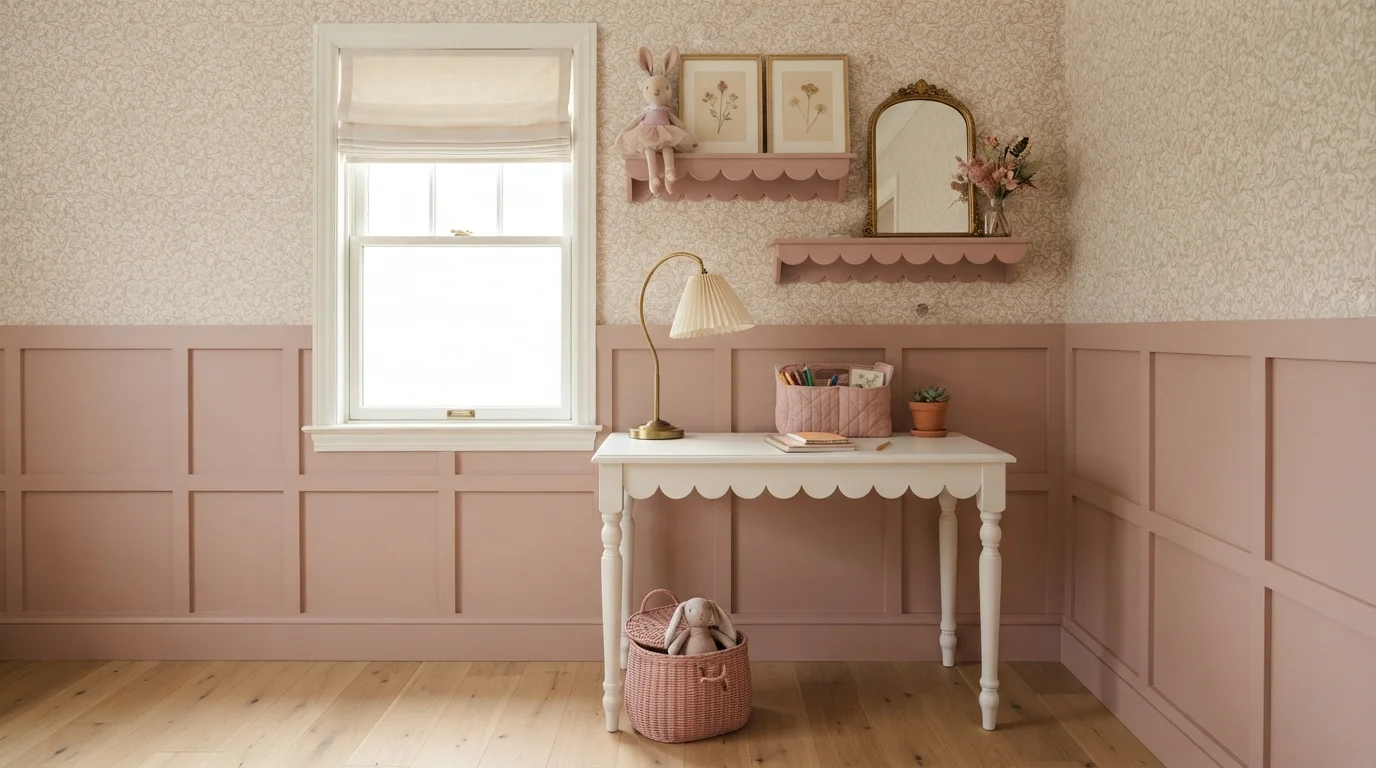
Dusty rose is a muted, romantic pink with warm vintage charm. In this cozy nook, the lower paneling and scalloped wall shelves wear this gentle rose tone, paired with cream floral wallpaper and a crisp white study table. The space feels sweet, calm, and charmingly playful. The combination works so well because the soft pink adds rich color without overwhelming the light, airy wood tones and gold decor. It is perfect for a whimsical child's bedroom or a dreamy storybook desk area.
SEE FOXEN ON YOUR WALLS →
A dreamy dusty blush and warm cream setting that feels timelessly gentle, peaceful, and delightfully cozy.
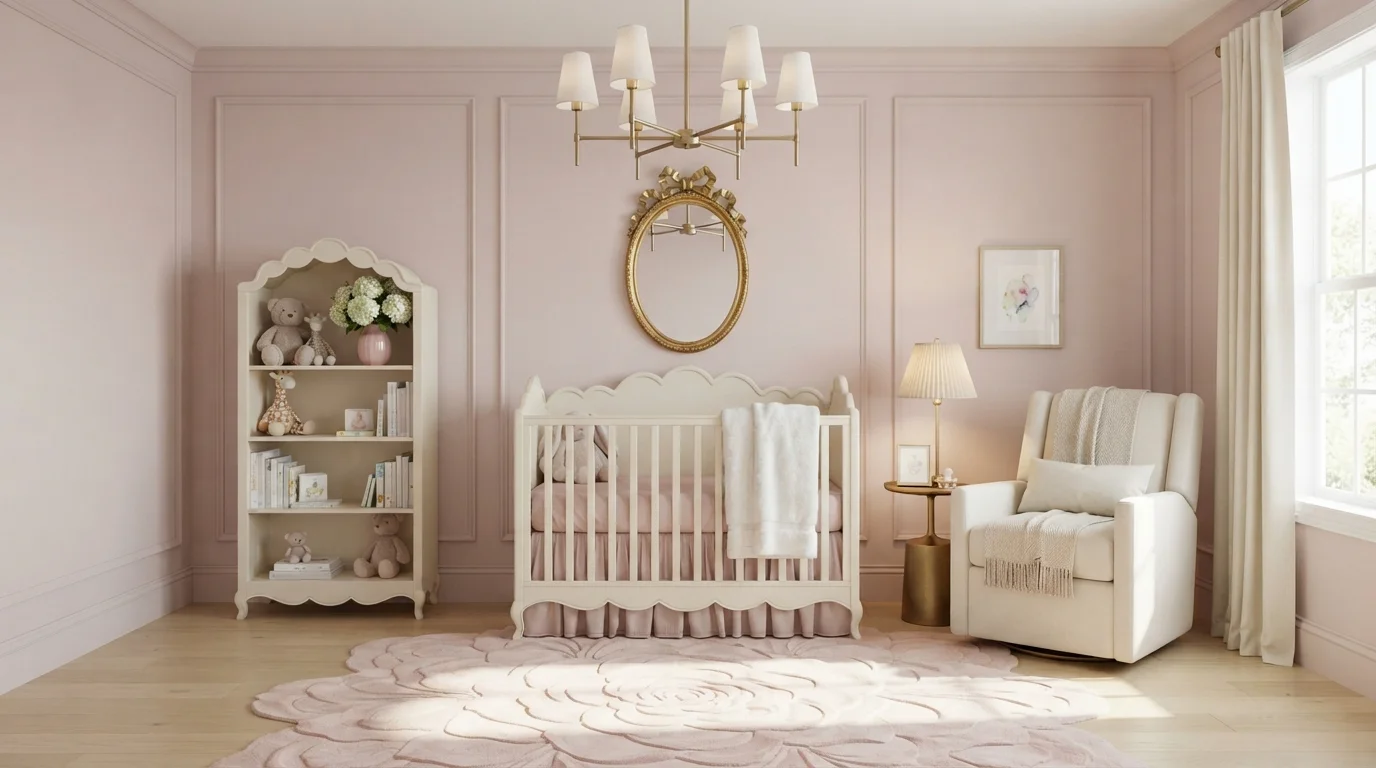
Blush pink is a soft, powdery pastel with a delicate warmth. In this room, dusty blush covers the paneled walls, textured area rug, and pleated crib bedding, while creamy off-white coats the scalloped crib, open bookshelf, and plush reading chair. The whole space feels deeply soothing, peaceful, and sweet. Pairing pastel pink with warm cream keeps the look elegant rather than overly sugary. It is a lovely choice for parents designing a classic, fairytale-inspired nursery.
SEE IT ON YOUR WALLS →
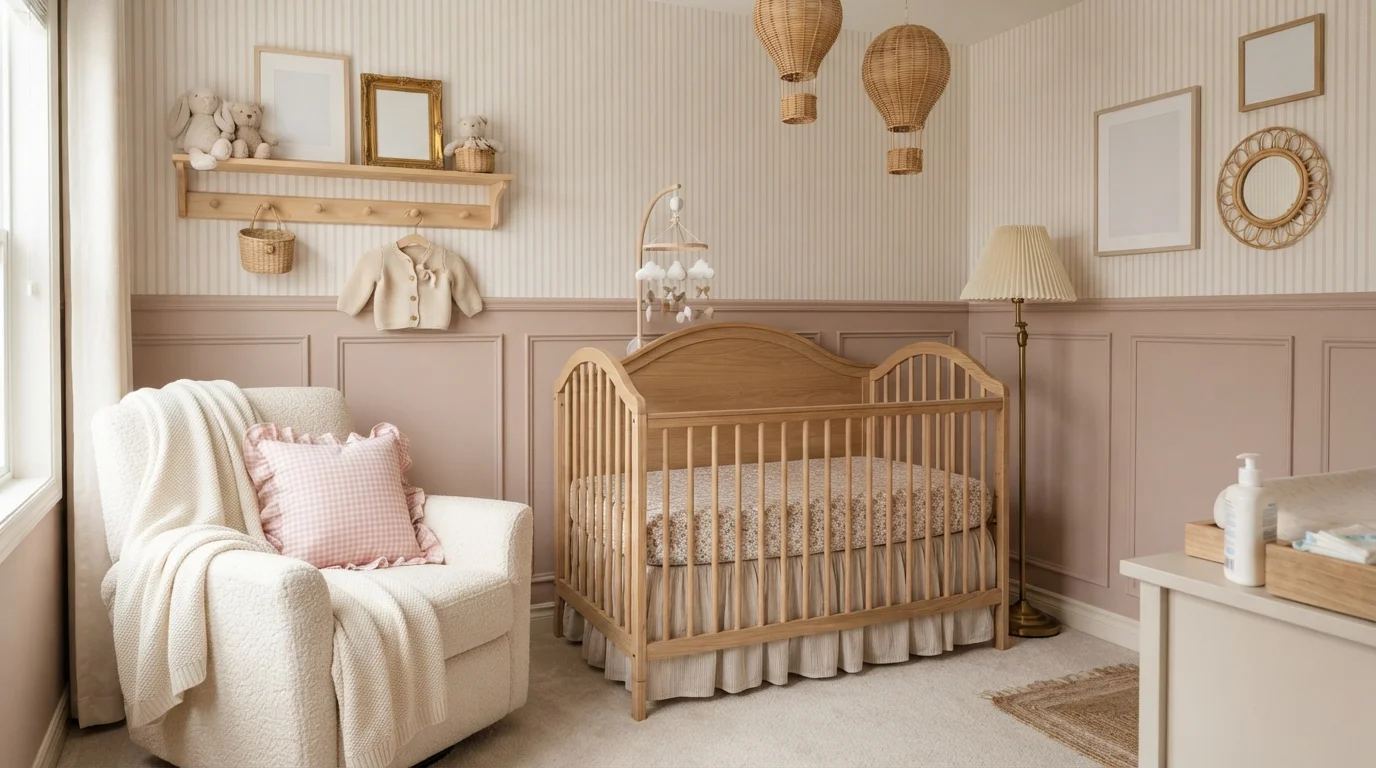
Soft dusty rose paneling, warm oak wood, and cozy cream bouclé create a gentle, storybook-inspired nursery setting.
Dusty rose is a soft, muted pink with a touch of warm brown. In this nursery, the lower paneled walls are painted in this gentle rose tone, paired with cream pinstripes and a plush cream bouclé armchair. The space feels tender, calming, and wonderfully snug for quiet bedtime moments. The combination works because the earthy light oak crib grounds the soft pink and keeps it from feeling overly sweet. It is a lovely choice for anyone wanting a timeless, storybook charm in a baby girl's room.
SEE IT ON YOUR WALLS →Pink Nursery Wall Color Combinations
A wall color never works alone. These are the full schemes from the rooms above — the lead color first, then the supporting colors that make the photo work.
Soft blush walls and woven textures wrap this gentle nursery in a soothing, dreamy warmth.
TRY THIS PALETTE →Dreamy sunlight filters through soft pink curtains into a gentle floral nursery filled with plush textures and sweetness.
TRY THIS PALETTE →Soft pastel pink walls pair with garden sage and creamy beadboard for a timeless, storybook-inspired nursery retreat.
TRY THIS PALETTE →Gentle rose walls and cozy bouclé textures create a dreamy, soothing sanctuary tailored for quiet nursery moments.
TRY THIS PALETTE →For a classic soft nursery, pair Pink Bliss or First Light walls with a pure white trim (Benjamin Moore Simply White or Sherwin-Williams Extra White) and let a natural or light-oak crib carry the warmth — the pale pink stays a backdrop instead of competing with the furniture. Teaberry and Romance both take a warm white trim better than a stark one; something like Benjamin Moore Swiss Coffee keeps the transition soft instead of chalky against either pink.
For a nursery that won't need repainting the day the crib comes down, put Malted Milk or Odessa Pink on the walls and bring in a deep walnut or espresso-stained dresser plus brass hardware — the darker wood grounds the blush instead of letting it feel saccharine, and sage or forest-green accents in a rug or rocking chair read as the natural complement to a warm pink. Pale Cherry Blossom and Pop both pair well with warm wood tones too, but keep any accent color muted; a bright primary next to either will fight the pink instead of framing it.
More Nursery Color Ideas
Set on a color family already? Each page has its own real rooms and picks.
Light or Dark Pink Nursery Colors?
Go Light (LRV 60+) If…
The room is small, faces north, or has to work at every hour. Light warm colors make it feel bigger and stay calm in evening light — the light you actually live in.
Go Dark (LRV Under 20) If…
You want the cocoon effect and the room has real daylight. Dark works best on one feature wall — or fully color-drenched in a large room with good windows.
With every pick here landing between LRV 59 and 82, light vs. dark in a pink nursery is really a question of how much color you want to feel versus how much light you want reflected back. A north-facing nursery, or one with a single small window, does best with Pink Bliss or First Light — both sit above LRV 75, so they bounce back most of the light they get and keep a small room from feeling like the sun never reaches it. Save Odessa Pink or Pale Cherry Blossom, the two lowest-LRV picks in this group, for a nursery that already gets strong south- or west-facing light; in a dim room they read muddier and dustier than they look on the paint chip.
If the goal is a color that still feels intentional at night with just a nightlight on, Teaberry and Malted Milk hold their warmth in low light better than the palest options, which can wash out to near-white once the sun goes down. Romance and Pop sit in between — bright enough for daytime changing and play, warm enough not to disappear after dark.
See It. Love It.
Paint It.
Upload one photo of your pink nursery and try every color on this page on your own walls — in your own light, before you buy a drop of paint.

Soft SpotBeforeSheen And Finish For A Nursery Wall
A nursery gets wiped down more than almost any other room in the house — bottle spills, crib rail marks, the occasional marker phase later on — so an eggshell or satin finish is worth the extra sheen over flat. It's washable without going glossy enough to show every roller mark or read as a nursing-home wall, which flat can do in a small, low-light space.
Because the room is going to hold an infant within days of the last coat drying, use a zero-VOC line rather than a standard one — Benjamin Moore's Natura and Sherwin-Williams' Harmony are both formulated for this and hold color as well as their standard lines. Paint at least a week before the due date if possible, keep windows open and a fan running during and after, and plan on the room being fully off-gassed within 24 to 48 hours of the final coat before the baby sleeps in it.
Where To Put The Pink
All four walls in one of the paler picks — Pink Bliss or First Light — keeps a small nursery feeling open rather than closing it in, since both reflect most of the light hitting them. If the room is larger or gets good natural light, a single accent wall behind the crib in one of the deeper tones (Malted Milk, Odessa Pink, Pale Cherry Blossom) reads as a deliberate design choice rather than a full-room commitment, and it's a much smaller repaint later if the color needs to change.
Ceilings usually do better in a flat white or the same pale pink diluted to half-strength rather than a full coat of the deepest pick — a dark ceiling in a room this size tends to feel low rather than cozy, especially with a crib underneath it.
Mistakes To Avoid With Pink In A Nursery
The most common miss is picking a swatch in the store's fluorescent light and getting a color that reads far more saccharine at home — Romance and Pop both carry warm undertones that intensify under warm bulbs at night, so sample them on the actual wall and look at the color after dark before committing. The second miss is choosing purely on LRV without accounting for orientation: Odessa Pink at LRV 59 looks rich and cozy in a bright, south-facing room and flat-out dim in a north-facing one.
The last mistake is treating pink as disposable because it's "just a nursery." A saturated, candy-toned pink does age out fast, but the muted picks here — Malted Milk, Pale Cherry Blossom, Odessa Pink — read more like a dusty rose than a kid's color and can carry the room well past the crib years if the trim and furniture stay neutral.
About Pink Nursery Paint Colors
Pink nurseries range from a whisper you barely notice to a warm blush that reads almost dusty in low light, and this room's eight picks span nearly all of it — from Benjamin Moore Pink Bliss (2093-70, LRV 82) down to Benjamin Moore Odessa Pink (HC-59, LRV 59). That's a 23-point LRV spread inside one color family, and it matters more here than in most rooms: a newborn spends hours a day staring at the walls and ceiling, and the paint is bouncing light back at them the whole time.
At the pale end, Pink Bliss and Benjamin Moore First Light (2102-70, LRV 76) read closer to a warm white than a declared "pink" wall — sweet without tipping into candy. Move down the list and Sherwin-Williams Teaberry (SW 6561, LRV 69) and Romance (SW 6323, LRV 66) carry enough true pink and peach-pink to register as a real color choice the moment you walk in, while Clare Pop (PNT100-LT-26, LRV 66) leans brighter and more peach than rose. The deepest three — Sherwin-Williams Malted Milk (SW 6057, LRV 62), Benjamin Moore Pale Cherry Blossom (2101-60, LRV 61), and Odessa Pink (HC-59, LRV 59) — trade some of that airiness for warmth, landing closer to blush or dusty rose than baby pink.
Nothing on this list is loud. The highest-chroma pick here still sits at an LRV in the mid-60s, which is a mid-light wall by any room's standard — this is a palette built around soft and livable, not saturated. Any of the eight mixes at a Benjamin Moore, Sherwin-Williams, or Clare counter this weekend in whichever sheen the nursery needs.

The Questions Everyone Asks
What color should I paint my pink nursery?
If you want one answer, start with the safe picks above — Birthday Cake, Fantastic Pink, Eraser Pink, Pink Cocoa Cupcake. They read well in any light and survive furniture changes. Then check the light: strong afternoon sun wants a step cooler, a north-facing room wants a step warmer.
what color should i paint a pink nursery
It depends on the room's light. In a small or north-facing nursery, Benjamin Moore Pink Bliss (LRV 82) or First Light (LRV 76) stay bright and airy all day. In a room with strong natural light, Sherwin-Williams Teaberry or Malted Milk carry more warmth without going dark. All of these mix at any Benjamin Moore or Sherwin-Williams counter in a washable eggshell.
is pink a good color for a gender-neutral nursery
Yes, if you pick a peach-leaning or muted shade rather than a classic baby pink. Sherwin-Williams Romance and Clare Pop both lean peach-pink rather than pastel rose, and Benjamin Moore Odessa Pink reads more like a warm blush than a "girl's" color. Pair any of them with white or wood trim to keep the room from reading gendered.
what's the best pink for a small or north-facing nursery
Stick to the highest-LRV picks in this group: Benjamin Moore Pink Bliss (LRV 82) or First Light (LRV 76). Both sit close to a warm white and reflect most of the light the room gets, which keeps a small or dim nursery from feeling closed in. Save the deeper picks, like Odessa Pink at LRV 59, for a room with strong natural light.
do i need special paint for a baby's nursery
Use a zero-VOC line rather than standard paint, since the room will hold an infant within days of painting. Benjamin Moore Natura and Sherwin-Williams Harmony are both zero-VOC and available in these pink formulas. Paint at least a week before the due date, ventilate well, and let the room air out 24 to 48 hours after the last coat before the baby sleeps in it.
will my child outgrow a pink nursery
A bright, candy-toned pink can feel young fast, but the muted picks here age better. Malted Milk, Pale Cherry Blossom, and Odessa Pink read closer to a dusty rose than a baby color, so the walls can carry through toddler years with just the crib and decor changing. If you want maximum longevity, pair any of them with white or wood trim rather than pastel accents.
What two-color combination works best in a pink nursery?
The reliable pattern is a quiet main color plus one deep accent on a single wall. Keep trim and ceiling in one warm white so the two colors are the only event in the room — the combination cards above show complete schemes from real rooms.
What colors make a pink nursery look bigger?
High-LRV, slightly warm colors — LRV 60–75 is the sweet spot. Paint the walls and trim close to the same light color so the corners blur, and keep the ceiling white. Stark cool white actually works against you; it creates hard shadows that show the room's edges.


Ask a Question