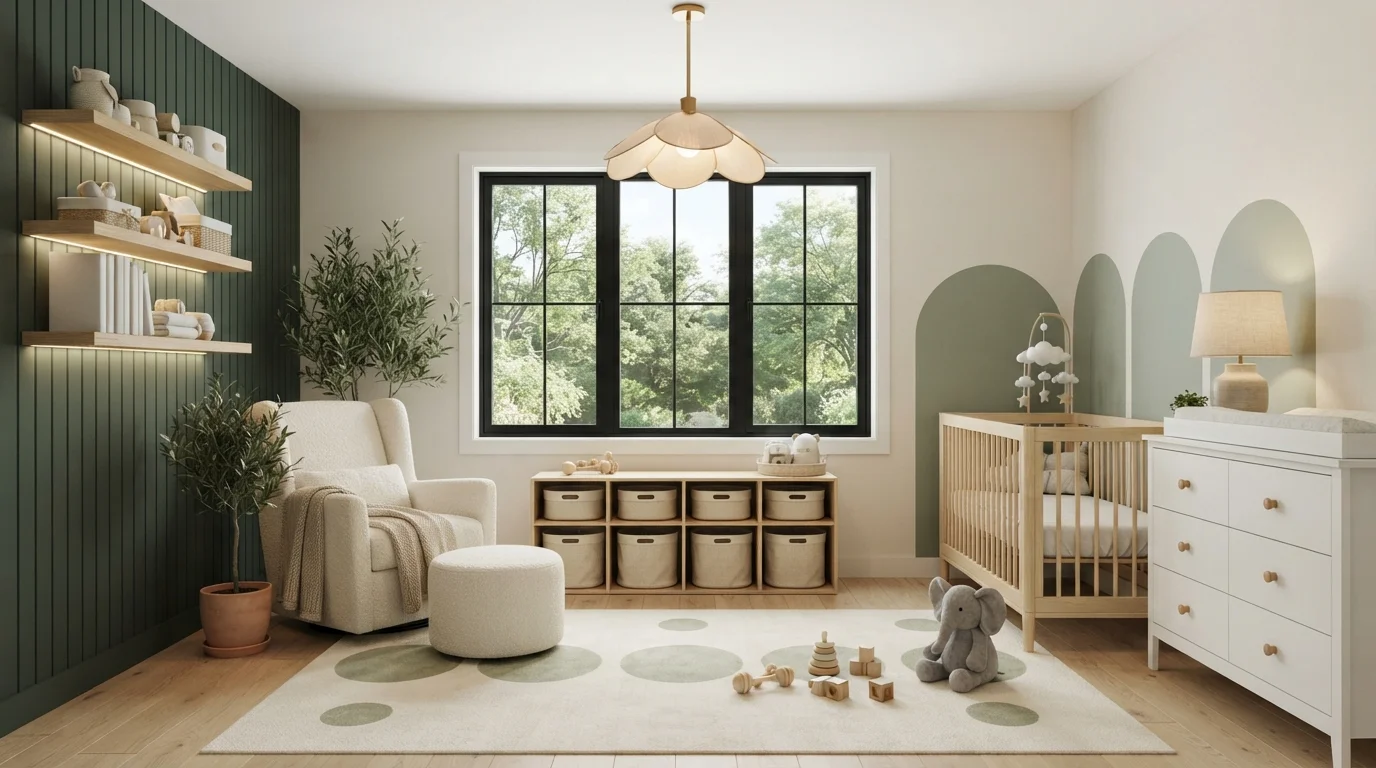
Room Colors · Green Nursery
8 Best Green Nursery Paint Colors for 2026
ideas, combinations, and real rooms
8 curated picks from real green nurserys — with the exact colors, honest reasons why, and the combinations that hold the room together.

Former interior stylist who can spot a green undertone from across a room. Jessica writes the color and mood pieces — what to choose, what pairs, and why your "white" looks pink.
The Fast Answer
Don't want to read 8 picks? These four are the safe answers.

Top Picks for the Green Nursery
Tap a shade to see the green nursery in it, then try it on your own room.
Green Nursery Color Trends 2026 — What's In, What's Out


- Bright Mint Or Kelly Green — Saturated mint and kelly greens that defined nurseries a decade ago now feel dated next to 2026's muted, earthy sage and olive tones.
- Cool Pastel Mint — Cool, blue-leaning pastel mint is losing ground to warmer sage and olive greens that read calmer and more grounded in 2026 nurseries.
- Overdone Jungle Mural Themes — Elaborate jungle-mural accent walls are giving way to a single, confident color-drenched green wall as the simpler 2026 approach.
The 8 Best Green Nursery Paint Colors
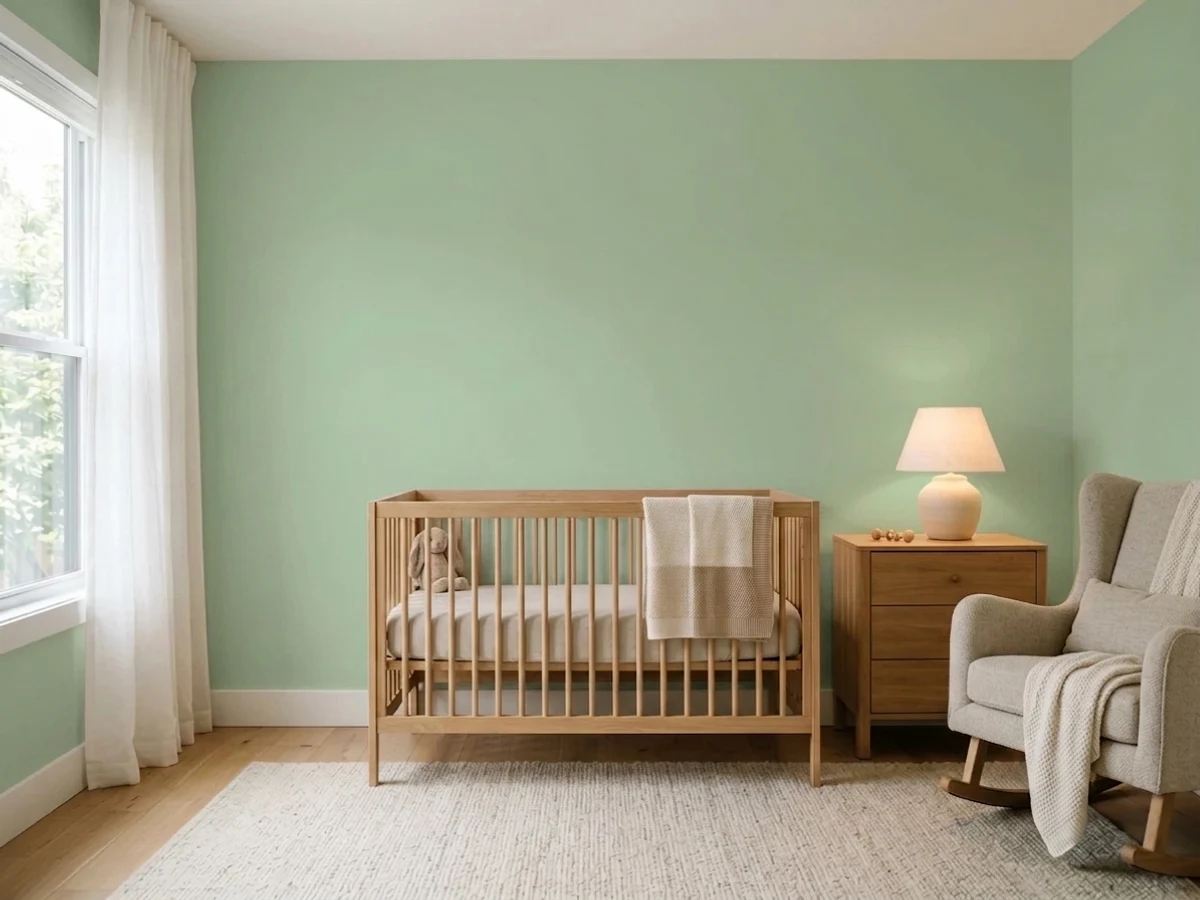
Every pick below is a real rendered green nursery, not a chip. The lead color first; the swatches are the full scheme in the photo — walls, furniture, textiles, accent.

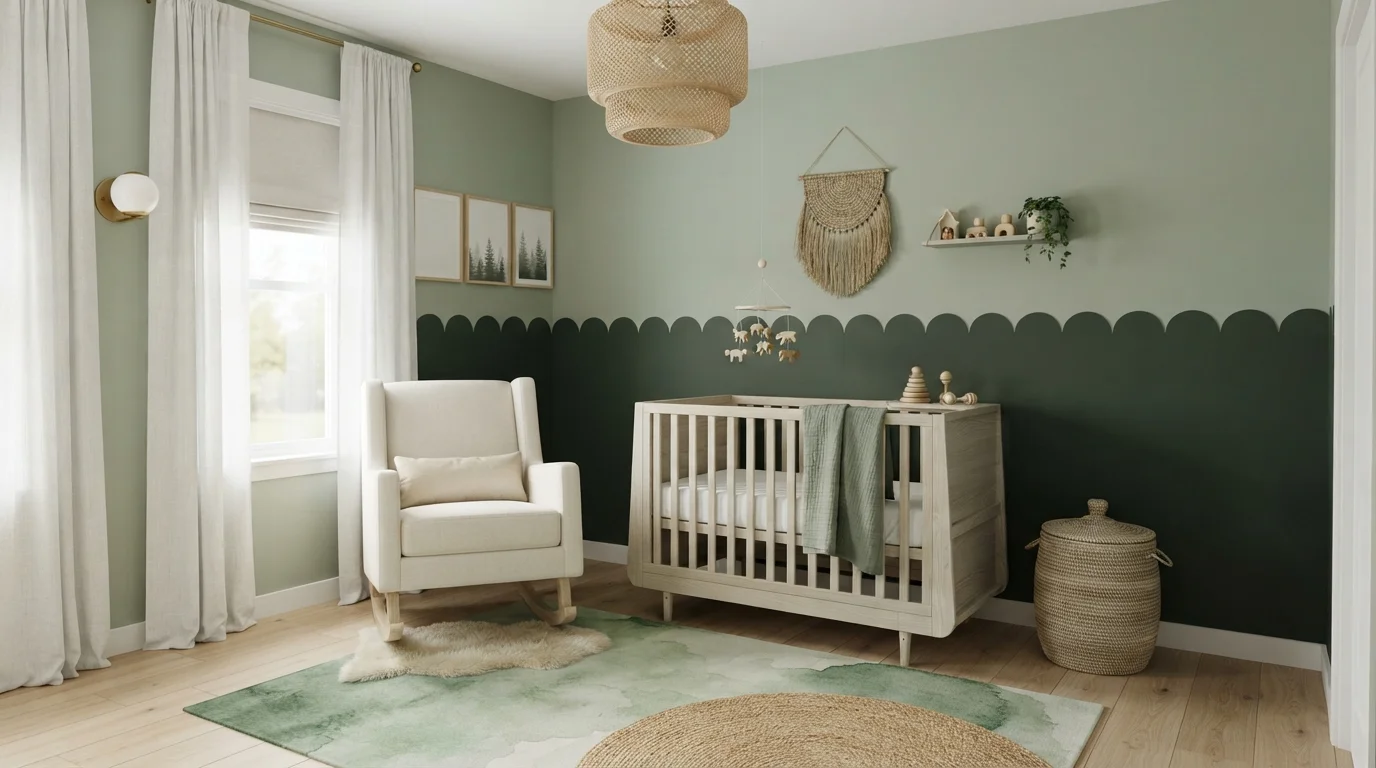
Soft sage and rich forest green create a soothing, nature-inspired nursery wrapped in warm wood tones.
Sage green is a soft, muted leafy green with gentle earthy notes. In this nursery, light sage coats the upper walls while a dark forest green scalloped wainscot adds playful contrast below. A light natural wood crib, off-white armchair, and soft green rug tie the entire room together. The space feels calm, cozy, and wonderfully grounded. Combining two greens with warm natural woven textures works because nature's colors always harmonize effortlessly. It is ideal for anyone who loves an organic, gender-neutral baby room.
SEE HIDDEN GLADE ON YOUR WALLS →
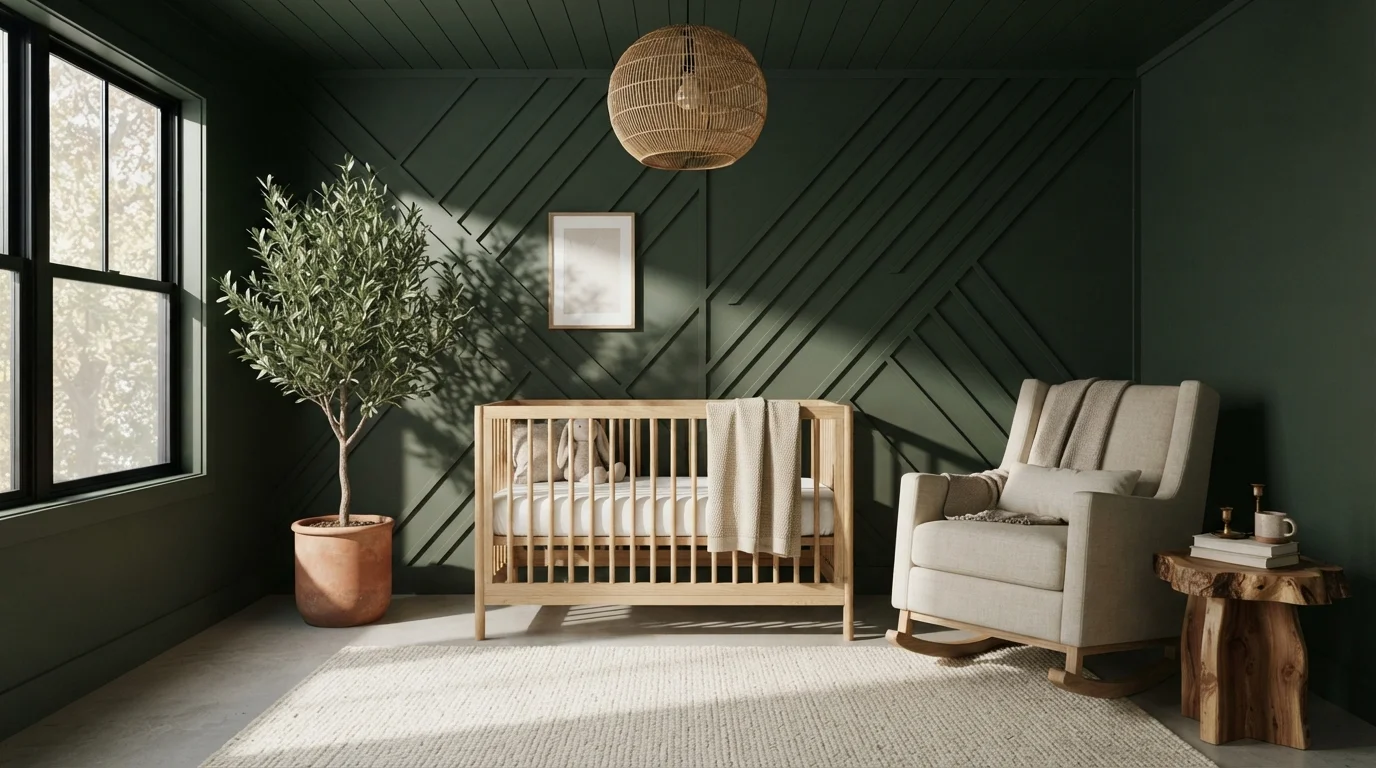
Deep forest green walls wrap around warm natural oak and woven textiles to create a peaceful, organic sanctuary.
Forest green is a deep, earthy green that brings the calm of nature right indoors. In this space, rich dark green blankets the slatted geometric accent wall and the ceiling above. It makes a stunning backdrop for the light oak crib, cozy linen rocking chair, and textured cream wool rug. The entire room feels snug, peaceful, and wonderfully grounded. This pairing works because earthy naturals naturally belong together, letting pale wood and woven fibers pop against moody color. It is a fantastic choice for anyone designing a calming, nature-inspired nursery.
SEE IT ON YOUR WALLS →
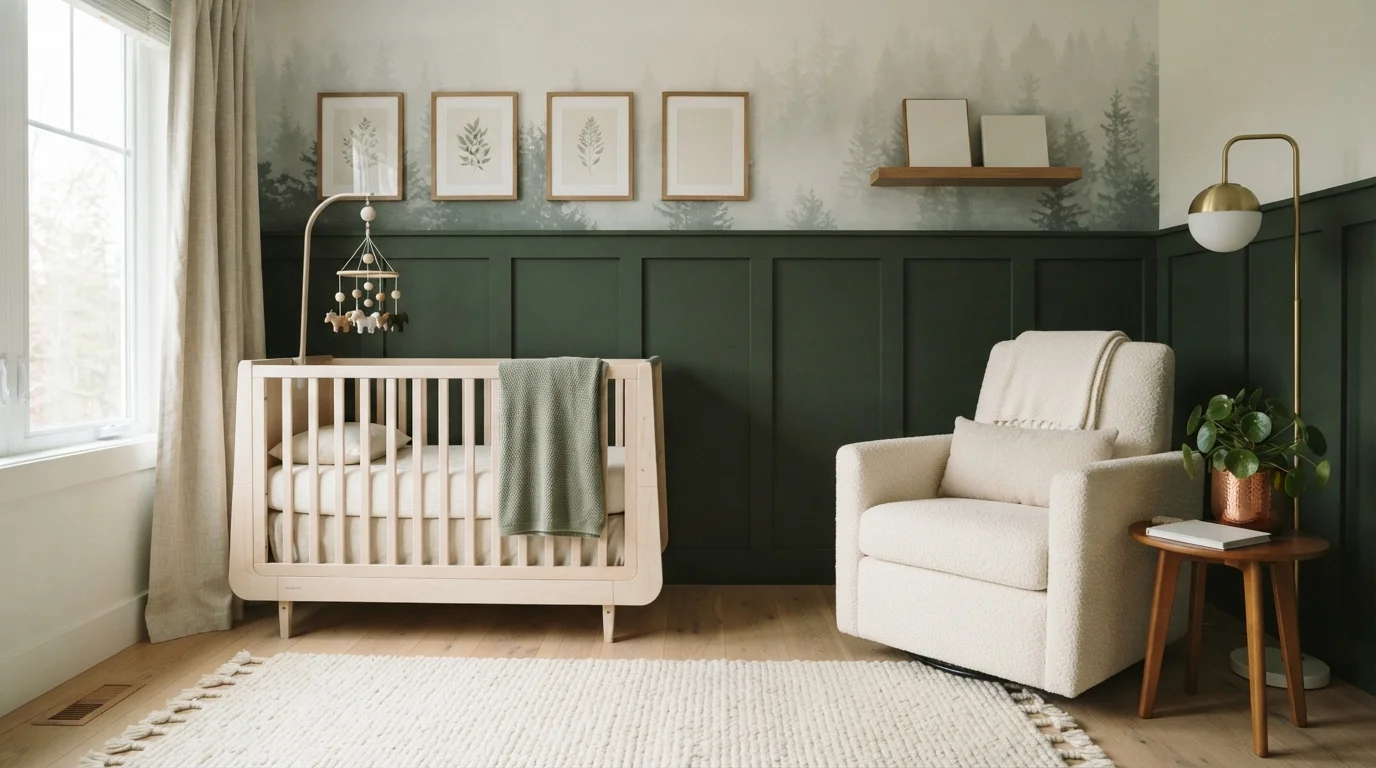
Deep forest green wainscoting and plush cream textures create a serene, nature-inspired sanctuary for quiet moments and sweet dreams.
Forest green is a deep, rich pine green that instantly brings the outdoors inside. In this nursery, dark green board and batten covers the lower walls, perfectly balanced by a misty tree mural above, a light wood crib, and a cozy cream bouclé armchair over a thick wool rug. The space feels calm, grounded, and deeply snug. Deep green pairs naturally with creamy whites and pale blonde wood, keeping the dark shade fresh and airy. It is ideal for anyone designing a peaceful woodland haven.
SEE DEEP FOREST ON YOUR WALLS →
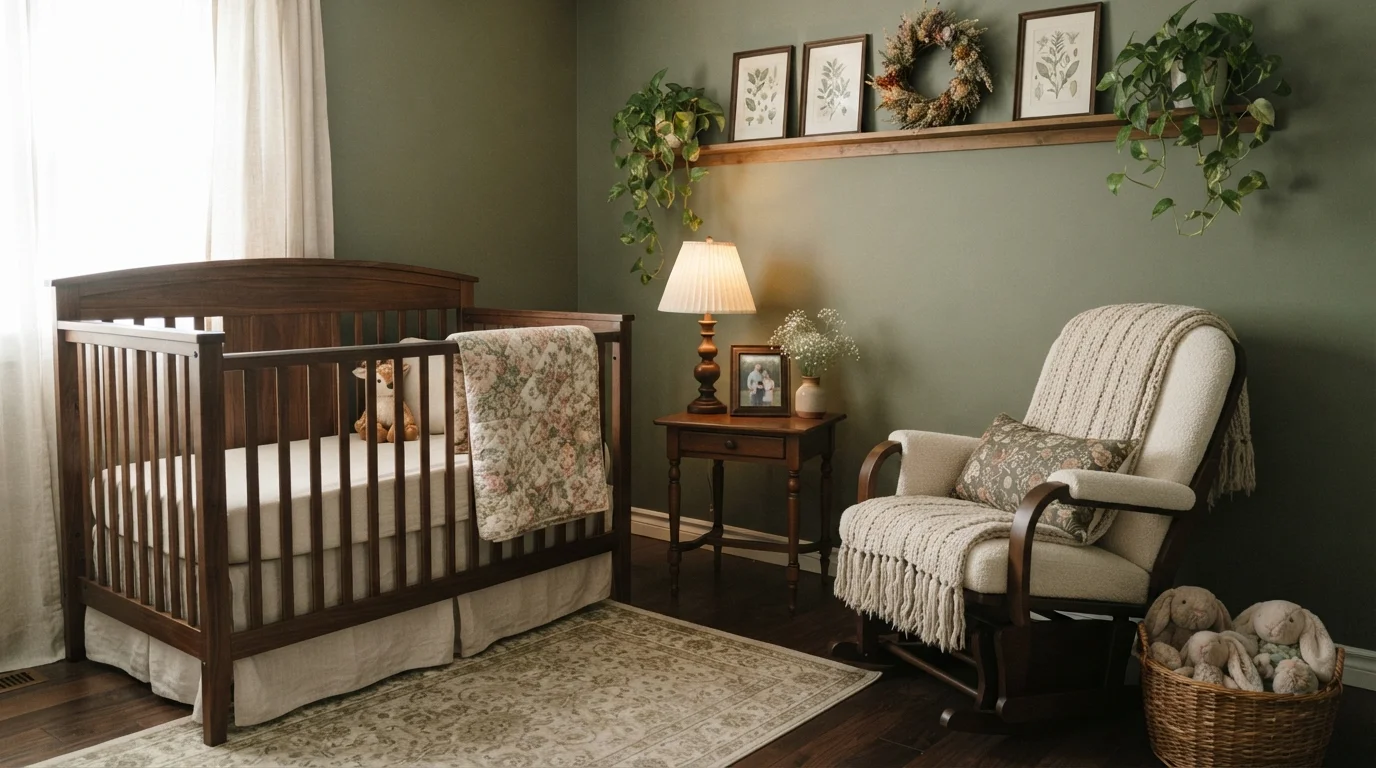
Warm lamplight and muted olive walls create a peaceful, storybook nursery filled with nostalgic heirloom charm.
Muted olive is a gentle, earthy green with quiet warmth. In this nursery, soft green walls wrap around a dark wood spindle crib, a comfortable rocking chair, and an antique-style floral rug. The whole room feels deeply calming, snug, and safe for bedtime stories. It works so well because nature-inspired greens naturally balance deep wood stains and creamy textiles. It is the perfect choice for anyone wanting a classic, heirloom-inspired nursery that never feels trendy or cold.
SEE DARK SAGE ON YOUR WALLS →
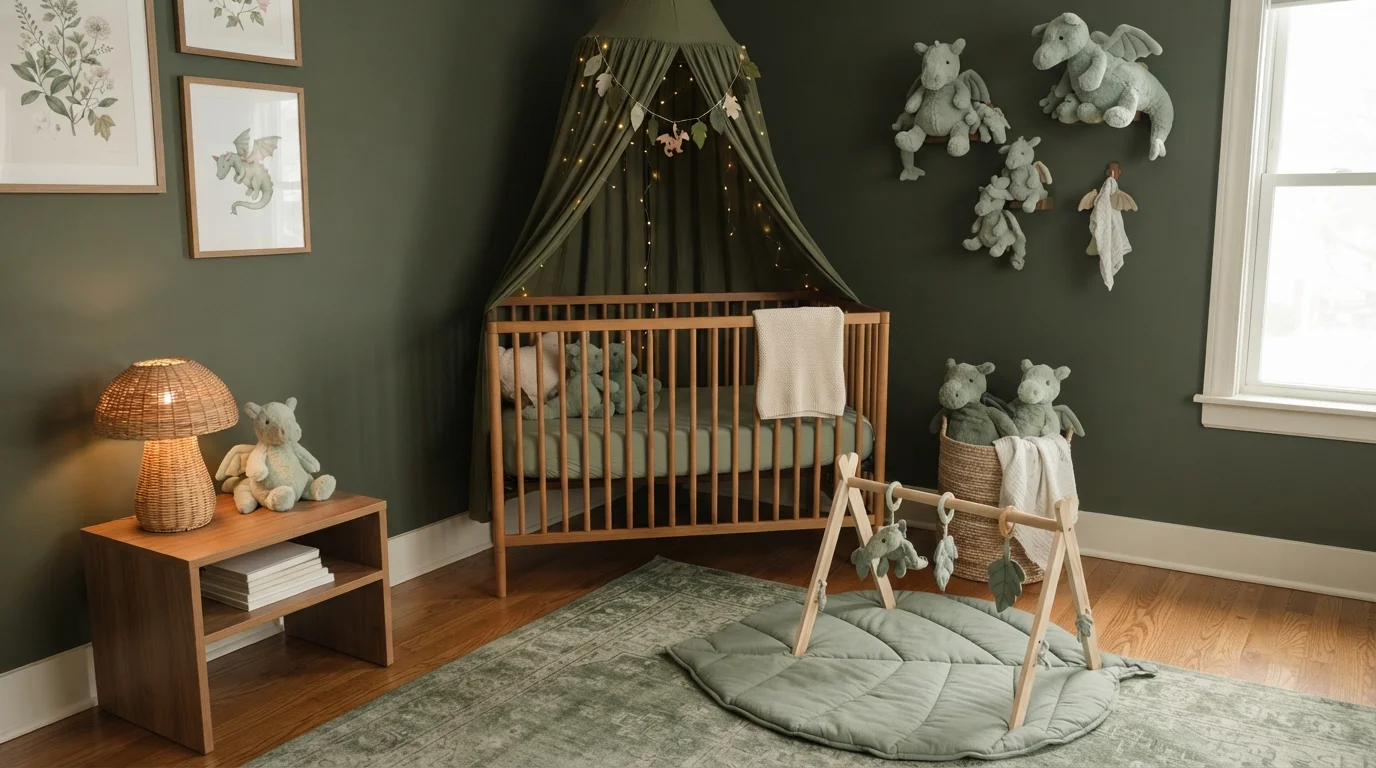
Soft sage dragons and warm wooden tones create a magical, cozy woodland retreat wrapped in deep olive walls.
Olive green is a deep, earthy moss tone. Here, velvety olive covers the walls, framing a natural wood crib, a hanging canopy strung with fairy lights, and an array of soft sage plush dragons. A muted green patterned rug and quilted leaf mat soften the warm wood floor. The room feels wonderfully cozy, calm, and full of storybook charm. Layering varied tones of sage and forest green alongside natural wood keeps the theme cohesive. It is perfect for creating a dreamy, magical woodland nursery.
SEE TREELINE ON YOUR WALLS →
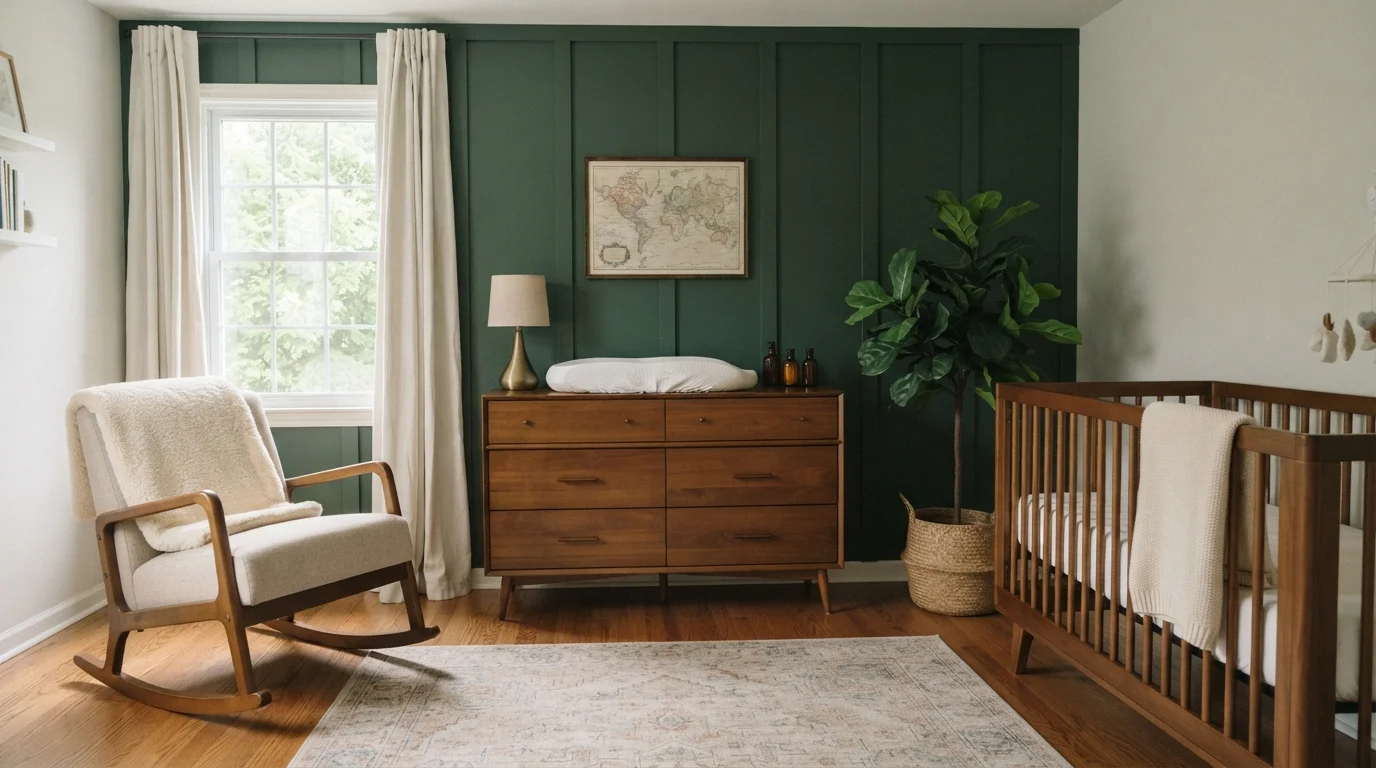
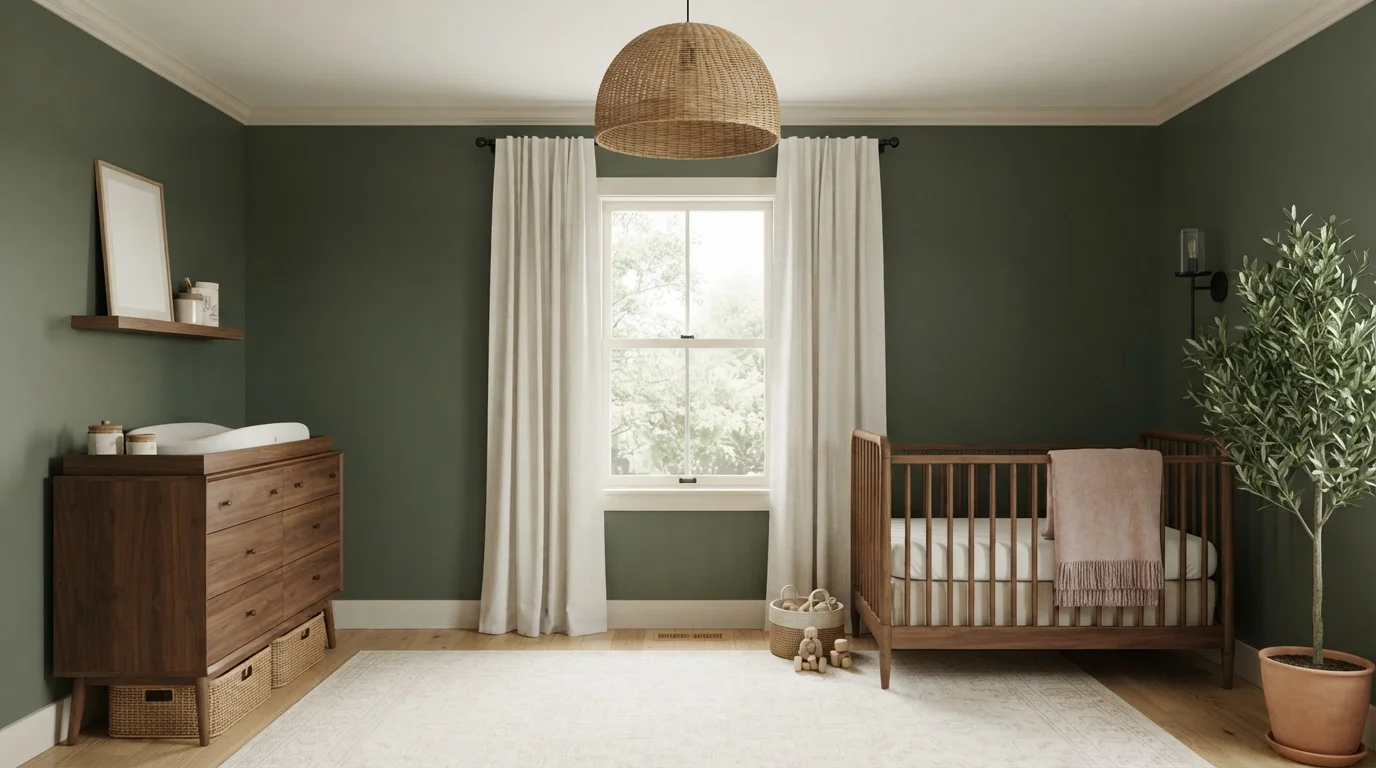
Deep forest green walls wrap this nursery in quiet warmth, balanced by cozy cream textiles and glowing amber wood.
Forest green is a deep, earthy woodland green. In this space, rich green panels cover the walls, pairing naturally with a warm walnut dresser, a matching wooden crib, a cream rocking chair, and a soft vintage rug. The room feels deeply calm, grounded, and snug. This combo works because rich botanical greens and warm timber always complement each other, while soft cream drapery keeps everything gentle and light. It is ideal for anyone wanting a nursery that feels comforting, timeless, and effortlessly stylish.
SEE SYCAMORE TREE ON YOUR WALLS →
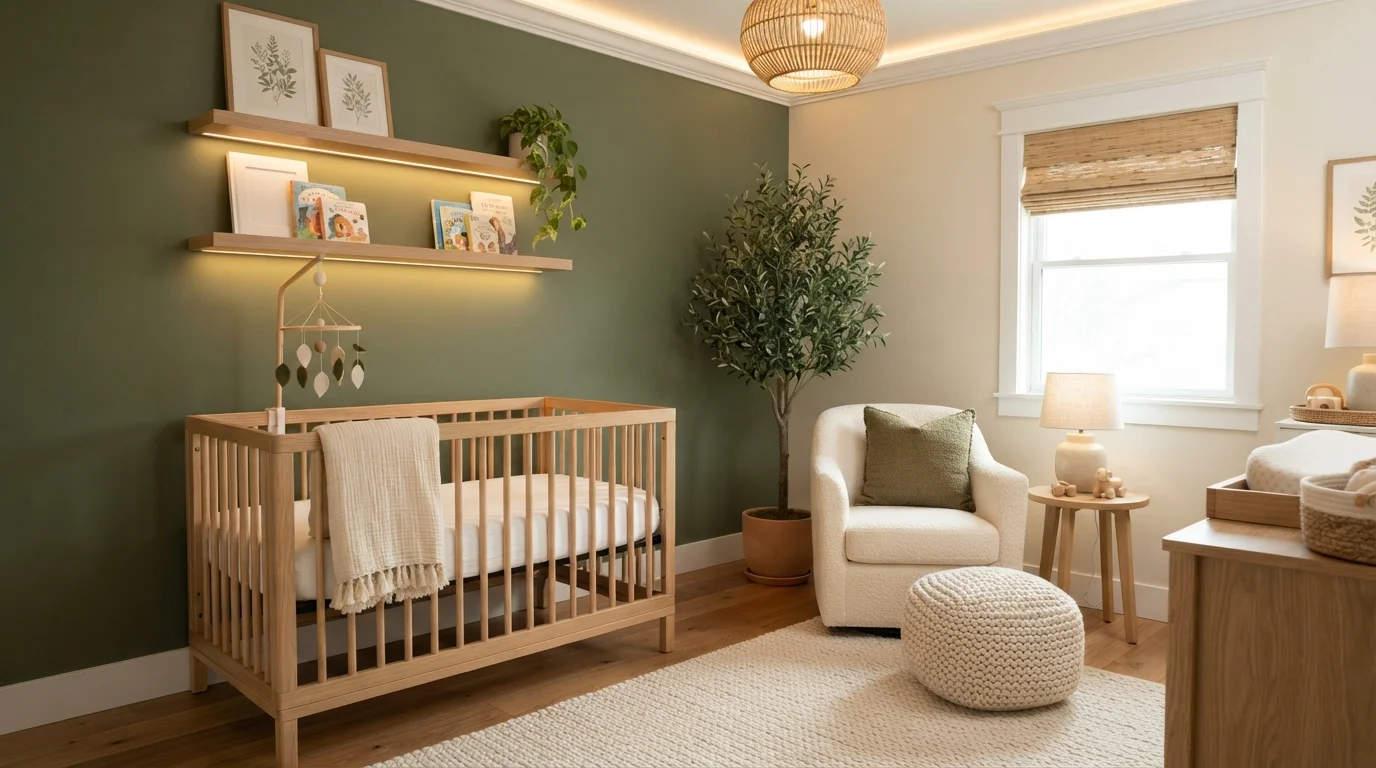
Gentle olive tones, glowing wood shelves, and soft cream textures create a peaceful haven for restful nights.
Olive green is a rich, comforting earthy shade. In this nursery, deep moss green wraps the feature wall behind a natural wood crib, balanced by soft cream walls, an ivory bouclé glider, and a braided knit pouf. The whole room feels snug, gentle, and utterly peaceful. Earthy greens and warm honey woods naturally belong together, keeping the space grounded without feeling dark. This look is ideal for parents who want a calm, nature-inspired nursery that grows gracefully with their child.
SEE MOTHER NATURE ON YOUR WALLS →
Deep forest green walls and warm woven textures create a gentle, nature-inspired nursery wrapped in soft daylight.
Olive green is a rich, grounding earthy shade that feels connected to nature. In this room, deep green covers the walls while a warm walnut crib and matching dresser bring in rich wood tones under a soft cream patterned rug. The space feels tranquil, grounded, and exceptionally snug for restful naps. This pairing works because deep earthy green and natural wood grain balance each other effortlessly without ever feeling busy. It is the perfect retreat for parents who want a quiet, timeless room inspired by the outdoors.
SEE BEVERLY ON YOUR WALLS →Green Nursery Wall Color Combinations
A wall color never works alone. These are the full schemes from the rooms above — the lead color first, then the supporting colors that make the photo work.
Soft sage and rich forest green create a soothing, nature-inspired nursery wrapped in warm wood tones.
TRY THIS PALETTE →Deep forest green walls wrap around warm natural oak and woven textiles to create a peaceful, organic sanctuary.
TRY THIS PALETTE →Deep forest green wainscoting and plush cream textures create a serene, nature-inspired sanctuary for quiet moments and sweet dreams.
TRY THIS PALETTE →Warm lamplight and muted olive walls create a peaceful, storybook nursery filled with nostalgic heirloom charm.
TRY THIS PALETTE →Home Body — a fresh, light green — pairs directly with white furniture and a natural wood crib, which makes it the easiest starting point if the nursery already has light oak or ash pieces picked out. Run it on all four walls with white trim and let the wood do the contrast work. Eucalyptus Leaf, a calmer blue-green, does the same job but leans cooler, so it sits better with gray-toned wood, brass hardware, and white bedding rather than warm honey-colored furniture.
For a combination wall, pair Jojoba or Green Trellis as the lower half or accent wall with Brook Green or Morning Zen carrying the rest of the room — the pale shade keeps the space from feeling boxed in while the earthier green grounds the crib wall. If Black Emerald is going in as the single accent wall, keep every other wall in Brook Green or a plain white trim color; putting two saturated greens in the same room reads as busy rather than calm, and calm is the whole point of a nursery.
More Nursery Color Ideas
Set on a color family already? Each page has its own real rooms and picks.
Light or Dark Green Nursery Colors?
Go Light (LRV 60+) If…
The room is small, faces north, or has to work at every hour. Light warm colors make it feel bigger and stay calm in evening light — the light you actually live in.
Go Dark (LRV Under 20) If…
You want the cocoon effect and the room has real daylight. Dark works best on one feature wall — or fully color-drenched in a large room with good windows.
Nursery light matters more than in almost any other room because so much of what happens there happens in the dark or half-dark — feedings, diaper changes, checking on a sick baby at 2 a.m. If the room started life as a small bedroom, office, or converted closet with one window, stick to Brook Green, Morning Zen, or Hancock Green (LRV 66–78); all three keep the room from feeling like a cave once the sun goes down and the only light source is a dim lamp. Jojoba and Green Trellis need real daylight to look right — a south- or west-facing nursery with a full-size window can carry both without the room going murky by late afternoon.
Black Emerald is the one pick that needs a plan before it goes on the wall. Full-room dark green makes it harder to spot a rash, a fever flush, or spit-up at a glance during a middle-of-the-night check, which is a real concern parents raise, not just a style note — so treat it as an accent wall behind the crib, or paint it below a chair rail with Brook Green or plain white above, and add a dimmable lamp near the changing area so there's always a light source that isn't the harsh overhead.
See It. Love It.
Paint It.
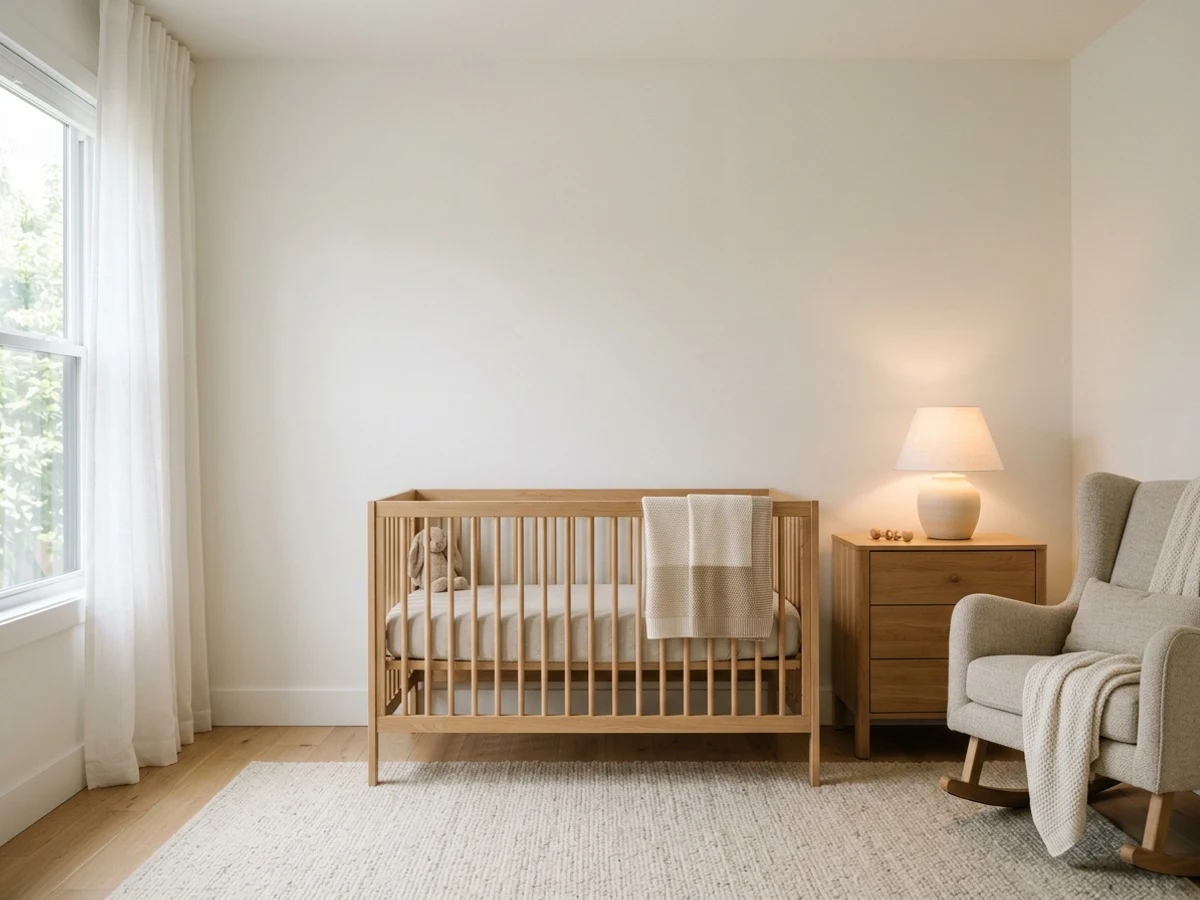
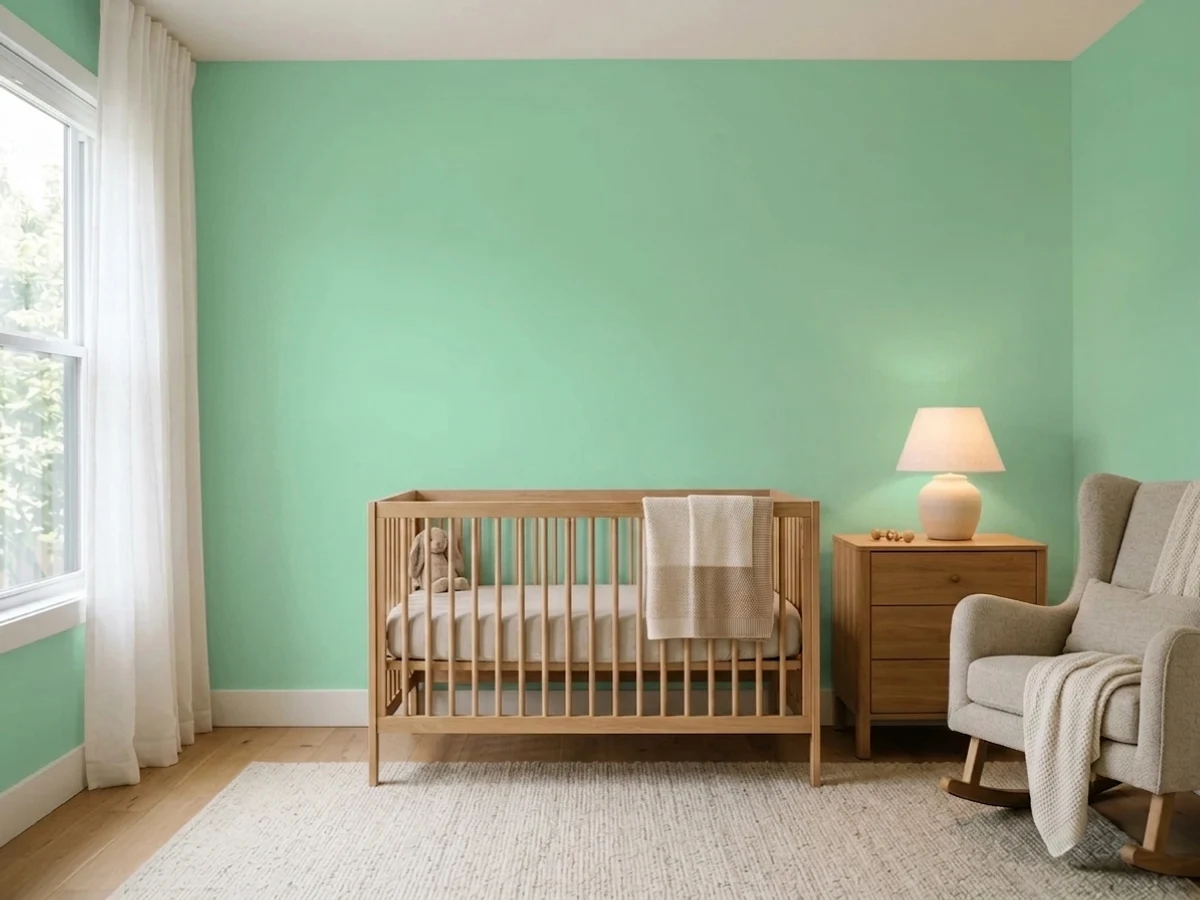
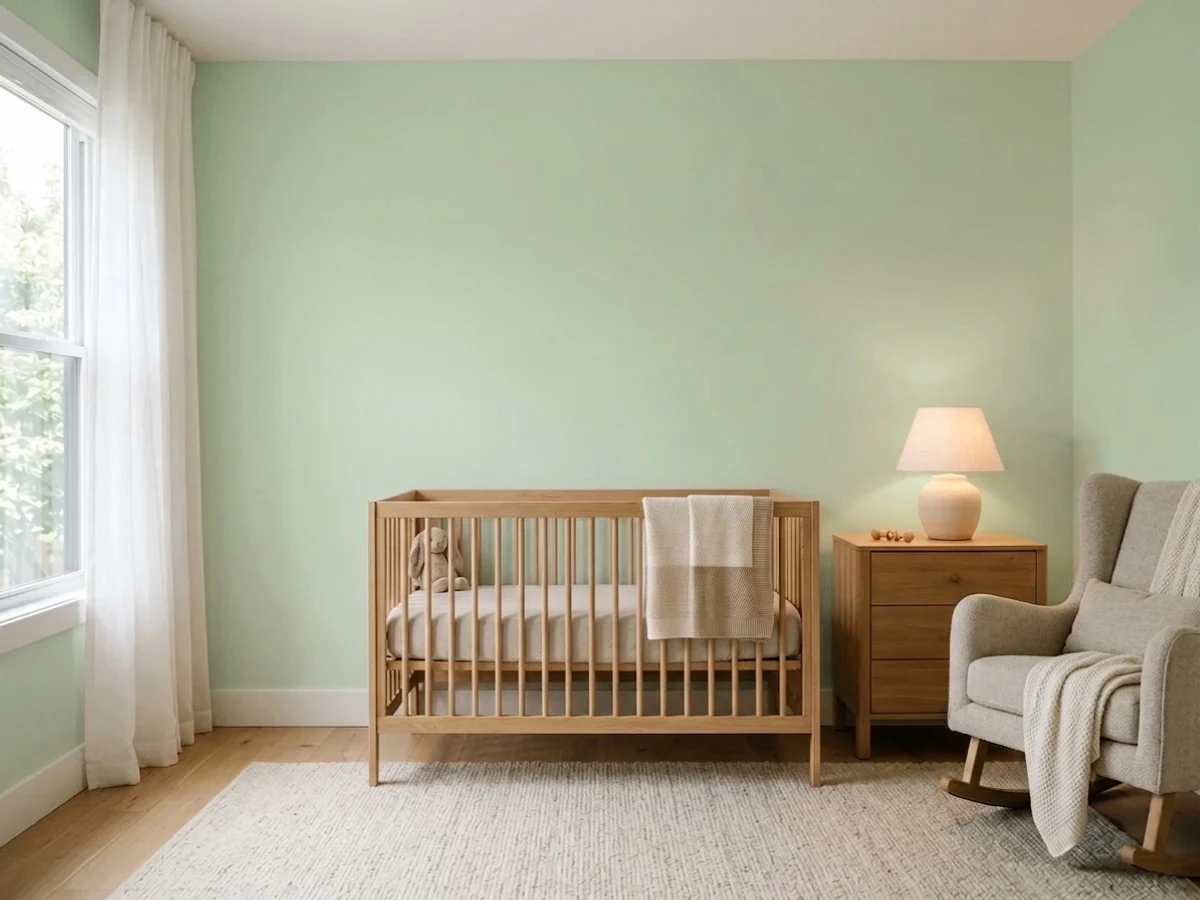
Upload one photo of your green nursery and try every color on this page on your own walls — in your own light, before you buy a drop of paint.

Eucalyptus LeafBeforeSheen And Paint Safety For A Nursery
Use eggshell or satin on nursery walls, not flat — flat paint marks and stains from spit-up, formula, and eventually crayon are hard to wipe clean, while eggshell survives a damp cloth. Skip semi-gloss on the main walls; it throws glare off a nightlight or lamp right when you're trying to keep the room dim for sleep.
Because a nursery gets painted while a baby (or a pregnant parent) is already in the house, go zero-VOC. Benjamin Moore Natura is a true 0 g/L zero-VOC line, Sherwin-Williams Harmony stays under 5 g/L and holds up better to scrubbing, and Behr Premium Plus Ultra is the budget zero-VOC option — all three carry GreenGuard Gold certification.
One thing to flag at the paint counter if going with a deep shade like Black Emerald: getting a true GreenGuard Gold result on a dark, saturated color depends on the store tinting a zero-VOC base with zero-VOC colorant (Benjamin Moore's Gennex or Sherwin-Williams' CCE). A deep base tinted with a conventional colorant can leave the certified range even if the base itself qualifies, so it's worth asking rather than assuming.
Where To Use The Darker Greens
Black Emerald and, to a lesser extent, Green Trellis work best as a single wall behind the crib rather than wrapping the room. That keeps the visual weight in one spot — usually the wall you'll photograph the most — while the rest of the room stays light enough for changing-table tasks and daytime naps with the shades open.
If the nursery is small, a full wrap in anything darker than Jojoba (LRV 56) will shrink the room visually and cut down on the bounce light you need for reading a bedtime story or checking a sleeping baby without turning on a bright lamp. Save the deepest picks for rooms with at least one good-sized window or plan on supplemental lighting.
Mistakes To Avoid In A Green Nursery
The most common miss is picking a yellow-leaning green like a bright grass or lime tone expecting it to feel cheerful — under most LED nursery lighting it can shift clinical or hospital-like instead. Everything in this palette leans blue-green or earthy for that reason; if a sample looks yellow-green on the chip, it will likely look more so once it's on four walls under warm bulbs.
The second mistake is skipping the swatch test. Green is one of the more light-reactive families — Brook Green can look almost gray at 7 a.m. and distinctly green by midafternoon, and Jojoba can swing warmer or cooler depending on whether the room gets morning or evening sun. Paint a sample patch and check it at the actual times you'll be in the room: early morning feedings and after dark with just a lamp on, not just midday.
About Green Nursery Paint Colors
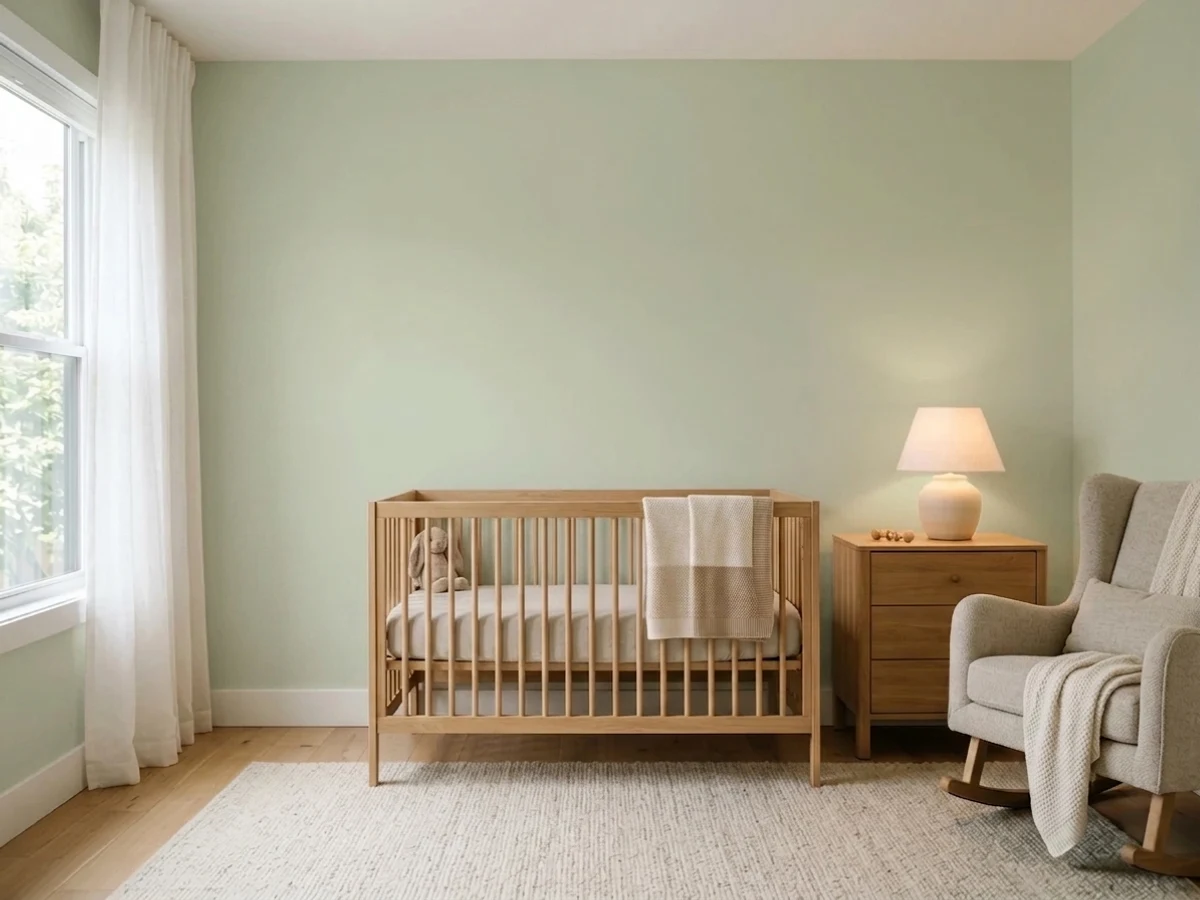
Green is the color most parents land on when they don't know the baby's sex yet, and it isn't just a safe default — it's the one family of paint that reads as calm without going flat or clinical the way a plain gray or beige nursery can. The palette here spans from almost-white pastels to one true statement shade, so the room can lean airy or lean cozy depending on how much natural light it actually gets. Brook Green (Behr N410-2, LRV 78) and Morning Zen (Behr S380-2, LRV 69) sit at the pale end — both are barely-there washes of green that still bounce enough light to make 3 a.m. diaper changes manageable without flipping on an overhead light.
Step down in LRV and the room gets warmer instead of just lighter. Hancock Green (Benjamin Moore HC-117, LRV 66) and Jojoba (Behr N390-3, LRV 56) both read as gentle, sunlit greens rather than mint — Hancock Green has a soft, cheerful cast, while Jojoba pulls toward an earthy, almost tea-colored green that plays well against a wood crib instead of fighting it. These are the two picks worth sampling first if the nursery gets decent daylight and the goal is "grow-with-the-kid" rather than "newborn pastel."
For parents who want more depth, Green Trellis (Valspar 5006-3C, LRV 43.3) and Eucalyptus Leaf bring in a soothing, nature-forward mid-tone that still works for either sex and holds up past the nursery years into a toddler room. Black Emerald (Sherwin-Williams) is the outlier — a near-black, saturated green built for one accent wall or a wainscot line, not a full four-wall wrap, since a nursery still needs enough ambient light for late-night feeding checks.
The Questions Everyone Asks
What color should I paint my green nursery?
If you want one answer, start with the safe picks above — Hidden Glade, Dard Hunter Green, Deep Forest, Dark Sage. They read well in any light and survive furniture changes. Then check the light: strong afternoon sun wants a step cooler, a north-facing room wants a step warmer.
what is the best green paint color for a nursery?
For most nurseries, Brook Green (Behr N410-2) or Morning Zen (Behr S380-2) are the safest starting points — both are pale, high-LRV greens (78 and 69) that keep the room bright enough for nighttime feedings while still reading clearly as green, not off-white. If the room gets good daylight and you want more warmth, Hancock Green (Benjamin Moore HC-117) is a gentler, sunnier option that still works in low light.
is green a good gender-neutral color for a nursery?
Yes — green is one of the most common choices when parents don't know or aren't sharing the baby's sex, because it reads as natural and calm rather than coded pink or blue. Softer picks like Hancock Green or Home Body work for either a boy or girl nursery and don't need to be repainted once you find out; Eucalyptus Leaf is built to carry the room past the nursery years too.
should i paint a nursery a dark green color?
A dark green like Black Emerald (Sherwin-Williams) works best as one accent wall, not the whole room. Full dark-green walls make it harder to see a baby's skin tone or spot a rash during a night check, and they shrink a small room visually. Use it behind the crib and keep the rest of the walls in a lighter pick like Brook Green so the room still reads calm rather than cave-like.
what paint is safe to use in a baby's nursery?
Look for a zero-VOC, GreenGuard Gold-certified paint — Benjamin Moore Natura (true 0 g/L), Sherwin-Williams Harmony (under 5 g/L, more scrub-resistant), or Behr Premium Plus Ultra (under 5 g/L, the budget option) all qualify. If you're going with a deep color like Black Emerald, ask the store to tint it with a zero-VOC colorant (Gennex or CCE) — a conventional colorant on a dark base can push the finished color out of the certified range.
what colors pair well with green in a nursery?
White trim is the default pairing across every pick here, and it's the right call — it keeps the green from feeling heavy. Home Body pairs directly with white furniture and a natural wood crib; Eucalyptus Leaf leans cooler and suits gray-toned wood and brass hardware better. For a two-tone wall, pair a mid-tone like Jojoba or Green Trellis with a paler green like Morning Zen rather than white, so the room still feels like one cohesive palette.
What two-color combination works best in a green nursery?
The reliable pattern is a quiet main color plus one deep accent on a single wall. Keep trim and ceiling in one warm white so the two colors are the only event in the room — the combination cards above show complete schemes from real rooms.
What colors make a green nursery look bigger?
High-LRV, slightly warm colors — LRV 60–75 is the sweet spot. Paint the walls and trim close to the same light color so the corners blur, and keep the ceiling white. Stark cool white actually works against you; it creates hard shadows that show the room's edges.

Ask a Question