Room Colors · Black Front Door
8 Best Black Front Door Paint Colors for 2026
ideas, combinations, and real rooms
8 curated picks from real black front doors — with the exact colors, honest reasons why, and the combinations that hold the room together.

Former interior stylist who can spot a green undertone from across a room. Jessica writes the color and mood pieces — what to choose, what pairs, and why your "white" looks pink.
The Fast Answer
Don't want to read 8 picks? These four are the safe answers.

Top Picks for the Black Front Door
Tap a shade to see the black front door in it, then try it on your own room.
Black Front Door Color Trends 2026 — What's In, What's Out


- Glossy True Black — A high-gloss, jet-black front door with cool metal hardware now reads harsh next to 2026's softer, warmer near-black finishes.
- Black Door With No Other Black Accents — An isolated black door with no matching black window frames or lighting is giving way to coordinated black exterior accents.
- Cool Silver Or Chrome Hardware — Cool-toned chrome and silver door hardware is losing ground to warm brass and bronze finishes on 2026 black front doors.
The 8 Best Black Front Door Paint Colors
Every pick below is a real rendered black front door, not a chip. The lead color first; the swatches are the full scheme in the photo — walls, furniture, textiles, accent.

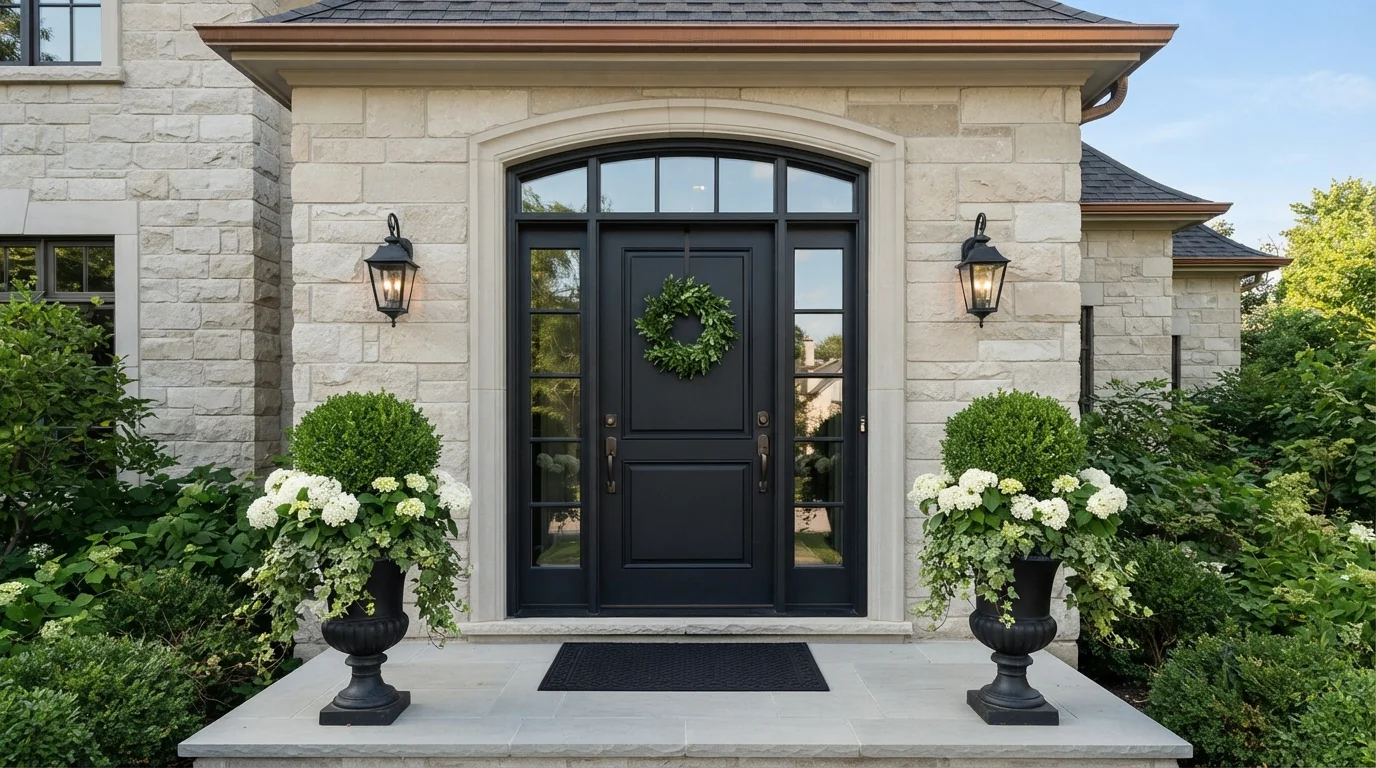
Rich black paint pairs with lush white hydrangeas and pale stone for an instantly inviting, high-contrast arrival.
Jet black is a deep, grounding classic color. In this entryway, a satin black coats the grand front door and window mullions, framed neatly by pale stone trim and two matching black urns filled with white hydrangeas. The entry feels instantly regal, polished, and fresh. This combination works because the stark contrast between deep black paint and bright white blooms makes the front door stand out. It is ideal for homeowners who love a tailored, traditional curb appeal with timeless charm.
SEE HOCUS POCUS ON YOUR WALLS →
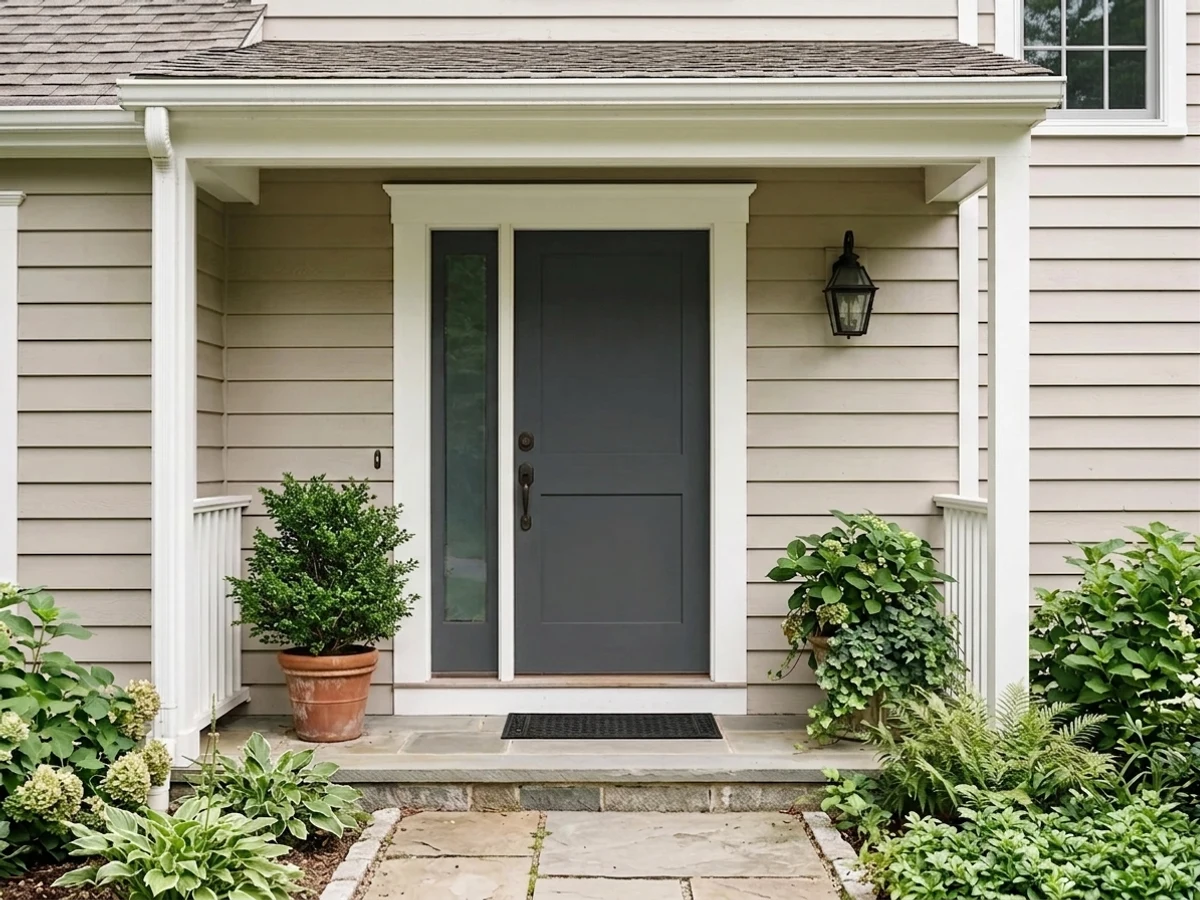
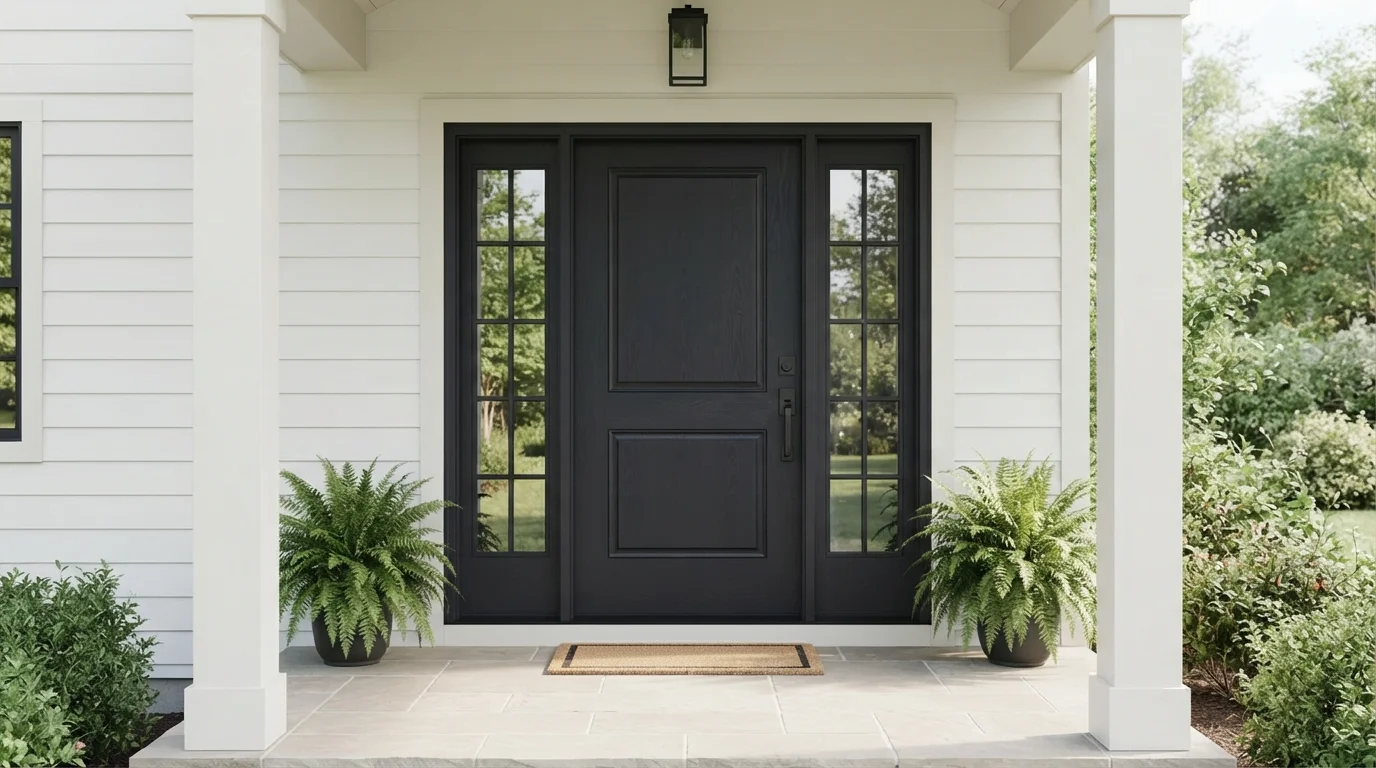
A rich, deep charcoal door delivers a striking and tailored focal point against clean off-white trim.
Charcoal is a deep, velvety shade that sits right between dark slate and pure black. In this entrance, the dark color coats the panel door, the matching sidelights, and the inner frame, while the surrounding exterior trim is a crisp, warm white. The whole entry feels grounded, clean, and unmistakably modern. This combination works because the stark contrast instantly defines the doorway and pulls your eye right in. It is an ideal look for anyone wanting an upscale, timeless boost to their curb appeal.
SEE TUXEDO ON YOUR WALLS →
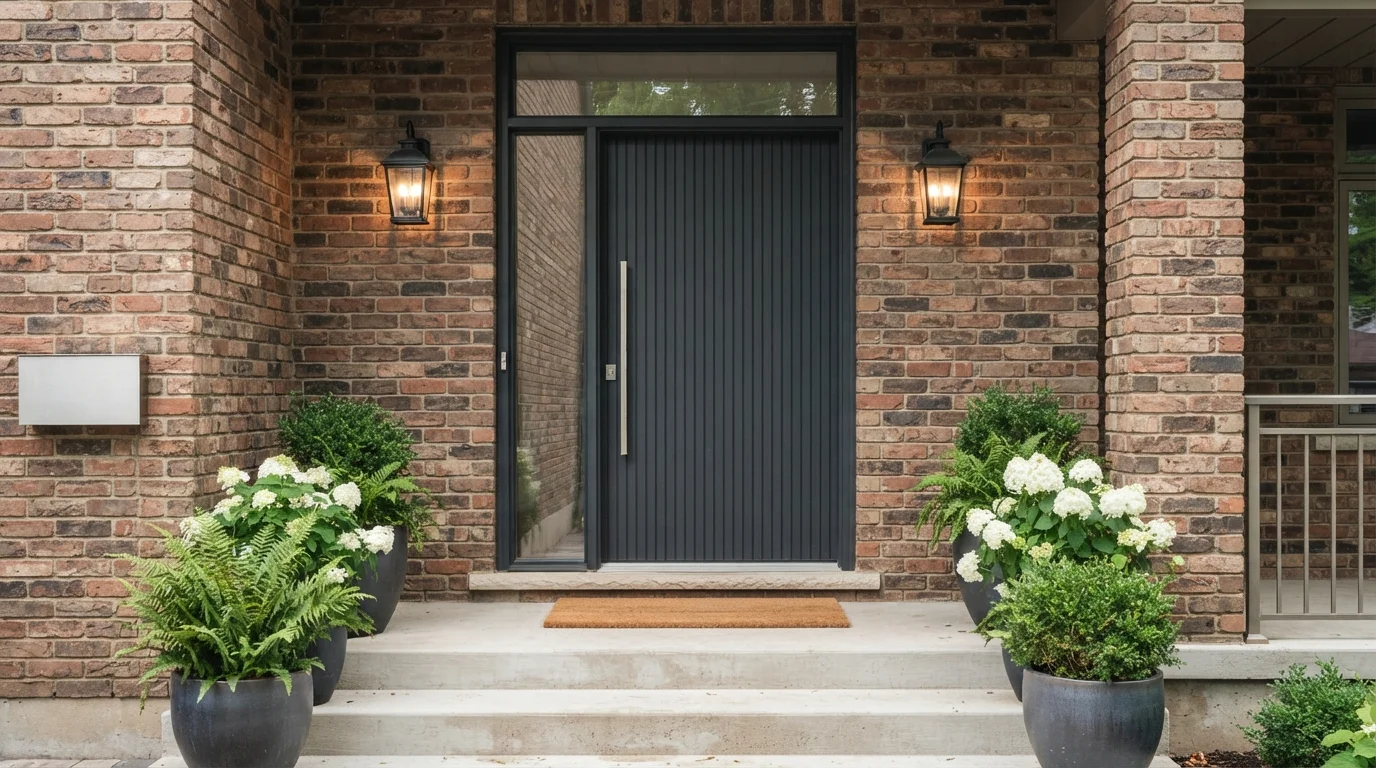
Deep charcoal panels meet classic red brick to create a bold, tailored, and welcoming front entry.
Charcoal is a rich, moody dark gray that feels sleek and timeless. In this entryway, that deep charcoal shade covers the tall vertical-slat door and matching outer frame. The entrance feels modern, upscale, and wonderfully grounded. The combination works because the cool, crisp dark finish creates an eye-catching contrast against the warm, textured red brick and amber lantern light. It is a fantastic choice for anyone looking to give a classic brick exterior a fresh, high-end update.
SEE IT ON YOUR WALLS →
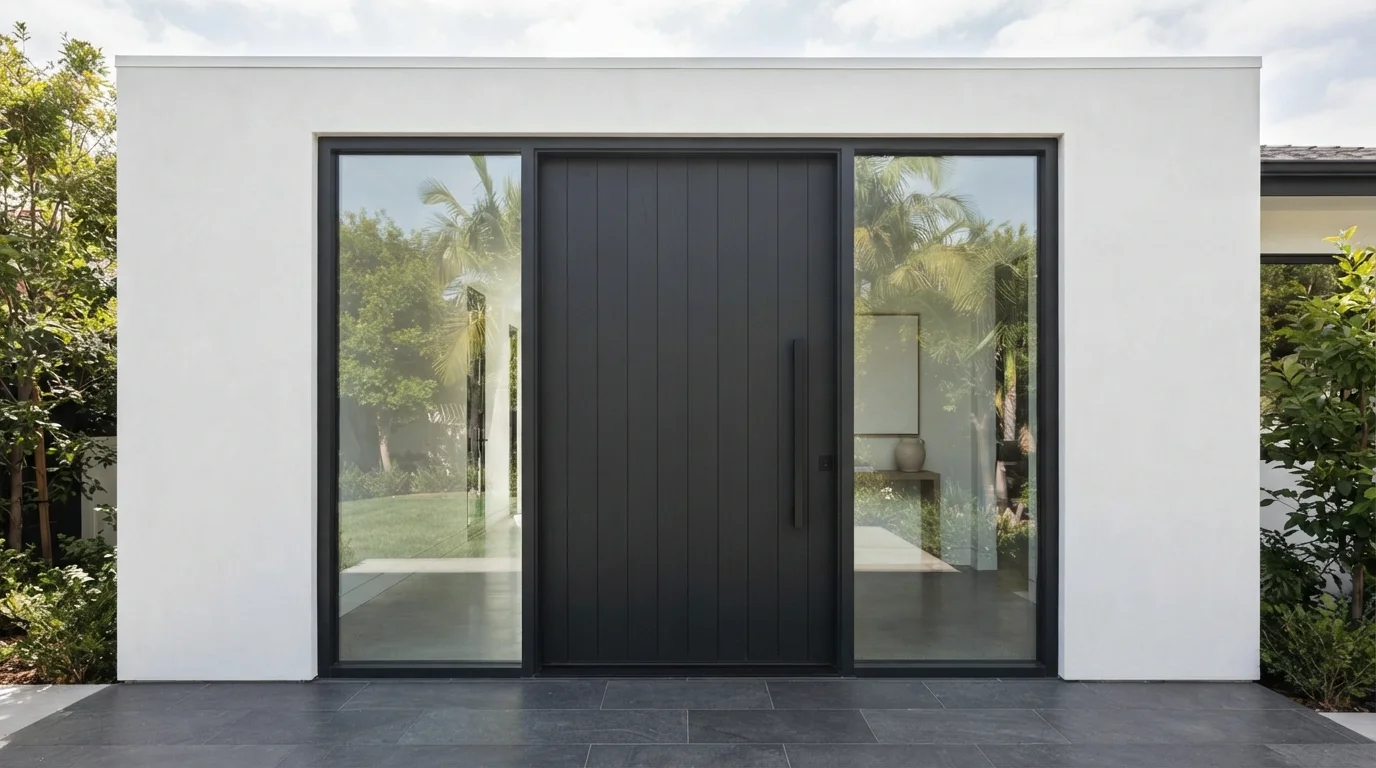
A commanding charcoal pivot door makes a striking, sophisticated statement framed against crisp white exterior walls.
Charcoal black is a deep, smoky dark shade with modern edge. Here, it covers the oversized vertical-plank pivot door and its matching window trim, standing out against clean white exterior walls. The entryway feels bold, architectural, and undeniably grand. The high contrast between the pitch-dark door and bright surroundings creates instant curb appeal while letting natural greenery pop through the sidelights. It is perfect for anyone wanting a striking, minimalist entrance that turns heads.
SEE IT ON YOUR WALLS →
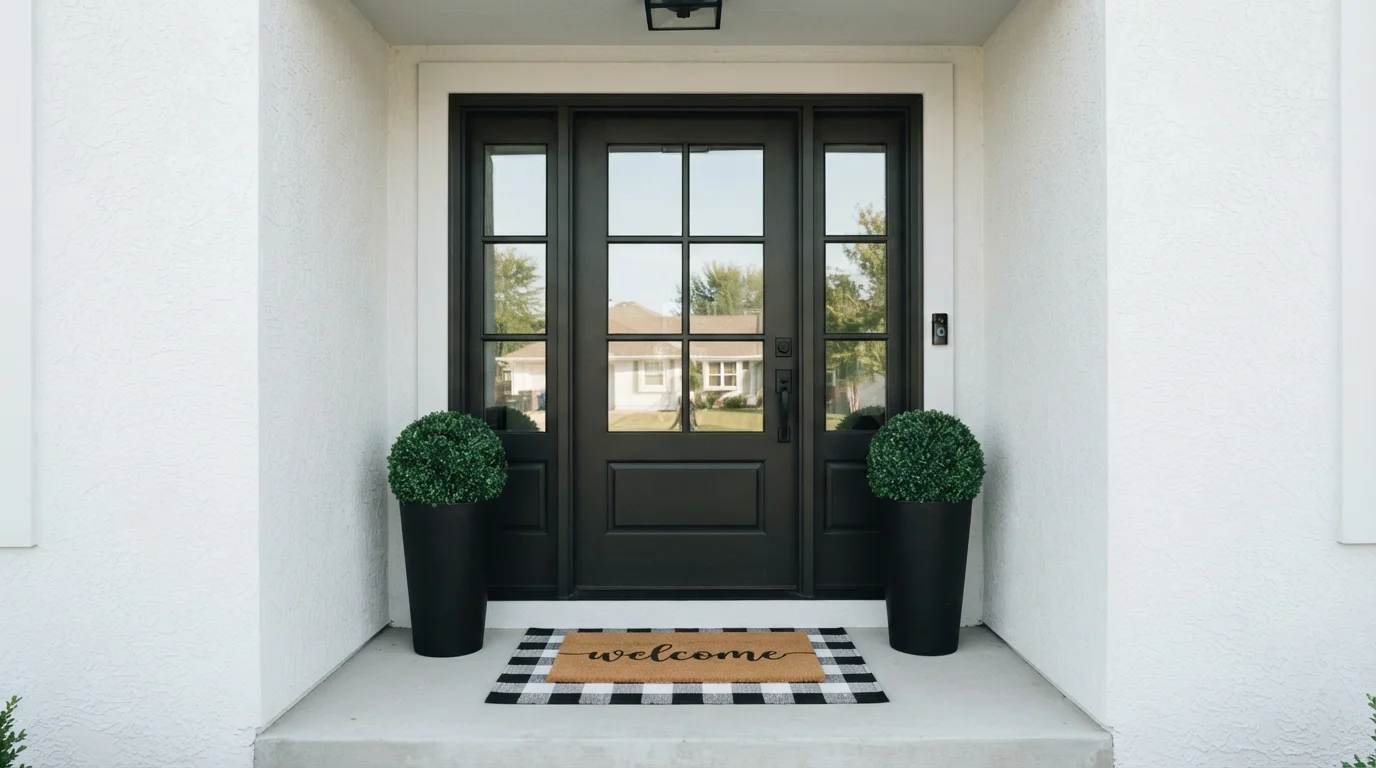
Crisp white walls contrast boldly with a deep black door and vibrant potted greenery for a clean, modern welcome.
Charcoal black is a deep, velvety dark neutral with a smart, modern edge. Here, rich matte black coats the grand multi-pane front door, sidelights, and matching tall planters, set against bright white stucco walls. The entry feels crisp, polished, and quietly dramatic from the moment you step up. High contrast between stark white and solid black makes the entrance pop while vibrant green topiaries add fresh life. It is perfect for anyone looking to give their home entrance a clean, tailored update.
SEE FACTORY BLACK ON YOUR WALLS →
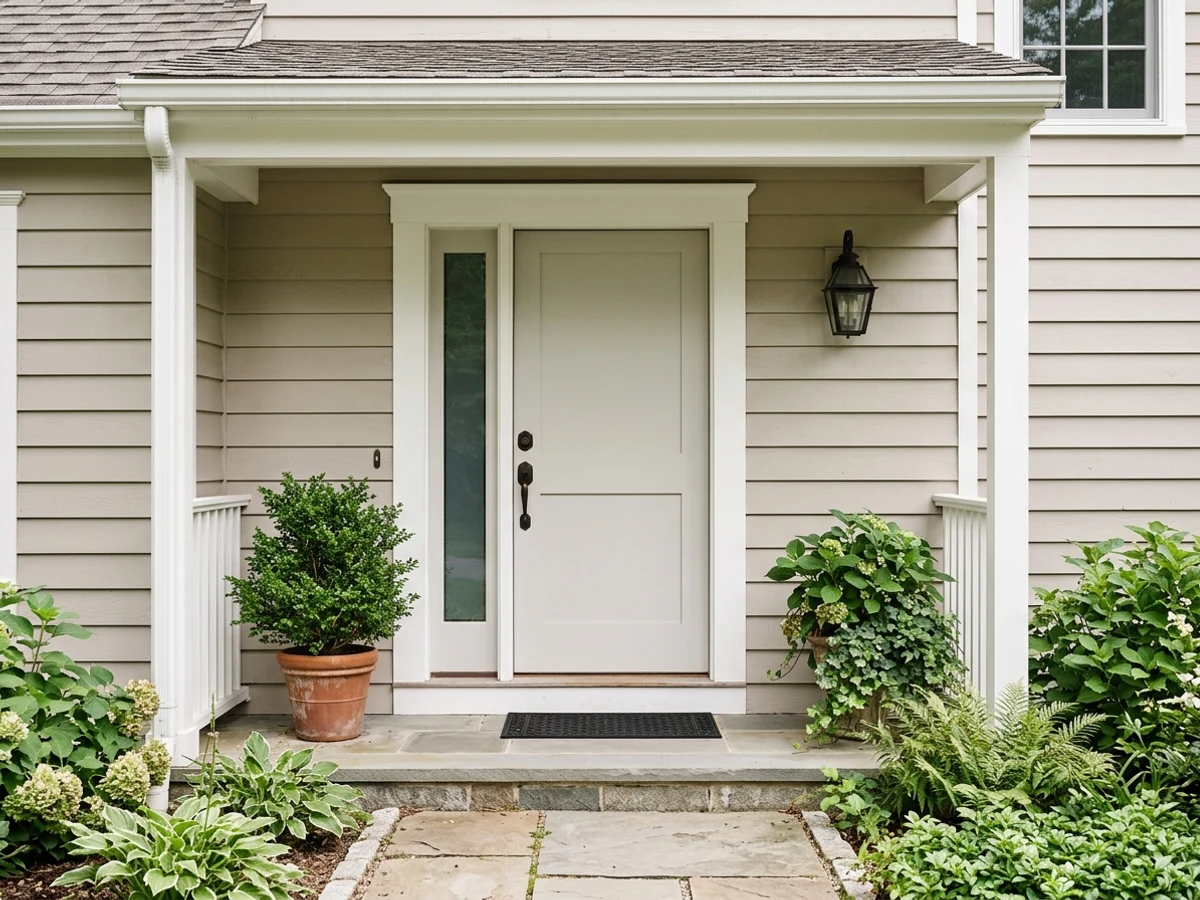
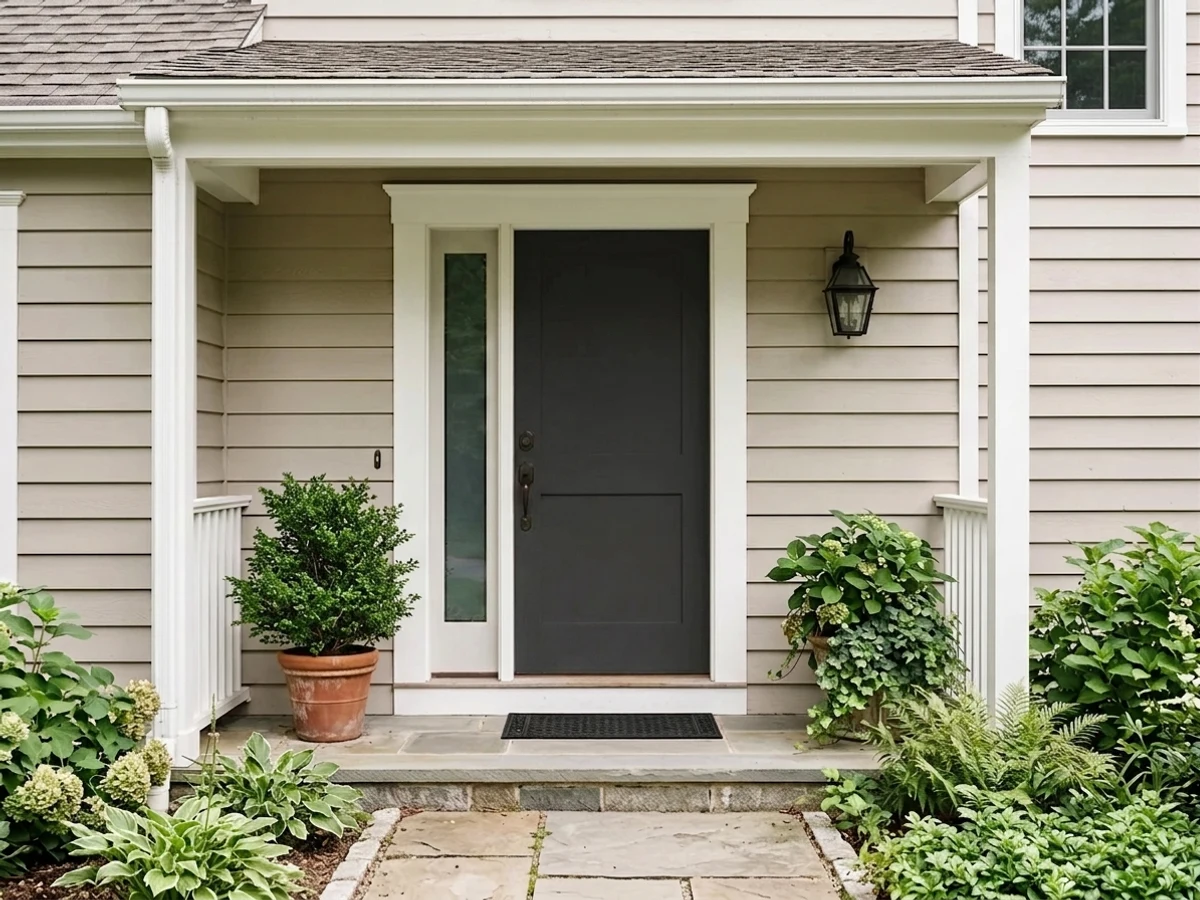
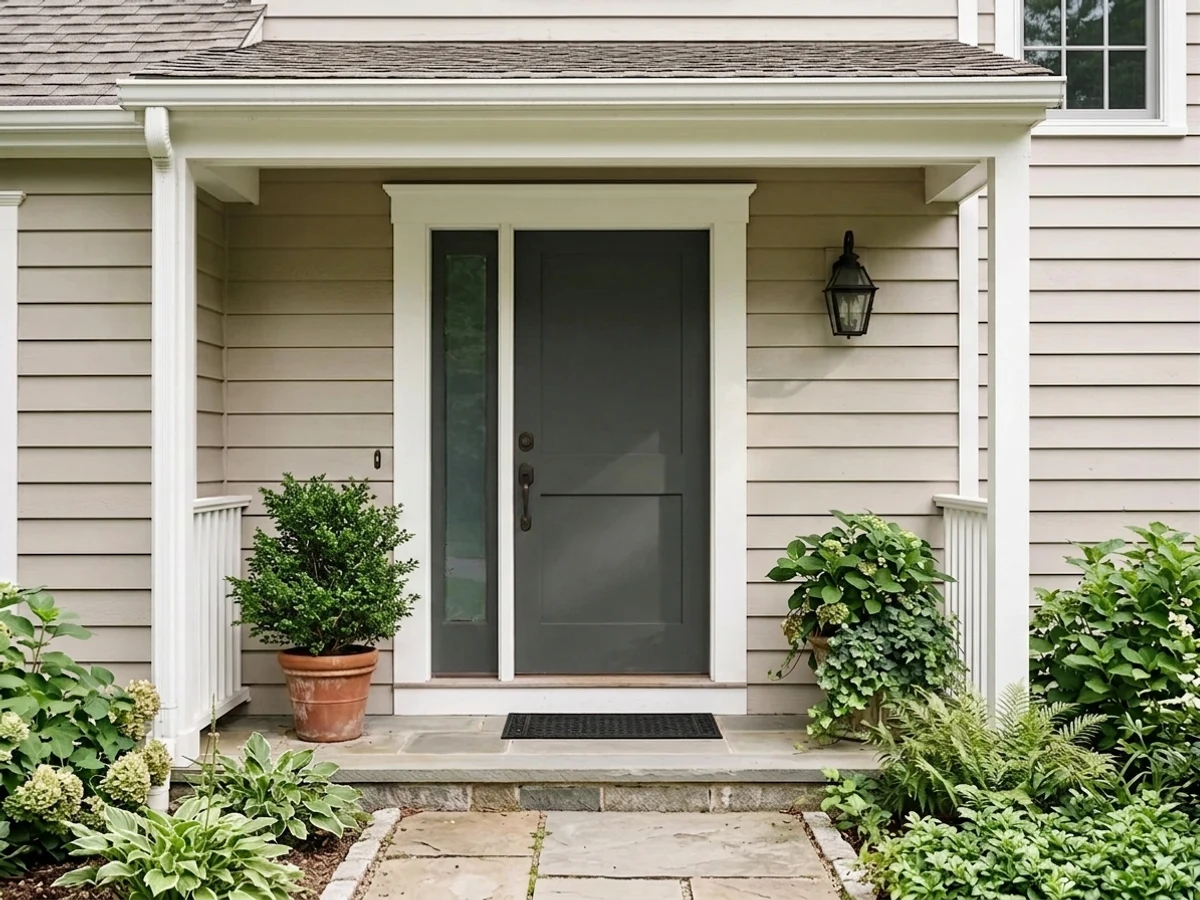
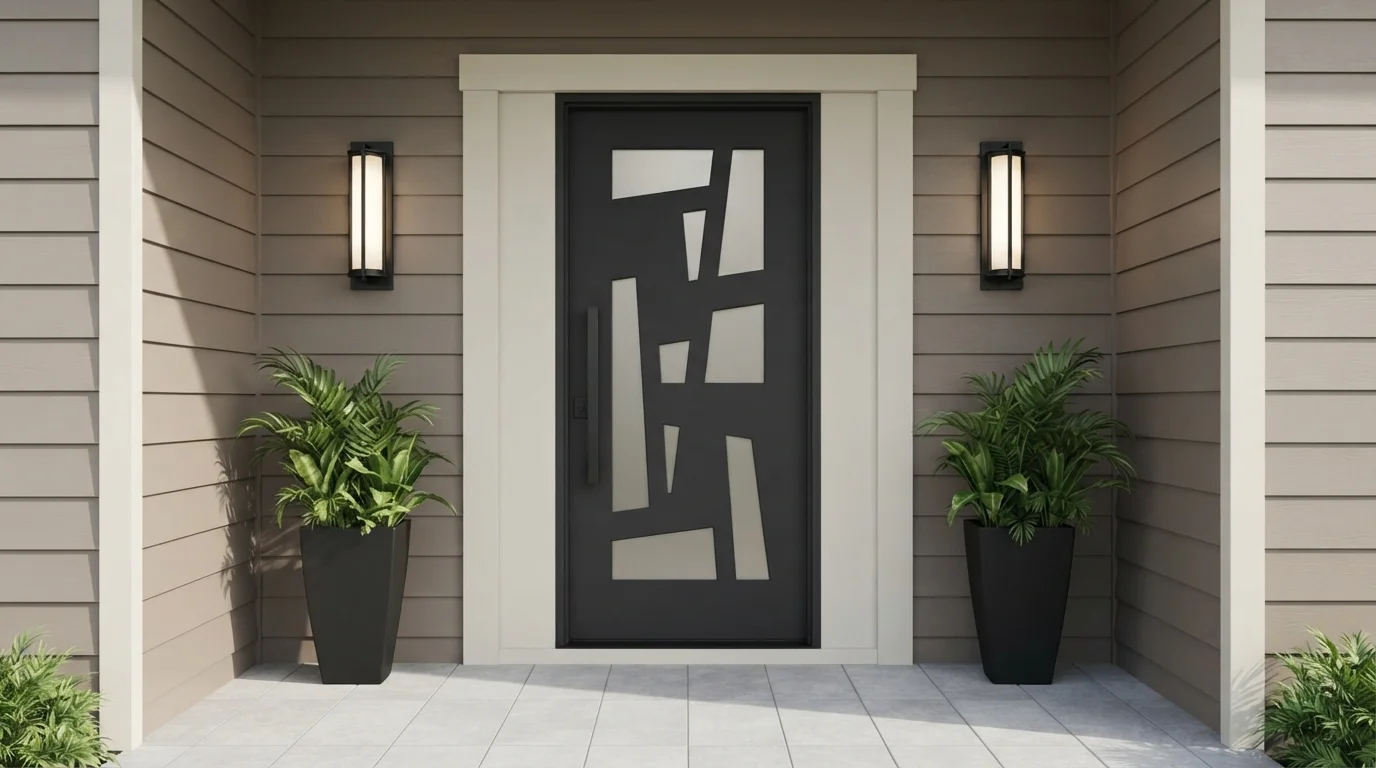
A sleek matte black door paired with warm taupe siding creates a crisp, upscale greeting at your threshold.
Charcoal black is a deep, velvety dark neutral. In this entryway, rich black coats the front door and tall planters, framed by a soft white surround and warm taupe horizontal siding. The look feels sleek, grounded, and undeniably stylish. The combination works because the earthy warmth of the siding balances the dramatic dark door so it never feels cold. It is a fantastic choice for anyone wanting a high-contrast, modern upgrade to their curb appeal.
SEE NOIR ON YOUR WALLS →
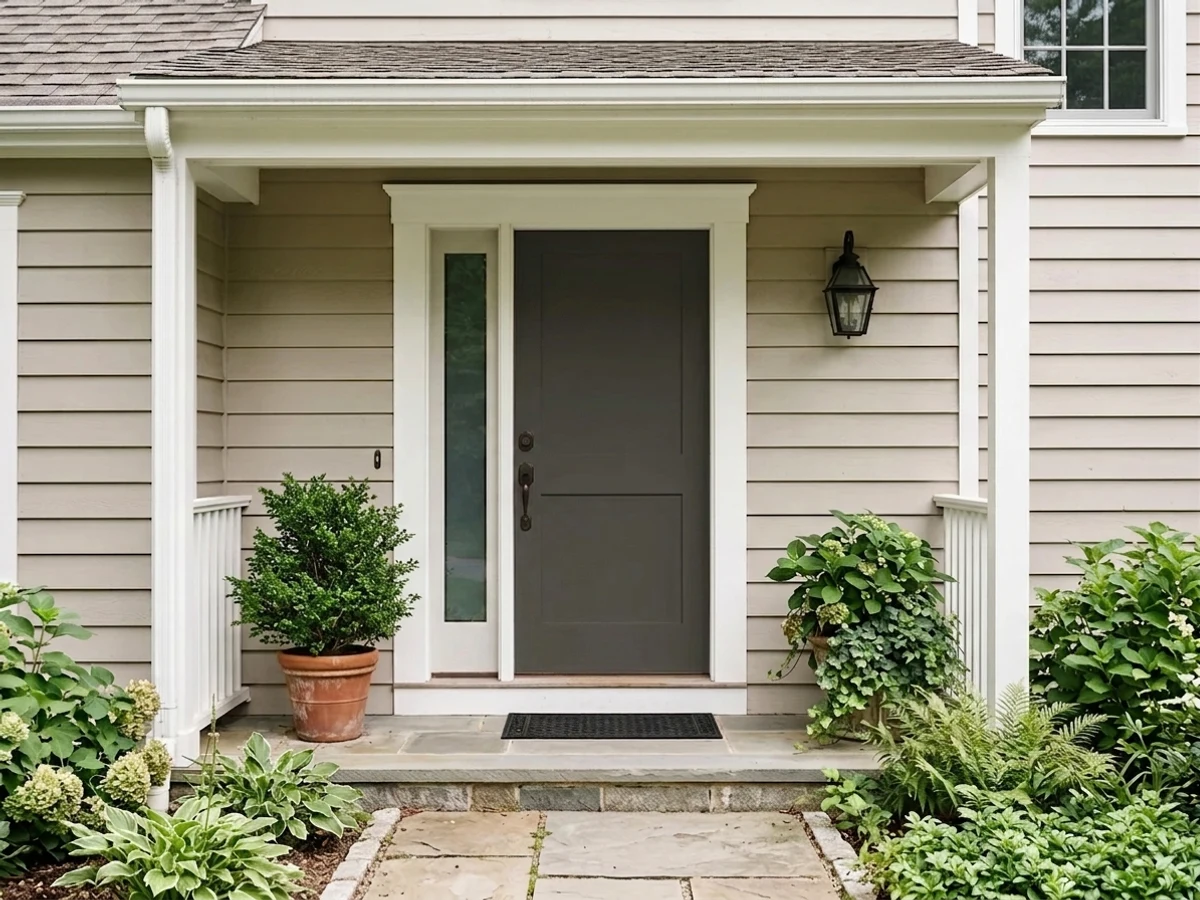
It gives you a softer, charcoal look that instantly modernizes your entryway.
SEE IRON ORE ON YOUR WALLS →
Black Front Door Wall Color Combinations
A wall color never works alone. These are the full schemes from the rooms above — the lead color first, then the supporting colors that make the photo work.
Rich black paint pairs with lush white hydrangeas and pale stone for an instantly inviting, high-contrast arrival.
TRY THIS PALETTE →A rich, deep charcoal door delivers a striking and tailored focal point against clean off-white trim.
TRY THIS PALETTE →Deep charcoal panels meet classic red brick to create a bold, tailored, and welcoming front entry.
TRY THIS PALETTE →Deep black woodwork frames textured stone and glowing lanterns to create an unforgettable, welcoming first impression.
TRY THIS PALETTE →The classic pairing is white or off-white trim against any of these blacks — it's the combination that shows up on the most resale listings because it works with brick, siding, and stucco alike, and it gives the door maximum contrast whether you land on true-black Tricorn Black or a softer charcoal like Iron Ore. If your house already has warm trim (cream, ivory, greige), lean toward the picks with a touch of warmth — Cracked Pepper, Carbon, or Off-Black — rather than a stark cool black, which can look slightly out of place against warm trim.
For hardware and accents, black doors split into two camps. Brass or matte-gold hardware against Inkwell or Tricorn Black is the high-contrast, traditional look — it reads especially well with brick and stained wood porch floors, and it's the pairing that shows up most with greenery and planters framing the entry. Matte black hardware, on the other hand, all but disappears against Wrought Iron or Iron Ore, which gives a cleaner, more modern edge — better suited to a house with black window frames or a black-and-white modern facade. Railings works well either way since it sits between true black and charcoal, so it's a safe pick if you're not sure which hardware finish you'll land on yet.
More Front Door Color Ideas
Set on a color family already? Each page has its own real rooms and picks.
Light or Dark Black Front Door Colors?
Go Light (LRV 60+) If…
The room is small, faces north, or has to work at every hour. Light warm colors make it feel bigger and stay calm in evening light — the light you actually live in.
Go Dark (LRV Under 20) If…
You want the cocoon effect and the room has real daylight. Dark works best on one feature wall — or fully color-drenched in a large room with good windows.
Every color on this page is a dark front door color — the real choice with black is how far toward true black to go, and that decision should follow the sun exposure your door actually gets, not just taste. A door in full afternoon sun, especially one facing south or west, is a bad candidate for the deepest options: true blacks like Tricorn Black and Inkwell (both LRV 3) absorb the most heat, and on a wood or fiberglass door that heat cycle is what causes swelling, cracking, and premature fading. If your entry gets hit with direct sun most of the day, Iron Ore, Wrought Iron, Off-Black, or Railings — all LRV 6-7 — reflect a bit more light and hold up better over years of exposure while still reading as black from the curb.
For doors that are shaded by a porch roof, deep overhang, or north-facing entry, that heat concern mostly disappears, and true black is fair game. Tricorn Black or Inkwell will look richer and more saturated in that kind of filtered light than they would in raw sun, where lighter dark shades like Cracked Pepper or Carbon can actually look more washed out by comparison. Either way, plan on exterior-grade paint rated for the material of your door — this is one spot where the paint quality matters as much as the color.
See It. Love It.
Paint It.
Upload one photo of your black front door and try every color on this page on your own walls — in your own light, before you buy a drop of paint.

Tricorn BlackBeforeSheen Matters More Than It Does Indoors
A front door gets touched, weathered, and looked at up close more than almost any other painted surface in the house, so sheen isn't a minor decision here. Satin is the middle ground most painters reach for on a front door — it has enough sheen to look finished and to wipe clean, but it doesn't show every brush mark or surface flaw the way a higher gloss does. Semi-gloss is the more durable option and stands up better to sun, rain, and repeated hand contact around the doorknob, which matters on any of the deeper colors here since scuffs and fingerprints show up faster on dark, glossier surfaces.
Whichever sheen you pick, use an exterior door-rated paint, not a wall paint pushed outdoors. Black and near-black exterior paints fade faster than lighter colors under UV exposure, so a proper exterior formula with UV-resistant pigment will hold the color of Tricorn Black or Wrought Iron noticeably longer than a generic exterior satin.
Heat, Sun, and Why Some Black Doors Warp
Dark colors absorb more heat than light ones, and a black front door in direct sun can run noticeably hotter to the touch than the surrounding siding. On a wood door especially, that daily heat-and-cool cycle is what causes swelling, shrinking, and eventually cracking or warping at the panel seams — it's the single most common complaint people have after painting a front door black. South- and west-facing doors take the brunt of it.
If your door sits in full sun most of the day, favor the lighter end of this page's picks — Off-Black (LRV 7), Railings (LRV 6), Iron Ore (LRV 6), or Wrought Iron (LRV 6) — over the true blacks, and make sure whatever door material you have (fiberglass and steel handle heat better than solid wood) is rated for dark exterior colors. A storm door or deep porch overhang solves most of this problem regardless of which shade you choose.
Picking Hardware and House Numbers
Because every color here is dark, hardware finish does more visual work than usual. Brass and unlacquered brass hardware is the pairing that photographs best against true black — it's the look behind most of the black-door listing photos that drive the resale premium, and it pairs naturally with Tricorn Black, Inkwell, or Cracked Pepper. Matte black hardware on a black or near-black door is a subtler, more architectural choice — it reads best on Iron Ore or Wrought Iron, where the slight tonal shift between door and hardware still shows without competing for attention.
House numbers and light fixtures should follow the same logic: warm metals (brass, aged bronze) against the warmer picks like Off-Black or Carbon, cooler metals (nickel, black) against Iron Ore or Wrought Iron.
About Black Front Door Paint Colors
A black front door is the one exterior upgrade that reads as intentional no matter what the rest of the house is doing. It works against white siding, brick, stucco, or stained cedar, and it doesn't fight with roof color or landscaping the way a saturated blue or red can. Real estate surveys have put a dollar number on that versatility: buyers say they'd pay roughly $6,449 more for a home with a black front door, more than almost any other exterior color choice. That's not a coincidence — black reads as a deliberate design decision even on a builder-grade house.
The picks on this page cover the range people actually choose between. Tricorn Black (Sherwin-Williams SW 6258, LRV 3) and Inkwell (Sherwin-Williams SW 6992, LRV 3) are true blacks — no visible undertone, the deepest option here. Cracked Pepper (Behr PPU18-01, LRV 5) and Carbon (Behr N520-7, LRV 5) soften that into a velvety charcoal that still reads as "black" from the street but feels less severe up close. Iron Ore (Sherwin-Williams SW 7069, LRV 6) and Wrought Iron (Benjamin Moore 2124-10, LRV 6) sit a shade lighter still, closer to a graphite gray-black that a lot of designers reach for specifically because it looks sharp without going stark. Off-Black (Farrow & Ball No. 57, LRV 7) and Railings (Farrow & Ball No. 31, LRV 6) are the gentlest of the group — genuinely black in full shade, but with enough warmth in daylight that they never feel cold.
What separates a good black front door from a flat one is contrast with the trim and hardware, not the paint color alone. Every pick here is dark enough to do that job; the decision is really about how jet-black versus how charcoal-soft you want the door to read against your specific siding and light.

The Questions Everyone Asks
What color should I paint my black front door?
If you want one answer, start with the safe picks above — Iron Ore, Tricorn Black, Dark Kettle Black, Hocus Pocus. They read well in any light and survive furniture changes. Then check the light: strong afternoon sun wants a step cooler, a north-facing room wants a step warmer.
does a black front door actually add resale value?
Real estate surveys have found buyers say they'd pay around $6,449 more for a home with a black front door compared to other colors, making it one of the highest-return exterior paint choices. Any of the picks here work for that effect — Tricorn Black and Railings are the two most commonly cited in resale-focused design advice because they photograph cleanly against both white and brick exteriors.
will a black front door make my house hotter or cause the door to warp?
Black absorbs more heat than lighter colors, and on a door in full sun that can cause a wood door to swell, shrink, and eventually crack or warp at the seams, especially on south- or west-facing entries. It won't heat the house itself in any meaningful way. If your door gets heavy direct sun, pick a slightly lighter option like Off-Black (LRV 7) or Iron Ore (LRV 6) over a true black like Tricorn Black (LRV 3), and use exterior-grade paint.
what sheen should I use to paint a front door black?
Satin or semi-gloss, both applied with an exterior door-rated paint. Satin looks slightly softer and hides minor surface imperfections better; semi-gloss is more durable and easier to wipe clean, which matters more on a door that gets touched daily. Either sheen works with any of the picks on this page — the color choice and the sheen choice are independent decisions.
what color trim goes with a black front door?
White or off-white trim is the classic, highest-contrast pairing and works with virtually any siding color, from brick to white or gray siding. If your existing trim runs warmer (cream or ivory), lean toward a black with some warmth to it, like Cracked Pepper or Off-Black, rather than a stark cool black such as Tricorn Black, which can look slightly mismatched against warm trim.
is black too dark for a small front door or entryway?
Not inherently — black reads as a design choice more than a size statement, and small entries with black doors are common in both older and modern homes. If you're worried about the entry feeling closed in, choose one of the softer, higher-LRV options like Off-Black (LRV 7) or Railings (LRV 6) instead of a true black like Inkwell (LRV 3); the slight lift in reflectance keeps the door from reading as a flat void against the trim.
What two-color combination works best in a black front door?
The reliable pattern is a quiet main color plus one deep accent on a single wall. Keep trim and ceiling in one warm white so the two colors are the only event in the room — the combination cards above show complete schemes from real rooms.
What colors make a black front door look bigger?
High-LRV, slightly warm colors — LRV 60–75 is the sweet spot. Paint the walls and trim close to the same light color so the corners blur, and keep the ceiling white. Stark cool white actually works against you; it creates hard shadows that show the room's edges.


Ask a Question