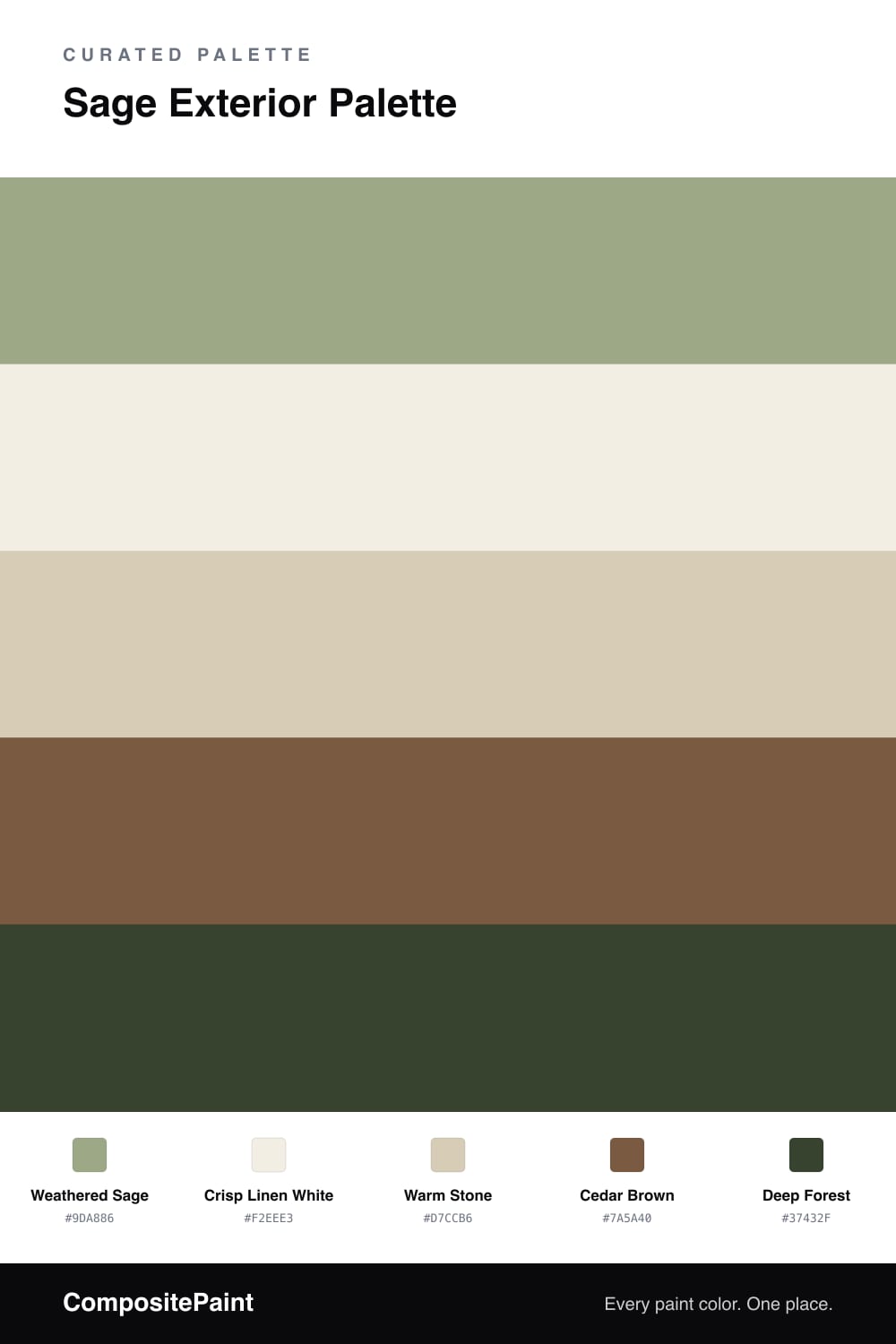
Sage is one of the most forgiving exterior colors there is, and I think of it almost like camouflage that flatters. It is a green with a lot of gray folded in, which is why Weathered Sage settles so easily next to whatever is already growing around the house. The color stays quiet in full sun and only gets richer under a cloudy sky.
To keep the body from going hazy, I lean on contrast at the trim line. Crisp Linen White sharpens every window and fascia, while Warm Stone gives you a softer in-between tone for a garage door, a porch ceiling, or column wraps when bright white feels like too much. That middle step is the part most people skip, and it is what makes a sage house look considered rather than plain.
Then come the grounding tones. Cedar Brown belongs on real wood — a front porch, a beam, a bit of decking — so the natural material reads as part of the plan. And Deep Forest is your one bold move for 2026: paint the door or the shutters in it and the whole elevation snaps into focus. Use the sage on roughly two-thirds of the surface, the neutrals for the structure, and the forest in just one or two places.