Palette

Rust Color PaletteRust Drift

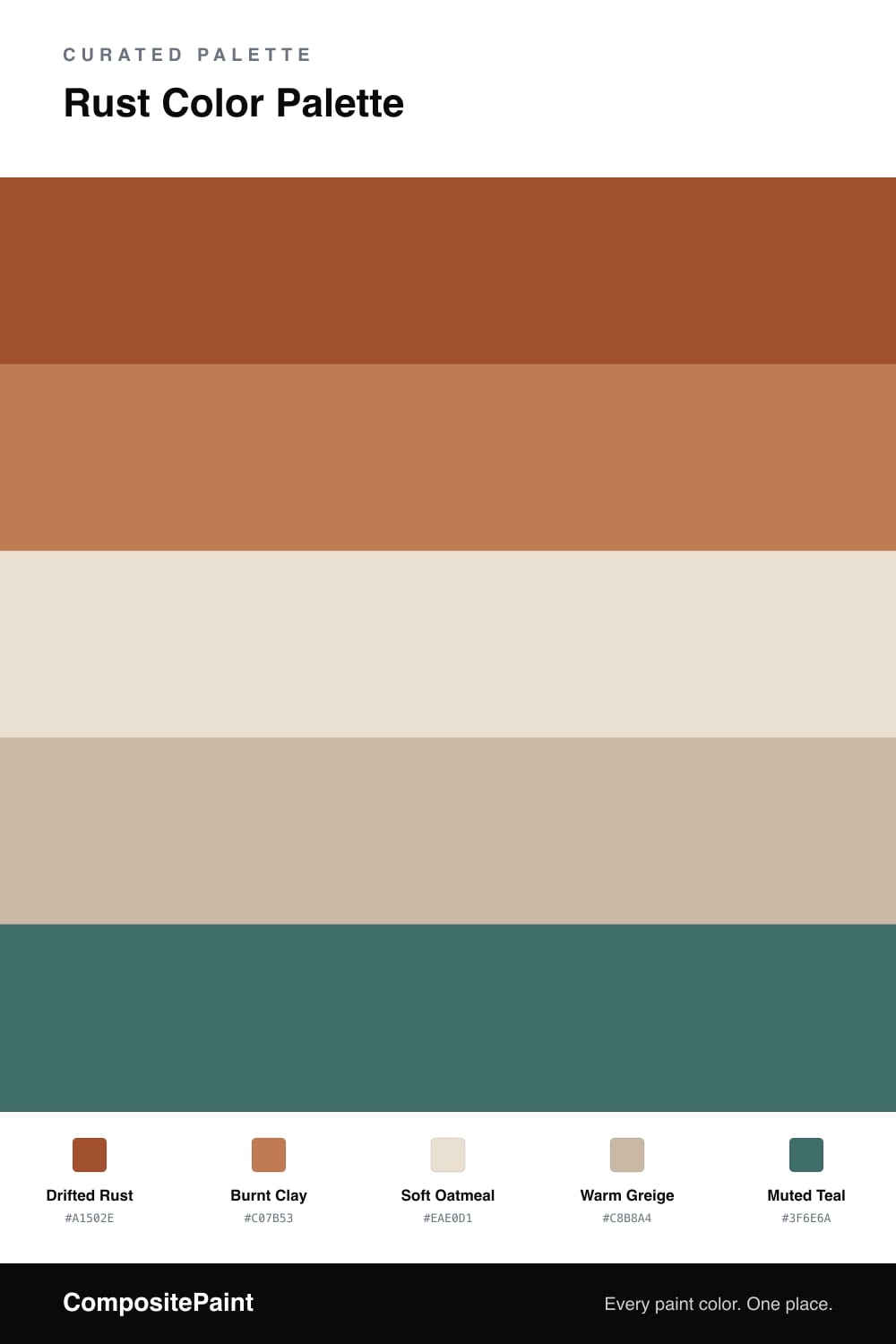
A warm five-color scheme led by deep rust, softened with oatmeal and clay neutrals and lifted by a muted teal accent — every color matched to real paint you can buy.

By Emily Roberts · DIY Editor & First-Timer's Guide
View palette in

Rust is having a real moment heading into 2026, and it is easy to see why. Drifted Rust brings that deep, sun-baked warmth that makes a space feel settled and grown-up, while Burnt Clay is its softer cousin — same family, just a little lighter and friendlier.

To keep all that warmth from feeling heavy, lean on Soft Oatmeal for your walls and Warm Greige for the in-between pieces. These two quiet neutrals give your eyes somewhere to rest, so the rust always feels intentional and never overwhelming.

Then there is Muted Teal, the small surprise that makes the whole thing click. A touch of dusty blue-green sits opposite rust on the color wheel, so it cools things down and makes the warm tones look even richer. Use it in tiny doses and let rust stay the star.

Buy these colors

Every Color, Matched to Real Paint

Each color matched to the closest paint in every brand we track, by ΔE2000. Tap a swatch for its full guide. Take any code to the store, they mix on demand.

Questions people actually ask

Questions

Why does rust feel so warm and easy to live with?

Rust is basically a grown-up orange with brown mixed in, so it gives you all the cozy warmth of a sunset without the loudness. That earthy quality is why it reads as calm rather than bold, and it pairs naturally with soft neutrals.

How much rust should I actually use?

Let it lead, then pull back — think of rust on a feature wall or big furniture piece, with the oatmeal and greige covering most of the room. The teal is just a spark, so save it for a chair, a vase, or a few cushions.