Navajo White
Dunn-Edwards' yellow-beige workhorse, reviewed honestly: the HOA stucco it actually coats, the rooms where it is not a white, and what to pick instead.

Jessica has spec'd whites and neutrals for more than 300 rooms and keeps a sample wall of painted drawdowns in her studio. Every color review is checked against real reader rooms in the comments and re-tested when a formula changes. About the testing process →
- 1Revere Pewter55
- 2Agreeable Gray60
- 3Navajo White70
- 4Pearly White77
- 5Dover White83
The Fast Verdict
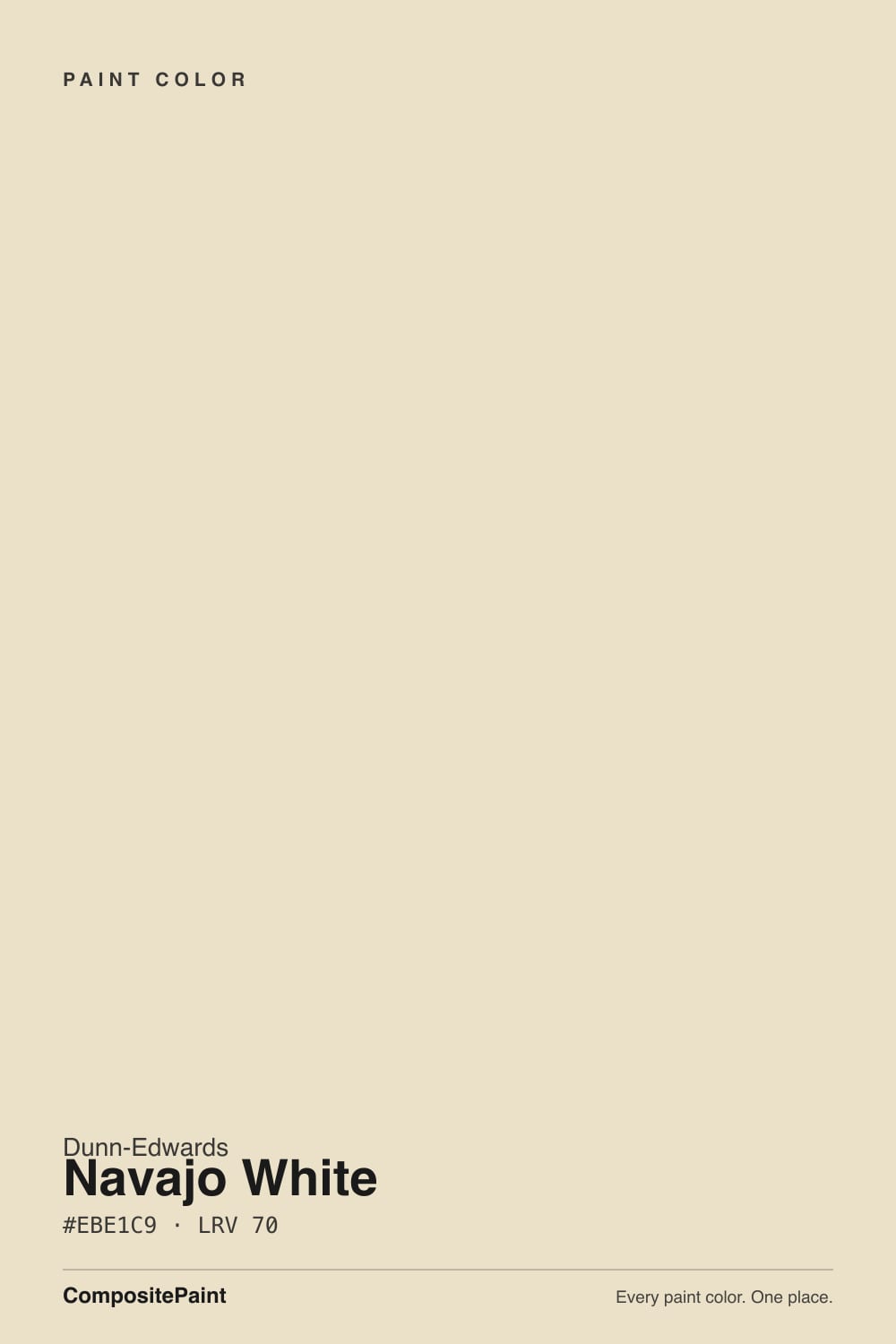
Navajo White is a cream-beige wearing a white name. At LRV 70 it is the deepest of the three famous Navajo Whites — yellow-beige, low chroma, enough pigment that four walls never pass as white. Dunn-Edwards files DEC772 in Classics, specs it on HOA stucco, and at least one Western designer reaches for it on historic interiors and kitchen cabinets. It is a workhorse, not a celebrity. Give it oak, plaster, and sage and it behaves. Buy it hoping for white and you will be disappointed on the first dry wall.
Southwest living rooms and historic interiors · kitchen cabinets with brass and warm counters · stucco exteriors with sage or cream trim · anyone who wants cream-beige, not a white
You actually want a white · trim is staying a brighter true white · cool grey marble, grey LVP, or cool LEDs · you want a current greige, not a yellow-cream
- Honest cream-beige at LRV 70 — holds as a color instead of washing out
- Real Southwest job: HOA stucco, historic interiors, cabinets with brass
- Flatters oak, walnut, plaster, Saltillo, and unlacquered brass
- One-color rooms work if you keep brighter true whites off the millwork
- Cabinets hide scuffs better than Warm White or any gallery white
- Not a white — buyers expecting white see beige by the second wall
- Reads dirty next to a brighter true white — Warm White and leftover builder trim are the trap
- West afternoon sun and cool LEDs pull the yellow all the way forward
- On the wrong house it reads as 1990s builder cream, not current beige
What Color Is Navajo White, Really?
A yellow-beige cream, not a white — the name is the whole trap. Dunn-Edwards files DEC772 in the Classics collection and measures it at Munsell 4.09Y, value 8.6, chroma 1.5: yellow-family, low saturation, high value, but that chroma is not a whisper. Birch White in the same deck sits at LRV 79 and can still pass as an off-white in even light. Navajo White is nine points deeper and a half-step more yellow. On a chip it looks like a soft cream. On four walls it is a light beige with a yellow spine, the color HOAs put on stucco when they want warmth without committing to tan.
At LRV 70 it sits two points under Sherwin-Williams Navajo White (LRV 72) and eight under Benjamin Moore's namesake (LRV 78). Of the three paints sharing this name, the Dunn-Edwards can is the deepest and the most clearly beige. Swiss Coffee in this deck is at LRV 83 — that is the actual Southwest white. The gap is the useful part. Navajo White holds as a color in a bright south room instead of washing out, and it will never read gallery-clean next to millwork. Put it beside Warm White (LRV 93) and the cream shows immediately. That is either the point or the dealbreaker.
Undertone in one line: yellow-beige first, cream second — never pink, never green, never grayed enough to pass as a quiet white. In even south or east daylight it reads as a finished cream-beige. In west sun after about four o'clock it goes distinctly yellow. If your sample looks dingy, the light is cool; if it looks buttery, that is the paint being honest about the hour. Both versions are the same can.
Where It Shines
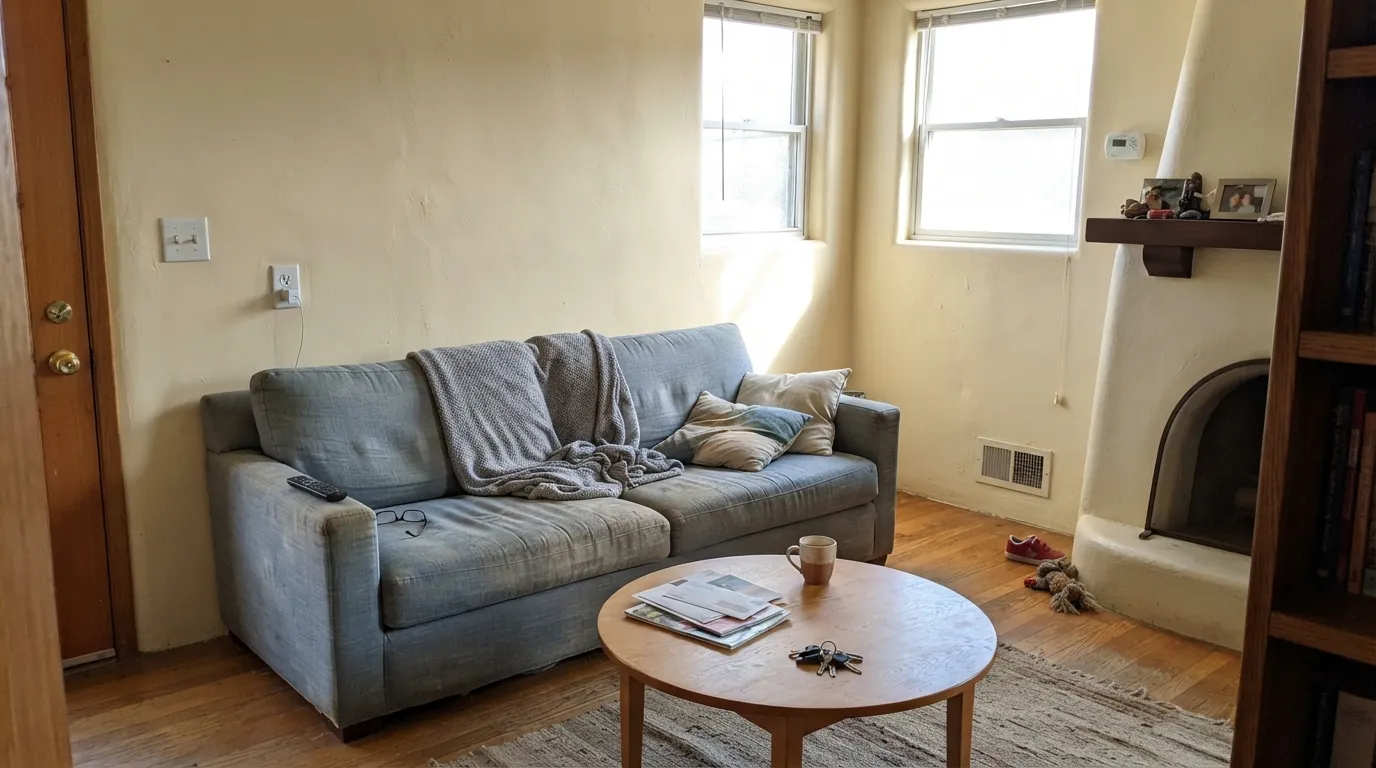
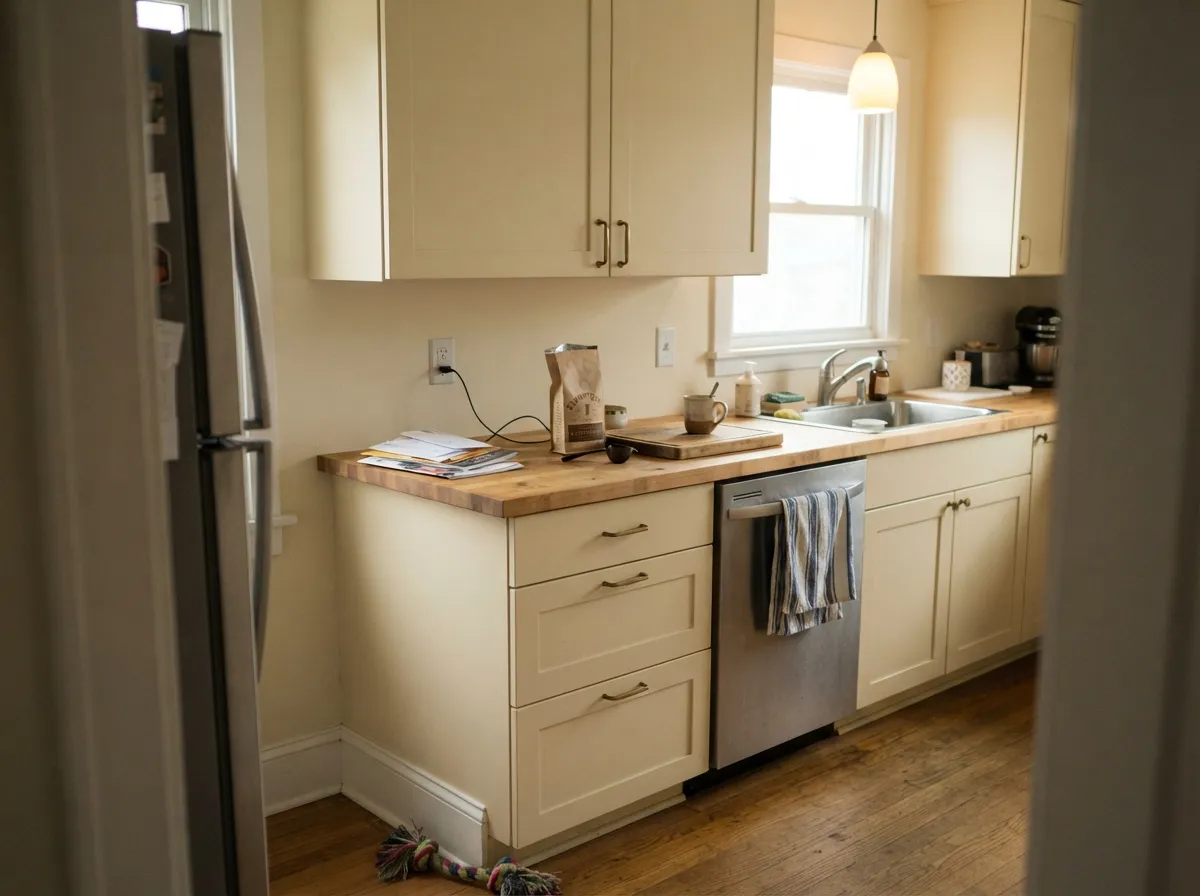
Give it real daylight, warm wood, and no brighter white next to it, and it does the job a Southwest cream is hired for. Open living rooms with oak, plaster, and Saltillo; historic interiors that want walls with a little age in them; kitchen cabinets under unlacquered brass. Outside, on a light stucco ranch, the name stops pretending to be white and starts being the body color HOAs already approved. Designer Marina Edwards has used it on walls in historic homes and called it especially lovely on cabinets with warm metals — that is the profile, not a magazine launch.
Where It Fails
Almost every regret story about Navajo White follows one of three scripts, and all three are visible on a large sample before the first gallon. None of them are a bad batch — but if your room matches one, this is not your cream, and a second coat will not fix it.
The name is doing the damage. On the chip it can pass for a warm off-white. On four walls at LRV 70 the yellow-beige is unmistakable — this is a light cream-beige, closer in depth to Stucco Tan (LRV 68) than to Whisper (LRV 87). If your goal was a white that still reads white, this is the wrong can. Swiss Coffee or Whisper will actually do that job in this deck.
The most common pairing mistake, and Dunn-Edwards walks you into it: the color page suggests lighter, neutral whites, and Greentree HOA specs Warm White (DEW380, LRV 93) on the trim against this body. Warm White is a true white wearing a warm name. On an exterior in desert sun the wash can forgive it. Indoors the brighter white wins, and Navajo White looks dingy and unwashed. The fix is the trim, not a second coat — Whisper (LRV 87) or the same color in semi-gloss. If the builder white has to stay, do not use this cream.
Carrara-look quartz, grey LVP, and 4000K bulbs sit at the opposite temperature and shove the yellow forward until the wall reads sour cream. Warm rugs will not rescue a whole-room clash. With cool floors or cool lamps, pick a true white — Lighthouse in this deck, or Chantilly Lace if you are crossing brands — and let the floor be the soft one.
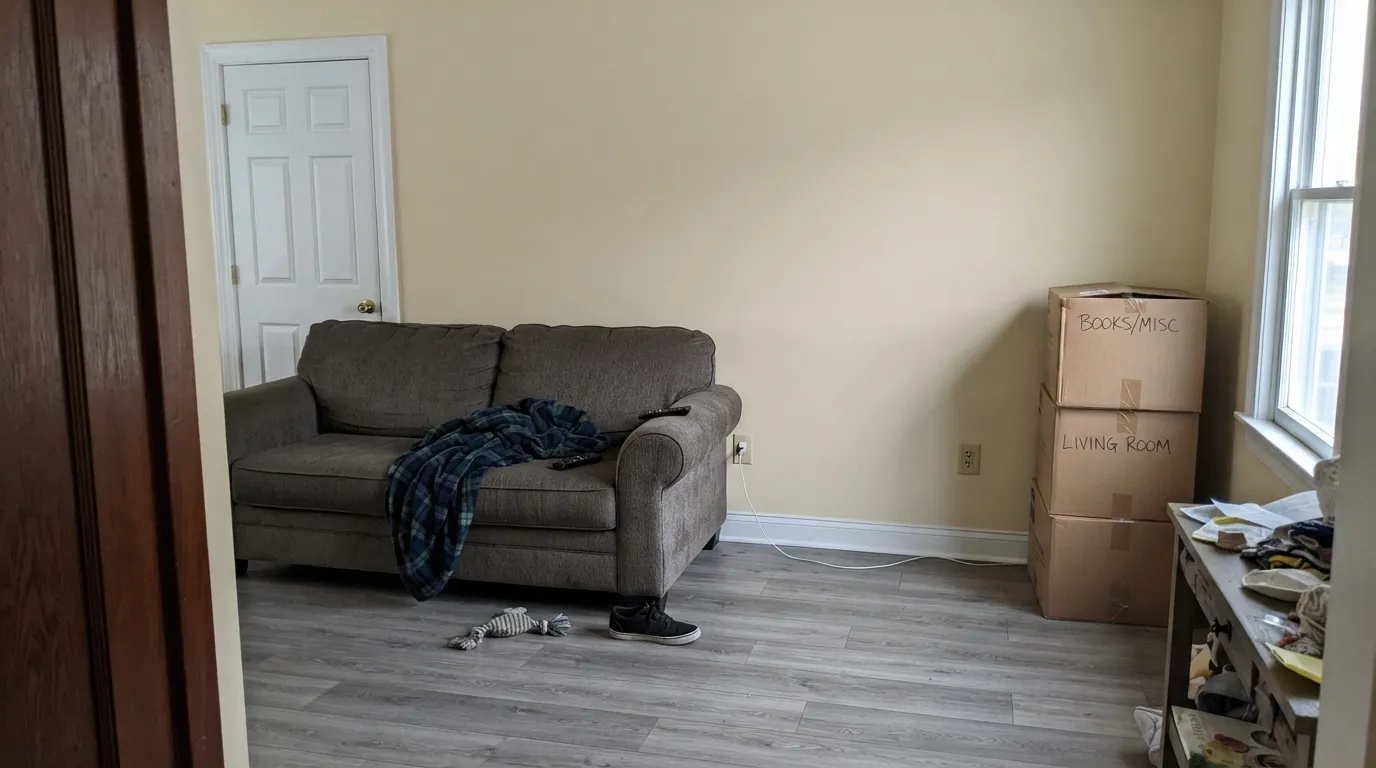
Room by Room
With oak or walnut, plaster, and even south or east light it is the calm cream-beige those rooms were built around. Eggshell; same color on trim in semi-gloss, or Whisper if you want a slight step up without going paper-white. A west glass wall is the 4 p.m. test, not a given.
Warm counters, brass, butcher block, terracotta — all of it loves this cream. Satin on cabinets wipes clean and hides knuckle marks a brighter white would broadcast. Marina Edwards flagged it for cabinets with unlacquered brass, and that is the right company. Cool white quartz or blue-grey tile will make the boxes look more yellow by contrast — sample against the actual slab.
Filtered daylight and 2700K bulbs hold the cream to a glow instead of a butter wall. Eggshell or velvet; same color in semi-gloss on the millwork. Crisp white linens will make the walls look more yellow than they are — stay on cream or oatmeal bedding.
LRV 70 is light enough to keep a hallway open and deep enough that it never feels like a rental corridor. One eggshell color across the main floor removes the cut lines between rooms. Windowless interior halls will read a step deeper and a touch yellower — put a lamp in, or the tunnel goes dingy.
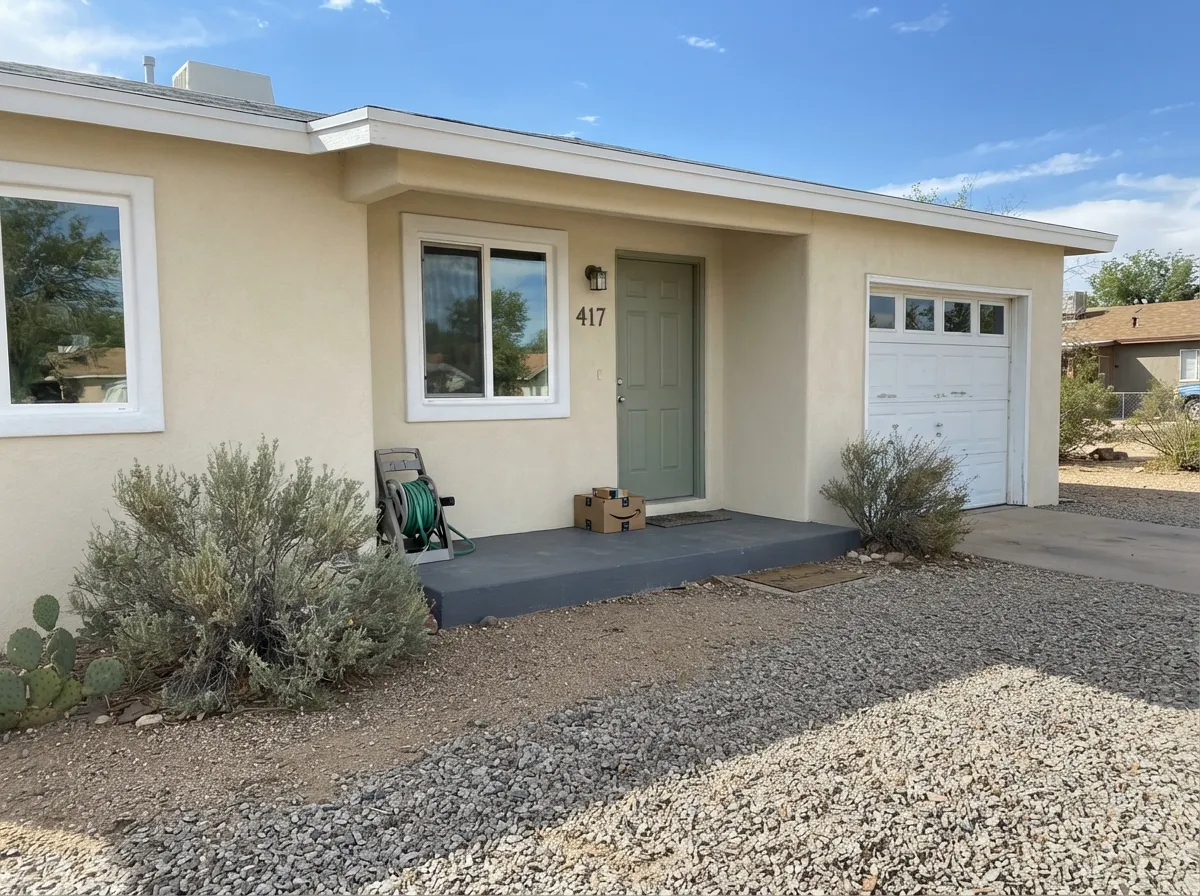
This is a real exterior cream, unlike several of the lighter whites in the same deck. Greentree HOA lists DEC772 as the White Scheme body with Warm White trim. Full sun washes it brighter and a little yellower than the indoor read, which is what you want on a Southwest ranch. Pair it with sage landscaping or Sage Brush on the door; walk the shady north side with a sample before you commit — that elevation will read a full step creamier.
With warm stone, wood vanities, and brass: easy. With cool grey marble or blue-grey tile: it argues, and the cream looks yellowed. If the stone is staying cool, use Lighthouse or Chantilly Lace instead.
Your Light Is the Risk
The cream-beige settles and still bounces. This is the light the stucco and historic interiors were mixed for — warm, finished, clearly not white.
From about four o'clock a west wall pulls the yellow all the way forward. On the chip it is cream; on that wall it reads distinctly yellow. Test at 4 p.m.
Quiet cream-beige in morning light, fuller yellow-beige by afternoon, a short buttery flash at golden hour. It changes — most people who wanted cream love it.
2700K lamps: creamier, cozier, the bedroom version. Cool LEDs: the yellow reads dirty — swap bulbs, not paint.
Most complaints about Navajo White are a light mismatch. Upload a photo of your actual room and see it on your walls — then ask for the same wall in north light or evening lamps before you buy a single sample.
Need It From Another Brand?
Any paint counter can custom-tint Dunn-Edwards DEC772 directly. If you would rather stay in one brand's own deck, these are the closest stock matches, measured as ΔE2000. Under 2 is a difference you will not see on the wall.
| Brand | Closest color | ΔE | LRV | |
|---|---|---|---|---|
| Sherwin-Williams | Restoration IvorySW 6413 · Sherwin-Williams | 0.9 | 75 | Color page → |
| Behr | Dry CreekECC-17-2 · Behr | 0.9 | 76 | Color page → |
| Benjamin Moore | Palace White956 · Benjamin Moore | 0.2 | 73 | Color page → |
| Valspar | Ivory Essence3006-8C · Valspar | 1.0 | 75.9 | Color page → |
| PPG / Glidden | Morocco SandPPG1096-2 · PPG / Glidden | 0.5 | 76 | Color page → |
| Glidden | Eloquent Ivory45YY 75/110 · Glidden | 1.5 | 75 | Color page → |
Similar Dunn-Edwards Colors
The nearest shades to Navajo White within Dunn-Edwards's own range, ranked by perceptual color distance — useful when you want the same look a touch lighter, darker, or warmer.
WCAG 2.1: AA is 4.5 : 1 for normal text, 3 : 1 for large text, AAA is 7 : 1.
Navajo White vs the Colors You're Also Considering
Every Navajo White sample board has the same rivals on it. The numbers show the real lightness gap — then it comes down to which risk you would rather live with.
Pick this when you want the deeper beige-cream and your painter is already in Dunn-Edwards.
Benjamin Moore 947 · LRV 78Navajo WhitePick this if you want the lighter, more-white namesake — eight LRV points brighter, still a cream, and a great warm white in the wrong half of the house.
Pick this for the Southwest stucco and historic-interior job in the DE Classics collection.
Sherwin-Williams SW 6126 · LRV 72Navajo WhitePick this if your painter works in Sherwin-Williams — the deepest, most old-school warm white in that deck, two points lighter than this one.
Navajo White Coordinating Colors
The rule for coordinating with Navajo White: stay on the warm side of the fence, and do not put a brighter true white next to it indoors. Cream trim that is not paper-white, a muted sage, and one dark note are the company that works. It flatters dusty beiges, desert greens, deep navies, and warm woods — and it argues with icy blues, cool greys, and blue-grey stone. These are the partners that keep showing up in rooms that work:
Where Navajo White Actually Shows Up
This is not a national default and it does not have a trend cycle attached to it. It is a Classics-collection cream that Western painters keep in the truck. Greentree HOA lists DEC772 as the White Scheme body color with Warm White on the trim — that is the honest fame: approved stucco, not a magazine cover. Inside, designer Marina Edwards has named it a go-to beige for walls in historic homes, and she likes it on kitchen cabinets with unlacquered brass. Those are the rooms it was mixed for.
The name is shared with Benjamin Moore, Sherwin-Williams, and Behr, which is why people search it and then buy the wrong can. Dunn-Edwards' version is the deepest of that group. If you are shopping it because a blog called Navajo White the new Alabaster, you have the wrong color and probably the wrong brand. If you are shopping it because your stucco, your oak, and your HOA already look like this, you are in the right aisle.
Navajo White With Wood Tones and Floors
Warm wood loves it. Oak — red, white, honey — walnut, butcher block, and pale white oak all sit comfortably against Navajo White because the yellow-beige meets their warmth halfway. If your floors are orange-leaning builder oak, this is one of the creams that absorbs some of the orange instead of amplifying it the way a crisp white would. Terracotta tile, Saltillo, and warm concrete are equally easy company — that is the Southwest material set this color still gets specified with.
The one flooring that needs a sample first is cool grey LVP or grey-washed wood. Grey floors pull the yellow into relief, and the wall can read slightly sour against them. It is not always a dealbreaker — a large warm rug and brass lamps fix it in most rooms — but test a big sample above the actual floor in afternoon light before painting the whole room. Metals are the easy part: unlacquered brass, antique bronze, and matte black all work; polished chrome is the one that leans cold against it.
Three Ready Palettes Built on Navajo White
A color is never alone on the wall. These are complete combinations in the 60-30-10 pattern, with the reason each one holds together. Every one opens in the visualizer.
Greentree HOA already specs this body with Warm White trim — desert sun washes the cream so the bright millwork does not dirty it the way it would indoors. Sage Brush is the dusty desert green Dunn-Edwards points this hue toward. Keep Warm White off interior trim.
Try this palette in your roomWhisper is Dunn-Edwards' White Dove — grayed enough that the millwork steps up without turning the walls dingy. Evergreen Fog is the muted sage that keeps the yellow-beige from floating. This is the historic-home version: cream walls, quiet trim, one green note.
Try this palette in your roomSwiss Coffee keeps the field lighter so the boxes stay cream, not beige-on-beige. Navajo White on satin cabinets is the move Marina Edwards flagged with unlacquered brass. Hale Navy is the single dark note, and it stays navy as long as the room has light. Keep the counters warm.
Try this palette in your roomNavajo White FAQ
Is Dunn-Edwards Navajo White actually white?
No. At LRV 70 it is a yellow-beige cream. The name is inherited, not a description. On four walls nobody will call it white unless the rest of the house is tan. If you want a white in this deck, that is Whisper (LRV 87) or Swiss Coffee (LRV 83).
How is it different from Benjamin Moore or Sherwin-Williams Navajo White?
Same name, different depth. Benjamin Moore's is the lightest at LRV 78 — still a cream, and a great warm white in the wrong half of the house. Sherwin-Williams' is the old-school warm white in that deck at LRV 72. Dunn-Edwards DEC772 is the deepest of the three at LRV 70, the most clearly beige, and the one HOAs and Western painters actually put on stucco. Do not treat them as interchangeable.
What trim color goes with Navajo White walls?
Indoors: Navajo White itself in semi-gloss, or Whisper if you want a slight step up. A brighter trim white — Warm White, leftover builder white, Lighthouse — makes the walls look dirty. That pairing is the most common interior mistake. Outside, desert sun is more forgiving, which is why some HOAs spec Warm White on the millwork; still sample the shady elevation.
Is it good for kitchen cabinets?
Yes, if the counters are warm. Satin Navajo White on shaker doors flatters butcher block, oak, and unlacquered brass, and it hides scuffs better than a brighter white. Cool white quartz or grey tile will make the boxes look more yellow. Use a urethane-fortified cabinet enamel.
Will it look yellow in my room?
On a west wall after about 4 p.m., yes — that is the documented shift, not a bad batch. In east or even south light it stays cream-beige. Cool LEDs and grey floors will also pull the yellow forward. Sample a big board on the actual wall and look at it through the afternoon before you commit.
Does it work on exteriors?
Yes — this is one of the creams Dunn-Edwards still puts on stucco. Greentree HOA lists it as a White Scheme body color. Expect it to read brighter and a little yellower in full sun than indoors, pair it with sage or a deep green door, and remember the north side will look creamier than the south. Swiss Coffee is the brighter stucco white if this feels too beige from the street.
Have you painted with Navajo White?
Rate it — one tap helps the next reader decide.
Ask a Question