Cottage White
Dunn-Edwards' traditional yellow-cream, reviewed honestly: the older houses it was mixed for, the light that turns it butter, and why it is not a white.

Jessica has spec'd whites and neutrals for more than 300 rooms and keeps a sample wall of painted drawdowns in her studio. Every color review is checked against real reader rooms in the comments and re-tested when a formula changes. About the testing process →
- 1First Star69
- 2Classic Gray74
- 3Cottage White80
- 4Swiss Coffee85
- 5Chantilly Lace91
The Fast Verdict
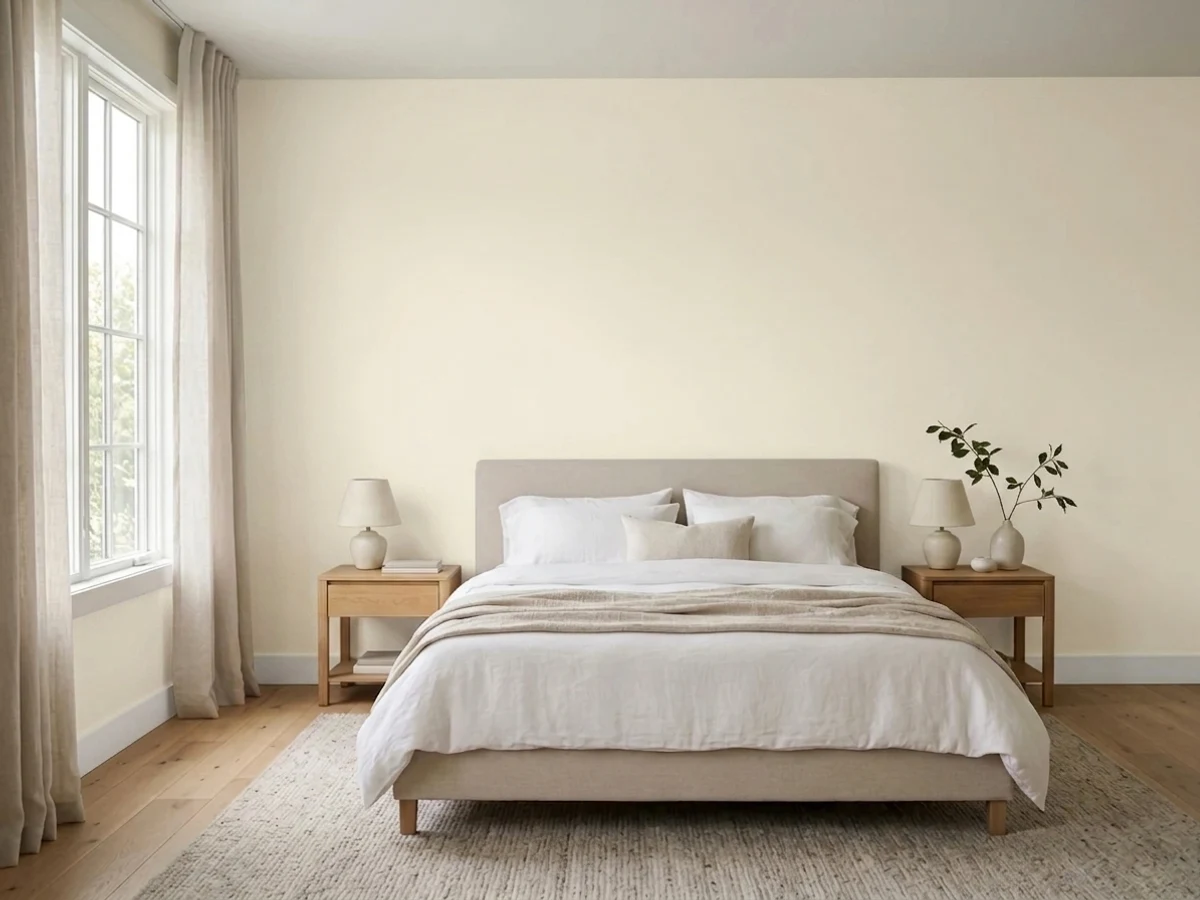
Cottage White is the cream Dunn-Edwards actually means when a traditional house asks for white. At LRV 80 it is a yellow-family off-white with real chroma — ivory on the chip, cream on the wall — the color DE designers keep speccing for Craftsman, Spanish, and older Western interiors. On bedroom walls with Warm White trim it glows the way the brand's own photos show. Buy it hoping for Whisper softness or a gallery white, and the yellow is the whole review.
Traditional bedrooms and living rooms · Craftsman, Spanish, and older Western houses · cream cabinets with oak and brass · walls that should read ivory, not gallery-white
You want a white that stays white · trim is staying a brighter builder white · cool grey floors or Carrara · a west wall that bakes all afternoon
- The traditional millwork-and-wall cream — looks like painted woodwork, not plastic
- Clear yellow warmth that actually reads as ivory, not a vague off-white
- Flatters oak, brass, plaster, travertine, and every warm wood tone
- Hides scuffs on cabinets and trim better than brighter whites
- The color DE actually specs for Craftsman, Spanish, and older Western houses
- Looks yellow on four walls the moment you wanted a white
- Reads dirty and dated next to Warm White, Chantilly Lace, or builder-bright trim
- West and hard south sun push it from cream to butter
- Clashes with cool grey floors, grey LVP, and Carrara-type stone
What Color Is Cottage White, Really?
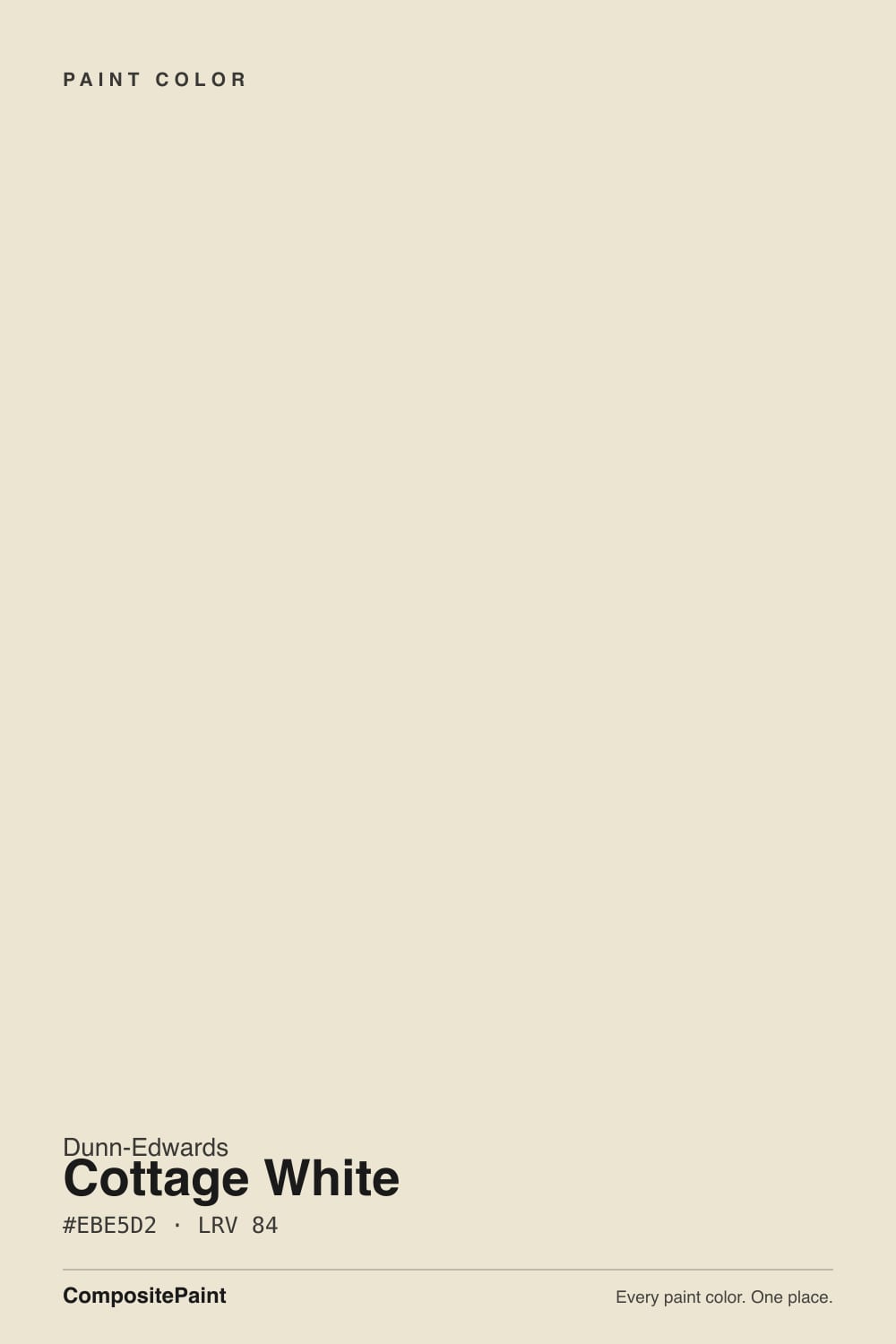
A yellow-cream with the yellow left switched on — not the grayed kind, not a modern off-white pretending to be neutral. Most of the whites people actually buy at a Dunn-Edwards counter (Whisper, Milk Glass) keep chroma near zero so the cream stays quiet. Cottage White does not. Dunn-Edwards files DEW318 in the Whites collection, and the Munsell is the honest version of that filing: 3.60Y at chroma 1.1, three times the pigment body of Whisper or Milk Glass. That is why West Coast designers put it in the same yellow-white bucket as Dunn-Edwards Swiss Coffee and Farrow & Ball Pointing, and why DE itself keeps showing it on bedroom walls with Warm White (DEW380) on the trim. It has sat in the deck since 2006. It has never been a Color of the Year. It is the can you get when the house is traditional and the word white is doing too much work.
At LRV 80 it reflects plenty of light, but it is clearly not a bright white. Milk Glass sits six points higher at LRV 86 and still reads as white on a wall; Whisper is at 87; White Dove is at 85. Dunn-Edwards Swiss Coffee, the peachy Southwest cream, is three points brighter at LRV 83. That gap is the useful part. On a wall Cottage White holds enough color to soften shadows and flatter oak; on millwork it reads as painted woodwork rather than plastic-bright; on a traditional stucco body it is cream, not a refrigerator. On four walls in hard afternoon sun the same number is the risk, because once the field is large the yellow has nowhere to hide. On a chip it looks like a soft white. On a sunny wall it looks like cream.
Undertone in one line: yellow first, a creamy beige second — never pink, never grayed enough to pass as a quiet white. In north or filtered light the yellow holds to a calm ivory, which is the bedroom glow DE keeps promising. In west sun and under 2700K lamps the yellow is the whole story. If your sample flashes green, that is a yellow base in cool light doing what yellow bases do — not a bad batch. If it looks peach, look at the floor or at Swiss Coffee sitting next to it. The paint itself is yellow.
Where It Shines
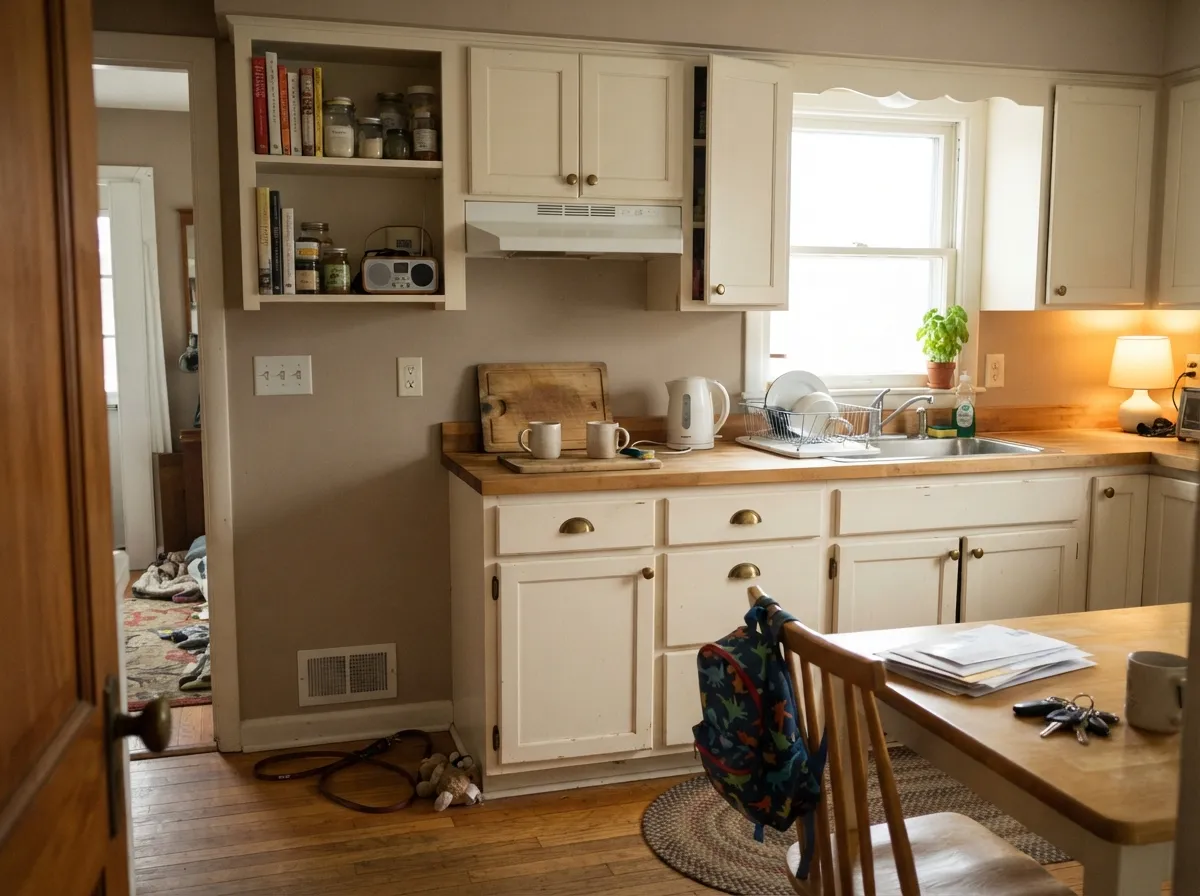
Its home turf is the traditional house. Eggshell Cottage White on bedroom and living-room walls, with Warm White snapping the casings, is the pairing Dunn-Edwards actually photographs, and it still earns that job: the cream makes plaster and painted woodwork look intentional instead of factory-white. Give it north or filtered east light and the yellow stays ivory rather than butter. Traditional kitchens with butcher block, unlacquered brass, and oak floors are the second-best use — satin on cabinets hides knuckle marks a brighter white would broadcast. Craftsman, Spanish Colonial, Victorian, and desert-ranch houses are the architecture this chroma was mixed for.
Where It Fails
Almost every regret story about Cottage White is the same story told three ways: someone wanted a white, they put a real white next to it, or the sun had nothing kind to say. The paint is consistent. What changes is the room.
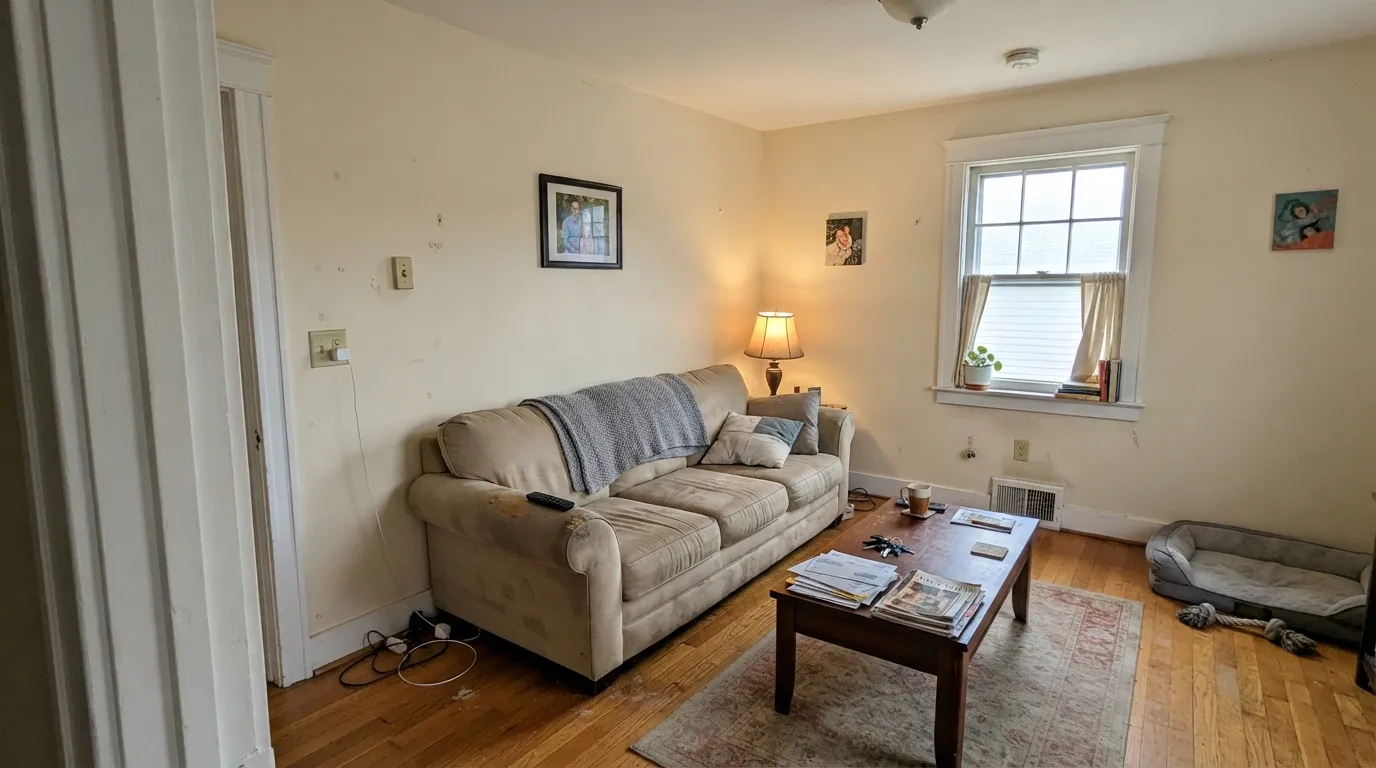
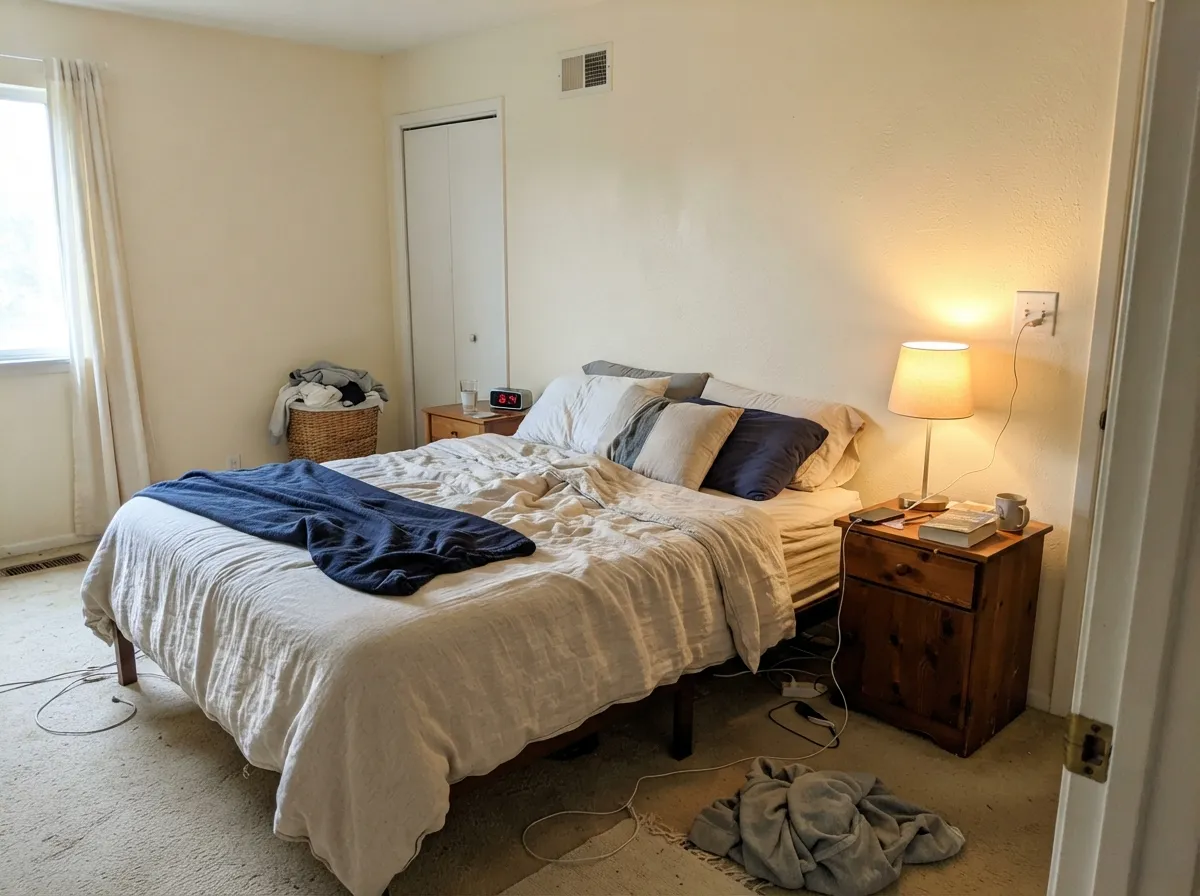
On the chip it passes as a soft white. On four walls the yellow sits there in the open — ivory, then cream, then a little buttery at the edges. Shoppers who wanted Whisper, Milk Glass, or a gallery white end up with a color guests will call cream. If white is what you actually want, this is the wrong can. Whisper is Dunn-Edwards' White Dove; Milk Glass is the cream that still reads as white. Cottage White is the one that does not.
The pairing DE's own bedroom photos dodge for a reason: Cottage White walls, Warm White or Chantilly Lace (LRV 90) on the trim. The brighter white wins, and Cottage White looks yellowed and slightly dirty. Extra White and leftover builder ceiling-white do the same trick. Run Cottage White on walls and millwork and let eggshell / semi-gloss / flat separate the planes — or keep Warm White on the woodwork only if you have sampled a board in afternoon light and still like the cream named.
A west or unshaded south wall from about four o'clock pushes it from cream to butter — the same afternoon-flash Simply White is famous for, with more chroma to work with. Separately, grey LVP, grey-washed oak, and Carrara-look stone sit at the opposite temperature and shove the yellow forward until the wall reads sour. Warm rugs will not rescue a whole-room clash. With cool floors, pick a true white and let the floor be the soft one.
Room by Room
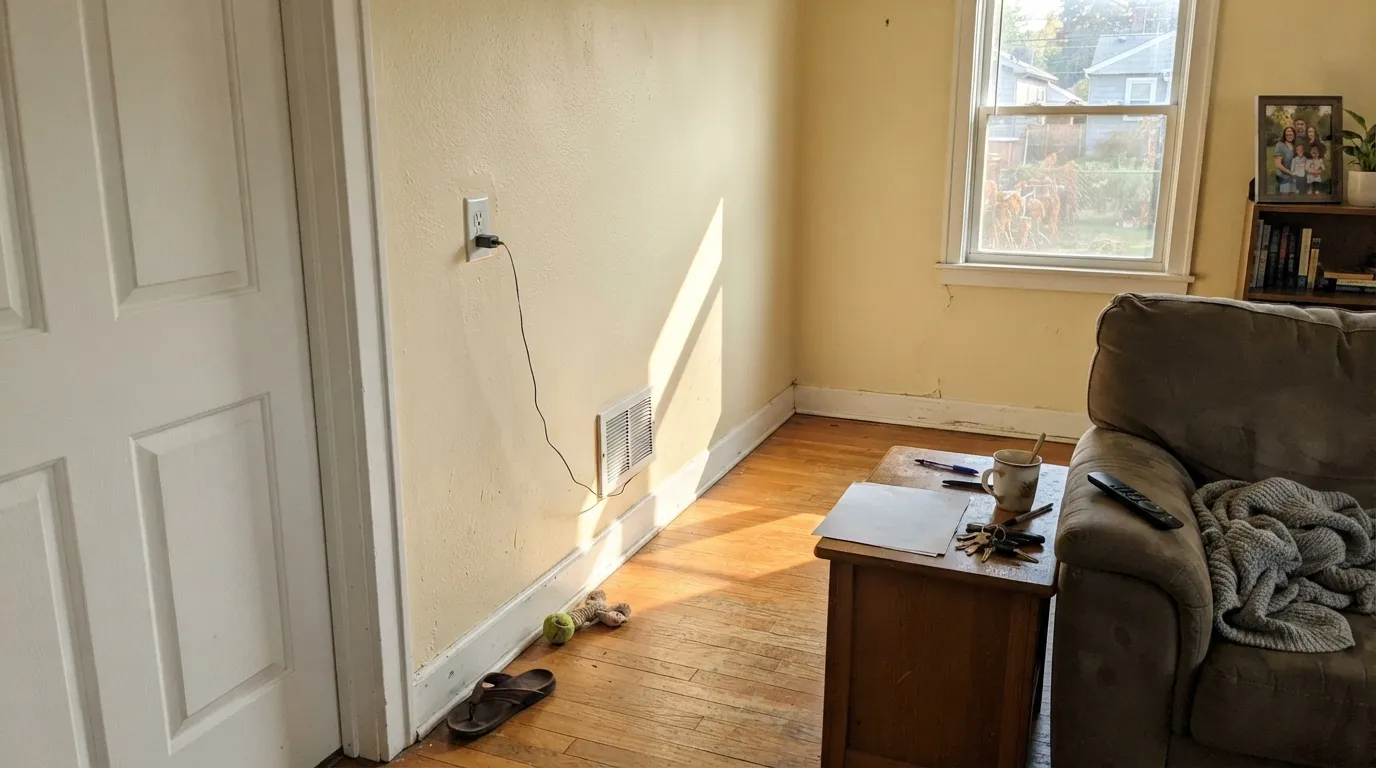
This is the room Dunn-Edwards keeps putting it in, and the light is why: bedrooms run on filtered daylight and 2700K lamps, which hold the yellow to a warm glow instead of a butter wall. Eggshell; Warm White on the trim if you sampled it, or the same color in semi-gloss. Crisp white linens will make the walls look more yellow than they are — stay on cream or oatmeal bedding.
With north or filtered daylight, stained oak, plaster, and brass, this is the cream those rooms were built around. Eggshell on the walls; same color in semi-gloss on the millwork if the woodwork is already painted, or Warm White if you want a clean snap and have tested a board. A new build with grey floors and a west glass wall is the skip — sample at 4 p.m. before you buy gallons.
Satin Cottage White on shaker doors flatters butcher block, honey oak, and unlacquered brass, and it hides scuffs better than Warm White. The catch is commitment: cream cabinets lock in every later choice. Cool white quartz or grey tile argues with it. If the counters are staying cool, use Milk Glass or Warm White on the boxes instead.
Dining rooms run on lamplight, and 2700K bulbs make Cottage White look intentional rather than yellow. Pair it with Light Sage or Hale Navy and it reads country-house correct. Eggshell, or matte if the plaster is old. A west-facing dining room with uncovered glass is the 4 p.m. test, not a given.
Semi-gloss on doors, casing, and crown against mid-tone sage, greige, or Stonish Beige reads as classic painted woodwork, not a bright cut line. Do not use it as trim under a cool gray or a crisp white wall — that is where the yellow looks like discoloration. One-color houses work: Cottage White walls in eggshell, the same formula in semi-gloss on the woodwork.
On stucco and wood siding it is a house cream, not a refrigerator — the warmer white DE's own architecture notes keep pointing traditional Spanish, Craftsman, Victorian, and desert-ranch houses toward. The shaded north elevation will read a step creamier than the sunny south; walk both sides with a sample. Dark trim (Iron Ore, Hale Navy) keeps it from looking unfinished. Sample the west wall at 4 p.m.
Your Light Is the Risk
Cool or shaded light holds the yellow to a calm ivory. This is the bedroom glow — cream that still reads finished, not butter. Traditional rooms with porches and deep eaves are its home turf.
From about four o'clock a sunny wall goes cream, then butter. The chroma has nowhere to hide. Keep this color off unshaded west walls, or sample at 4 p.m. and believe what you see.
East light is the cleanest, coolest read. Midday is honest cream. Late west sun flushes it yellow for an hour — the same paint, louder, not a new color. Live with a sample through a full day.
2700K bulbs: creamier, cozier, more ivory — the reason it works in bedrooms. Cool 4000K–5000K LEDs: sour yellow-green. Swap the bulbs before you repaint.
Most complaints about Cottage White are a light mismatch. Upload a photo of your actual room and see it on your walls — then ask for the same wall in north light or evening lamps before you buy a single sample.
Need It From Another Brand?
Any paint counter can custom-tint Dunn-Edwards DEW318 directly. If you would rather stay in one brand's own deck, these are the closest stock matches, measured as ΔE2000. Under 2 is a difference you will not see on the wall.
| Brand | Closest color | ΔE | LRV | |
|---|---|---|---|---|
| Sherwin-Williams | PaperwhiteSW 7105 · Sherwin-Williams | 0.4 | 87 | Color page → |
| Behr | Linen White 18701870 · Behr | 0.5 | 86 | Color page → |
| Benjamin Moore | Lily of the Valley905 · Benjamin Moore | 0.4 | 84 | Color page → |
| Valspar | Dairy BelleV164 · Valspar | 0.8 | 85.1 | Color page → |
| PPG / Glidden | Combed CottonPPG1205-1 · PPG / Glidden | 2.4 | 87 | Color page → |
| Glidden | Combed CottonPPG1205-1 · Glidden | 1.9 | 87 | Color page → |
Similar Dunn-Edwards Colors
The nearest shades to Cottage White within Dunn-Edwards's own range, ranked by perceptual color distance — useful when you want the same look a touch lighter, darker, or warmer.
WCAG 2.1: AA is 4.5 : 1 for normal text, 3 : 1 for large text, AAA is 7 : 1.
Cottage White vs the Colors You're Also Considering
Every Cottage White sample board has the same rivals on it. The numbers show the real lightness gap — then it comes down to which risk you would rather live with.
Pick this when you actually want cream on the walls of a traditional house, and Whisper would look too clean.
Dunn-Edwards DEW340 · LRV 87WhisperPick this if you wanted Dunn-Edwards' White Dove — a grayed, slightly creamier wall white that is the safer whole-house default.
Pick this when the yellow-cream should show, not hide. Milk Glass is the livable white; this is the ivory.
Dunn-Edwards DEW358 · LRV 86Milk GlassPick this if you want cream that still reads as white — six LRV points brighter, with the chroma turned almost off.
Antique White (DEW351) at LRV 73 is the deeper, creamier cousin. It puts noticeably more color on the wall and feels cozier, so choose it when Cottage White's LRV 84 looks too pale or washes out in bright light. Cottage White is the better pick when you want more reflectance and a lighter overall room.
Historic White (DET653) at LRV 79 is very close but reads a touch softer and more muted, a little less bright and open than Cottage White. If you like the warmth but want the walls to feel gently aged rather than clean, Historic White leans that way.
Rice Bowl (DE6170) at LRV 75 is warmer still and carries a faint pink-beige quality, where Cottage White stays on the clean yellow-cream side. Compare all of these side by side, since the differences are subtle on a chip but clear across a full wall.
Cottage White Coordinating Colors
The rule is temperature-honest pairing, not a second cream fighting this one. Cottage White wants a slightly brighter true white only if you have sampled the trim snap, a real mid-tone for contrast, and one dark note. It sits comfortably next to Warm White, Light Sage, Stonish Beige, and Hale Navy, and it argues with any cooler, brighter white you try to use as trim against it without a test board. These are the partners that keep showing up in rooms that work:
Why Traditional Houses Get This Can
Cottage White has sat in the Dunn-Edwards deck since 2006. It is not a Color of the Year, and it has never had a national campaign. What it has is a job: Western painters and color advisors reach for DEW318 when the house is Craftsman, Spanish Colonial, Victorian, or desert ranch and a cooler white would look like a remodel. Dunn-Edwards' own guidance on choosing a white is blunt about architecture — traditional Spanish and Craftsman homes used warmer whites; Victorian too; desert ranch leans warm; mid-century and Scandinavian do not. Cottage White is the can that sentence is pointing at.
The public trail is modest and specific. DE's own product photography puts it on bedroom walls with Warm White on the trim. A Houzz shopper with travertine floors had it on a shortlist next to White Sand and White Blossom — yellow-family company — and a featured reply steered them toward Simply White if they wanted a warm white that still reads as white, not yellowish. That is the honest split. You will not find a famous TV house in this color. You will find it on older stucco in the West, which is the point.
Cottage White With Wood Tones And Floors
Warm wood loves it. Oak — red, white, honey — walnut, butcher block, and cedar all sit comfortably because the yellow meets theirs halfway. Honey oak is kinder here than it is against a true white: Cottage White softens the orange instead of making the floor look louder. Travertine, the flooring on that Houzz shortlist, is the same temperature family and is why the color keeps coming up in older Western houses. Brass and unlacquered hardware look clean rather than dated.
The flooring that needs a sample first is cool grey LVP or grey-washed wood. Grey plank pulls the yellow into relief, and the wall can read sour against it. Carrara-look stone does the same trick on a kitchen or bath. It is not always a dealbreaker — a large rug and warm lamps fix it in most rooms — but tape a big sample above the actual floor in afternoon light before you paint the whole room. Medium maple and stained pine are safe.
Three Ready Palettes Built on Cottage White
A color is never alone on the wall. These are complete combinations in the 60-30-10 pattern, with the reason each one holds together. Every one opens in the visualizer.
This is the pairing Dunn-Edwards photographs: Cottage White on the field so the bedroom glows, Warm White on the woodwork so the edges snap, one near-black door so the cream has a note. Sample the trim board in afternoon light — the thirteen-point LRV gap will name the yellow.
Try this palette in your roomCream boxes against the Southwest's default stucco beige is the traditional kitchen this white was mixed for. Hale Navy on the island grounds the yellow so brass hardware looks deliberate. Warm quartz and butcher block belong here; grey stone does not.
Try this palette in your roomLight Sage is a dependable stucco sage that needs real sun to read green — the mid-tone a cream trim white was built to frame. Cottage White on the woodwork is softer than Warm White and less Dove-gray than Whisper, so the handoff stays warm. Iron Mountain on the door is the single dark note the Craftsman elevation needs.
Try this palette in your roomCottage White FAQ
Is Cottage White a white or a cream?
Cream. Dunn-Edwards files it in the Whites collection, and the chip can pass as a soft white, but at LRV 80 with yellow chroma 1.1 it reads ivory-to-cream on four walls. Guests will not call it white. If white is what you actually want, sample Whisper or Milk Glass next to it before you buy gallons.
What trim color goes with Cottage White walls?
Cottage White itself, in semi-gloss, is the safest answer — the sheen change is enough. Warm White on the woodwork is the pairing DE photographs, but test a board: some rooms make Cottage White look yellow next to a 93-LRV true white. Never park Chantilly Lace, Extra White, or leftover builder ceiling-white on the casings.
Cottage White, Whisper, or Milk Glass for living-room walls?
Whisper if you want Dunn-Edwards' White Dove — grayed, the safer default. Milk Glass if you want cream that still reads as white. Cottage White if the house is traditional and you mean ivory. They are not close: Whisper 87, Milk Glass 86, Cottage White 80. Sample all three on the same wall at 4 p.m. and at night under your actual bulbs.
Is it good for kitchen cabinets?
Yes, in a traditional kitchen with oak, brass, and warm counters. Satin urethane-fortified cabinet enamel hides scuffs better than a gallery white. Sample against cool grey quartz before you commit the whole kitchen — the yellow will show. If the stone is staying cool, Milk Glass or Warm White on the boxes is the safer cream-to-white range.
Does Cottage White work on exteriors?
On stucco and wood siding of a traditional house, yes — it is a house cream rather than a stark white, which is what DE's own notes keep pointing Spanish, Craftsman, Victorian, and desert-ranch elevations toward. Sample the sunny and shaded sides; the north elevation will look a step creamier. Give the house a dark door so it does not read unfinished.
Will it look yellow in a north-facing room?
North light is actually its friend. Cool daylight holds the yellow to a calm ivory, which is why bedrooms and north living rooms are its best interiors. The yellow problem is the other direction: west and hard south afternoon sun, or a brighter white sitting next to it. Dim interior rooms with no real window are a different skip — there the cream goes dingy, not fresh.
Have you painted with Cottage White?
Rate it — one tap helps the next reader decide.
Ask a Question