Almond
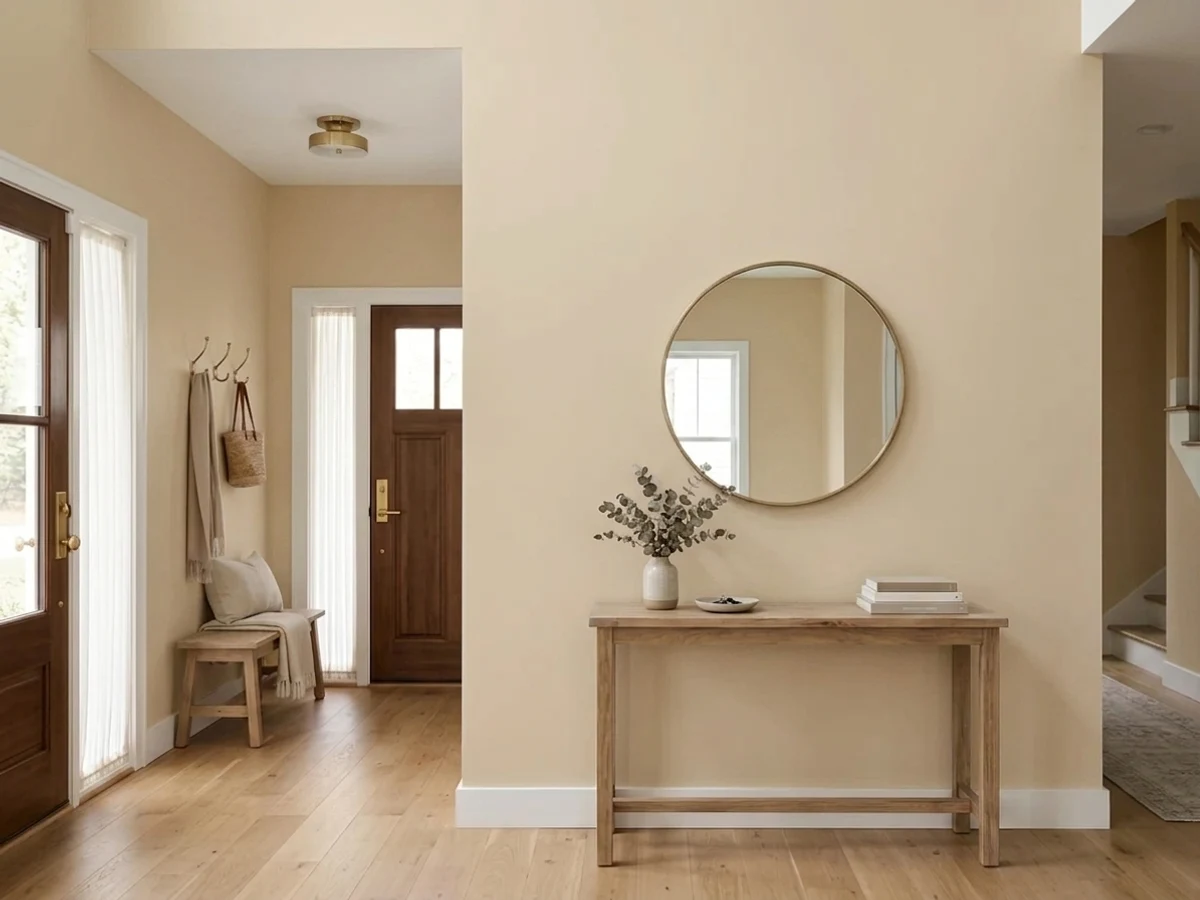
The Dunn-Edwards tan-cream sold for whole-house traditional palettes, reviewed honestly: where it stays almond, where it goes peach, and when to pick a greige instead.

Jessica has spec'd whites and neutrals for more than 300 rooms and keeps a sample wall of painted drawdowns in her studio. Every color review is checked against real reader rooms in the comments and re-tested when a formula changes. About the testing process →
- 1Revere Pewter55
- 2Agreeable Gray60
- 3Almond69
- 4Shoji White74
- 5Dover White83
The Fast Verdict
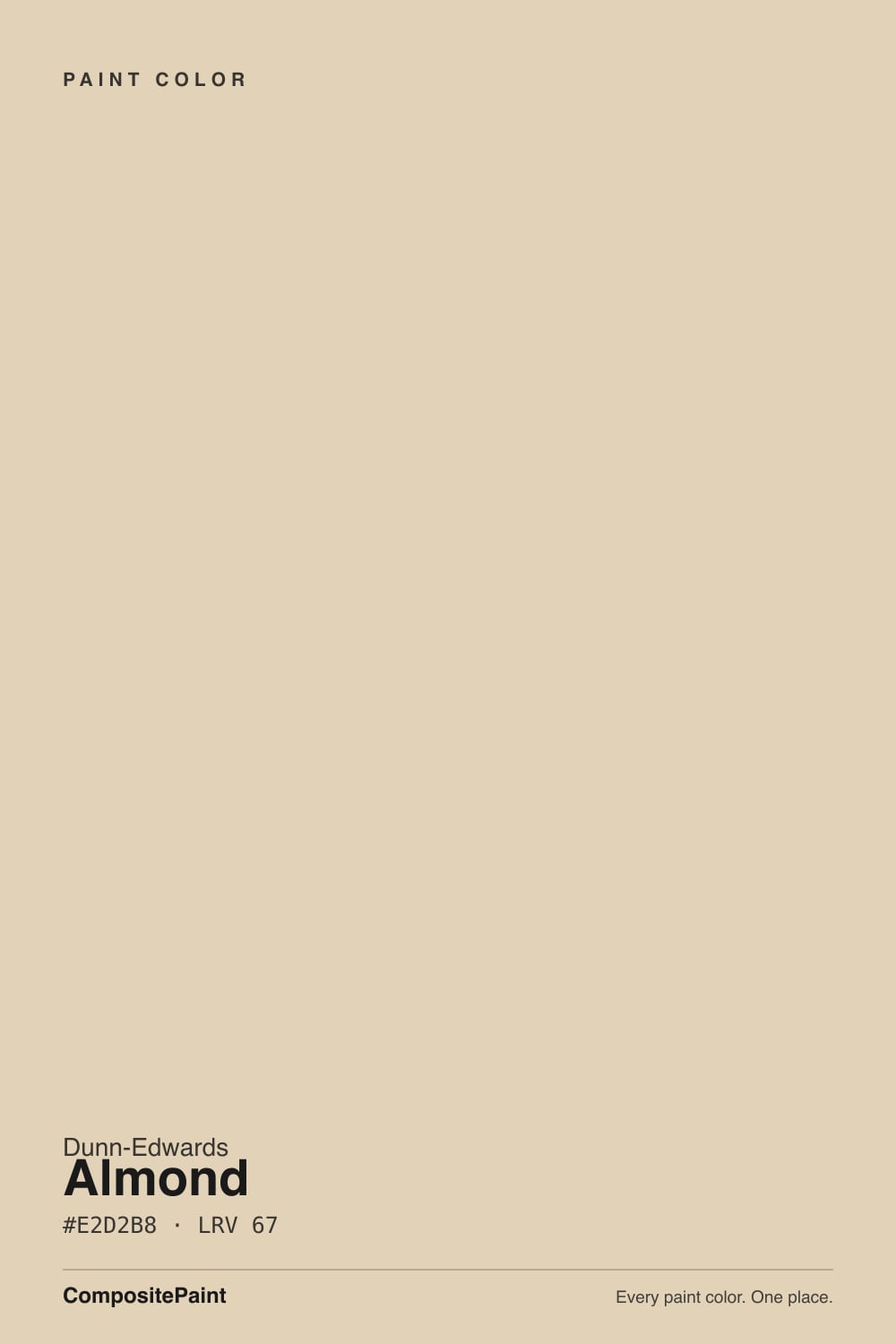
Almond is a light tan-cream with a yellow-brown base — creamy rather than gray, LRV 69, the color of a West Coast ranch that never joined the greige decade. Dunn-Edwards sells it as a whole-house traditional neutral, and in even daylight with oak floors it does that job without fuss. Sample it if you actually want beige. If the chip looked 'just warm' and you were hoping for gray-beige, this is the wrong family.
Traditional and Spanish-Colonial interiors · whole-house walls in even warm daylight · honey oak, walnut, and terracotta · cream kitchens with brass
You actually want greige · cool gray LVP or quartz · an unshaded west wall · a crisp white-and-gray modern scheme
- True tan-cream — warm without needing a separate 'beige' search
- LRV 69 light enough for whole-house walls and dimmer halls
- Loves honey oak, walnut, terracotta, and brass
- Traditional and Spanish-Colonial interiors look finished, not themed
- Low chroma keeps it from going butter-yellow in even daylight
- Not greige — buyers expecting gray-beige see 1990s almond
- West and unshaded south sun can peach it for hours
- Fights cool gray floors, cool quartz, and gallery-white trim
- The name and the color both date themselves if the furniture is gray
What Color Is Almond, Really?
A pale beige with a yellow-brown undertone — nut-shell, not greige. On the chip it can pass for a soft off-white; on four walls the tan shows up immediately and the yellow in the base does the rest. Low chroma keeps it from going butter-yellow in decent light, but this is still a cream-beige, the kind DE has kept in the Perfect Palette for traditional whole-house work. It will never read gray. That is the whole personality, not a side effect.
At LRV 69 it is a light beige, not an off-white. Hang it next to White Dove (LRV 85) and the body appears at once: enough bounce for hallways and small rooms, enough color to kill the builder-white look. Pale Oak sits at the same LRV 69 with a cooler, more greige personality — same depth, opposite temperature — which is the comparison to make before you buy gallons. Almond reflects like a light neutral and still paints as tan-cream.
Undertone in one line: yellow-tan first, a drop of brown second, a hint of peach when the sun is low. Never gray, never green. If the sample looks pink-peach, that is west light, not a hidden red. If it looks dingy, the room is too cool and too dim for a cream this yellow-based.
Where It Shines
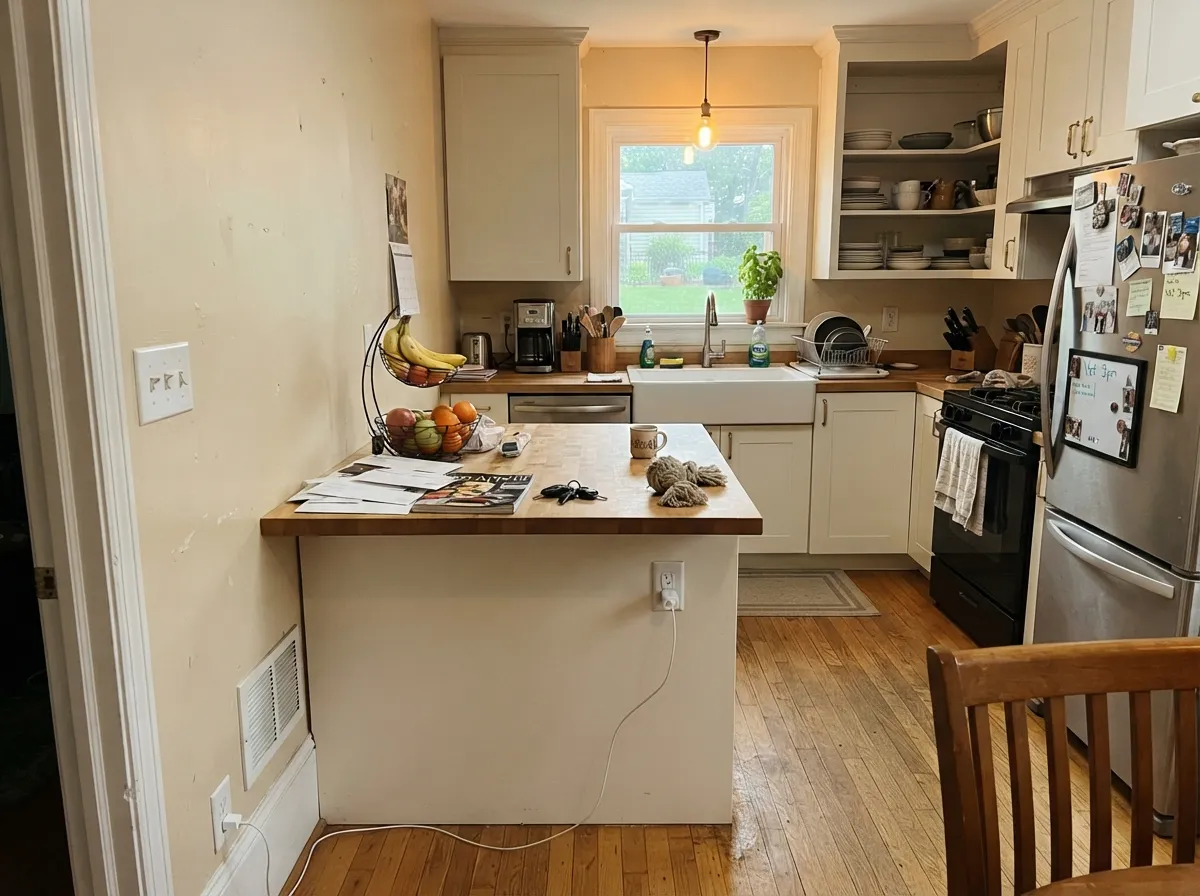
Give it even daylight, warm wood, and a cream or soft-white trim and Almond does the quiet traditional job it was mixed for. Whole-house walls are the real use: hallways, living rooms, and bedrooms in one color, so the house reads finished instead of decorated. Kitchens with oak or walnut, brass, and cream or Alabaster cabinets are the second home — the tan-cream makes wood look intentional instead of leftover. Eggshell hides the texture older West Coast plaster actually has.
Where It Fails
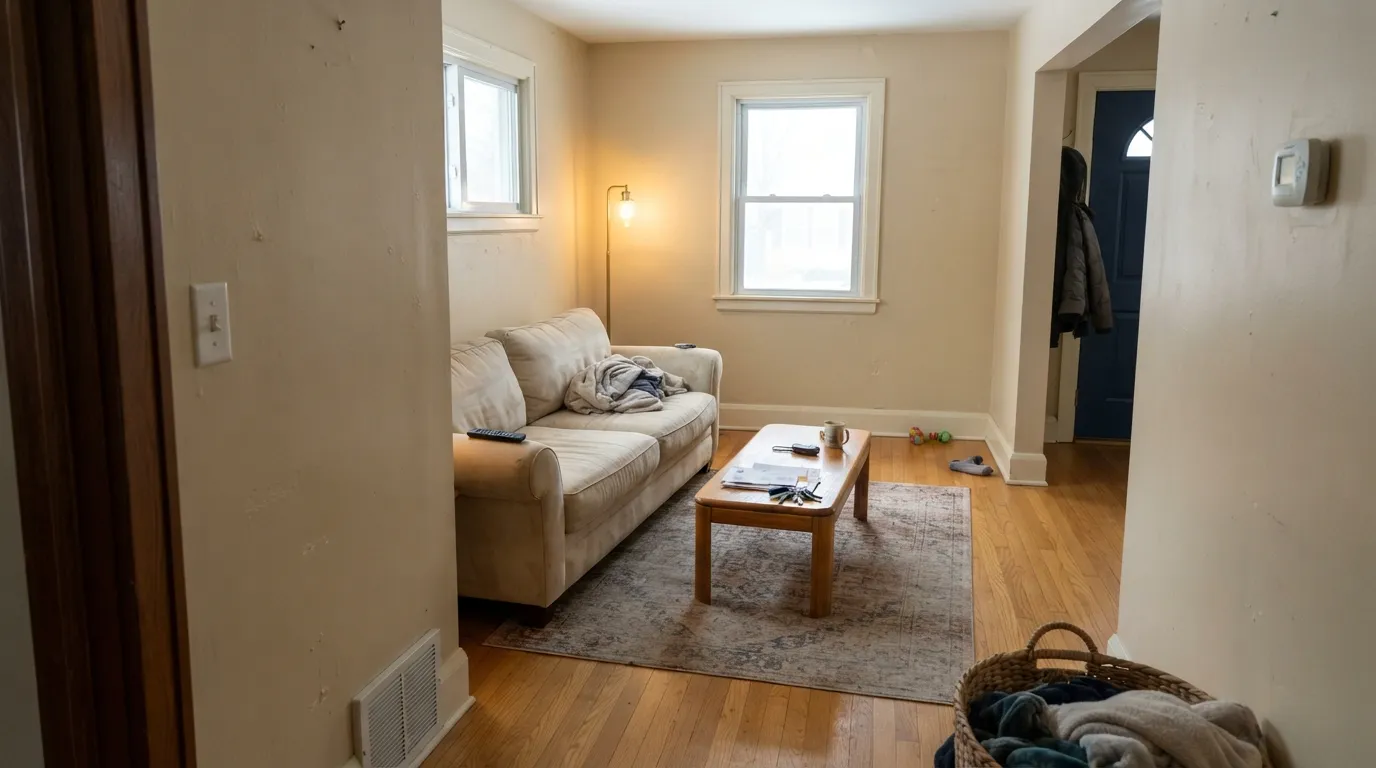
Almost every regret story about a cream this yellow-based follows one of three scripts, and all three are visible on a big sample before anyone opens a gallon. None of them are a bad batch — but if your room matches one, this is not your beige.
On a phone screen Almond can look like a warm white. On the wall it is clearly beige — tan-cream, a little 1990s almond-appliance in the wrong company. If you have been circling Agreeable Gray or Accessible Beige, this is a different family. Accessible Beige (LRV 58) grays the yellow out; Almond leaves it in. Buy it for beige, not as a 'safer gray.'
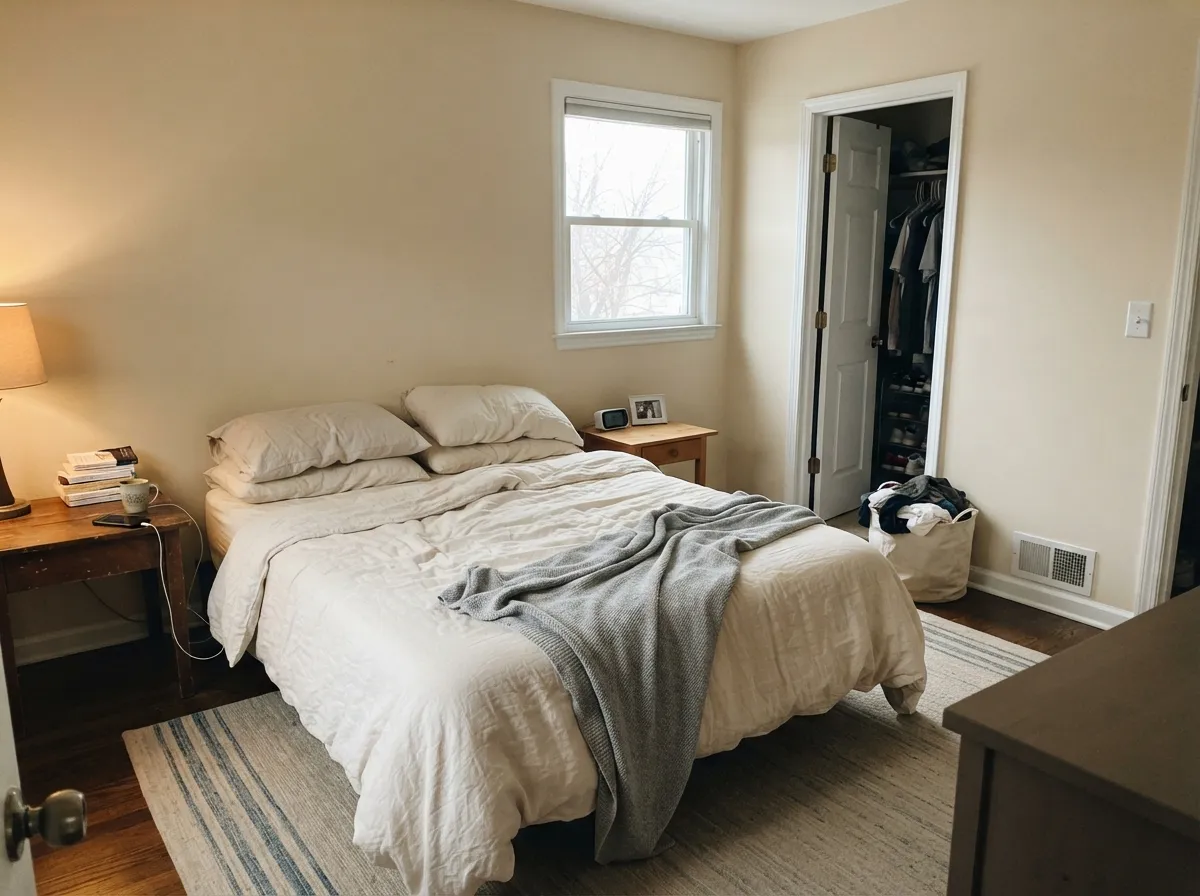
The yellow-brown base plus low afternoon sun is a peach cocktail. Unshaded west walls, and some blasting south rooms, go distinctly apricot-cream for several hours — the exact shift people describe as 'suddenly yellow.' East light and filtered south light are fine. A west picture window with no overhang is not. Sample on that wall at 4pm, not at noon.
Gray LVP, cool quartz, and a crisp white like Chantilly Lace sit at the opposite temperature. They push Almond toward dingy yellow and make the walls look dirty rather than creamy. Honey oak and walnut forgive it; gray floors do not. Trim should be a soft warm white (White Dove), not a gallery white, or run Almond on the woodwork too and change only the sheen.
Room by Room
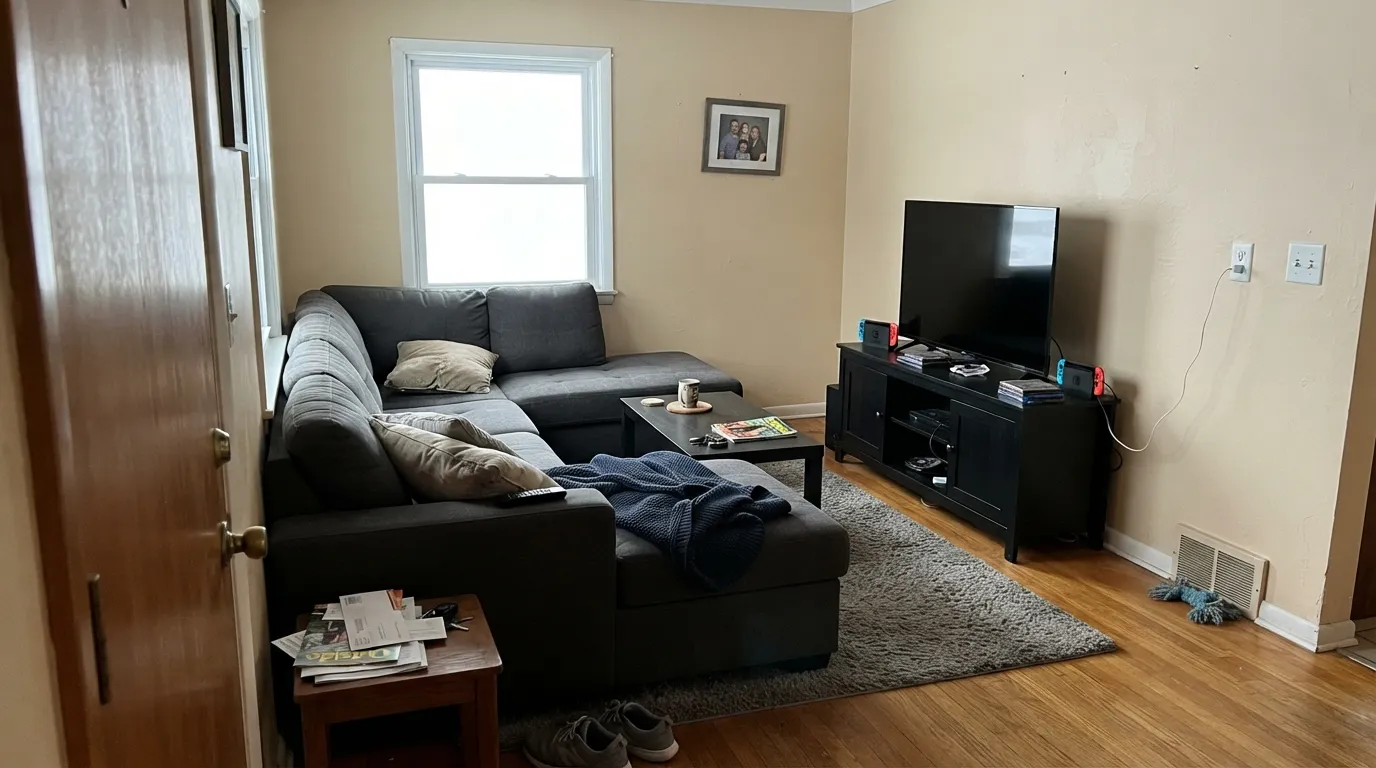
Open, even daylight and oak or walnut furniture are the easy win: the tan-cream sits back, wood looks richer, and the room feels finished. Eggshell; White Dove or same-color semi-gloss on trim. Against a gray sectional it can look dated — that is a furniture problem, not a lighting one.
Butcher block, oak, brass, cream or Alabaster cabinets: Almond on the walls is a traditional kitchen that still reads current if the rest of the house is warm. Satin on cabinets if you commit to cream boxes; skip it next to cool gray quartz. Two coats over a light existing color is typical.
Soft, restful, and a little nutty under 2700K lamps. Morning east light is its best bedroom read. A west bedroom needs a sample at golden hour before you paint all four walls — peach at bedtime is a real outcome. Matte or eggshell; cream bedding, not gray.
This is the Perfect Palette pitch, and it is fair: one light tan-cream through living, hall, and bedrooms keeps older houses from chopping into sample-board rooms. LRV 69 holds up in a dim hall better than a mid greige. Keep trim in the same warm family so doorways do not flash a colder white.
Cream tile, wood vanities, brass: fine. Gray marble, blue-gray tile, chrome-and-cool-quartz: the beige goes yellow-stale. If the bath is the one cool room in a warm house, paint it a true white and leave Almond in the hall.
On a shaded or north-east stucco wall it reads as a soft adobe cream, which is why it still shows up on West Coast ranches. Full west and south elevations will read a step yellower from the street. Pair with a deeper tan or a warm dark on trim, not a cool gray, and walk the sample around the house before committing the facade.
Your Light Is the Risk
Even warm daylight is the honest read: tan-cream, a little nutty, not peach. This is the light DE is selling when it calls Almond a whole-house neutral.
Low warm sun floods the yellow-brown base. Walls go apricot-cream, sometimes for the whole evening. Test that elevation at 4pm before you roll it.
It starts quieter and more beige in the morning, then warms and yellows as the sun drops. Most traditional rooms like the shift; peach-haters will not.
Warm 2700K lamps make it nuttier and cozier — the almond-shell version. Cool 4000K LEDs gray the cream out and it reads like leftover builder beige. Swap bulbs before you blame the can.
Most complaints about Almond are a light mismatch. Upload a photo of your actual room and see it on your walls — then ask for the same wall in north light or evening lamps before you buy a single sample.
Need It From Another Brand?
Any paint counter can custom-tint Dunn-Edwards DEC753 directly. If you would rather stay in one brand's own deck, these are the closest stock matches, measured as ΔE2000. Under 2 is a difference you will not see on the wall.
| Brand | Closest color | ΔE | LRV | |
|---|---|---|---|---|
| Sherwin-Williams | Intricate IvorySW 6350 · Sherwin-Williams | 0.5 | 74 | Color page → |
| Behr | Weathered Sandstone290E-1 · Behr | 0.8 | 73 | Color page → |
| Benjamin Moore | Mystic Beige2162-60 · Benjamin Moore | 1.5 | 73 | Color page → |
| Valspar | Malted Milk7003-9 · Valspar | 1.8 | 73.9 | Color page → |
| PPG / Glidden | Tea BiscuitPPG1201-2 · PPG / Glidden | 1.5 | 73 | Color page → |
| Glidden | Tea BiscuitPPG1201-2 · Glidden | 1.5 | 74 | Color page → |
Similar Dunn-Edwards Colors
The nearest shades to Almond within Dunn-Edwards's own range, ranked by perceptual color distance — useful when you want the same look a touch lighter, darker, or warmer.
WCAG 2.1: AA is 4.5 : 1 for normal text, 3 : 1 for large text, AAA is 7 : 1.
Almond vs the Colors You're Also Considering
Every Almond sample board has the same rivals on it. The numbers show the real lightness gap — then it comes down to which risk you would rather live with.
Pick this when you want more light bounce (LRV 69 vs 58) and an actual tan-cream, not a greige.
Sherwin-Williams SW 7036 · LRV 58Accessible BeigePick this if you want the yellow grayed out — it is the safer modern beige until the light goes cool.
Pick this when the room should stay tan-cream all day, not drift toward taupe.
Benjamin Moore OC-20 · LRV 69Pale OakPick this for the same depth with a cooler, more greige personality — beautiful in good light, moody in bad.
Almond has close neighbors in the Dunn-Edwards deck, and the differences are small but real on a wall. Celestial Moon (DET650) sits almost on top of it at LRV 66 with nearly the same hex, so it reads as a near-identical warm cream. Choose between them mostly on which chip looks right in your own light.
Buttercream Frosting (DET662) matches Almond's LRV of 67 but leans a touch more yellow-cream, so it feels slightly sweeter and less tan. If you want a bit more visible warmth, it is the pick.
Quicksand (DEC754) is the bigger shift. At LRV 60 it is noticeably deeper and a little more grounded, so it works when Almond feels too pale for the room and you want the same warm character with more presence. Sample all three side by side, because in warm light they can blur together.
Almond Coordinating Colors
Stay on the warm side of the fence: soft whites, deeper beiges, one navy or muted sage, and metals in brass or bronze. Cool grays and icy whites are the pairings that make Almond look dated. These are the partners that keep the house in one temperature:
A Perfect Palette Workhorse, Not a Trend Color
DEC753 lives in Dunn-Edwards' Perfect Palette — the West Coast house-paint deck, not a Color of the Year list. DE does not run a Color of the Year program, and Almond has no verified celebrity-room or viral-makeover claim attached to it. What it has is staying power in traditional California, Arizona, and Southwest interiors: ranch houses, Spanish Colonial stucco, cream kitchens that never went gray.
That honesty is useful. You are not buying a 2026 mood color. You are buying a light tan-cream that DE has kept on the rack because whole-house beige still has a job in sunny houses with oak floors. If you want the current greige conversation, Accessible Beige and Pale Oak are the louder national names. If you want the cream those houses had before greige, this is it.
Almond With Wood Tones and Floors
Honey oak is the pairing this color was effectively mixed for. Yellow-tan walls meet yellow-oak floors in the middle, so the orange in builder oak calms down instead of shouting. Walnut, cedar, and terracotta tile sit just as easily. Cream carpet is fine; a large warm rug is fine.
Cool gray LVP, gray-washed oak, and blue-gray tile are the honest no. They pull the yellow in Almond forward until the wall looks stale. If the gray floor is staying, either put a big warm rug between it and this paint or pick Accessible Beige / Pale Oak and let the yellow recede.
Metals are simple: unlacquered brass, antique bronze, and oil-rubbed bronze belong here. Polished chrome and black stainless lean cold against the cream and make it look yellower than it is.
Three Ready Palettes Built on Almond
A color is never alone on the wall. These are complete combinations in the 60-30-10 pattern, with the reason each one holds together. Every one opens in the visualizer.
White Dove is the trim that keeps Almond from looking yellow-dirty: warm enough to match, grayed enough not to double the cream. Hale Navy is the one dark note a traditional house needs, and it stays navy as long as the entry has light.
Try this palette in your roomAlabaster is a cabinet white that still sits on the warm side of Almond, so the boxes do not flash cold. Evergreen Fog on the island is one muted sage note — enough color for brass hardware without turning the kitchen into a theme.
Try this palette in your roomKilim Beige is the deeper beige that actually flatters honey oak; Almond is the lighter whole-house coat that still belongs in the same family. White Dove trim keeps both from stacking into one yellow plane.
Try this palette in your roomAlmond FAQ
Is Dunn-Edwards Almond beige or greige?
Beige — a light tan-cream with a yellow-brown undertone. It is not grayed enough to pass as greige on four walls. If you want the yellow pulled out, look at Accessible Beige; if you want the same LRV with a cooler personality, look at Pale Oak.
What trim white goes with Almond?
A soft warm white. White Dove is the default because a drop of grey keeps the cream from looking dirty. Same-color Almond in semi-gloss on the woodwork also works. Skip gallery whites (Chantilly Lace territory): they make the walls go yellow by comparison. Swiss Coffee is creamier and can pile on warmth in an already-sunny room.
Will Almond look yellow in my room?
In even east or filtered south light it reads tan-cream, not yellow. In unshaded west afternoon sun — and some blasting south rooms — the yellow-brown base peaches out. Cool 4000K bulbs also make it look like dingy beige. Sample on the brightest wall at 4pm, and keep the lamps at 2700K.
Does Almond work with oak floors?
Honey oak is one of the reasons to buy it: beige and yellow-oak agree with each other instead of fighting. Walnut and terracotta are just as easy. The floor that argues is cool gray LVP or gray-washed wood, which shoves Almond toward stale yellow. Test a big card above the actual floor.
Can I use it whole-house?
Yes — that is the job Dunn-Edwards built it for. LRV 69 is light enough for halls and small bedrooms, and one tan-cream through the main floor keeps older houses from looking like a fan deck. Keep trim in the same warm family, and do not run it onto an unshaded west elevation without a 4pm sample.
How is Almond different from Accessible Beige?
Accessible Beige is deeper (LRV 58) and the yellow is grayed out, so it behaves more like a modern warm neutral — until cool light strips the warmth. Almond is lighter, creamier, and more clearly tan. Pick Accessible Beige to join the greige decade; pick Almond if you want the cream-beige on purpose.
Have you painted with Almond?
Rate it — one tap helps the next reader decide.
Ask a Question