Healing Aloe
Benjamin Moore's chameleon spa green, reviewed honestly: the light that makes it glow green, the light that turns it flat blue-gray, and what to pick instead.

Jessica has spec'd whites and neutrals for more than 300 rooms and keeps a sample wall of painted drawdowns in her studio. Every color review is checked against real reader rooms in the comments and re-tested when a formula changes. About the testing process →
- 1Stardew43
- 2Sea Salt63
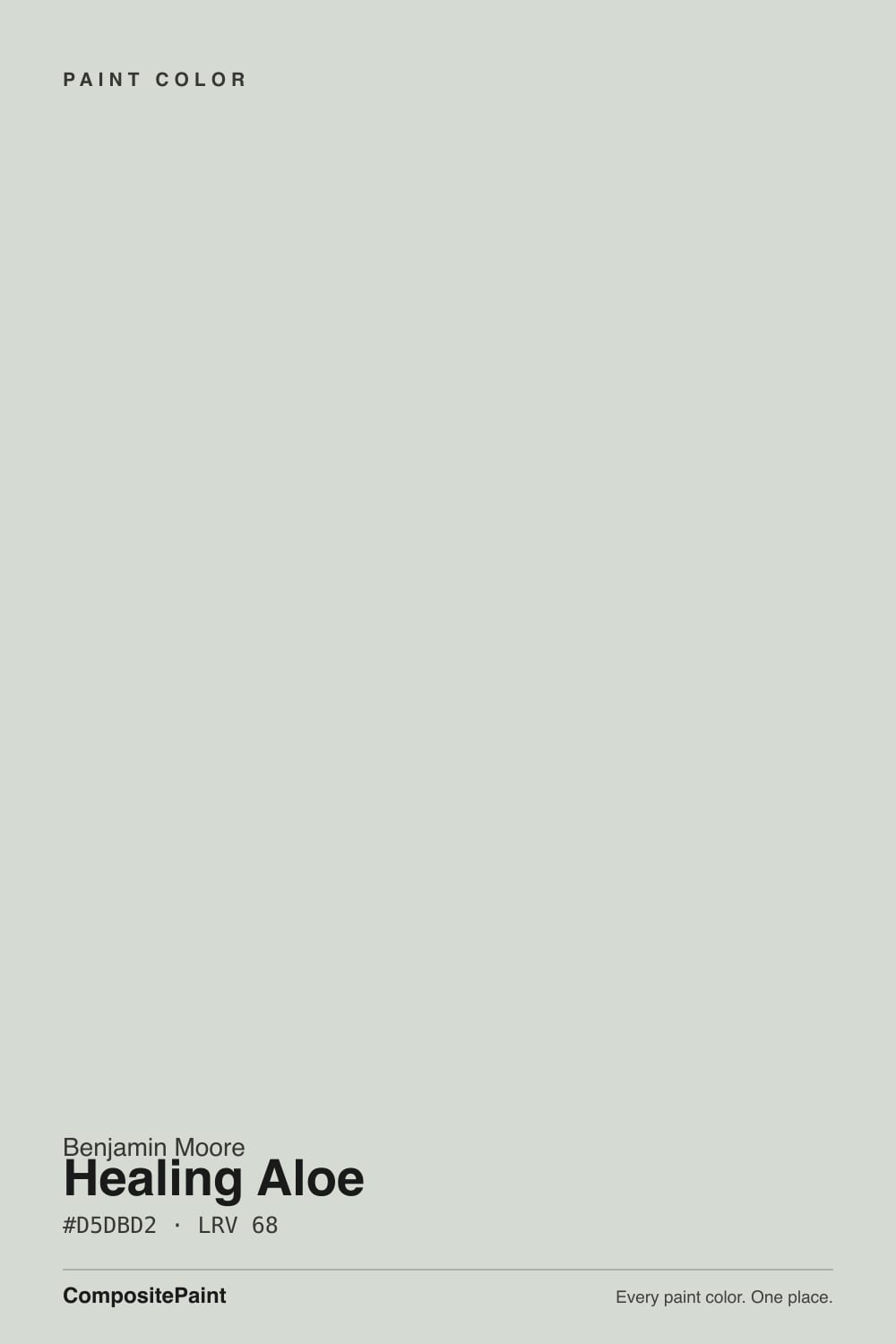
- 3Healing Aloe68
- 4Spring Thaw83
The Fast Verdict
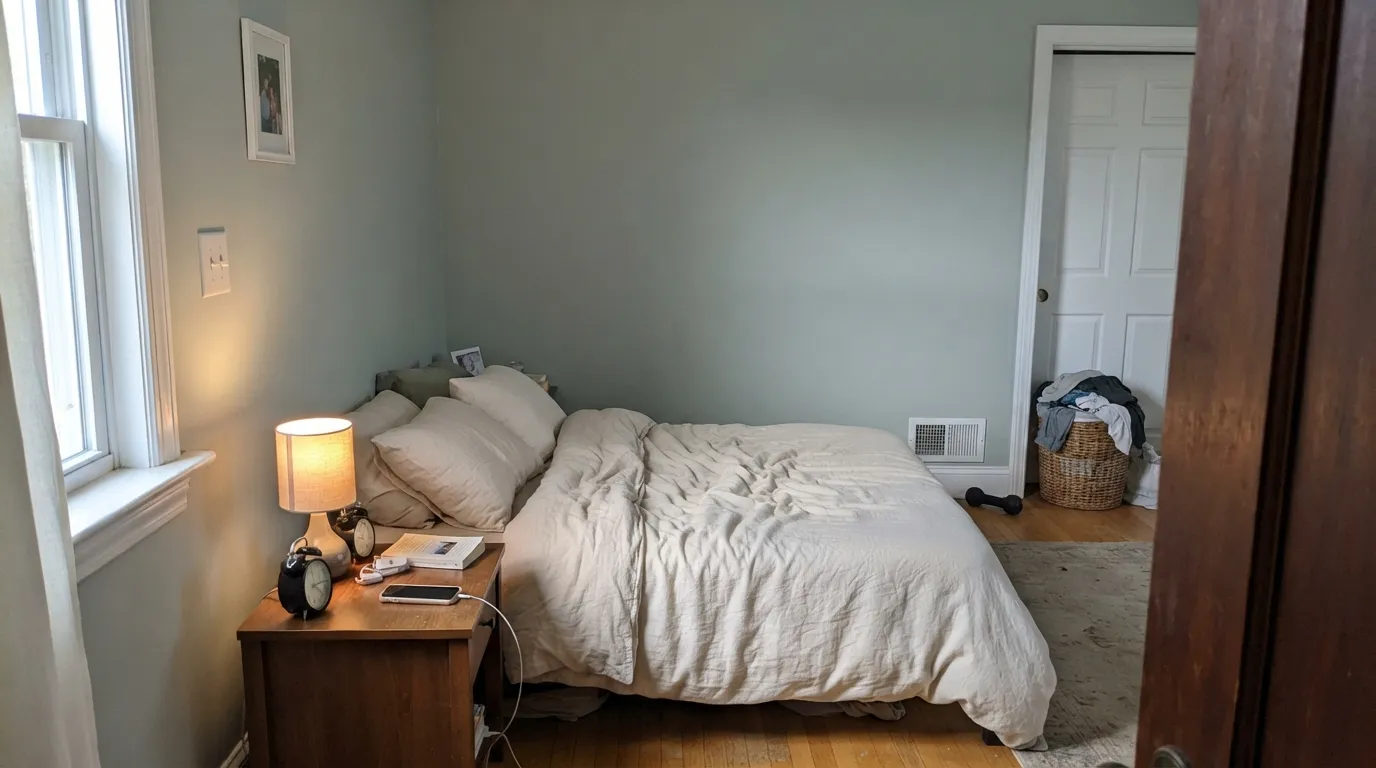
Healing Aloe is Benjamin Moore's own description in one line: "a refreshing wash of green with notes of gray." That is also its whole personality — a soft, grayed sage-green that leans blue the moment the light goes cool. In south or west daylight it reads like a spa: quiet green with a cool edge, never minty, never loud. In a dim north room the green all but disappears and you are left with a plain blue-gray. It is a genuinely versatile Classics-collection color, not a headline color — buy it for what it actually is.
Bedrooms and bathrooms that want a spa feel · south- or west-facing kitchens and living rooms · lower cabinets under a crisp white upper · nurseries that shouldn't read babyish
Your room is north-facing and stays dim · you want an obviously leafy, saturated green · your fixed finishes already lean cool blue-gray · you're painting a sun-blasted south or west exterior wall
- A genuinely versatile grayed sage-green, not a one-note trend color
- Reads as a real spa color in south or west daylight
- Lower-cabinet pairing with a white upper is a proven, repeated real kitchen combo
- LRV 68 keeps rooms feeling light, not heavy
- Calming in bedrooms, bathrooms and nurseries without reading themed
- Loses most of its green in a dim, north-facing room
- Too subtle for anyone who wants an obviously leafy green
- Washes out in full, intense exterior sun
- Shifts noticeably between green, gray and blue depending on the hour
What Color Is Healing Aloe, Really?
A grayed sage-green with a cool, blue-leaning undertone — Benjamin Moore's own copy calls it "a refreshing wash of green with notes of gray," and that gray is doing more work than the name lets on. It sits in the Classics collection, not a recent trend launch, which is why it shows up again and again in kitchen and bathroom renovation photos without ever being the headline color of a season. It is a quiet, dependable green, not a famous one.
At LRV 68 it sits close to a light neutral — brighter than any true sage in the BM deck — which is exactly why it reads differently in different rooms. In real daylight the green comes forward and it looks like a proper, if muted, sage. Take the light away and the high reflectance value stops helping: with nothing to bounce, the undertone tips toward its gray-blue half and the green reads as an afterthought.
Undertone in one line: green first, gray second, blue underneath both — never a true, saturated leaf-green. Morning and south light pull the green forward; north light and evening pull it toward a cooler blue-gray. If your sample looks flatly gray with no green at all, that is a light problem, not a paint problem.
Where It Shines
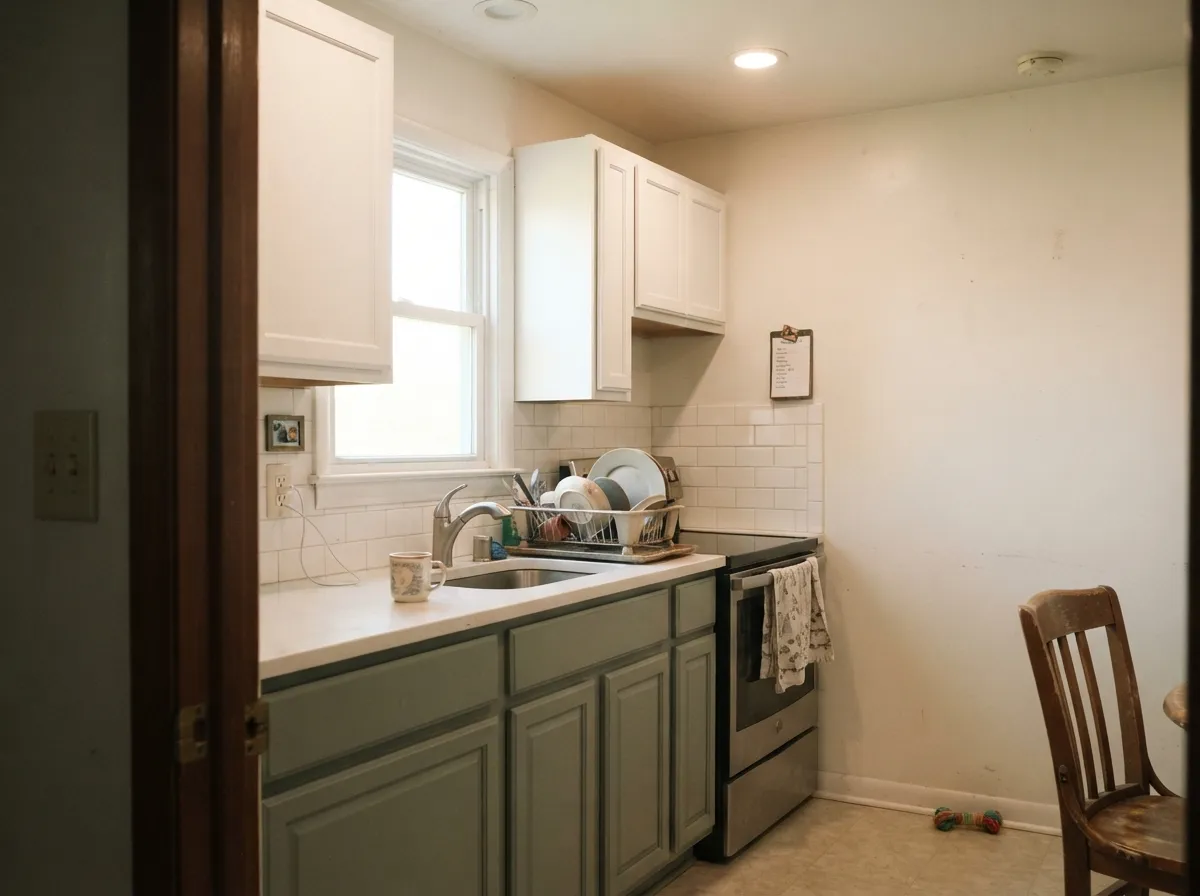
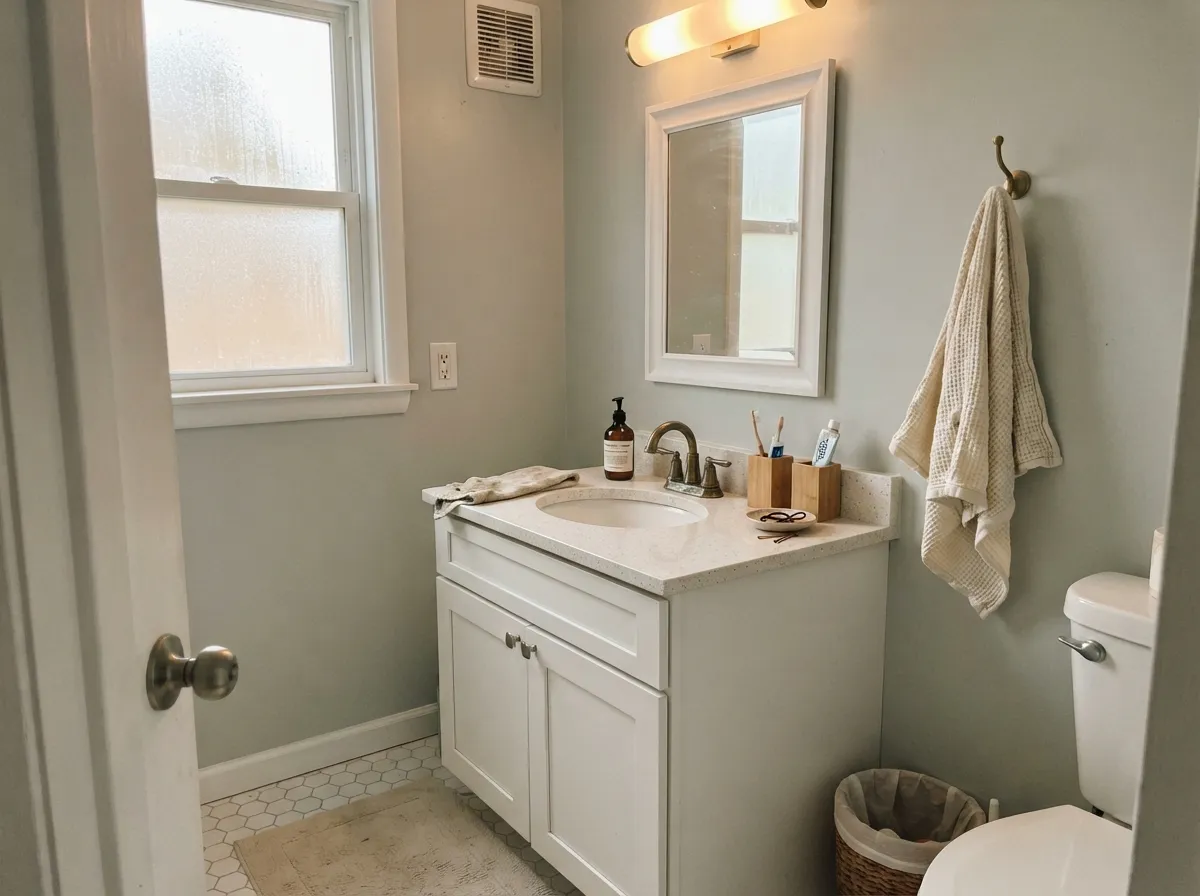
Give it south or west daylight and it earns its spa-color reputation — soft, cool-green, calming without tipping cold. Its most common real-world job is exactly the one homeowners post about online: Healing Aloe on lower kitchen cabinets under a crisp white upper cabinet, which lets the green carry the room without committing an entire kitchen to color. Bedrooms and bathrooms are its other natural home — the muted green reads restful rather than themed, and it never goes full "forest cabin."
Where It Fails
Almost every disappointed story about Healing Aloe comes from one of three situations, and all three are predictable before the first coat. None of them are the paint's fault — but if your room or wall matches one, this is not your color, and a bigger sample will only confirm it.
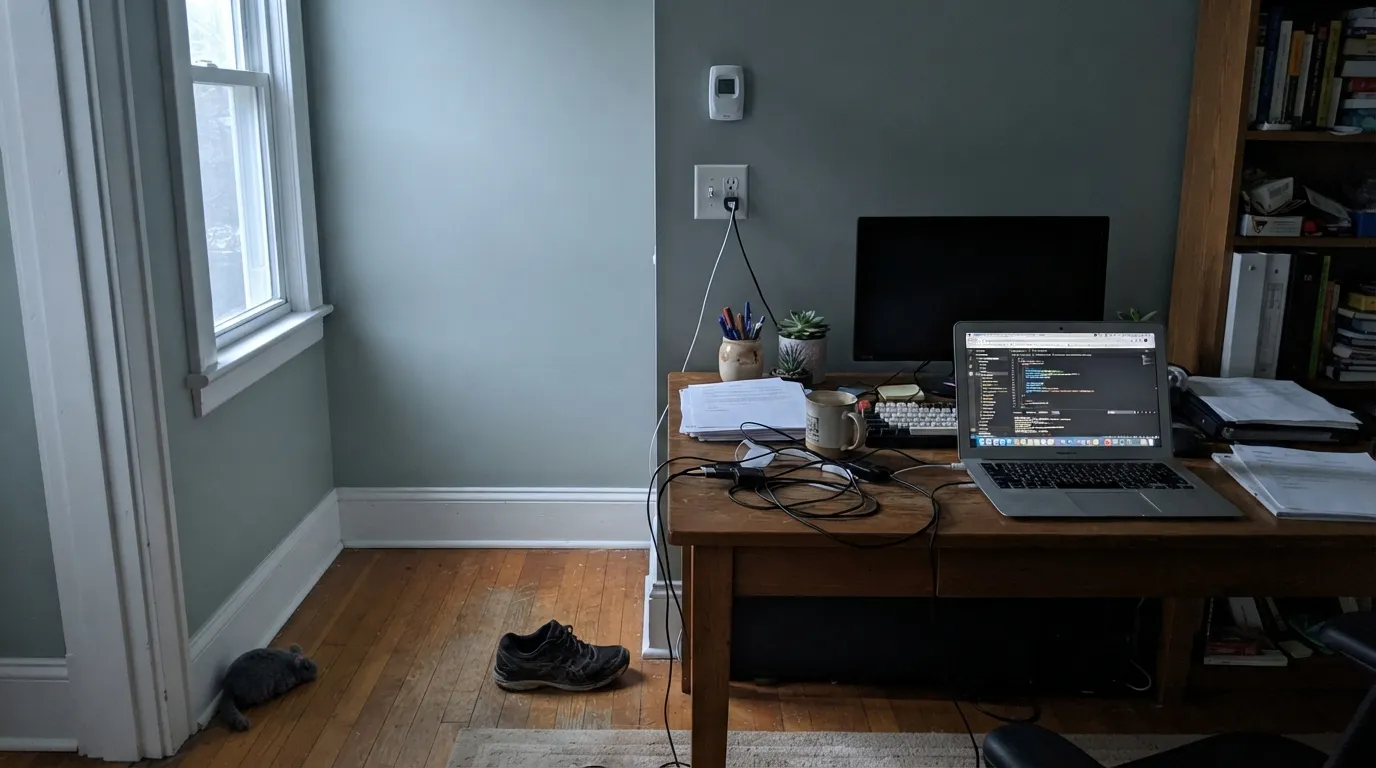
North light is cool and flat, and it strips the green out of Healing Aloe faster than almost any other color in the BM sage family. What's left reads as a plain, slightly institutional blue-gray. The color did not fail; the light did. Warm 2700K lamps bring some green back at night, but a genuinely dim north room should look elsewhere.
This is a grayed sage, not a leafy green — at LRV 68 it is closer to a light neutral than to a garden color. If you're picturing a clearly, confidently green wall, Healing Aloe will read as "a nice gray" to most guests. Look for a deeper, more saturated green in the deck instead.
Outdoors it behaves the opposite of how it behaves indoors: full, intense sun washes the color out and flattens it, while east- and north-facing elevations hold its green-gray character much better. Painting the sunniest side of the house with it and expecting the same color you saw on a shaded chip is the exterior version of this color's north-room problem, just reversed.
Room by Room
In any real daylight it reads as a calm, cool-green retreat without going full forest theme. Eggshell on the walls; keep the bulbs warm (2700K) so it doesn't go flat and gray after dark.
Clean and spa-like without feeling cold, especially with white or cream tile. Satin on any painted vanity; it handles humidity fine at that sheen.
The recurring real-world pairing: Healing Aloe on lower cabinets, a crisp white on the uppers, so the green shows without the whole kitchen wearing it. Works on walls too in a south- or west-facing kitchen with white or light stone counters.
Reads as a soft neutral-green backdrop across most of the day in a bright room. In a dim or heavily shaded living room, expect it to sit closer to plain gray than green.
Muted enough to avoid the pastel-nursery look while staying gentle. Pairs easily with cream trim and doesn't need a theme built around it.
Works on Cape Cod and coastal-style homes, but full southern or western sun washes it out. East- or north-facing elevations keep more of the green-gray character. Details in the exterior section below.
Your Light Is the Risk
The green comes forward and it reads like a genuine, cool-toned spa sage. Its best and most photographed light.
Cool, flat daylight drains the green and leaves a plain blue-gray. Test a large sample before committing a whole room.
Greener in morning light, softer and more blue-gray by evening. The shift is real but gentle, not a color change.
2700K warm bulbs bring some green back after dark. Cool white LEDs push it toward flat gray — swap bulbs before repainting.
Most complaints about Healing Aloe are a light mismatch. Upload a photo of your actual room and see it on your walls — then ask for the same wall in north light or evening lamps before you buy a single sample.
Need It From Another Brand?
Any paint counter can custom-tint Benjamin Moore 1562 directly. If you would rather stay in one brand's own deck, these are the closest stock matches, measured as ΔE2000. Under 2 is a difference you will not see on the wall.
| Brand | Closest color | ΔE | LRV | |
|---|---|---|---|---|
| Sherwin-Williams | KingstonSW 9677 · Sherwin-Williams | 0.9 | 70 | Color page → |
| Behr | Soothing CeladonICC-95 · Behr | 1.3 | 70 | Color page → |
| Valspar | Bottle GlassT656 · Valspar | 0.9 | 69.6 | Color page → |
| PPG / Glidden | Wayward WillowPPG1033-2 · PPG / Glidden | 1.4 | 70 | Color page → |
| Glidden | Wayward WillowPPG1033-2 · Glidden | 1.5 | 71 | Color page → |
| Dutch Boy | Frosted Needles328-1DB · Dutch Boy | 2.8 | 69 | Color page → |
Similar Benjamin Moore Colors
The nearest shades to Healing Aloe within Benjamin Moore's own range, ranked by perceptual color distance — useful when you want the same look a touch lighter, darker, or warmer.
WCAG 2.1: AA is 4.5 : 1 for normal text, 3 : 1 for large text, AAA is 7 : 1.
Healing Aloe vs the Colors You're Also Considering
Every Healing Aloe sample board has the same rivals on it. The numbers show the real lightness gap — then it comes down to which risk you would rather live with.
Pick this for more visible green — Sea Salt is beautiful when the light agrees with it, but Healing Aloe carries more color on an average day.
Sherwin-Williams SW 6204 · LRV 63Sea SaltPick this if you want it cooler and grayer, with the green as a hint rather than the headline.
Side-by-side comparison →Pick this when you want the lighter, airier read instead of a mid-depth accent.
Benjamin Moore 1564 · LRV 41Beach GlassPick this for a deeper, more saturated version of the same blue-green-gray chameleon — the two layer beautifully in one room.
Pick this when green should read first and blue only as an undertone.
Benjamin Moore 1563 · LRV 50Quiet MomentsPick this if you want the bluer BM spa color — Quiet Moments stays calm until the light turns it turquoise; Healing Aloe stays greener.
Side-by-side comparison →Pick this for the cooler, quieter, more gray-leaning version of the same family.
Benjamin Moore HC-114 · LRV 56Saybrook SagePick this if you want an obviously, confidently green wall — Saybrook Sage is a beautiful green that needs warm company, and it reads far more leafy than Healing Aloe ever will.
Quiet Moments 1563 is the closest sibling in the deck and the most common comparison. It is #B5C2BC at LRV 50, which is eighteen points darker and clearly bluer. Healing Aloe stays a pale wash, while Quiet Moments has enough depth and blue to read as a soft coastal color on a full wall. Choose Quiet Moments when you want people to notice the color, and Healing Aloe when you do not.
Sherwin-Williams Sea Salt SW 6204 at #CDD3CB and LRV 63 is the other pairing people ask about. Sea Salt is five points darker and holds its green-blue better in low light, so it looks more like a color and less like a neutral. Healing Aloe is lighter and quieter.
Across brands, Farrow and Ball Pale Powder No. 204 at LRV 69 and Clare Rain Check at LRV 70 sit under a difference of 1, essentially the same color. Sherwin-Williams Kingston SW 9677 and Behr Soothing Celadon ICC-95 are visually identical in normal room light.
Healing Aloe Coordinating Colors
The rule for coordinating with Healing Aloe: warm whites, deeper members of its own green-gray-blue family, and one near-black for grounding. It pairs easily with cream trim, brass or matte black hardware, and layers well with both a warmer green and a bluer green from the same BM spa family. These are the partners that keep showing up together:
Healing Aloe on Exteriors
Outdoors, Healing Aloe behaves almost the opposite of how the interior sections above describe it. It genuinely suits Cape Cod and coastal-style homes, where the muted green-gray reads quiet and weathered rather than loud. But full, unbroken southern or western sun does the same thing to this color that a dim north room does indoors — it flattens and washes the color out, only in the other direction.
The elevations that hold onto the color's character best are the shaded ones: east- and north-facing walls keep more of the green-gray depth through the day. If the house has strong sun exposure on one side, sample that exact wall before ordering paint for the whole exterior — the shaded sample in the store will not match the sunniest wall of the house.
Healing Aloe With Wood Tones and Metals
This color is easygoing with wood and metal in a way some greens are not. Warm mid-tone woods, cream-toned stone counters, and either brass or matte black hardware all sit comfortably against it — none of them fight the cool green-gray the way a very cold gray or a very warm terracotta would.
The one place to test first is a very stark, bright-white trim right next to it: because Healing Aloe leans cool, a cold bright white can make the wall read greyer and less green by contrast. A warm white like White Dove keeps the green reading as green.
Three Ready Palettes Built on Healing Aloe
A color is never alone on the wall. These are complete combinations in the 60-30-10 pattern, with the reason each one holds together. Every one opens in the visualizer.
Two depths of the same green-gray-blue chameleon read as intentional layering rather than a mistake; White Dove's warmth keeps the pairing from going cold in a north-facing bedroom.
Try this palette in your roomThe real, repeated kitchen combo: crisp Chantilly Lace uppers keep the room bright while Healing Aloe lowers carry the color at eye level. Kendall Charcoal on an island or hardware gives the scheme one grounding dark note.
Try this palette in your roomSaybrook Sage's warmer, more confident green in a small room lets Healing Aloe stay the quiet, whole-house version next door — same family, different volume. White Dove trim ties the two together without going stark.
Try this palette in your roomHealing Aloe FAQ
Is Healing Aloe green, gray, or blue?
All three, depending on the light — Benjamin Moore's own description calls it "a wash of green with notes of gray." In south or west daylight the green leads; in north light or evening it slides toward blue-gray. It never becomes a true saturated green, and it rarely goes fully gray in decent light.
Will it look too blue or too gray in a north-facing room?
Likely yes. North light is the one condition where the green consistently loses to the gray and blue underneath it, and reviewers who saw it glow in a bright store sample are often surprised by how flat it reads at home. Warm lamps help after dark; a truly dim north room is this color's weak spot.
What trim white goes with Healing Aloe?
A warm white like White Dove for a soft, cohesive bedroom or living room look. For a crisper kitchen-cabinet contrast, a brighter white like Chantilly Lace works well — that pairing is the color's most common real-world use, with Healing Aloe on lower cabinets and the bright white on the uppers.
Is it good for kitchen cabinets?
Yes, and it is one of its most photographed real-world jobs — usually on lower cabinets under white uppers, which lets the green show without committing the whole kitchen. Satin or a urethane-fortified cabinet enamel is the right sheen either way.
How is Healing Aloe different from Beach Glass or Quiet Moments?
All three are Benjamin Moore's cool green-gray-blue chameleons at different depths. Healing Aloe (LRV 68) is the lightest and greenest of the three; Beach Glass (LRV 41) is a deeper, more saturated version of the same chameleon; Quiet Moments (LRV 50) leans bluer and can turn turquoise in the wrong light where Healing Aloe stays closer to green.
Does it work on exteriors?
Yes, especially on Cape Cod and coastal-style homes, but the outdoor behavior is the reverse of the indoor advice: full, intense southern or western sun washes the color out, while shaded east- or north-facing elevations hold its green-gray character better. Sample the actual elevation before committing.
Have you painted with Healing Aloe?
Rate it — one tap helps the next reader decide.
Ask a Question