Fresh Air
The quiet countryside yellow, reviewed honestly: the soft light where it glows, the bright sun that turns it eggy, and what to pair it with.

Jessica has spec'd whites and neutrals for more than 300 rooms and keeps a sample wall of painted drawdowns in her studio. Every color review is checked against real reader rooms in the comments and re-tested when a formula changes. About the testing process →
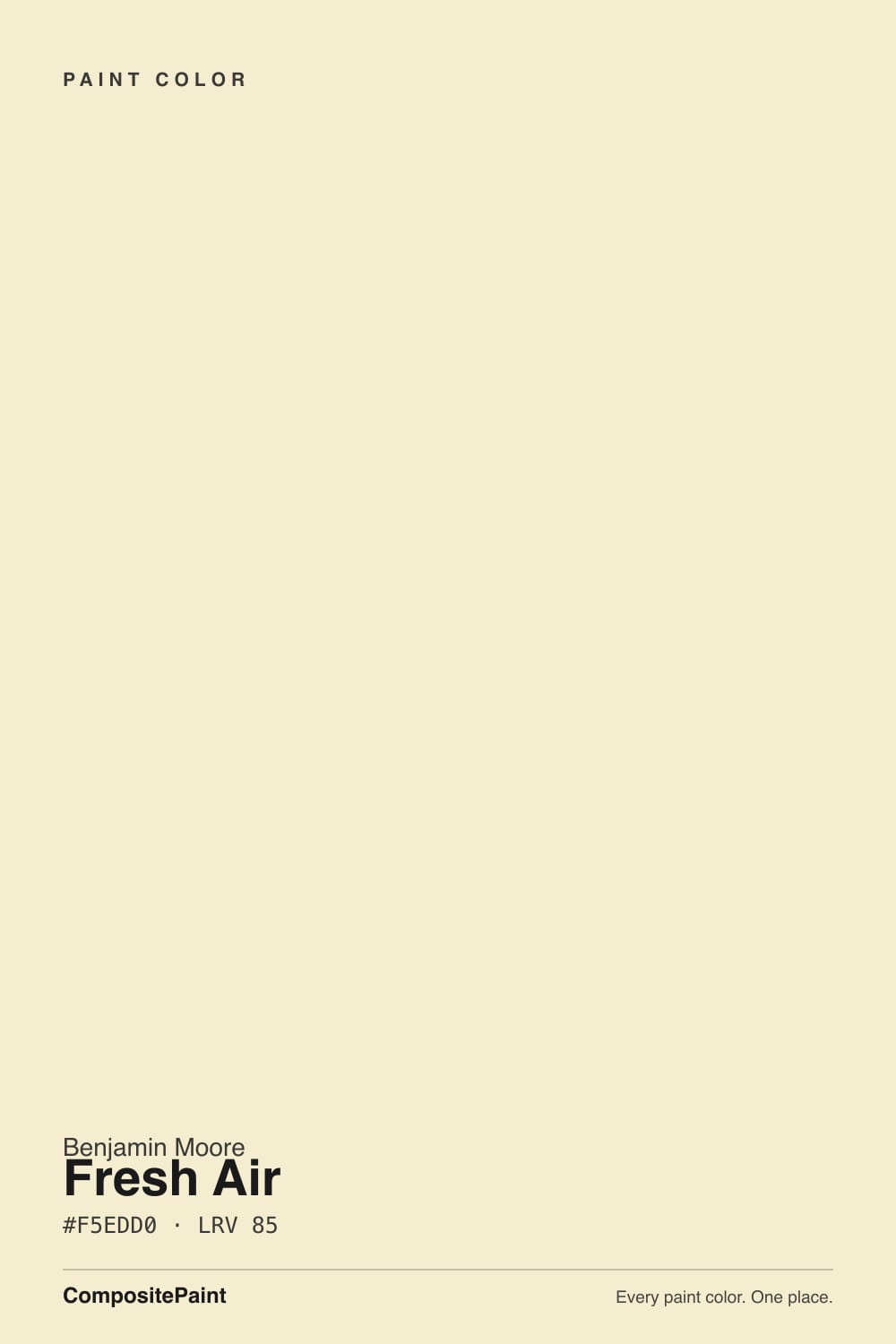
- 1Agreeable Gray60
- 2Pale Oak69
- 3Fresh Air85
- 4Lightning White92
The Fast Verdict
Fresh Air is a real, committed pale yellow — not a cream wearing a color name. Benjamin Moore's own copy calls it "an early morning walk through the countryside," and that soft, hay-and-cottage feeling is the honest read: buttery and quietly old-fashioned rather than trendy. In a dim or north-facing room it is one of the best ways to add warmth without picking an accent wall. Push it into direct south sun and that same softness turns artificial, almost lemon-drop; test a full sheet before you commit a whole kitchen to it.
Kitchens and breakfast nooks with oak or warm wood · north-facing rooms that need warmth · farmhouse or English-cottage looks · anyone who wants visible color without admitting to an accent wall
Your room floods with direct south sun · you actually want a true white or gray · your counters or tile lean cool blue-gray · you won't sample a full sheet before painting
- A genuine soft yellow that reads countryside, not neon or candy
- Classics collection — proven for decades, not chasing a trend
- One of the best ways to warm up a dim or north-facing room
- Flatters oak, brass, rattan and other warm natural textures
- High LRV keeps the room bright while still adding real color
- Turns artificial-looking in strong direct south sun
- Benjamin Moore itself does not recommend it outdoors
- Reads dingy next to a stark bright white trim
- Argues with cool gray or blue-gray stone and tile
What Color Is Fresh Air, Really?
Fresh Air is a genuine pale yellow — not a beige or a cream that merely leans yellow, but an actual yellow, grayed down and grounded with a hint of ivory-brown so it reads soft instead of citrus. Benjamin Moore files it in the Classics® collection, and it shows: the color has none of the trend-chasing energy of a Color of the Year pick. It has just sat quietly in the deck for decades doing one job — warming up a room that needs it — while sage greens and greige took the spotlight.
At LRV 85 it sits at the exact same reflectance as White Dove, and that pairing is the most useful comparison on this page: put them side by side and White Dove reads as a warm neutral white, while Fresh Air is unmistakably a color. Same amount of light bounced back, completely different personality — proof that LRV alone never tells you the whole story. On four walls, that extra hue means Fresh Air commits harder than any "warm white" in the deck; it is closer in spirit to a very pale butter than to an off-white.
Undertone in one line: warm yellow, grounded by a trace of brown-ivory — never green, never pink. If your sample looks sickly or greenish, that is almost always reflected light bouncing off grass, trees, or a green neighboring wall, not the paint itself; check it away from a window before you blame the can.
Where It Shines
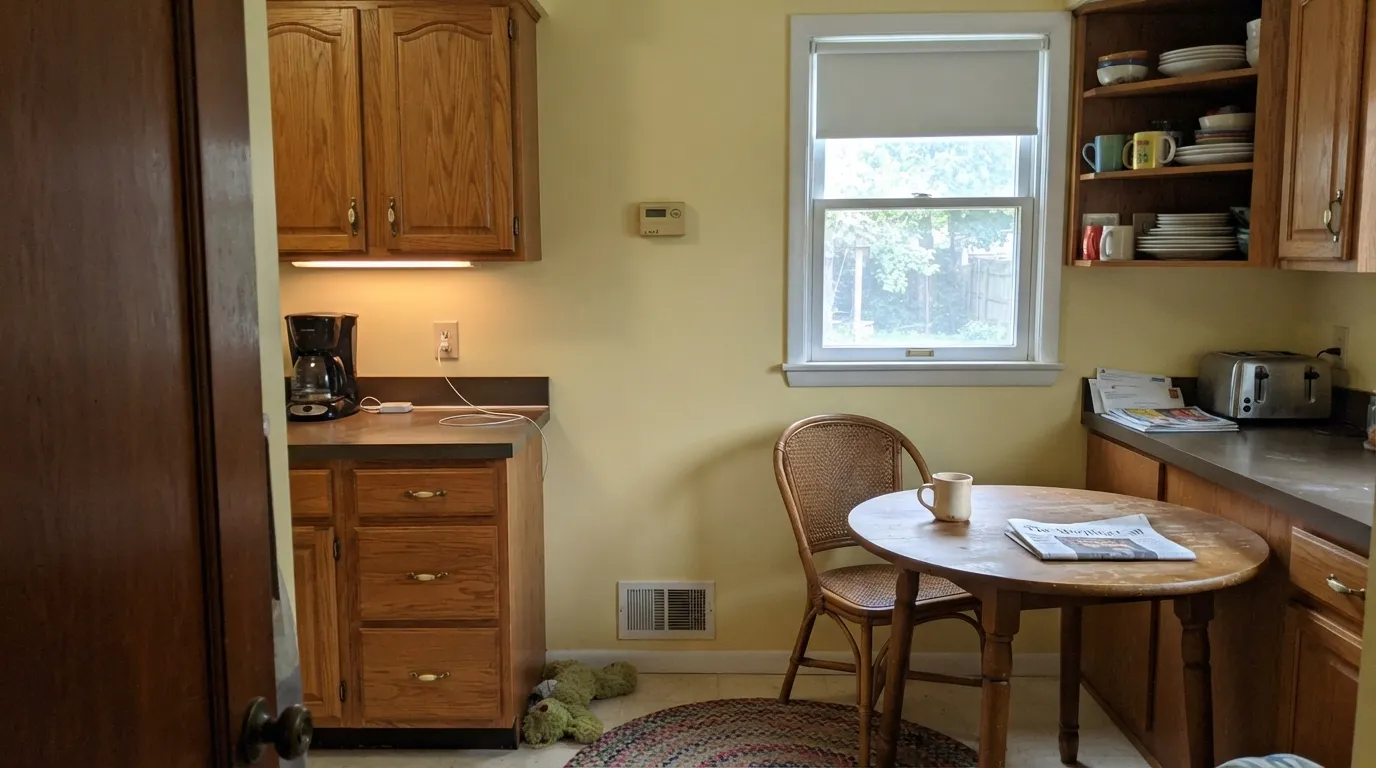
This is a soft-light color, and it earns its keep in exactly the rooms Benjamin Moore's own description points to: kitchens and breakfast nooks with real wood, and any north-facing room that reads cold and needs help. Oak cabinetry, brass hardware, and woven grasscloth or rattan all sit comfortably against it — the countryside-cottage look it was built for. Muted sage and dusty blue accents are its natural foil; both sit opposite yellow on the color wheel, which is why a single sage cabinet or a soft blue-green pillow reads intentional next to Fresh Air instead of clashing.
Where It Fails
Almost every regret with a pale yellow like this follows one of three scripts, and none of them are unique to Fresh Air — they are simply the honest physics of painting a room genuinely yellow. Sample big before you commit, and all three are avoidable.
Strong, direct daylight amplifies a pale yellow the same way it amplifies any saturated color — by midday in a sun-drenched room, Fresh Air can tip from buttery toward artificial, almost fluorescent-lemon. Benjamin Moore itself does not recommend it as an exterior paint, which is the company's own way of saying: this color needs filtered, not blasting, light. Sample a full sheet on the sunniest wall before painting the whole room.
Crisp cool trim (Chantilly Lace territory) makes Fresh Air's warmth look dingy by comparison — the same optical trick that trips up every warm off-white in this deck. Trim it in a soft warm white like White Dove instead, or paint trim and walls the same color at two sheens.
Yellow and blue-violet sit opposite each other on the color wheel, which is exactly the pairing Benjamin Moore's own tool suggests for contrast accents — but on a countertop or floor tile, that same opposition reads as an argument, not a design choice. Cool gray quartz or blue-gray marble will fight Fresh Air rather than complement it; warm-toned stone or butcher block is the safer match.
Room by Room
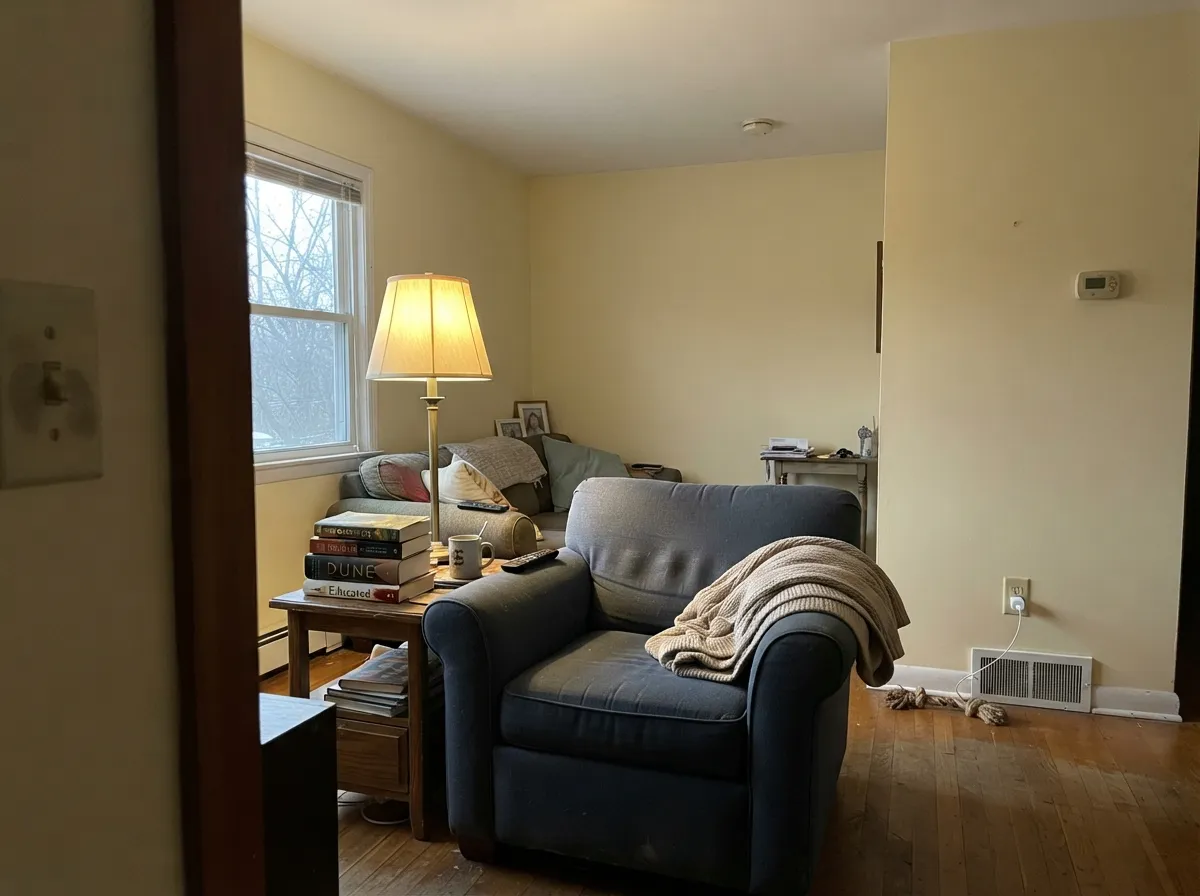
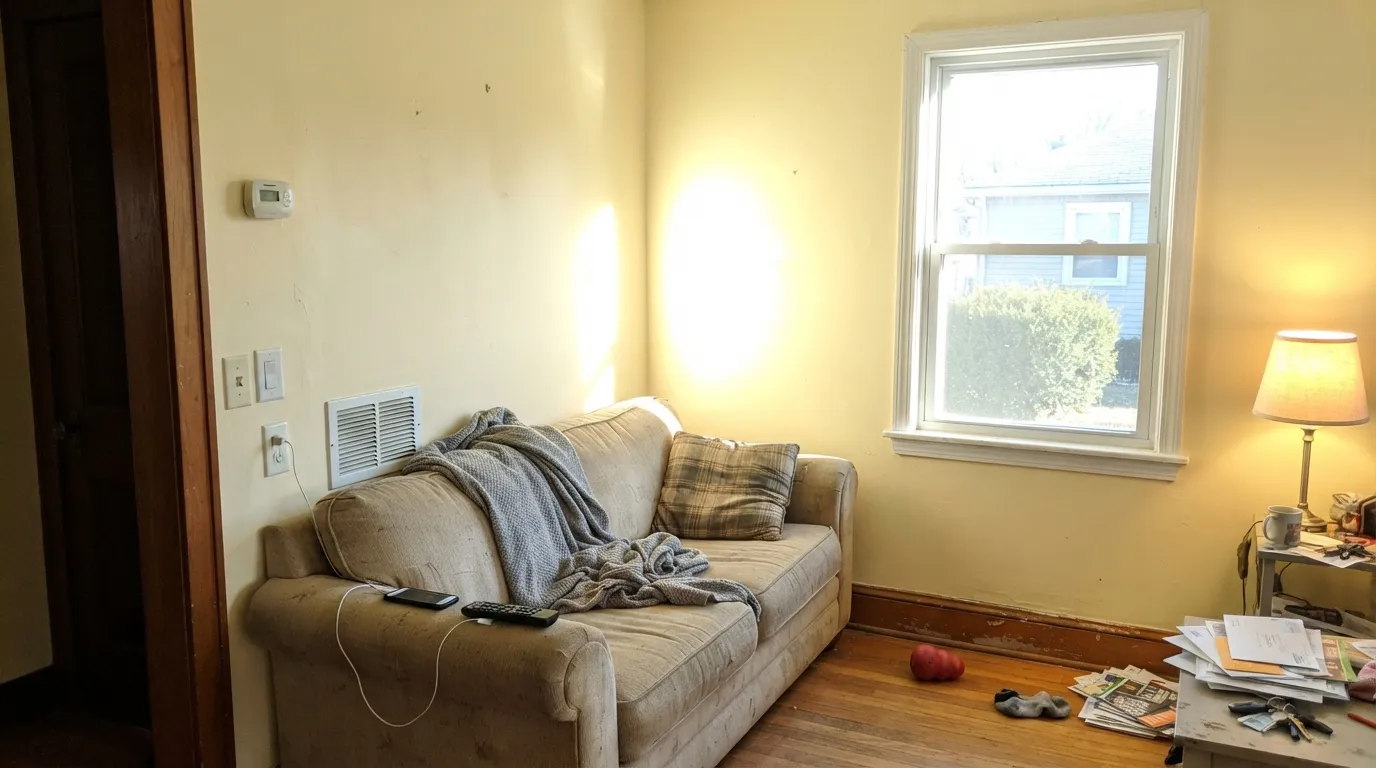
In a room with soft, indirect daylight it reads calm and sunny without effort. Eggshell on the walls, and keep the trim warm rather than stark white so the contrast doesn't undercut it.
Oak cabinets, butcher block, brass hardware, a rattan chair by the window — this is the exact scene Benjamin Moore built the color for. It flatters warm wood better than almost any true white in the deck.
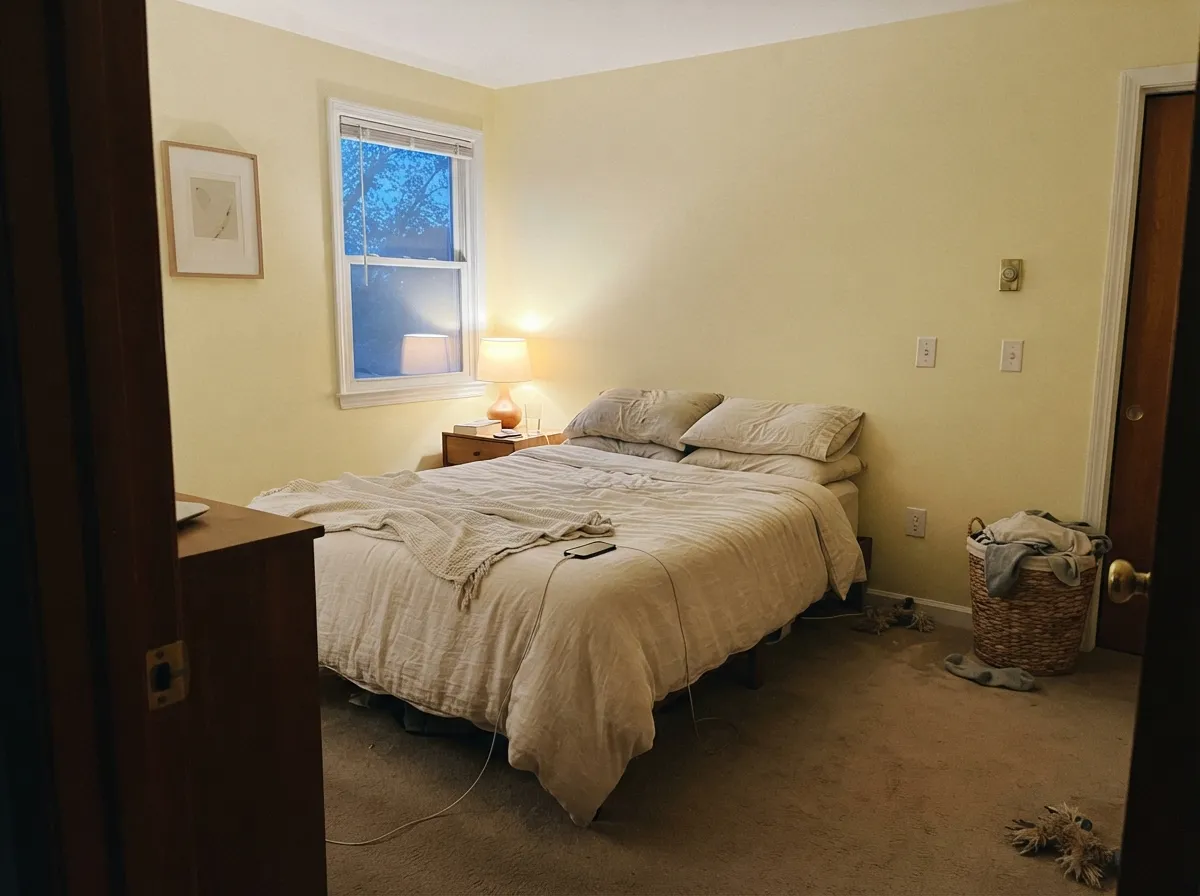
Cream or white bedding keeps it soft; avoid stark white sheets, which make the wall look yellower by contrast. Under 2700K lamps at night it deepens toward a gentle honey.
With warm marble, wood vanities, or brass fixtures it is genuinely lovely. With cool gray or blue-gray tile it visibly argues — pick a neutral white instead.
Fresh Air is a wall color, not a trim white. If you're painting trim to match a Fresh Air room, use a soft warm white like White Dove rather than Fresh Air itself — full-strength yellow on door casings reads costume-y fast.
Benjamin Moore does not recommend Fresh Air as an exterior paint. Keep it indoors and pick a dedicated exterior color if you love the tone outside.
Your Light Is the Risk
Soft, filtered light is where the "early morning countryside" description actually holds — buttery and gentle, never eggy.
Strong midday sun amplifies the yellow past buttery into artificial, almost fluorescent-lemon. Test a full sheet on the sunniest wall first.
Warmest and most golden at sunrise or sunset hours, quieter and softer the rest of the day.
2700K bulbs deepen it toward honey and it gets cozier at night. Cool LEDs flatten the yellow toward a chalky, slightly gray beige.
Most complaints about Fresh Air are a light mismatch. Upload a photo of your actual room and see it on your walls — then ask for the same wall in north light or evening lamps before you buy a single sample.
Need It From Another Brand?
Any paint counter can custom-tint Benjamin Moore 211 directly. If you would rather stay in one brand's own deck, these are the closest stock matches, measured as ΔE2000. Under 2 is a difference you will not see on the wall.
| Brand | Closest color | ΔE | LRV | |
|---|---|---|---|---|
| Sherwin-Williams | CoronaSW 7121 · Sherwin-Williams | 2.1 | 85 | Color page → |
| Behr | Creme Brulee360E-1 · Behr | 0.7 | 85 | Color page → |
| Valspar | Yellow Bliss3008-4C · Valspar | 2.4 | 85.7 | Color page → |
| PPG / Glidden | Silk SailsPPG1206-2 · PPG / Glidden | 1.2 | 85 | Color page → |
| Glidden | Crisp CandlelightPPG1210-1 · Glidden | 1.0 | 83 | Color page → |
| Dutch Boy | Pithed Lemon122-1DB · Dutch Boy | 0.9 | 83 | Color page → |
Similar Benjamin Moore Colors
The nearest shades to Fresh Air within Benjamin Moore's own range, ranked by perceptual color distance — useful when you want the same look a touch lighter, darker, or warmer.
WCAG 2.1: AA is 4.5 : 1 for normal text, 3 : 1 for large text, AAA is 7 : 1.
Fresh Air vs the Colors You're Also Considering
Every Fresh Air sample board has the same rivals on it. The numbers show the real lightness gap — then it comes down to which risk you would rather live with.
Pick this for the cleaner, more purely yellow version with less pink drift.
Benjamin Moore 2159-60 · LRV 81CreamPick this if you want more peach-pink warmth and don't mind babysitting the light — Cream leans sweeter and needs real sun to behave.
Pick this when you want the room to admit it's yellow instead of pretending to be a white.
Benjamin Moore 947 · LRV 78Navajo WhitePick this for a quieter, more beige-leaning version that reads as an off-white rather than a color.
Pick this for Benjamin Moore's slightly more grayed-down, less saturated take on the same cream family.
Sherwin-Williams SW 7012 · LRV 81CreamyPick this if your painter works in Sherwin-Williams — a close cousin with the same buttery honesty.
Pick this when you actually want people to notice — Fresh Air is a color, White Dove is a decision to avoid one.
Benjamin Moore OC-17 · LRV 85White DovePick this if you're nervous about committing to visible yellow — same LRV, but White Dove gives warmth without anyone noticing it's a color.
Fresh Air Coordinating Colors
The rule for coordinating with Fresh Air is simple: warm whites and warm wood keep it grounded, and its natural design foil is a cool blue-green or blue-violet accent — Benjamin Moore's own complementary-color guidance points the same direction. Stay away from stark bright whites and cool gray stone, which both make the yellow look worse rather than better. These partners keep showing up in rooms that work:
A Quiet Classic, Not a Trend Color
Fresh Air has never had a Color-of-the-Year moment, and it isn't chasing one. Benjamin Moore keeps it filed in the Classics® collection with a description that sounds almost pastoral — "an early morning walk through the countryside" — the kind of old-fashioned, unbothered copy trend colors don't get. Its own instructions from Benjamin Moore are equally understated: not recommended for exterior use, which is a rare, specific restriction that sets it apart from most whites and creams in this deck.
That honest, low-key positioning is the point. If you want a color that will look dated in five years because everyone had it in 2026, this isn't that color — and if you want one that will still look like a deliberate, slightly old-world choice a decade from now, that's exactly what a Classics-collection yellow is built for.
Fresh Air With Wood Tones and Floors
Because Fresh Air is already a warm color, it is unusually forgiving of wood — oak, pine, walnut and butcher block all read as companions rather than competitors, and honey-toned floors that fight cooler whites blend right in here instead of clashing. Brass and unlacquered metals carry the same warmth through hardware and light fixtures.
The one floor that argues with it is a cool, gray-washed or whitewashed wood. Those finishes are built to read cold and modern, and set against a warm committed yellow they can look mismatched rather than intentional — sample the wall above the actual floor before painting the whole room if your floors lean gray.
Three Ready Palettes Built on Fresh Air
A color is never alone on the wall. These are complete combinations in the 60-30-10 pattern, with the reason each one holds together. Every one opens in the visualizer.
White Dove trim keeps the yellow from reading dingy, and the navy island supplies the one deep, cool note the scheme needs. Both are the classic breakfast-nook combination Fresh Air was built for.
Try this palette in your roomDusty blue-green is Fresh Air's natural complement on the color wheel, so a single accent wall in Woodlawn Blue reads soft and intentional rather than clashing. White Dove keeps the trim from fighting the yellow.
Try this palette in your roomSage is the muted green Fresh Air's own color guide points to as an accent, and both colors share enough warmth to sit together without a rug or a referee. Grasscloth or rattan finishes the countryside look.
Try this palette in your roomFresh Air FAQ
Is Fresh Air a yellow or a white?
It's a genuine pale yellow. At LRV 85 it reflects as much light as a white, but the hue is unmistakably yellow — put it next to a true warm white like White Dove (also LRV 85) and the difference is obvious. Buyers hoping for a "barely-there" off-white are usually surprised by how much color shows up on the wall.
Can I use Fresh Air outside?
Benjamin Moore does not recommend it as an exterior color. Treat it strictly as an interior wall color and pick a dedicated exterior yellow if you want the look outside too.
What trim white goes with Fresh Air walls?
A soft warm white, not a stark bright one. White Dove is the default — a crisp trim white like Chantilly Lace makes the yellow read dingy by contrast instead of clean.
Does it work with oak cabinets and floors?
Yes — this is close to its ideal pairing. Warm oak, butcher block and brass hardware all sit comfortably next to it, which is exactly the countryside-kitchen look Benjamin Moore built the color for.
Will it look sickly or green in my room?
Unlikely from the paint itself — the undertone is warm yellow grounded by a trace of brown, never green. If your sample looks greenish, check for reflected light bouncing off grass, trees, or a green wall nearby before blaming the can.
Is Fresh Air a trend color or a classic?
A classic, quietly. Benjamin Moore files it in the Classics® collection, and it has none of the Color-of-the-Year marketing push behind trend picks — it has simply sat in the deck doing one steady job for decades: warming up a room without shouting about it.
Have you painted with Fresh Air?
Rate it — one tap helps the next reader decide.
Ask a Question