Sunflower Seed
Behr's lightest true yellow, reviewed honestly: the sunny rooms where it glows like morning light, the dim ones where it turns pale and flat, and what to pick instead.

Jessica has spec'd whites and neutrals for more than 300 rooms and keeps a sample wall of painted drawdowns in her studio. Every color review is checked against real reader rooms in the comments and re-tested when a formula changes. About the testing process →
- 1Honey Tea52
- 2Jackfruit62
- 3Sunflower Seed79
- 4Frittata86
- 5Barely Yellow92
The Fast Verdict
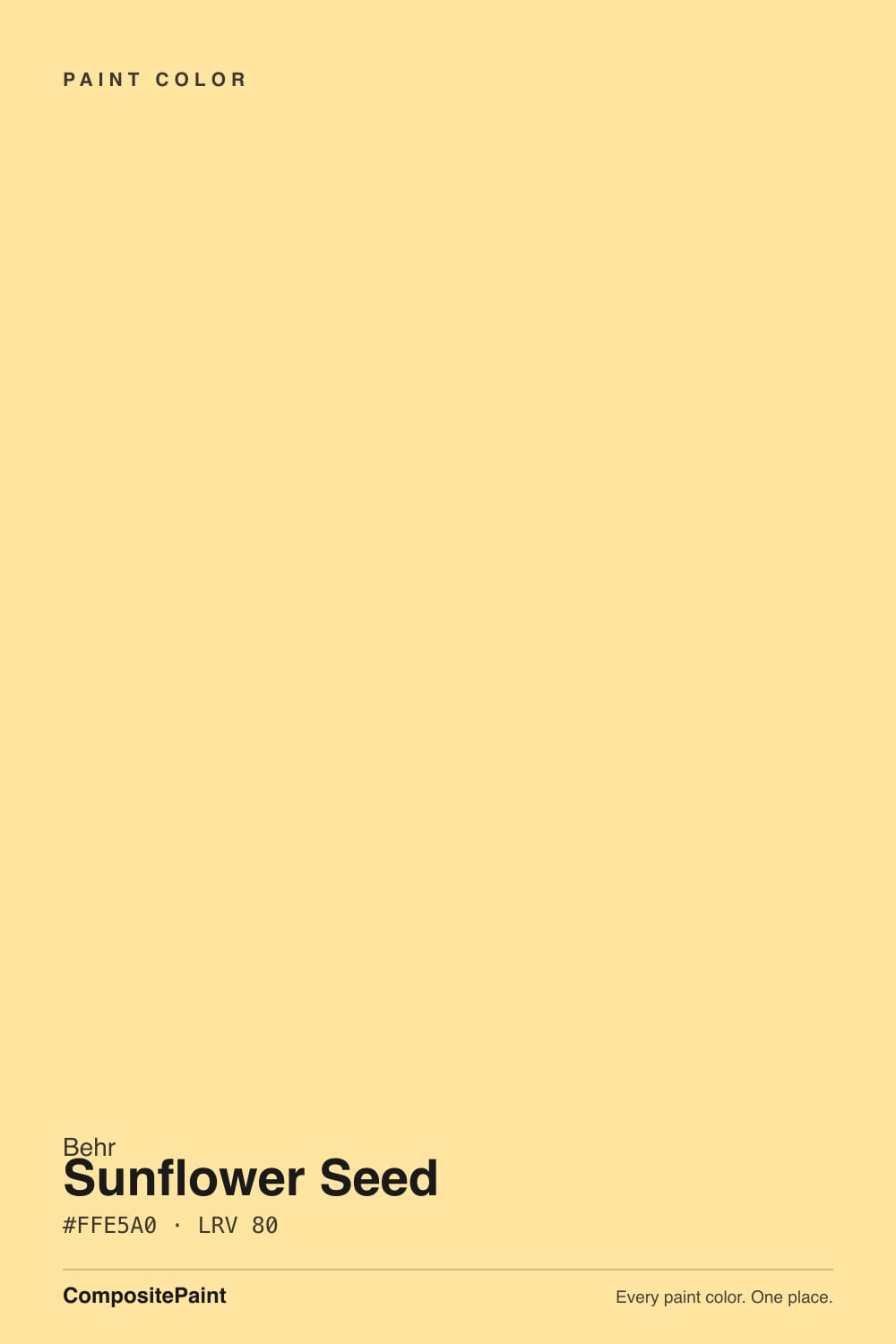
Sunflower Seed is Behr's answer to the parent who wants a yellow nursery without a neon one. At LRV 80 it sits almost as pale as an off-white, but the warm golden base keeps it unmistakably yellow rather than beige — sunny in daylight, gentle enough not to fight a crib set or a set of oak floors. It is a color built to be lived in, not stared at.
Nurseries and kids' rooms · sunny kitchens and breakfast nooks · hallways and mudrooms that need warmth · anyone who wants yellow without the neon
Your room stays dim or faces north · you want a true, neutral white · your floors or counters are cool gray · you're hoping bright white trim will make it read as white too
- A real yellow pale enough to use everywhere, not just as an accent
- Warm without going neon — the honest "soft nursery yellow"
- Flatters white oak, honey wood and brass
- Light enough (LRV 80) to work on trim and ceilings too
- Ages better than a saturated trend yellow — grayed just enough to feel timeless
- Goes flat and slightly greenish in dim, north-facing light
- Reads visibly yellow, not neutral — a letdown for buyers hoping for "basically white"
- Clashes with cool gray floors, quartz and chrome
- Too cheerful for most adult primary bedrooms
What Color Is Sunflower Seed, Really?
A pale, warm sunflower yellow — not a cream, not a beige, a real yellow that has simply been diluted almost to its limit. At LRV 80 it sits at the very top of Behr's yellow family, close enough to white that some color-matching sites file it as a neutral off-white. Behr does not: on Behr's own site it lives in the Yellow family, and on a wall the difference shows. Push a swatch of true white next to it and the yellow announces itself immediately.
Set it beside its Behr siblings and the logic gets clearer. Vanilla Ice Cream, one step paler, reads almost cream by comparison. Charismatic, a deeper honey-gold further down the same chip strip, is what Sunflower Seed would look like if it grew up and got serious. Sunflower Seed sits in the gap between them: warm enough that a room reads as "the yellow one," pale enough to use the way most people use a soft neutral — walls, trim, even ceilings, without visual noise.
Undertone in one line: warm gold, never green in good light. If a sample looks washed-out or faintly sickly, that is a light problem, not a paint problem — cool, cloudy or north-facing light strips out the warm wavelengths a pale yellow depends on and leaves the pale base looking flat and slightly gray-green. Warm daylight or a 2700K bulb fixes it instantly.
Where It Shines
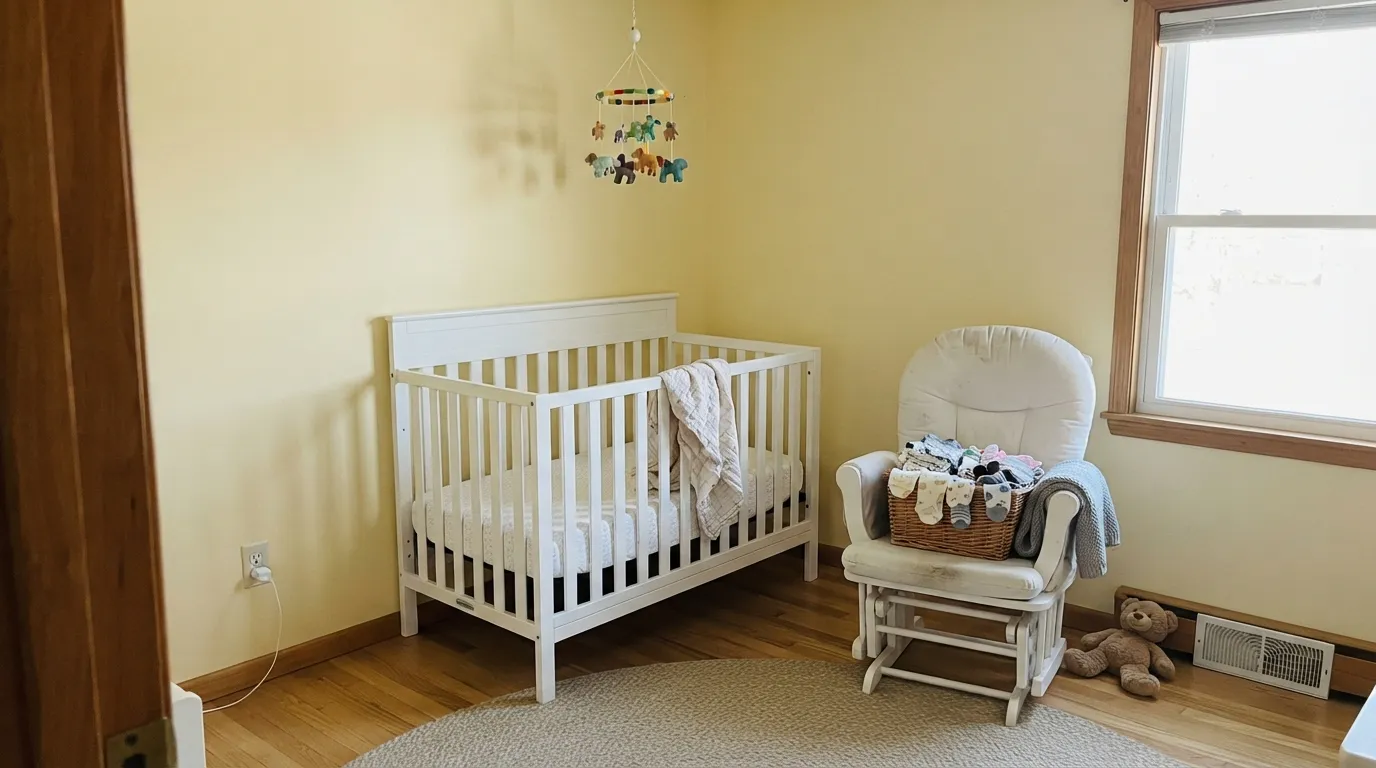
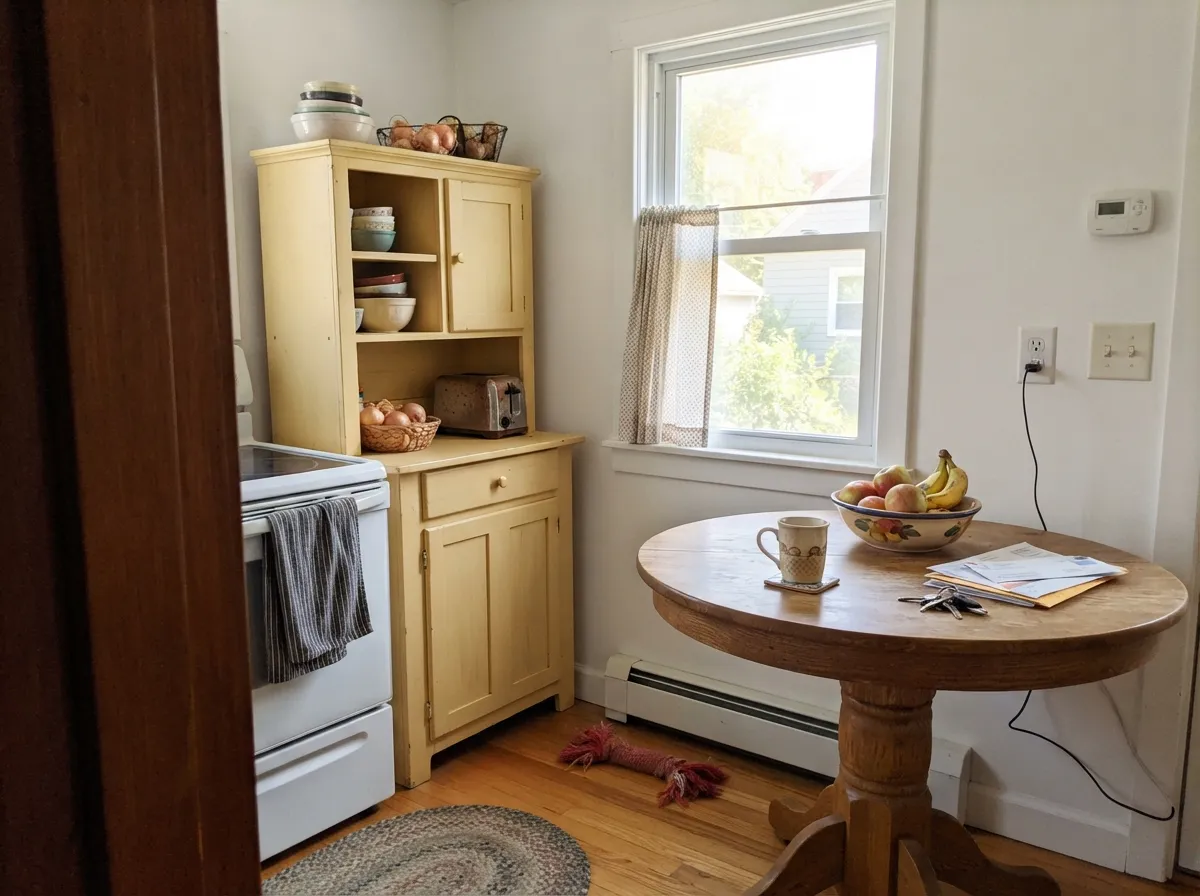
Give it real daylight — south or east, or a warm lamp after dark — and Sunflower Seed does exactly what a nursery yellow is supposed to do: it makes a room feel like morning without shouting about it. It is at its best in small, well-loved rooms: a nursery, a playroom, a mudroom bench, a breakfast nook where the sun actually reaches the wall. It also plays well with white oak and honey-toned wood, and with white trim it reads clean and cheerful instead of dated.

Where It Fails
Almost every disappointed review of Sunflower Seed traces back to one of three situations, and all three are predictable before the first coat goes on. None of them are the paint's fault — but if your room matches one, this is not your yellow.
At LRV 80 it is pale enough to look almost neutral on the chip, which fools some buyers into thinking it will "basically read as white." On a full wall it never does — the warm yellow is visible and obvious, especially next to any brighter white trim. If you want a hint of warmth without visible color, this is one full step too far; go with a genuine off-white like Swiss Coffee instead.
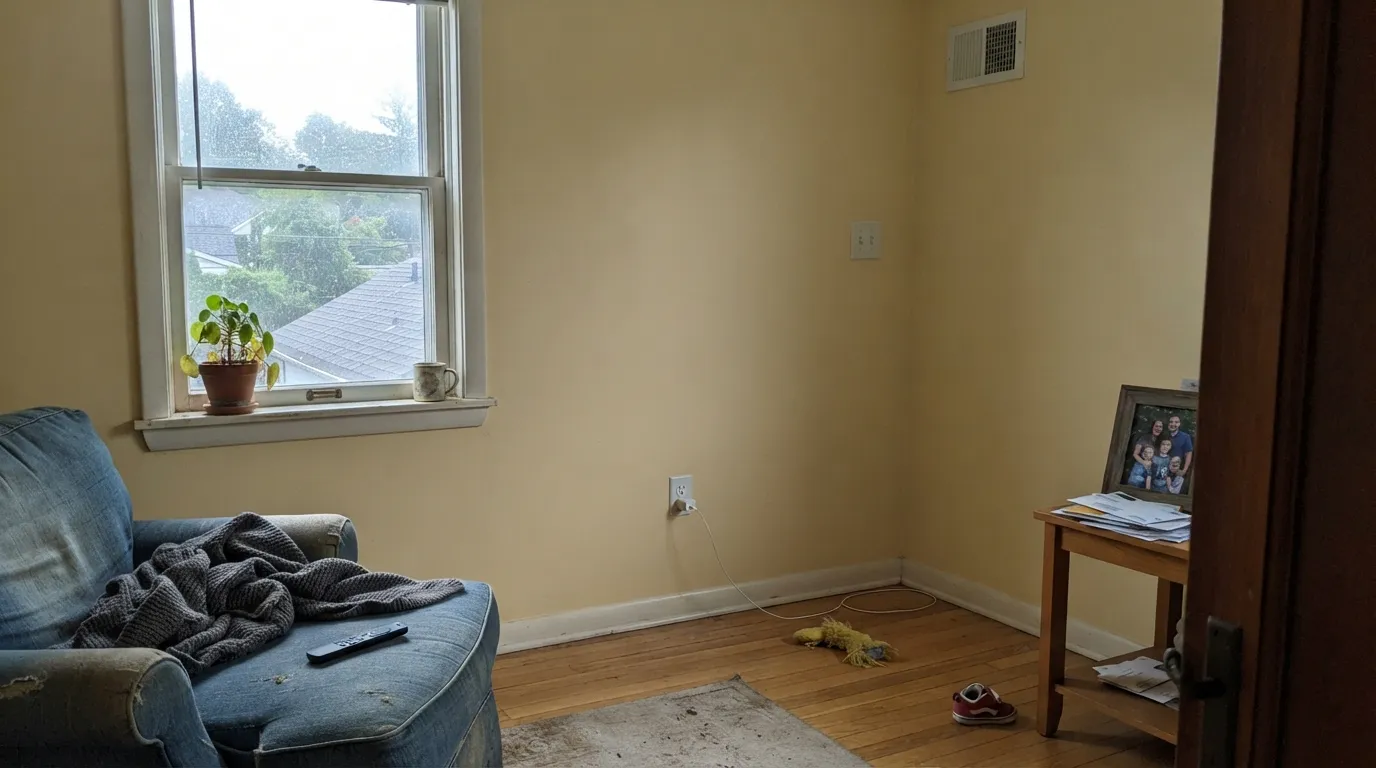
Cool, indirect daylight has almost no warm wavelengths for a pale yellow to reflect, so the color goes flat and slightly greenish-gray — readers describe it as "institutional" or "like a hospital hallway." The fix is warm bulbs and, if the room stays dim year-round, a warmer, deeper yellow that carries its own color instead of borrowing it from the sun.
Yellow and cool gray argue with each other — the gray pulls green out of the yellow, and the yellow makes the gray look dingy rather than crisp. It is the single most common pairing regret with this color. Warm wood, cream tile and brass hardware are its natural company; cool gray stone is not.
Room by Room
This is the color's home turf. Eggshell on the walls, warm white trim, and it reads sunny and gentle rather than sugary. It is soft enough that most parents don't repaint it when the crib becomes a toddler bed.
On walls with morning sun it is genuinely cheerful without going full lemon. It also works well as a cabinet or island color in a smaller dose — enough warmth to feel custom, not enough to overwhelm the room.
A dose of warmth in a space that usually gets none. Since hallways rarely get direct sun, lean on warm bulbs to keep the color from going flat.
Beautiful in a south- or east-facing room with real daylight and wood furniture. In a north-facing or heavily shaded room it can read pale and tired by mid-afternoon — sample it at the darkest hour of the day you'll actually use the room.
Works for a guest room or a bright, cheerful primary bedroom, but most adults looking for a restful bedroom color will find it too energetic for that purpose. It reads better as a kid's or nursery color than a grown-up retreat.
With warm wood vanities and brass it is a happy, sunlit powder room. With cool gray tile or chrome fixtures the undertone clash shows up fast — test big before committing.
Your Light Is the Risk
Real warm sun makes it glow like actual morning light — the reason to buy this color in the first place.
Cool, indirect light drains the warmth and leaves a flat, faintly gray-green pale yellow. Test on the cloudiest day you can.
Bright and cheerful in the morning, deeper and more golden as afternoon sun moves in. The shift is gentle, not a color change.
2700K warm bulbs keep it glowing buttery after dark. Cool white LEDs mute it toward a dull, slightly gray tone — swap the bulb before you blame the paint.
Most complaints about Sunflower Seed are a light mismatch. Upload a photo of your actual room and see it on your walls — then ask for the same wall in north light or evening lamps before you buy a single sample.
Need It From Another Brand?
Any paint counter can custom-tint Behr P270-3 directly. If you would rather stay in one brand's own deck, these are the closest stock matches, measured as ΔE2000. Under 2 is a difference you will not see on the wall.
| Brand | Closest color | ΔE | LRV | |
|---|---|---|---|---|
| Sherwin-Williams | They call it MellowSW 9015 · Sherwin-Williams | 2.3 | 79 | Color page → |
| Benjamin Moore | Shooting Star304 · Benjamin Moore | 1.9 | 77 | Color page → |
| Valspar | Pecan Cream3006-4B · Valspar | 1.9 | 76.7 | Color page → |
| PPG / Glidden | Corn SilkPPG12-01 · PPG / Glidden | 2.1 | 79 | Color page → |
| Glidden | SawdustPPG1206-4 · Glidden | 1.7 | 79 | Color page → |
| Dutch Boy | Sun Faded116-4DB · Dutch Boy | 1.0 | 78 | Color page → |
Similar Behr Colors
The nearest shades to Sunflower Seed within Behr's own range, ranked by perceptual color distance — useful when you want the same look a touch lighter, darker, or warmer.
WCAG 2.1: AA is 4.5 : 1 for normal text, 3 : 1 for large text, AAA is 7 : 1.
Sunflower Seed vs the Colors You're Also Considering
Every Sunflower Seed sample board has the same rivals on it. The numbers show the real lightness gap — then it comes down to which risk you would rather live with.
Pick this when you actually want people to see yellow — Vanilla Ice Cream is the safer choice, Sunflower Seed is more honest about what it is.
Behr P260-3 · LRV 82Vanilla Ice CreamPick this if you want the same soft yellow dialed down almost to cream — Vanilla Ice Cream is a full shade paler and less obviously "yellow" on a big wall.
Pick this when you want the room to unmistakably read as a yellow nursery or kitchen, not a neutral with a hint of warmth.
Behr ICC-90 · LRV 86Butter YellowPick this for a whisper of yellow most guests will read as an off-white — Butter Yellow is paler still and the safer resale pick.
Pick this for the softer, easier version — Charismatic needs more daylight to avoid looking heavy; Sunflower Seed rarely does.
Behr PPU6-14 · LRV 57CharismaticPick this if Sunflower Seed feels too shy — Charismatic is a full step deeper, a real honey-gold instead of a pale hint.
Sunflower Seed Coordinating Colors
The rule for coordinating with Sunflower Seed is simple: stay warm, and let one color carry the contrast instead of asking the yellow to do it alone. It pairs easily with warm whites, a single sage or navy accent, and warm wood — and it argues with cool grays and anything icy. These are the partners that keep showing up in rooms that work:
Why Pale Yellow Works For Nurseries And Kids' Rooms
Pale, grayed-down yellows like Sunflower Seed have become one of the default gender-neutral nursery choices for a straightforward reason: they carry the optimism of a yellow room without the commitment of a saturated one. Where a true lemon yellow can feel like a decision that has to be reversed by the time a nursery becomes a toddler's room, a color this pale behaves more like a soft neutral that happens to be warm — it works across the stages a kid's room actually goes through.
It is also a practical hand-off color: because it sits so close to white on the LRV scale, it plays well with almost any furniture a family already owns, from a white crib to natural wood shelving to colorful toys and art. The paint does the quiet work of warming the room; it doesn't compete with everything a child's room accumulates over the years.
Sunflower Seed With Wood Tones And Floors
Warm wood is this color's best friend. White oak, honey oak and most mid-tone stains sit comfortably against Sunflower Seed because both are working with the same warm palette — neither fights the other for attention. Even orange-leaning builder oak reads calmer next to it than it does against a stark white.
Cool gray floors and gray-washed wood are the one pairing to sample carefully. The temperature mismatch tends to make the floor read dingy and the walls read faintly green, especially in anything but strong daylight. If gray flooring is staying put, a warm rug between the two surfaces does more good than repainting.
Three Ready Palettes Built on Sunflower Seed
A color is never alone on the wall. These are complete combinations in the 60-30-10 pattern, with the reason each one holds together. Every one opens in the visualizer.
Yellow and sage is the classic gender-neutral nursery pairing without going twee. Behr White trim keeps the walls from feeling saturated, and Evergreen Fog on a single dresser or accent wall grounds the sweetness with something quieter.
Try this palette in your roomPolar Bear keeps the main walls quiet and bright while Sunflower Seed carries the color on cabinetry or an island, where a smaller dose reads cheerful instead of overwhelming. Naval on the lower cabinets or stools gives the kitchen one confident dark note to anchor it.
Try this palette in your roomSwiss Coffee trim sits close enough in value to Sunflower Seed that the wall-to-trim transition stays soft, not high-contrast. Charismatic on a bench, door or shelf adds one deeper honey note so the hallway doesn't read as a single flat wash of pale yellow.
Try this palette in your roomSunflower Seed FAQ
Is Sunflower Seed good for a nursery?
It is one of the more dependable soft-yellow nursery colors precisely because it is so pale (LRV 80). It reads sunny and gentle rather than bright or babyish, works for either gender, and is light enough that most parents don't feel the need to repaint it as the child grows. Give it a warm bulb for nap-time and bedtime.
Will Sunflower Seed look green in the wrong light?
It can, in cool north-facing or overcast light. Pale yellows depend on warm light to look warm; take that away and the color reads flat and slightly gray-green rather than sunny. It is not a defect specific to this color — it happens to nearly every pale yellow — but it is worth testing on a cloudy day before committing a whole room.
What trim white goes with Sunflower Seed?
A soft, slightly warm white — Behr White or Swiss Coffee — keeps the transition gentle and lets the yellow read as intentional rather than dirty. A stark, cool bright white will work for a crisper, more graphic look in a kid's room, but it will make the yellow look a shade more washed-out by contrast.
Is it too babyish for a kitchen or hallway?
Not if the dose is right. On full walls with real daylight it reads cheerful and grown-up, closer to "sunny cottage kitchen" than "baby's room." It is more of a nursery color specifically because most nurseries want exactly that mood — the paint itself is not childish.
Does it work with gray floors or quartz counters?
Generally no. Cool gray and warm yellow pull against each other — the gray reads dingier next to the yellow, and the yellow can pick up a faint green cast next to cool gray. It is a far better match for warm wood floors, cream stone and brass than for anything cool-toned.
How different does it look under lamps at night versus daytime LEDs?
A meaningful difference. Warm 2700K bulbs keep the color glowing and buttery after dark, close to its daytime best. Cool white LEDs mute it toward a duller, slightly gray-yellow — if the room looks flat at night, check the bulb temperature before repainting.
Have you painted with Sunflower Seed?
Rate it — one tap helps the next reader decide.
Ask a Question