Recycled Glass
Behr's actual 2018 Color of the Year, reviewed honestly: the real sea-glass green it becomes in daylight, the flat gray it turns into under cool light, and what to pick instead.

Jessica has spec'd whites and neutrals for more than 300 rooms and keeps a sample wall of painted drawdowns in her studio. Every color review is checked against real reader rooms in the comments and re-tested when a formula changes. About the testing process →
The Fast Verdict
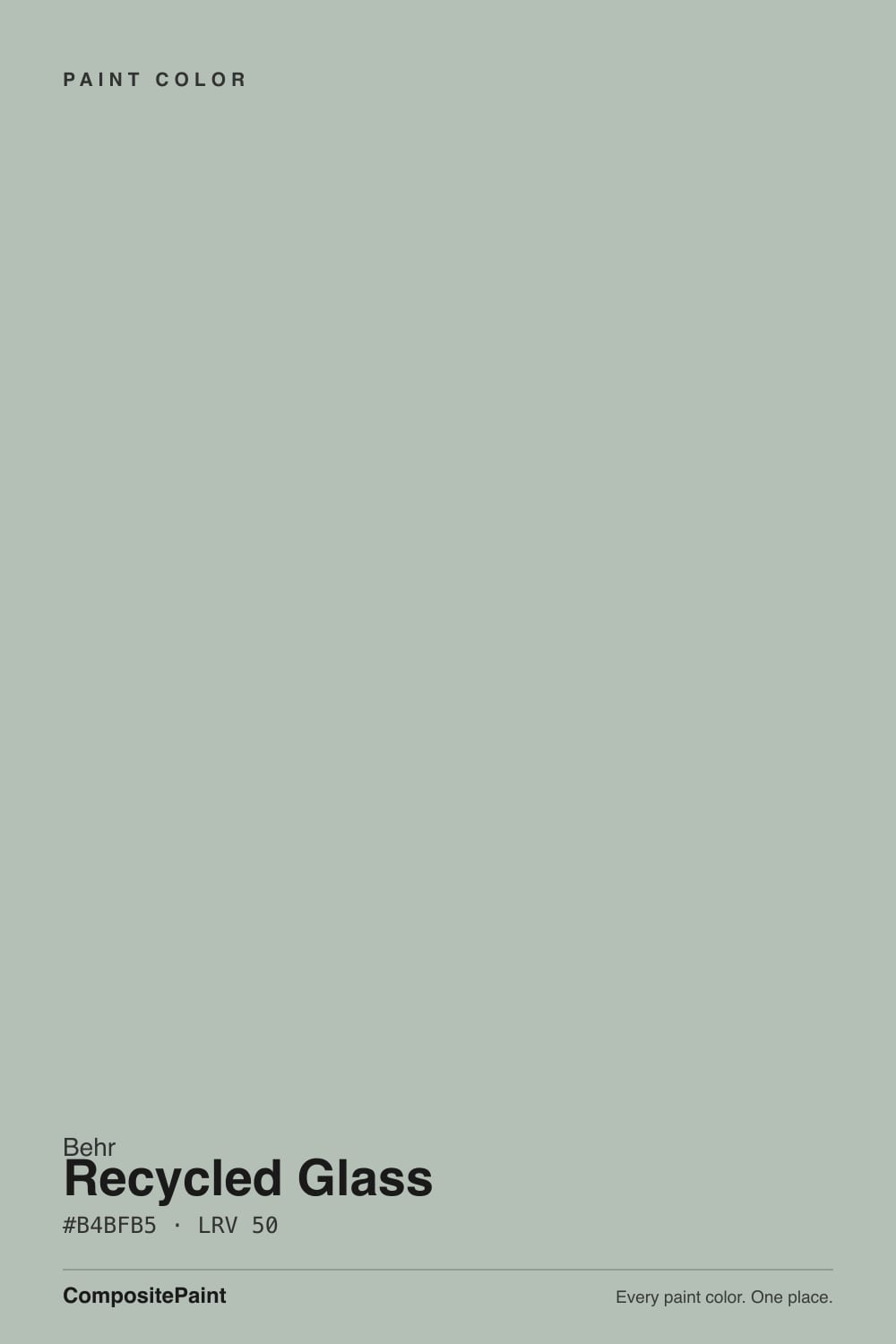
Recycled Glass is Behr's actual Color of the Year for 2018 — a fact that surprises most people who see the chip today, because the color itself is built to whisper, not announce. It's a pale, cool green-gray inspired by sea glass: low in chroma, easy to live with, and honest about needing real light to show its green. Give it daylight and it looks like weathered beach glass. Take the light away and it settles into a plain blue-gray. Less famous than Behr's newer hits, but a genuine title-holder that still earns its shelf space.
Coastal and spa-style bathrooms · bedrooms that want calm, not stark gray · kitchen islands and cabinets with warm wood or brass · exteriors under white trim
Your room runs on cool LEDs with little natural light · you want a color that reads unmistakably green from across the room · your floors and trim lean strongly gold or honey · you need a color everyone recognizes by name
- A real Behr Color of the Year (2018) most people have never heard of — genuine pedigree, not marketing
- Reads as authentic pale sea glass in good daylight
- Low-chroma and quiet enough to work as a neutral-with-personality
- Flatters brass, nickel, and white oak
- A safe, uncommon exterior color under white trim
- Goes flat blue-gray fast in cool or dim light
- Too subtle for anyone who wants an obviously green room
- Fights strong honey-oak or golden wood tones
- Little brand recognition today despite the Color of the Year title
What Color Is Recycled Glass, Really?
Recycled Glass is a pale, cool green-gray that Behr actually named its Color of the Year back in 2018 — a fact that surprises most people who see the chip today, since it never became a household name the way some of Behr's later picks did (Blank Canvas, Cracked Pepper). Behr's own story ties it to sea glass, the smoothed, sand-worn shards you find washed up on a beach, and that inspiration is legible in the paint: soft, a little cloudy, more atmosphere than pigment.
At LRV 50 it sits almost exactly at the midpoint between light and dark, which is a big part of why it reads so differently room to room. (A few third-party color listings put the LRV a couple of points higher, near 52–53 — close enough to call the same color, but worth knowing your sample may read a touch lighter than our number.) In good daylight the green in it comes forward and it genuinely looks like pale sea glass. Take the daylight away — a north room, an overcast afternoon, a cool LED overhead — and the green recedes, leaving a flat, slightly blue-gray. This is chameleon behavior, the same trait that makes colors like Sherwin-Williams Sea Salt and Benjamin Moore Beach Glass polarizing: gorgeous in the right light, unremarkable without it.
Undertone in one line: green first, blue-gray second, never warm. If the sample looks like plain gray on your wall, the room's light is cold or dim — that's the paint reverting to its blue-gray floor, not a defect.
Where It Shines
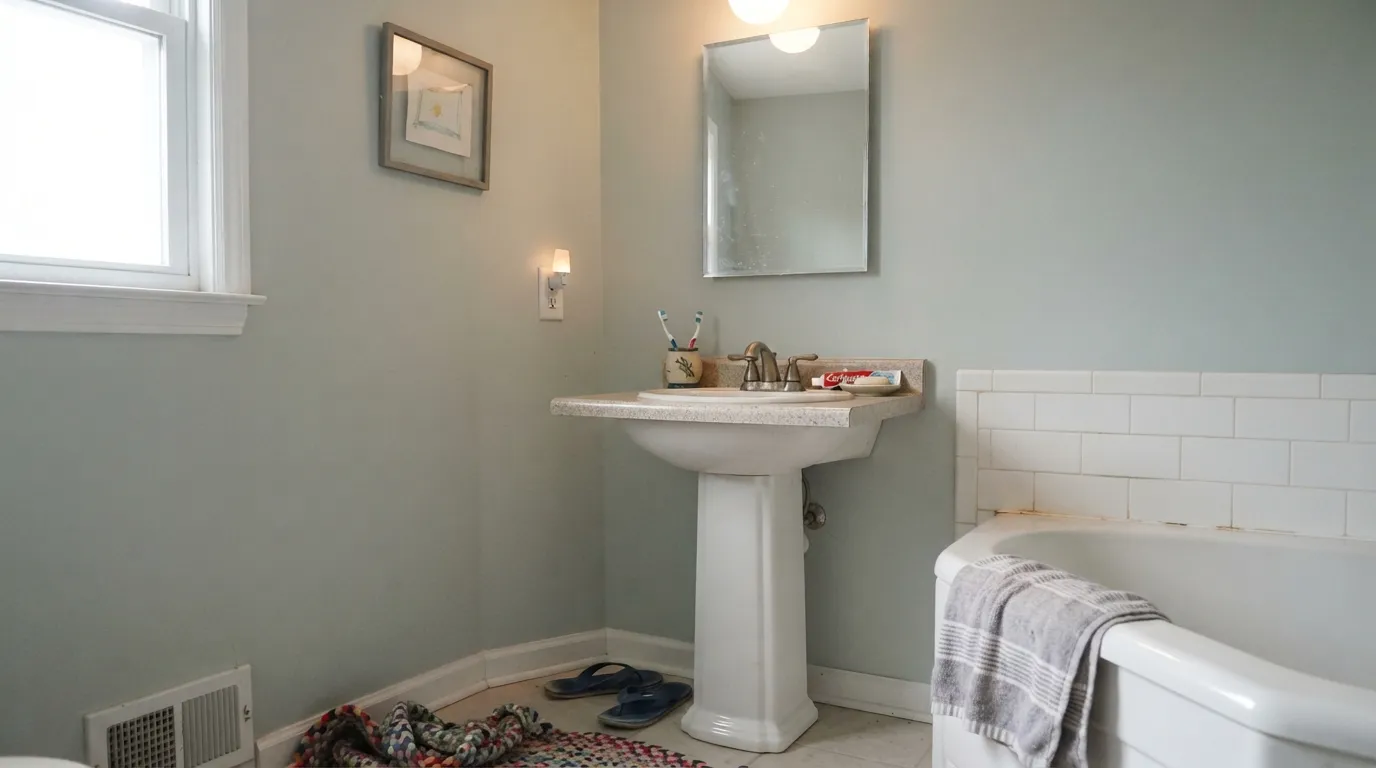
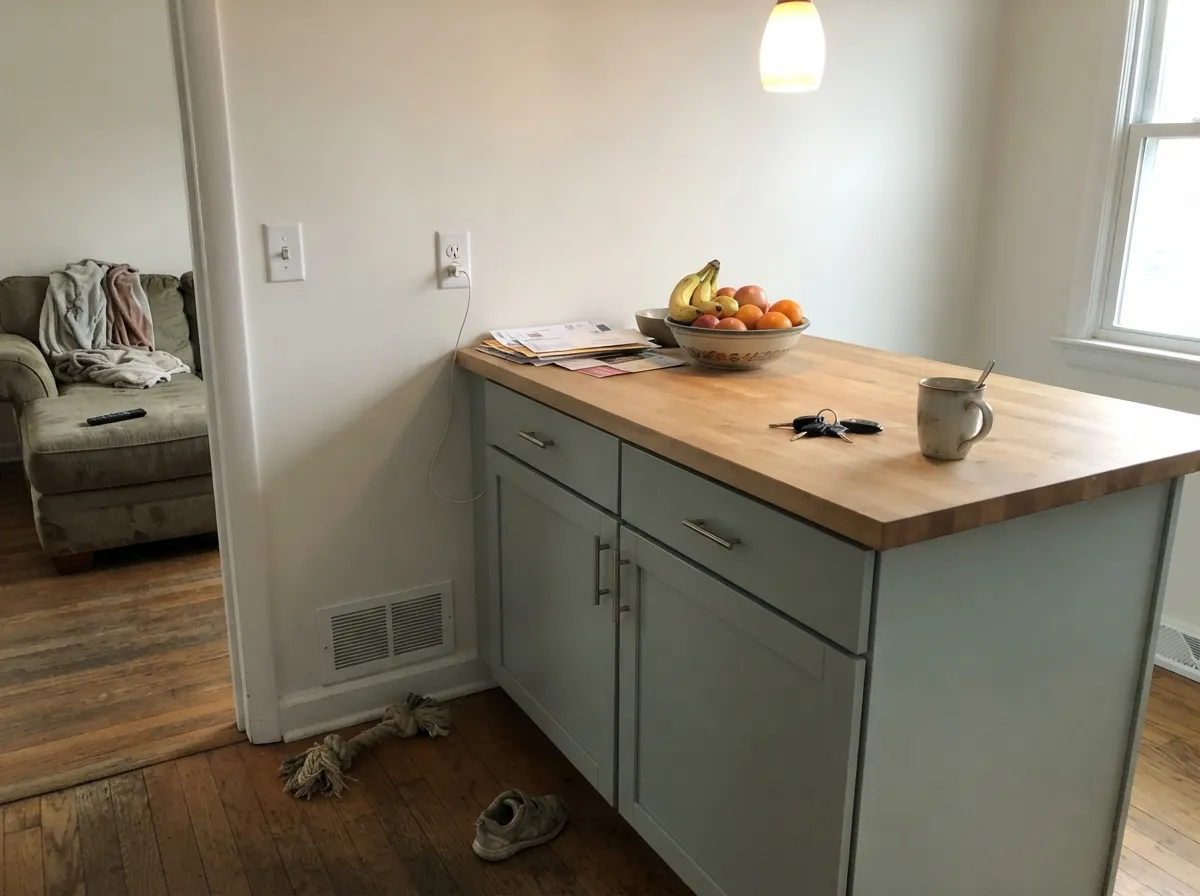
Recycled Glass earns its keep in rooms that get real daylight and want quiet color instead of a stark neutral. Coastal and spa-style bathrooms are its most natural home — the sea-glass idea is right there in the name — and it does the same job in bedrooms that want to feel calm without going full gray. On a kitchen island or a run of cabinets, paired with warm wood or brass, it reads considered rather than trendy. Outdoors, under white trim, it's a quiet, confident exterior that photographs better than it sounds on paper.
Where It Fails
Almost every disappointment with Recycled Glass comes down to one of three mismatches, and all three are visible before the first coat if you know to look for them. None of them are the paint failing — they're the paint being an honest chameleon in a spot that didn't give it what it needs.
Recycled Glass is low-chroma by design — Behr built it to whisper, not announce. In anything but strong daylight it reads as a soft gray with only a hint of green up close. If you want unmistakable sage, look at Behr Bitter Sage or Jojoba instead; Recycled Glass is the quieter, grayer cousin.
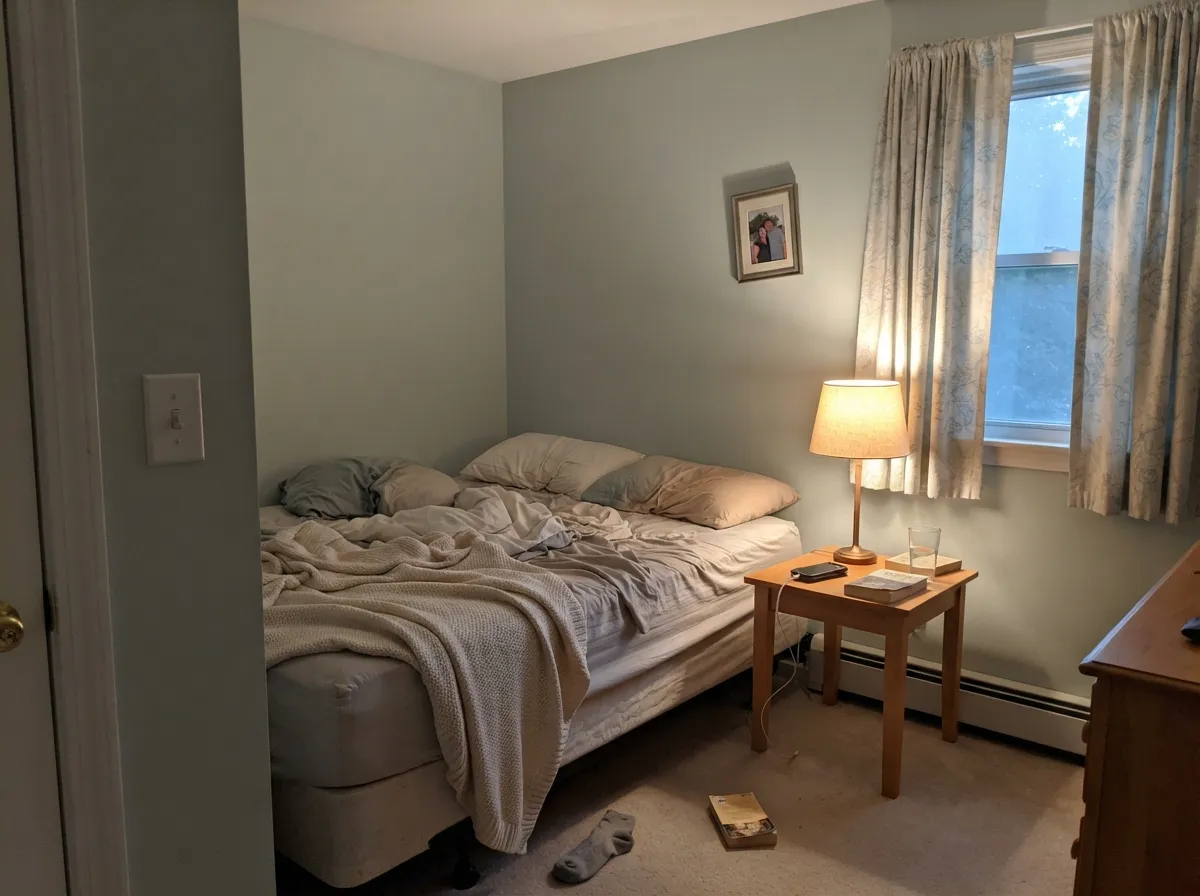
North-facing rooms, overcast days and cool-white LEDs all pull the same way: the green drops out and what's left is a flat blue-gray that can read cold rather than calm. Warm 2700K bulbs and any south or west exposure bring the sea-glass tint back.
This is a cool color at heart, and heavy honey-oak trim or golden-toned floors push it the opposite direction — the wood looks more yellow, the wall looks flatter and grayer, and neither side wins. It's a far easier match with white oak, walnut, or painted trim than with builder-grade orange oak.
Room by Room
The sea-glass idea works exactly as advertised here: with a white vanity, brass or nickel fixtures and good light, it's calm without being clinical. Eggshell or satin for the humidity.
A genuinely restful color when the room gets sun. In a dim, north-facing bedroom it can go a little cold and gray at night — pair with warm lamps rather than cool overhead light.
On cabinetry against warm wood counters or open shelving, it reads current without shouting. Satin or semi-gloss cabinet enamel; a full room of Recycled Glass walls is a much bigger, riskier bet.
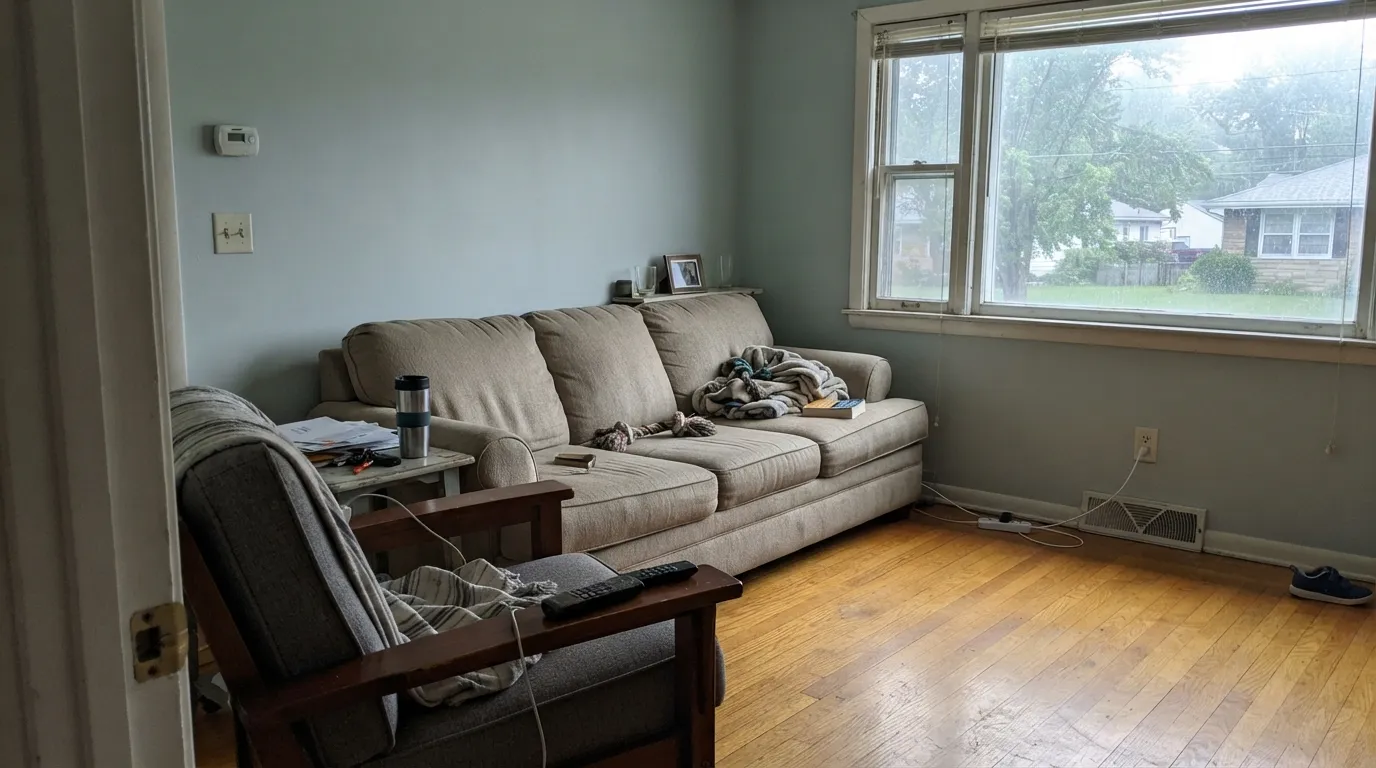
Works as a quiet neutral-with-personality in a bright room. In a dim or north-facing living room it will read closer to plain gray than to the sea-glass color on the chip.
Full daylight is where this color is most honest and most attractive: a soft, weathered green-gray under white trim reads coastal cottage without trying too hard. Pair with a dark front door for contrast.
Small, mixed-light rooms where "mostly gray, sometimes green" is exactly the level of commitment most people want. A good place to test the color before betting a bigger room on it.
Your Light Is the Risk
Full daylight is where the green in Recycled Glass actually shows — the closest the wall gets to the sea-glass chip.
Cool, flat daylight drains the green and leaves a plain blue-gray. Sample here before committing to a whole room.
Morning and evening sun both nudge it warmer and greener for an hour or two; midday flattens it back toward gray.
2700K lamps keep a trace of green alive after dark; cool-white LEDs push it straight to gray — swap the bulb before you swap the paint.
Most complaints about Recycled Glass are a light mismatch. Upload a photo of your actual room and see it on your walls — then ask for the same wall in north light or evening lamps before you buy a single sample.
Need It From Another Brand?
Any paint counter can custom-tint Behr MQ6-18 directly. If you would rather stay in one brand's own deck, these are the closest stock matches, measured as ΔE2000. Under 2 is a difference you will not see on the wall.
| Brand | Closest color | ΔE | LRV | |
|---|---|---|---|---|
| Sherwin-Williams | Hazel GazeSW 9652 · Sherwin-Williams | 2.2 | 51 | Color page → |
| Benjamin Moore | Pleasant Valley696 · Benjamin Moore | 2.2 | 50 | Color page → |
| Valspar | Bog Fog8003-34D · Valspar | 0.9 | 48 | Color page → |
| PPG / Glidden | Coastal CrushPPG1129-4 · PPG / Glidden | 2.5 | 50 | Color page → |
| Glidden | Green Smoke50GY 48/075 · Glidden | 1.1 | 48 | Color page → |
| Dutch Boy | Silvered Sage427-3DB · Dutch Boy | 1.7 | 52 | Color page → |
Similar Behr Colors
The nearest shades to Recycled Glass within Behr's own range, ranked by perceptual color distance — useful when you want the same look a touch lighter, darker, or warmer.
WCAG 2.1: AA is 4.5 : 1 for normal text, 3 : 1 for large text, AAA is 7 : 1.
Recycled Glass vs the Colors You're Also Considering
Every Recycled Glass sample board has the same rivals on it. The numbers show the real lightness gap — then it comes down to which risk you would rather live with.
Pick this for the version with real green in it, not just blue-gray.
Behr HDC-CT-26 · LRV 50WateryPick this if you want the same LRV and the same Behr chameleon trick, tipped blue instead of green.
Pick this for more depth — Recycled Glass holds its color further into a dimmer room.
Sherwin-Williams SW 6204 · LRV 63Sea SaltPick this for a lighter, brighter green-gray if your room already gets strong daylight.
Within Behr, Dew (HDC-NT-25) at LRV 50 and Colonnade Gray (BXC-25) at LRV 50 are the closest siblings. Both carry a little more blue in the green, so they read slightly cooler on the wall. Urban Putty (BNC-06) at LRV 50 goes the other way with more visible green. Keystone Gray (HDC-AC-21) at LRV 49 is the grayest of the set.
Across brands, Valspar Bog Fog (8003-34D) at LRV 48 is the nearest match at a deltaE of 0.93, effectively the same color. Glidden Green Smoke (50GY 48/075) at LRV 48 lands at 1.13, which is visually identical in normal room light.
Step further out and the gaps show. Sherwin-Williams Hazel Gaze (SW 9652) at LRV 51 and Benjamin Moore Pleasant Valley (696) at LRV 50 are very close, but sample first. Farrow and Ball Light Blue (No. 22) at LRV 49 sits at 2.76, close enough to substitute after testing despite the name.
Recycled Glass Coordinating Colors
The rule for coordinating with Recycled Glass: cool-leaning whites, warm neutral woods, and one confident dark. It sits happily next to crisp trim whites, softens next to warm wood tones, and takes a near-black accent well. These are the partners that keep it looking deliberate instead of accidental:
A Real Color of the Year Nobody Remembers
Behr named Recycled Glass its Color of the Year for 2018, inspired by sea glass — the smoothed, sand-tumbled shards found washed up on beaches. It arrived a few years before Behr's more talked-about picks (Blank Canvas, Cracked Pepper) turned the annual announcement into something homeowners actually track, and it never built the same name recognition.
That obscurity is arguably an advantage now: it's a genuinely well-considered color with an official pedigree, sitting quietly in Behr's standard deck without the trend baggage a more famous Color of the Year eventually carries. If you want a color with real design credentials that almost nobody will recognize by name, this is a rare case where that's a feature, not a downside.
Recycled Glass With Wood Tones and Floors
White oak, weathered gray wood, and walnut are the easiest partners — all three sit close enough to Recycled Glass's own cool-neutral register that nothing has to fight for attention.
Honey oak and other strongly golden floors are the one real mismatch: yellow-orange sits opposite this color's blue-green lean, so the two exaggerate each other instead of blending. A large rug, painted trim, or simply choosing a warmer green (Behr Jojoba, Bitter Sage) solves the problem faster than hoping a sample will change your mind.
Three Ready Palettes Built on Recycled Glass
A color is never alone on the wall. These are complete combinations in the 60-30-10 pattern, with the reason each one holds together. Every one opens in the visualizer.
White keeps the small room bright while Recycled Glass supplies the sea-glass mood; one near-black accent — a mirror frame, a faucet finish — gives the palette a single grounded note instead of drifting into pastel.
Try this palette in your roomSwiss Coffee keeps the walls warm and creamy so the cool island reads as a deliberate color choice rather than a mismatch; the near-black accent pulls both together.
Try this palette in your roomWhite trim keeps the cool green-gray from reading drab in full sun, and one dark door gives the facade a single confident focal point — the classic coastal-cottage formula.
Try this palette in your roomRecycled Glass FAQ
Is Recycled Glass green or gray?
Both, depending on the light — that's the point of the color. In real daylight it's a genuine pale sea-glass green; in cool or dim light it settles into a flat blue-gray. If you need a color that reads the same in every room, this isn't it.
Was Recycled Glass really Behr's Color of the Year?
Yes — Behr named it Color of the Year for 2018. It never became as well-known as some of Behr's later picks, but the title is real, and the color has quietly stayed in the standard deck ever since.
Is it good for kitchen cabinets?
Yes, especially on an island or a run of upper cabinets against warm wood or white walls. A full kitchen of Recycled Glass cabinets is a bigger commitment — sample it against your actual counters and floor first.
Does it work on an exterior?
It's one of its better uses. Full daylight brings out the green, and white trim keeps it from reading drab. Pair with a dark front door for contrast.
What trim white goes with Recycled Glass?
Any clean, slightly cool white — Behr White or Behr Polar Bear both work. Avoid a warm cream trim, which pushes the wall color further toward flat gray by contrast.
Does it work with wood floors?
White oak, walnut, and gray-washed floors are the easiest partners. Strong honey-oak or golden-toned floors fight the cool undertone — the wood looks more yellow, the wall looks grayer — and a large rug or a warmer green (Jojoba, Bitter Sage) solves it faster than hoping the light saves you.
Have you painted with Recycled Glass?
Rate it — one tap helps the next reader decide.
Ask a Question