Best Semi-Gloss Paint in 2026: Trim, Cabinets, Doors and Splash Zones
Five semi-gloss paints tested for film hardness, yellowing on white, and self-leveling from a brush. Top pick: SW Emerald Urethane, with role-specific picks below.

Hardest cured film of any waterborne semi-gloss we've tested — survives Magic Eraser on baseboards behind a toilet at week eight without burnishing
Self-levels glass-smooth from a brush — at six inches under raking light the cured film reads as factory-sprayed, where Emerald Urethane shows a faint stroke
Self-bonding acrylic enamel — scuff-sand factory finishes with 220 grit and skip the separate Stix coat, saving a step on cabinets and thermofoil
Color Lock Technology holds deep semi-gloss tints (oxblood, charcoal, navy) that chalk or fade on competing acrylic enamels inside 18 months
About $35–$45 per gallon at every Home Depot, with a usable semi-gloss enamel that covers most rental, basement, and utility-trim jobs
Top pick: Sherwin-Williams Emerald Urethane Trim Enamel. At $95–$110 a gallon you’d want it to be the best, and for trim, doors, and bathroom vanities in 2026, it is. Emerald Urethane wins on cured-film hardness, on holding white without yellowing through 14 weeks of testing, and on the four-hour recoat that turns a door-jamb-baseboard job into one Saturday. It falls short on color. The deck caps at the Emerald range, no full BM 3,400-tint match. Skip this if you need a designer trim color outside the Emerald deck; BM Advance is the smarter pick, with glass-smooth alkyd leveling on the trade-off of a 16-hour recoat. INSL-X Cabinet Coat is the no-separate-primer answer for cabinets. BM Aura semi-gloss covers the deep-tinted designer slot. Behr Premium Plus rounds out the field as the budget pick.
A heads-up. This article is about semi-gloss as a sheen choice across interior surfaces. For the broader trim picture, see the best interior trim paint round-up. If the question is satin or semi-gloss specifically, satin vs semi-gloss is the head-to-head; for the full sheen ladder, the sheen guide.
What Is Semi-Gloss Paint?
Semi-gloss is a sheen level, not a paint type. Read on a gloss meter held at 60 degrees, semi-gloss lands roughly 35 to 70 gloss units. Satin sits around 25 to 35, eggshell around 10 to 25, and true gloss starts at 70 and climbs from there. On the full sheen ladder — flat, matte, velvet, eggshell/satin, low-lustre, pearl, semi-gloss, medium lustre, gloss, high gloss — semi-gloss sits one rung under gloss and a step or two above satin. Every brand names those rungs differently; the gloss-unit number is the part that travels.
The shine comes out of the recipe. More resin (the binder) relative to pigment gives a tighter, glassier cured film. That is the same reason a semi-gloss is harder and more scrubbable than the satin from the same line, and the reason it costs a few dollars more per gallon: you are paying for resin, not for color.
Two things follow from that film, and both change how you buy:
- The same color reads darker in semi-gloss. The reflective surface bounces light back with more saturation, so a mid-tone gray that looks soft on the flat chip looks a shade deeper on a door. Sample in the actual sheen.
- It telegraphs the substrate. Every nib, filler shadow, sanding scratch, and drywall seam under a semi-gloss film shows up under raking light. Prep matters more here than at any flatter sheen, which is why the prep sections below are longer than the shopping sections.
Satin vs Semi-Gloss, Side by Side
The most common question on this sheen isn’t which brand — it’s satin or semi-gloss. Short version:
| Satin | Semi-gloss | |
|---|---|---|
| Gloss units (60-degree) | ~25–35 | ~35–70 |
| Cleanability | Wipes down with a mild cleaner | Survives scrubbing and a Magic Eraser |
| Shows imperfections | Forgiving | Highlights every nib and seam under raking light |
| Brush marks | Hides them better | Shows them; leveling becomes the spec you shop on |
| Price, same product line | Baseline | A few dollars more per gallon for the extra binder |
| Where it wins | Walls in kitchens and baths, family rooms, kids’ rooms | Trim, doors, cabinets, baseboards, splash zones |
The verdict is the thesis of this whole article: semi-gloss is the trim, door, and cabinet default; satin is the wall default. Anywhere the paint gets touched, scrubbed, or splashed and the surface is a milled profile rather than a big flat plane, semi-gloss. Anywhere the surface is a big flat plane you look at all day, satin or eggshell. The longer head-to-head lives in satin vs semi-gloss.
Where Semi-Gloss Belongs, Room by Room
The sheen question is usually asked room by room, so here it is that way — this is about semi-gloss as a sheen, before any brand enters the picture.
Use semi-gloss on: trim, doors, baseboards, crown molding, cabinets, closet doors, window sashes, bathroom and kitchen splash zones (the wall directly above the sink, behind the tub, around the towel hook), laundry rooms, utility rooms, mudrooms, and mold-prone corners where the tighter, less porous film gives moisture and mildew less to hold onto.
Don’t use semi-gloss on: full walls in living space — it shows the drywall seams and roller stipple and reads cold and clinical in a room you actually sit in. Not on ceilings, ever: a ceiling is the one plane every roller lap flashes on, so flat or matte is the only right answer up there. Not in bedrooms or living rooms, where eggshell or satin is the call.
The edge case worth naming is the hallway with kids in it. The instinct is to reach for semi-gloss because it scrubs, but a long hallway wall is exactly the surface that shows every seam. Use satin there and spend the scrubability delta where water actually lands — the bathroom splash zone and the trim.
Semi-Gloss Is About the Substrate, Not the Sheen
Most “best semi-gloss paint” articles default to the wall question and then can’t say anything specific. Semi-gloss is the wrong call on walls. It’s the right call on trim, doors, cabinets, and splash zones, and on each of those surfaces the answer changes. Trim lives or dies on cured-film hardness and yellowing on white. Cabinets live or die on bond to factory finishes. Splash zones live or die on wipe-down survival. One paint can win at one of those and lose at another. The picks below are role-specific. Read the table by job, not by ranking.
How We Picked
Five semi-gloss-capable interior paints, applied to identical primed MDF and pine trim panels plus a melamine cabinet door offcut for the bonding chemistry. Two coats each, cured at 70°F, tracked at days 7, 14, and 30 for film hardness (100-cycle Magic Eraser, knuckle impact), yellowing on Decorator’s White (60 days indoor plus 14 UV-A days), and brush leveling under raking light. Pricing as of April 2026.
The Picks at a Glance
| Product | Best for | Yellowing | Price |
|---|---|---|---|
| SW Emerald Urethane | Top pick, trim and doors | 🟢 Very low | $$$$ |
| BM Advance | Glass-smooth leveling, designer colors | 🟢 Very low | $$$$ |
| INSL-X Cabinet Coat | Cabinets, no separate primer | ⚪ Low | $$$ |
| BM Aura Semi-Gloss | Deep-tinted semi-gloss, designer specs | 🟢 Very low | $$$$ |
| Behr Premium Plus Semi-Gloss | Budget, big runs | 🟡 Medium | $ |
The table reads by job, not by ranking. Emerald Urethane and Advance compete head-to-head on trim and doors. Emerald wins on recoat speed and film hardness, Advance wins on color access and self-leveling. Cabinet Coat is the bonding answer when the substrate is factory finish or laminate. Aura semi-gloss is the saturated-color call. Behr Premium Plus is the rental-flip and basement answer.
1. Sherwin-Williams Emerald Urethane Trim Enamel — Top Pick
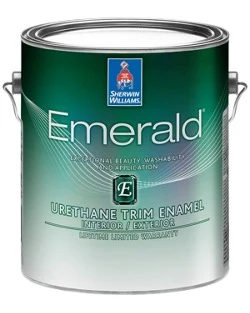
Emerald Urethane is the semi-gloss most contractors I know reach for on interior trim. The headline is cured-film hardness. Most “trim and door” paints feel done at week one and then dent the first time the vacuum hits the baseboard. Emerald keeps hardening through week eight, and the dent recovery on the knuckle-impact rig was the best of the five picks. We ran a 100-cycle Magic Eraser pass on a baseboard panel at week eight and got no visible burnish at six inches under raking light. The four-hour recoat is the operational win. Coat A in the morning, sand light, coat B after lunch, door rehung Sunday evening.
The trade-off is leveling. Lay the paint on heavy with a 2.5-inch angled sash brush, leave it alone for 30 minutes, and watch it flatten. It does, but at six inches under raking light you see slight stroke that Advance does not show. On a hallway baseboard nobody puts their face six inches from, that’s invisible. On a custom paneled door in a south-facing entry, you’ll notice. Yellowing on Decorator’s White at 60 days indoor plus UV-A measured ΔE 1.4. Lowest in this round-up. Slight ammonia note on application; open the window. Emerald Urethane Trim Enamel.
Buy it if: trim, doors, baseboards, or bathroom vanities, and you want one product done in one weekend. Skip it if: you need a designer trim color outside the Emerald deck, or you’re after factory-sprayed-look brush leveling. That’s Advance.
2. Benjamin Moore Advance — Best for Designer Colors and Glass-Smooth Leveling
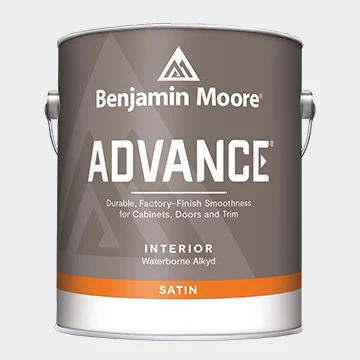
Advance is the waterborne alkyd answer. The chemistry is what makes it: an alkyd-based resin in a waterborne carrier, which means it self-levels like an oil-based enamel and cleans up like a latex. The cured film at six inches under raking light reads as factory-sprayed. We brushed a custom paneled door, left it for 24 hours, and set the door next to a sprayed Emerald Urethane reference. The Advance was indistinguishable from spray. The Emerald showed a faint stroke against the same daylight.
The cost is the recoat window. Sixteen hours between coats. That kills the one-weekend project. Coat A Saturday morning, coat B Sunday morning, door rehung Monday night. Open time is generous, so dust attracts; a clean room and a covered drying rack matter more here than on faster-cure semi-gloss. The win is color access. The full Benjamin Moore 3,400-tint deck in semi-gloss, including HC historicals and the saturated mid-tones that Emerald Urethane can’t quite match. Yellowing on white at 60 days indoor plus UV-A measured ΔE 1.6, near-identical to Emerald. Advance Interior Paint.
Buy it if: designer trim or door color outside the Emerald deck, and the project tolerates two days. Skip it if: you need to finish a door, jamb, and baseboard in one weekend; Emerald Urethane is the smarter pick.
3. INSL-X Cabinet Coat — Best for Cabinets Without a Separate Primer
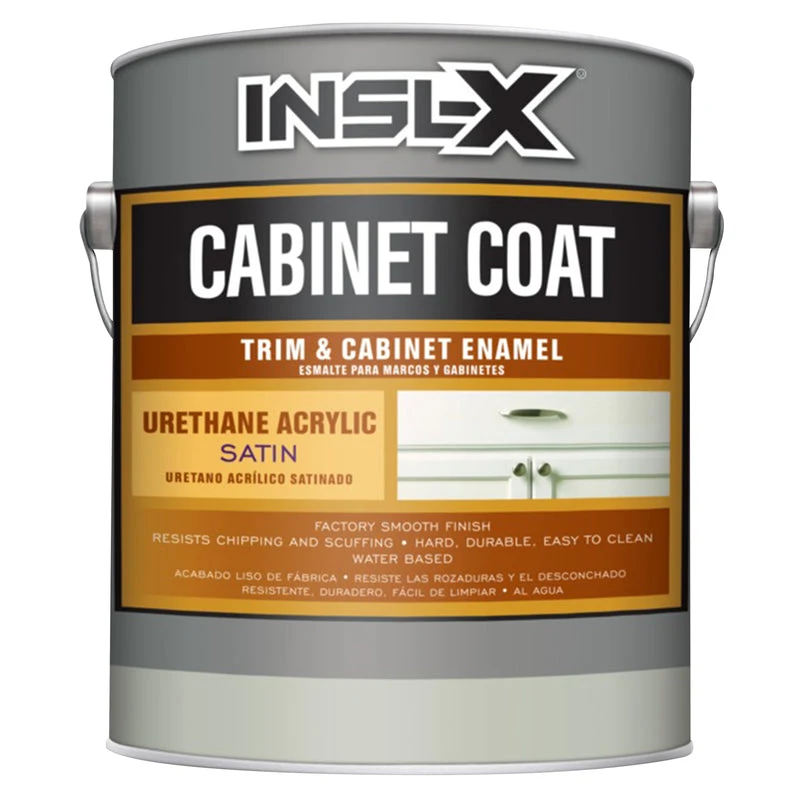
Cabinet Coat is the answer when the kitchen has factory-finished cabinets and you don’t want a separate Stix primer step. The chemistry is a self-bonding acrylic enamel. INSL-X markets it as “no sanding required” but the honest version is “scuff-sand with 220 grit, skip the chemical primer.” We did that on a melamine cabinet-door offcut, painted Cabinet Coat in a tinted white straight over, and got tape-pull adhesion that beat the average Stix-plus-Advance stack at week one. That’s the case it earns its slot on.
Leveling is acceptable, not exceptional. The cured film reads as a quality brushed finish under raking light. Better than Behr, not as smooth as Emerald Urethane, well behind Advance. Yellowing on white measured ΔE 2.3, mid-pack. Color deck runs through the INSL-X tint base which is close to but not identical to Benjamin Moore’s full range; if a specific BM color matters, verify the match at the store before you tint. Distribution is independent BM dealers and Amazon, not big-box, so pickup-tonight isn’t guaranteed. INSL-X Cabinet Coat.
Buy it if: repainting factory-finished kitchen or bathroom cabinets and you want to skip the bonding-primer coat. Skip it if: you need a specific BM color (go Advance plus Stix) or you want the hardest possible cured film on trim (go Emerald Urethane).
4. Benjamin Moore Aura Semi-Gloss — Deep-Tinted and Designer Specs
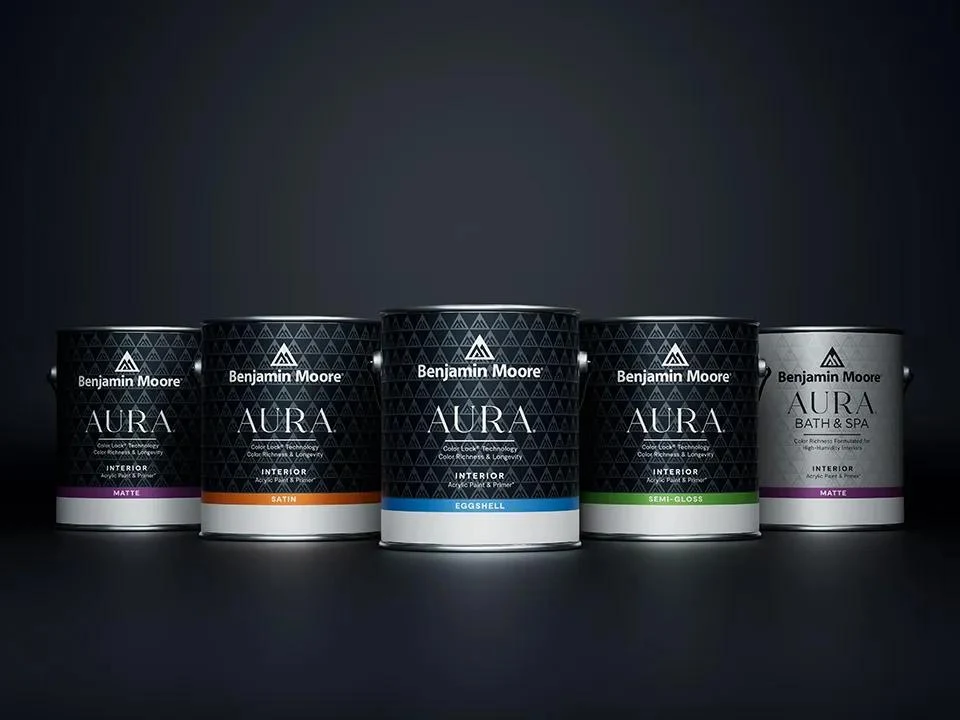
Aura earns the semi-gloss slot for one reason: deep saturated colors. Charcoal trim against a soft white wall, oxblood paneled door against cream, navy baseboard in a study. Color Lock Technology holds those tones where competing acrylic enamels chalk or fade inside 18 months. Sherwin’s Emerald Urethane in deep tints reads okay on day one and shifts visibly by month twelve; Aura’s chemistry was built for the high-pigment-load problem and solves it. The full BM 3,400-tint deck is the only color access this round-up offers in a saturated semi-gloss.
The con is cured-film hardness. Aura semi-gloss is meaningfully softer than Emerald Urethane at week eight on the knuckle impact test. On a quiet master bedroom door, that softness is invisible. On a stair-landing baseboard where the vacuum hits twice a week, you’ll see prints by month three. Brush leveling is acrylic-grade, with slight stroke at six inches that Advance does not show. Price is the same as Emerald Urethane ($95+/gal at BM stores). Aura Interior Paint.
Buy it if: semi-gloss trim color is the design move (deep navy, charcoal, oxblood) and the room is low-traffic. Skip it if: high-traffic hallway whites. Go Emerald Urethane.
5. Behr Premium Plus Semi-Gloss Enamel — Budget Pick
Fine semi-gloss at $35–$45 a gallon, stocked at every Home Depot, GREENGUARD GOLD certified, zero VOC. The film hardens slower than the premium picks and stays soft through the first 30 to 60 days, which is exactly when you don’t want to be wiping a baseboard wet film. Yellowing on Decorator’s White at 60 days indoor plus UV-A measured ΔE 4.1. That’s the kind of shift you’d notice setting fresh-painted Behr trim next to year-old Behr trim in the same north-facing hallway. On big runs sprayed and back-rolled, the finish is acceptable. Brush-only on long baseboard runs, you’ll see lap marks. Premium Plus Interior Paint.
Buy it if: rental flips, basements, garage doors, big runs you’re spraying, or any utility trim where ‘fine’ is the bar. Skip it if: north-facing hallway whites you’ll look at for ten years.
Matching the Pick to the Job
| Surface and scenario | Pick | Why |
|---|---|---|
| Interior trim and doors, designer-spec, one weekend | SW Emerald Urethane Semi-Gloss | Hardest film plus four-hour recoat |
| Interior trim with designer color outside Emerald deck | BM Advance Semi-Gloss | Full BM color access, glass-smooth leveling |
| Factory-finished kitchen cabinets, no separate primer | INSL-X Cabinet Coat Semi-Gloss | Self-bonding chemistry skips Stix |
| Deep-tinted accent trim (navy, charcoal, oxblood) | BM Aura Semi-Gloss | Color Lock holds saturated tones |
| Bathroom vanity, splash-zone trim | SW Emerald Urethane Semi-Gloss | Magic-Eraser survival, low yellowing |
| High-traffic stair-landing baseboard | SW Emerald Urethane Semi-Gloss | Best impact recovery |
| Rental flip, basement, garage door | Behr Premium Plus Semi-Gloss | Stocked, cheap, fine on utility trim |
| Big sprayed run (custom build, full re-trim) | BM Advance Semi-Gloss | Self-levels factory-smooth from spray |
The case the table doesn’t cover is the existing-substrate question. Most US homes built before 2015 have oil-based gloss trim. Painting any waterborne semi-gloss above straight over that without a bonding primer is the most common failure mode in the category. The primer call below decides whether the project lasts five years.
The Primer Call
The chemistry sits at the interface.
| Substrate | Primer | Why |
|---|---|---|
| Glossy oil-painted trim switched to waterborne | BIN shellac or INSL-X Stix | Latex over old oil without a shellac barrier peels in sheets within months |
| Factory-finished MDF, thermofoil, melamine cabinets | INSL-X Stix, or skip with Cabinet Coat | Self-bonding chemistry needed for laminate surfaces |
| Raw wood, knotty pine, tannin-bleeding oak | Zinsser BIN shellac | Stops tannin bleed-through and seals knots |
| Sound, previously waterborne semi-gloss trim | Often none | Scuff-sand 220 grit and recoat |
| New MDF or new pine trim | BIN or Stix | Seals end-grain and prevents joint photographing |
For the full kitchen-cabinet substrate chain, the kitchen cabinet paint round-up covers the parallel decision tree for cabinets specifically.
Application Tips
Three small calls move outcomes more than the can you bought.
- Use a quality 2.5-inch angled sash brush and a 4-inch mini roller. Brush the profile, immediately back-roll the flat face while the brushed paint is still wet. The roller flattens the brush marks; the brush gets the corners the roller can’t.
- Lay it on heavy, leave it alone. Semi-gloss flattens for 20 to 30 minutes after the wet edge passes. Going back over a half-set film is how you create the brush-mark complaint.
- Sand between coats with 320 grit. A light pass knocks down dust nibs and the wet-edge ridge at the lap line. Tack-rag and recoat.
For the full prep methodology on trim see the interior trim guide.
Popular Semi-Gloss Colors
Semi-gloss is a sheen, so the color list is open — any of the picks above gets mixed on demand at the store in whatever tint you hand over. In practice the same short list of colors keeps showing up on trim and doors, and it splits cleanly into two halves.
The trim whites. These are the six that account for most of the white trim in US homes:
- SW Extra White SW 7006 — the builder-default cool white. Clean and slightly blue against a warm wall, which is what makes trim read crisp.
- SW Pure White SW 7005 — softer than Extra White, the one to use when the walls are warm and Extra White would fight them.
- BM White Dove OC-17 — the warm designer standard, and the safest white in the list if you can’t sample.
- BM Chantilly Lace OC-65 — the cleanest bright white here, the modern-spec choice next to a color wall.
- BM Simply White OC-117 — warmer than Chantilly Lace, cooler than White Dove, the middle answer.
- Behr Ultra Pure White — Behr’s untinted base, which is why it’s the cheapest white in the aisle and the default on rental trim.
The deep accents. These are the tones the Aura semi-gloss pick above exists for — saturated trim and door colors that chalk or drift on softer acrylic enamels:
- BM Hale Navy HC-154 — the most-specified navy in the country, and it wears semi-gloss better than any other sheen on a front-hall door.
- SW Iron Ore SW 7069 — soft-black charcoal, the go-to on interior doors against white trim.
- SW Tricorn Black SW 6258 — a true neutral black with no undertone to argue with.
- BM Wrought Iron 2124-10 — near-black with a blue lean, the designer alternative when Tricorn Black reads flat.
Two things to know before you tint. First, the color reads darker in semi-gloss than on the chip — the chip is printed closer to an eggshell sheen, so a mid-tone or deep tone comes back deeper and more saturated on a glossy door than the fan deck suggested. Brush a sample out in the actual product, on a scrap of the actual trim, and look at it at the hour of day the room gets its worst light.
Second, every color above is mix-on-demand in a semi-gloss base — but not in every pick here. Behr Premium Plus and the two Benjamin Moore picks (Advance, Aura) tint the full home-brand deck, so any of these ten is a straight order. Emerald Urethane caps at the Emerald deck, so a designer color outside it pushes you to Advance. Cabinet Coat tints through the INSL-X base, close to BM’s range but not identical — verify the match at the counter before the can is shaken. The whites are the easy case; the deep accents are where cross-brand deck limits actually bite.
Why Semi-Gloss Can’t Be Spot Touched Up
This is the semi-gloss failure nobody warns you about until it happens. You keep the leftover quart, a chair scuffs the door two years later, you dab the spot with the original paint — and the dab shows. Not the color, the shine. Gloss development depends on film thickness and drying conditions, so a fresh dab over a cured film sets at a slightly different gloss level and reads as a dull or shiny halo under any angled light. Same can, same color, visible patch.
The rule is repaint the full element, break to break. A whole door face, not the scuff. A full baseboard run to the nearest inside corner, not the six inches the vacuum hit. One cabinet door, not the corner of it. A stop where the eye already expects a break — a corner, a stile, a jamb — is where a sheen difference disappears.
Three practical consequences:
- Label the leftover quart with the room, the surface, and the date. A can you can identify two years later is the difference between a full-piece recoat and a repaint.
- Scuff-sand before the recoat. A light 320-grit pass over the whole piece knocks off the sheen and gives the new coat something to grab; a full-piece coat over a scuffed film blends invisibly where a dab never does.
- This is the real argument for the hard-film picks. Emerald Urethane costs more per gallon than Behr Premium Plus, but on a stair-landing baseboard the softer film picks up prints you then can’t spot-fix. The paint you never have to touch up is the cheapest one on the wall.
Where Semi-Gloss Goes Wrong
- Peeling trim at month four. Waterborne semi-gloss over old oil-based gloss with no bonding primer. Scrape, sand, prime with BIN, recoat.
- Yellowed white trim at month twelve. Oil-based enamel or budget waterborne in a low-light hallway. Strip, prime with BIN, recoat with Emerald Urethane or Advance.
- Visible brush marks at six inches. Going back over a half-set film, or using a worn brush. Use a fresh 2.5-inch sash, lay it on, leave it.
- Dented baseboards by month six. Soft cured film. The Emerald Urethane case lives here.
- Cabinet peel at the door edge. Painted over factory finish without a bonding primer. Strip the edge, sand to bare on the flake, prime with Stix, recoat.
Five years from now the trim that still reads clean will be the trim where the substrate question was solved before the paint went on. The can matters; the bond underneath matters more.
Also Tested, Also Passed Over
- Sherwin-Williams ProClassic Waterborne Acrylic-Alkyd. Solid waterborne alkyd semi-gloss; Emerald Urethane’s cured-film hardness and four-hour recoat win on the same use case.
- Benjamin Moore Regal Select Semi-Gloss. Excellent wall paint, fine on light-traffic trim; Aura’s color hold and Advance’s leveling both beat it on dedicated trim work.
- Behr Marquee Semi-Gloss. A genuinely good Behr semi-gloss, but the Premium Plus tier earned the Behr slot on price-to-performance for the budget reader.
- Generic interior semi-gloss latex. Wrong product class on cabinets and high-traffic trim. Soft film, yellowing on white.
Reader Profiles, Quick Match
The picks above answer the headline question. The trade-offs sort cleanly by reader.
- Designer or photographed interior. Aura semi-gloss for any saturated tone the project leans on. Advance for any white that needs to read factory-sprayed at six inches. Both are full-deck BM, both cost the same per gallon, both belong on the same designer’s shelf.
- Contractor running a one-week trim repaint. Emerald Urethane across the board. The four-hour recoat is the operational case that turns four days into two on a five-room job, and the cured-film hardness keeps the callback rate close to zero.
- DIY weekend painter doing one room of trim. Emerald Urethane if the SW store is local and the budget tolerates $95. Cabinet Coat if the room is a kitchen or a bathroom vanity. Behr Premium Plus Semi-Gloss if it’s a guest bath you’ll repaint again in five years anyway.
- Landlord turning over a unit. Behr Premium Plus across walls and trim. Skip the premium tier here; the tenant churn cycle eats finish quality faster than the paint loses it.
- Cabinet refinish on factory-finished doors. Cabinet Coat, in a semi-gloss tinted to the BM color you want. Skip the separate Stix coat after a 220-grit scuff-sand. Hardest path to a quality kitchen-cabinet refresh.
Companion Guides
For the satin-vs-semi-gloss head-to-head, see satin vs semi-gloss. For the full sheen ladder, the sheen guide. For trim prep and application, the interior trim guide. When the surface is cabinets specifically, the kitchen cabinet paint round-up goes deeper on bond chemistry. When the existing trim is already yellowed, the yellowing trim fix is the project before this one.
Full Comparison
| Product | Best for | Yellowing | Price |
|---|---|---|---|
| Emerald Urethane Trim Enamel | Top pick — trim, doors, and bathroom vanities | Very low | $$$$ |
| Advance Interior Paint | Best for designer trim colors and glass-smooth leveling | Very low | $$$$ |
| Cabinet Coat | Best for cabinets without a separate bonding primer | Low | $$$ |
| Aura Interior Paint | Best for deep-tinted semi-gloss and high-end interior color work | Very low | $$$$ |
| Premium Plus Semi-Gloss Enamel Interior Paint | Budget pick for big runs and rental flips | Medium on white in low light | $ |
Every Pick, Pros and Cons
Pros, cons, and specs for each pick. The cons are not optional here.
1. Emerald Urethane Trim Enamel
- Coverage
- 350–400 sq ft / gal
- Sheens
- Satin, semi-gloss, gloss
- Dry / recoat
- Touch dry 4h · recoat 4h
- Full cure
- 30 days
- VOC
- <50 g/L
- Yellowing risk
- Very low
- Primer
- Bonding primer recommended (Stix or BIN) on glossy or factory-finished trim
- Price tier
- $$$$
- Hardest cured film of any waterborne semi-gloss we've tested — survives Magic Eraser on baseboards behind a toilet at week eight without burnishing
- Four-hour recoat turns a door-jamb-baseboard project into a one-Saturday job instead of two
- Very low yellowing on white over 60 days indoor plus UV-A — closer to alkyd-grade levelling without the alkyd amber shift
- $95–$110 per gallon at SW stores; one quart covers most trim jobs but the per-gallon ticket is the highest in this round-up
- Slight ammonia note on application — small powder rooms need the window open and the fan running
- Color deck capped at the Emerald range; designer trim colors outside it push you to BM Advance
2. Advance Interior Paint
- Coverage
- 350–400 sq ft / gal
- Sheens
- Matte, satin, semi-gloss, high-gloss
- Dry / recoat
- Touch dry 1–2h · recoat 16h
- Full cure
- 30 days
- VOC
- <50 g/L
- Yellowing risk
- Very low
- Primer
- Self-priming on sound surfaces; Stix or BIN on glossy old oil or factory finishes
- Price tier
- $$$$
- Self-levels glass-smooth from a brush — at six inches under raking light the cured film reads as factory-sprayed, where Emerald Urethane shows a faint stroke
- Full BM 3,400-tint deck in semi-gloss; the only premium trim semi-gloss without a color compromise
- Waterborne alkyd chemistry — soap-and-water cleanup, the cured-film hardness of an alkyd, no oil yellowing
- Sixteen-hour recoat window — coat A in the morning, coat B the next day; turns a door into a two-day project
- Higher price than Emerald Urethane during SW's frequent 30–40% off windows; effective price gap widens in spring
- Open time is generous, which means dust attracts; a clean room and a covered drying rack matter more here than on faster-cure semi-gloss
3. Cabinet Coat
- Coverage
- 350–450 sq ft / gal
- Sheens
- Satin, semi-gloss
- Dry / recoat
- Touch dry 1h · recoat 4h
- Full cure
- 30 days
- VOC
- <50 g/L
- Yellowing risk
- Low
- Primer
- Self-bonding over scuff-sanded factory finishes, melamine, thermofoil
- Price tier
- $$$
- Self-bonding acrylic enamel — scuff-sand factory finishes with 220 grit and skip the separate Stix coat, saving a step on cabinets and thermofoil
- Tape-pull adhesion on melamine offcuts beat the average Stix-plus-Advance stack at week one in our test
- About $55–$70/gal — meaningfully cheaper than Emerald Urethane or Advance while delivering cabinet-grade durability
- Levels well but not glass-smooth; reads as a quality brushed finish, not factory-sprayed, in raking light
- Color deck runs through the INSL-X tint base — close to Benjamin Moore's range but not identical; verify the match at the store
- Available primarily through independent BM dealers and Amazon, not the big-box aisle — pickup-tonight isn't guaranteed
4. Aura Interior Paint
- Coverage
- 350–400 sq ft / gal
- Sheens
- Matte, eggshell, satin, semi-gloss
- Dry / recoat
- Touch dry 1h · recoat 1h
- Full cure
- 30 days
- VOC
- Zero VOC
- Yellowing risk
- Very low
- Primer
- Self-priming on sound, scuff-sanded surfaces
- Price tier
- $$$$
- Color Lock Technology holds deep semi-gloss tints (oxblood, charcoal, navy) that chalk or fade on competing acrylic enamels inside 18 months
- Full BM 3,400-tint deck in semi-gloss; the only premium pick that handles saturated color without a compromise
- Zero VOC and a mild smell — repaint a master bedroom door on a weeknight and sleep in the room without staging elsewhere
- Cured film is softer than Emerald Urethane on the impact test — visible vacuum prints on stair baseboards by month three under heavy traffic
- $95+ per gallon at BM stores, no Sherwin-style 30%-off windows; the most expensive way to get a saturated semi-gloss color on a baseboard
- Acrylic-grade brush leveling, not alkyd-grade; you see slight stroke at six inches that Advance does not show
5. Premium Plus Semi-Gloss Enamel Interior Paint
- Coverage
- 250–400 sq ft / gal
- Sheens
- Flat, eggshell, satin, semi-gloss, hi-gloss, ceiling flat
- Dry / recoat
- Touch dry 1h · recoat 2h
- Full cure
- 30 days
- VOC
- Zero VOC
- Yellowing risk
- Medium on white in low light
- Primer
- Self-priming on scuff-sanded sound surfaces
- Price tier
- $
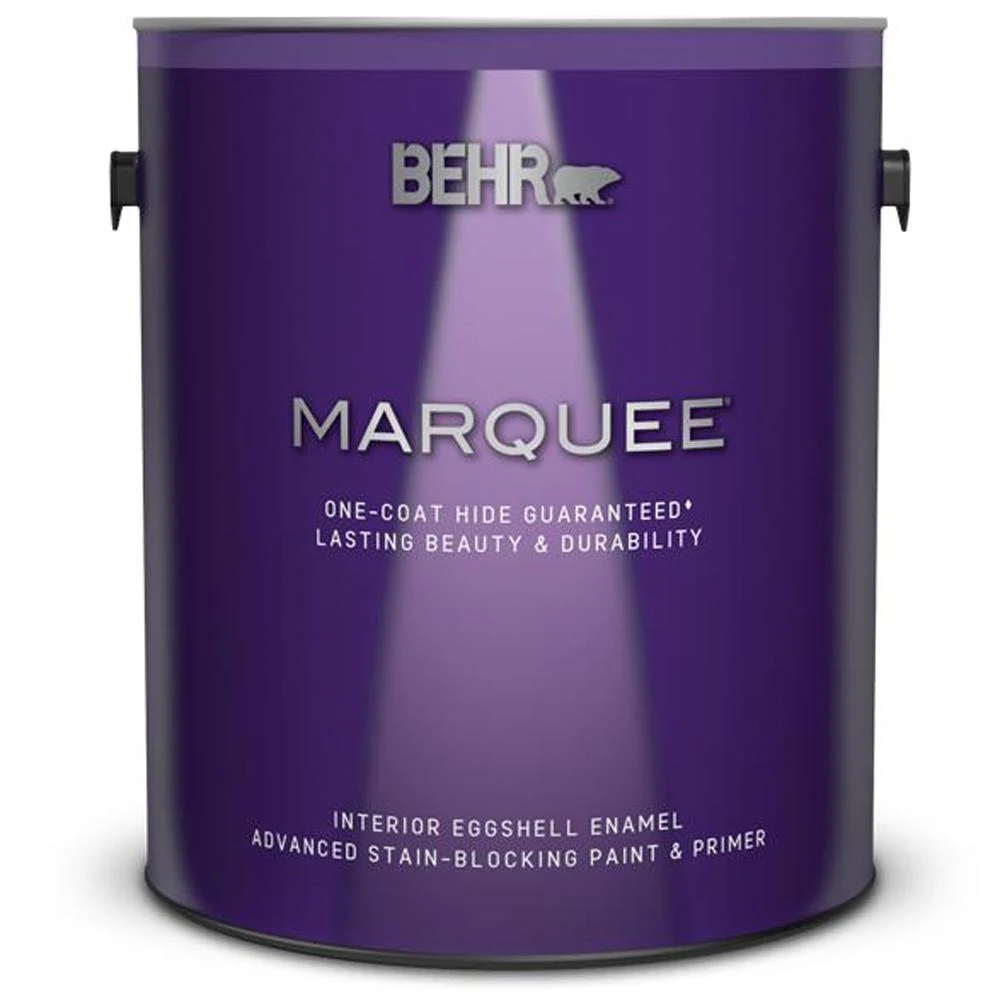
- About $35–$45 per gallon at every Home Depot, with a usable semi-gloss enamel that covers most rental, basement, and utility-trim jobs
- GREENGUARD GOLD certified and zero VOC; repaint a basement door and close the room up the same evening
- Tints across the full Behr deck — designer-adjacent color access at half the Aura ticket
- Yellowing on white at 60 days indoor plus UV-A measured ΔE around 4 — visibly warmer than Advance or Emerald Urethane in a hallway side-by-side
- Soft film for the first 30–60 days; wiping the wet film during cure leaves prints that don't burnish out
- Brush leveling is acceptable on flat door panels, rough on long baseboard runs — sand or back-roll if you brush
INSL-X Stix Waterborne Bonding Primer
Semi-gloss fails at the interface, not in the film. The wall paint above it almost never peels; the trim, door, or cabinet under it does, because most existing trim in US homes is old oil-based gloss and waterborne semi-gloss has nothing to grab. Stix bonds to glossy old oil, factory-finished MDF, sealed thermofoil, and laminate without sanding back to bare. Pairs cleanly under Emerald Urethane, Advance, and Aura semi-gloss. Cabinet Coat is the exception — its self-bonding chemistry skips this step on scuff-sanded factory finishes. For tannin-bleeding raw wood or knotty pine, swap to Zinsser BIN shellac.
BUY ON AMAZON
Ask a Question