Satin vs Semi-Gloss
Satin vs semi-gloss, decided by how each sheen reads in real light. Where each one belongs, how to tell them apart, and a clear pick by room and surface.

The 30-Second Answer
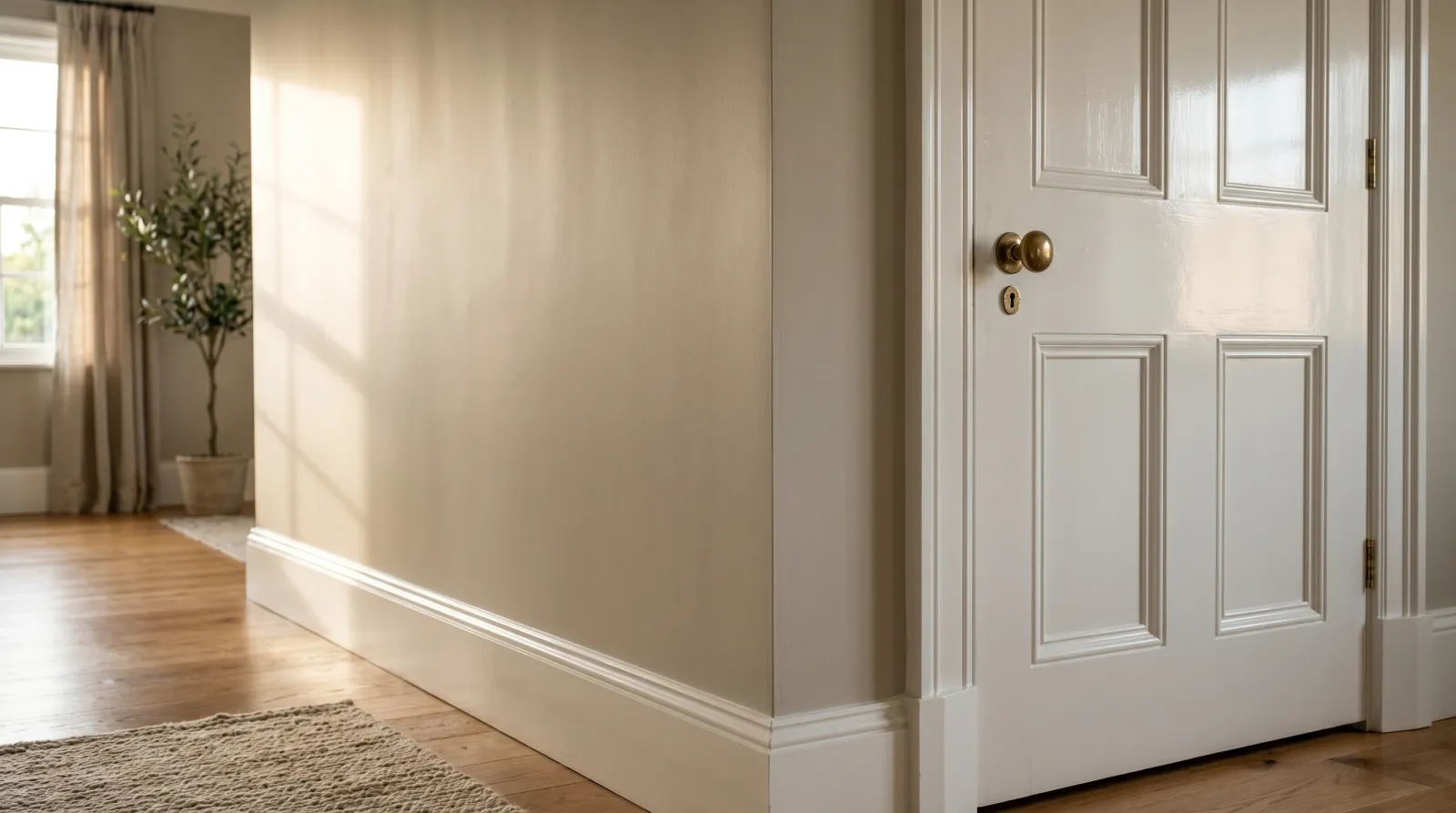
Put satin on the big surfaces you want to live quietly: walls in a kid’s room, a hallway, a family room, anywhere you want to wipe a smudge without the wall turning into a mirror. Put semi-gloss where you want a crisp edge and the hardest washable film: trim, baseboards, doors, cabinets, and the splash zones in a bath. The classic move is satin walls with semi-gloss trim. The molding steps forward, the wall stays calm, and the room reads finished.
At a Glance
| Satin | Semi-gloss | |
|---|---|---|
| Gloss units (60°) | 25–35 | 35–70 |
| How it reads in light | Soft glow, diffuse | Sharp, directional reflection |
| Hides surface flaws | ✓ | ✗ |
| Scrub resistance | ✓ | ✓✓ |
| Touch-up | ✓ | ✗ |
| Best for | Walls, busy rooms | Trim, doors, wet rooms |
| Cost per gallon | $$ | $$ |
How to Tell Which One You’ve Got
Stand so a window or lamp sits off to one side at about 45 degrees, then look down the surface instead of straight at it. If the light spreads into a soft, low oval and you can’t quite see the bulb in the reflection, that’s satin. If the surface throws a tight bright spot and you can make out the shape of the window, that’s semi-gloss. A flashlight held at an angle does the same trick: the smaller and brighter the hot spot, the higher the sheen. Trim almost always reads a step or two glossier than the wall beside it, which is exactly the point.
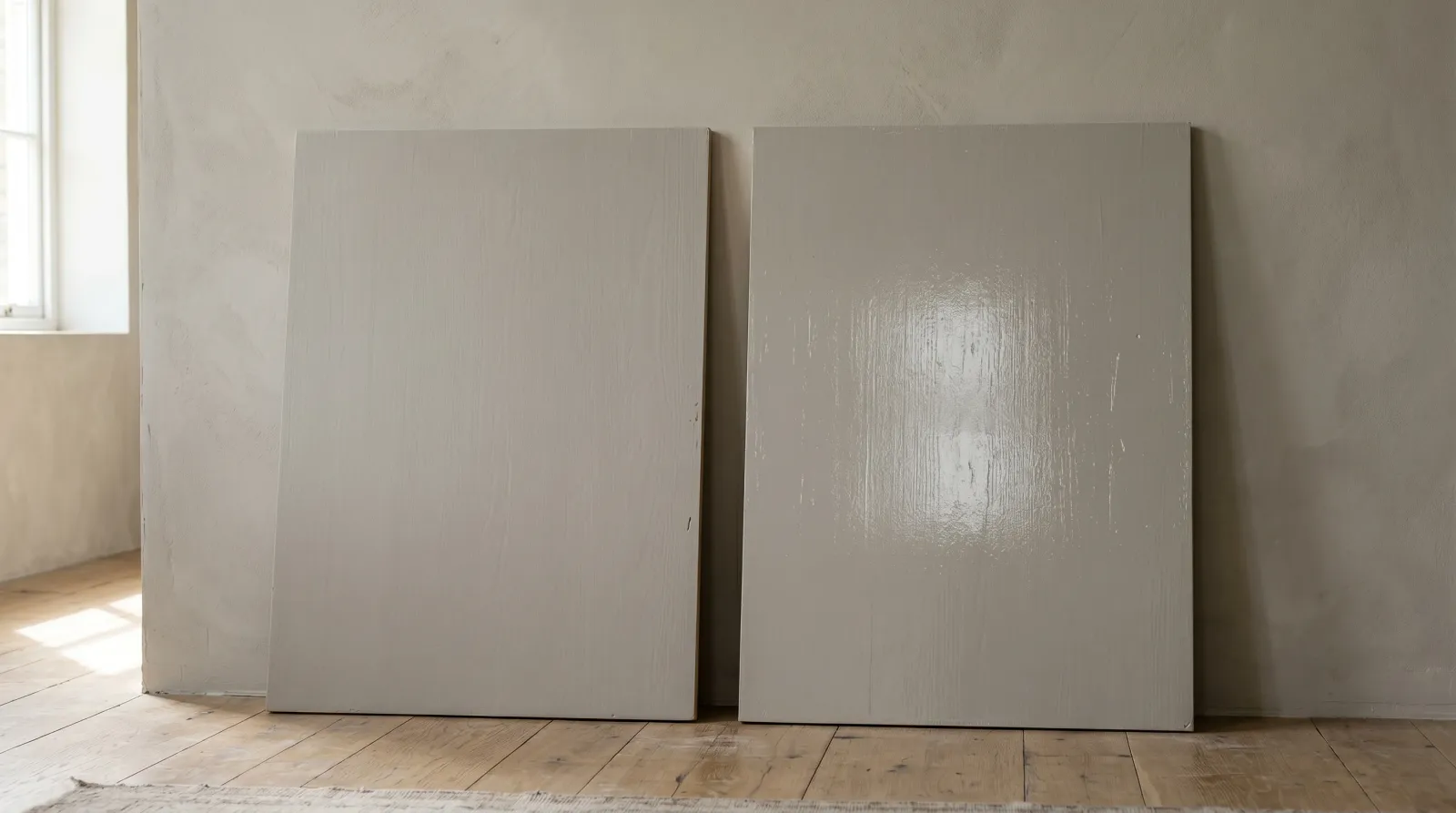 Two boards, same color, in the same raking light. The satin holds a soft even glow; the semi-gloss picks up a directional shine you can almost see the window in.
Sheen and Light
This is where the choice actually lives. Satin sits low enough on the gloss scale that light scatters off it softly. A satin wall reads as one calm plane, even when a window is washing across it in late afternoon. Semi-gloss does the opposite. It behaves a little like a mirror, so it picks up the light source and any ripple in the surface underneath.
That difference is why satin belongs on walls and semi-gloss belongs on trim. A wall is a big flat field, and you don’t want it competing with the windows. Trim is narrow and shaped, so a higher sheen catches the edges of the molding and lets the profile read. Brass hardware and a glossy door quietly play off each other in a way a flat surface never can.
If a room takes strong raking light at any hour, lean toward satin on the broad planes. Semi-gloss on a big wall in that light will show every roller line and patched nail hole.
Winner: Satin on walls, semi-gloss on trim. They aren’t competing for the same surface.
Durability and Scrub
The denser, glossier film wins the cleaning contest. Semi-gloss packs more binder at the surface, so it sheds grease, fingerprints, and crayon better and survives more scrubbing before the finish dulls. That’s why it goes on doors people push open with full hands and trim that meets shoes and vacuum cleaners.
Satin is no slouch. A good acrylic satin wipes down fine for a family room or a hallway and shrugs off the occasional scuff. It just gives up a little wash performance for that softer look. In a bathroom or a mudroom, where water and grime are constant, semi-gloss earns its place on the surfaces that take the abuse.
Winner: Semi-gloss.
Where It Belongs
| Surface or room | Sheen | Why |
|---|---|---|
| Living room walls | Satin | Soft read under window light |
| Kids’ room walls | Satin | Wipes down, hides hand smudges |
| Hallway walls | Satin | Calm plane, easy to clean |
| Baseboards and casing | Semi-gloss | Crisp edge against the wall |
| Interior doors | Semi-gloss | Hard, washable, sheds handprints |
| Kitchen and bath trim | Semi-gloss | Moisture and scrub resistance |
| Bathroom walls | Satin | Soft look, fine with an exhaust fan |
| Cabinets | Semi-gloss | Durable, cleanable, crisp |
The pattern is simple once you see it. Big planes go satin so the room stays quiet. Edges, shapes, and high-touch surfaces go semi-gloss so they read sharp and wash clean. For the full ladder from matte up to gloss, the sheen guide walks through all five.
Touch-Up
A patched spot reads differently from the wall around it, because fresh paint cures at a slightly different thickness and gloss. At satin sheen, that difference usually hides below what your eye notices. Feather the patch, roll it out, and it disappears in most light.
Semi-gloss is unforgiving. The higher the sheen, the more a touch-up flashes as a dull or shiny spot, and raking light makes it permanent. With semi-gloss trim, a touch-up usually means repainting the whole length of the board, corner to corner. Keep the original can, label it with the room, and plan to recoat the full run rather than dab.
Winner: Satin.
Cost
Inside a single paint line, satin and semi-gloss cost within a couple dollars a gallon of each other, and they cover about the same square footage. Price isn’t the deciding factor. What matters is how the sheen sits in the room and how hard the surface has to work. Choose on light and use, not on the shelf tag.
Winner: Tie.
Verdict by Use Case
- Pick satin if: you’re painting walls, especially in a room with raking window light or imperfect drywall, and you want a soft surface you can still wipe down.
- Pick semi-gloss if: you’re painting trim, doors, cabinets, or wet-room surfaces and you want a crisp reflection plus the hardest, most washable film.
- It’s basically a tie when: you want trim and wall to blend on purpose. Then run satin on both and let the room read soft and seamless.
Common Mistakes
Matching trim sheen to the wall. Satin trim against a satin wall flattens the room. The molding stops stepping forward. Drop the wall to satin or eggshell and bring the trim up to semi-gloss so the architecture reads.
Putting semi-gloss on a big wall “for durability.” It will scrub well and look like a topo map. Every seam and screw pop catches the light. On broad planes, step down to satin and accept slightly less wash performance. It’s almost always the right call outside a wet room.
Sheen-shopping from a chip. Stores show color in one sheen. The same color in semi-gloss reads harder and more saturated because the higher reflection deepens it. Order a sample in the exact sheen you’ll use, brush it on a board, and look at it in the room’s real light at the hour you live there.
Top Picks by Side
Going with satin? See the best satin trim paint for the soft-sheen lines worth buying.
Going with semi-gloss? See the best semi-gloss paint, and the best interior trim paint for crisp baseboards and casing.
FAQ
Can I use semi-gloss paint on walls? You can, but it rarely looks good on a large plane. Semi-gloss reflects the light source and reveals every drywall flaw under raking light. Save it for kitchen and bath walls that take constant splash, and even then a satin wall with semi-gloss trim usually reads better.
Will satin over old semi-gloss look strange? No, as long as you prep and use two coats. The new film’s surface texture controls how the sheen reads, so the old semi-gloss won’t show through. Scuff-sand the glossy surface to break it, wipe clean, prime if you’re covering a stain, then paint.
Is semi-gloss too shiny for cabinets? No. Cabinets want a hard, washable film with a clean reflection, and semi-gloss delivers that. Step up to gloss only if you want a near-lacquer shine and your doors are dead flat, since high sheen shows every imperfection. See semi-gloss vs gloss for that call.