Semi-Gloss vs Gloss: The Trim and Door Sheen Decision
How to choose between semi-gloss and high-gloss for trim, doors, and cabinets — gloss-unit numbers, surface-flaw reality, and a verdict by use case.

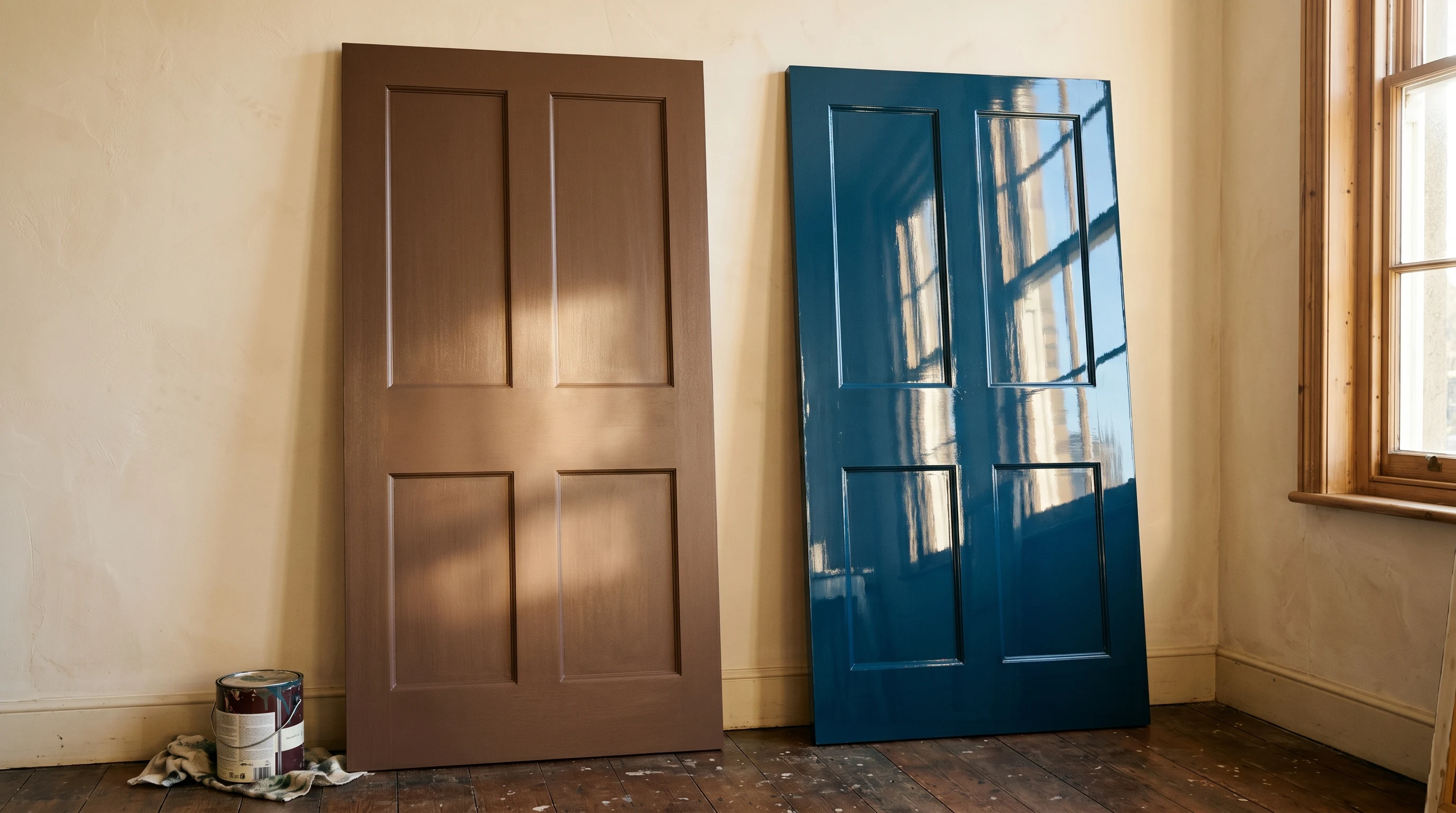
The 30-Second Answer
For most trim repaints in most houses, pick semi-gloss. It reads crisp against an eggshell wall, takes daily fingerprints, and forgives the kind of substrate the painter inherits (old caulk lines, slightly raised grain, a brush hair from the last coat). Reach for high-gloss only when the surface is genuinely flat, the room is design-forward, and the door or cabinet front is meant to shine. The two sheens sit one band apart (semi-gloss 35–60 GU at 60°, gloss 70–85+ GU), but the practical gap between them is the difference between new shoes and glass.
At a Glance
| Semi-gloss | Gloss (high-gloss) | |
|---|---|---|
| Gloss units (60°) | 35–60 | 70–85+ |
| Light reflection | Soft directional shine | Mirror highlight |
| Hides surface flaws | ✓ (forgiving) | ✗ (telegraphs everything) |
| Scrub resistance | ✓✓ | ✓✓ (slightly harder) |
| Brush-mark forgiveness | ✓ | ✗ |
| Application difficulty | Jobsite-friendly | Demanding |
| Best room | Trim, kitchen, bath, kids’ doors | Statement doors, cabinets, design-forward trim |
How to Tell Which One’s Already on Your Trim
Stand a foot from the trim with a window or lamp at your back. Look at the reflection. Semi-gloss gives a soft, slightly washed bounce. You can see the room’s brightness but not its shape. Gloss returns a sharp, near-mirror highlight where you can read the window mullions back at you. A second test: hold a flashlight at 45° six inches off the surface. Semi-gloss spreads the bright spot into a diffuse oval; gloss returns a tight, hot center with crisp edges. The crisper the highlight, the higher the sheen.
Light Reflection
Semi-gloss bounces light softly. The trim reads as clean and tended-to. The sheen says someone wipes this baseboard down, but it doesn’t ask for attention. Gloss bounces a true specular highlight. In raking afternoon light, a glossed door picks up the window like a dark mirror, and the panel beads its reflection back at the room.
The cleanest way to describe the difference: semi-gloss shines like new shoes, gloss shines like glass. Semi-gloss reads as well-maintained. Gloss reads as show-off, in the best sense: the deliberate sheen of a black front door against limewash, of a navy library cabinet, of trim in a south-facing room where the architecture wants to be seen.
Winner: Both, depending on what the room is doing. Quiet rooms want semi-gloss. Showcase rooms want gloss.
Durability and Scrubbability
Both films are formulated to take wipe-down, fingerprints, and the daily indignities of door edges and baseboards. Premium semi-gloss survives 1,000+ cycles on ASTM D2486 scrub testing. Premium high-gloss runs slightly higher, mostly because the lower pigment volume concentration packs the binder denser at the surface.
In practice, you won’t feel the gap. Both clean with a damp microfiber, both shrug off a Mr. Clean Magic Eraser, both hold up against a ten-year-old’s sticky hand on a doorframe. If durability is the deciding factor, you’ve already picked the right sheen tier — keep going on the visual question.
Winner: Gloss, by a hair. Tie in real-world use.
Surface Flaw Visibility
This is the dimension that decides the fight.
Gloss telegraphs every surface variation the substrate carries. Hairline drywall scratches from sanding across the grain. Brush bristles caught in the wet film. Raised wood grain that shouldn’t have been raised. Faint roller stipple from a nap that was a hair too long. Filler that’s a few thousandths proud of the surrounding wood. Each one catches the specular highlight and reads as a scar in raking light.
Semi-gloss masks roughly half of those flaws. The lower sheen scatters reflection enough that small topology drops below visibility. The same trim that looks decent in semi-gloss can look like a topographic map in gloss.
The line I tell people: if your trim has nail holes you can see when light raked across it pre-paint, gloss will make them stadium-level visible after. The sheen amplifies what the surface is already doing.
Winner: Semi-gloss, by a wide margin.
Leveling and Brush-Mark Forgiveness
Gloss self-levels well in oil-based formulations. The long open time gives the film hours to flow flat before it skins. Waterborne high-gloss is harder. The film skins fast, and brush marks that haven’t flowed out by skin-over stay in the dried surface as ridges.
The waterborne products that handle this well (Benjamin Moore Advance High-Gloss, Sherwin-Williams Emerald Urethane Trim Enamel High-Gloss) use long-open binder chemistry that buys you working time. Even with those, brush technique matters more than it does at semi-gloss.
Semi-gloss is forgiving. Brush marks that would read in gloss disappear into the diffuse reflection. A jobsite-grade premium semi-gloss laid down with a quality brush looks clean from across the room.
Winner: Semi-gloss.
Application Difficulty
Semi-gloss is jobsite-friendly. A clean Purdy XL, strained paint poured into a small cut pot, a fine-finish 3/16-inch microfiber roller for the flat panels, and you’ll get a result that reads professional.
Gloss demands more. The substrate has to be flat: sanded with the grain to 220 grit, dust-free, ideally tack-clothed before paint. The paint should be strained even if the can looks clean. The brush has to be premium and unshed (a dropped bristle in wet gloss is a permanent feature). Working time is short and unforgiving. Drying conditions matter; dust settling on a wet glossed door becomes texture.
For cabinet-quality high-gloss, you’re spraying in a controlled environment. HVLP at the right thinning ratio, a tack-cloth pass between coats, a clean spray booth or a sealed-up garage with the AC off so dust isn’t moving. A glossed cabinet door that came off a brush will not look like a glossed cabinet door that came off a sprayer, and most homeowners can tell.
Winner: Semi-gloss.
Suitability by Use
| Use | Recommended sheen | Why |
|---|---|---|
| Whole-house trim repaint | Semi-gloss | Inherited substrate, jobsite conditions, no time to chase flaws |
| Kitchen trim and casing | Semi-gloss | Grease and wipe-down without industrial sheen |
| Bathroom trim | Semi-gloss | Humidity and splash without reading clinical |
| Kids’ bedroom doors | Semi-gloss | Sticky hands, marker, life — needs to wipe and forgive |
| Statement front door | High-gloss | Showcase surface, often prepped by a finish painter |
| Design-forward interior doors | High-gloss | Modern architecture wants the mirror read |
| Painted cabinet doors (sprayed) | High-gloss | Furniture-grade finish reads as built, not jobsite |
| Painted cabinet doors (brushed) | Semi-gloss | Brush marks survive at 50 GU; not at 80 GU |
| Library or built-in millwork | Either | Gloss for showcase; semi-gloss for daily-use joinery |
The Substrate Prep Reality
Gloss only works if the prep is right. There’s no fudging this. The sheen is the audit.
Three failures the gloss film will reveal that semi-gloss hides: hairline drywall sand scratches across the grain instead of with it; brush bristles or dust nibs caught in the wet film during application; raised wood grain on softwoods or MDF edges that should have been sanded back after the first coat. Each one is a surface defect that exists below the threshold of casual perception in semi-gloss and well above it in gloss.
If you’re not prepared to sand the substrate flat, vacuum and tack-cloth before each coat, strain the paint, and inspect the dried first coat under raking light before the second goes down, pick semi-gloss. The result will look better than a high-gloss job done at semi-gloss prep standards.
Specific Products by Side
Going semi-gloss? Benjamin Moore Advance Semi-Gloss, Sherwin-Williams Emerald Urethane Trim Enamel Semi-Gloss, and Behr Marquee Interior Semi-Gloss all land in the 45–55 GU sweet spot for waterborne trim work. See best interior trim paints →.
Going high-gloss? Benjamin Moore Advance High-Gloss and Sherwin-Williams Emerald Urethane Trim Enamel High-Gloss are the two waterborne products built for true 70+ GU finish on doors and cabinets. Behr Marquee High-Gloss is the home-center option; it reads slightly less mirrored than the BM and SW lines but applies more forgivingly. Watch the can label. “High-gloss” is true gloss; plain “gloss” can be marketing for an enthusiastic semi-gloss.
Verdict by Use Case
- Pick semi-gloss if: the trim is inherited substrate, the room is everyday-use, the painter is the homeowner, the door gets sticky hands. The sheen reads as someone took care without asking for compliments.
- Pick high-gloss if: the surface is genuinely flat, the room is design-forward, the door is the visual anchor, the cabinet’s coming off a sprayer. Gloss reads as showroom under a south-facing window.
- It’s basically a tie when: the trim is in a quietly modern interior with good prep. Either sheen works, the choice is taste. Look at the wall sheen first. Eggshell walls pair beautifully with semi-gloss trim. Plaster or limewash walls take gloss trim like architecture.
Ask a Question