What color should I paint my blue bathroom?
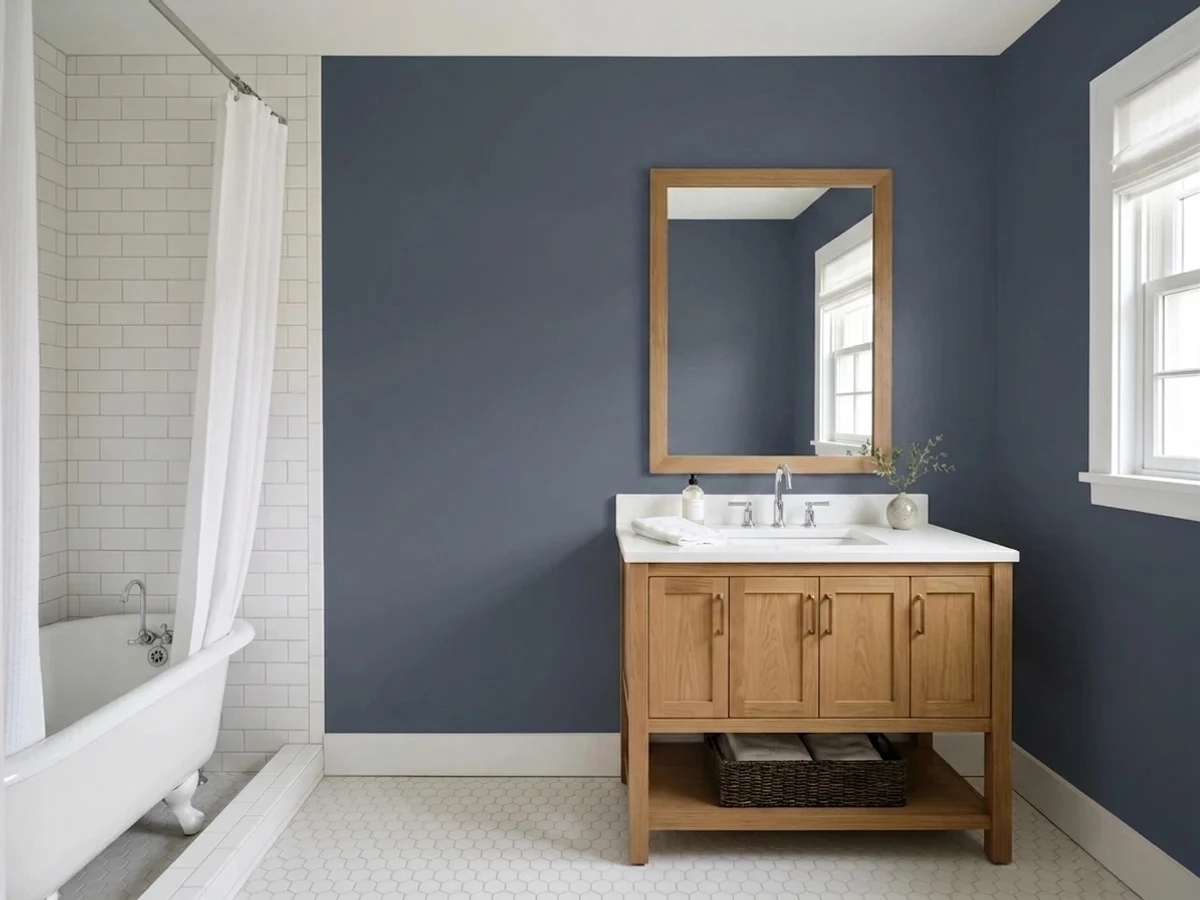
If you want one answer, start with the safe picks above — Naval, Palladian Blue, Van Deusen Blue, Sleepy Blue. They read well in any light and survive furniture changes. Then check the light: strong afternoon sun wants a step cooler, a north-facing room wants a step warmer.
What is the best blue for a bathroom?
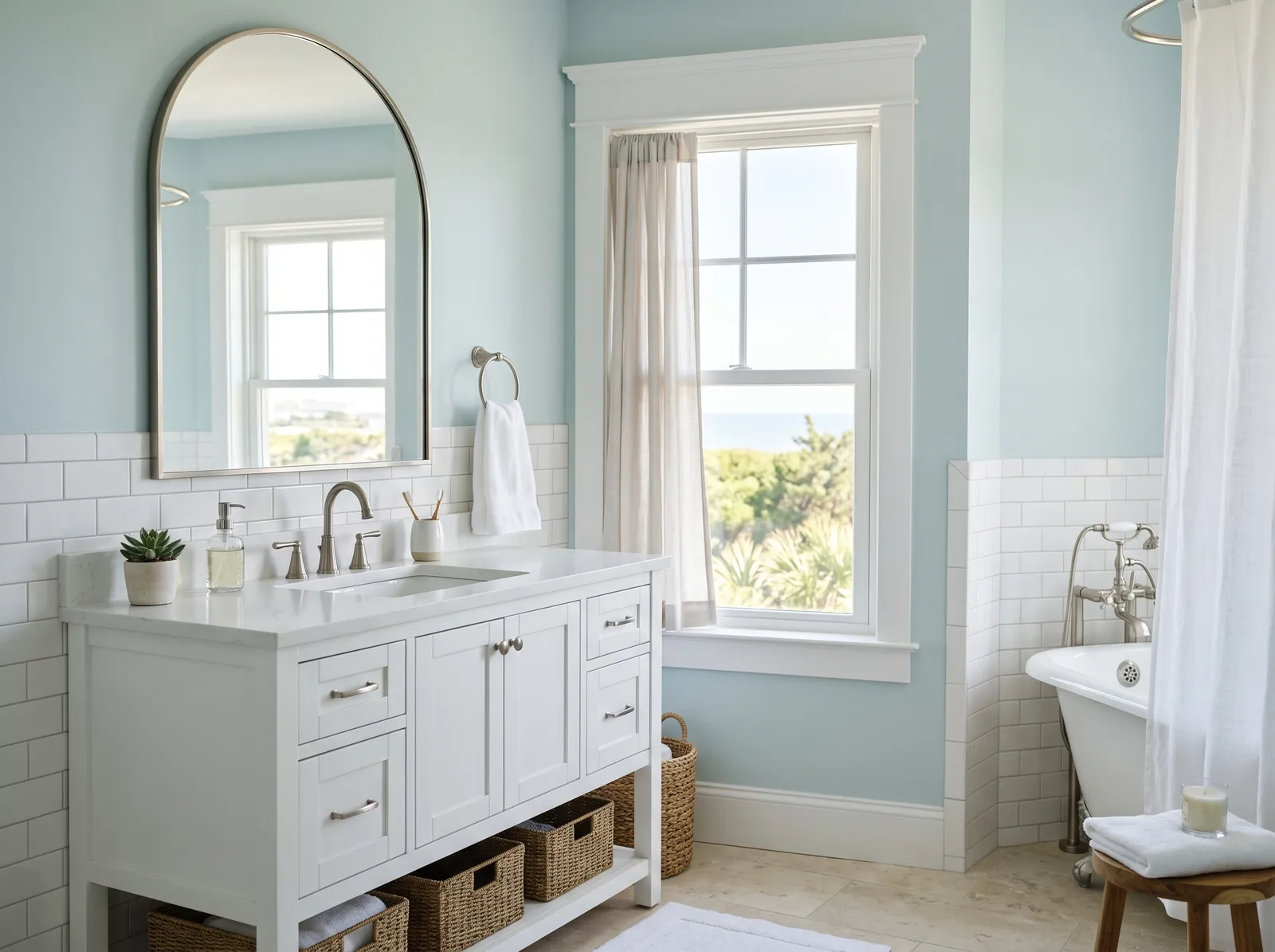
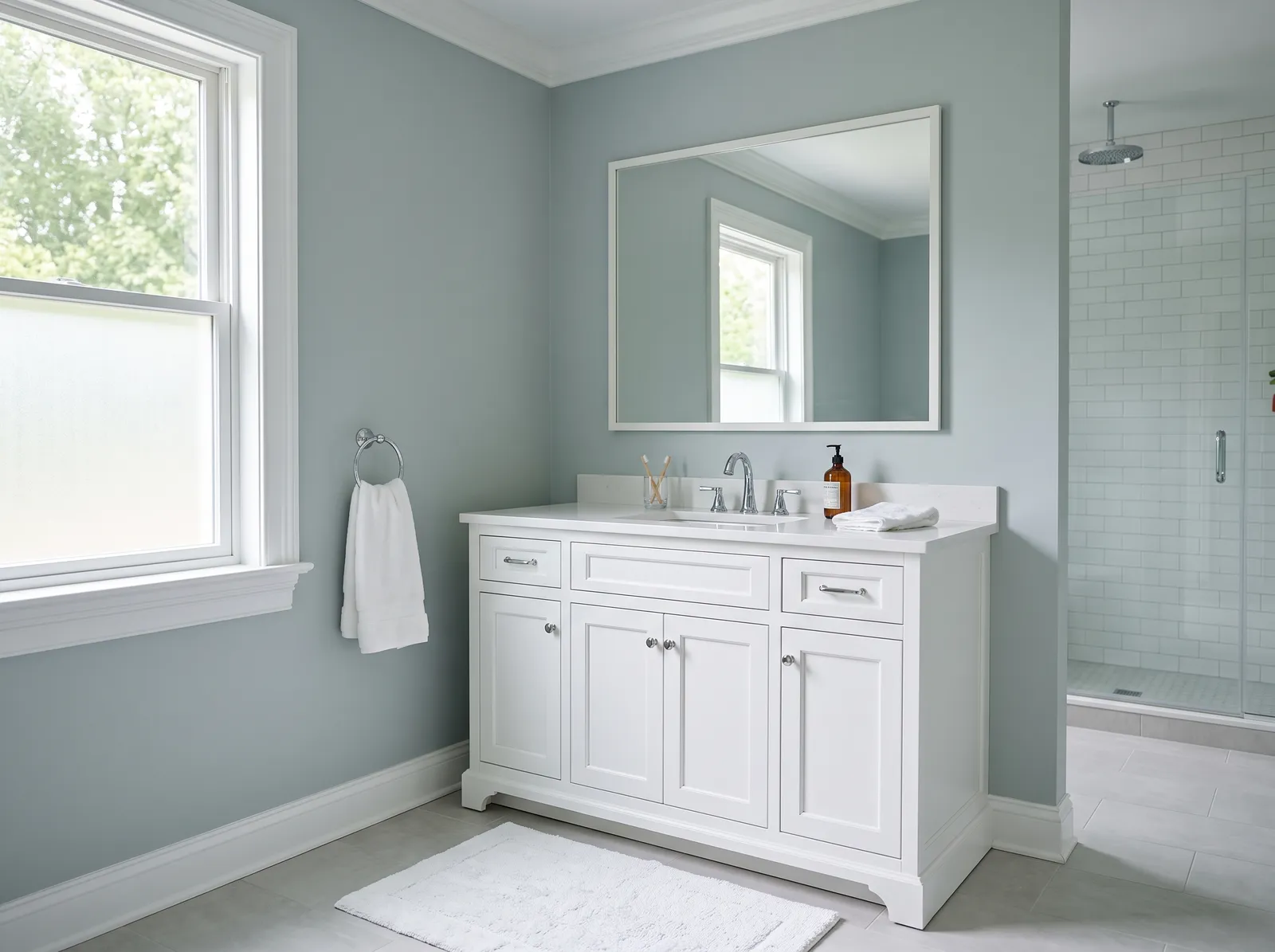
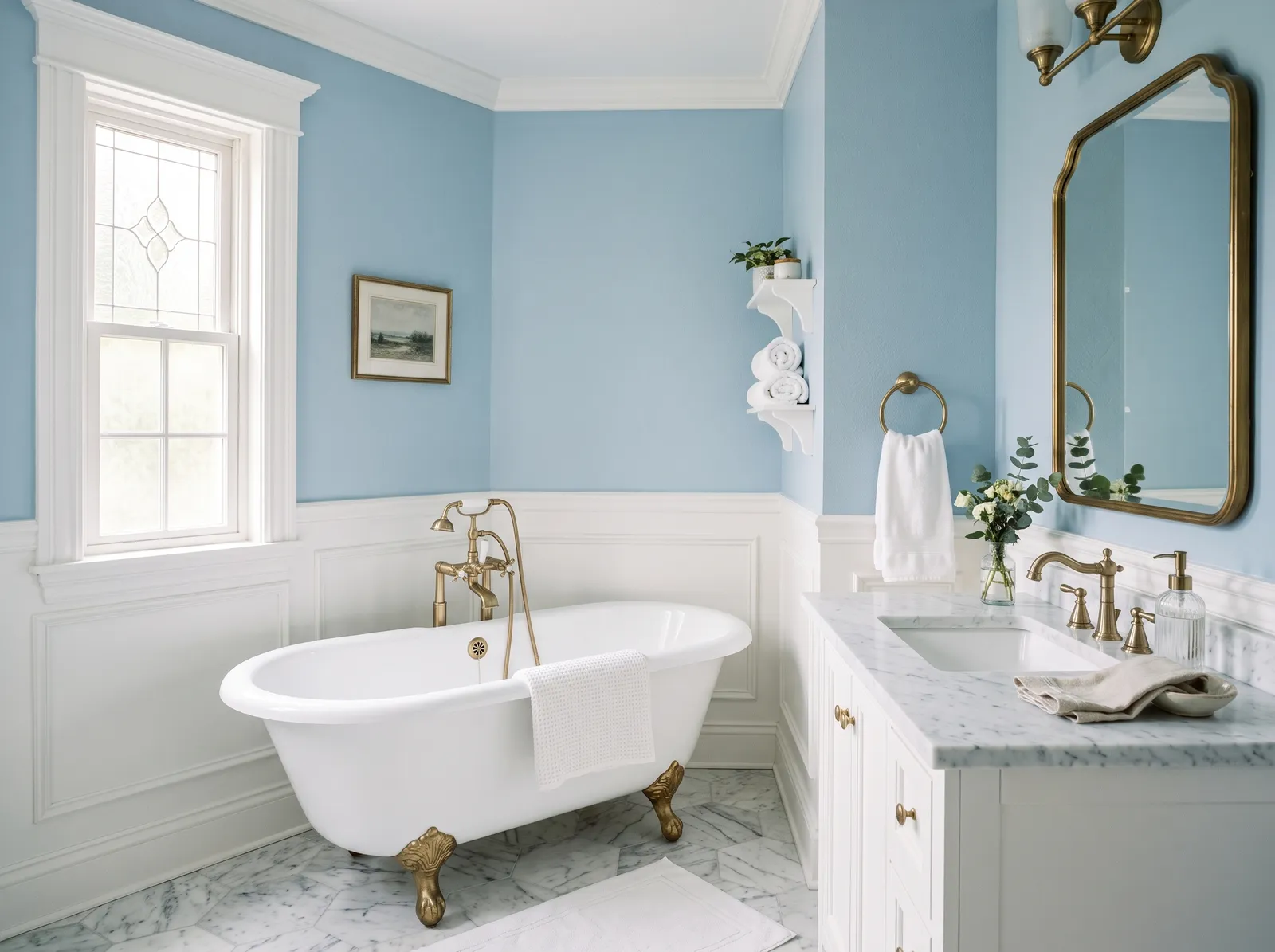
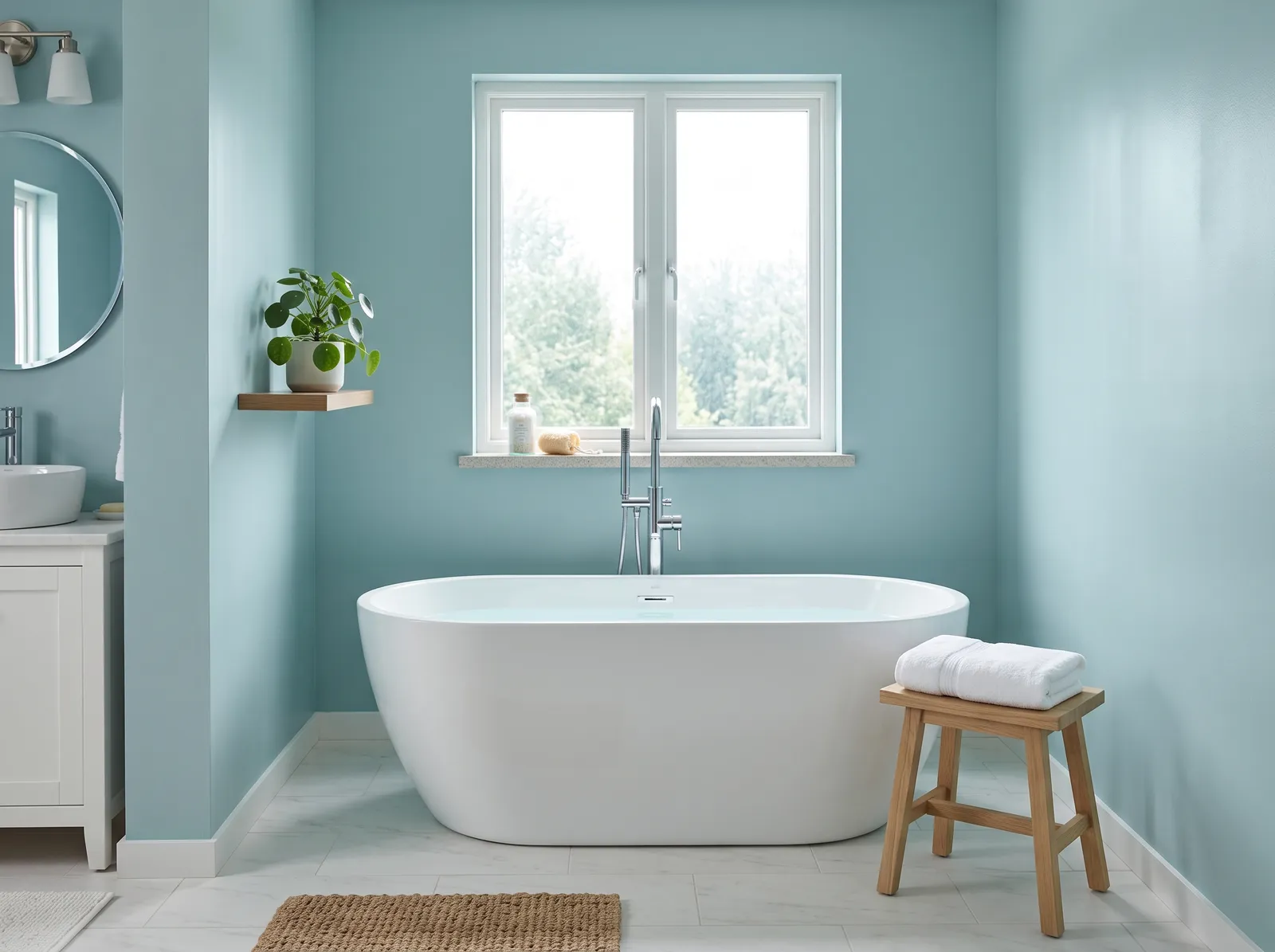
There is no single best blue, but a soft gray-blue or blue-green like Palladian Blue or Sleepy Blue is the most forgiving in bathroom light. It feels calm without turning cold.
Is blue a good color for a small bathroom?
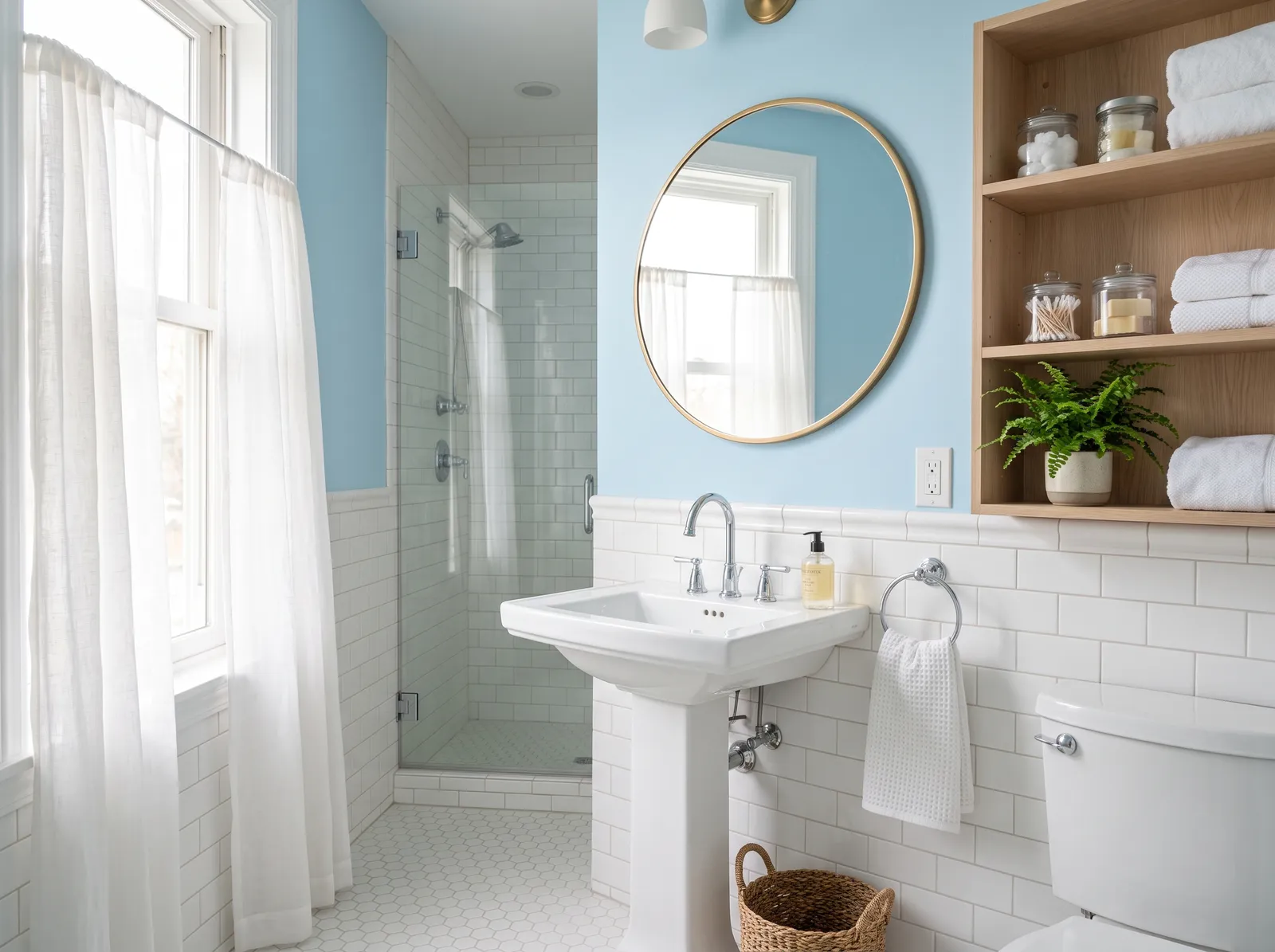
Yes, a pale blue is one of the best choices for a small bathroom because it reflects light and makes the walls feel like they recede. Keep the trim white to open the space up further.
What colors go with a blue bathroom?
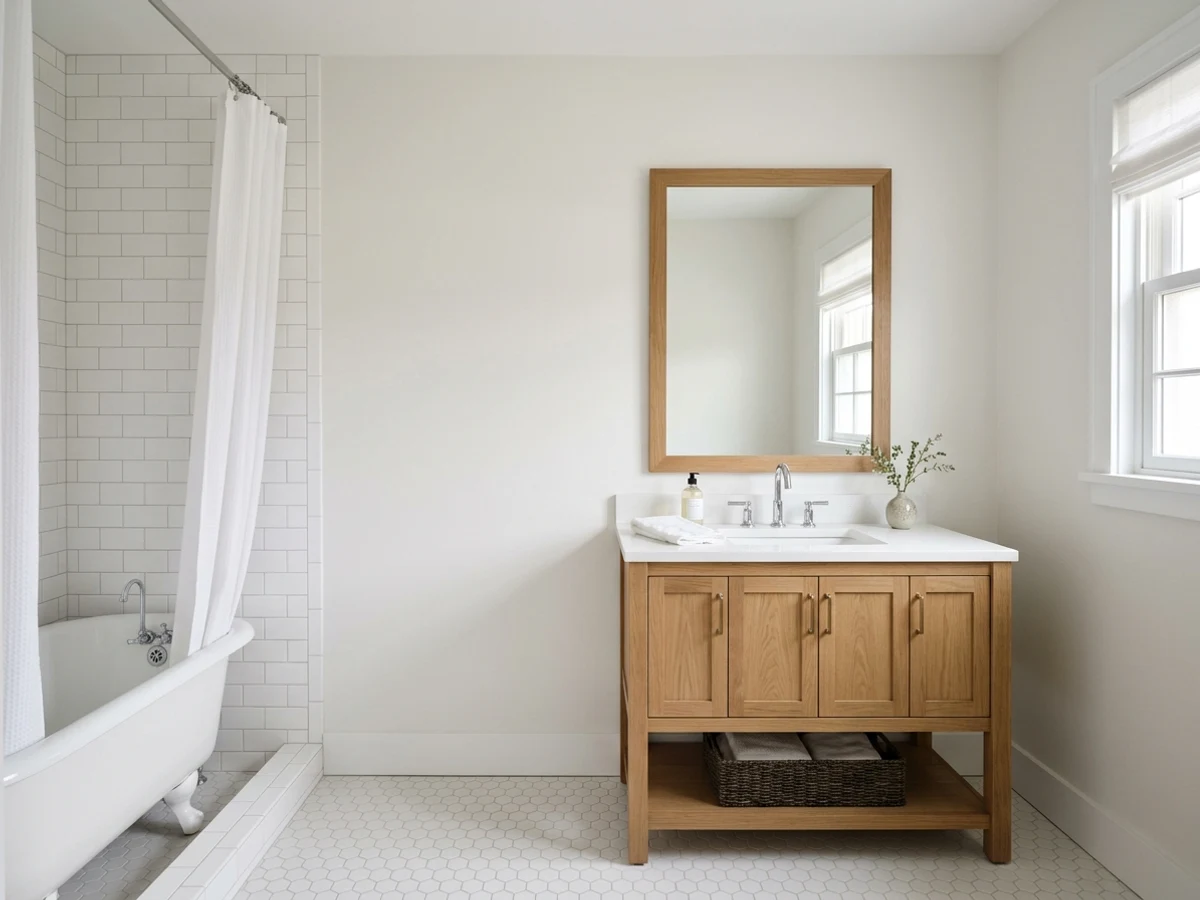
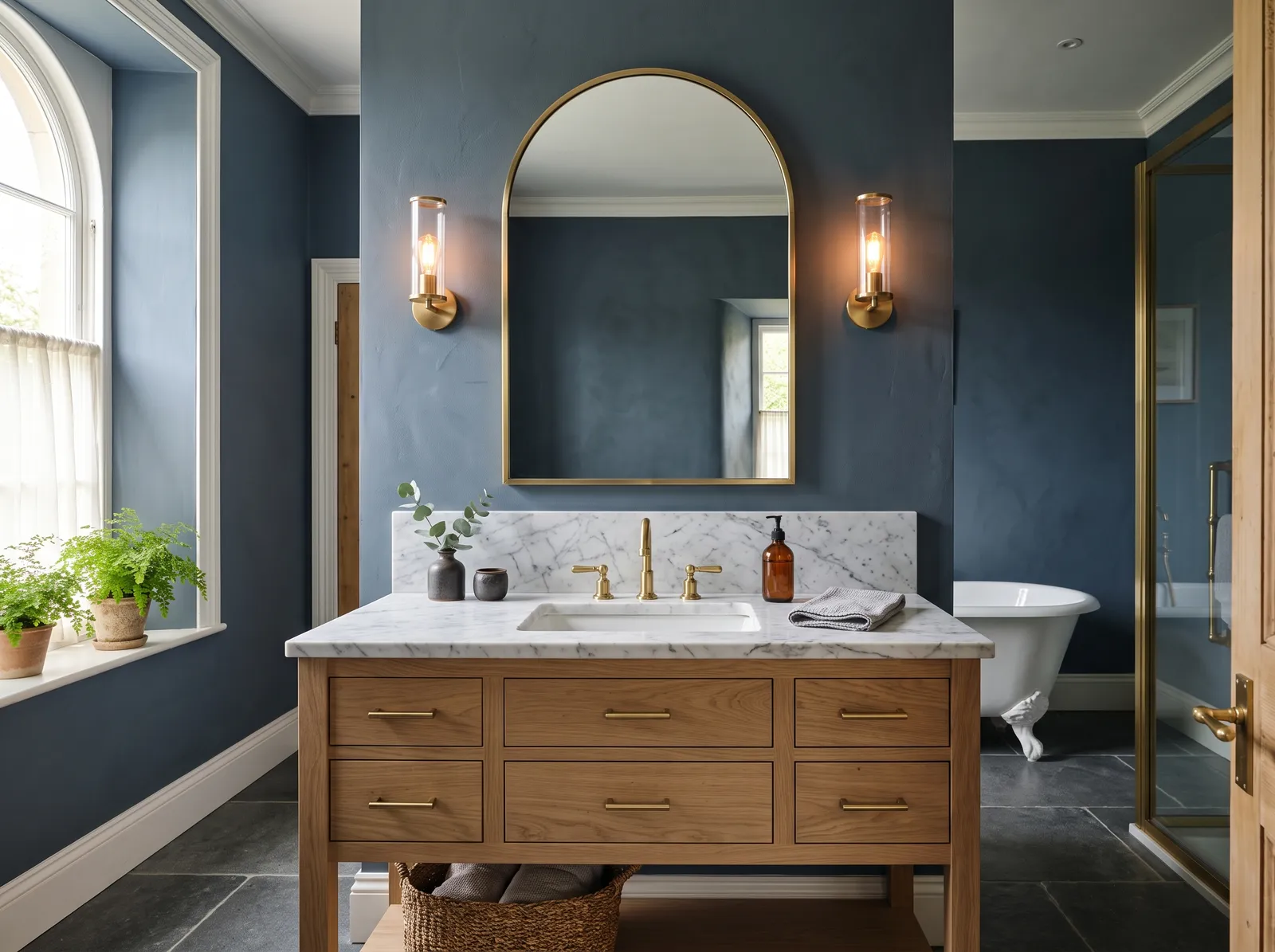
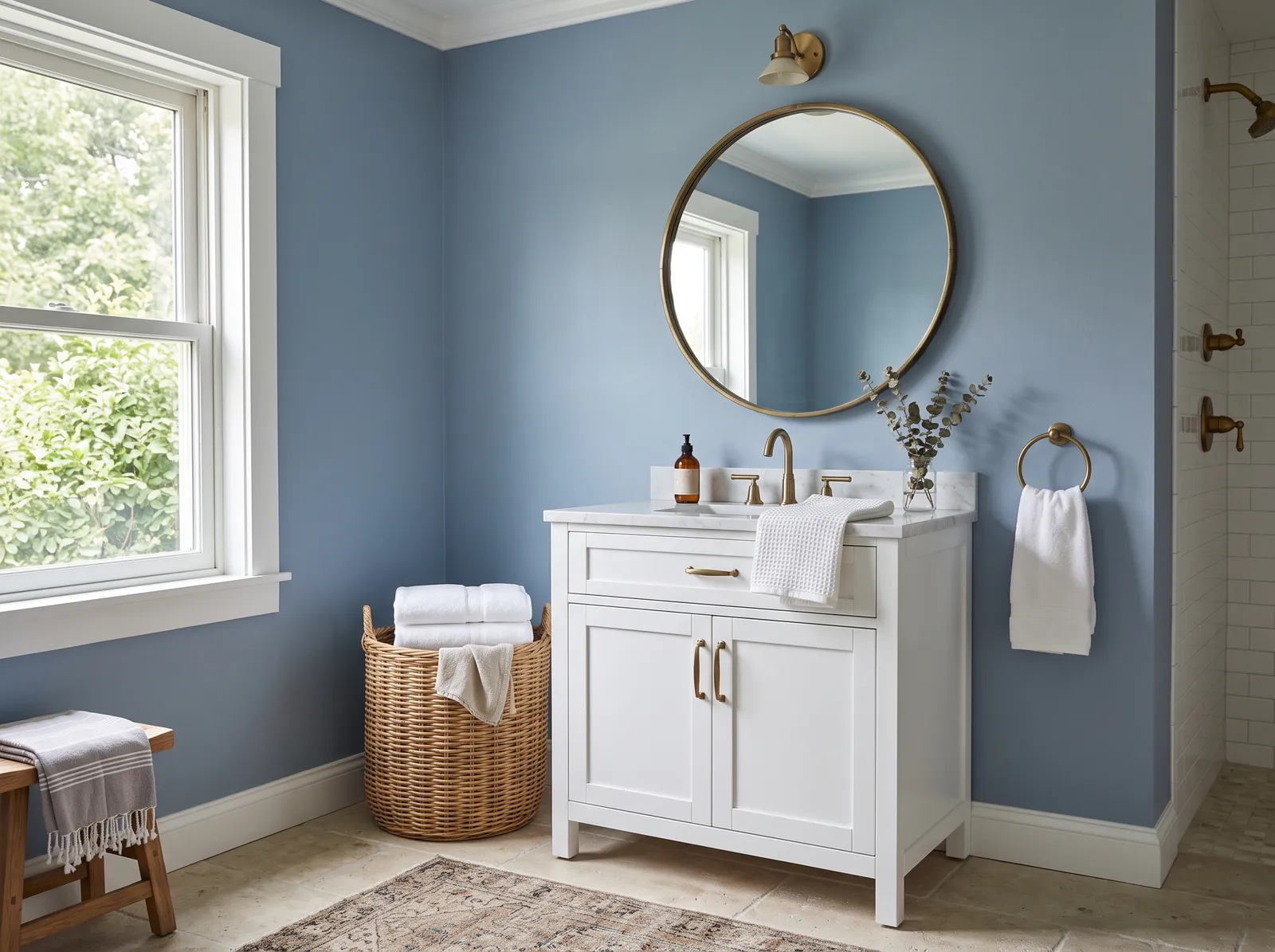
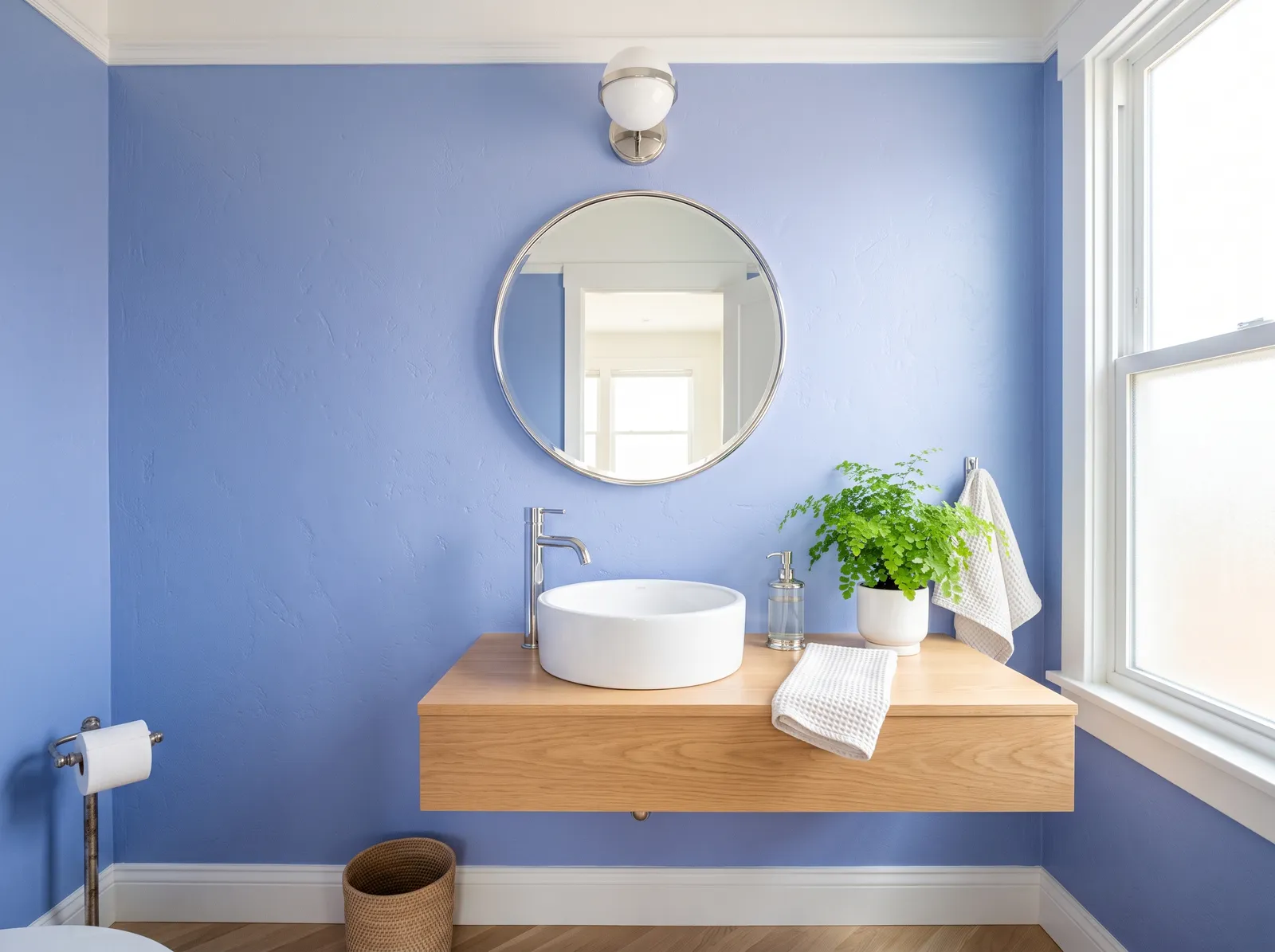
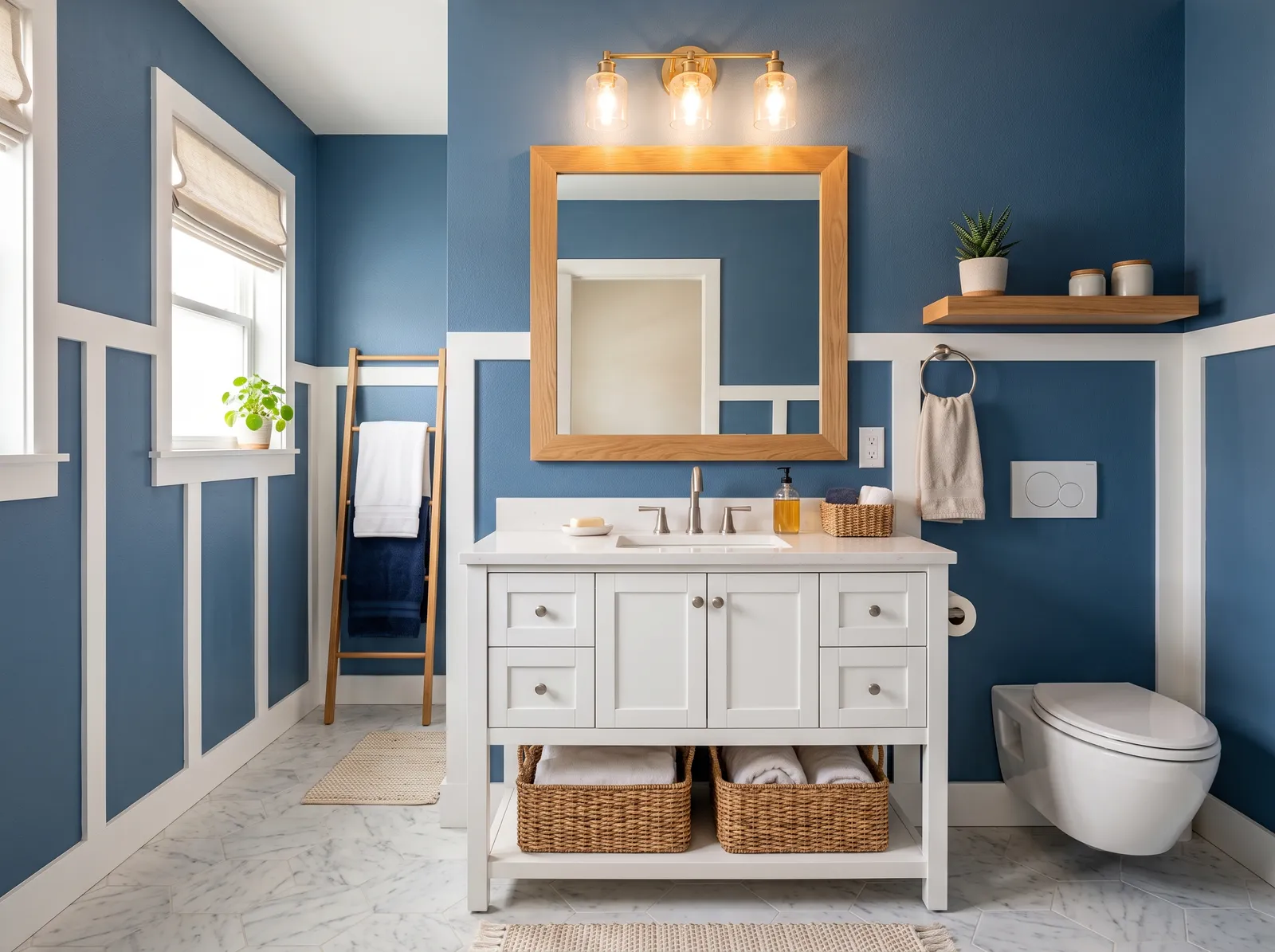
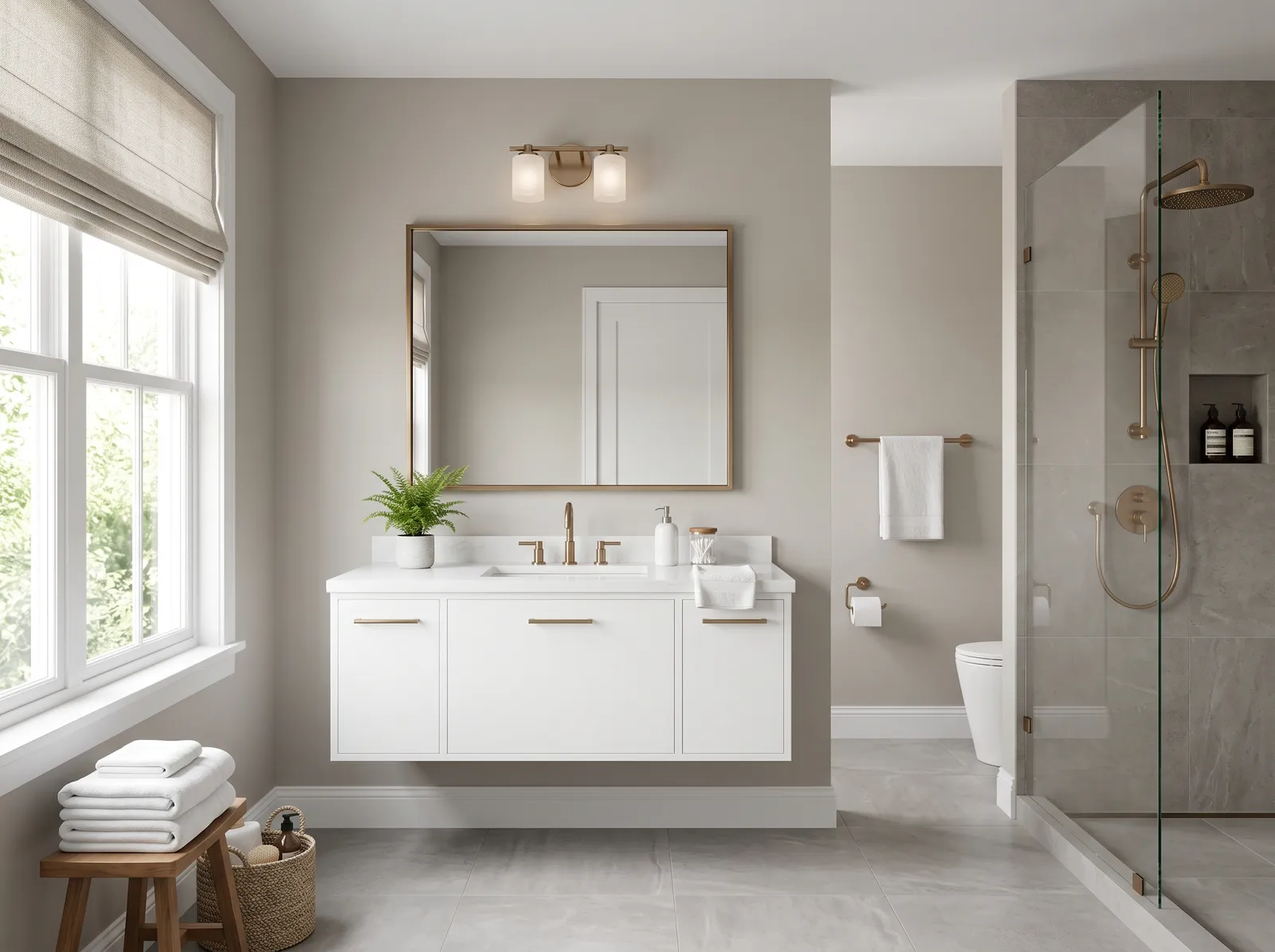
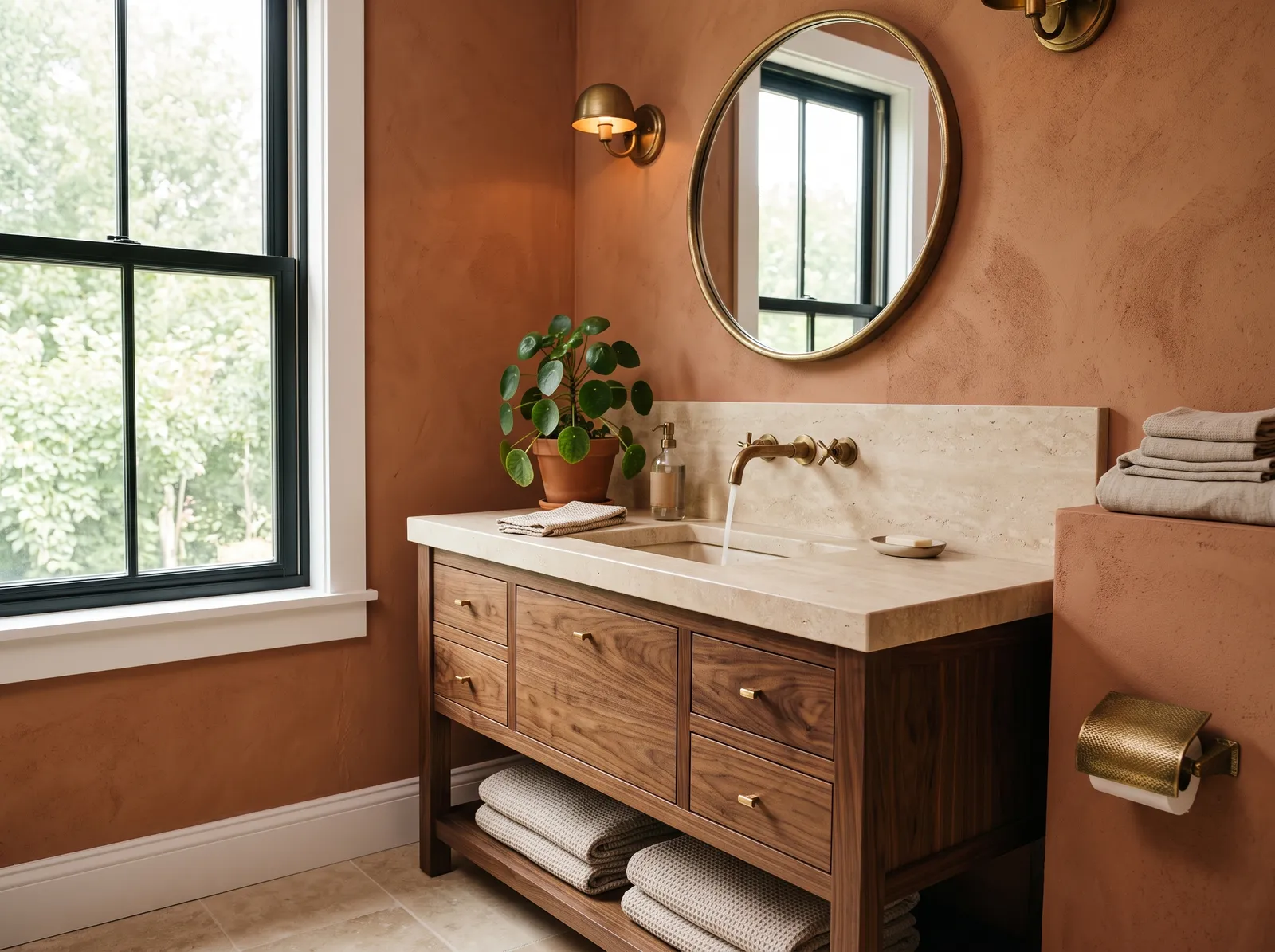
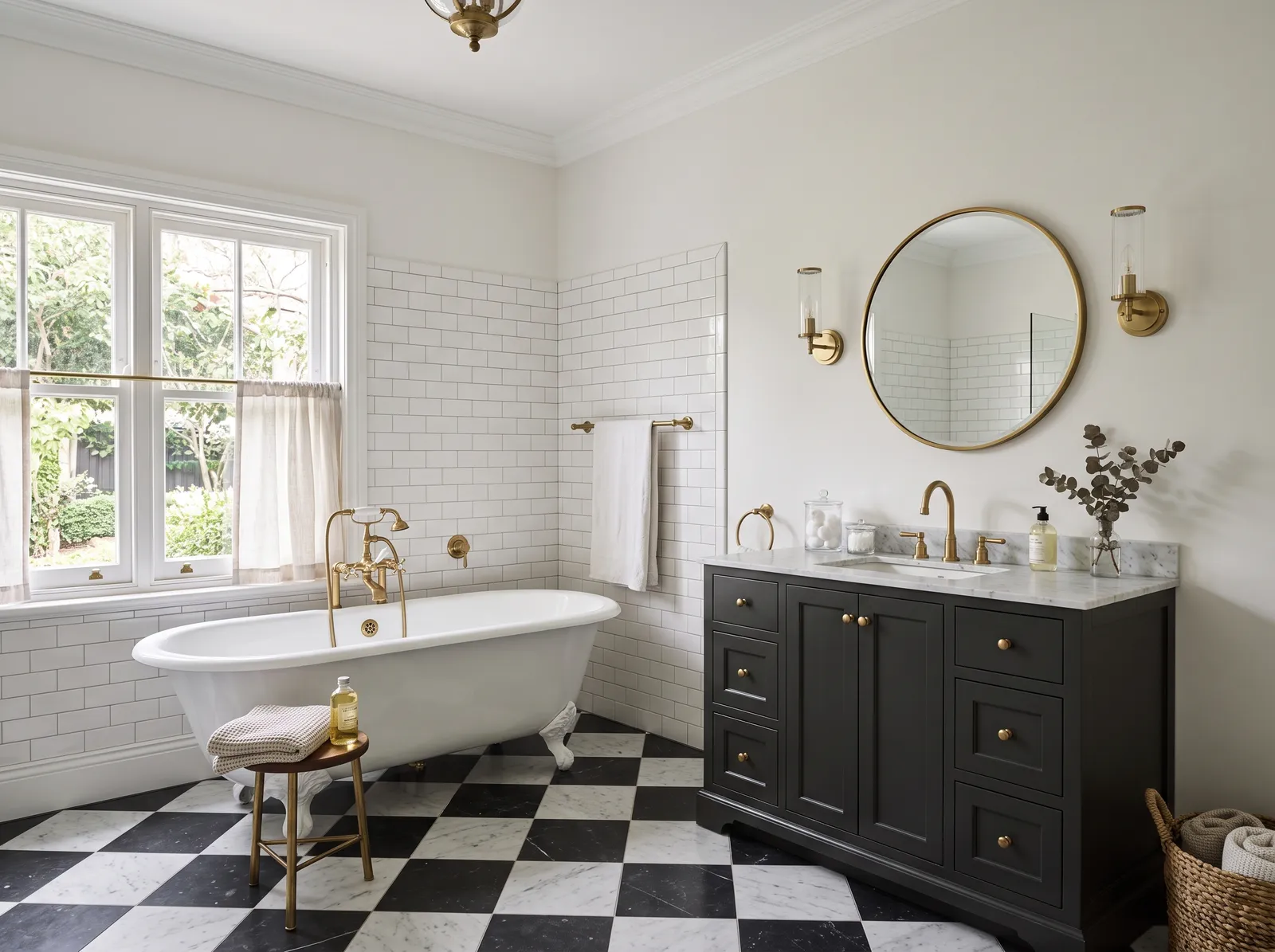
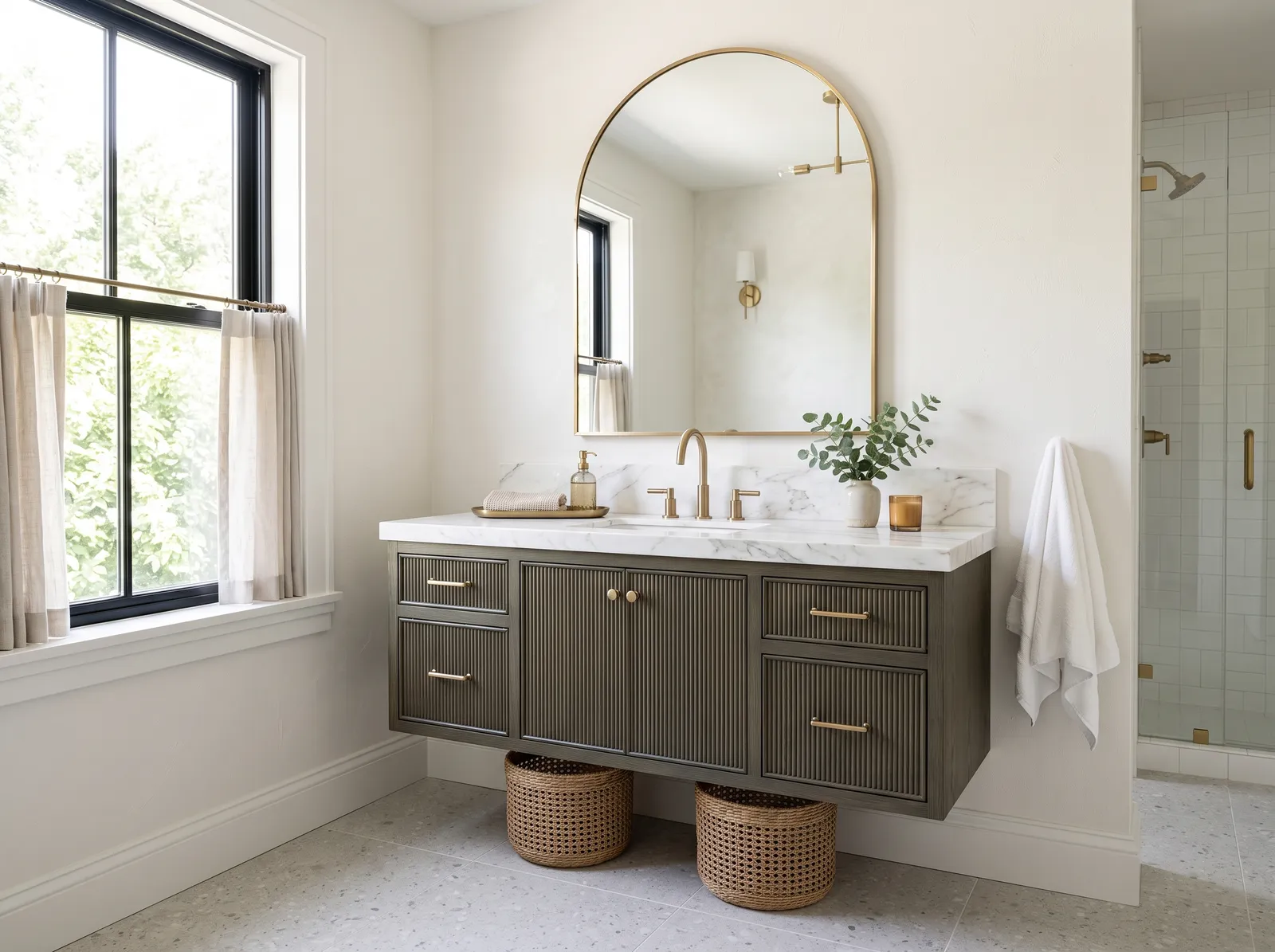
Crisp white, warm wood, and natural greenery all look wonderful with blue. For metal, brass warms the room while chrome keeps it cool and clean.
Does navy work in a bathroom?
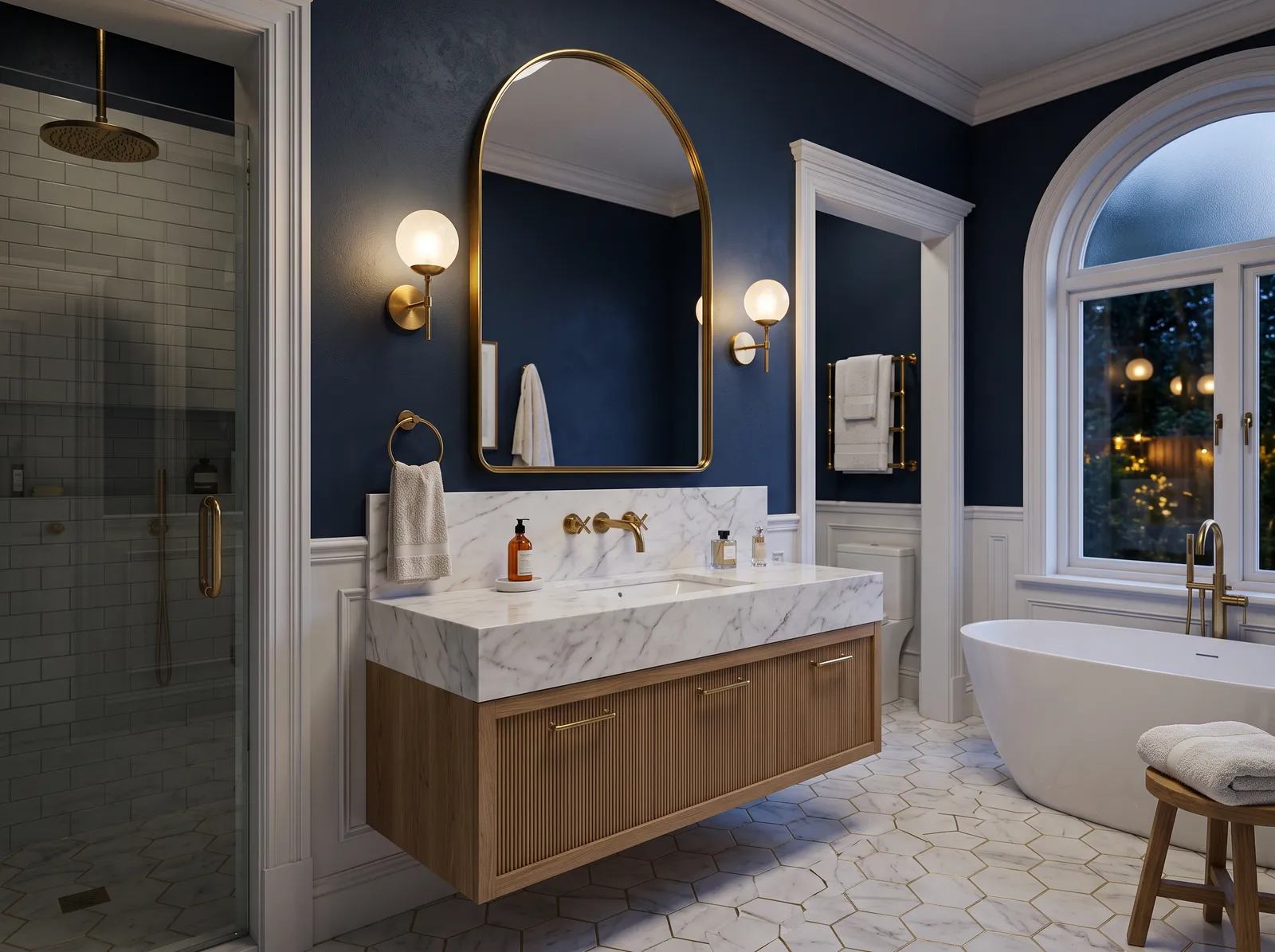
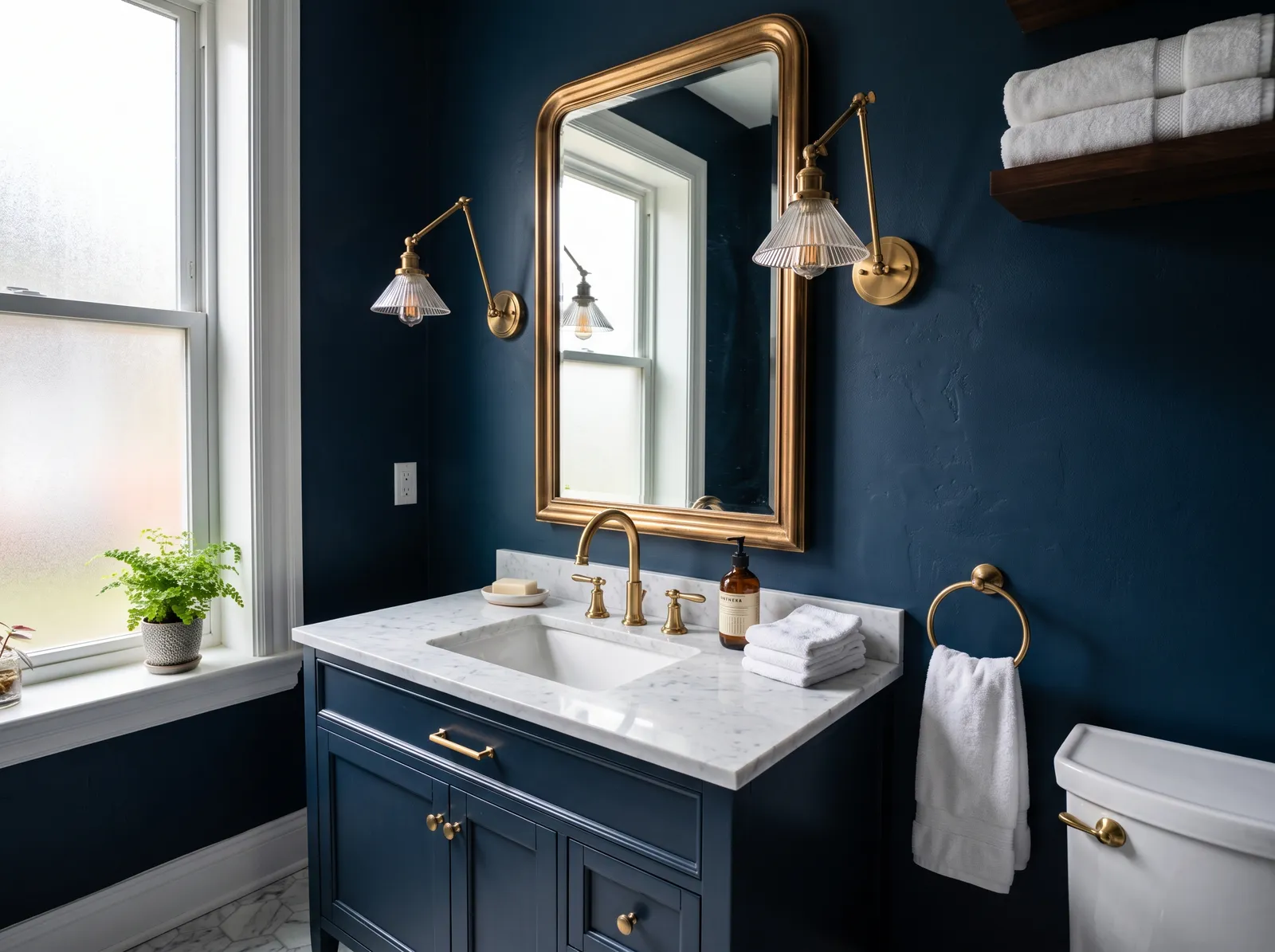
Navy works beautifully and feels rich and spa-like, especially with lots of white tile and warm lighting. It also hides splashes and fingerprints better than pale shades.
Will a pale blue look too cold in my bathroom?
It can if your light is cool or the room faces north. Choose a blue with a hint of gray or green to keep it soft and warm instead of icy.
What finish should I use for blue bathroom walls?
Use a satin or semi-gloss on the walls so they resist moisture and wipe clean easily. A flatter finish is fine for the ceiling.
What two-color combination works best in a blue bathroom?
The reliable pattern is a quiet main color plus one deep accent on a single wall. Keep trim and ceiling in one warm white so the two colors are the only event in the room — the combination cards above show complete schemes from real rooms.
What colors make a blue bathroom look bigger?
High-LRV, slightly warm colors — LRV 60–75 is the sweet spot. Paint the walls and trim close to the same light color so the corners blur, and keep the ceiling white. Stark cool white actually works against you; it creates hard shadows that show the room's edges.

 1
1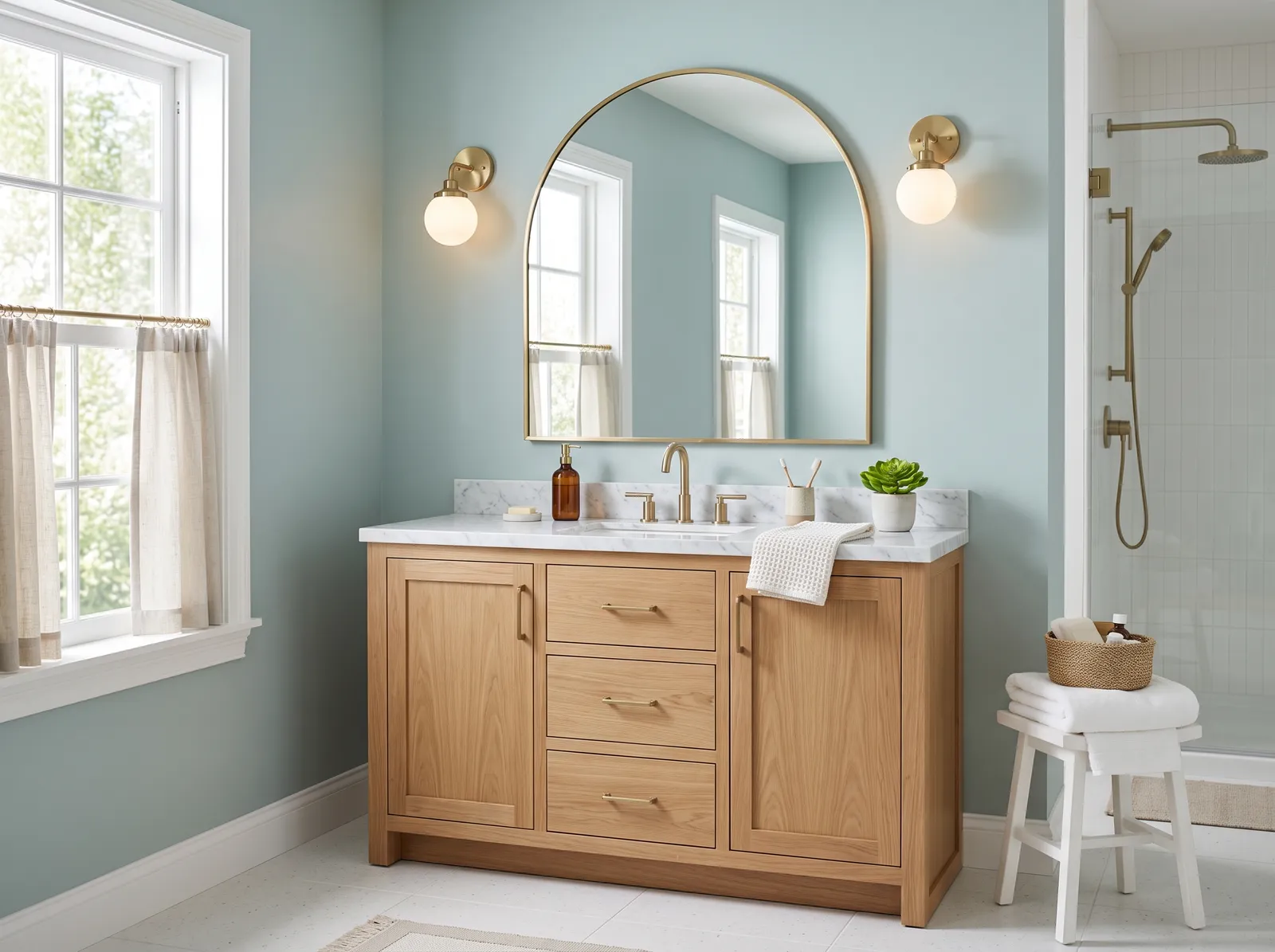
Ask a Question