Palette

Skin Color PaletteBare Skin Study

A five-color skin-tone scheme moving from soft porcelain through warm tan and caramel into deep umber, every color matched to real paint you can buy.

By David Chen · Formulation Lead & Resident Chemist
View palette in

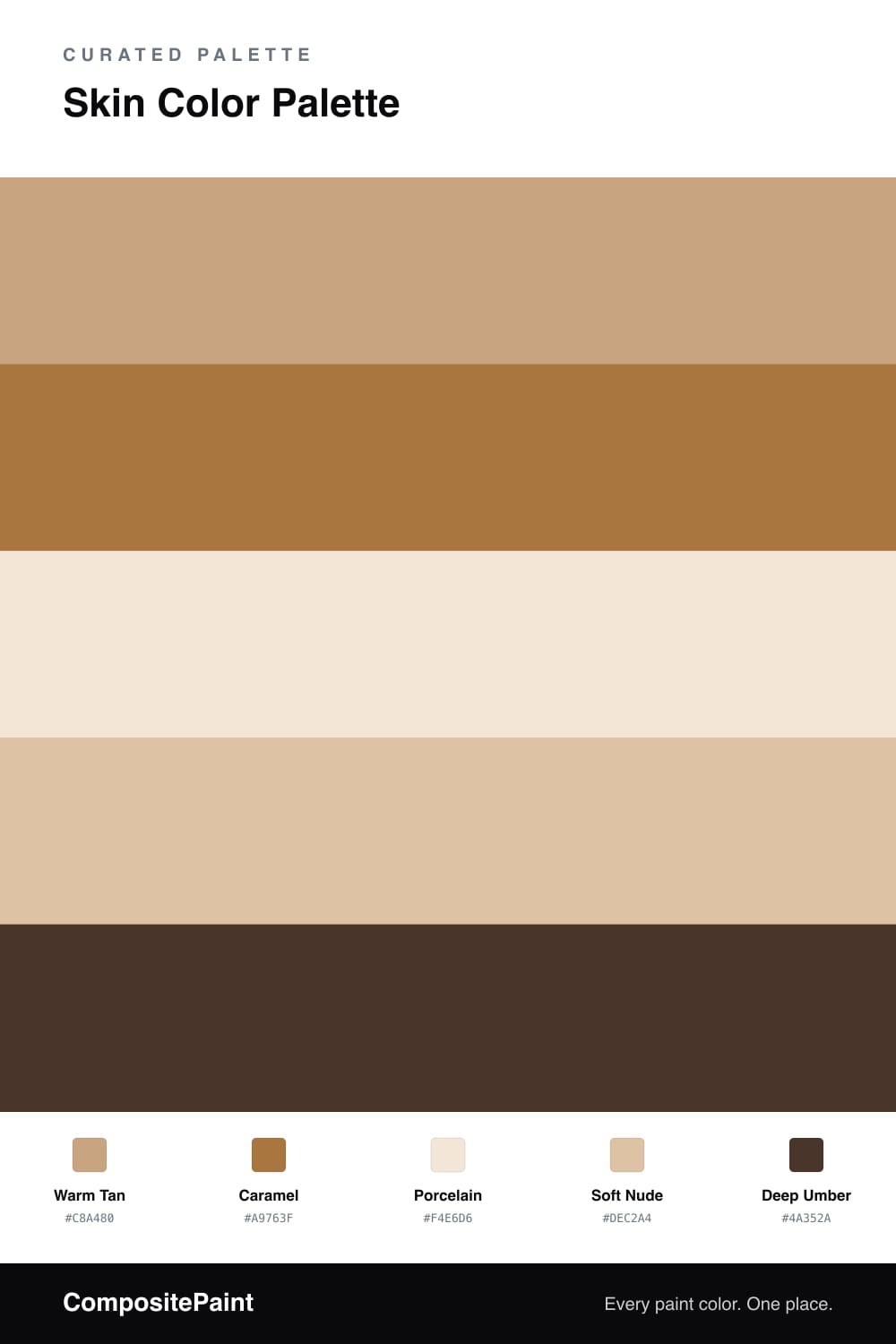
Skin tones are some of the hardest colors to get right because they live so close together on the wheel. The trick is to treat them like a gradient. Here a soft Warm Tan leads, sitting right in the middle of the range where it feels lived-in and easy.

Porcelain opens everything up as the lightest layer, and Soft Nude bridges the gap so nothing jumps. Think of it like the way light falls across an arm — pale where it catches, warmer in the turn.

For depth, Caramel and Deep Umber do the quiet structural work, the umber especially in trim or a single grounding piece. It reads contemporary and warm for 2026, the kind of palette that feels skin-soft without ever going beige-boring.

Buy these colors

Every Color, Matched to Real Paint

Each color matched to the closest paint in every brand we track, by ΔE2000. Tap a swatch for its full guide. Take any code to the store, they mix on demand.

Questions people actually ask

Questions

Why do these skin-tone colors work together?

They all share the same warm undertone and step evenly from light to dark, so the eye reads them as one family rather than five separate picks. That shared base is what keeps a nude palette calm instead of muddy.

How do I balance them in a room?

Let the warm tan lead and keep porcelain as your breathing space, roughly a 60/30 split, then use caramel and umber in small doses to add depth and edges.