Seaside Fog
The Lowe's sage-gray that's officially filed under "green," reviewed honestly: the light where it actually looks green, the light where it disappears into gray, and the near-identical name you can accidentally buy instead.

Jessica has spec'd whites and neutrals for more than 300 rooms and keeps a sample wall of painted drawdowns in her studio. Every color review is checked against real reader rooms in the comments and re-tested when a formula changes. About the testing process →
- 1Sage Green22
- 2Evergreen Fog30
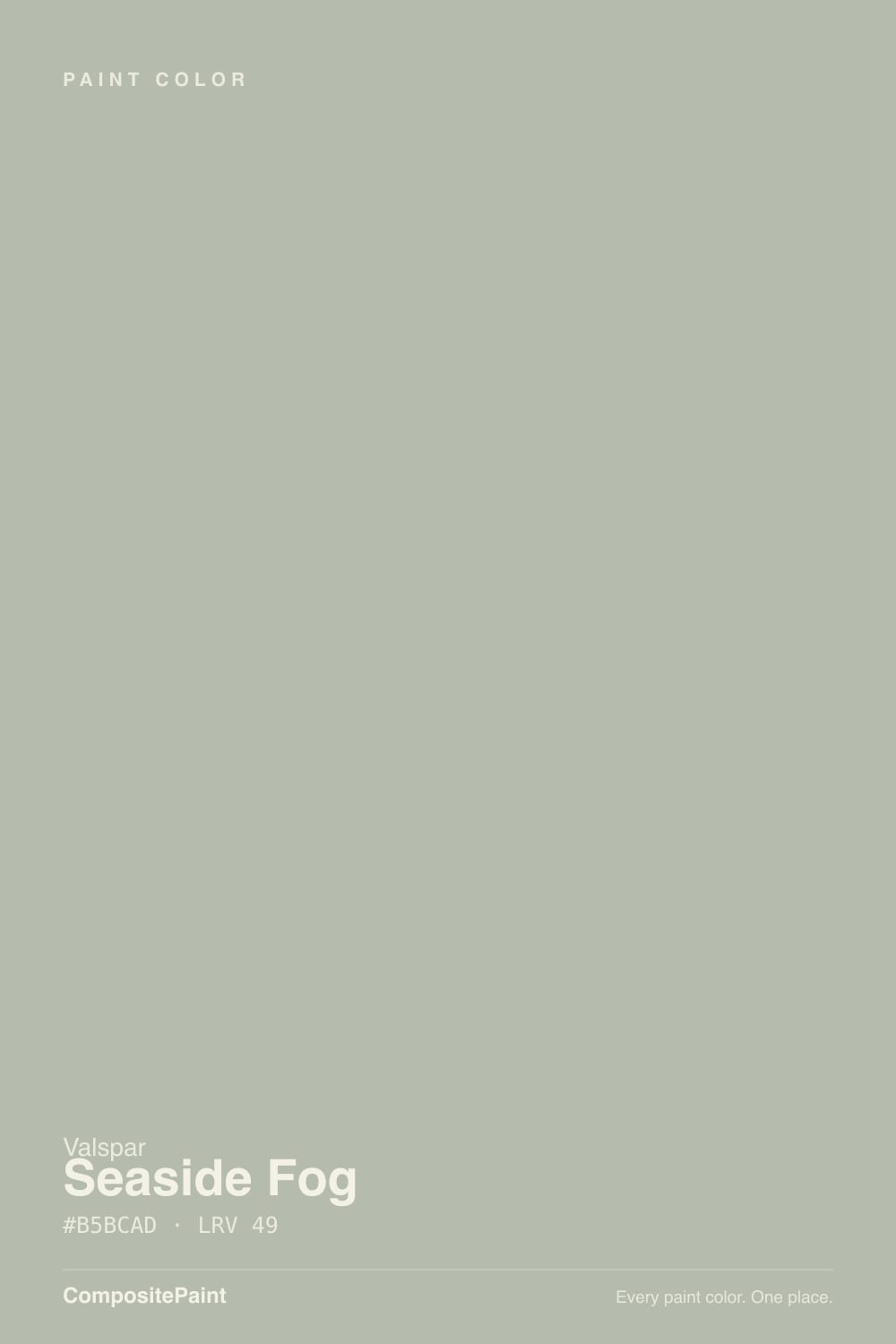
- 3Seaside Fog49
- 4Soft Fern57
- 5Hancock Green66
The Fast Verdict
Seaside Fog is a genuine mid-tone: LRV 49, dead center between light neutral and moody dark. Valspar files it under "green," and in real daylight it earns that filing — a quiet, grayed-out sage.
But its red, green and blue values sit within 15 points of each other, which is exactly the recipe for a color that goes nearly gray the second the light turns flat. Buy it wanting a calm, chameleon neutral that occasionally shows its green, and you'll be happy. Buy it wanting an obviously green room, and you'll be disappointed by dinnertime.
Bathrooms and powder rooms wanting a spa mood without committing to teal · bedrooms and dens with warm lamps at night · kitchen islands and cabinets over a white-oak or painted floor · sunrooms and mudrooms that get real daylight
You want an obviously, unmistakably green room · your space is windowless or stays overcast most days · your floors and cabinets are honey oak · you're actually shopping for Seashore Fog, a different, bluer Valspar color with a nearly identical name
- Genuinely mid-tone (LRV 49) — never washes out, never swallows a small room
- Reads as a calm, believable sage in real daylight, without going full teal
- Doubles as a safe gray-green neutral on the days you're not sure you want "green" at all
- Flatters brass, matte black and white-oak floors
- Small rooms — baths, powder rooms, closets — take the depth well
- In flat, overcast or north light it can read as plain gray — the green can nearly disappear
- Easy to confuse with Valspar's similarly named Seashore Fog, a different and bluer color
- Fights honey oak and other warm golden wood instead of complementing it
- Not committed enough for anyone who wants an unmistakably green room
What Color Is Seaside Fog, Really?
A grayed-down sage that Valspar's own site classifies as "green" with a cool undertone — but only just. The hex is #B5BCAD: red 181, green 188, blue 173. Green edges out the other two channels, which is the whole basis for calling it a green at all, but the spread between the highest and lowest channel is only 15 points on a 0-255 scale. That is a genuinely narrow gap. Compare it to a color with real chlorophyll, like Sherwin-Williams Evergreen Fog (LRV 30), where green visibly dominates red and blue — Seaside Fog is nowhere near that committed. It is a color built to read as "a green-ish gray" or "a gray-ish green" depending entirely on what light hits it.
At LRV 49 it sits almost exactly at the midpoint of the reflectance scale — not a light neutral you can use everywhere with no daylight, and not a deep mood color that needs real commitment either. That middle position is why it behaves the way it does: with enough daylight bouncing around, it holds its sage identity; in a dim or north-facing room, there simply isn't enough light hitting the wall to separate the green channel from its neighbors, and the color reads flat gray-taupe instead. Put it next to Sherwin-Williams Sea Salt (LRV 63, lighter and more clearly blue-green) and Seaside Fog will look noticeably deeper and quieter by comparison — a useful gut check if you're deciding between the two.
Undertone in one line: a cool, grayed sage-green — real, but subtle, and it needs daylight to prove it. If your sample reads as plain warm gray, that is the light doing its job honestly, not a bad batch of paint. And a practical warning that has nothing to do with light: Valspar also sells a color called Seashore Fog (7004-22), a different, more clearly blue-gray paint with a different SKU and hex. The two names are close enough that they turn up tangled together in searches and even in some color-matching databases — double-check you're holding the 8004-31D chip before you buy a gallon.
Where It Shines
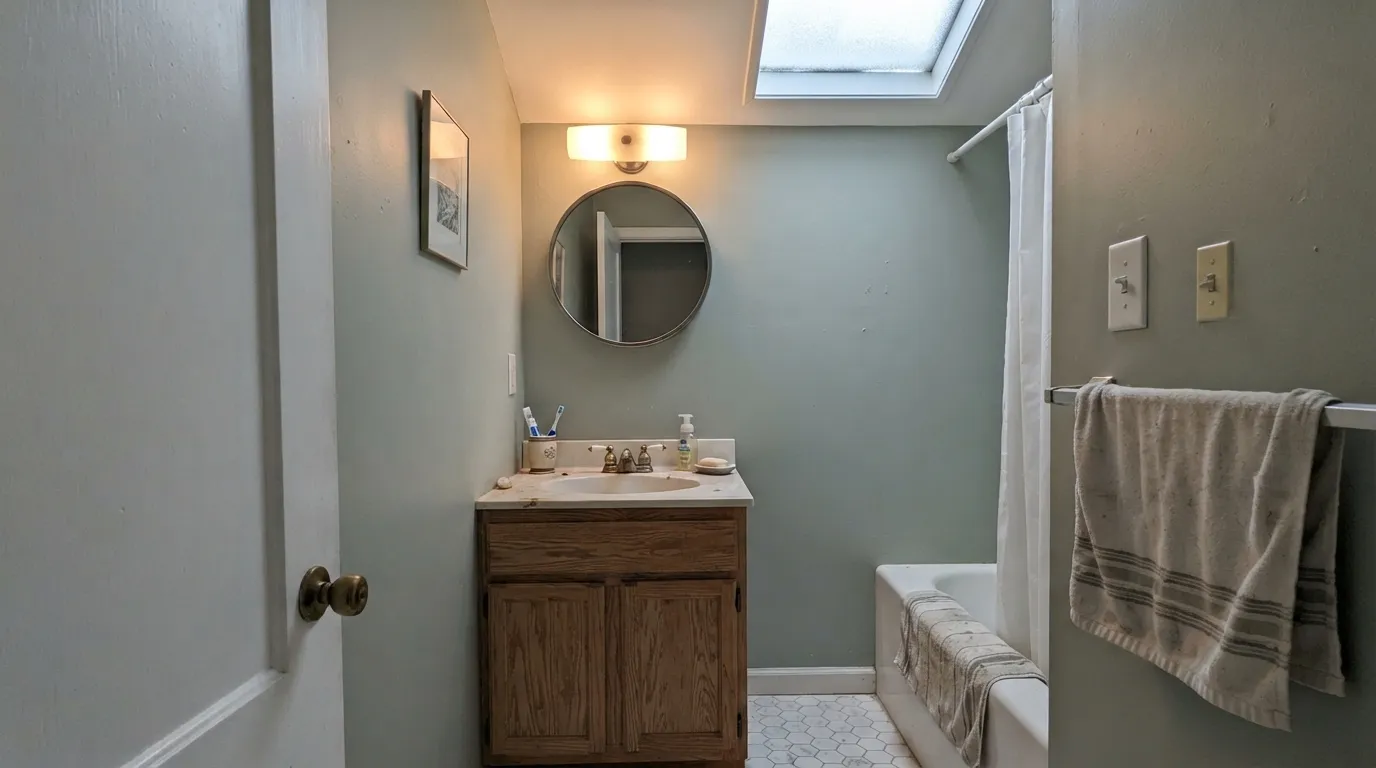
Give it a room with real, bounced daylight — a bathroom skylight, an east-facing bedroom after mid-morning, a sunroom — and Seaside Fog is a genuinely restful sage that reads coastal without tipping into teal or turquoise. Its best job is exactly where a full-strength green would feel like too much of a commitment: a powder room, a vanity, a kitchen island, a closet you're willing to drench. Pair it with white oak, brass, matte black or a warm white trim and it looks deliberate — a quiet, grown-up alternative to the louder sage-greens everyone already recognizes.
Where It Fails
Almost every disappointed story about Seaside Fog comes down to one of three predictable situations, and none of them are really the paint's fault. If your room matches one, sample it big before you commit a whole wall.
The name and the "green" family tag promise more color than the wall usually delivers. With only a 15-point spread between its red, green and blue values, this color needs real daylight to separate "sage" from "gray." In a dim or overcast room, most people would call it a plain warm gray-taupe, full stop. If green is the actual goal, look at a more committed color like Evergreen Fog instead.
Two different Valspar colors, one nearly identical name: Seaside Fog (8004-31D, the sage-gray reviewed here) and Seashore Fog (7004-22, a distinctly bluer gray). They show up next to each other in searches and swatch tools. If your painted wall looks bluer or grayer than you expected from this review, check the SKU on your can — you may be looking at the other one.
This is a cool-leaning color, and warm honey-toned oak pulls against it — the wood can look slightly more orange, and the wall can look slightly more muddy-olive than sage. It is not a disaster, but it is a real, visible tension. White oak, walnut, painted floors and matte black metals are the easier partners.
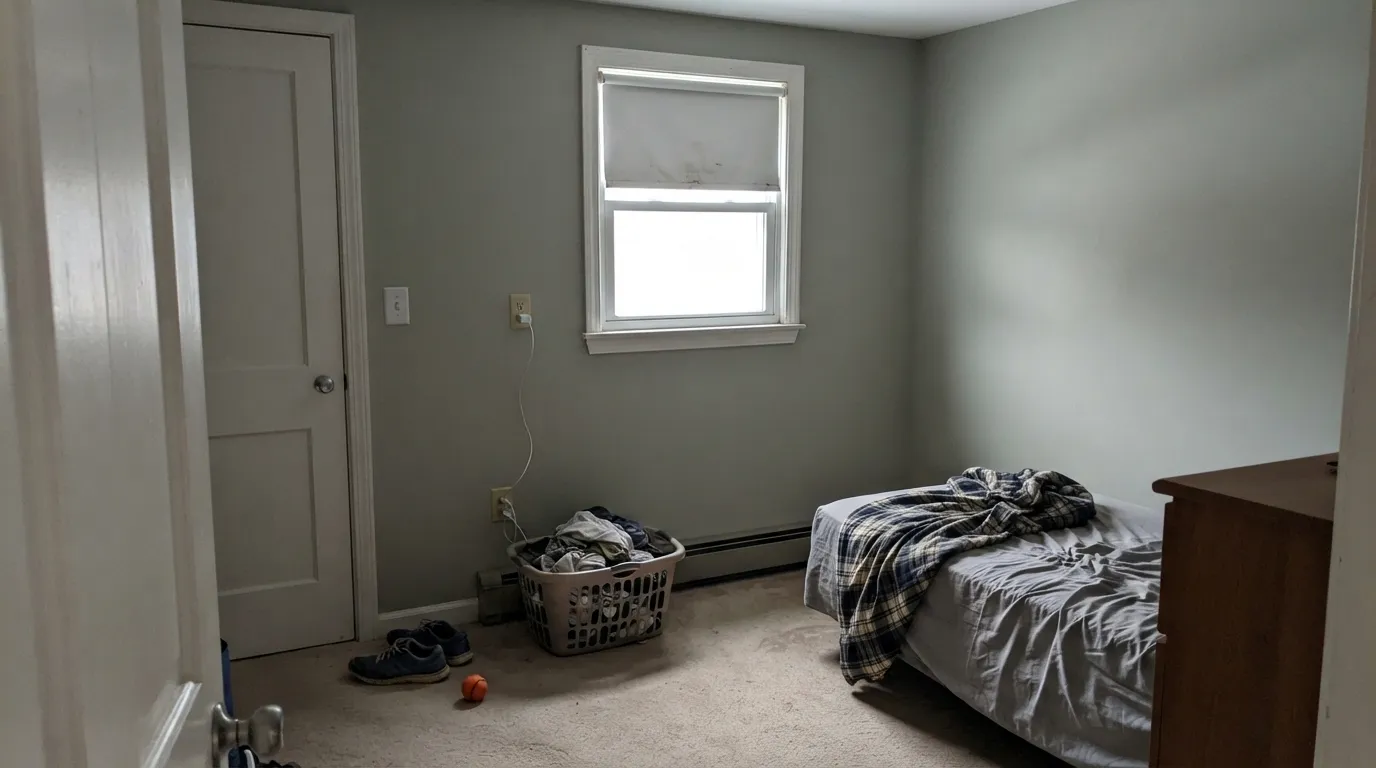
Room by Room
A skylight, a frosted window, or even just decent overhead lighting is enough to keep the sage reading true. Matte or eggshell on the walls, satin on a vanity. This is the room where a full commitment to green feels risky and Seaside Fog's in-between quality is exactly the point.
Under 2700K bulbs at night it settles into a soft, khaki-leaning gray-green that reads calm rather than cold. If the room is north-facing and dim during the day, expect it to look more gray than green most of the time — which some readers will actually prefer.
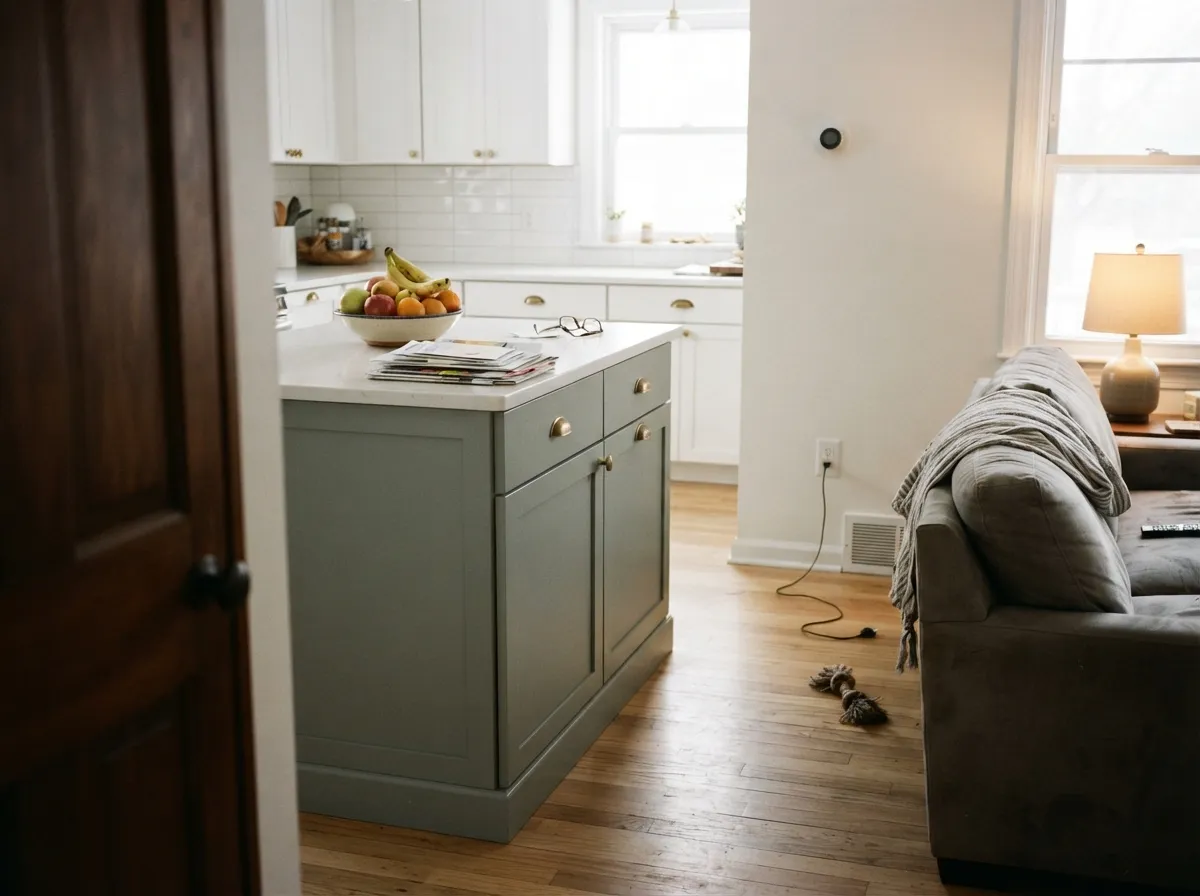
On lower cabinets or an island against white walls, it is genuinely charming with brass hardware and a white-oak or painted floor. A full kitchen of Seaside Fog walls over honey-oak cabinetry is where the wood-tone tension in the fails section shows up hardest.
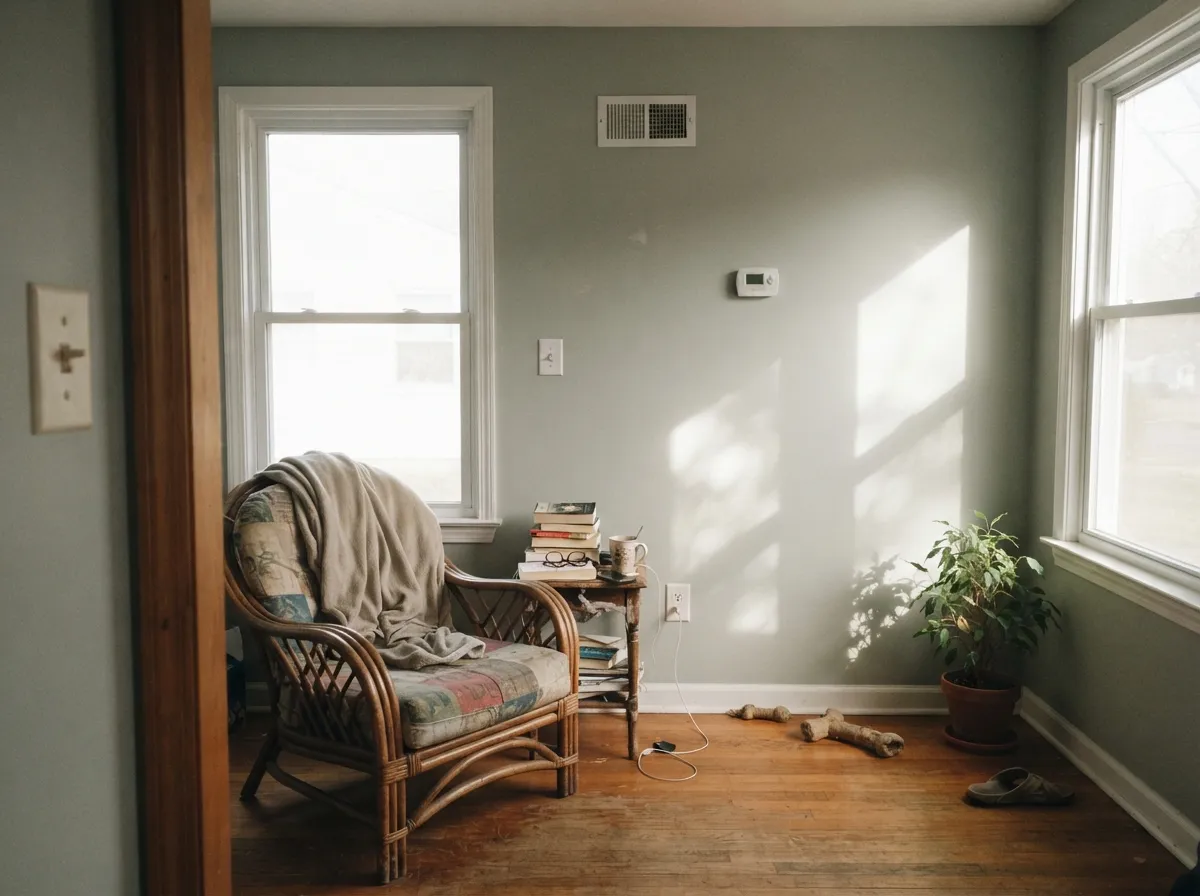
In a room that actually gets sun for a good chunk of the day, it holds its sage color and works as a quiet, non-committal alternative to a brighter green. In a dim family room it will likely read as "just gray," which is fine if that is secretly what you wanted.
These rooms rarely get flattering light, and Seaside Fog's gray-leaning fallback mode is actually an asset here — it looks intentional and calm even under a single overhead fixture, without needing the color to perform.
Small, enclosed spaces take a mid-tone color well, and a fully drenched closet (walls, trim, shelving) in Seaside Fog reads custom rather than accidental. Add a warm bulb inside so it doesn't slide fully gray.
Your Light Is the Risk
A skylight, a bright north-adjacent bath, or an east room after mid-morning — enough light to let the green channel separate from gray without going harsh.
With the color's red, green and blue values already this close together, low or flat light collapses the difference entirely — the wall reads gray-taupe, with the "sage" mostly gone.
Warmer and greener during the morning or evening sun hours, cooler and grayer under flat midday overhead light. The shift is gentle, not dramatic.
2700K bulbs pull it toward a soft, khaki-leaning gray-green. Cool white LEDs flatten it toward true gray — swap the bulbs before you second-guess the paint.
Most complaints about Seaside Fog are a light mismatch. Upload a photo of your actual room and see it on your walls — then ask for the same wall in north light or evening lamps before you buy a single sample.
Need It From Another Brand?
Any paint counter can custom-tint Valspar 8004-31D directly. If you would rather stay in one brand's own deck, these are the closest stock matches, measured as ΔE2000. Under 2 is a difference you will not see on the wall.
| Brand | Closest color | ΔE | LRV | |
|---|---|---|---|---|
| Sherwin-Williams | Hazel GazeSW 9652 · Sherwin-Williams | 0.9 | 51 | Color page → |
| Behr | Flagstaff GreenN400-3 · Behr | 2.1 | 50 | Color page → |
| Benjamin Moore | Gray Horse2140-50 · Benjamin Moore | 3.3 | 49 | Color page → |
| PPG / Glidden | Coastal CrushPPG1129-4 · PPG / Glidden | 2.1 | 50 | Color page → |
| Glidden | Silver Green Vine10GY 49/081 · Glidden | 1.8 | 49 | Color page → |
| Dutch Boy | Cliff Face422-3DB · Dutch Boy | 4.1 | 49 | Color page → |
Similar Valspar Colors
The nearest shades to Seaside Fog within Valspar's own range, ranked by perceptual color distance — useful when you want the same look a touch lighter, darker, or warmer.
WCAG 2.1: AA is 4.5 : 1 for normal text, 3 : 1 for large text, AAA is 7 : 1.
Seaside Fog vs the Colors You're Also Considering
Every Seaside Fog sample board has the same rivals on it. The numbers show the real lightness gap — then it comes down to which risk you would rather live with.
Pick this for a deeper, quieter mid-tone that stays closer to a true sage-gray.
Sherwin-Williams SW 6204 · LRV 63Sea SaltPick this for a lighter, more famous, more clearly blue-green cousin with a much longer track record.
Pick this for the quieter, closer-to-neutral version that reads calm even outside a bathroom.
Benjamin Moore 1564 · LRV 41Beach GlassPick this for more saturated blue-green — the spa-bathroom classic that commits harder than Seaside Fog does.
Seaside Fog Coordinating Colors
The rule for coordinating with Seaside Fog: warm whites, near-blacks, and either lighter or deeper members of its own gray-green family. It stays quiet next to true whites and one dark accent, and it layers well with bluer or greener cousins without introducing a second, competing undertone.
Seaside Fog vs. Seashore Fog: Same Name, Different Color
This is worth its own section because the mix-up is real and easy to make. Seaside Fog (8004-31D, hex #B5BCAD) is the grayed sage-green reviewed on this page. Seashore Fog (7004-22) is a separate Valspar color with a different SKU, a different hex, and a description that leans distinctly bluer and cooler. The names are close enough — and both are Valspar coastal-neutral colors — that they show up tangled together in swatch tools, color-matching databases, and general searches.
The practical fix is simple: always confirm the exact SKU, not just the name, before you order a sample or a gallon. If a photo or a review you're looking at describes a wall that reads noticeably bluer or cooler than what's shown here, there's a real chance it's the other color, not this one.
Seaside Fog With Wood Tones and Floors
White oak, walnut, and painted or whitewashed floors are the easiest company for Seaside Fog. Because the color leans cool, these wood tones don't fight it for temperature, and the sage stays calm and gray-green rather than sliding toward olive.
Honey oak and other warm, golden wood are the genuine tension point. The cool undertone in the paint and the warm undertone in the wood pull against each other — not a disaster, but a visible one, especially on a full wall of cabinets or flooring. If the wood isn't changing, sample generously and look at it in the room's actual light before committing.
Metals are the easy part: unlacquered brass and matte black both read well against it. Polished chrome and very cool-toned stainless are the only finishes that can make the whole pairing feel a little cold.
Three Ready Palettes Built on Seaside Fog
A color is never alone on the wall. These are complete combinations in the 60-30-10 pattern, with the reason each one holds together. Every one opens in the visualizer.
A warm, same-brand white trim keeps Seaside Fog from sliding all the way to flat gray under artificial light, and one true dark on the fixtures gives the small room the finished, expensive look it needs when there's no daylight to lean on.
Try this palette in your roomKeeping the walls a warm white lets the mid-tone sage do its job on cabinetry without betting the whole kitchen on a color that can go gray. The deeper cousin on one door adds real depth without doubling the risk.
Try this palette in your roomA room with genuine daylight is where Seaside Fog earns its "green" filing, and pairing it with a brighter, bluer-green cousin on one wall adds depth without introducing a second undertone family to fight over.
Try this palette in your roomSeaside Fog FAQ
Is Seaside Fog green or gray?
Officially green — Valspar's own site files it under the green family with a cool undertone. But the red, green and blue values that make up its hex (#B5BCAD) sit within 15 points of each other, which is a very narrow spread. In good daylight it reads as a genuine grayed sage; in flat or dim light, most people would honestly call it gray. The name splits the difference: fog for the gray days, sea for the good ones.
What's the difference between Seaside Fog and Seashore Fog?
Two different Valspar colors with almost the same name. Seaside Fog is 8004-31D, hex #B5BCAD, the sage-gray reviewed here. Seashore Fog is a separate color, 7004-22, described elsewhere as a distinctly bluer gray. They get tangled together in online searches and swatch databases, so check the SKU on the chip or can before you buy — it's an easy, real mix-up.
What does an LRV of 49 actually mean here?
LRV 49 sits almost exactly at the midpoint of the 0-100 reflectance scale — it reflects roughly half the light that hits it. That puts it squarely in mid-tone territory: not a light, safe-anywhere neutral, and not a deep, committed mood color either. It needs a reasonably lit room to look its best, but it won't swallow a small space the way a true dark would.
Is Seaside Fog good for a windowless bathroom?
It can work, but go in with the right expectations: without daylight, this color leans on its gray fallback mode rather than showing much green. Warm 2700K fixtures help keep it from reading flat, and pairing it with a warm white trim (Dove White is the easy same-brand match) keeps the room from feeling washed out.
What trim color goes with Seaside Fog?
Valspar's own Dove White is the simple answer — same brand, warm enough not to fight the sage, one trip to Lowe's. If you want more contrast, Valspar's Ultra White is brighter and crisper, best on trim rather than a full wall.
Does Seaside Fog work with honey oak floors or cabinets?
It's a real tension, not a guaranteed disaster. Cool-leaning sage against warm honey oak can push the wood slightly orange and the wall slightly muddy-olive. White oak, walnut and painted floors are much easier partners. If the honey oak is staying, sample a big piece of poster board on the actual wall before committing.
Have you painted with Seaside Fog?
Rate it — one tap helps the next reader decide.
Ask a Question