Whitened Sage
The Behr sage that reads almost pure white, reviewed honestly: where the green whisper actually shows, the light that erases it completely, and what to pick instead.

Jessica has spec'd whites and neutrals for more than 300 rooms and keeps a sample wall of painted drawdowns in her studio. Every color review is checked against real reader rooms in the comments and re-tested when a formula changes. About the testing process →
- 1Heirloom Shade63
- 2First Star69
- 3Whitened Sage74
- 4Alabaster82
- 5Chantilly Lace91
The Fast Verdict
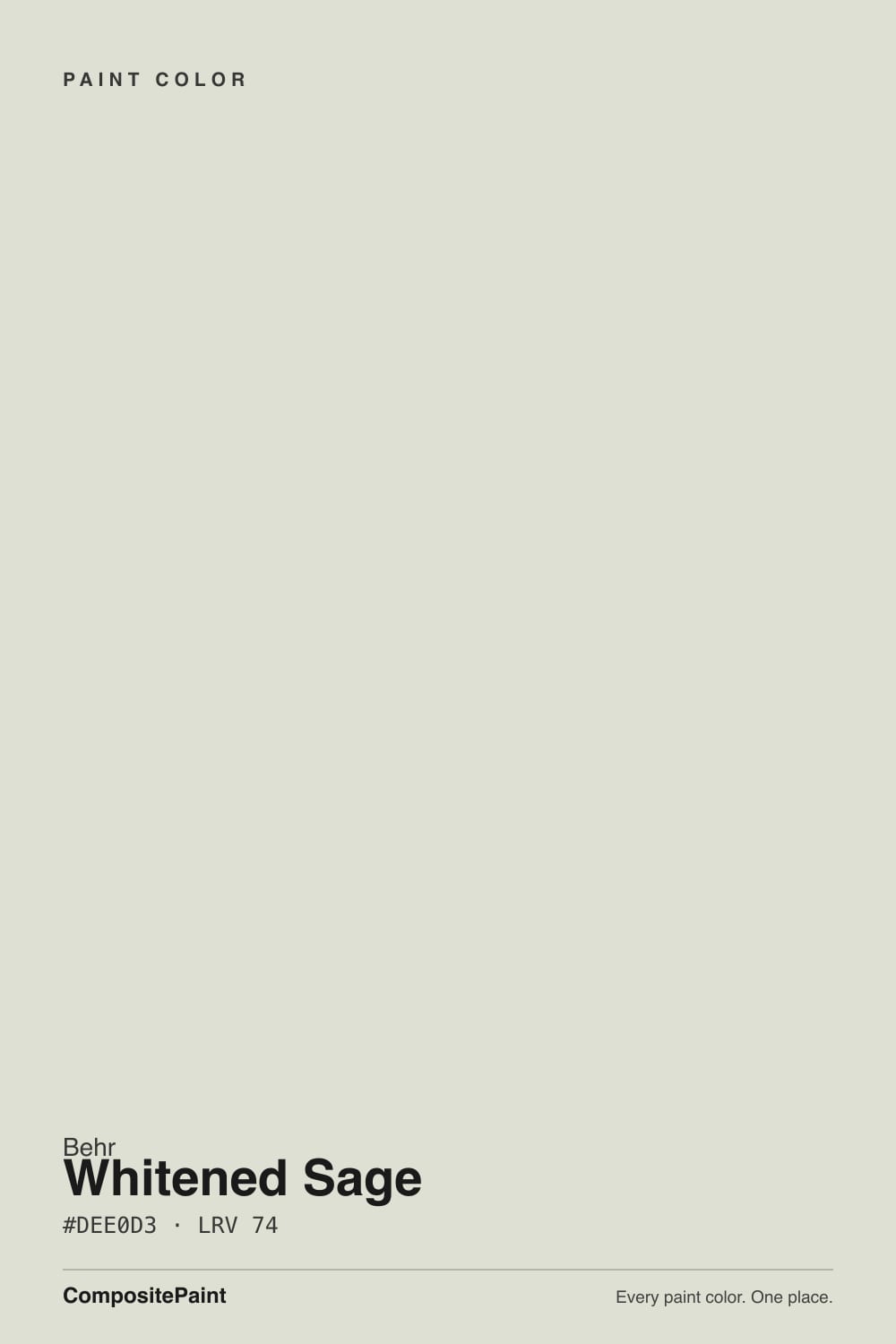
Whitened Sage is exactly what its name warns you about: sage that has been whitened almost out of existence. At LRV 74 it sits in the same brightness band as a trim white, not a color wall — Behr's own file copy calls it "a true white with a touch of gray-green," and that is the honest read. Buy it as a quiet, slightly organic near-white and it is genuinely lovely. Buy it hoping for a visible green statement wall and you will be disappointed by week two.
Whole-house near-white walls that want a little more character than plain white · kitchens and bathrooms with warm wood or brass · nurseries and calm bedrooms · anyone who wants "sage" without committing to real green
You want a wall that reads unmistakably green from across the room · your room is dim or north-facing · you're painting a full sun-drenched exterior and need it to match the swatch photo · you're chasing the deeper sage look of Sage Brush or Bitter Sage
- A genuinely versatile whole-house near-white with a little more character than plain white
- Hides scuffs and shadowing better than a stark white at LRV 74
- Strong reported one-coat coverage over dark colors on the Dynasty eggshell line
- Calm, gender-neutral choice for bedrooms, nurseries and bathrooms
- An easy, low-commitment way to try "sage" without a bold green wall
- Reads almost entirely white in flat, cool, or north-facing light — the green is a whisper, not a statement
- Full exterior sun can wash it whiter than online swatch photos suggest
- Too subtle for anyone who wants a wall that reads visibly green
- Coverage and depth get mixed reviews on Behr's exterior (Marquee) line specifically
What Color Is Whitened Sage, Really?
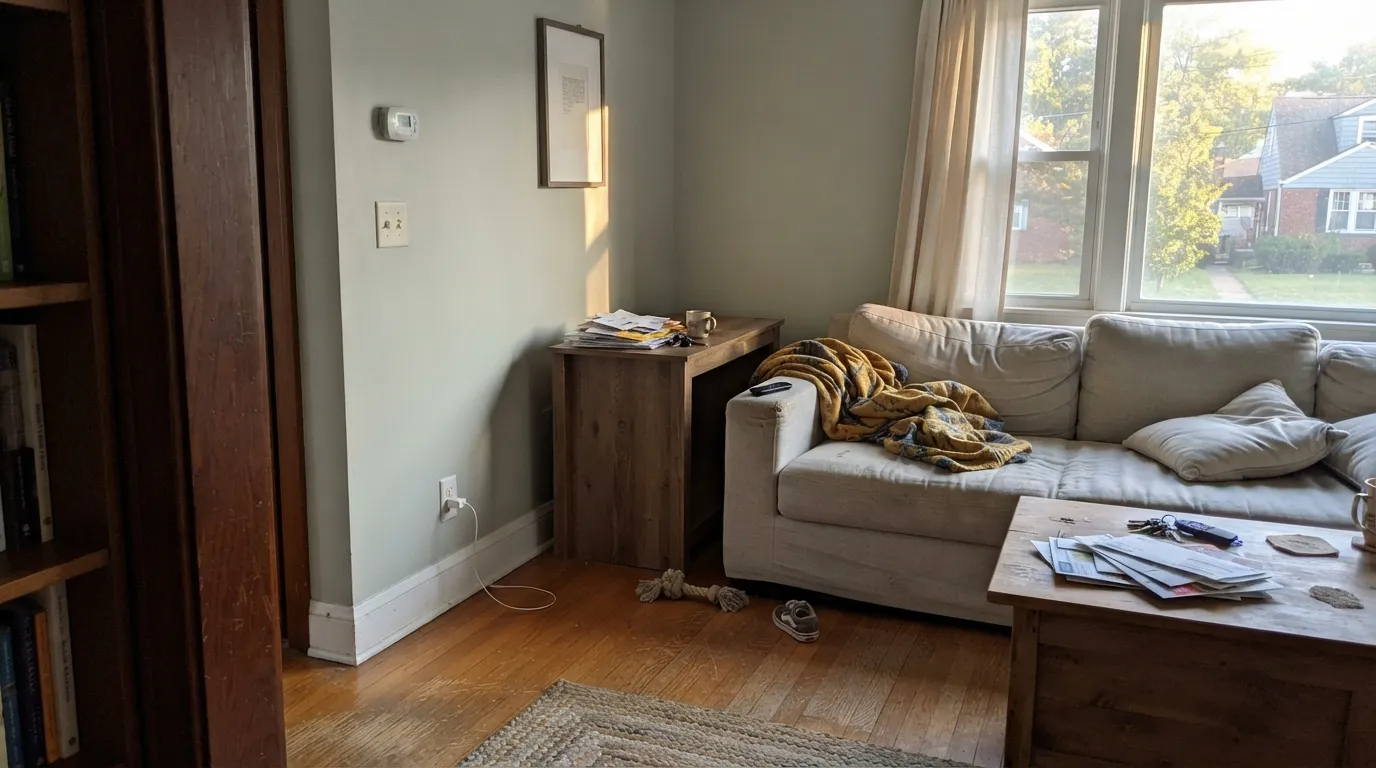
A near-white with a faint gray-green cast — and the "whitened" in the name is not marketing, it is a warning label. Behr's own color file describes it as "a true white with a touch of gray-green," which puts it closer to a trim white than to any of the brand's real sage greens. Compare it to Behr's own deck: Bitter Sage sits at LRV 40 and Sage Brush at LRV 60 — both genuinely read as green on a wall. Whitened Sage, at LRV 74, is a different animal entirely: a white that has been tinted, not a green that has been lightened.
That distinction is the whole story of this color's owner reviews. Home Depot buyers split cleanly into two camps: people who wanted a gray-green whisper and got exactly that — "a very light gray tint... looks fabulous" — and people who expected visible sage and instead found a wall "SO white it matches my white ceiling." Both groups are describing the same paint honestly. The color genuinely is that pale; the disagreement is about what they thought "sage" meant on the can.
Undertone in one line: gray-green first, with a faint warm cast underneath — never blue, never true white despite how it can read. The green only becomes legible in real, warm-leaning daylight or set directly against something warmer or greener; in flat or cool light it recedes to plain off-white.
Where It Shines
Give it real side-lit daylight and something warm to sit next to — golden oak, brass, cream linen, a stack of dried herbs on the counter — and the gray-green comes forward just enough to feel intentional instead of accidental. Owners on the Dynasty eggshell line report genuinely strong performance: one coat covering deep red walls, results they say outperform paint costing twice as much. It is at its best as connective tissue for a whole house — a near-white with a personality just barely different from builder white, worn on walls that see the color mostly through what it's paired with.
Where It Fails
Almost every disappointed review of Whitened Sage comes down to one of three mismatches, and every one of them is knowable before you buy the sample.
At LRV 74 this is not Sage Brush or Bitter Sage — it is a white with green suggested, not shown. If you want a wall people notice is green from the doorway, this color will not deliver it; step down to a deeper sage in the same family.
The whisper of gray-green needs warm, real daylight to register at all. Under flat north exposure or cool-white bulbs it drains to plain, slightly flat white — the exact complaint behind the "matches my white ceiling" reviews.
Marquee exterior reviewers reported the color reading noticeably whiter outdoors than the online swatch promised, with some calling coverage and depth disappointing. Full sun washes out what little color is there; sample a real board outside before committing a whole facade.
Room by Room
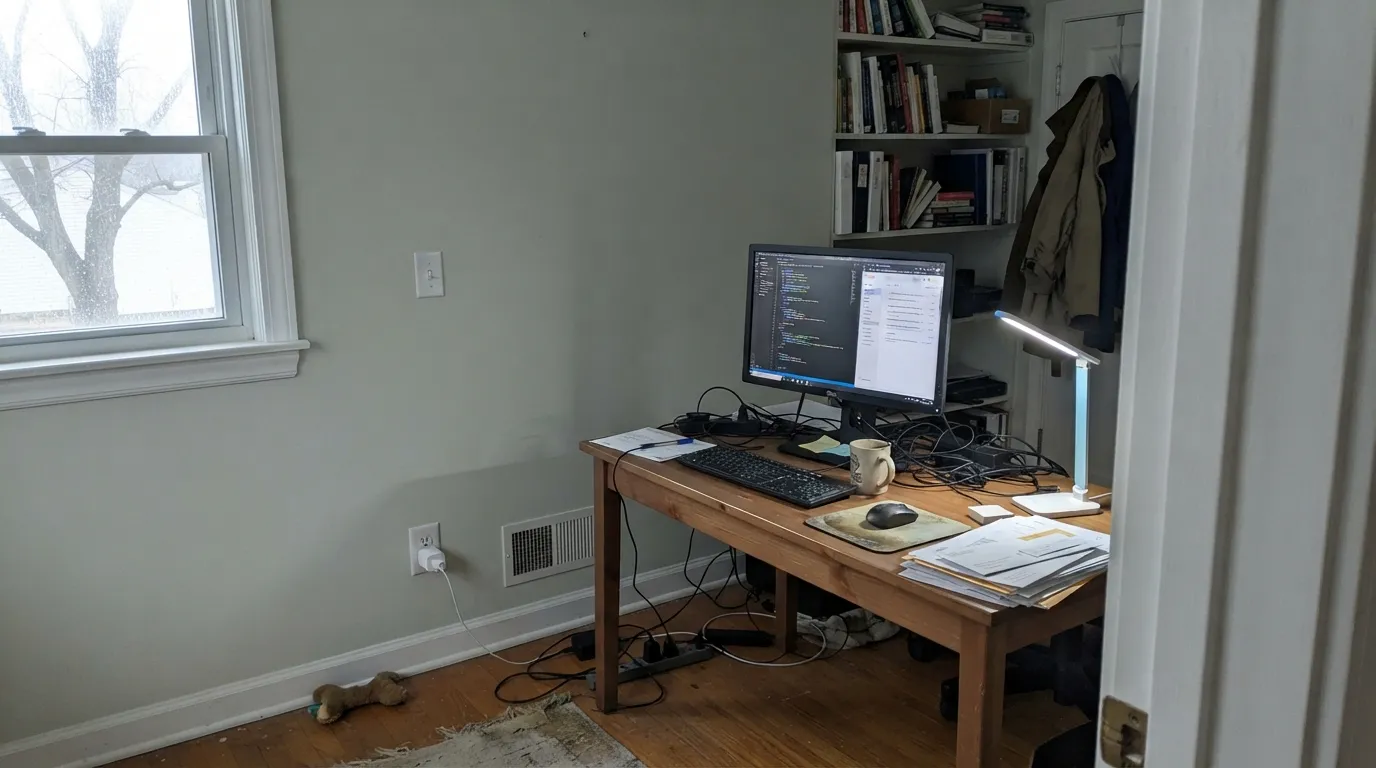
In warm afternoon light it reads as a quiet, slightly organic near-white rather than plain builder white. Eggshell finish; keep the trim genuinely white (not this color) so the faint green has something to read against.
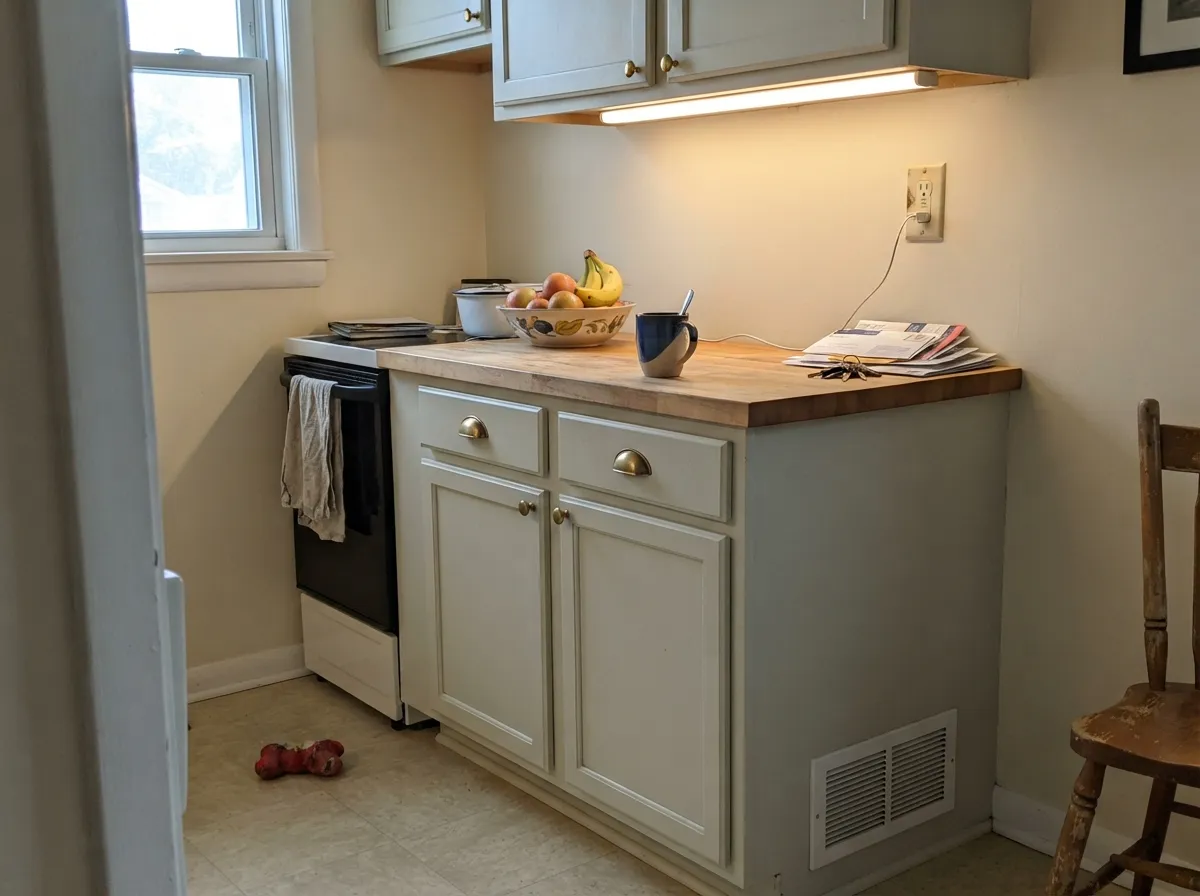
Satin Whitened Sage cabinets against a warmer wall color and brass hardware let the green whisper show without turning the kitchen into a color statement. Owners report strong one-coat coverage on the Dynasty line, which matters on cabinets.
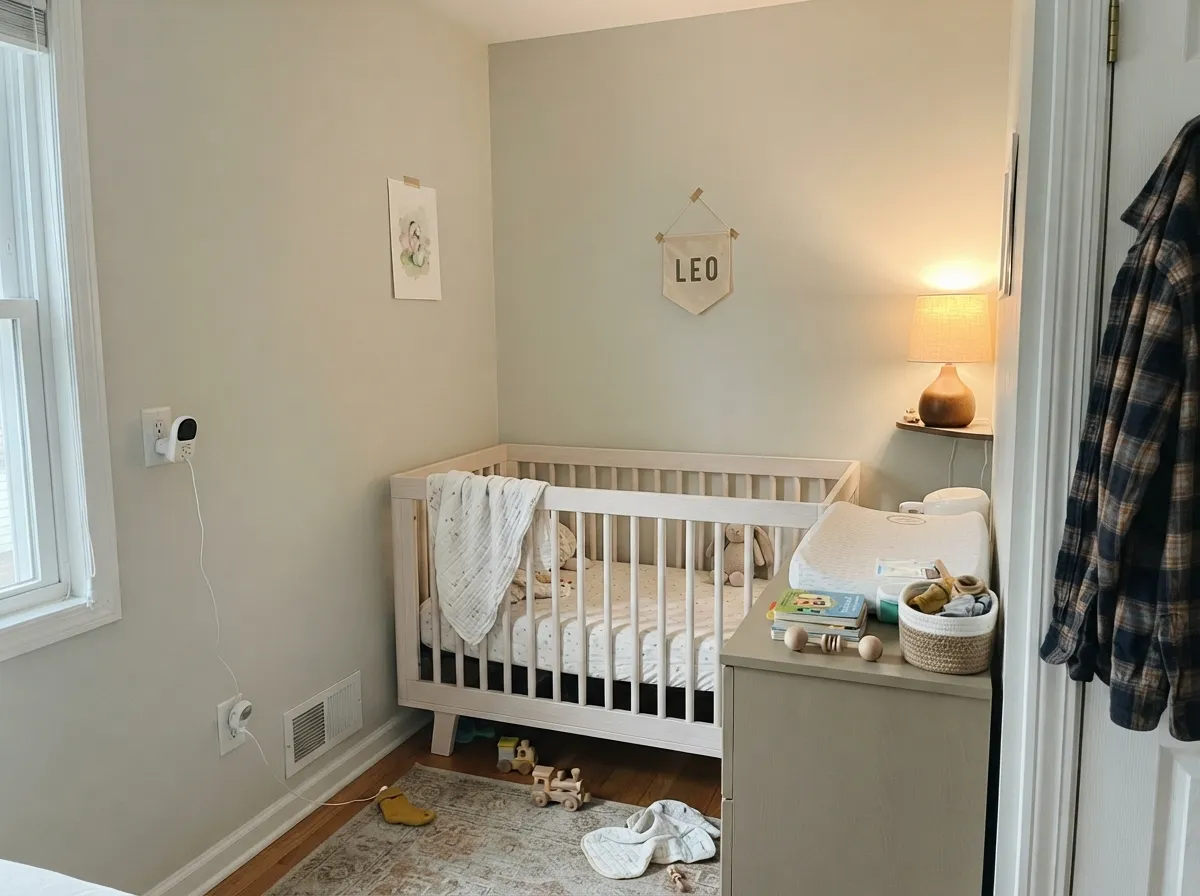
This is where the pale, barely-there green earns its keep: restful without being a color decision anyone has to defend. Warm 2700K lamps help the green stay visible after dark.
With warm-toned tile, wood vanities or brass it reads soft and spa-like. With stark white fixtures and cool LED vanity lighting, expect it to disappear into the tile.
It can work as a soft, understated siding white, but real owner reviews on the Marquee exterior line describe it reading whiter and flatter in full sun than the online photos suggest. Test a large board on the actual wall, in the actual light, before ordering gallons.
A calm near-white that avoids the sterile feel of a stark white without demanding attention on video calls. Works well with warm wood shelving.
Your Light Is the Risk
Side-lit warm sun is where the gray-green actually registers instead of reading as plain white.
Cool, flat light erases the faint green entirely — this is the "matches my white ceiling" complaint. Test first.
Strong direct sun washes it toward a brighter, flatter white — the exact effect exterior reviewers flagged against the online photos.
Warm 2700K lamps pull the gray-green forward slightly at night; cool LEDs flatten it back to plain white.
Most complaints about Whitened Sage are a light mismatch. Upload a photo of your actual room and see it on your walls — then ask for the same wall in north light or evening lamps before you buy a single sample.
Need It From Another Brand?
Any paint counter can custom-tint Behr PPU10-12 directly. If you would rather stay in one brand's own deck, these are the closest stock matches, measured as ΔE2000. Under 2 is a difference you will not see on the wall.
| Brand | Closest color | ΔE | LRV | |
|---|---|---|---|---|
| Sherwin-Williams | NuanceSW 7049 · Sherwin-Williams | 2.5 | 74 | Color page → |
| Benjamin Moore | Ally's EarringCSP-125 · Benjamin Moore | 1.5 | 74 | Color page → |
| Valspar | Pale Oak Grove5008-3A · Valspar | 1.4 | 74.9 | Color page → |
| PPG / Glidden | Rain CloudPPG1125-1 · PPG / Glidden | 1.0 | 75 | Color page → |
| Glidden | Wild WheatPPG1123-3 · Glidden | 1.2 | 74 | Color page → |
| Dutch Boy | Worn Pages016W · Dutch Boy | 3.9 | 74 | Color page → |
Similar Behr Colors
The nearest shades to Whitened Sage within Behr's own range, ranked by perceptual color distance — useful when you want the same look a touch lighter, darker, or warmer.
WCAG 2.1: AA is 4.5 : 1 for normal text, 3 : 1 for large text, AAA is 7 : 1.
Whitened Sage vs the Colors You're Also Considering
Every Whitened Sage sample board has the same rivals on it. The numbers show the real lightness gap — then it comes down to which risk you would rather live with.
Pick this for the marginally deeper, slightly more grounded version of the same near-white green.
Behr N320-1 · LRV 76Campfire AshPick this if this exact one is out of stock — it is nearly the same pale sage-white idea, a shade lighter.
Pick this when you want the green to actually be noticeable, not just implied.
Behr BWC-29 · LRV 79Silver FeatherPick this if even this feels too green — Silver Feather is the palest green in the whole Behr deck.
In the Behr deck, Salt Cellar (PPU25-11) at LRV 74 and hex #DEE0D7 holds more blue, so it reads cooler and less green than Whitened Sage. Arid Landscape (N310-2) at LRV 74 and #DFE0CF drops its blue further and looks more clearly sage. Mission White (PPU24-15) at LRV 74 and #E1DFD4 lets red lead green, making it the warmer option.
Across brands, Diamond Vogel Speak to Me (0413) at LRV 74 has a deltaE of 0.94 and PPG Rain Cloud (PPG1125-1) at LRV 75 sits at 0.98, so both are effectively the same color. Valspar Pale Oak Grove (5008-3A) at LRV 74.9 at deltaE 1.39 and Benjamin Moore Ally's Earring (CSP-125) at LRV 74 at deltaE 1.48 are visually identical in normal room light.
Sherwin-Williams Nuance (SW 7049) at LRV 74 and deltaE 2.53 is very close but worth sampling first, since it holds more blue and reads slightly cooler. Farrow and Ball School House White (No. 291) at LRV 73 and deltaE 3.29 is close but visibly different side by side, leaning warmer and creamier.
Whitened Sage Coordinating Colors
The rule for coordinating with Whitened Sage is to decide which side you want it to lean: pair it with warm whites and wood and it reads as a quiet warm neutral; pair it with a genuinely darker green and it reads as the palest step in a sage family. Both work — the pairing decides which paint you actually bought.
Why Whitened Sage Reads Whiter Than "Sage" Promises
The name is honest if you read it literally: this is sage that has been whitened, not a green that has been softened. Behr's own deck makes the gap obvious once you line the colors up. Bitter Sage sits at LRV 40 and Sage Brush at LRV 60 — both genuinely read as green from across a room. Whitened Sage, at LRV 74, sits closer to the brand's trim whites than to either of those. It isn't a watered-down version of a green color; it's a tinted version of a white one.
That is also why the color's real-world reviews split so cleanly in two. People who bought it expecting a pale gray-green whisper are consistently happy. People who bought it expecting anything resembling a visible sage wall are consistently surprised — and on the exterior line specifically, some reported the color looking noticeably whiter in full sun than the online listing photo. Neither group is wrong about the paint; they disagreed about what "sage" meant before it went on the wall.
Whitened Sage With Wood Tones and Floors
Because the color itself carries so little pigment, the wood and flooring around it do most of the work of making it feel intentional. Golden and honey oak actually help here — the warm floor gives the cool gray-green something to react against, so the wall reads as a considered near-white rather than a leftover trim can. Walnut and espresso floors work too, in a quieter, more monochrome way.
The one combination that flattens it completely is a cool gray floor under cool white LED lighting: two pale, low-color surfaces cancel each other out, and the room can end up looking like nothing was decided at all. If your floors are already cool and gray, warm the room with brass, wood furniture or warm bulbs before you commit to this wall color.
Three Ready Palettes Built on Whitened Sage
A color is never alone on the wall. These are complete combinations in the 60-30-10 pattern, with the reason each one holds together. Every one opens in the visualizer.
The pale walls stay quiet and restful while a true white trim gives the faint green something crisp to sit against. One deeper-sage accent wall shows the green Whitened Sage only implies, so the room doesn't read as plain white by accident.
Try this palette in your roomWarm Swiss Coffee walls keep the sage cabinets from reading stark or clinical, and the near-black island gives the room the one dark anchor a whole scheme of pale neutrals is missing. Brass hardware pulls the warmth through.
Try this palette in your roomA genuine white trim keeps the pale siding legible as something other than plain white in full sun, and a real dark-green door and shutters supply the one saturated note the facade needs without introducing a whole new color family.
Try this palette in your roomWhitened Sage FAQ
Is Whitened Sage actually green?
Barely, and that is by design. At LRV 74 it is closer to a trim white with a green cast than to a green wall color. In warm daylight the gray-green is visible; in flat or cool light it reads as plain white. If you want unmistakable green, look at Sherwin-Williams Sage or Behr's own Sage Brush instead.
Why do some reviews call it too white?
Because it is, relative to what the name promises. Behr's own file describes it as "a true white with a touch of gray-green" — several Home Depot reviewers report it matching their white ceiling. That's not a defective can; it's an accurate description of a very pale color.
Does it work on kitchen cabinets?
Yes, especially in satin. Paired with a warmer wall color and brass hardware, the faint green reads as intentional rather than accidental, and owners on the Dynasty eggshell line report strong one-coat coverage.
How bright is it, really?
LRV 74 — in the same brightness band as many trim whites, not a mid-tone color wall. It reflects most of the light that hits it, which is exactly why the green in it is so easy to lose in anything but warm, direct light.
Is it good for an exterior?
It can work as a soft, understated siding color, but sample it outdoors first. Owner reviews on the Marquee exterior line specifically describe it reading noticeably whiter in full sun than the online swatch photo, so a large test board on the actual wall matters more here than on most colors.
What trim goes with Whitened Sage walls?
A genuine white — Behr Polar Bear or Behr White — gives the faint green something crisp to sit against. A cream or off-white trim will blur into the walls and make the whole room read flat and colorless.
Have you painted with Whitened Sage?
Rate it — one tap helps the next reader decide.
Ask a Question