Room Colors · Green Children's Room
8 Best Green Children's Room Paint Colors for 2026
ideas, combinations, and real rooms
8 curated picks from real green children's rooms — with the exact colors, honest reasons why, and the combinations that hold the room together.

Former interior stylist who can spot a green undertone from across a room. Jessica writes the color and mood pieces — what to choose, what pairs, and why your "white" looks pink.
The Fast Answer
Don't want to read 8 picks? These four are the safe answers.

Top Picks for the Green Children's Room
Tap a shade to see the green children's room in it, then try it on your own room.
Green Children's Room Color Trends 2026 — What's In, What's Out


- Bright Grass-Green Accent Walls — A single loud grass-green wall against plain white now feels like a leftover 2000s playroom trick.
- Frog-and-Jungle Theme Green — Cartoon jungle-themed bright greens are losing ground to more grown-up, earthy green tones that last past toddlerhood.
- Minty Pastel Green — Cool, minty pastel greens read clinical next to 2026's warmer, deeper botanical shades.
The 8 Best Green Children's Room Paint Colors
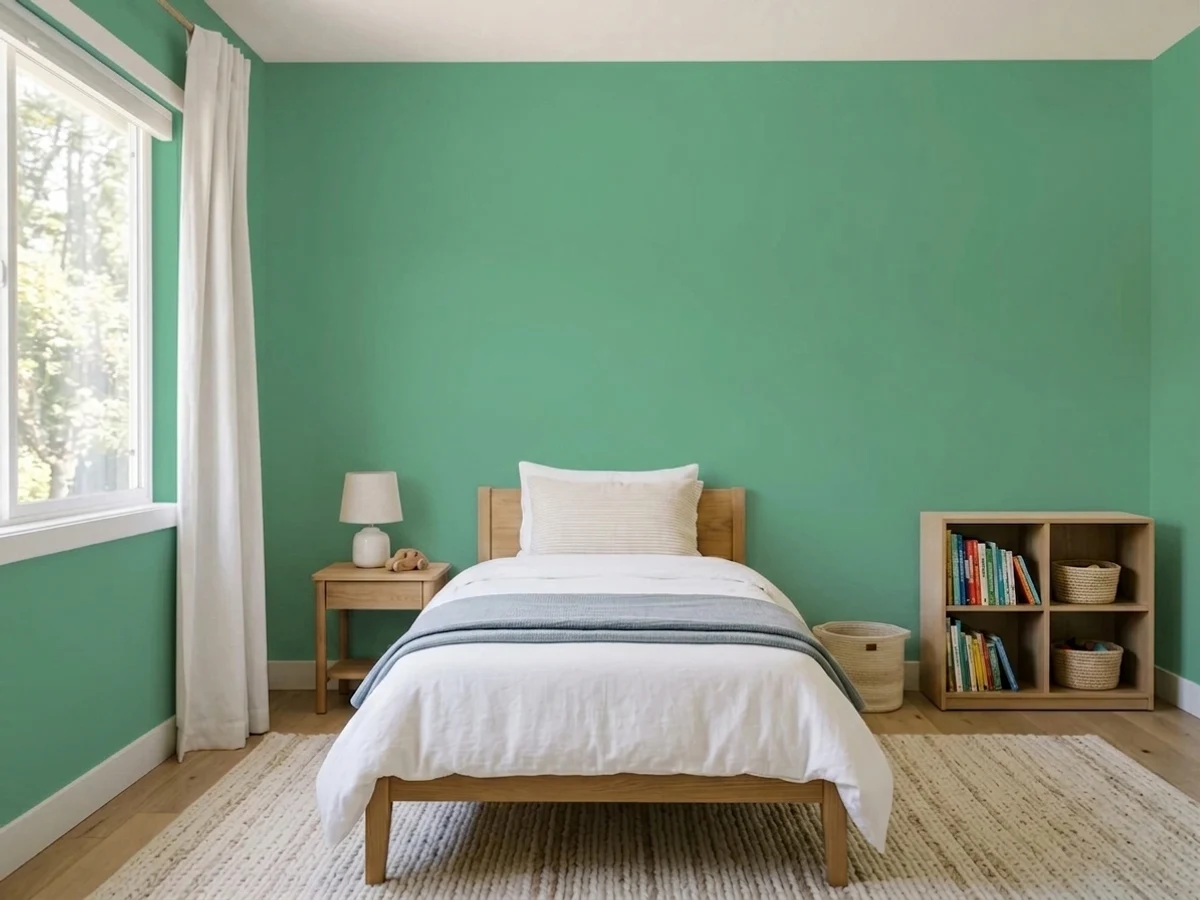
Every pick below is a real rendered green children's room, not a chip. The lead color first; the swatches are the full scheme in the photo — walls, furniture, textiles, accent.

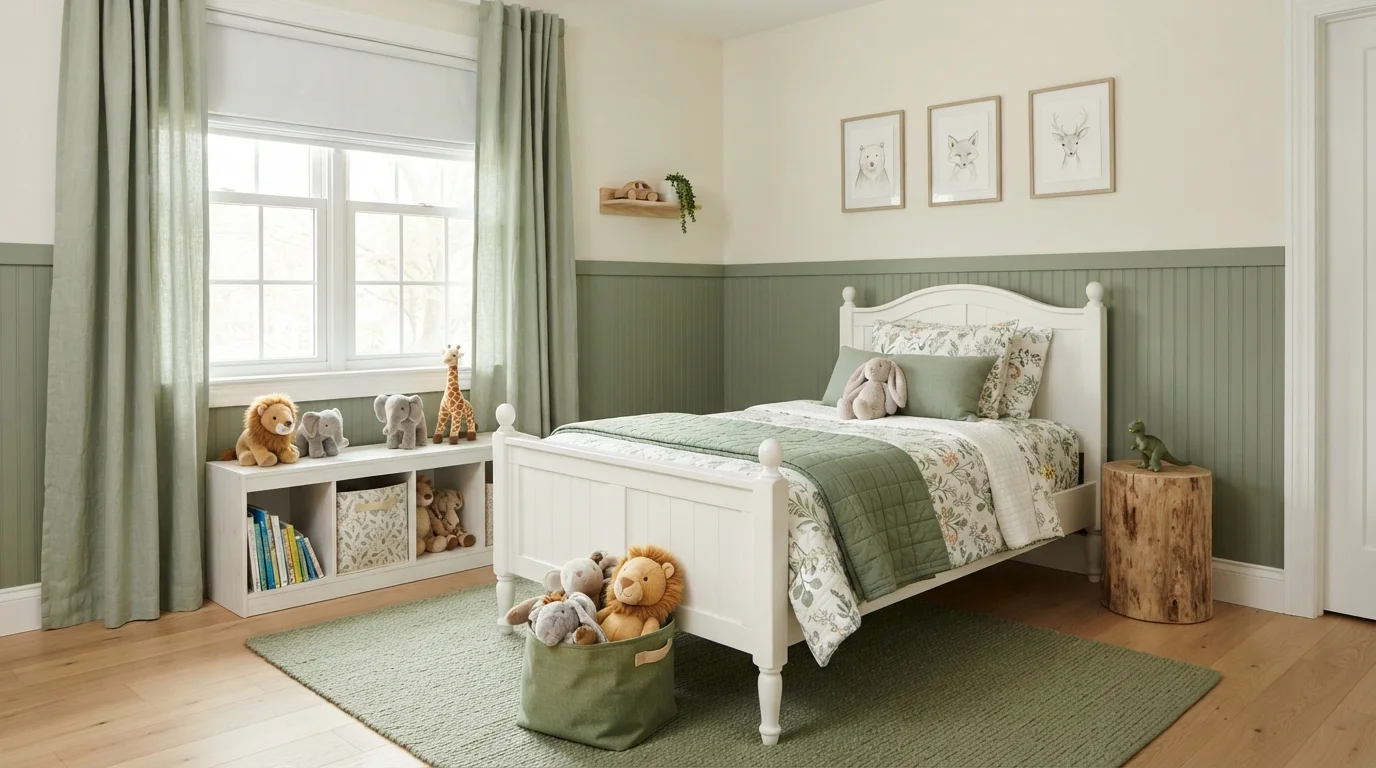
Soft sage walls, warm cream accents, and friendly plush animals create a soothing, nature-inspired space for peaceful dreaming.
Sage is a muted, earthy green with a calm botanical feel. In this sweet bedroom, gentle sage coats the lower half of the walls, balanced by creamy off-white up top and a soft green shag rug below. The room feels gentle, grounded, and completely snug. Pairing leafy greens with creamy whites works because nature-inspired tones naturally make a space feel balanced and open. It is a wonderful choice for anyone wanting a peaceful, gender-neutral bedroom that will stay timeless as your little one grows.
SEE INLAND ON YOUR WALLS →
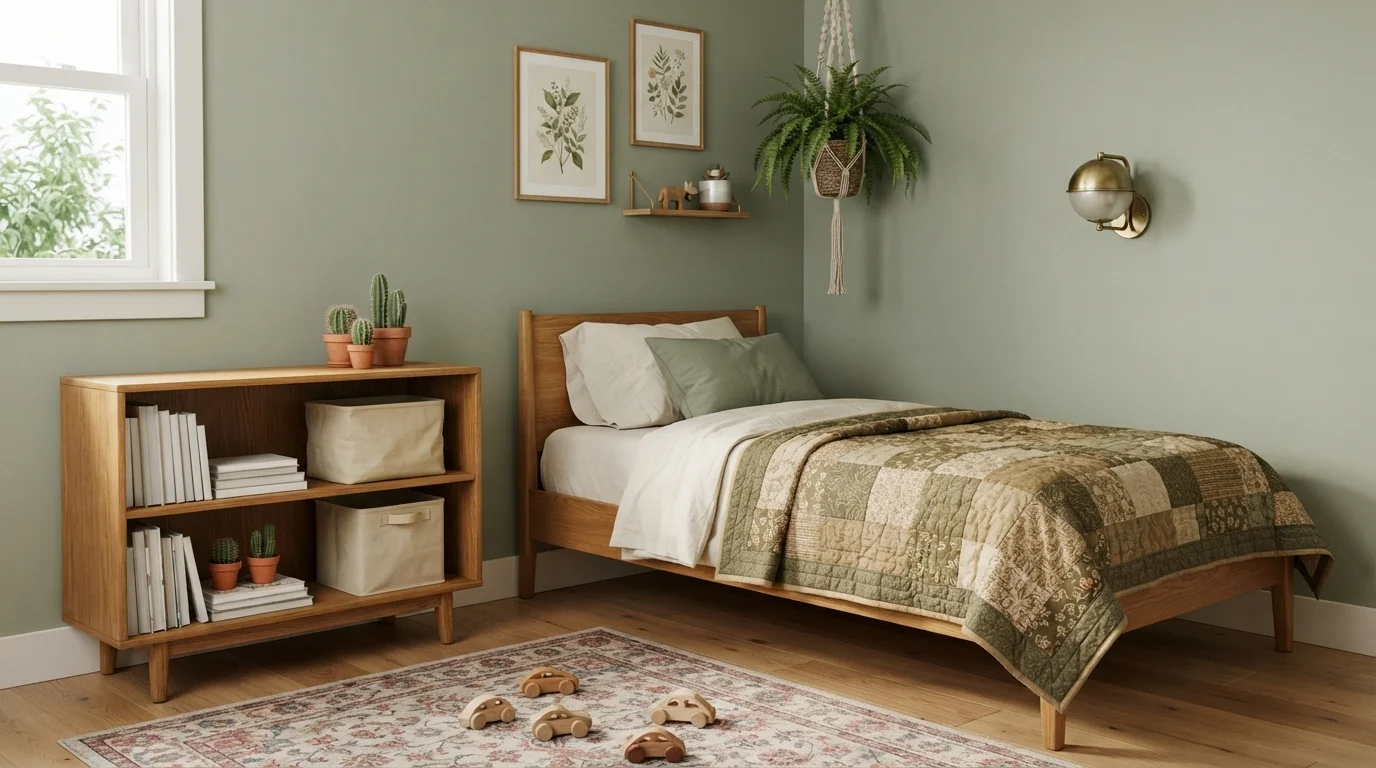
Gentle sage green walls surround warm natural wood furniture and patchwork textiles for a peaceful, nostalgic bedroom atmosphere.
Sage green is a soft, earthy botanical green. In this room, the muted green walls pair beautifully with warm oak wood furniture, a vintage floral area rug, and cozy green patchwork bedding. The space feels peaceful, snug, and pleasantly nostalgic. This combination works because gentle nature-inspired greens naturally balance the golden tones of real wood. It is perfect for anyone wanting a calming, timeless bedroom that feels grounded and full of character.
SEE LEAFLET ON YOUR WALLS →
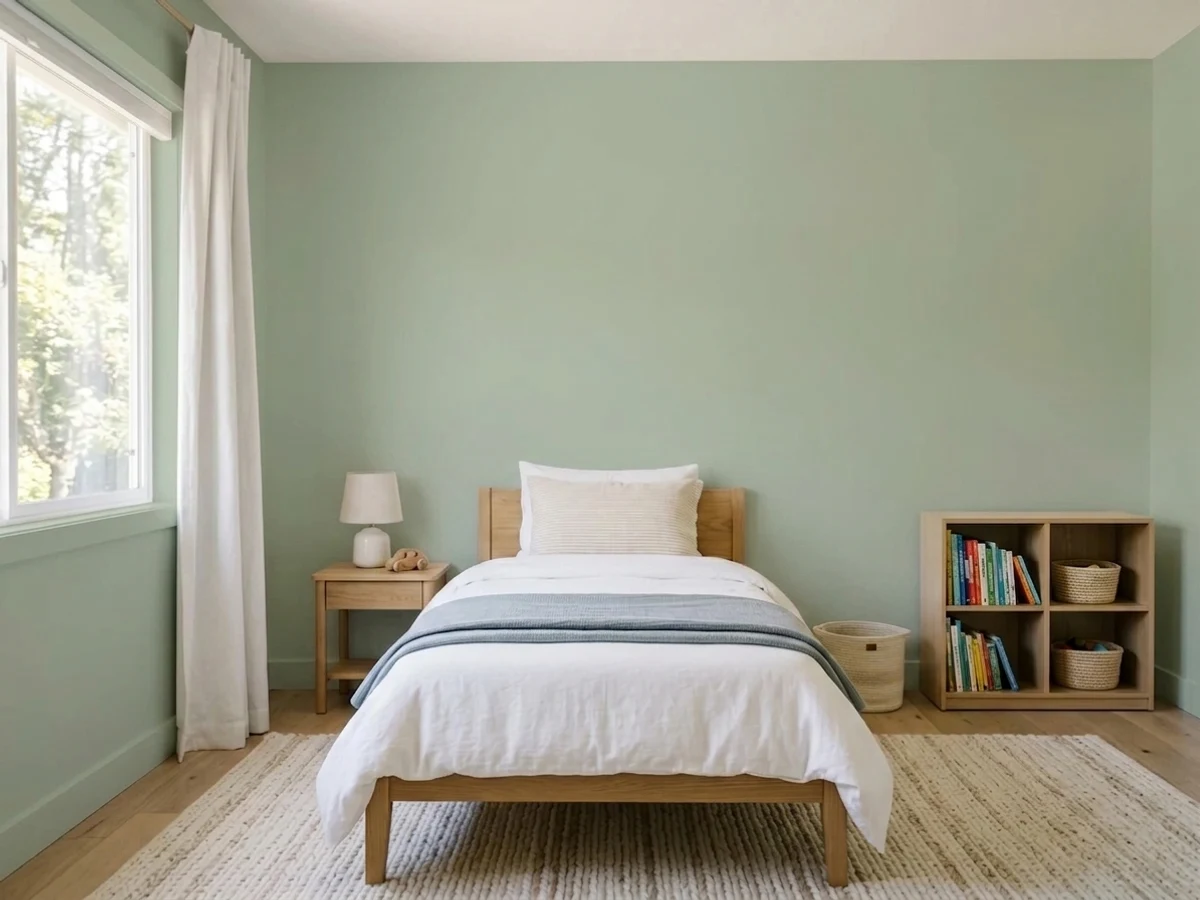
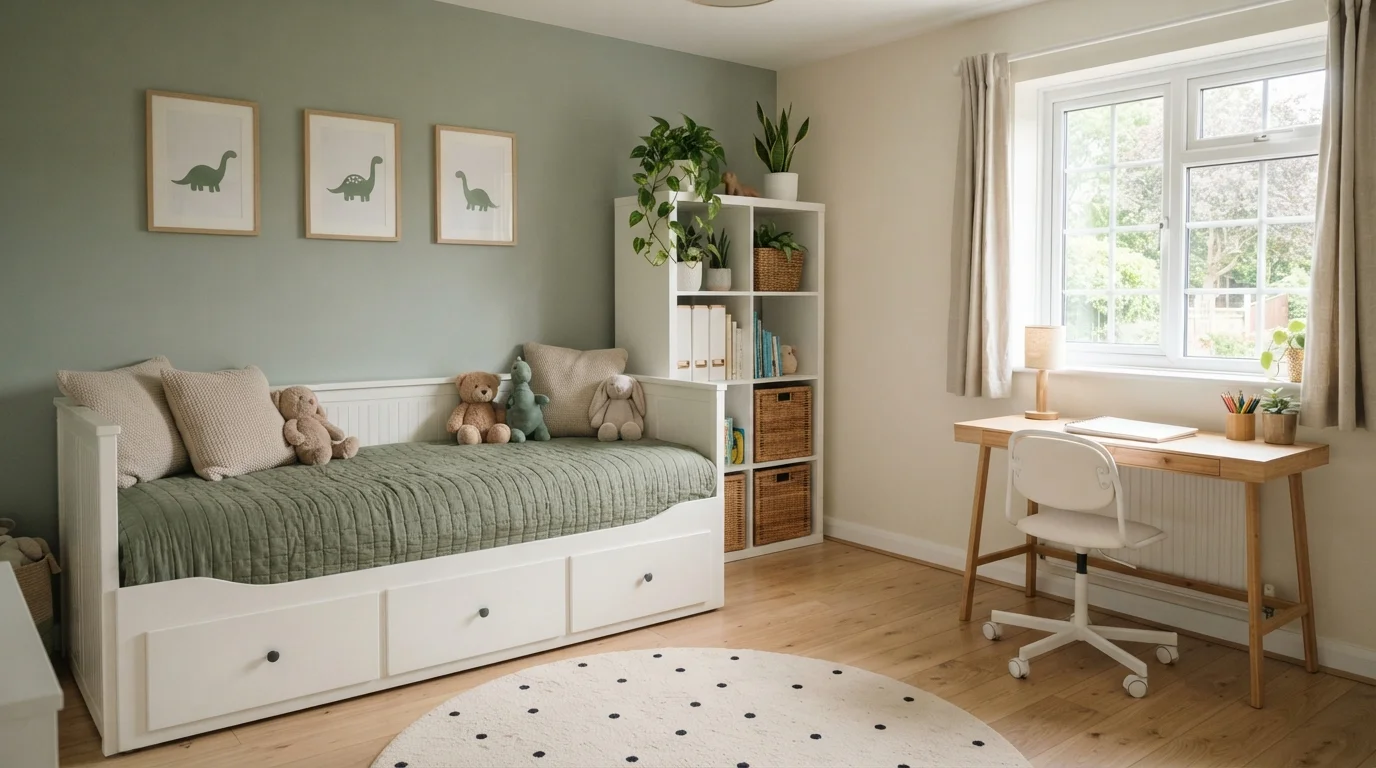
Muted sage walls and warm wood accents create a soft, nature-inspired bedroom designed for calm play and restful sleep.
Sage green is a quiet, earthy leafy green that instantly relaxes a room. In this space, the soothing green accent wall pairs beautifully with creamy off-white side walls, light wood furniture, and a playful dotted cream rug. The room feels snug, bright, and wonderfully grounded. Combining gentle greens with warm natural wood tones and crisp white furniture keeps the whole look fresh and balanced. It is the perfect setup for a growing child who needs a calm place to sleep, read, and create.
SEE SIGH OF RELIEF ON YOUR WALLS →
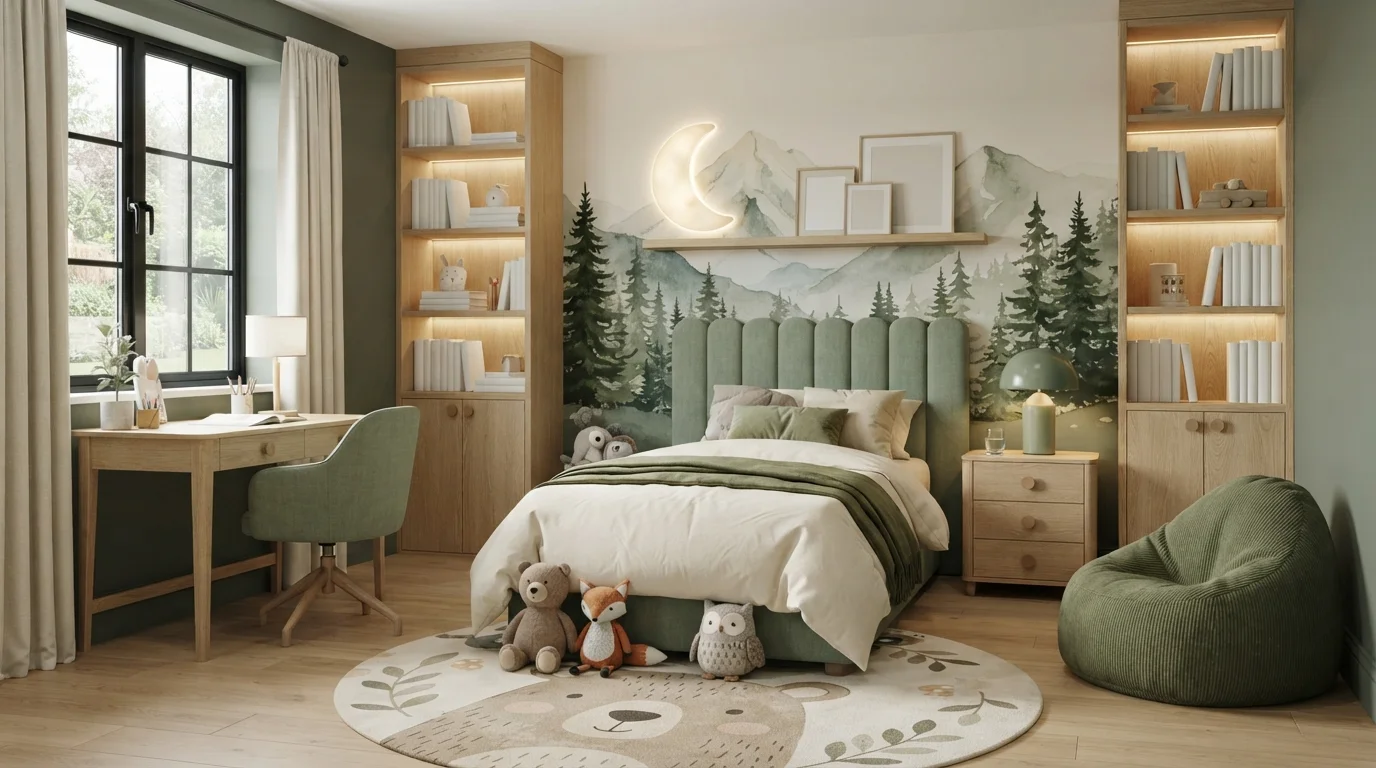
Warm glowing light and soft sage green pair with natural wood for an enchanting, serene bedtime retreat.
Sage is a soft, earthy green with gentle gray tones. In this room, it washes over the main walls and carries into the tufted headboard, desk chair, and cozy beanbag, while soft cream highlights the forest mural and bedding. The space feels snug, peaceful, and ready for adventure. This look works because the organic green blends effortlessly with warm natural wood and creamy whites, creating an outdoor feel indoors. It is perfect for a nature-loving kid who loves calm, creative spaces.
SEE GREEN WOODS ON YOUR WALLS →
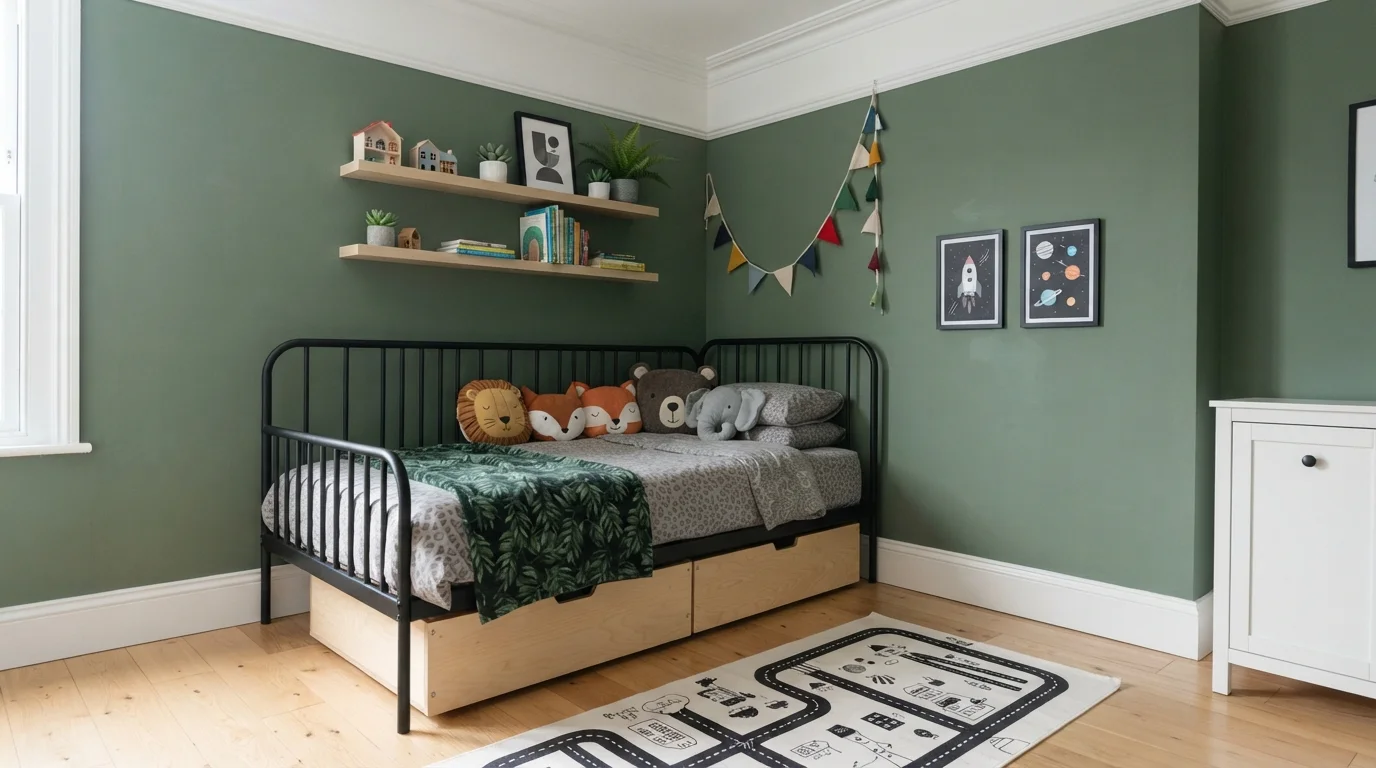
Rich mossy green walls paired with playful earth-toned accents create an inviting, storybook woodland atmosphere for dreaming and play.
Sage green is a calming, earthy moss color with gentle depth. In this room, that warm sage wraps the walls entirely, set off by crisp white ceiling trim and a clean black metal bed frame. The space feels grounded, cozy, and ready for playtime. The combo works because deep foliage greens naturally pair with warm woods and golden animal prints. It is a fantastic choice for anyone styling a kid's room that can easily grow with them.
SEE IT ON YOUR WALLS →
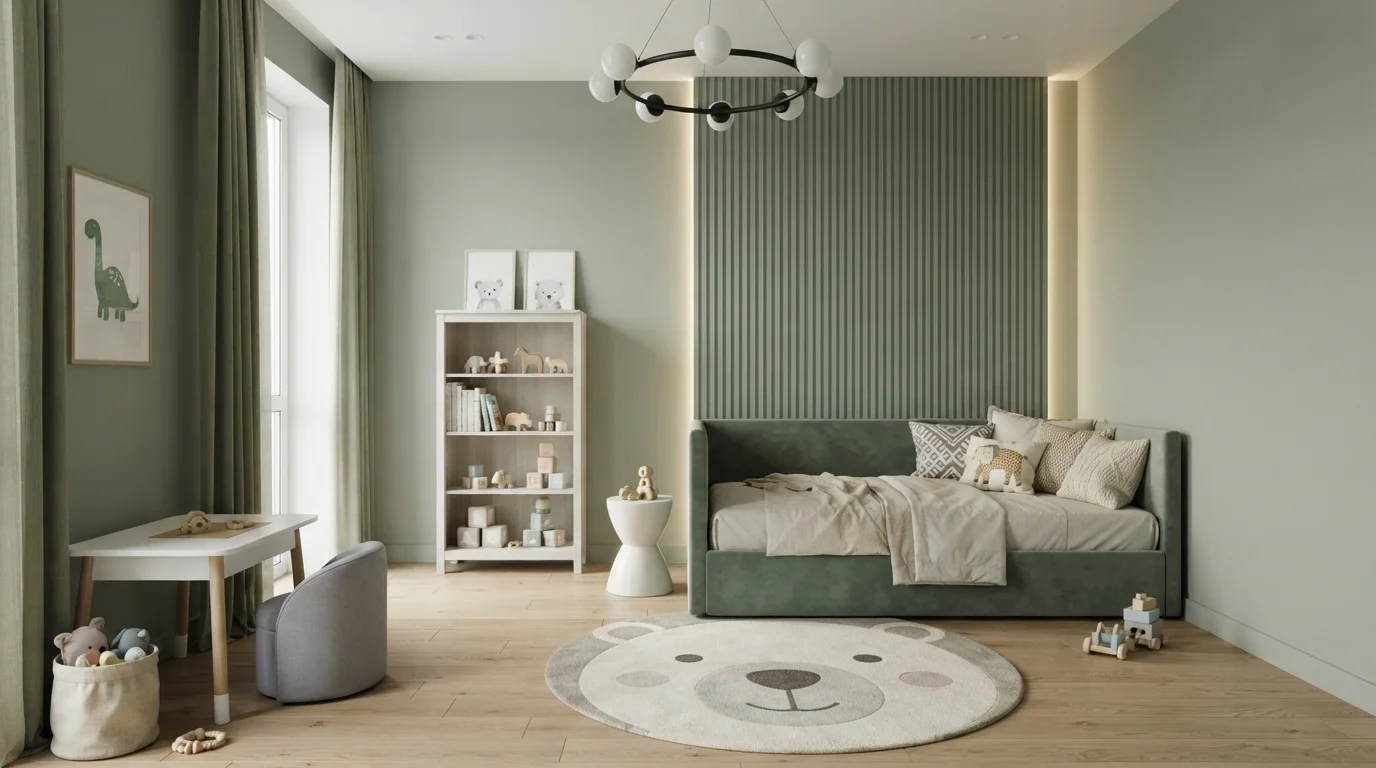
Gentle sage green fluted walls combine with soft neutrals to create a peaceful, nature-inspired space for rest and play.
Sage green is a soft, earthy green with a refreshing, nature-inspired touch. In this lovely children's room, calming sage coats the vertical fluted accent wall, paired with smooth greige walls, a matching velvet daybed, and a sweet bear rug on light oak flooring. The room feels cozy, soothing, and wonderfully balanced. This combination works because gentle botanical greens naturally harmonize with warm, creamy neutrals without overwhelming a small space. It is perfect for anyone creating a peaceful nursery that effortlessly grows with your child.
SEE SUMMER'S DAY ON YOUR WALLS →
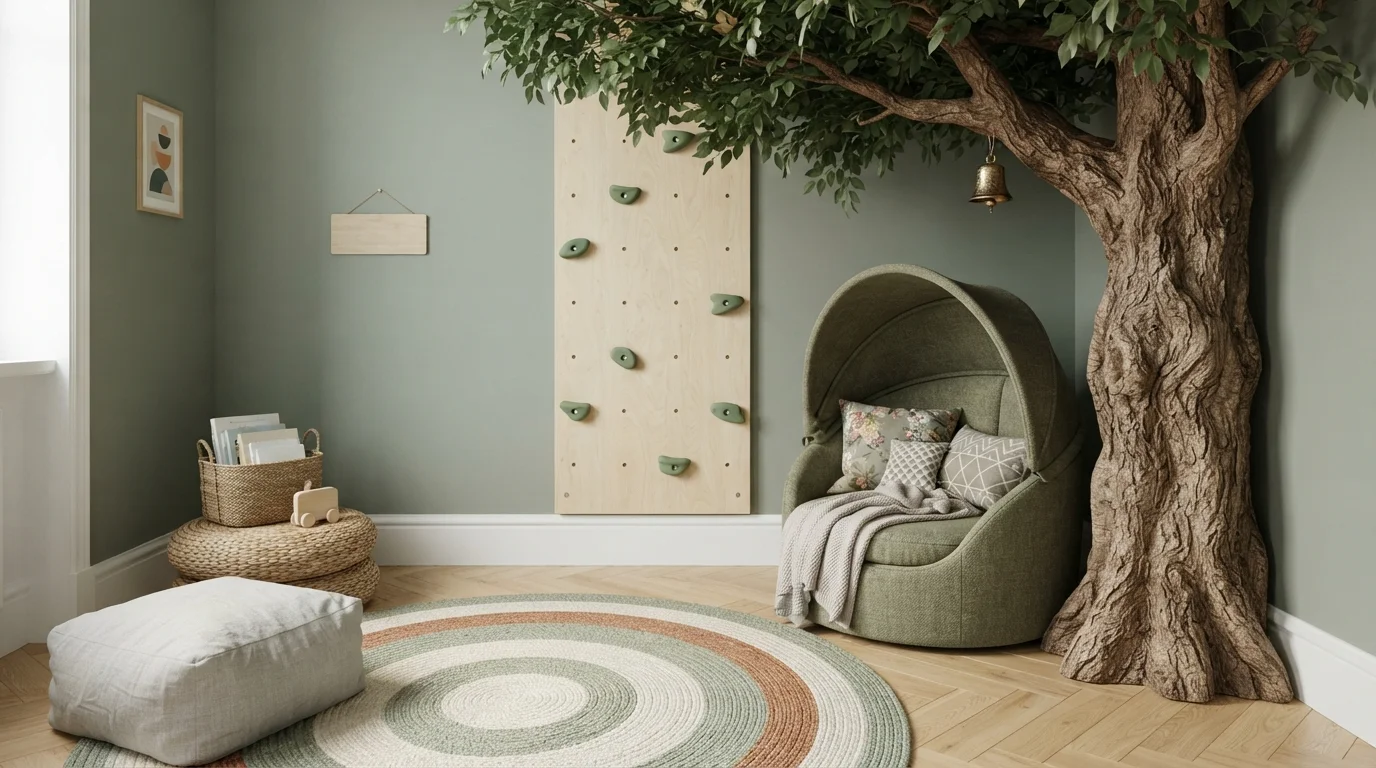
Gentle sage walls and playful forest textures create a dreamy, relaxing corner for little imaginations to thrive.
Sage is a soft, earthy leaf-green with a soothing grey tint. In this playroom, calm sage covers the walls, blending beautifully with the matching hooded reading pod, leaf canopy, and warm wood climbing blocks. The space feels tranquil, cozy, and sweetly magical without looking messy. The look works so well because earthy greens and natural blonde woods always pair seamlessly. It is perfect for anyone wanting a creative play area that stays quiet, grounded, and restful.
SEE IT ON YOUR WALLS →
Soft natural light washes over calming two-tone green walls, warm oak furniture, and cozy textured sage bedding.
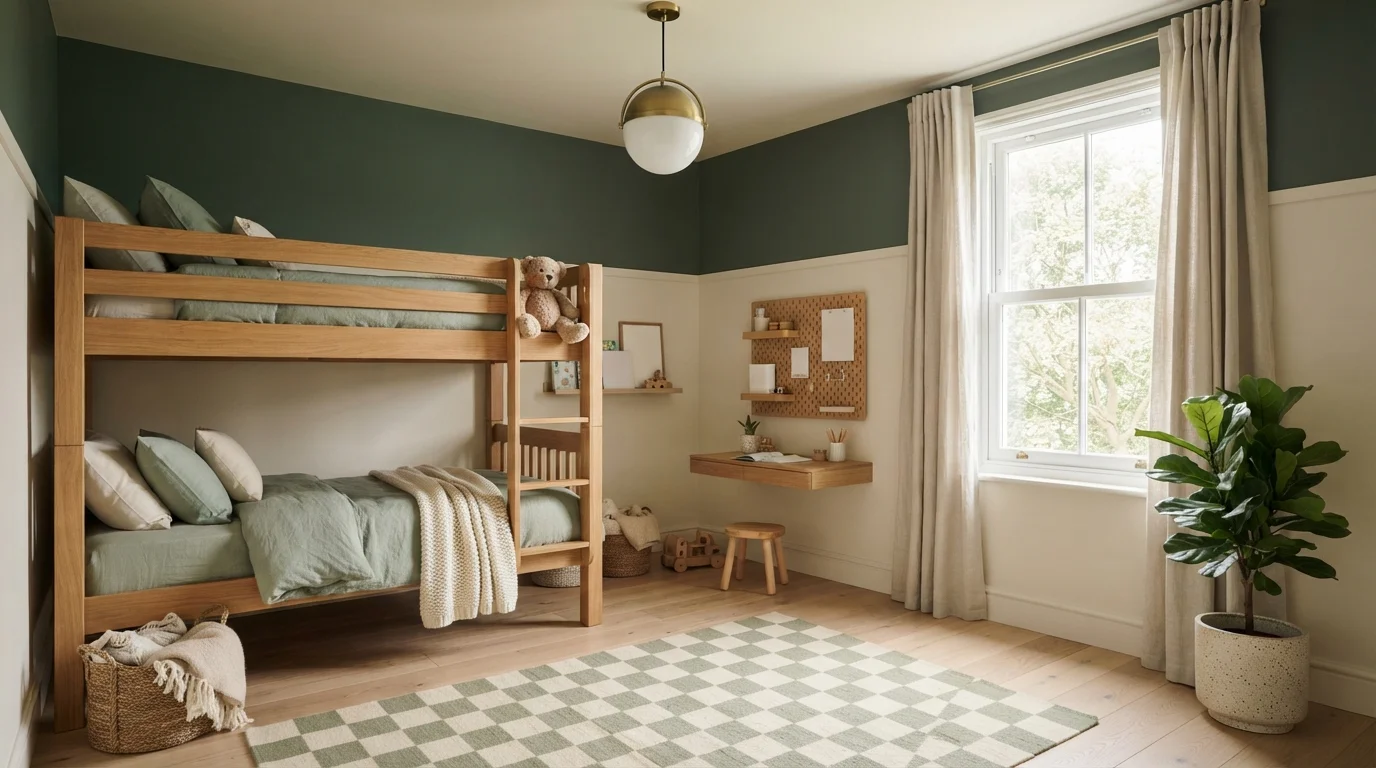
Moss green is a quiet, forest-inspired color that grounds any space. In this room, the deep green covers the upper half of the walls, balanced by a gentle off-white along the bottom. The space feels balanced, cozy, and wonderfully calm. The combination works so well because fresh woodland tones and natural oak wood grain naturally complement each other. It is the perfect design approach for a shared kids' space or guest bedroom that feels fun yet sophisticated.
SEE PAINTED TURTLE ON YOUR WALLS →Green Children's Room Wall Color Combinations
A wall color never works alone. These are the full schemes from the rooms above — the lead color first, then the supporting colors that make the photo work.
Soft sage walls, warm cream accents, and friendly plush animals create a soothing, nature-inspired space for peaceful dreaming.
TRY THIS PALETTE →Gentle sage green walls surround warm natural wood furniture and patchwork textiles for a peaceful, nostalgic bedroom atmosphere.
TRY THIS PALETTE →Muted sage walls and warm wood accents create a soft, nature-inspired bedroom designed for calm play and restful sleep.
TRY THIS PALETTE →Warm glowing light and soft sage green pair with natural wood for an enchanting, serene bedtime retreat.
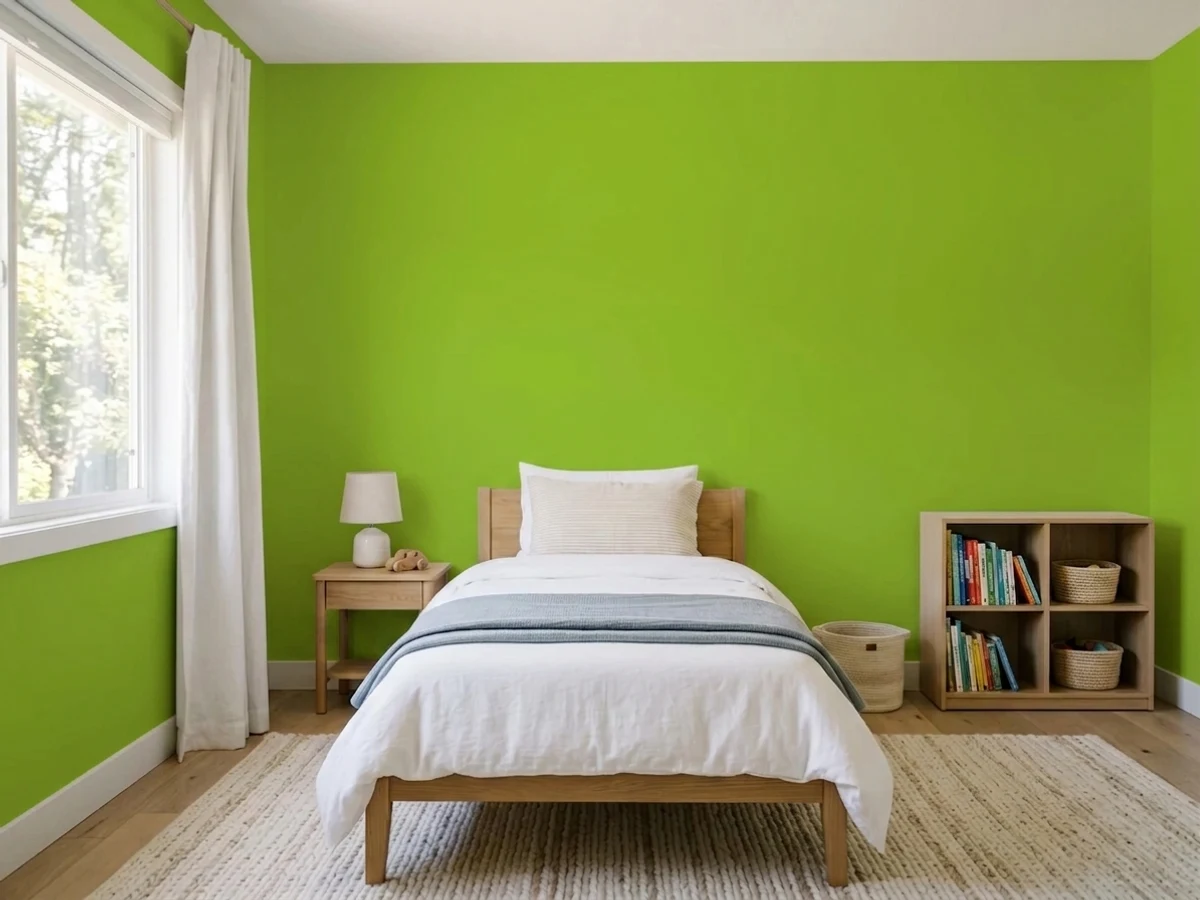
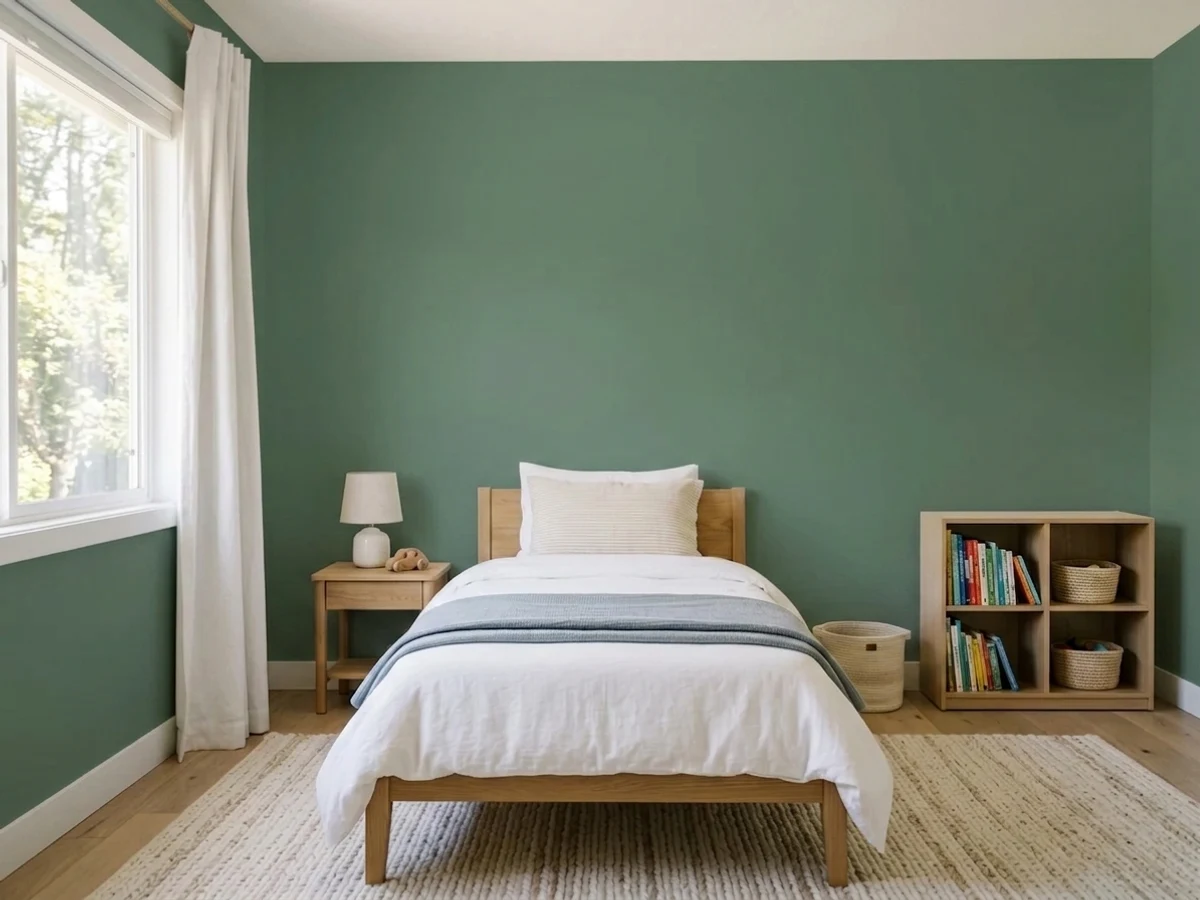
TRY THIS PALETTE →For a full-room green, pair Green Trellis with plain white trim and let natural wood furniture — a maple crib, an oak bunk bed frame — do the warming up; the muted sage has enough gray in it that it won't fight with warm wood tones. Fresh Apple works the same way but louder: white trim, white built-ins, and let the wall be the one bright thing in the room so it doesn't turn into a lime-green box.
For an accent-wall combination, put Chard or Black Emerald on the wall behind the bed and run Green Trellis or a plain warm white on the remaining three walls — the dark wall anchors the room without swallowing all the light. Jadite pairs well with warm oak flooring and brass or matte-black hardware, which keeps its gray-green cast from reading cold. And if the room calls for real saturation without going pastel, Scotch Lassie next to white trim and a few wood accents gives a true green that still reads current, not nursery-specific.
More Children's Room Color Ideas
Set on a color family already? Each page has its own real rooms and picks.
Light or Dark Green Children's Room Colors?
Go Light (LRV 60+) If…
The room is small, faces north, or has to work at every hour. Light warm colors make it feel bigger and stay calm in evening light — the light you actually live in.
Go Dark (LRV Under 20) If…
You want the cocoon effect and the room has real daylight. Dark works best on one feature wall — or fully color-drenched in a large room with good windows.
Kids' rooms usually get less natural light than a primary bedroom — smaller windows, a north-facing exposure, furniture blocking half a wall — so LRV matters more here than in most rooms. Green Trellis at 43.3 and Fresh Apple at 42 both sit in the mid-to-high LRV range, which keeps a nursery or small bedroom from feeling closed in even on a gray afternoon. Julep, at LRV 32, is bright enough to carry a full room in decent daylight, but it photographs more saturated than it reads on the wall, so test a swatch before committing all four walls.
Jadite (LRV 20) is the hinge point: light enough for a full room if the room gets real daylight, dark enough to feel grounded rather than juvenile. Chard and Black Emerald sit well below that — both are deep, low-LRV greens that work best as one wall, not the whole room, in a child's space. A full room in Black Emerald can feel like a cave to a five-year-old trying to fall asleep in the dark; on a single headboard wall, that same depth reads as a cozy forest retreat instead.
See It. Love It.
Paint It.
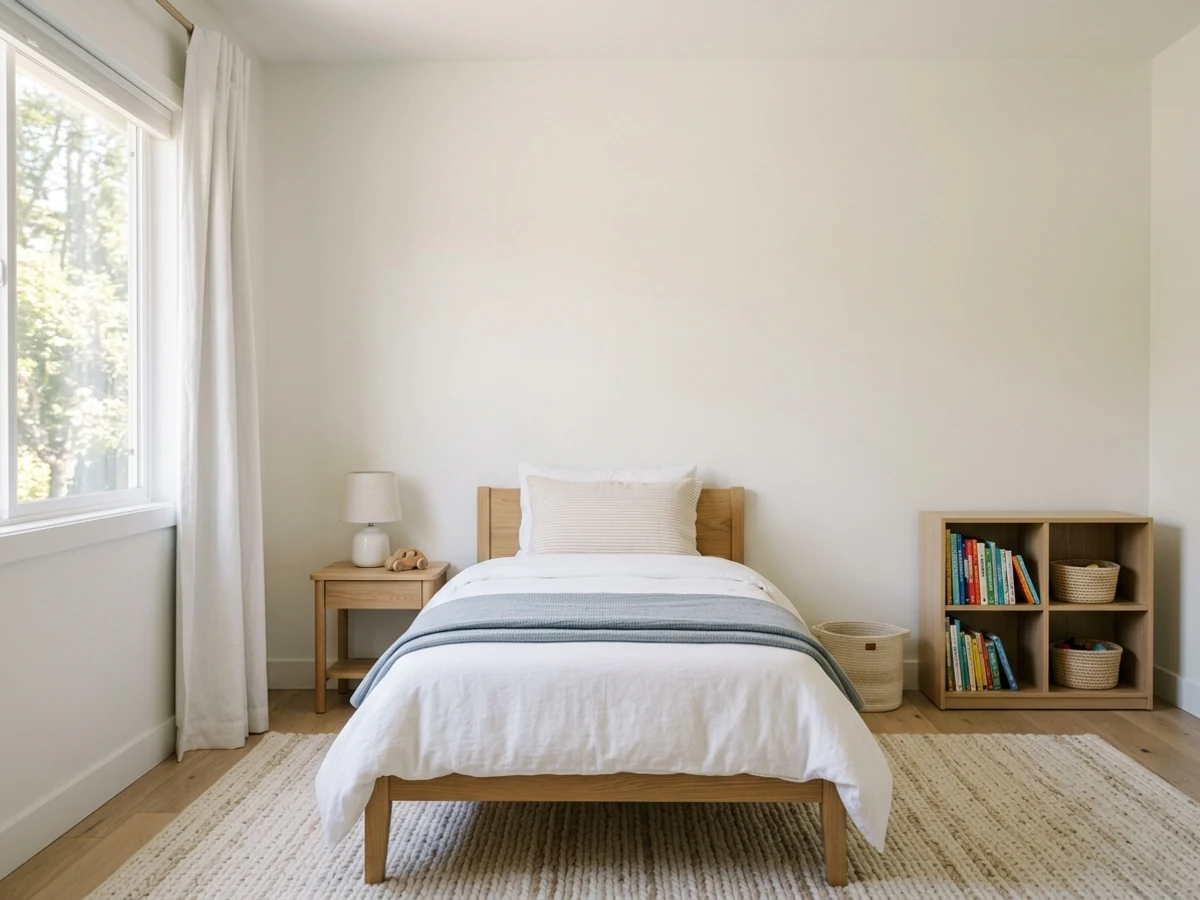
Upload one photo of your green children's room and try every color on this page on your own walls — in your own light, before you buy a drop of paint.

Fresh AppleBeforeChoosing A Green That Grows With Your Kid
Muted, mid-to-low LRV greens don't read as a specific age the way a bright primary green does. Jadite and Chard both have enough gray and warmth in them that they look like a deliberate design choice rather than a nursery color — a family can go from crib to twin bed to a desk in the corner without a repaint. Green Trellis works the same way at a lighter, brighter level: it's soft enough for a newborn's room but not so pastel that it looks out of place once the child is picking their own posters for the wall.
Fresh Apple is the one pick here that's more clearly tied to early childhood. Its brightness and grassy tone read as playful and young, which is exactly right for a toddler or preschool room built around play, but it's also the pick most likely to feel like it needs an update by the tween years. If a full repaint isn't part of the plan, lean toward Green Trellis, Jadite, or Chard for the walls and save Fresh Apple or Julep for something easier to change later — bedding, a rug, or a single accent wall.
Sheen And Finish For A Kid's Room
Eggshell or satin on the walls handles crayon, marker, and handprints far better than flat paint, and both still hold color well without looking glossy in a bedroom. That matters more in a child's room than almost anywhere else in the house — walls get touched, climbed on, and drawn on in ways a formal living room never does. Save semi-gloss for trim, doors, and window frames, where it needs to stand up to scrubbing.
On a darker pick like Chard or Black Emerald, satin also does a better job than flat at hiding roller marks and lap lines, which show up more on a deep, saturated color than on a light one. If the room includes built-ins or a closet door painted to match the walls, keep that same sheen consistent so the color doesn't shift in tone from one surface to the next.
Mistakes To Avoid With Green In A Kid's Room
Green shifts more than most colors between morning and evening light, so a swatch of Jadite that looks gray at noon can read noticeably more green under warm bulbs at bedtime. Test any of these picks on the actual wall, at the times of day the room gets used, before buying the gallon — this matters even more for a kid's room, since a color that feels wrong at night can make bedtime harder, not easier.
The other common mistake is painting a small room entirely in a low-LRV green like Chard or Black Emerald. Both work well as a single accent wall, but on all four walls in a room with limited windows, they can make the space feel darker and smaller than it is, which is the opposite of what most parents want for a child's room. Finally, be careful with very saturated, high-chroma greens on every wall — a full room of intense color can feel visually tiring in a space that's meant for sleep, so a livelier pick like Julep or Fresh Apple usually works better as an accent than as the color on all four walls.
About Green Children's Room Paint Colors
Green earns its place as the safest color that grows with a kid, because it reads calm to adults and playful to a toddler without ever feeling gender-coded. That range is exactly what these seven picks cover, from the quiet Green Trellis (Valspar 5006-3C, LRV 43.3) that keeps a nursery gentle and bright, to a saturated, no-apologies green like Scotch Lassie (Behr 480D-5) for parents who don't want a washed-out pastel.
For daytime energy, Fresh Apple (Behr P360-6, LRV 42) and Julep (Sherwin-Williams SW 6746, LRV 32) both lean bright and grassy — the kind of green that photographs well against white furniture and reads as creative play rather than sleepy. On the deeper end, Jadite (Sherwin-Williams SW 6459, LRV 20), Chard (Behr MQ6-49), and Black Emerald (Sherwin-Williams SW 2936) trade brightness for a grounded, woodland feel that doesn't age out once the toy chest gets swapped for a desk.
Every one of these mixes at the counter of any paint store that carries Valspar, Behr, or Sherwin-Williams — there's no need to hunt down a special 'kids' line to get a color built for a child's room.
The Questions Everyone Asks
What color should I paint my green children's room?
If you want one answer, start with the safe picks above — Inland, Leaflet, Sigh of Relief, Green Woods. They read well in any light and survive furniture changes. Then check the light: strong afternoon sun wants a step cooler, a north-facing room wants a step warmer.
is green a good color for a kids bedroom?
Yes — green is one of the few colors that reads calm to adults and cheerful to kids without leaning toward a specific gender. A muted option like Green Trellis (Valspar 5006-3C) works from nursery through elementary school, while a brighter pick like Julep (Sherwin-Williams SW 6746) suits a room built around play rather than sleep.
what green paint colors work for both boys and girls rooms?
Muted, mid-LRV greens are the safest gender-neutral pick — Green Trellis and Jadite (Sherwin-Williams SW 6459) both avoid reading as a specifically 'girl' mint or 'boy' hunter green. Brighter grassy greens like Fresh Apple (Behr P360-6) are also neutral; they just read more playful than calm.
should i paint my kid's room a dark green?
A dark green works well as one wall, not the whole room. Chard (Behr MQ6-49) or Black Emerald (Sherwin-Williams SW 2936) on a headboard wall gives a cozy, grounded feel; painted on all four walls in a room with limited windows, either can feel closed-in to a young child trying to fall asleep.
what colors go with green in a kid's room?
White trim is the simplest pairing and lets any of these greens do the work. Warm wood tones — oak floors, a maple crib, pine bunk beds — pair naturally with muted greens like Green Trellis and Jadite, while brass or matte-black hardware keeps a gray-green pick like Jadite from reading cold.
will a green nursery still look right once my child is older?
It depends on the shade. A muted, mid-LRV green like Green Trellis, or a deeper one like Chard, doesn't read as nursery-specific, so it can carry through toddler and elementary years without a repaint. A very bright, saturated green like Fresh Apple reads more like a young child's room and is more likely to need a refresh by the tween years.
What two-color combination works best in a green children's room?
The reliable pattern is a quiet main color plus one deep accent on a single wall. Keep trim and ceiling in one warm white so the two colors are the only event in the room — the combination cards above show complete schemes from real rooms.
What colors make a green children's room look bigger?
High-LRV, slightly warm colors — LRV 60–75 is the sweet spot. Paint the walls and trim close to the same light color so the corners blur, and keep the ceiling white. Stark cool white actually works against you; it creates hard shadows that show the room's edges.

Ask a Question