Antique White
Valspar's deepest, warmest white, reviewed honestly: how it differs from Valspar's own near-white trio, the light that flattens it, and what to pick instead.

Jessica has spec'd whites and neutrals for more than 300 rooms and keeps a sample wall of painted drawdowns in her studio. Every color review is checked against real reader rooms in the comments and re-tested when a formula changes. About the testing process →
- 1Agreeable Gray60
- 2Pale Oak69
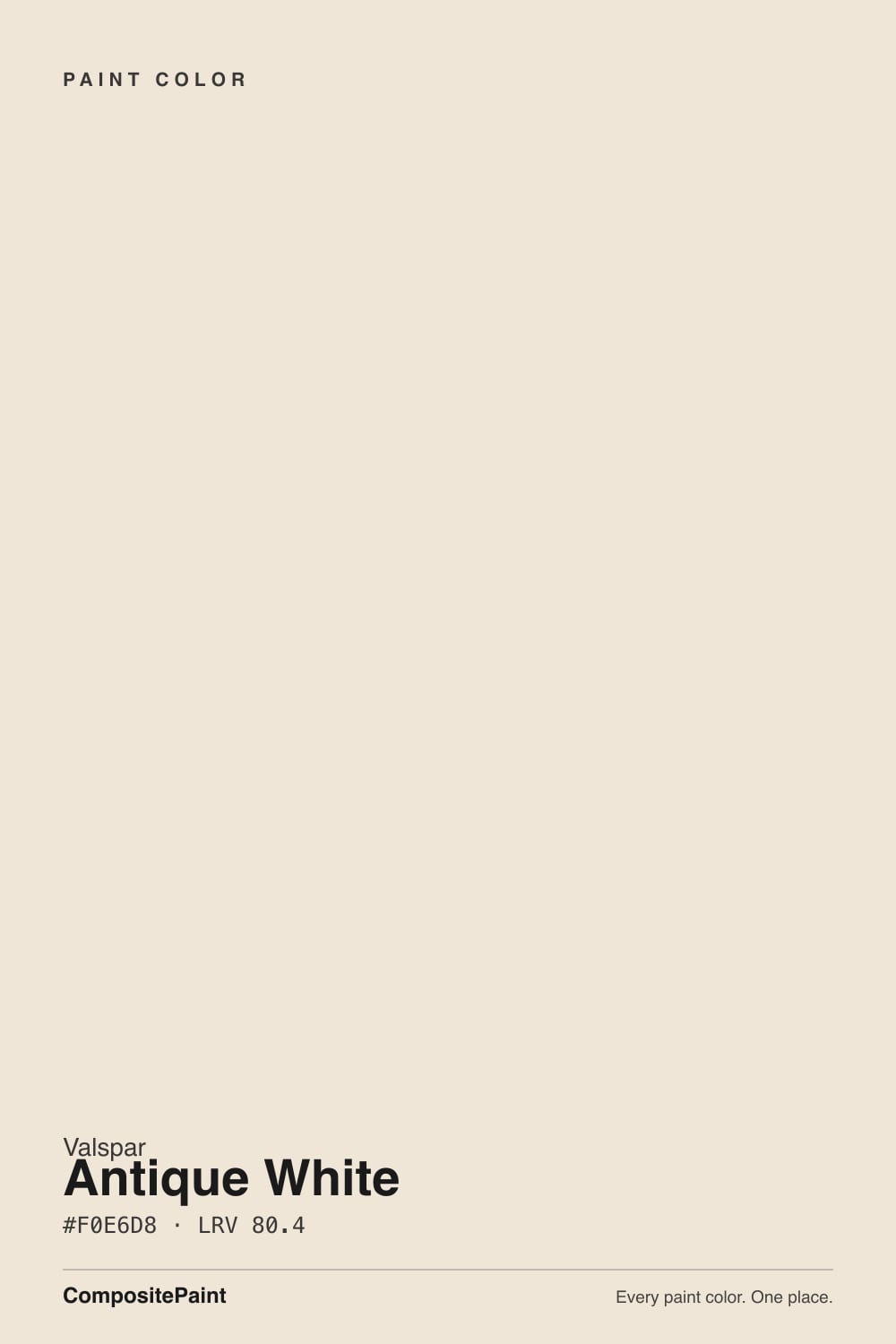
- 3Antique White80.4
- 4Moonlit Beach88
- 5Crème Fraiche93
The Fast Verdict
Antique White is what happens when a Lowe's warm white commits to being a cream instead of hedging toward near-white. At LRV 80.4 it sits noticeably deeper than Valspar's own Dove White (85.1) and Du Jour (86) — the beige-yellow undertone is real and visible, not a whisper, which is exactly the traditional, lived-in look the name promises. It rewards real daylight and warm wood; it does not forgive a dim north room or cool grey stone.
Traditional and farmhouse rooms with real daylight · trim and exterior body over wood or vinyl siding · anyone who wants an actual cream, not a barely-there near-white · warm wood floors and brass hardware
You want the near-white look of Valspar Dove White or Du Jour · your room is dim and north-facing · your counters or floor tile run cool grey · you're trying to match one of Valspar's other whites exactly
- A genuine warm cream, not a hedge-your-bets near-white
- Holds its color in strong daylight without flashing yellow
- Flatters warm wood, brass, and traditional furniture
- Sold across Valspar's 4000, Signature and Reserve lines in every common sheen
- A dependable exterior body color over wood and vinyl siding
- Easy to confuse with Valspar's own Dove White and Du Jour on the rack
- Goes flat and slightly dingy in a dim, north-facing room
- Clashes with cool grey stone, tile and chrome fixtures
- Too warm for anyone chasing a crisp, near-white look
What Color Is Antique White, Really?
A genuine warm cream, not a near-white — and that is the detail that separates it from its own Valspar siblings. Dove White and Du Jour are built to read as barely-there whites with only a faint undertone; Antique White is different on purpose, carrying enough beige-yellow to be unmistakably a cream on the wall. It is a Lowe's color sold across the Valspar 4000, Signature and Reserve lines in flat, satin and semi-gloss, which points to how broadly it gets used — walls, trim, cabinets and exterior body all pull from the same chip.
At LRV 80.4 it still reflects most of the light that hits it — brighter than a true beige, and only a hair below Benjamin Moore Linen White (LRV 80) and Navajo White (LRV 78), the two designer creams it sits closest to in depth. Next to Valspar's own Dove White (85.1) or Du Jour (86) the gap is obvious: those two are built to disappear into a wall, Antique White is built to be noticed. That extra five or six points of depth is what gives it real color, and also what makes it show its undertone more plainly than its near-white cousins.
Undertone in one line: warm beige-yellow, straightforward and consistent — never pink, never green. If your sample reads flatter or grayer than expected, that is cool light working against it, not a different can under the lid.
Where It Shines
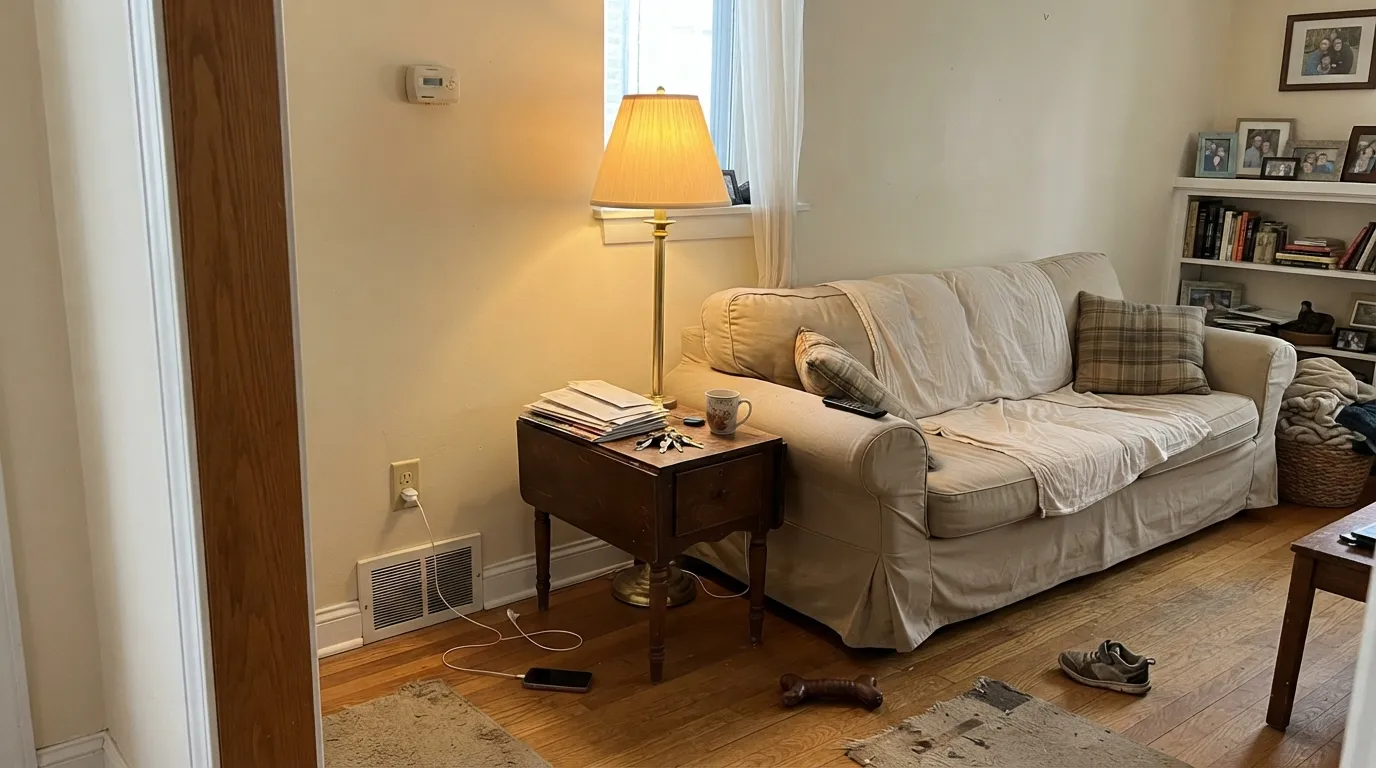
Give it real daylight and warm materials and it does exactly what the name promises: an old-house, lived-in warmth that reads intentional rather than dated. It is a natural body color for exterior siding and trim — warm without tipping yellow in strong sun — and indoors it is most at home in traditional rooms with oak or walnut floors, brass hardware, and furniture with some age to it.
Where It Fails
Most disappointment with Antique White comes down to one of three mismatches, and all three are avoidable with a sample board before the first gallon.
Antique White sits on the same Valspar rack as Dove White and Du Jour, and shoppers grab the wrong one more often than you'd think. If you want the barely-there look, Du Jour is the cleanest of the three; Antique White is the one that reads as a real cream, not a whisper of one.
Cool daylight strips the warmth out of any cream, and Antique White has more color to lose than the near-whites next to it — it can go flat and slightly dingy instead of soft. Go warmer light or a paler pick if the room stays dim all day.
Grey quartz, cool marble and blue-grey tile sit at the opposite temperature and make Antique White's warmth look dated by contrast, almost yellow. With cool stone, step up to a true near-white like Valspar Dove White or Du Jour instead.
Room by Room
With real daylight and warm wood furniture it is a calm, traditional backdrop. Eggshell on walls; semi-gloss on trim if you want the one-color look.
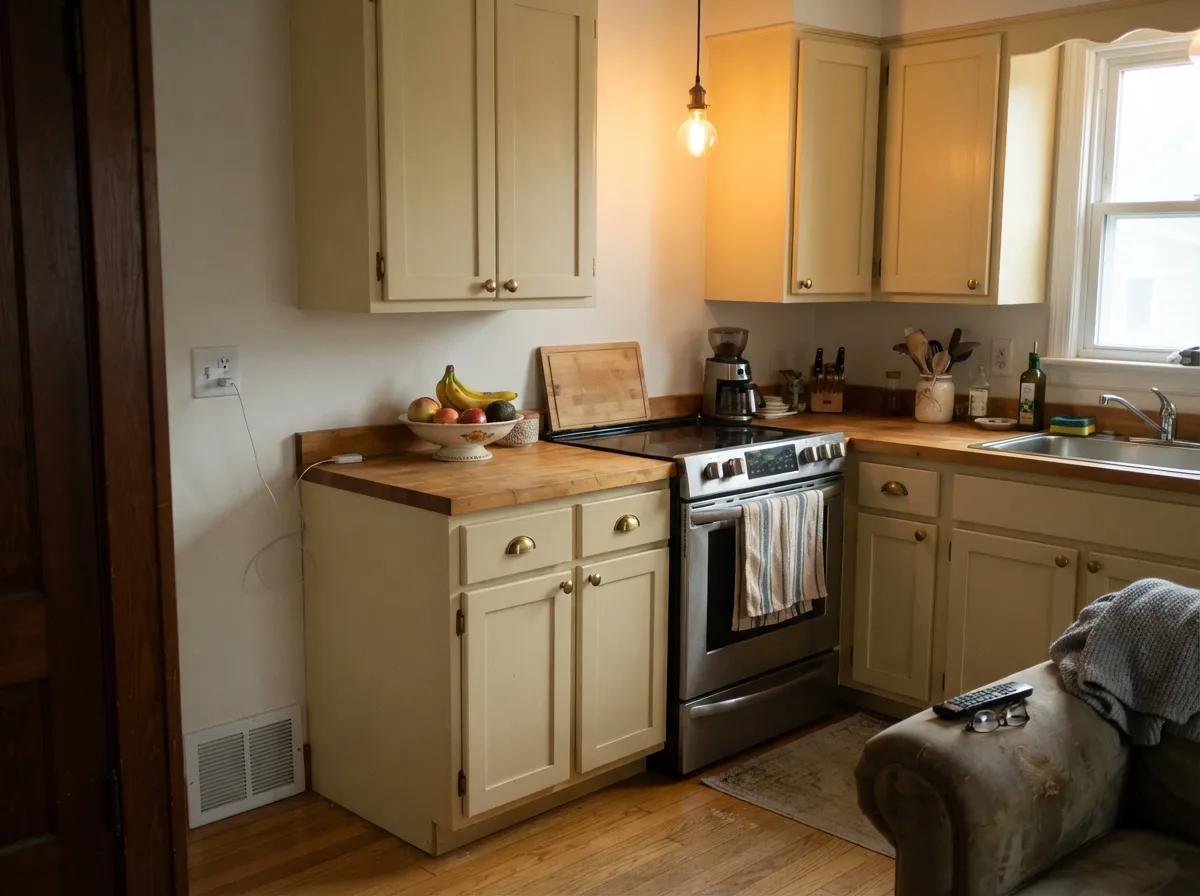
On cabinets, with butcher block, warm granite or brass hardware, it reads custom and collected rather than builder-basic. Against cool grey quartz it starts to look yellowed — sample against the actual counter first.
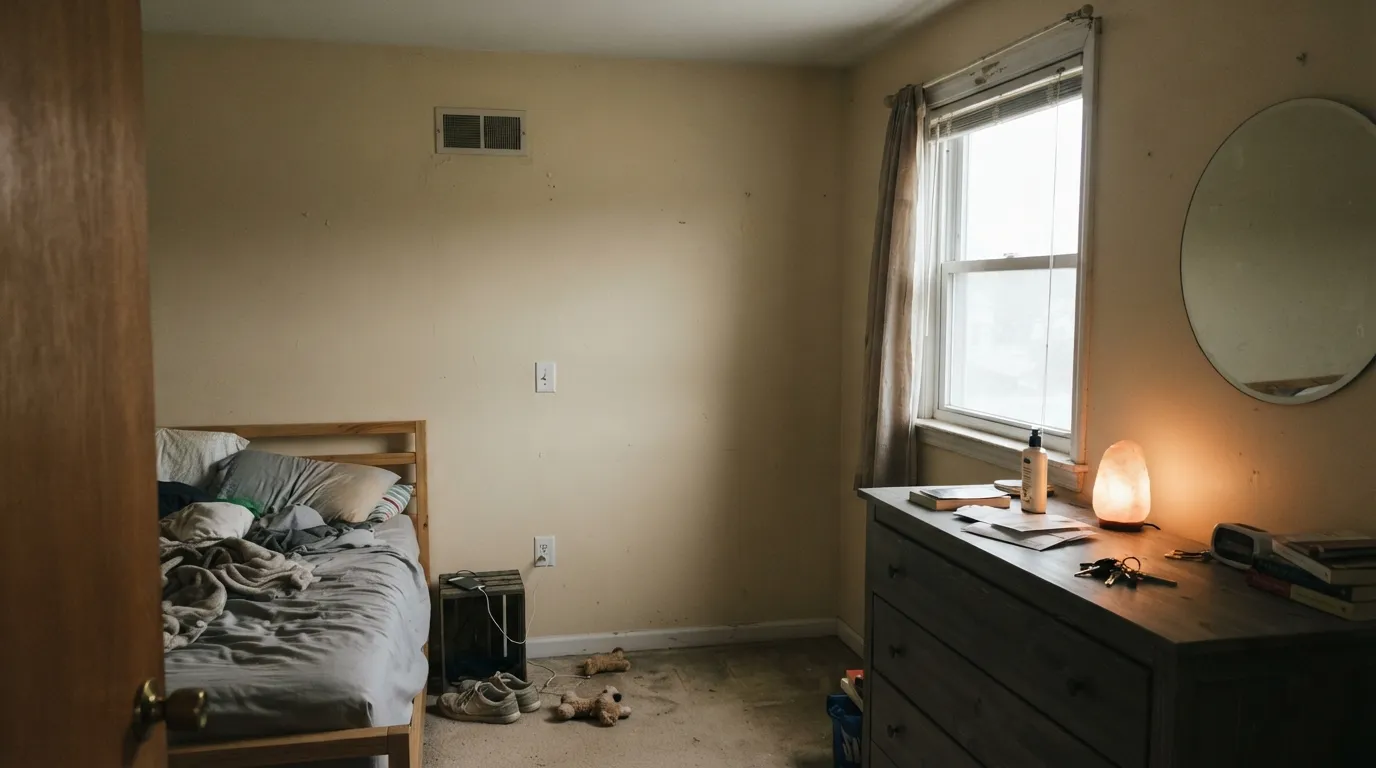
Under 2700K lamps at night it turns cozy and soft. In a north-facing bedroom that never gets direct sun, it can read closer to beige than white — fine if that is the goal, disappointing if you wanted crisp.
Warm-toned tile, wood vanities and brass fixtures are an easy match. Cool grey tile or chrome fixtures fight it; pick Dove White or Du Jour instead in that bathroom.
Semi-gloss Antique White trim under a deeper wall color (Revere Pewter, Accessible Beige) gives an old-house softness a stark white would not. It is a warmer, more period-appropriate trim than either Valspar near-white.
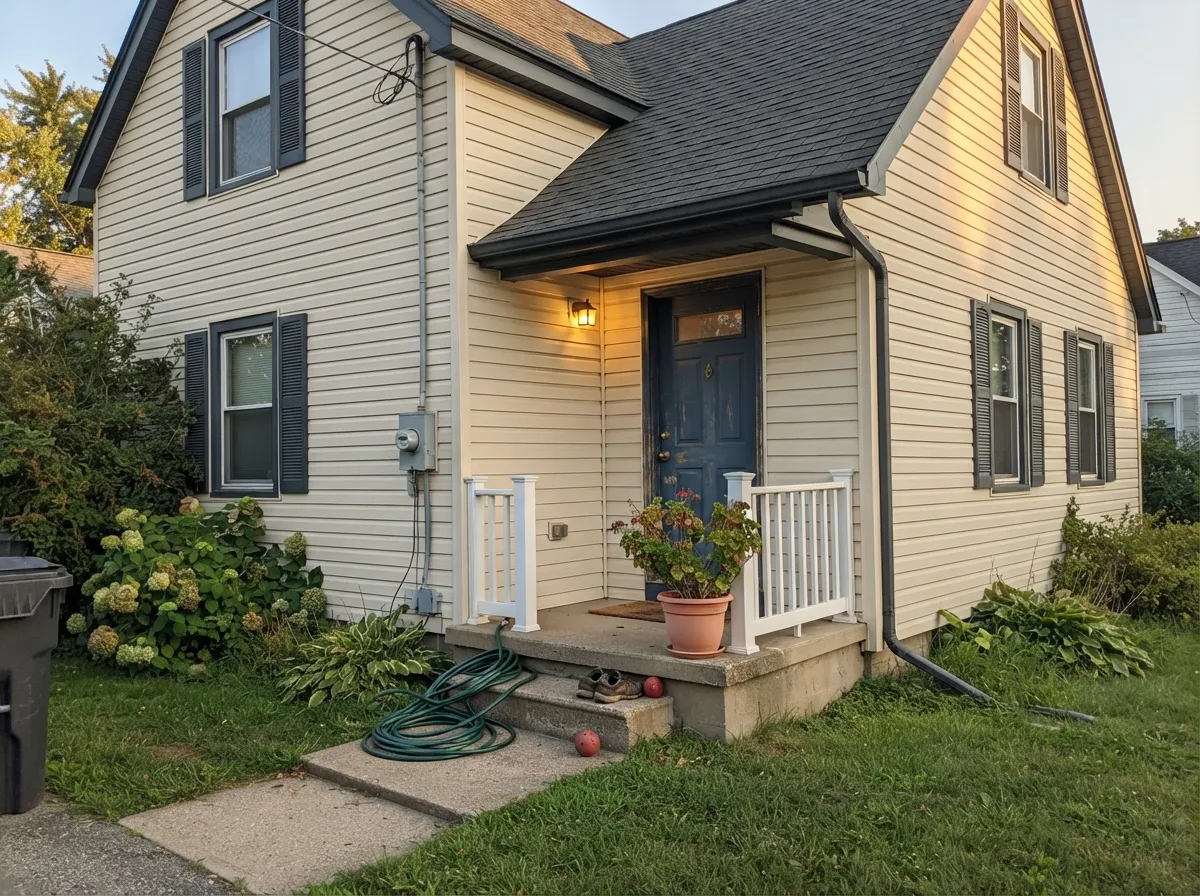
As a body color over wood or vinyl siding it holds its warmth in strong sun without flashing yellow, and it pairs well with dark trim for contrast. Full details in the exterior section below.
Your Light Is the Risk
Full warm sun keeps the cream honest and glowing without tipping into yellow. Its best and most reliable light.
Cool, indirect daylight drains the warmth and can leave it looking flat, almost dingy. Sample here before committing a whole room.
Warm and glowing at the sun hours, quieter and more neutral the rest of the day. The shift is gentle, not dramatic.
2700K bulbs deepen the cream and make it cozy. Cool white LEDs flatten it toward a dull beige — swap the bulb before the paint.
Most complaints about Antique White are a light mismatch. Upload a photo of your actual room and see it on your walls — then ask for the same wall in north light or evening lamps before you buy a single sample.
Need It From Another Brand?
Any paint counter can custom-tint Valspar 7002-20 directly. If you would rather stay in one brand's own deck, these are the closest stock matches, measured as ΔE2000. Under 2 is a difference you will not see on the wall.
| Brand | Closest color | ΔE | LRV | |
|---|---|---|---|---|
| Sherwin-Williams | CreamySW 7012 · Sherwin-Williams | 1.4 | 81 | Color page → |
| Behr | Pale ChamoisPPL-51 · Behr | 0.2 | 79 | Color page → |
| Benjamin Moore | Navajo White947 · Benjamin Moore | 2.6 | 78 | Color page → |
| PPG / Glidden | Angel FoodPPG1088-1 · PPG / Glidden | 0.8 | 81 | Color page → |
| Glidden | Elegant IvoryPPG1081-1 · Glidden | 0.8 | 80 | Color page → |
| Dutch Boy | Creamed Vanilla018W · Dutch Boy | 1.4 | 81 | Color page → |
Similar Valspar Colors
The nearest shades to Antique White within Valspar's own range, ranked by perceptual color distance — useful when you want the same look a touch lighter, darker, or warmer.
WCAG 2.1: AA is 4.5 : 1 for normal text, 3 : 1 for large text, AAA is 7 : 1.
Antique White vs the Colors You're Also Considering
Every Antique White sample board has the same rivals on it. The numbers show the real lightness gap — then it comes down to which risk you would rather live with.
Pick this when you want a real, visible cream rather than a whisper of one.
Valspar 7002-7 · LRV 85.1Dove WhitePick this if you want the near-white version of the same warmth, closer to Benjamin Moore White Dove.
Pick this for the traditional warmth Du Jour was built to avoid.
Valspar 7002-6 · LRV 86Du JourPick this for the cleanest, least buttery white on the same Valspar rack.
Antique White Coordinating Colors
The rule for coordinating with Antique White is the same one that governs every warm cream: stay warm, and keep cool grey stone and chrome at arm's length. It pairs easily with warm greiges, dark near-blacks for contrast, and its own paler Valspar siblings when you want depth without a color change. These are the partners that keep showing up in rooms that work:
Antique White on Exteriors
This is arguably the color's strongest job. Full sun brings out the warmth without pushing it toward butter-yellow, which is the trap cheaper warm-white exteriors fall into, and its LRV of 80.4 keeps a house looking bright rather than dingy even on a shaded elevation. It reads as an old-house, well-kept warm white rather than a stark, modern one — the reason it turns up so often as a trim and body option across Valspar's exterior 4000 and Reserve lines.
Pair it with dark trim — Kendall Charcoal or Wrought Iron — for the classic farmhouse contrast, or a warm greige like Accessible Beige for a softer, monochrome look. What to avoid: cool blue-grey shutters or stone accents, which make Antique White's warmth read dated instead of intentional. As with any warm exterior white, walk the house before committing — the shaded side will read noticeably creamier than the side in full sun.
Antique White With Wood Tones and Floors
Warm wood is this color's best company. Oak, walnut, cherry and pine floors all sit comfortably against Antique White because both are working the same warm side of the wheel — even orange-leaning builder oak looks intentional rather than clashing, since the wall doesn't fight the floor's warmth the way a gray or a near-white would.
Cool flooring needs a sample first. Grey-washed wood, cool LVP and any flooring with a blue-grey cast pull Antique White's warmth into relief, and the wall can start to look yellowed by comparison. It's rarely a dealbreaker — warm rugs and brass fixtures usually bridge the gap — but test a large sample above the actual floor before committing a full room.
Three Ready Palettes Built on Antique White
A color is never alone on the wall. These are complete combinations in the 60-30-10 pattern, with the reason each one holds together. Every one opens in the visualizer.
Accessible Beige and Antique White share the same warm base, so the wall-to-trim handoff is seamless; Kendall Charcoal supplies the one dark note a traditional exterior needs without going cold.
Try this palette in your roomAgreeable Gray's warm base keeps the walls from fighting the cabinets, and Hale Navy grounds the room with the one deep color it needs; brass hardware ties all three together.
Try this palette in your roomRevere Pewter's warm greige and Antique White's genuine cream come from the same temperature family, so the trim softens the walls instead of cutting them; Pale Oak adds a lighter echo without introducing anything cool.
Try this palette in your roomAntique White FAQ
Is Valspar Antique White warm or cool?
Warm — a genuine beige-yellow cream, not a near-white. It's meaningfully deeper and more colored than Valspar's other whites (Dove White, Du Jour), so expect real warmth on the wall, not a hint of it.
How is it different from Valspar Dove White and Du Jour?
Depth. Dove White (LRV 85.1) and Du Jour (LRV 86) are built to read as barely-there near-whites; Antique White (LRV 80.4) is five to six points deeper and shows its beige-yellow undertone plainly. If you want the faint version, pick Du Jour; if you want a real cream, this is it.
Does it work on exterior siding?
Yes — it's one of its best jobs. As a body color over wood or vinyl it holds warmth in strong sun without flashing yellow, and it pairs well with dark trim like Kendall Charcoal for classic contrast.
What trim white goes with Antique White walls?
Antique White itself, in semi-gloss, keeps the one-color look. If you want contrast, go with a deeper warm neutral like Revere Pewter rather than a brighter white — a starker white will make Antique White look dingy next to it.
Is it good for kitchen cabinets?
Good with warm materials — butcher block, warm granite, brass hardware. Against cool grey quartz or marble it starts to look yellowed by contrast; sample against the actual counter before committing.
Will it look yellow in a north-facing room?
It can read flatter and more beige than expected in cool, indirect daylight — not butter-yellow, but noticeably less warm than the chip promised. If the room stays dim all day, test a large sample before painting.
Have you painted with Antique White?
Rate it — one tap helps the next reader decide.
Ask a Question